-
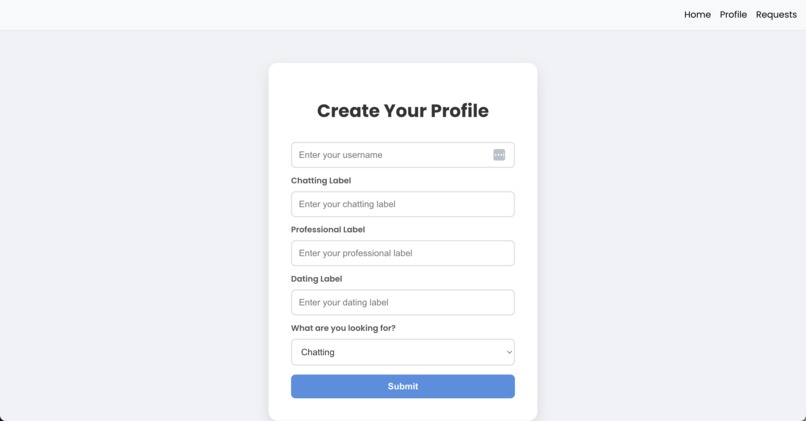
SignUp page
-
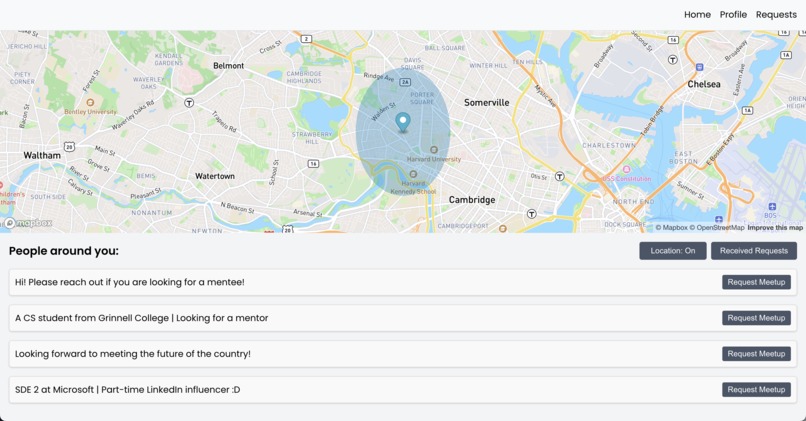
Home Page
-
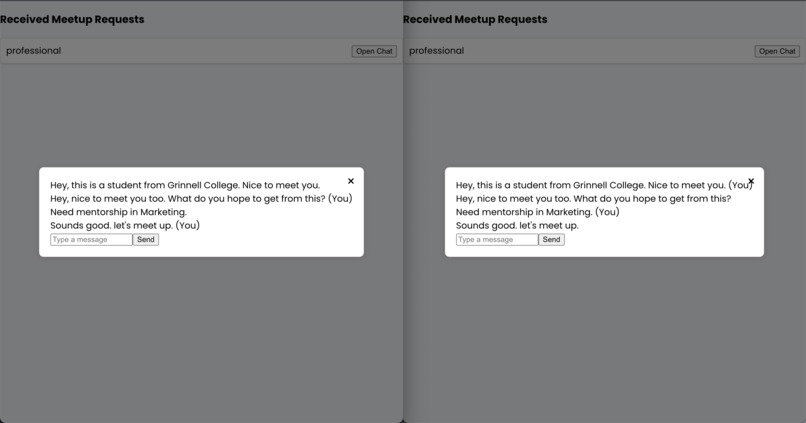
Chat


Inspiration
Proximity was born from the realization that despite our hyper-connected digital world, many people feel disconnected from those physically around them. We wanted to create a platform that bridges the gap between online social networking and real-world interactions, encouraging people to form meaningful connections with others in their immediate vicinity.
What it does
Proximity allows users to discover and interact with people within a one-mile radius. Users can set up profiles with different labels for various contexts (professional, dating, casual chatting), and the app matches them with nearby users who have similar interests or goals. Once connected, users can send meetup requests and engage in real-time chats, all while maintaining control over their privacy and visibility.
How we built it
We developed Proximity using a modern web stack:
Frontend: React for a dynamic and responsive user interface Backend: Node.js with Express for a robust API Database: MongoDB for flexible data storage Mapping: MapboxGL for location visualization Real-time Communication: WebSocket for instant messaging
We integrated geolocation services to track and update user positions and implemented a matching algorithm based on user preferences and proximity.
Challenges we ran into
- Balancing user privacy with location-based functionality
- Optimizing performance for real-time updates of nearby users on the map
- Ensuring reliable WebSocket connections for the chat feature
- Managing complex states across components for chat sessions
- Implementing an efficient algorithm for proximity-based user matching
Accomplishments that we're proud of
- Creating a seamless, intuitive user experience for location-based social discovery
- Implementing a real-time chat system that works smoothly within the app's context
- Developing a flexible user profile system that adapts to different social contexts
- Successfully integrating mapping functionality with user discovery features
- Building a scalable backend architecture capable of handling real-time data updates
What we learned
- Advanced React state management techniques
- Real-time data handling with WebSockets
- Geolocation API integration and optimization
- Best practices for user data privacy and security in location-based apps
- Efficient database querying for location-based data
- Collaborative development workflows and version control
What's next for Proximity
- Implementing push notifications for new nearby users and messages
- Expanding the matching algorithm to include more sophisticated preferences
- Adding features for creating and discovering local events
- Developing mobile apps for iOS and Android for increased accessibility
- Implementing AI-driven suggestions for potential connections
- Enhancing privacy features with optional anonymity modes
- Integrating with other social platforms for easier onboarding and profile creation


Log in or sign up for Devpost to join the conversation.