-
-
-
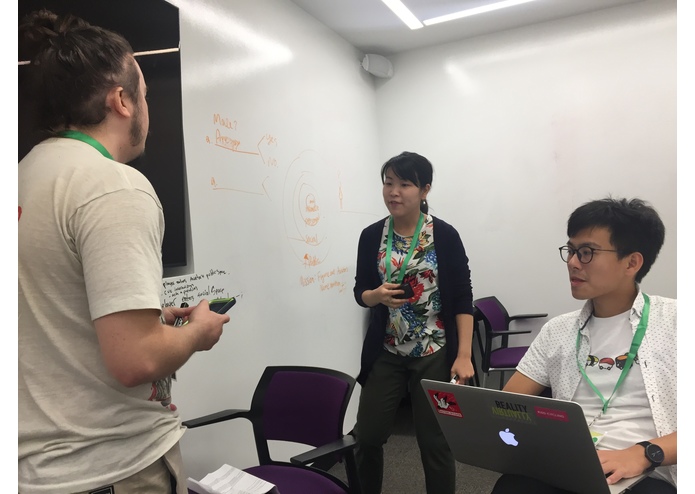
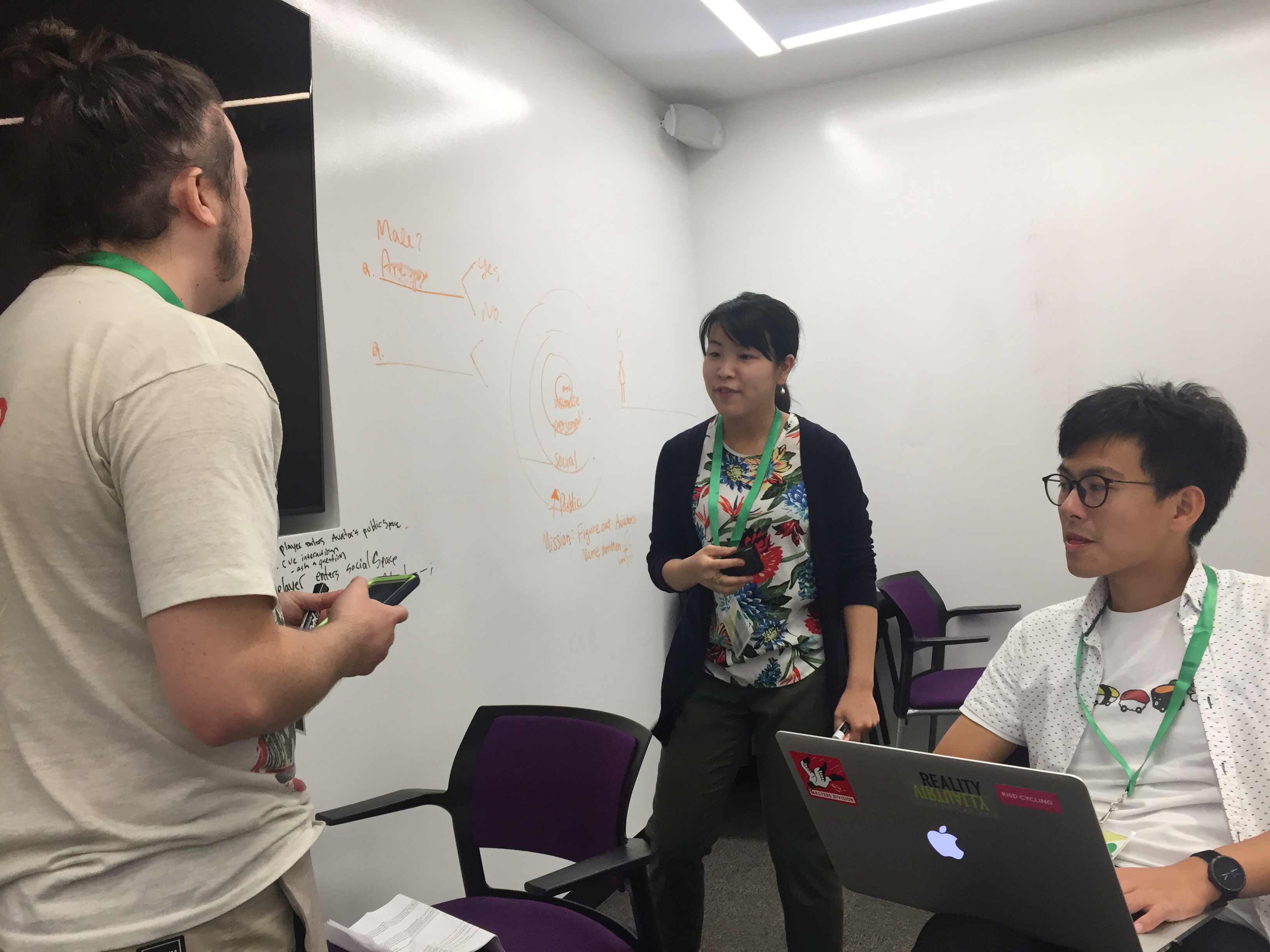
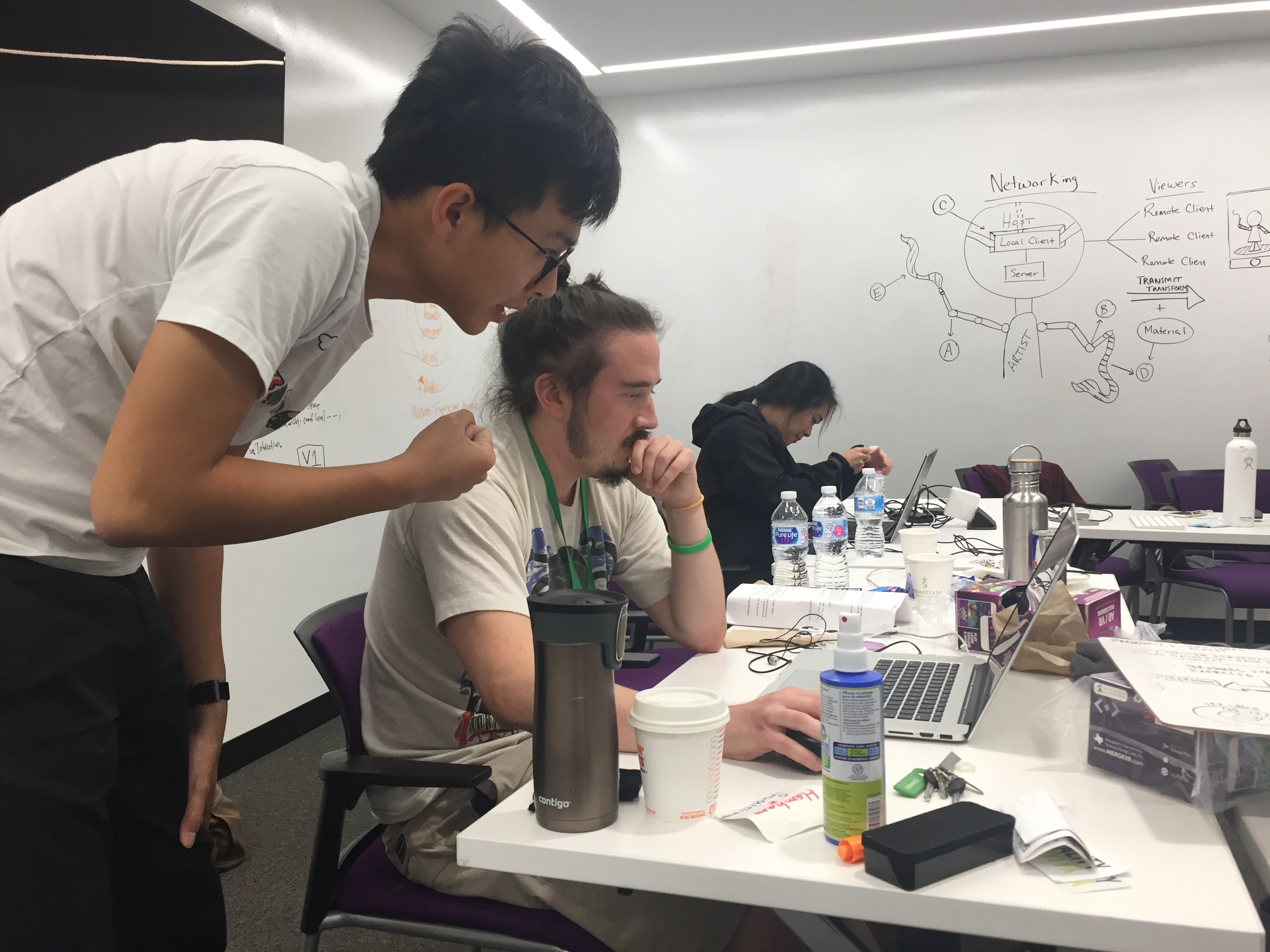
We spent a lot of time discussing sociology, social VR behaviors, and cultural considerations.
-
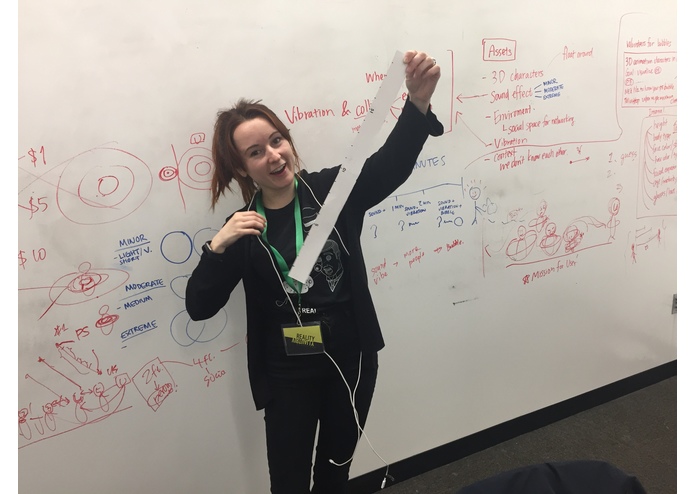
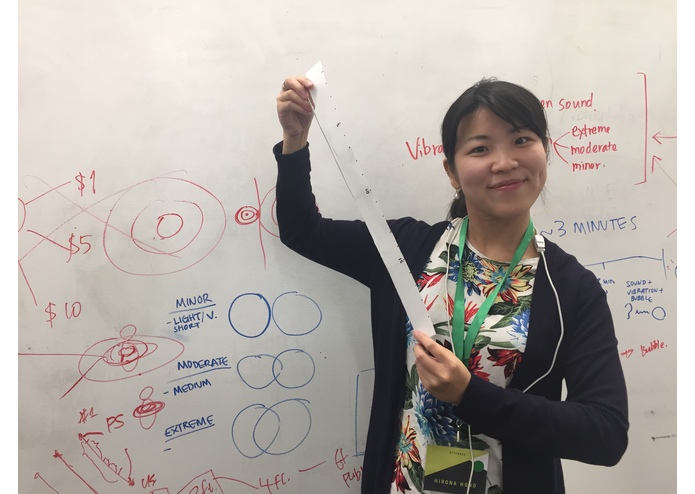
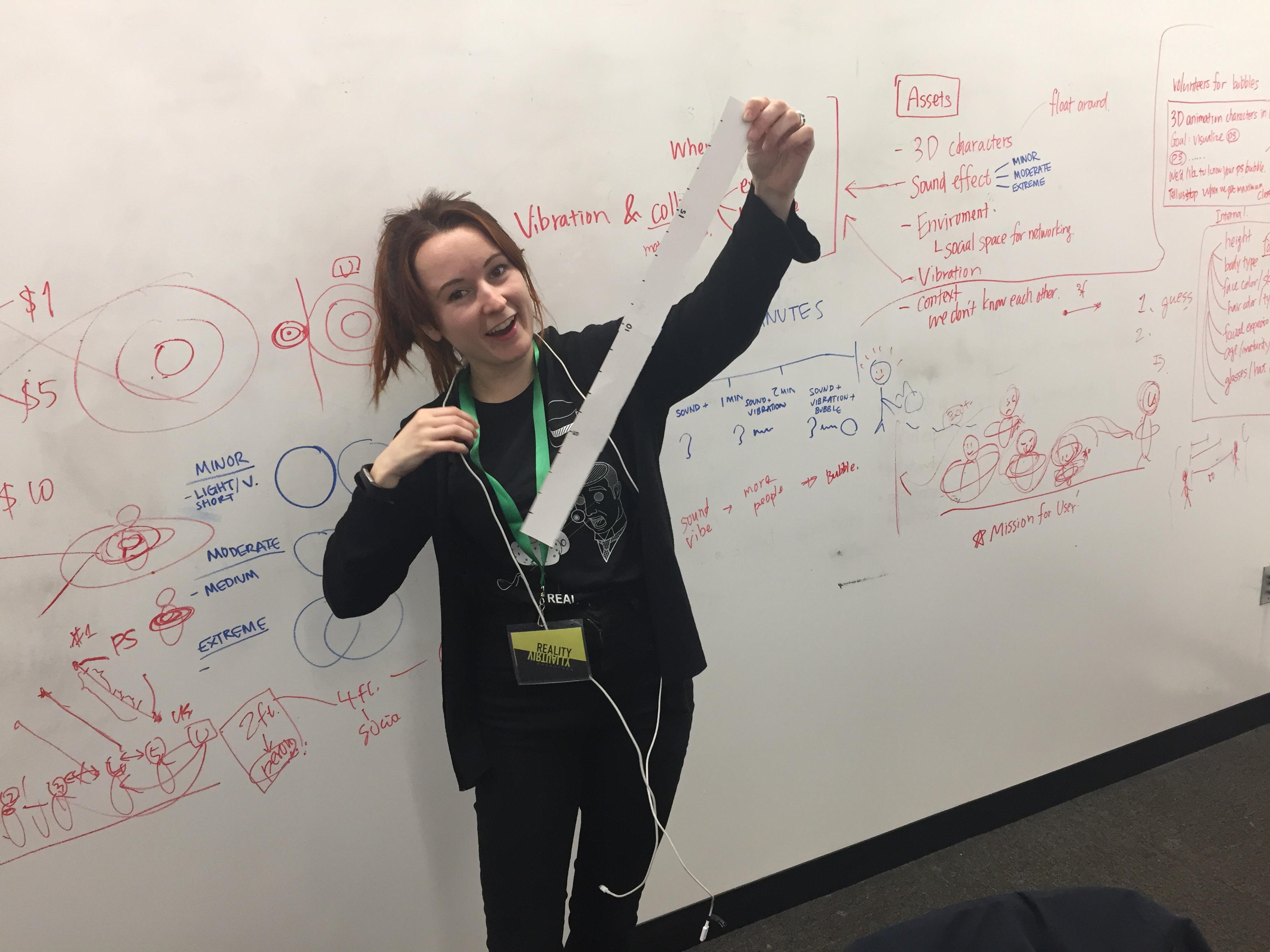
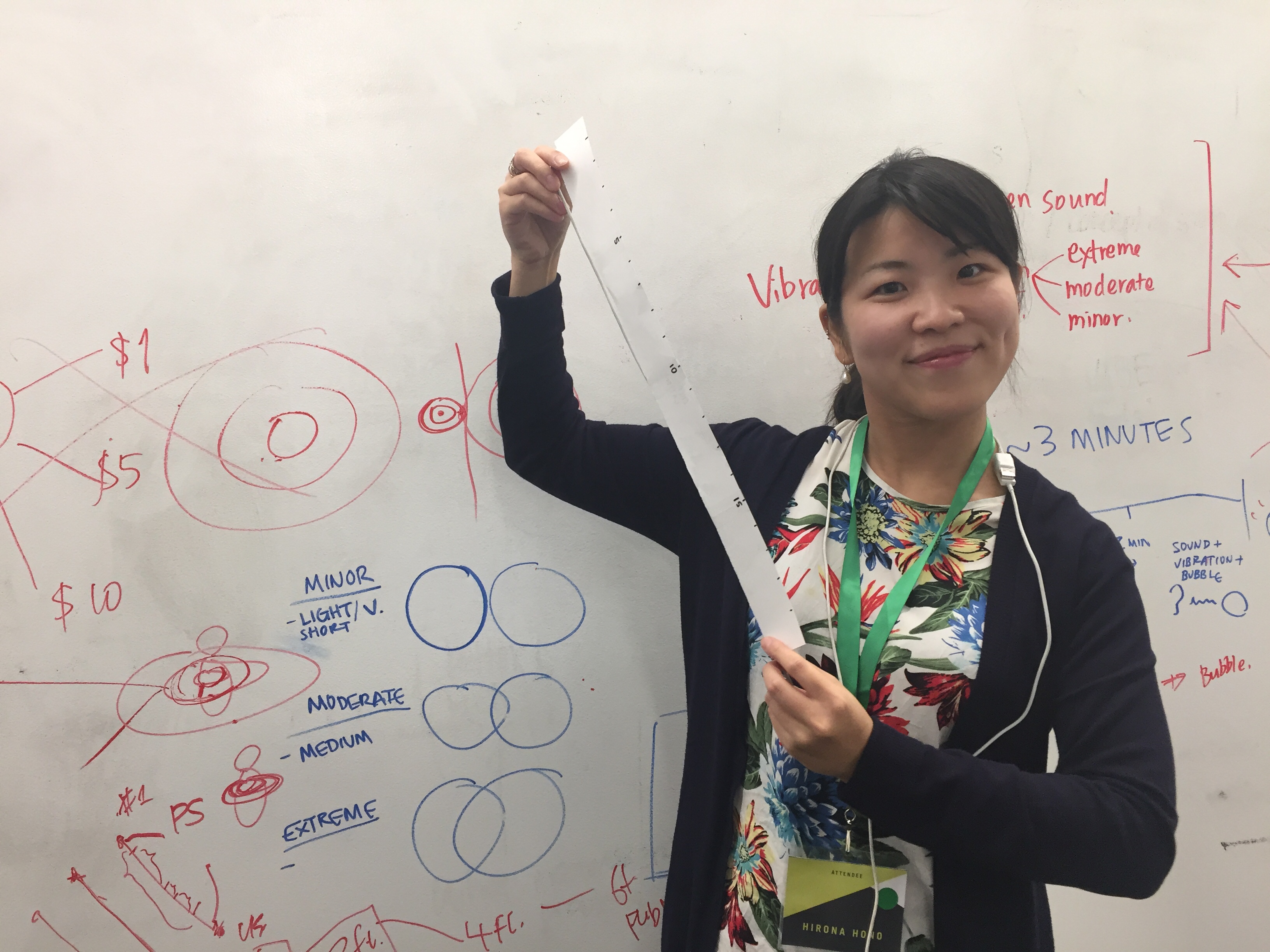
We didn't have a ruler, so we "hacked" one together using old paper.
-
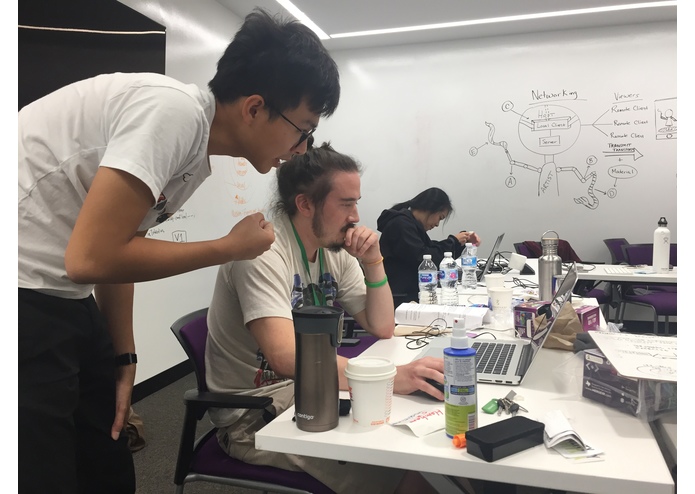
Our developer and designer worked well together; teaching each other new tricks along the way!
-
Inspiration
Social VR can be confusing and awkward. There are no social norms defined yet, making many interactions in VR discomforting to users of different backgrounds, cultures, and preferences.

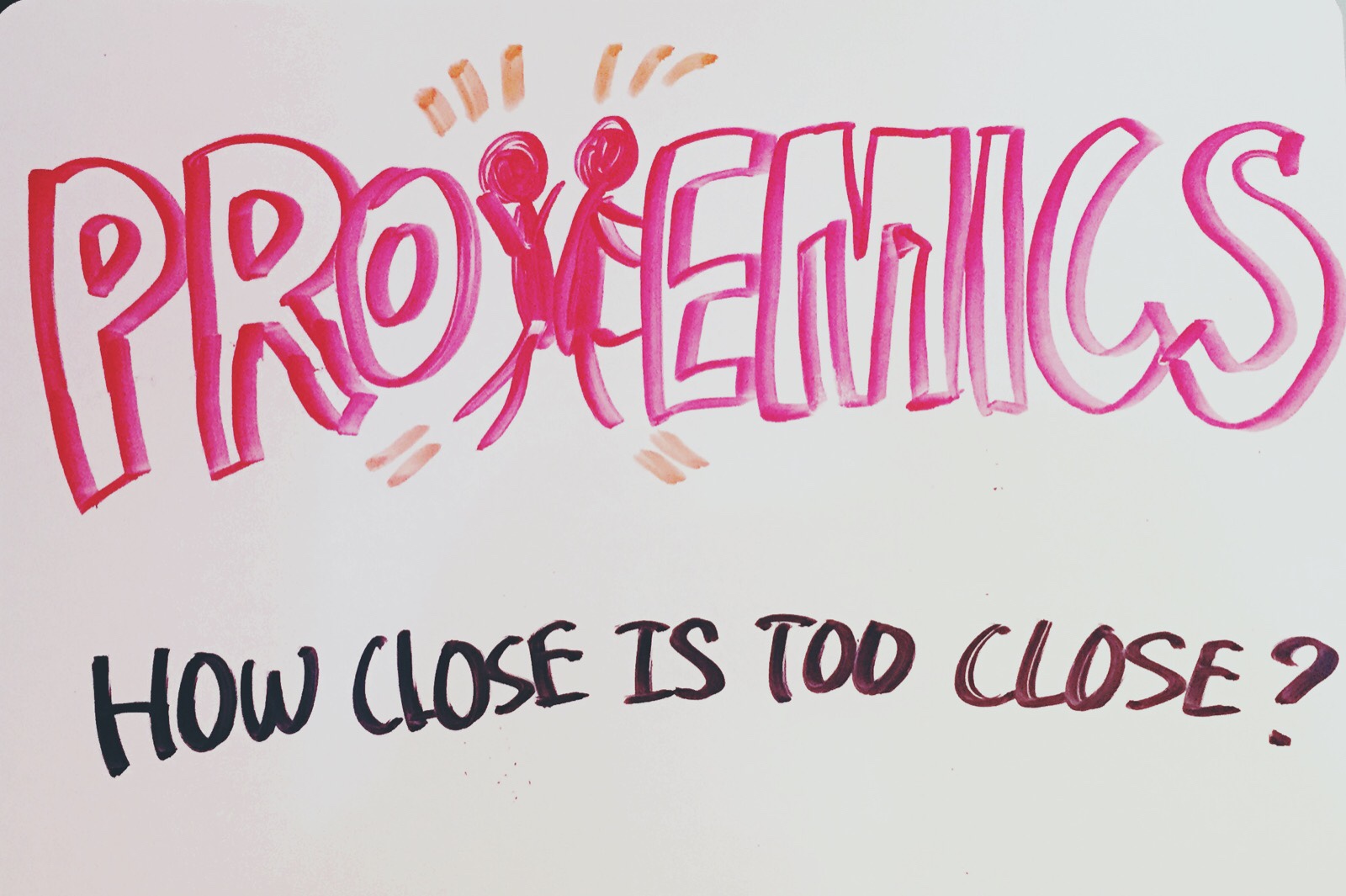
Proxemics is the concept and study of how individuals use space, how it makes us feel more or less comfortable, and to what extent it impacts the relationship between people. The original concept of proxemics was introduced by E.T. Hall, an anthropologist from the U.S. in 1963.

What if we could better communicate personal space preferences through the use of visuals, sound, and haptics in social VR?
Overview
ProxemicsVR visualizes the concept of "personal space" in order to create a better understanding of what's acceptable across different cultures.
TEAM INFO
Team Name
ProxemicsVR
Team Lead
Quinn McCord
Team Members
1) Eva Hoerth
2) Hirona Hono
3) Quinn McCord - Team Lead
4) Yong Wang
Category
Education, AR & VR for Good
Location
Location: Floor 6 + Big open room near the deck
Table Number: #52
Environment:
Platform: Oculus Rift
Development tools: Unity, Adobe Fuse, Microsoft Visual Studio
SDKs : Oculus, VRTK
APIs: ??
Assets: Mixamo, Unity Asset Store
Libraries: VRTK
Any components not created at the hackathon: NA
What will you experience?
You walk into a room of people, mostly strangers. You notice that each person has a bubble around them.
If you accidentally come across their "virtual personal space bubbles" by accident, the sound will notify you.
What is Personal Space?
Personal space is an invisible area around your body that represents to what extent you feel comfortable around others. Avatars in ProxemicsVR have two bubbles around their body: the outer bubble represents "social space" and the inner bubble represents "personal space."
In the field of cross-cultural psychology and behavioral science, "personal space" consists of the following four ares;
- Public distance: For public speaking
- Social distance: For interactions among acquaintances
- Personal distance: For interactions among good friends or family
- Intimate distance: For embracing, touching or whispering
How we built it
STEP1_Brainstorm ideas
We brainstormed together how we can visualize people's personal space. Since it is a concept that is not visible to people in reality, we tried to come up with a new way to represent it, which gives people an opportunity to think about what personal space is, what it feels like, and how it could potentially influence their interaction with others.
STEP2_Design a project scope
There are many variables to determine one's understanding and deployment of one's personal space. Among the above-mentioned four categories of personal space (Public, Social, Personal, and Intimate), for instance, it is considered that the size of your personal space bubble changes over the course of time, who you are interacting with, in what context and environment. For the sake of the scope of this hackathon, we decided to keep the variables as simple as possible and decided to focus on "Social" and "Personal."
STEP3_Interview participants
Our hypothesis was that participants from different socio-cultural backgrounds have different sizes of bubbles for both social and personal space. In order to investigate that, we picked up 6 participants randomly, but with intention not to choose all of them from seemingly similar socio-cultural backgrounds (please see volunteer interviewees' photo below). First, one of the team members stood across an interviewee and ask the interviewee to walk and approach toward the team member. Then, the interviewee is asked to stop at the location she/he feels comfortable standing considering the distance her/him and our team member. We did this exercise for two rounds (to measure social distance and personal distance) and collected data.
STEP5_Develop scenes and avatars
While two members were collecting personal space data from volunteering interviewees, two other members of our team developed the Unity scene, game mechanism and avatars.
STEP4_Integrate proximity data to Unity scenes
We reflected the collected data of personal space into the size of the bubbles that each avatar carries around their body in Unity scene. At the end of the scene development, the movement of avatars, sounds of bubbles when collided with one another, logic of avatar movements were added so that users can see the visualized personal space bubbles when playing this exercise.
Challenges we ran into
Sociology is a complex subject; and trying to communicate theories in a virtual world is not an easy task.
Our early challenges were:
- Figuring out how we could communicate personal space in social VR
- Defining what kind of value this would bring
- Avoiding bringing our own biases into the design of the simulation
- Identifying how we would make this experience more engaging and less educational
Accomplishments!
Although we only finished a small portion of what we wanted to, we dove deeper into areas that each team member wanted to learn more about, like:
- Sociology
- Unity scripting
- 3D modelling
What's next for ProxemicsVR
We have members from all over the country, and one in Japan! We want to continue gathering data around social interactions and behaviors across cultures, and bring this information to VR creators so that they can design more inclusive social spaces that anyone of any background would enjoy using. Inclusivity is key to successful experiences!
Built With
- empathy
- unity
- vrtk


Log in or sign up for Devpost to join the conversation.