-
-
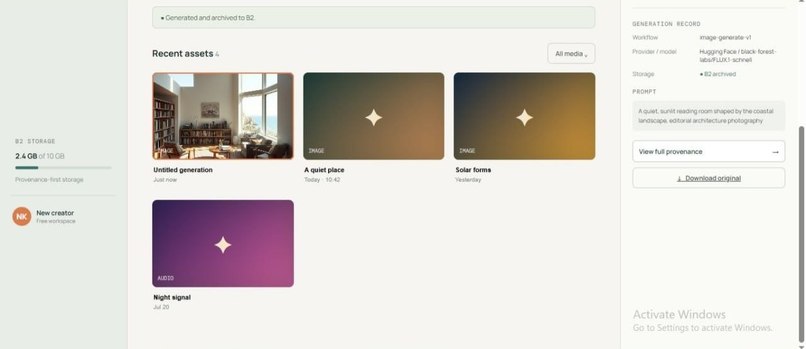
Update in media
-
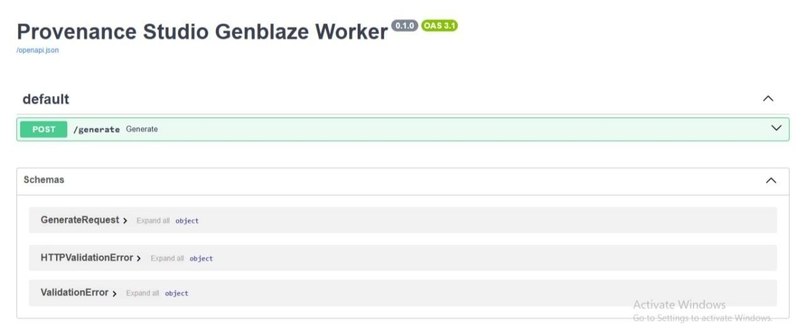
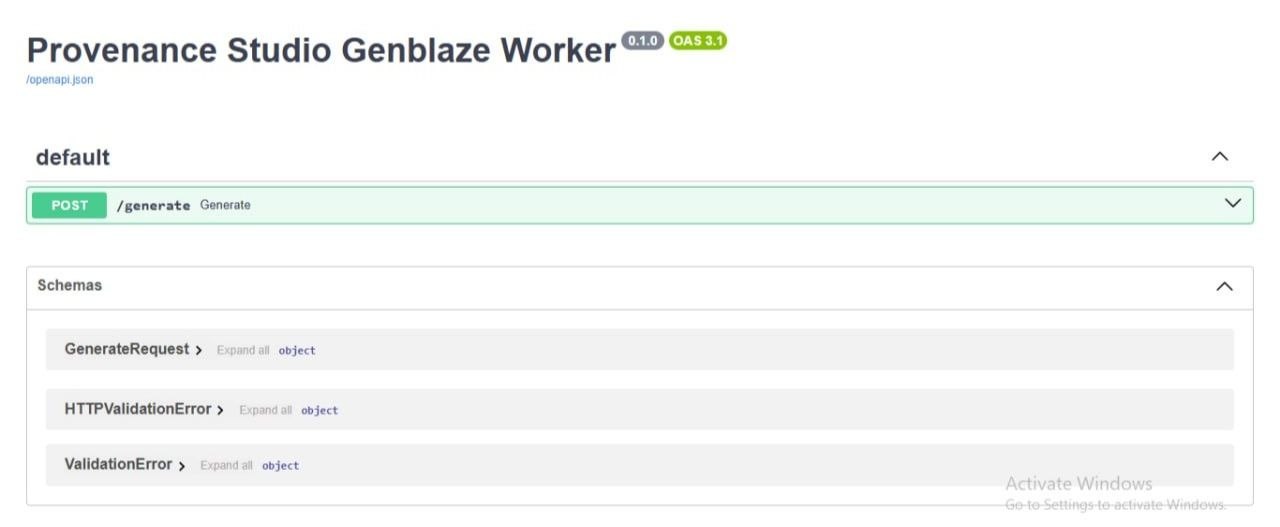
Provenance Studio Genblaze Worker
-
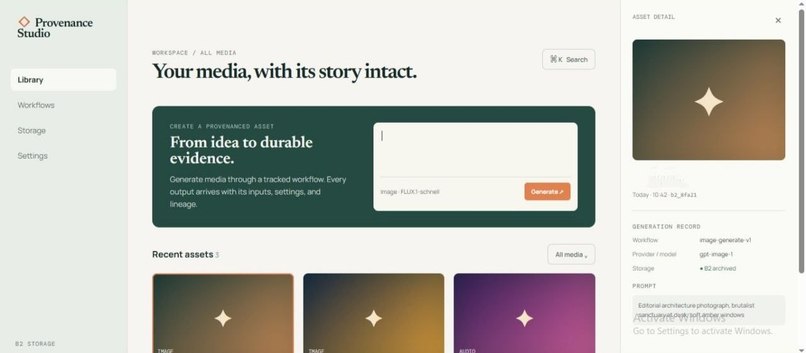
Start
-
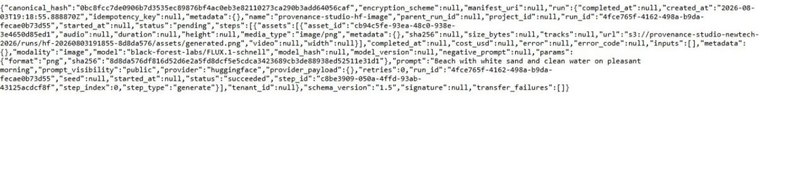
Provenance for image 1
-
Provenance for image 2
-

Image creation 2
-
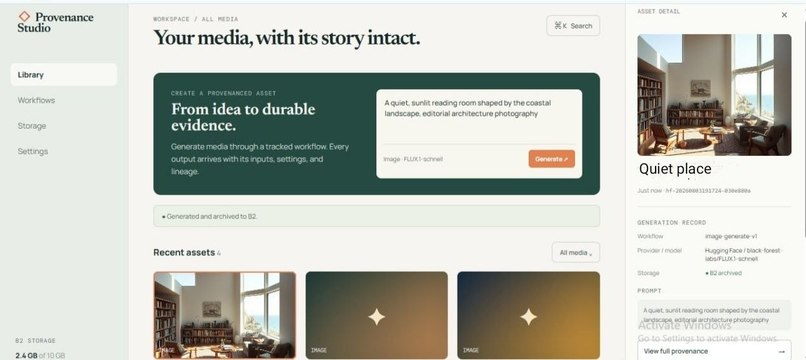
Image creation 1
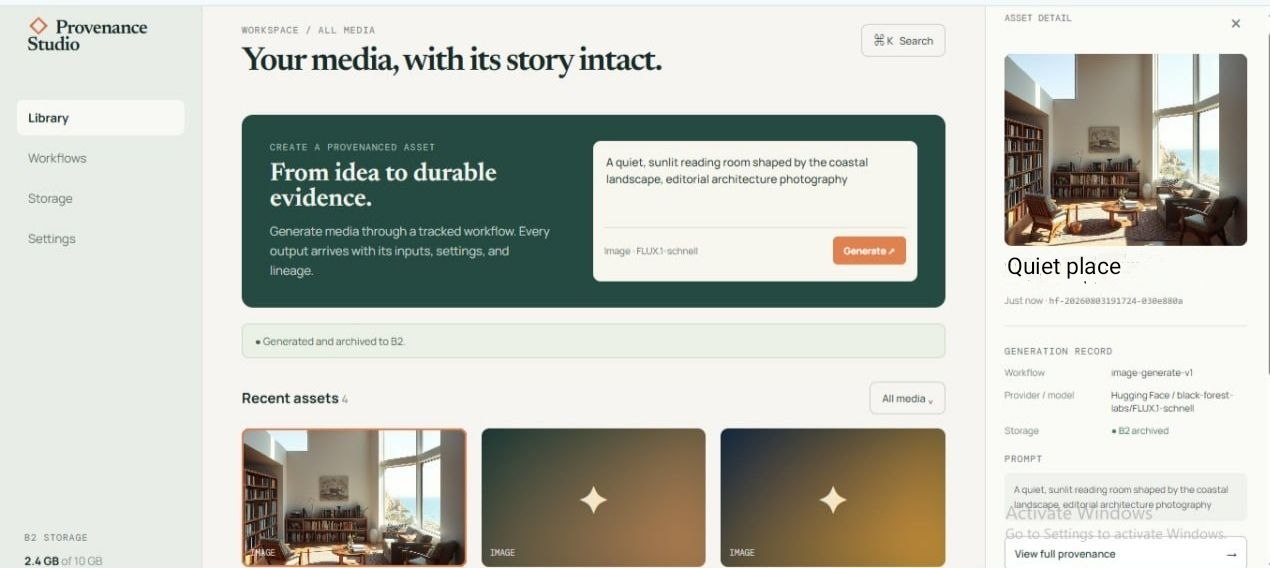
Inspiration
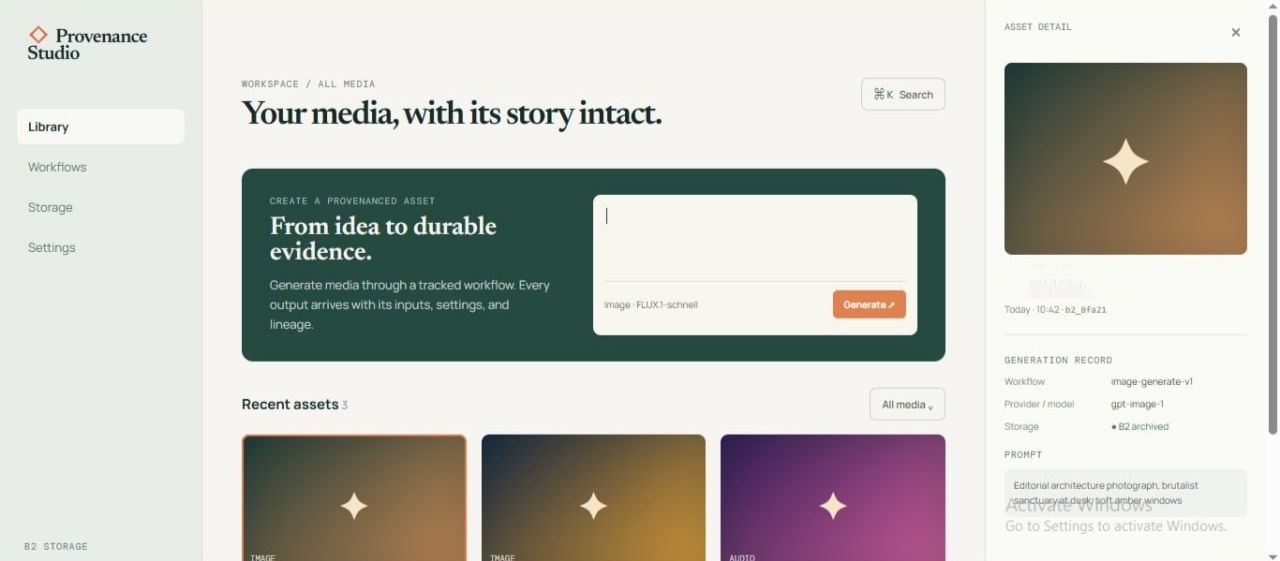
Generative AI makes creating visual assets a effortless task, but it introduces a big problem: lost lineage. Once asset is generated, its prompt, model version, seed, and execution parameters disappear into random file names and detached databases - it becomes useless. So, we built Provenance Studio to ensure that every generated asset carries an immutable, cryptographically verifiable receipt of its origin story, stored safely right alongside the media.
What it does
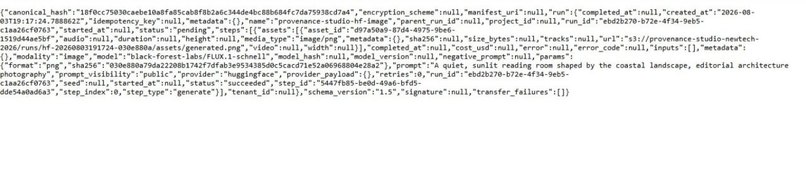
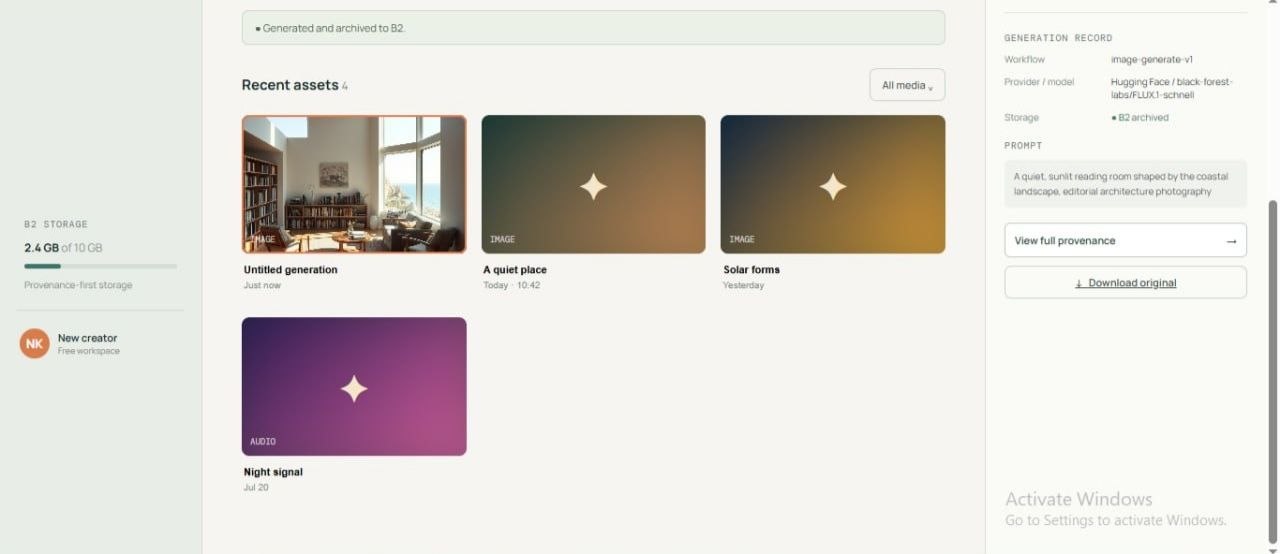
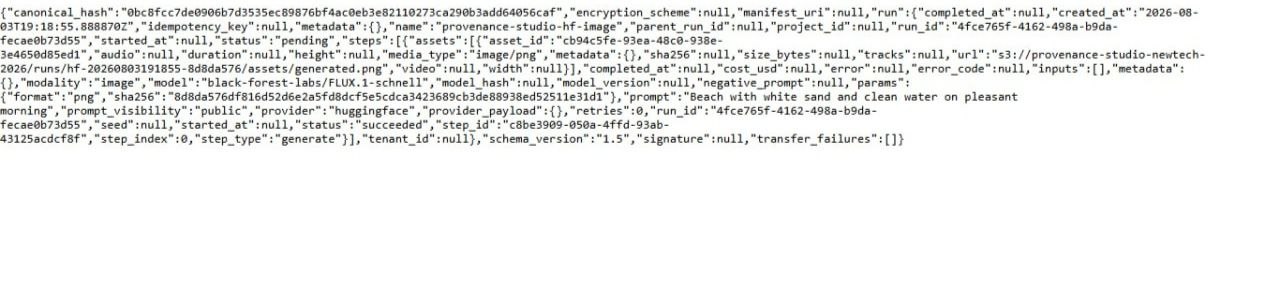
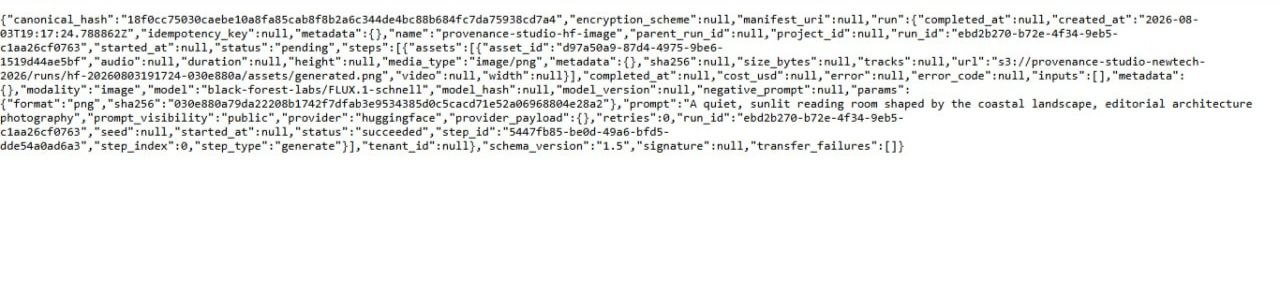
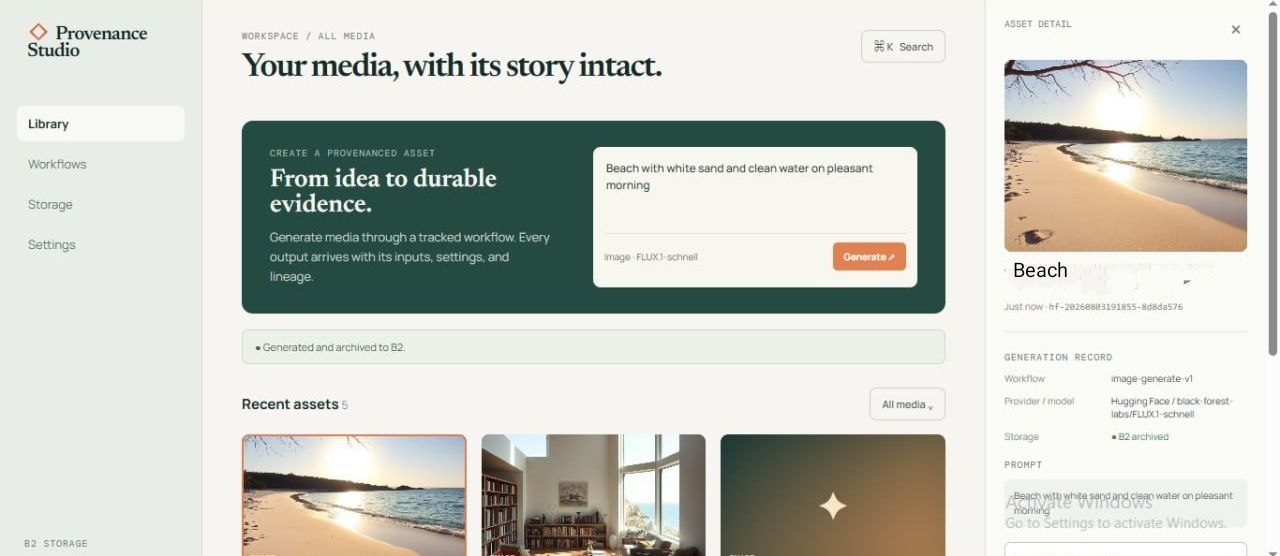
Provenance Studio combines generative AI creation with automated provenance tracking : 1.Tracked Generation: It Generates media via models like FLUX.1-schnell (Hugging Face). 2.Lineage Manifests: Automatically creates a standardized manifest.json capturing execution parameters. 3.Cryptographic Verification: Assigns a SHA-256 hash to every run to guarantee data integrity. 4.Backblaze B2 Archiving: Stores generated assets and JSON manifest records securely in object storage. 5.Replay / Remix: Lets users inspect any historical asset and reload its exact state back into the workspace.
How we built it
1.Frontend: Built with Next.js (React) featuring a studio workspace UI with interactive asset inspection drawers. 2.Backend Pipeline: Next.js route handlers (/api/generate) and FastAPI worker services orchestrating inference and provenance building. 3.Storage & Lineage: Backblaze B2 (S3 API) for archiving media and structured JSON lineage files. 4.Core Logic: Powered by genblaze-core principles to build uniform output manifests across providers.
Challenges we ran into
1.Schema Normalization: Standardizing raw response metadata from different providers into a single, canonical manifest.json. 2.Async Upload Latency: Uploading heavy media and JSON manifests to Backblaze B2 without slowing down the live user UI. 3.State Management: Parsing historical JSON manifests back into UI input states for the Replay feature without breaking active form state.
Accomplishments that we're proud of
1.Automated Pipeline: Built a seamless flow where generation, hashing, manifest creation, and B2 archiving happen in one click. 2.Interactive Replay: Turned static media history into a reproducible, interactive prompt workspace. 3.Production Deployment: Successfully built, tested, and deployed the full app live on Render.
What we learned
1.Early Architecture: Designing storage and manifest schemas early makes backend multi-provider integrations much cleaner. 2.Efficient Storage: Leveraging Backblaze B2 for cost-effective storage of both large media assets and micro-JSON metadata payloads
What's next for Provenance Studio
1.Multi-Modal Support: Expanding from static images 2.Tamper-Proof Audit Trails: Integrating Backblaze B2 Object Lock features for strict enterprise compliance. 3.Team Workspaces
Built With
- backblaze-b2
- fastapi
- flux.1-schnell
- gmi-cloud
- hugging-face
- javascript
- next.js
- python
- react
- render
- s3-api
- sha-256


Log in or sign up for Devpost to join the conversation.