-
-
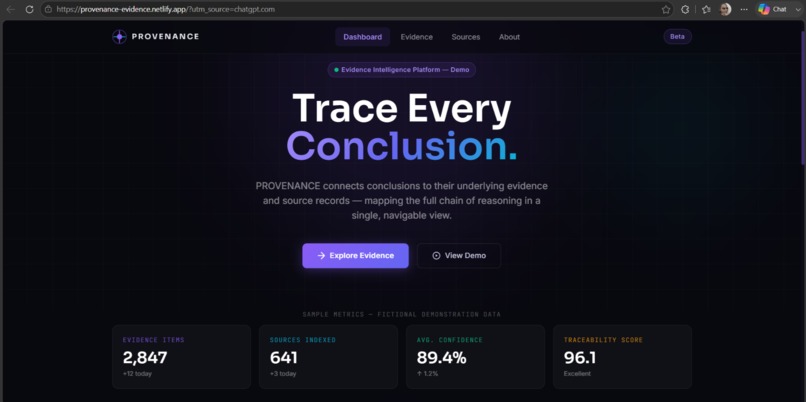
DASHBOARD
-
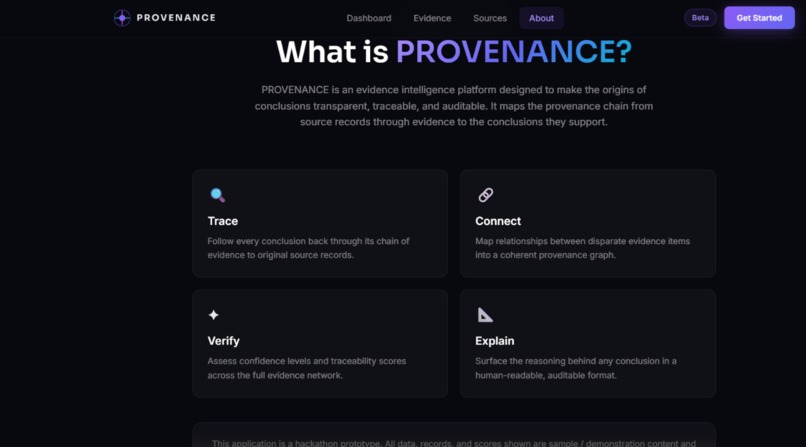
ABOUT
-
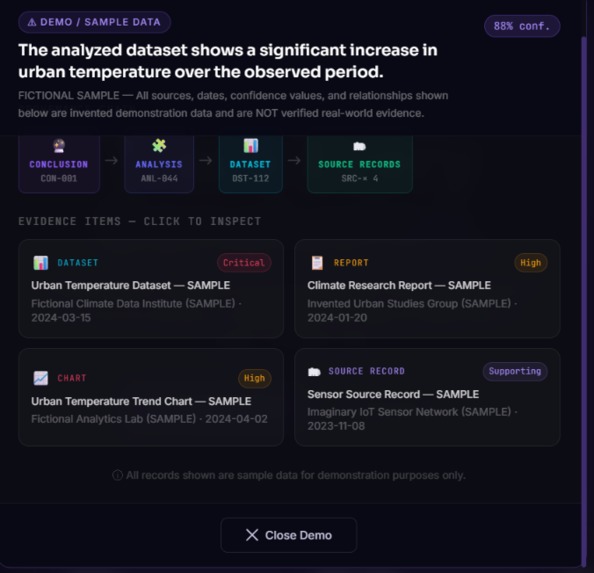
VIEW DEMO
-
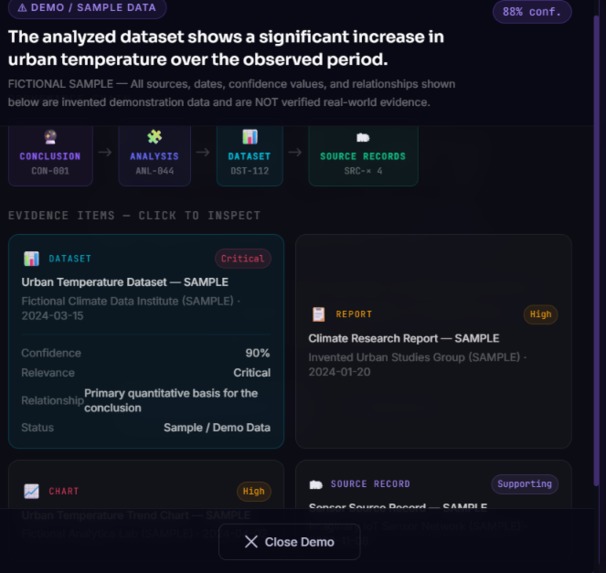
DEMO
-
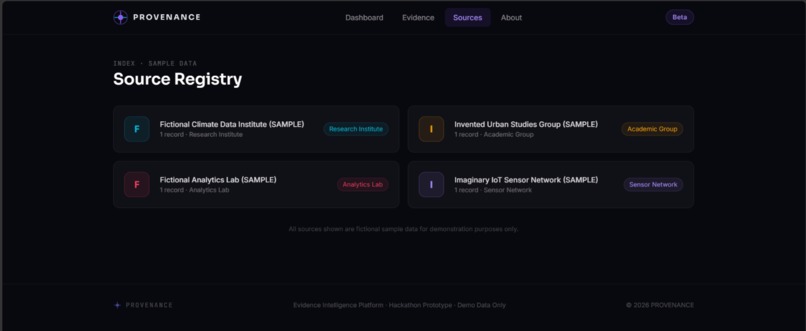
SOURCES
-
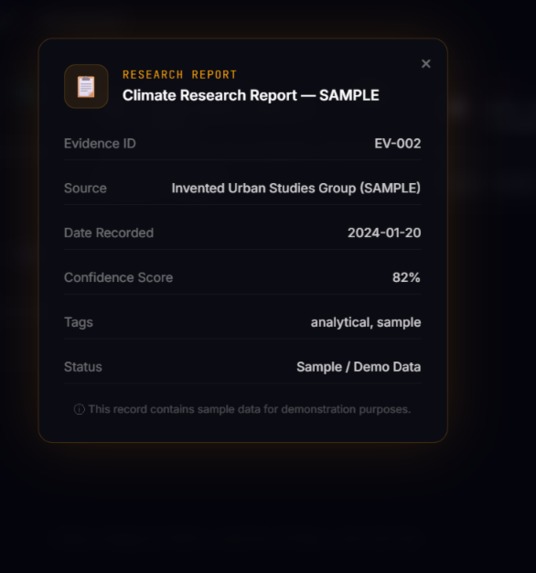
SAMPLE OF EVIDENCE
-
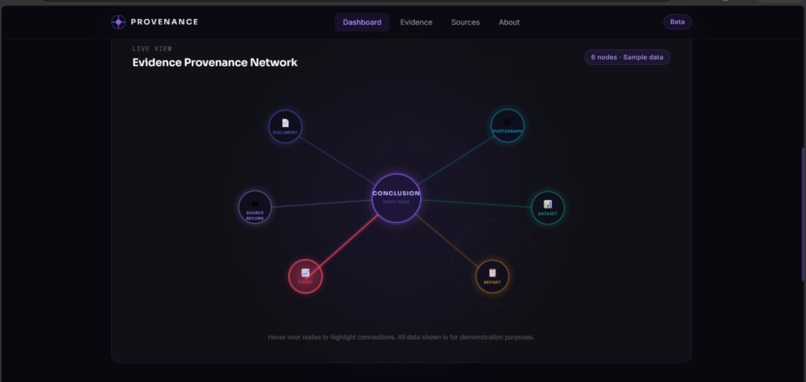
NETWORK
-
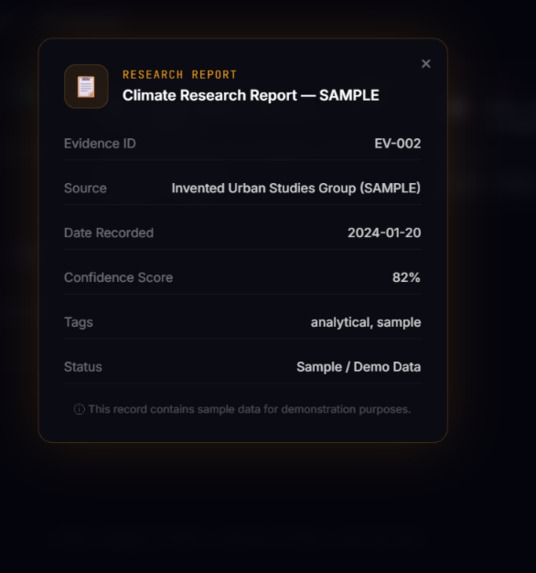
-
-
-
-
-
-
-
PROVENANCE — Evidence Intelligence for Trustworthy AI
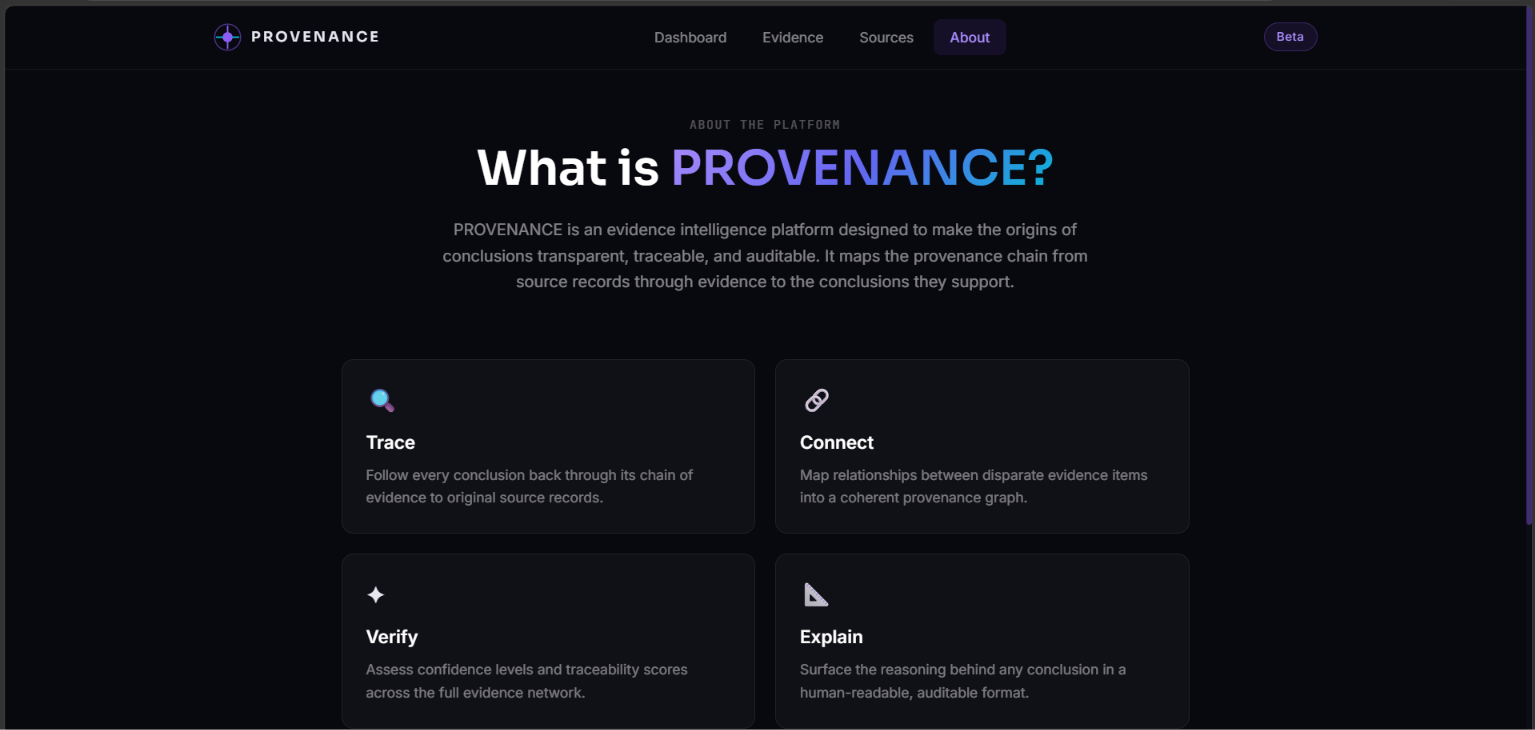
AI can generate answers in seconds, but when an answer matters, users need to understand where it came from and what evidence supports it.
We were inspired by the difficulty of tracing AI-generated conclusions back to the information behind them. Evidence can exist across datasets, reports, charts, and source records, making it difficult to understand how those pieces contribute to a conclusion.
PROVENANCE was created around a simple idea:
Trustworthy AI should make its evidence trail visible.
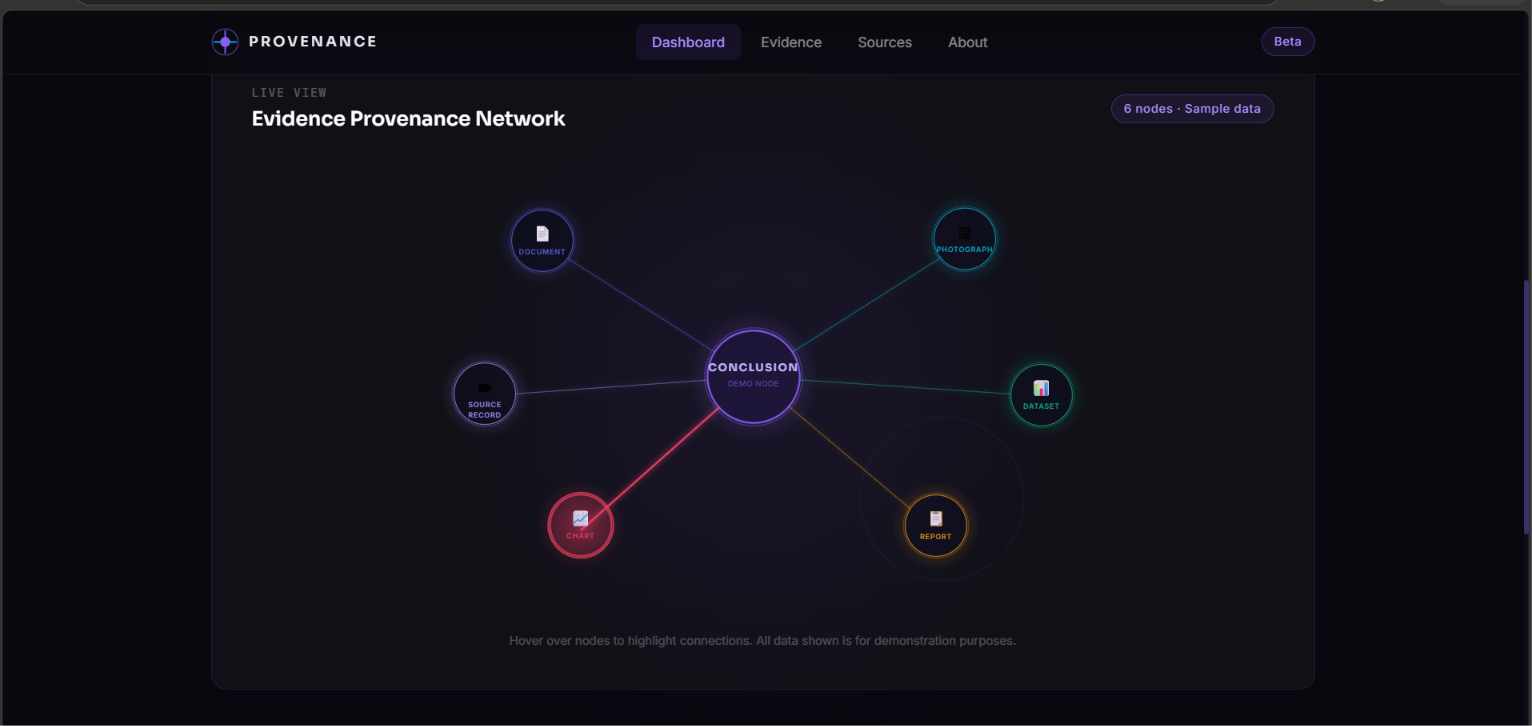
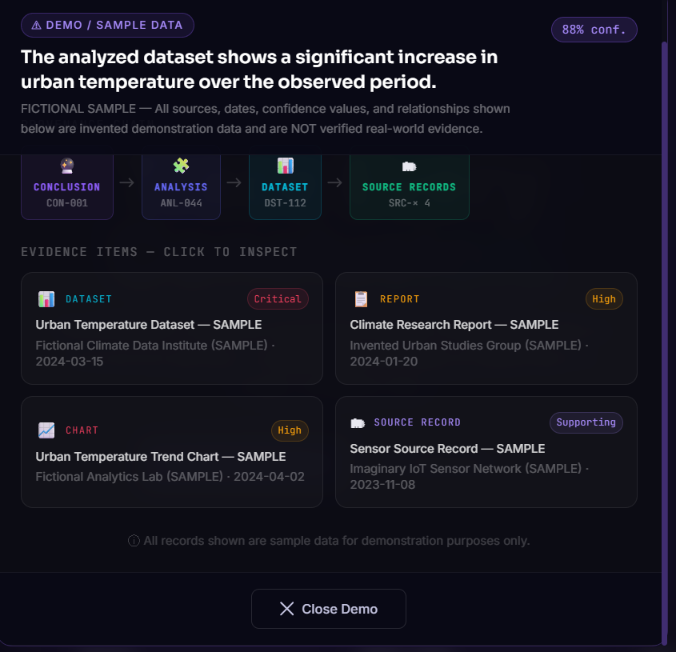
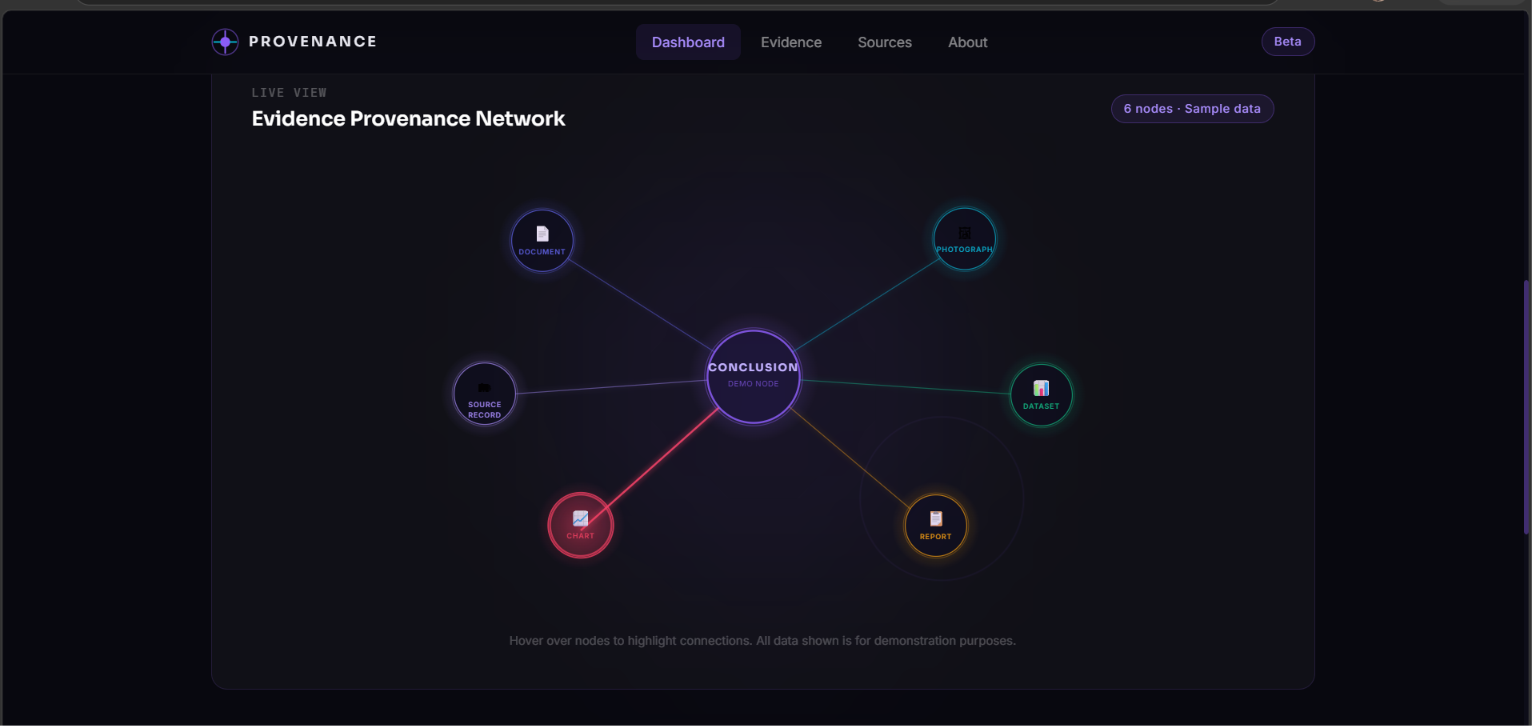
Instead of treating a conclusion as a black box, PROVENANCE provides an interface where users can follow the path from a conclusion to the analysis, dataset, evidence, and source records behind it.
What PROVENANCE Does
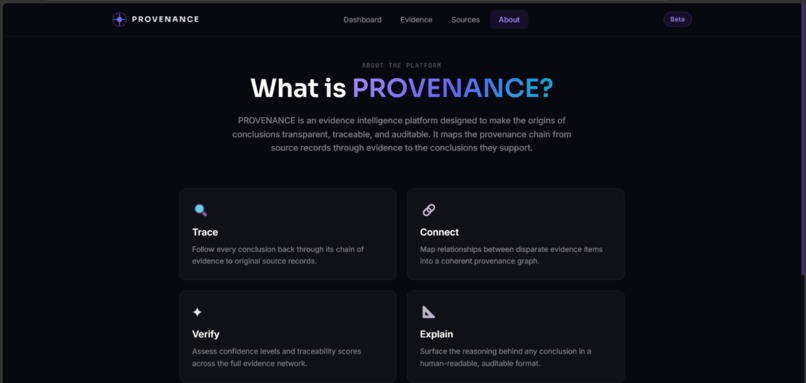
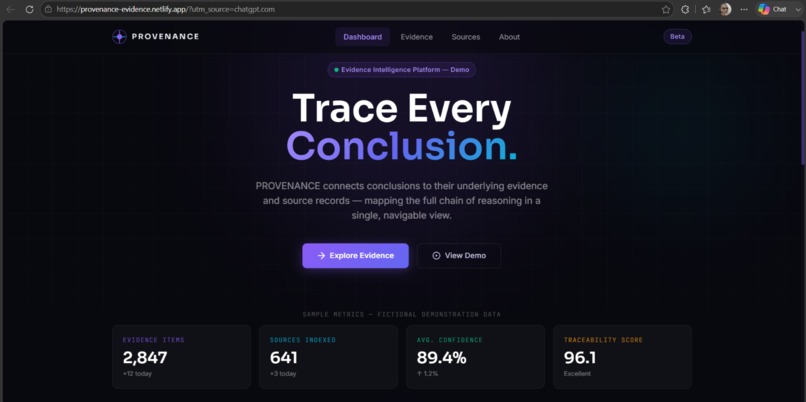
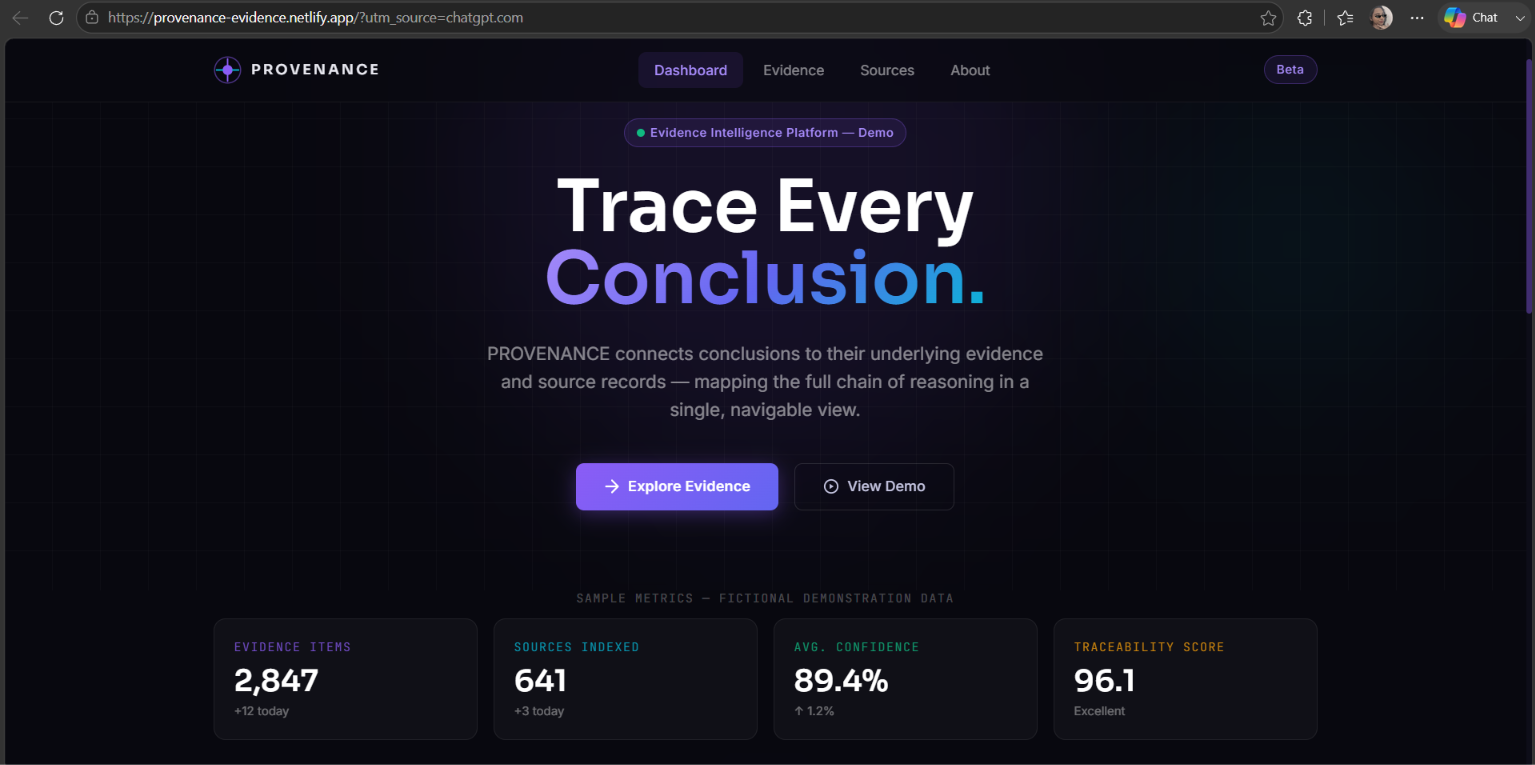
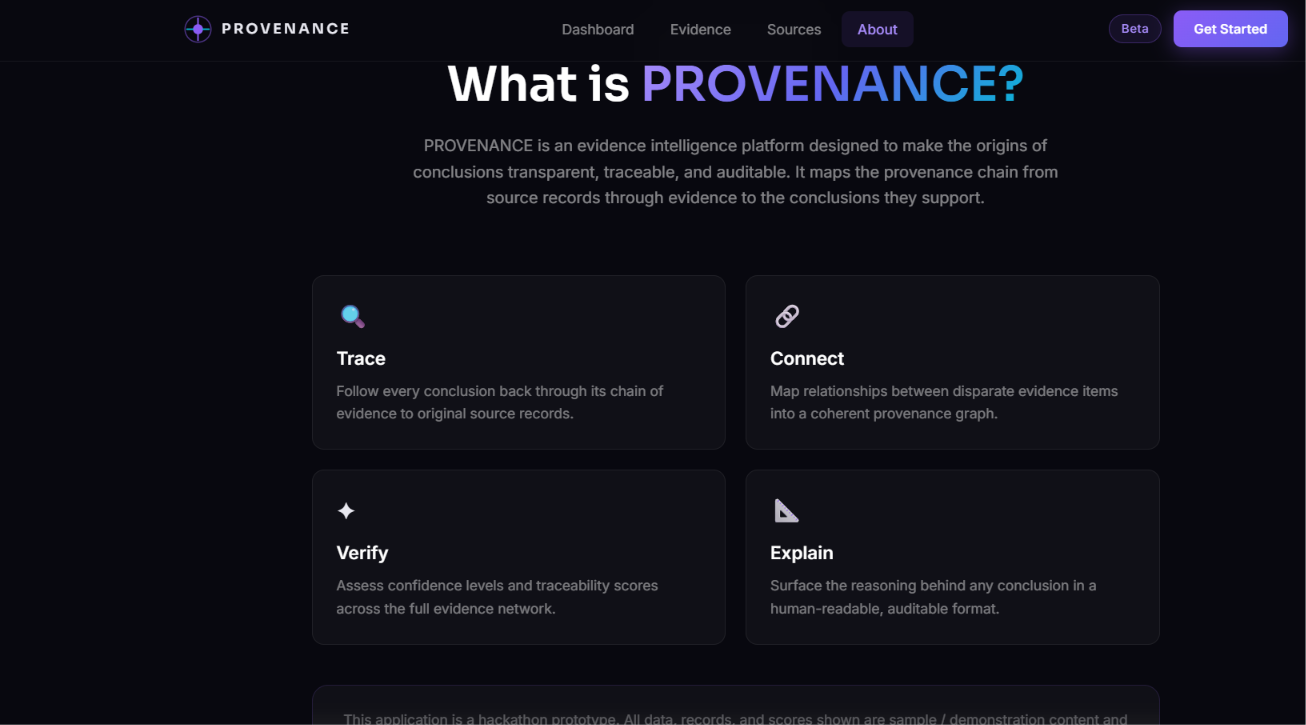
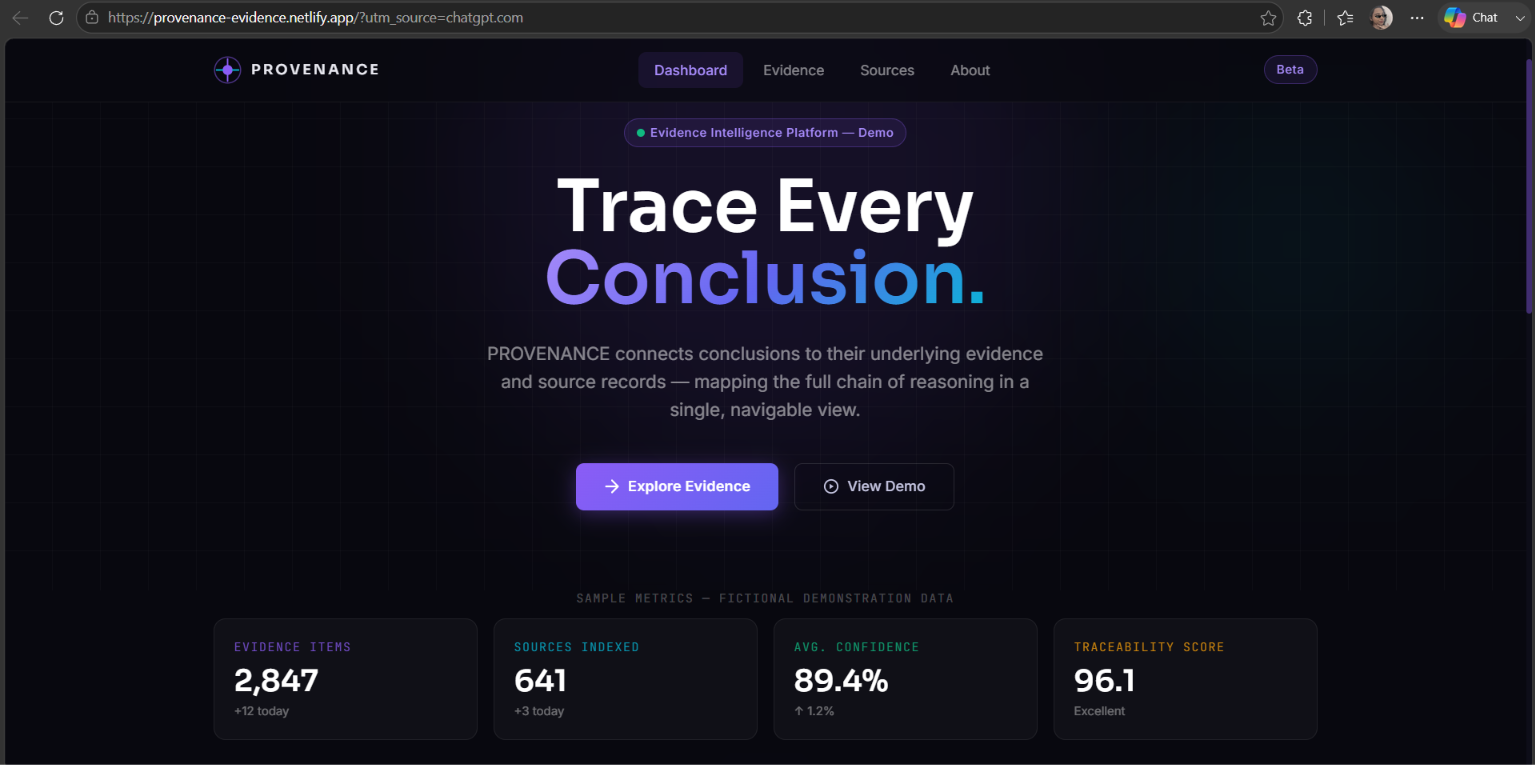
PROVENANCE is an Evidence Intelligence Platform designed to make conclusions traceable, explainable, and easier to inspect.
The platform organizes information through the chain:
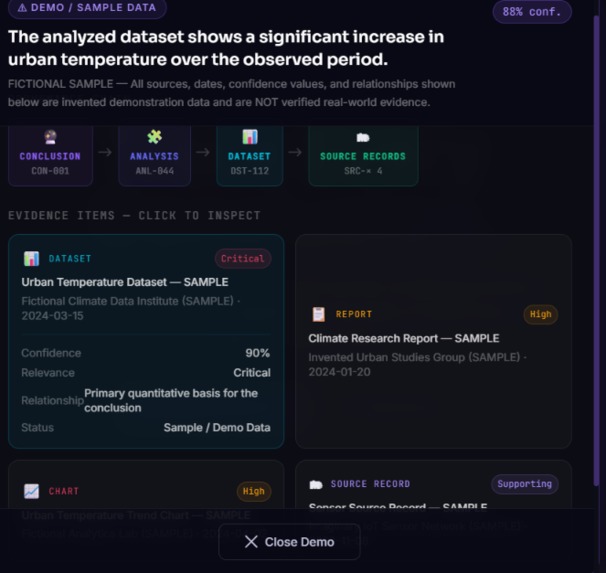
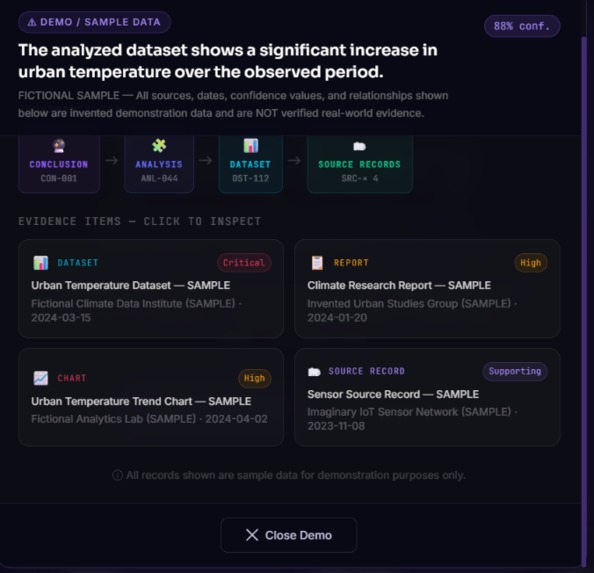
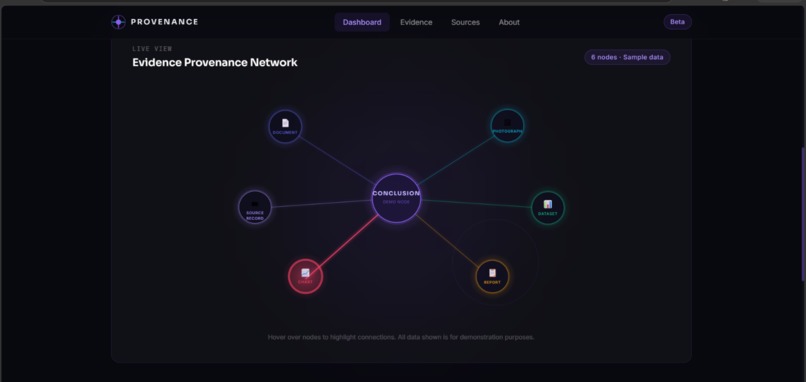
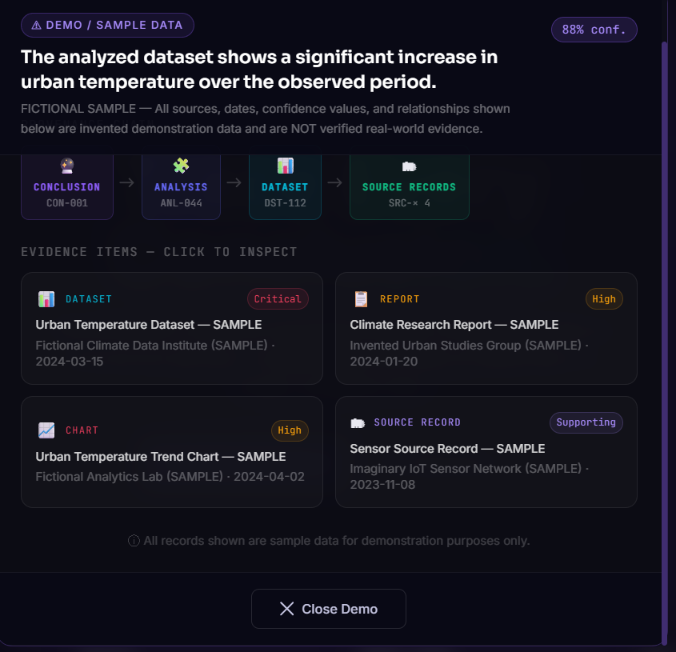
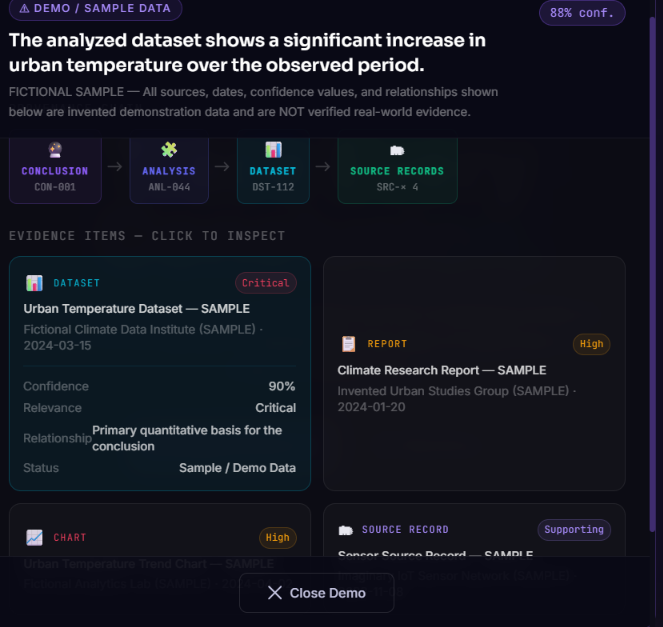
CONCLUSION → ANALYSIS → DATASET → SOURCE RECORDS
Users can explore an evidence-driven conclusion and inspect the individual evidence items connected to it.
The platform includes:
- An interactive dashboard for exploring conclusions and evidence
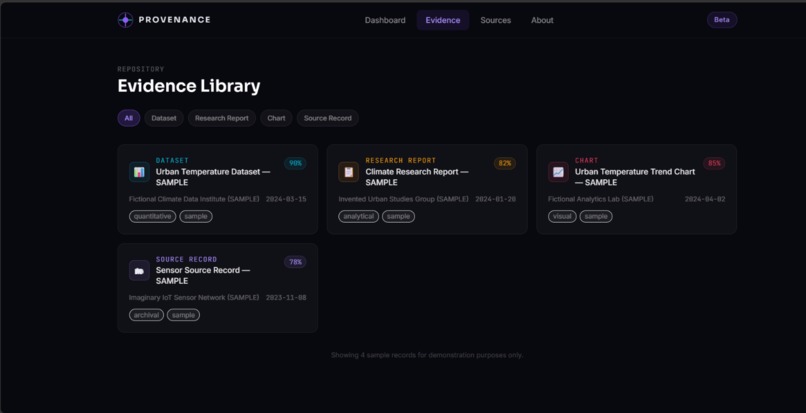
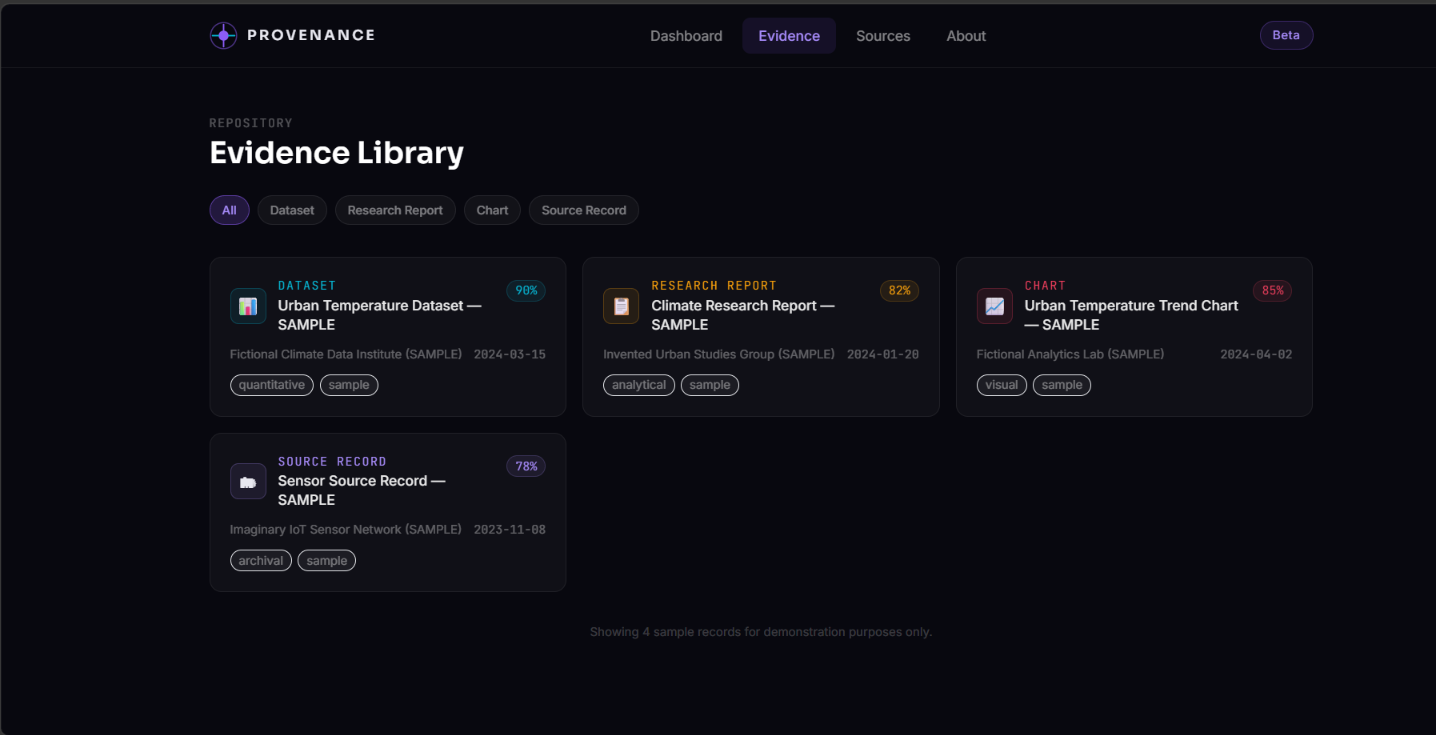
- An Evidence Library for viewing supporting evidence
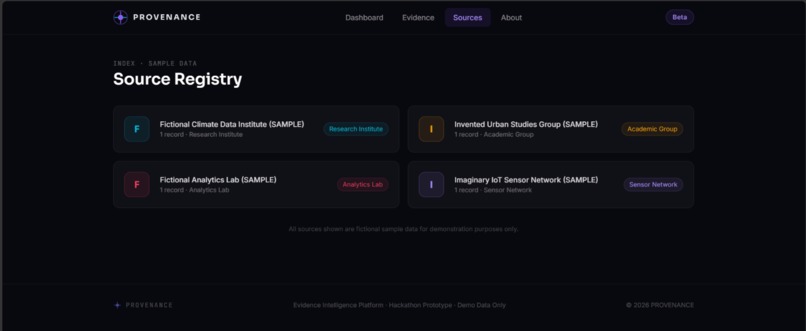
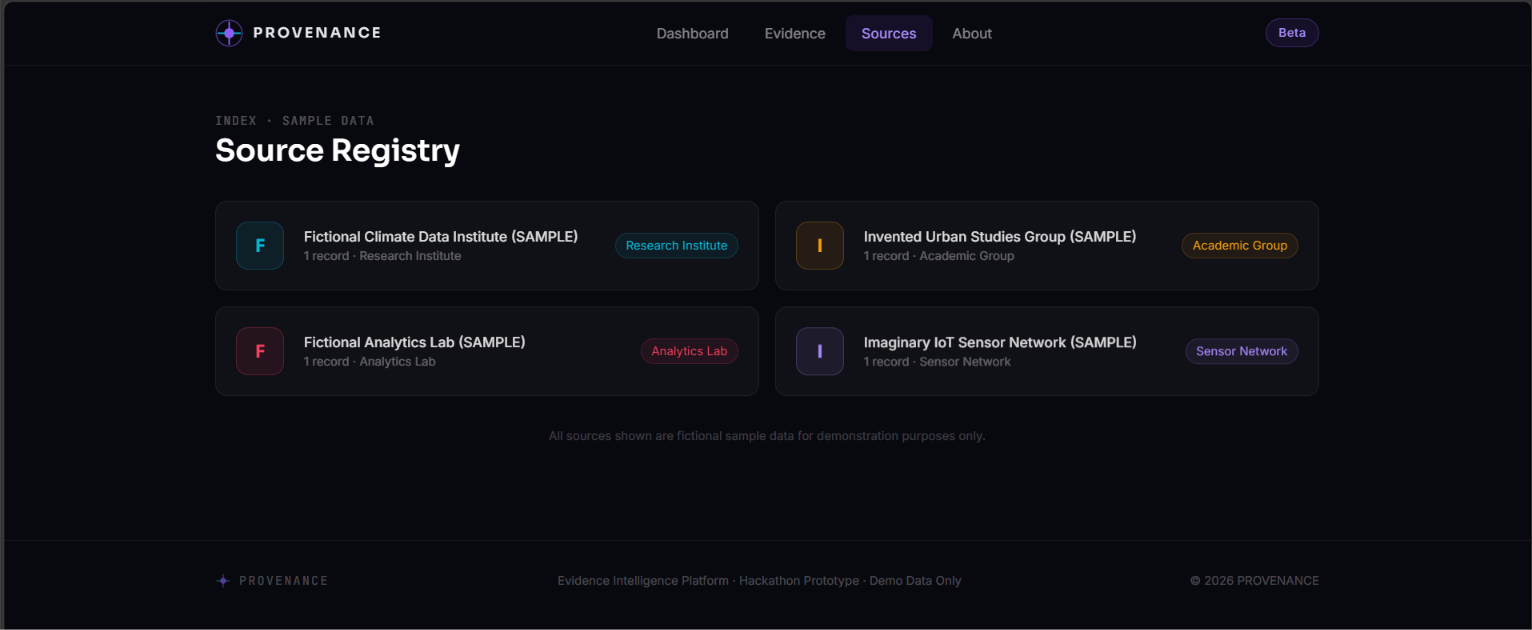
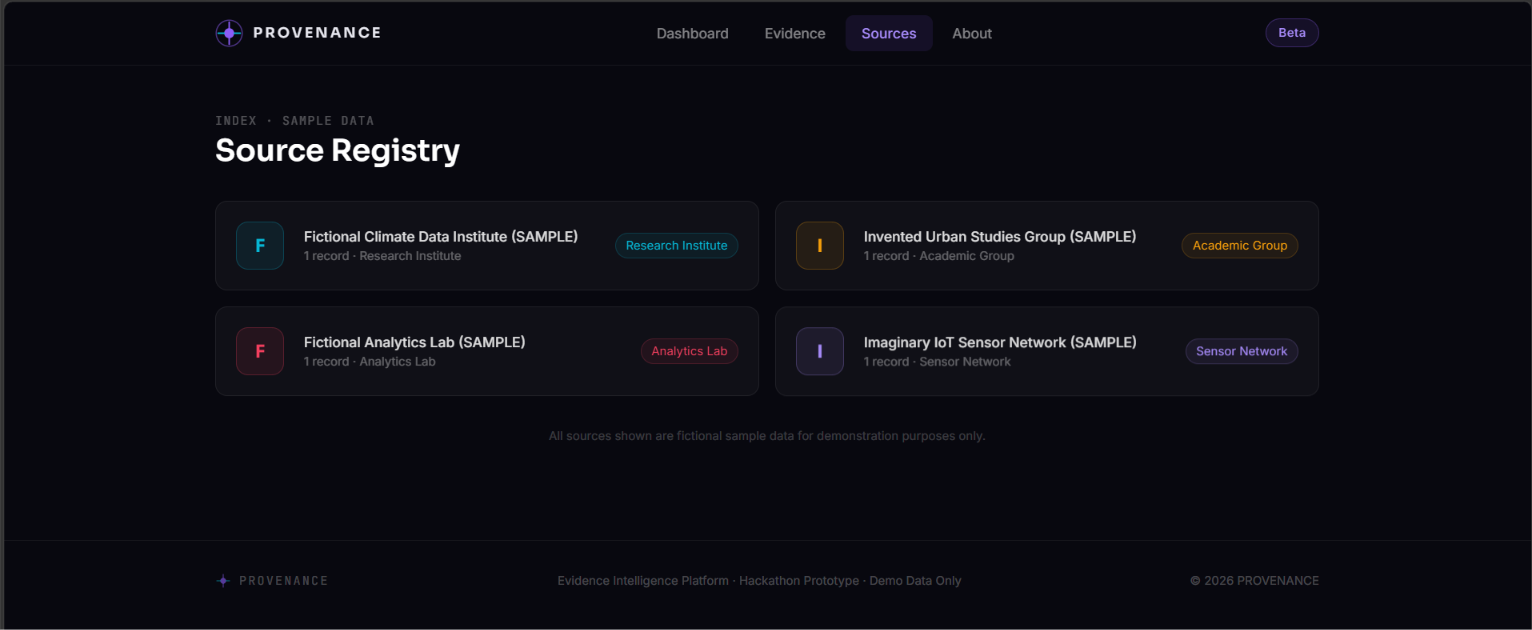
- A Source Registry for organizing source records
- A visual provenance chain showing how evidence connects to a conclusion
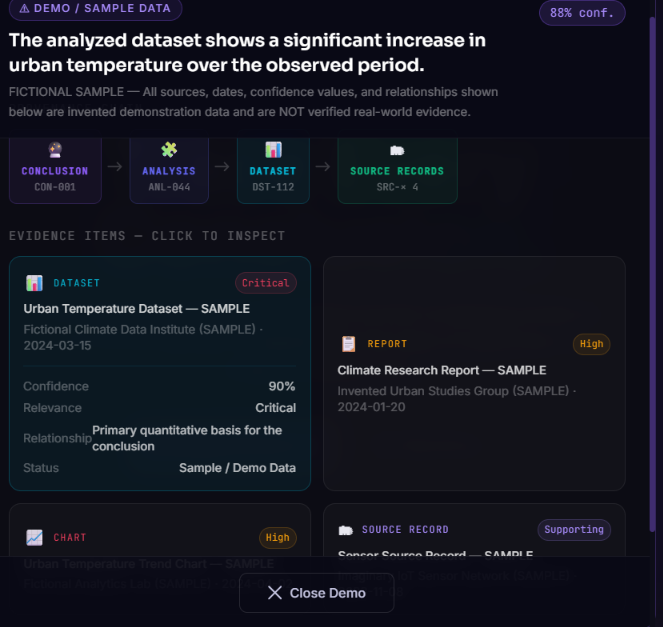
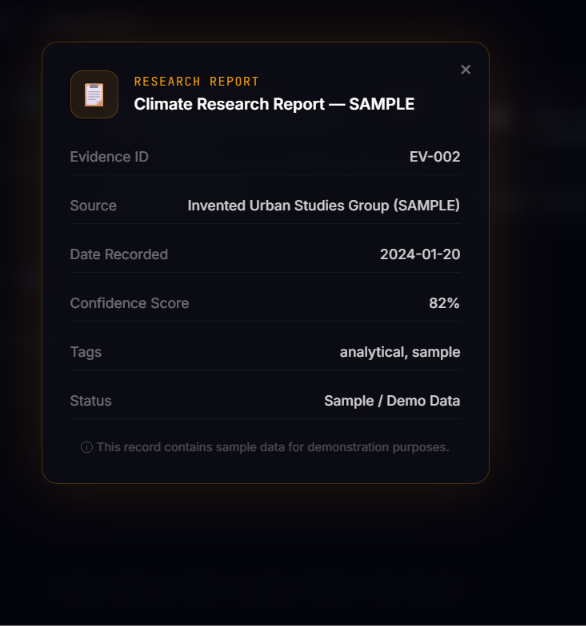
- Evidence detail views containing source, date, relevance, confidence, and relationship information
- An interactive demo for exploring the complete evidence workflow
The current prototype uses clearly labeled fictional sample data to demonstrate how an evidence trail can be structured and inspected.
How We Built It
PROVENANCE was built as a modern web application focused on making evidence relationships easy to explore.
The interface was developed using React, JavaScript, Vite, HTML, and CSS.
The core design follows a provenance workflow:
CONCLUSION → ANALYSIS → DATASET → SOURCE RECORDS
Each evidence item contains structured information such as its type, source, date, relevance, confidence, and relationship to the conclusion.
The interface uses interactive views and detail panels so users can move from a high-level conclusion into the individual evidence supporting it.
The application was developed and tested locally and deployed as a public web application using Netlify.
Challenges
One of the main challenges was deciding how to present complex evidence relationships without making the interface difficult to understand.
Simply listing sources does not clearly communicate how those sources contribute to a conclusion. We therefore focused on representing the relationships between the conclusion, analysis, dataset, and source records.
Another challenge was designing an experience that allows users to move between a high-level overview and detailed evidence information without losing the overall reasoning structure.
We addressed this through the visual provenance chain, Evidence Library, Source Registry, and detailed evidence and source views.
Accomplishments
We are proud that PROVENANCE turns an otherwise difficult-to-follow evidence trail into an interactive experience.
The working prototype allows users to:
- Explore a conclusion through its provenance chain
- Follow the relationship between analysis and datasets
- Inspect individual evidence items
- View source information
- Understand relevance and confidence information
- Navigate between evidence and source records through a structured interface
Most importantly, we created a foundation for making AI conclusions more transparent and inspectable rather than presenting them as unexplained outputs.
What We Learned
We learned that trustworthy AI is not only about producing an answer. It is also about helping users understand the information behind that answer.
During development, we learned that evidence becomes much more useful when its relationships are clearly represented.
We also learned that a good evidence interface needs to balance transparency with simplicity. Users should be able to investigate supporting information without being overwhelmed by unnecessary complexity.
This project helped us think about AI outputs as conclusions that can be accompanied by an understandable evidence trail.
What's Next
The current PROVENANCE prototype focuses on demonstrating the core concept of traceable evidence.
Future versions could connect to real datasets, research papers, public records, and live information sources. The platform could also incorporate automated evidence retrieval, claim-level analysis, source freshness monitoring, contradiction analysis, and stronger AI-assisted reasoning.
We envision PROVENANCE evolving into an evidence intelligence layer that helps users investigate important AI-generated conclusions across research, journalism, business intelligence, compliance, and other domains where trustworthy information matters.
The long-term goal is simple:
Every important AI conclusion should have an evidence trail that users can inspect.
From conclusion to evidence. From evidence to source. From AI output to something users can understand.
Demo Note
The current interactive demo uses clearly labeled fictional/sample data for demonstration purposes. The sample conclusions and evidence records should not be interpreted as real or independently verified research findings.
Built With
- ai
- analysis
- analytics
- artificial-intelligence
- css
- data
- datasets
- evidence
- explainable
- html
- intelligence
- javascript
- netlify
- provenance
- react
- research
- retrieval
- software
- sources
- technology
- transparency
- trust
- verification
- vite
- web

Log in or sign up for Devpost to join the conversation.