-
-
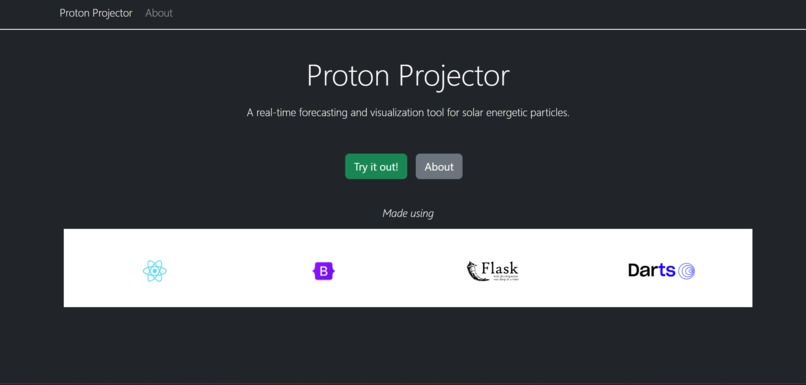
Homepage
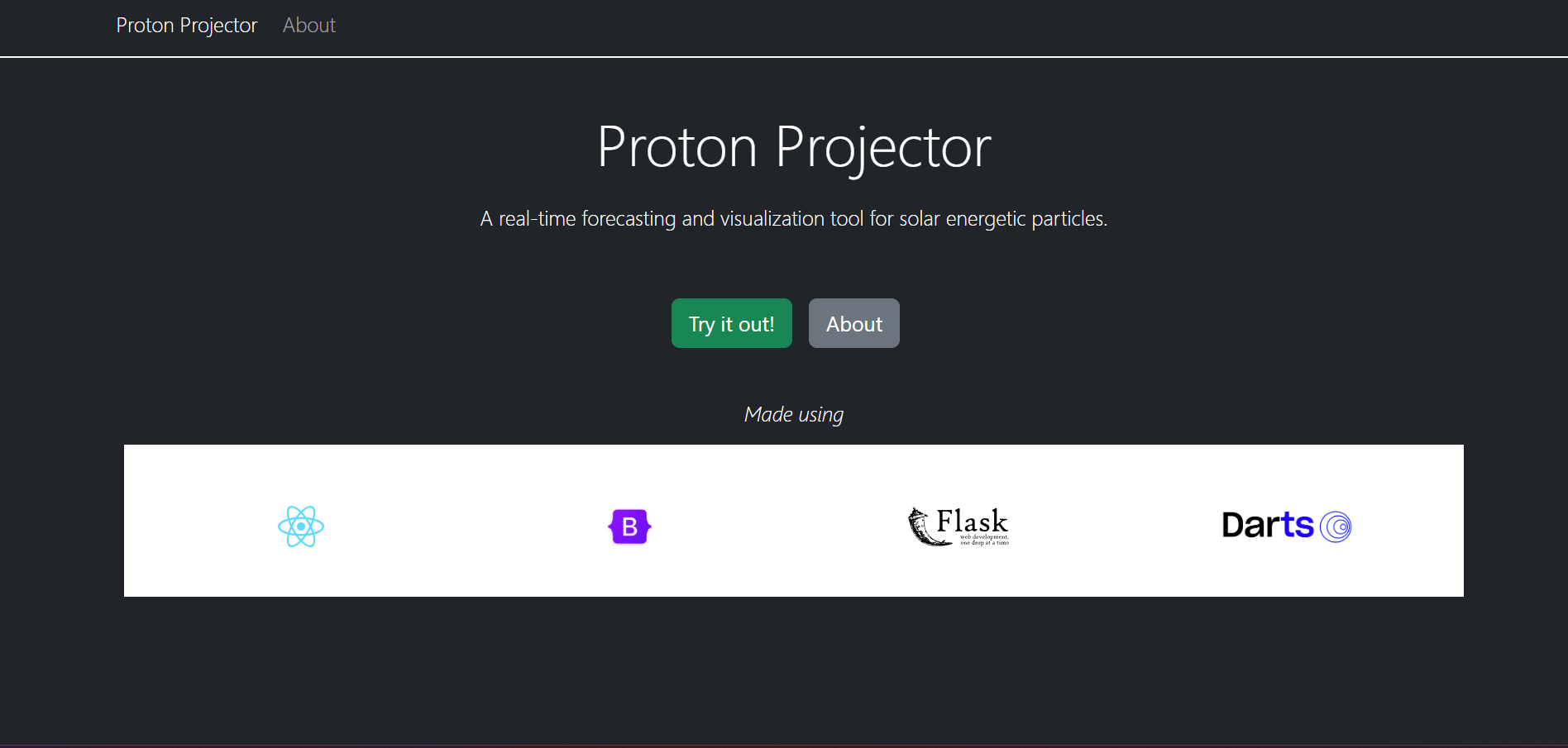
Inspiration
Primarily inspired by NASA's HESPERIA ReLEASE and the article "A machine learning approach to predicting proton flux"
What it does
Uses a Darts TFT model to predict proton flux, using live data from NOAA databases. Trains an RNN model on the electron and low-energy proton covariates, and uses the RNN to predict future near-relativistic flux values, which are then fed to the TFT model. A matplotlib graph is generated and saved as a PNG file, which is then sent back to the frontend.
How we built it
Uses a Flask backend and a React-Bootstrap frontend. Used Pycharm IDE for coding the backend and Sublime Text editor for the React bit.
Challenges we ran into
The inverse scaler for the model was returning huge values, so I wrote a makeshift scaler myself, which resulted in values that were closer to what I would expect. I also spent a lot of time finding the required data sources for the model and parsing them.
Accomplishments that we're proud of
I'm proud of the interactive app I built around the model. Users can configure model hyperparameters themselves, initiate training, and see results, which makes the whole experience not only educational but also hands-on.
What we learned
I wasn't too familiar with frontend (I usually work with a team and just code the backend), so I learned a lot about React-Bootstrap and frontend design.
What's next for Proton Projector
I want to create a dataset for x-ray flux and radio waves, two time series variables that are associated with SEP events and therefore proton flux. This would be truly novel and could advance SEP forecasting significantly.


Log in or sign up for Devpost to join the conversation.