Inspiration
Air conditioners are one of the highest consumers of household electricity. Often, users set the AC to 18°C to cool a room quickly, fall asleep, and leave it running at maximum power all night, unnecessarily increasing carbon emissions. I wanted to build a solution at the exact intersection of hardware and software: writing code on a laptop that results in a physical machine conserving energy in the real world.
What it does
Protocol-24 bridges the gap between dumb appliances and the smart home. It features:
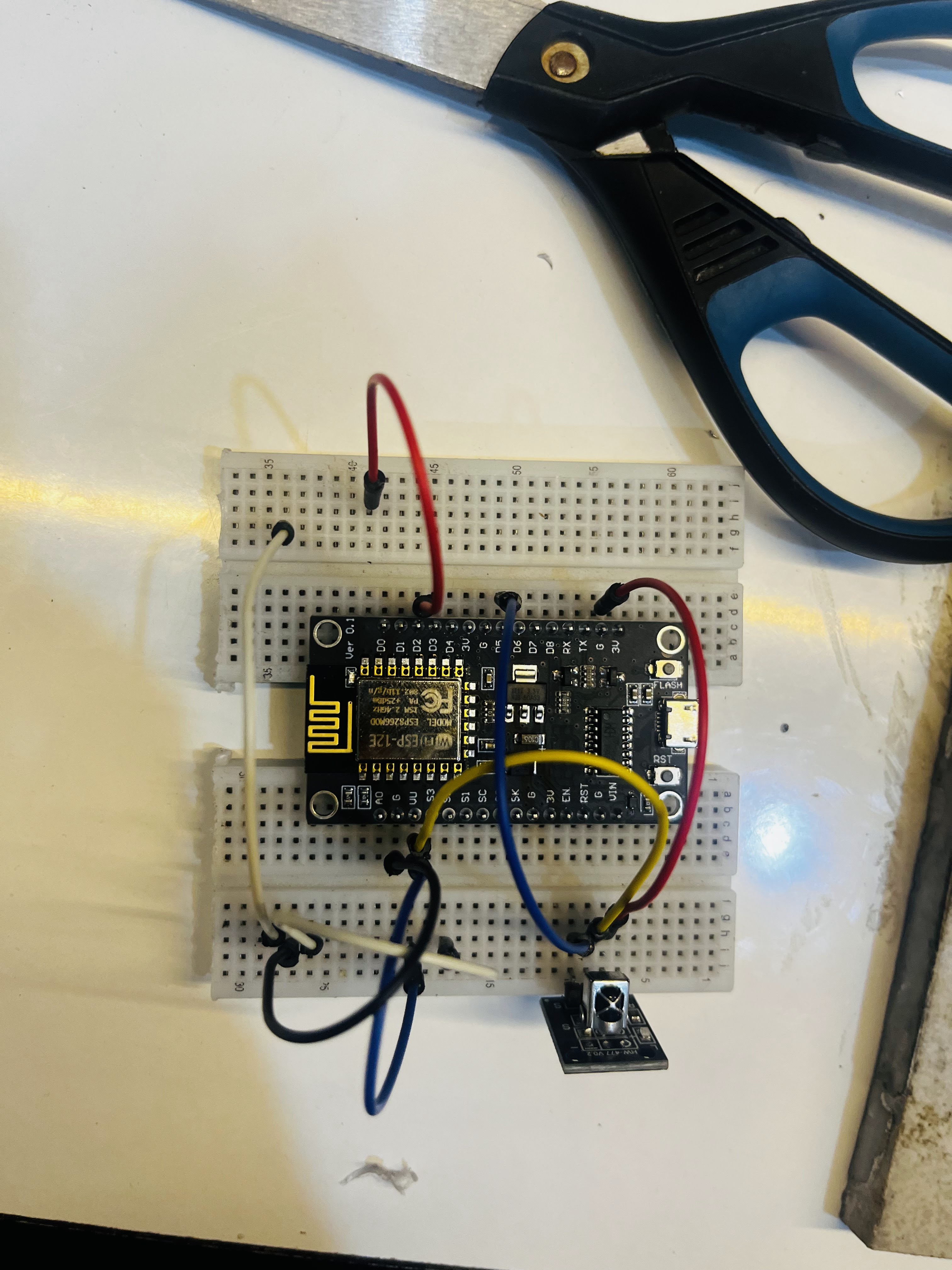
Stealth Hardware: A miniaturized, custom-built infrared (IR) transmitter and NodeMCU ESP8266 hidden entirely inside the physical AC unit.
Global Web Control: A responsive HTML/JS web dashboard allowing climate control from anywhere in the world.
Voice Automation: Full integration with the Google Home ecosystem.
Smart Eco-Override: If the temperature is set below 24°C, a background timer starts. After 60 minutes, the hardware automatically forces the AC back to a highly energy-efficient 24°C and syncs this new state to the cloud, delivering rapid initial cooling while mathematically guaranteeing long-term power conservation.
How we built it
Instead of using an off-the-shelf smart hub, I engineered a bespoke solution from the ground up. I reverse-engineered the physical remote’s IR hex codes, prototyped on a breadboard, and soldered the final PCB. The firmware is written in C++, connecting the microcontroller to local Wi-Fi and securely bridging it to Google Home via the Sinric Pro API. The frontend UI matrix is hosted on Netlify.
Challenges we ran into
The Web Security Block (CORS): Strict browser CORS policies blocked my dashboard from talking to the AC hardware cloud. I bypassed this by engineering a custom backend proxy route (_redirects file on Netlify) to securely tunnel my API keys.
Microcontroller Threading: Standard delay() functions in C++ caused the 1-hour Eco-Timer to freeze the chip and drop Wi-Fi. I rewrote the firmware using an asynchronous, non-blocking millis() architecture so the timer runs in the background while listening for network commands.
Accomplishments that we're proud of
Shifting my mindset from a consumer of technology to an active creator. I successfully identified a real-world inefficiency, designed the hardware, wrote the software to control it, and deployed it securely to the global internet.
What we learned
Building Protocol-24 taught me that real-world engineering is about seamless integration across completely different technology stacks. I learned:
Asynchronous C++: I learned how to move away from basic, linear delay() functions and implement non-blocking millis() architectures to allow a single-core microcontroller to multitask.
Web Security & Networking: I learned how strict browser security (CORS) actually works in production, and how to configure server-side proxy routes to bypass client-side restrictions securely.
Hardware Reverse Engineering: I learned how to intercept, decode, and transmit raw IR hex signals to trick an appliance into thinking it was talking to its own factory remote.
Full-Stack Scope: Most importantly, I learned how to bridge the gap between frontend web development and backend embedded systems to create a tangible, physical outcome.
What's next for PROTOCOL 24
Closed-Loop Environmental Sensing: Currently, the system transmits commands blindly. The next step is wiring a DHT22 Temperature & Humidity sensor directly to the ESP8266. This will allow the dashboard to display the real-time room temperature and enable the Eco-Timer to turn off the AC based on the actual room climate rather than a fixed 60-minute stopwatch.
AI-Powered Predictive Cooling: Utilizing weather APIs and machine learning (potentially using VoltHacks' Featherless AI credits), the system could analyze local weather forecasts and historical room temperatures to pre-cool the room during off-peak energy hours, maximizing grid efficiency.
Universal Appliance Scaling: Expanding the custom PCB design to include multi-directional IR LEDs, transforming Protocol-24 from a dedicated AC controller into a universal smart hub capable of managing non-smart fans, TVs, and heaters simultaneously.
Built With
- html5
- vscode

Log in or sign up for Devpost to join the conversation.