-
-
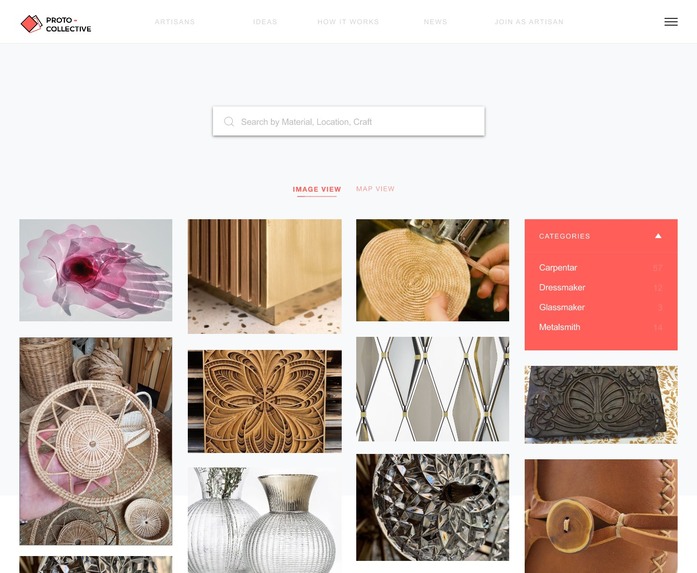
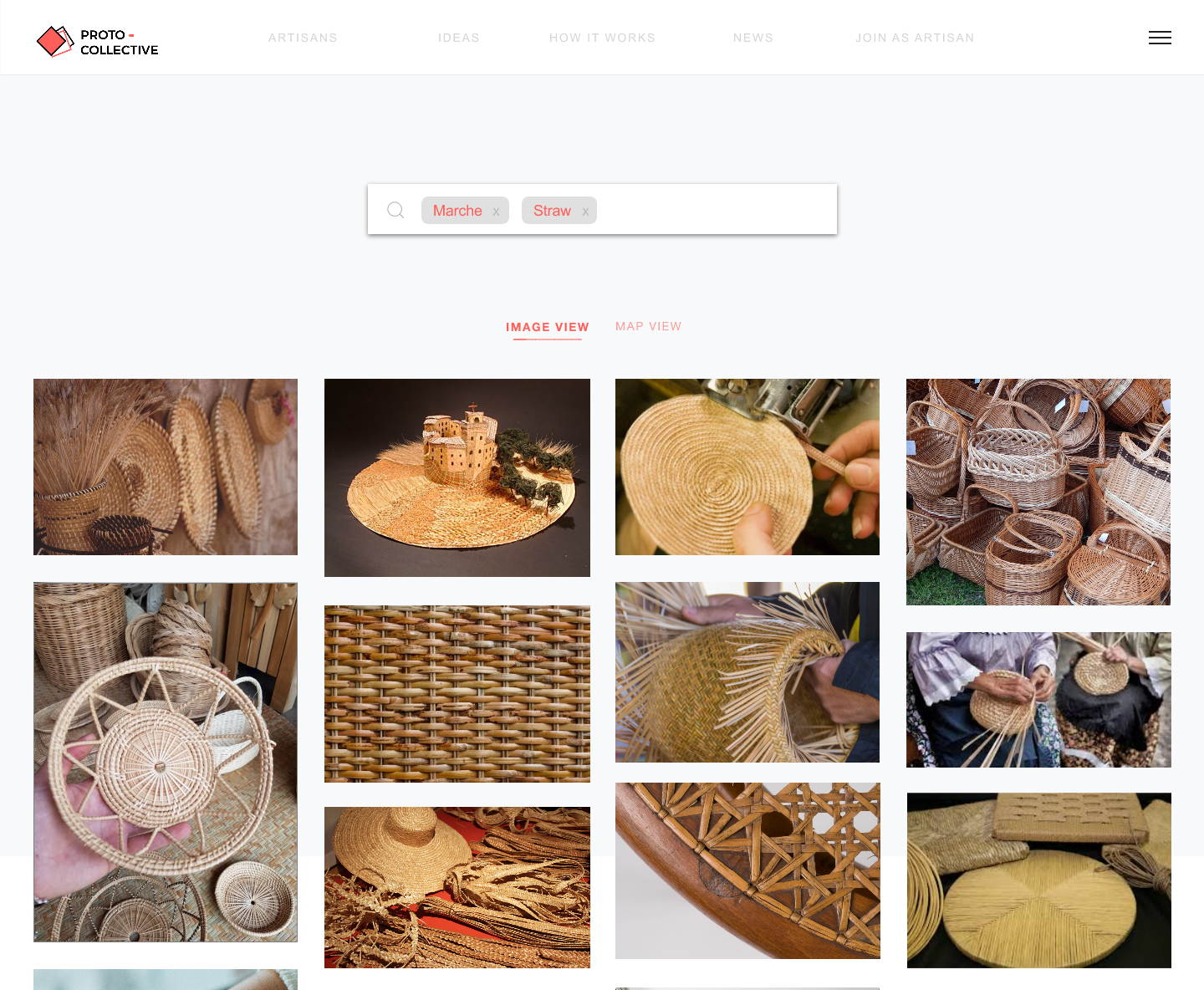
Landing Page
-
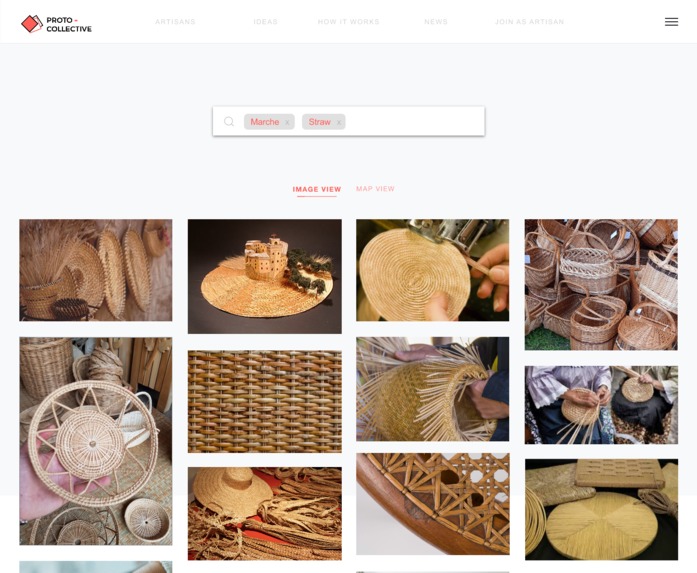
Search with keywords
-
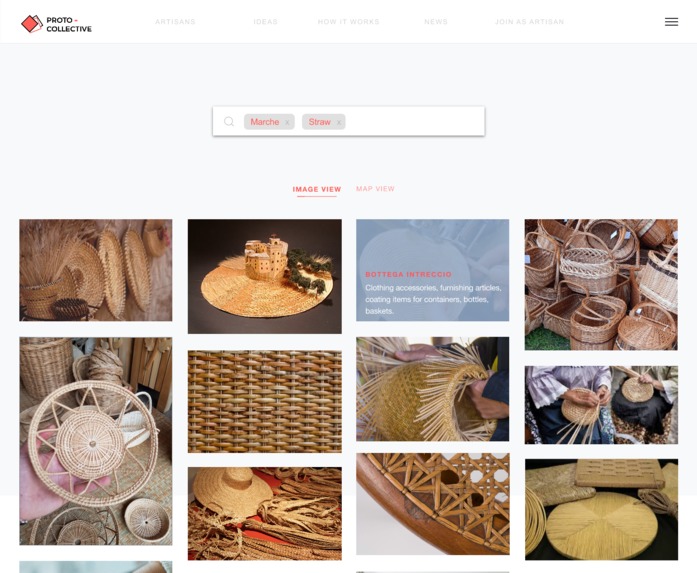
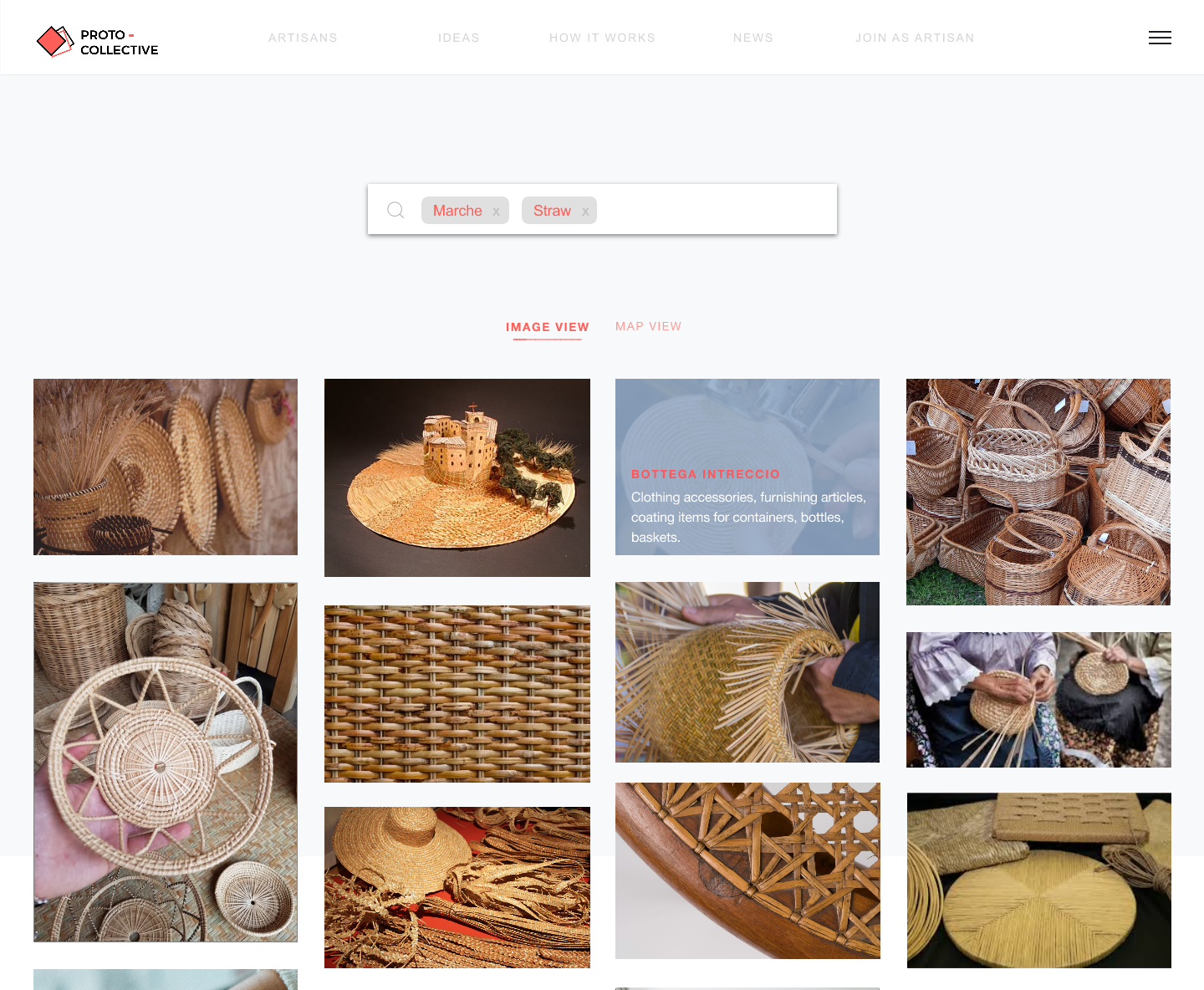
Image info
-
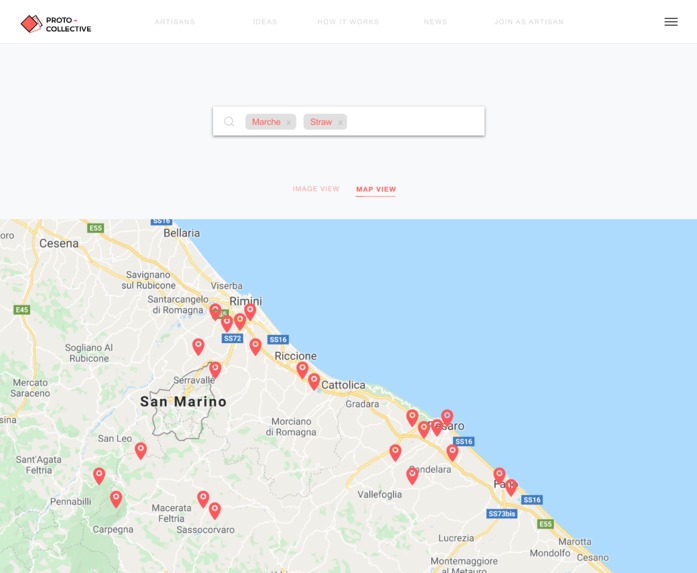
Search on map option
-
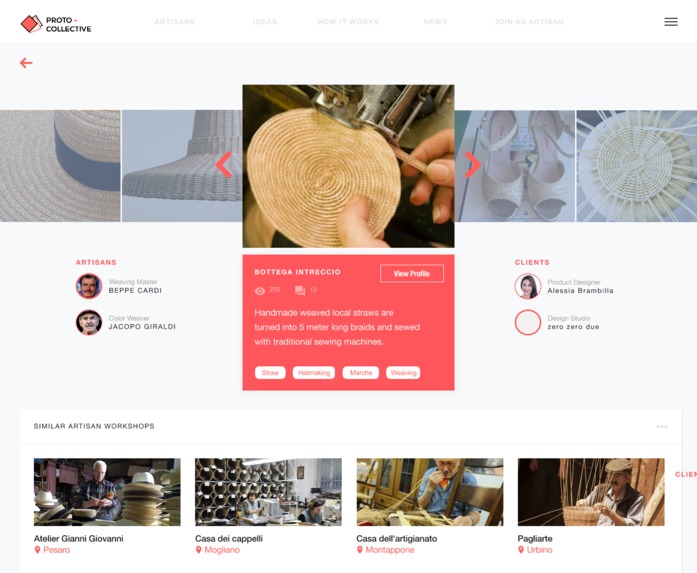
Image details - ecosystem of users involved in design and productions
-
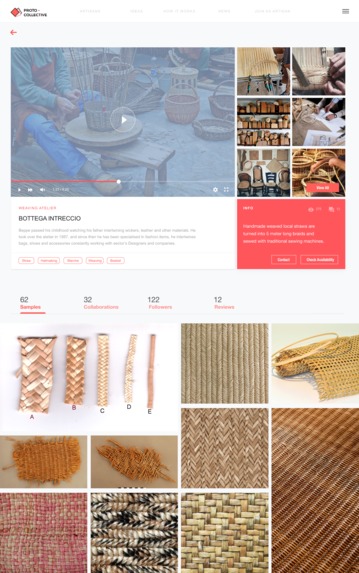
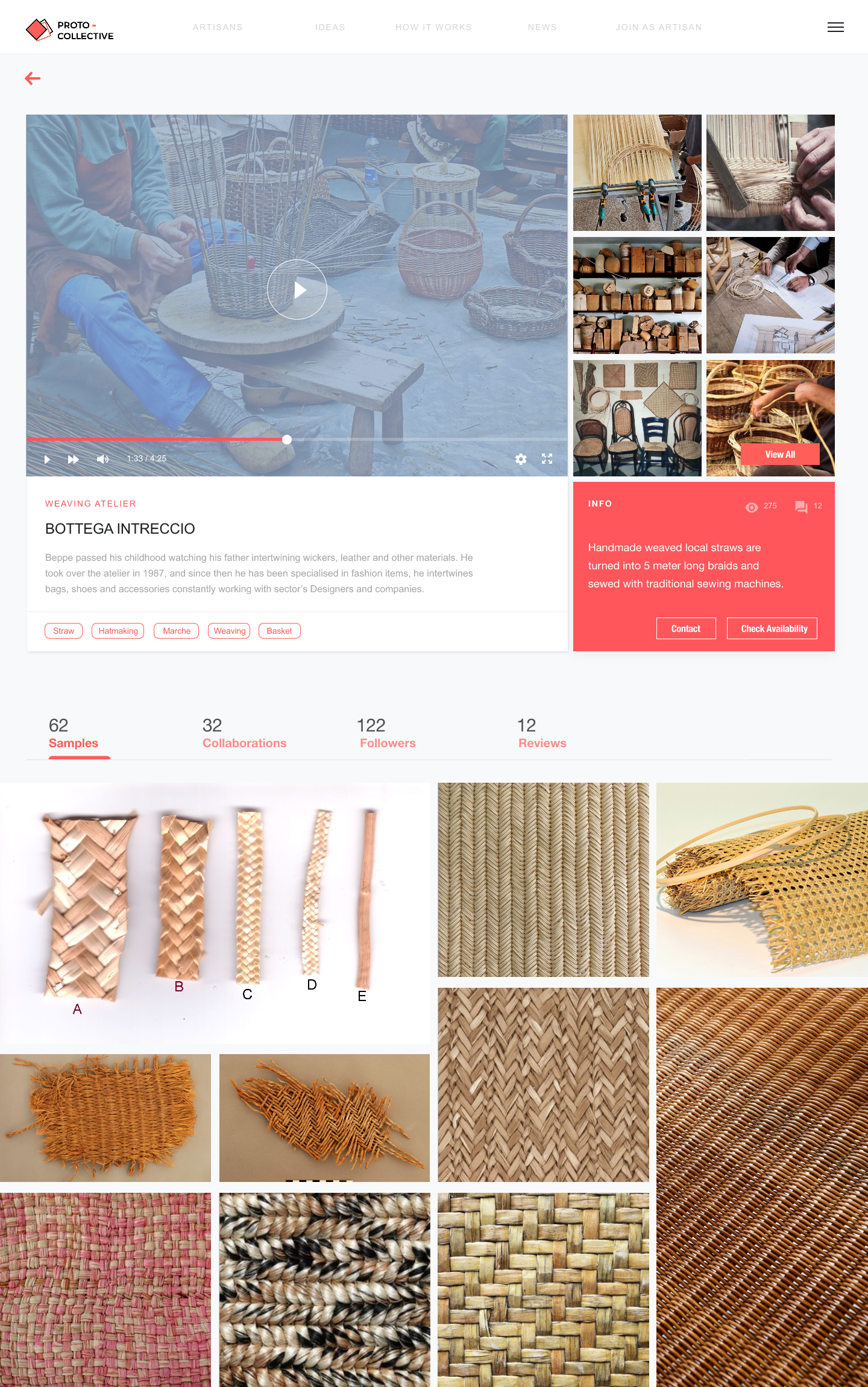
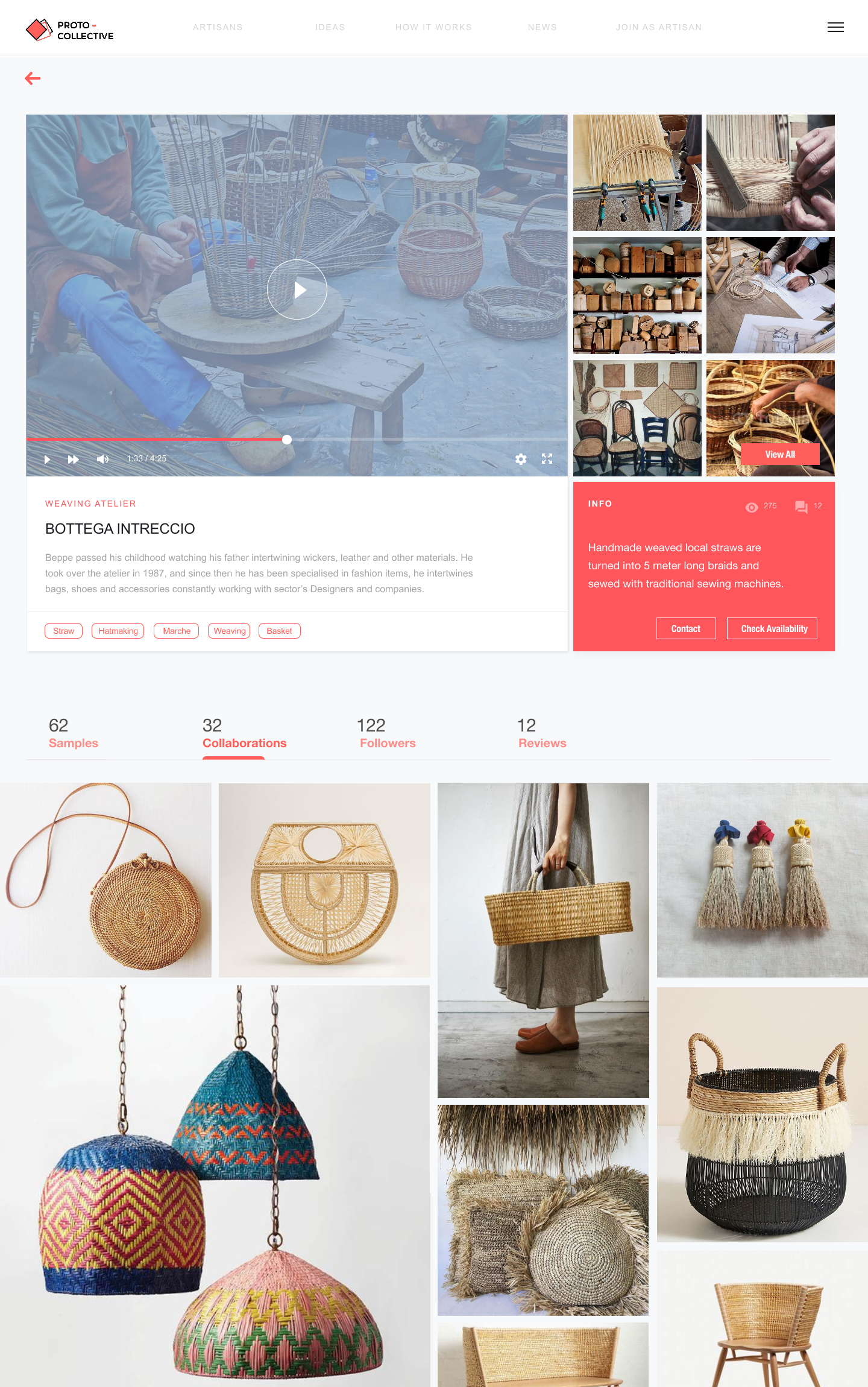
Artisan Profile - video tour of the workspace, work samples, materials photo..
-
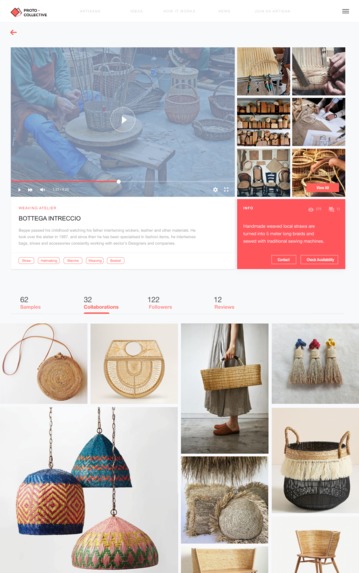
Artisan Profile - collaborations that artisan made/makes
-
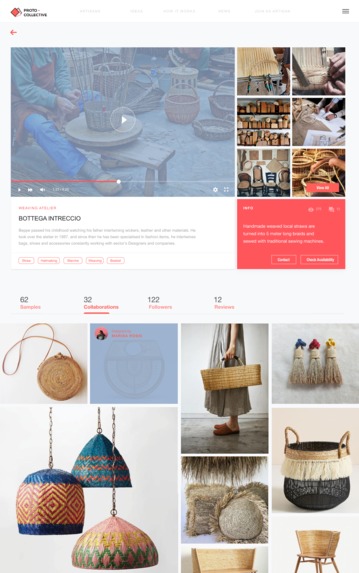
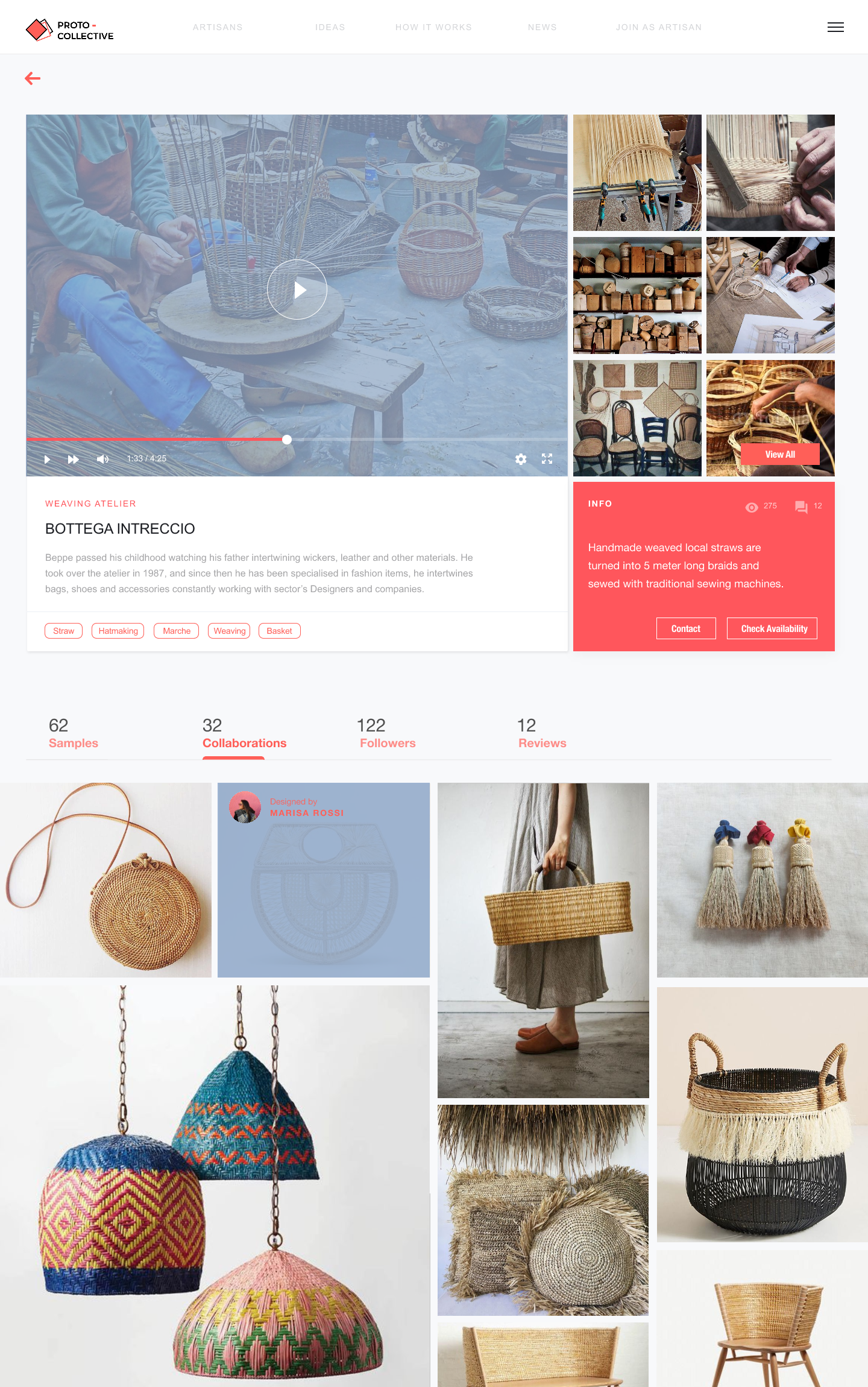
Artisan Profile - example of designer who worked with the artisan
-
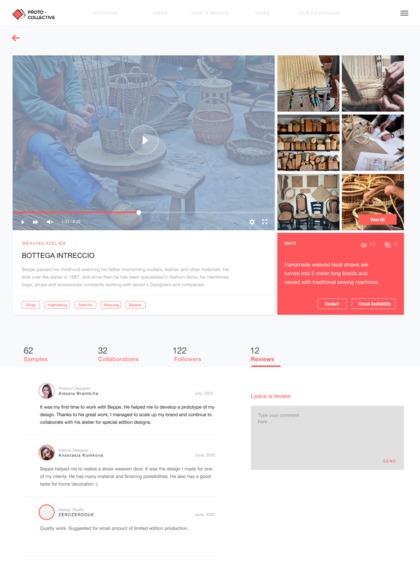
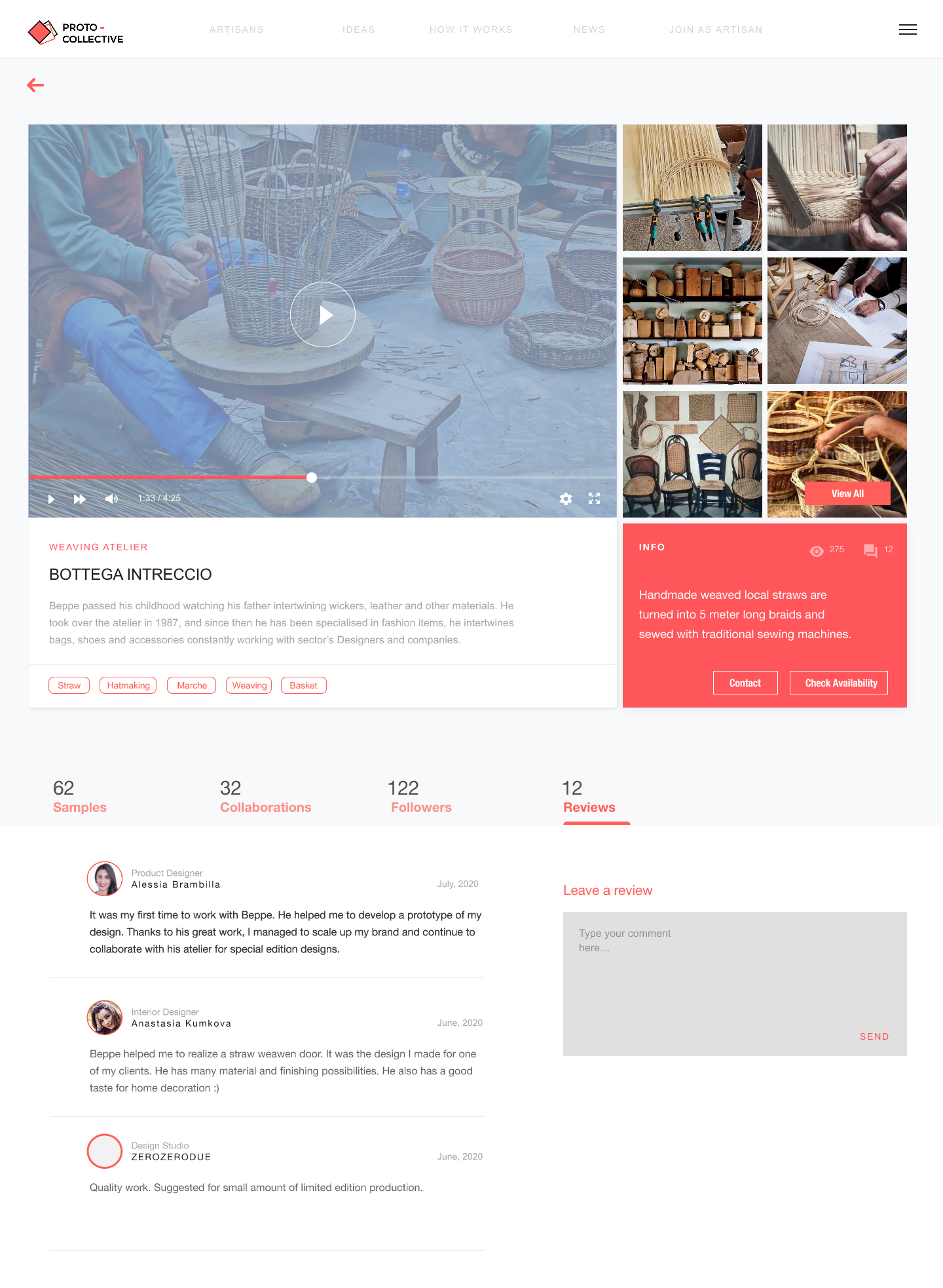
Artisan Profile - Client reviews for the artisan
-
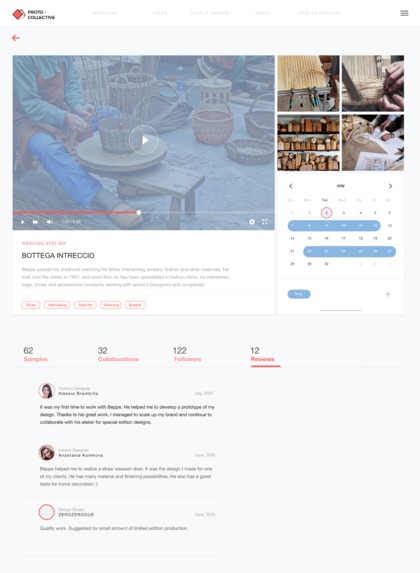
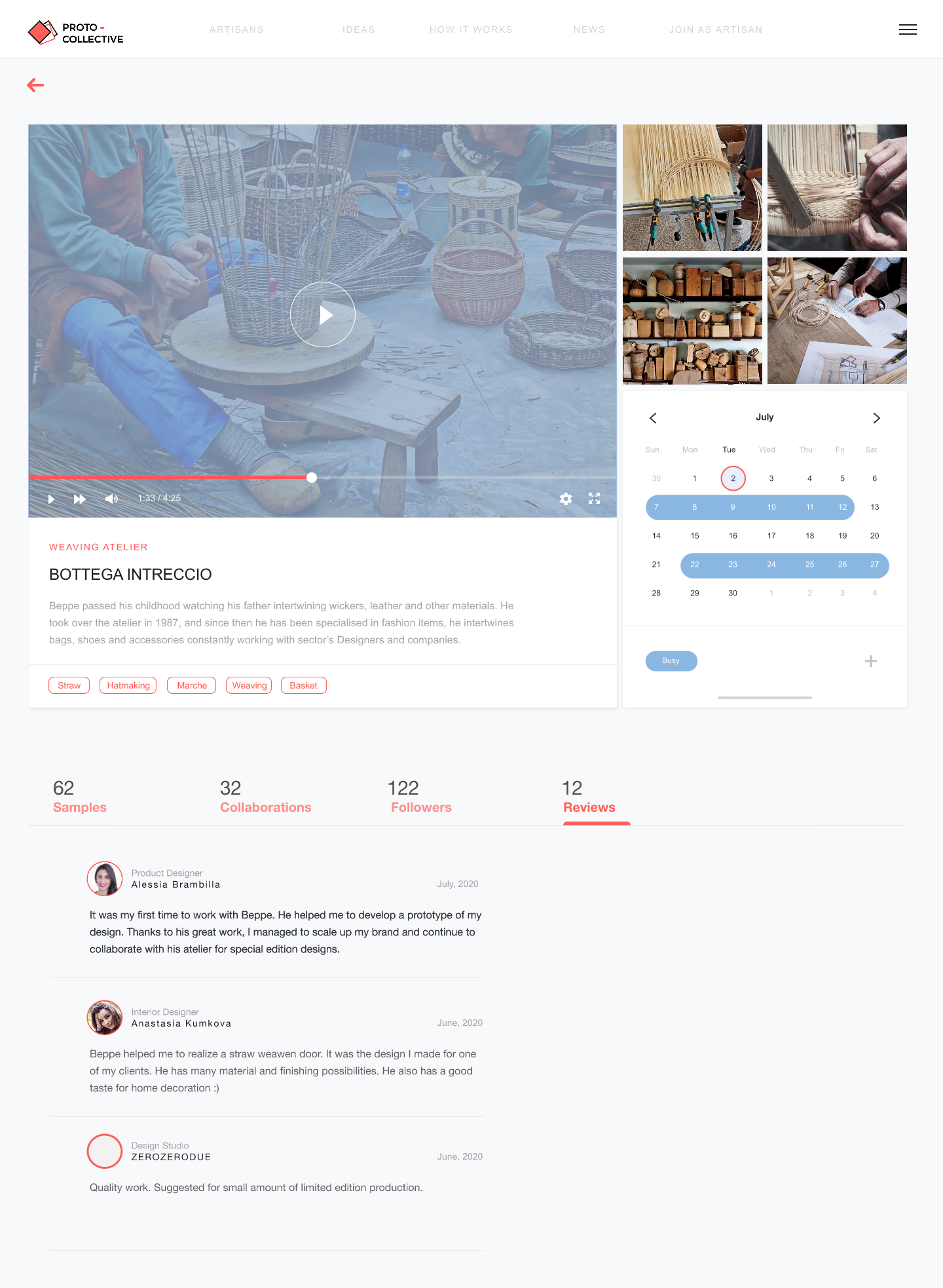
Artisan Profile - Check artisan's availability
-
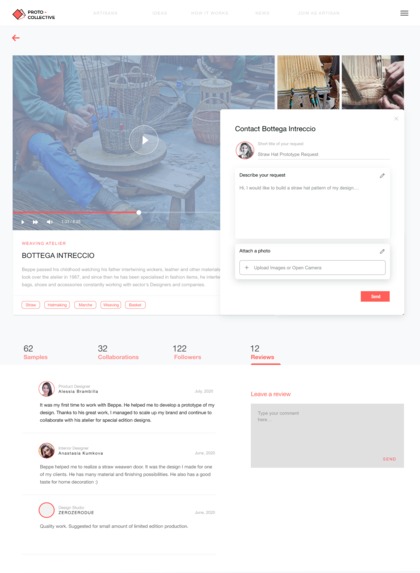
Artisan Profile - Contact
-
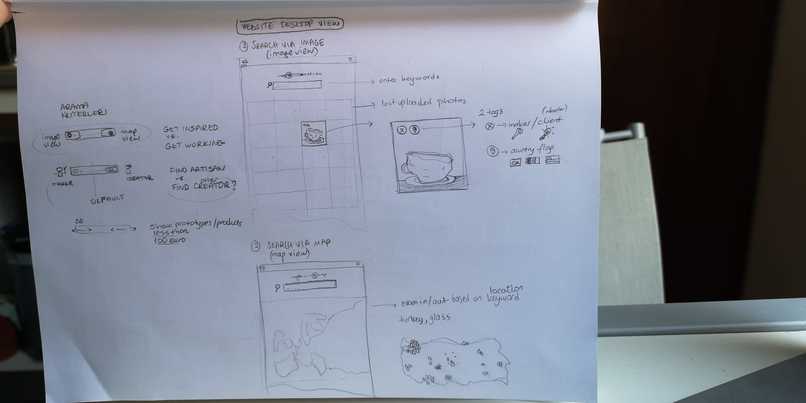
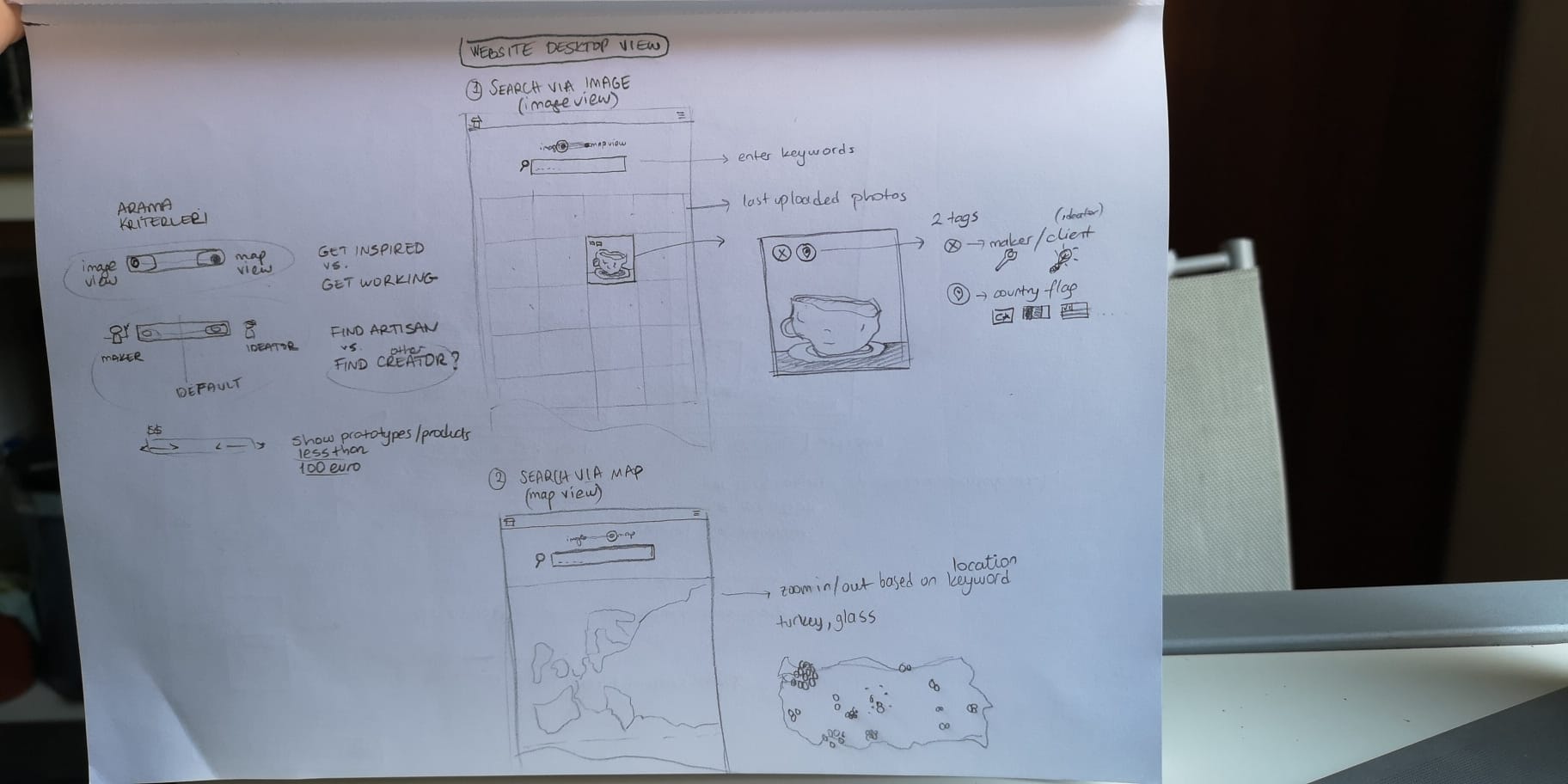
Initial concept sketches for ideation - Landing page
-
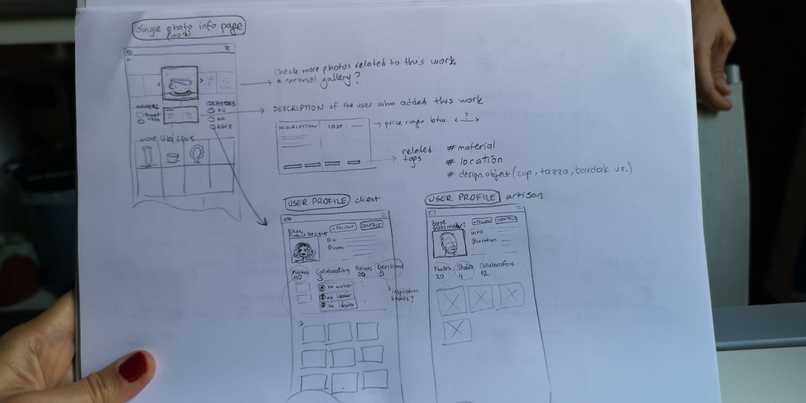
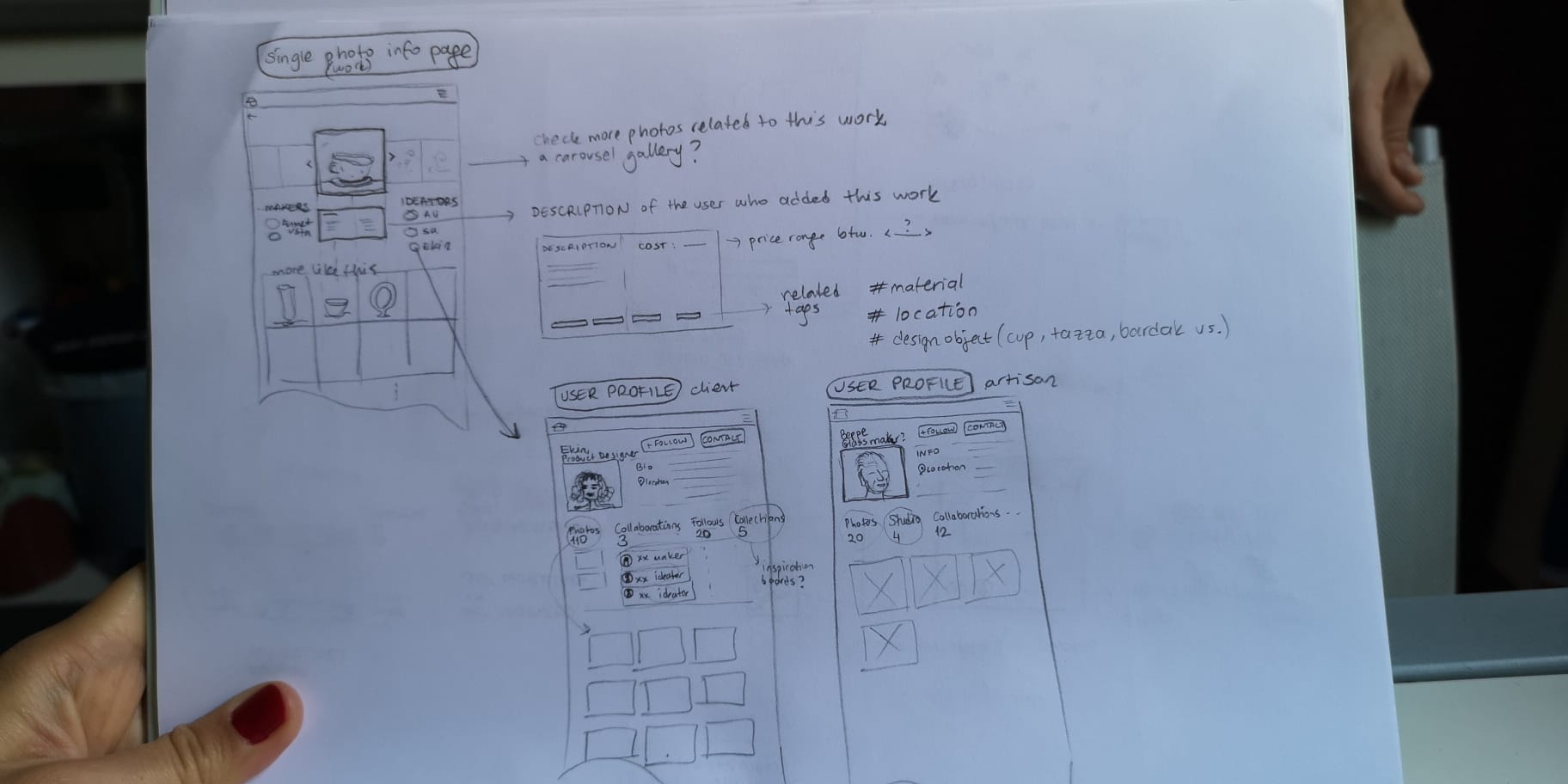
Initial concept sketches for ideation - User profiles




Inspiration
The Covid-19 pandemic caused a great decline in production worldwide. This influenced closely the creative industries, putting at risk the small producers, especially the artisans who find leads only through their local network. With the rapid rise of technological tools for prototyping and globalization of the workforce, artisans have already been facing a risk of obsolescence. This alerts a potential loss of cultural heritage since artisans would no longer be able to pass down their art and techniques that are highly representatives of local cultures. Unfortunately, the economic crisis coming with Covid-19, accelerates this risk of culture loss by further weakening the power of artisans under lockdown.
User Personas - Needs & Challenges
Beppe, 63 - Artisan Beppe is an artisan with 30+ years of experience. He has a small atelier in a small town of Italy. He had to close his workshop due to coronavirus and is worried about not finding any more clients after. He wishes he had a website but is reluctant to make such an investment during the crisis.
Sara, 32 - Designer Sara is an idea machine that manages her own small design studio. She often works with artisans to realize her design ideas. But, she always struggles to find them online and can never be sure about the quality of their work since they don’t deliver samples easily or have really low quality photos on their social media account.
Our Solution
With Proto-Collective, we would like to give more visibility to both creative businesses and local artisans by promoting their work in an international network and thus, make a contribution to uplift the small local businesses, strengthen their position in the economic circle of cities. We hope that this idea would facilitate realizing innovative ideas that will be needed even more in the times of post-covid.
What Proto-Collective does
Proto-Collective helps artisans to have a high quality online presence with the documentation of their story, workshop facilities and work samples thanks to high quality video and photography service.
Proto-Collective platform offers a visual discovery experience to designers, architects, students, start-ups and creative entrepreneurs making them intuitively explore the works of artisans they like. They can search for local artisan workshops by using filters such as materials, location and price range they look for. Proto-Collective ensures the reliability and the quality work provided by the artisans in the network. Users can visit different artisans’ profiles, validate their qualities and read the reviews of others who worked with that artisan. The platform gives them the possibility to check the availability of artisans, initiate a conversation and start collaborating.
Business Model
Artisans pay an annual fee to be present on the platform. This fee includes the first photography service of their workplace and samples. Whereas users get 2-3 months of free access to use the platform. After the trial period ends, they have free access to a limited number of artisan profiles, they pay a monthly fee to access and contact unlimited profiles.
How we built it
We built a prototype with Invision Studio that shows the main interactions and features of the platform.
Challenges we ran into
During this weekend, we interviewed some potential creative users of the platform and iterated our concept-research-redesign process. We had difficulty finding some small artisans to validate our concept rapidly. Also, we need validation of possible business models that would keep the platform financially sustainable. We realized that we don’t have a financial background which makes it difficult for us to estimate initial investment requirements to run the beta version of the platform.
Accomplishments that we're proud of
The market and user research we made during the Hackathon process made us prepare a strong conceptual framework of the platform. Also, we have made progress on the design of the website by producing a working prototype that can be used for testing in the next steps.
What we learned
During our market research we learnt that there are many solutions like ours, targeting to promote local artisans. We studied their strengths and weaknesses to identify the gap our idea would target. -Artisan network is promoted through local communities only, making it inaccessible to a wider population. -Self promoting artisans lack photography skills that make them ignored by creatives who are highly attracted by high visual quality. -Artisans / platforms that offer a good quality targets a more wealthy and elite client profile with their high prices. -There is a lack of transparency of the artisan’s costs for production which makes it quite volatile. -Designers have difficulty to trust artisans with the fear that they could sell design ideas to others or produce themselves overpassing the designer.
What's next for Proto-Collective
We know the importance of building our idea on the real needs and challenges of potential users. Therefore, we plan to conduct a user testing with different profiles (personas) to validate the desirability and usability of Proto-Collective, as well as, to gather further insights and opportunities along with their needs. After consolidating our concept with a possible business model, we would like to pitch our idea to find investment that would help to build the first beta-version of the platform.
We think Proto-Collective is very scalable to any country. If it becomes successful worldwide, it also holds the potential to become a visual archive of the local cultural heritage. By promoting the handicrafts from remote locations, the artisans from developing countries can receive new commissions from creatives worldwide and sustain their economic growth.
Built With
- invision


Log in or sign up for Devpost to join the conversation.