-
-
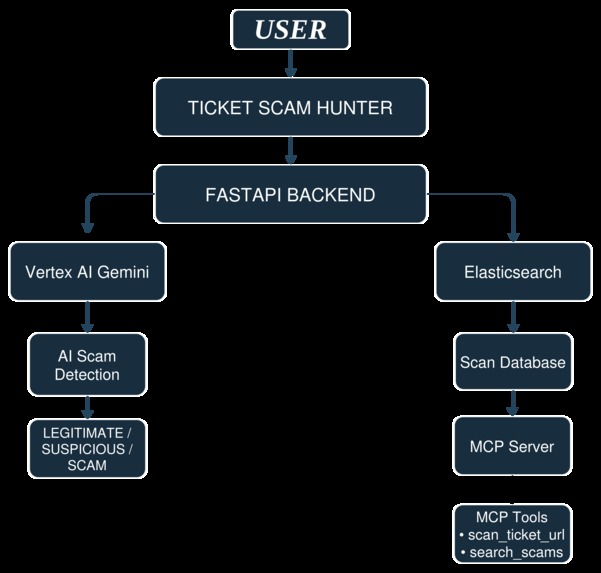
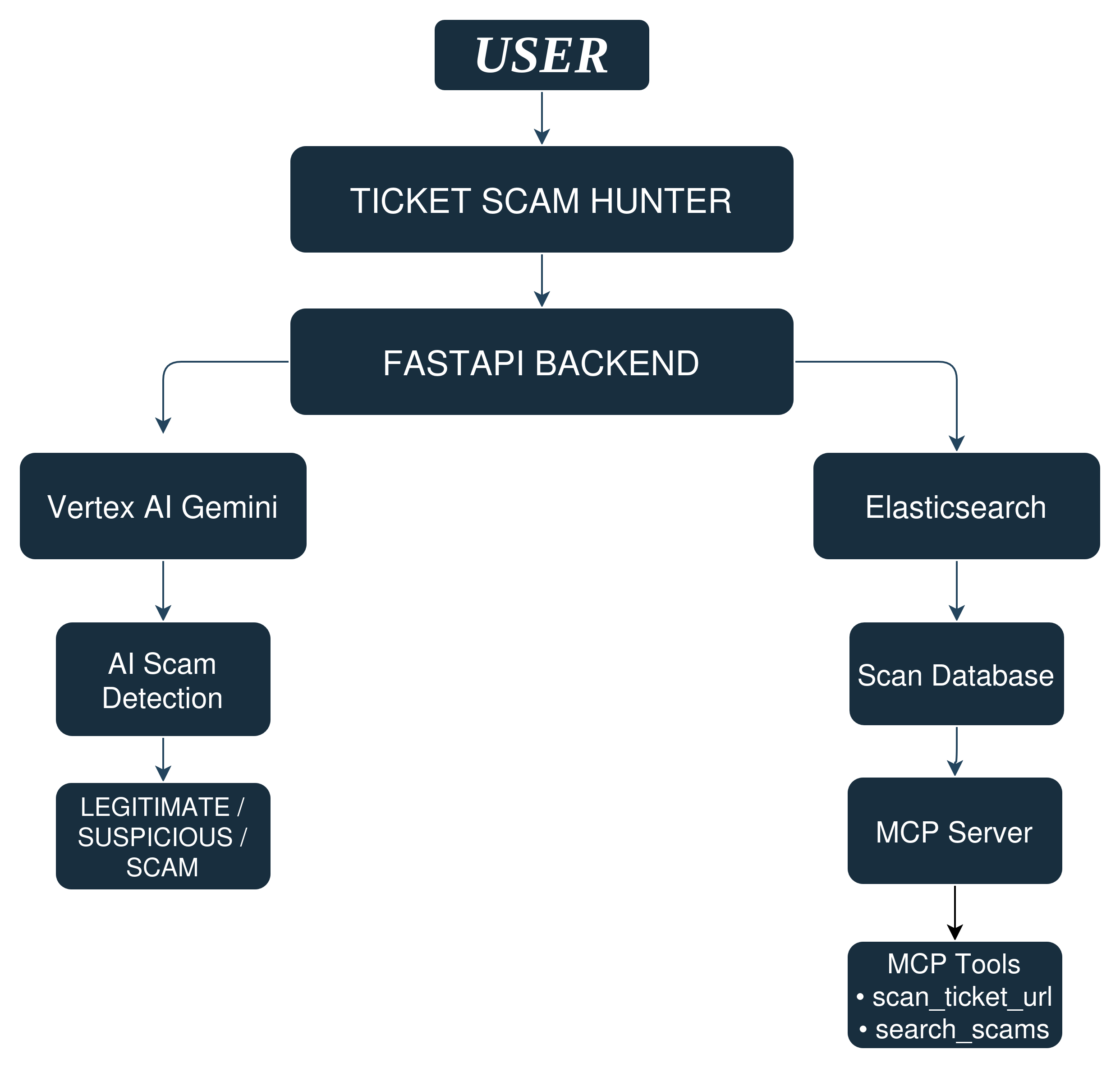
architecture of the project
Inspiration
The idea for ProTick AI came to me while thinking about ticket scams around major sporting events, such as the FIFA World Cup.
A few years ago, my father was scammed while trying to buy tickets for a cricket match through an unofficial source. The loss wasn't huge, but it showed me how easy it is for people to trust the wrong seller when they're excited about attending an event.
When I saw that one of the hackathon themes involved the FIFA World Cup, I immediately thought about that experience. Millions of fans will be searching for tickets online, and many of them may come across fake websites, misleading offers, or unofficial sellers.
That led to a simple question:
What if we could use AI to help people check whether a ticket website looks trustworthy before they make a purchase?
That's what inspired us to build ProTick AI — a platform that uses web scraping, Google Vertex AI Gemini, Elasticsearch, and MCP to analyze ticket-selling websites and help users identify potential scams before spending their money.
What it does
ProTick AI helps users evaluate ticket-selling websites before purchasing. Users submit a website URL, and the platform gathers publicly available information through web scraping. This data is analyzed by Google Vertex AI Gemini to classify the website as Legitimate, Suspicious, or a potential Scam.
Results are stored in Elasticsearch, creating a searchable history of analyzed websites. The platform also offers capabilities via an MCP (Microservices Communications Protocol) for AI agents and applications to access scam detection and search functions.
How we built it
We developed ProTick AI using FastAPI, Python, Google Vertex AI Gemini, Elasticsearch, and MCP.
The process begins with web scraping, where the platform gathers publicly available information from a submitted website. This information is sent to Gemini, which conducts the analysis and generates a verdict along with supporting reasoning.
The analysis results are stored in Elasticsearch, enabling us to search for and retrieve previous scans. We also implemented an MCP server to facilitate interaction between AI agents and external applications, using tools such as scan_ticket_url and search_scams.
Challenges we ran into
One of the biggest challenges was dealing with websites that restrict automated access. Some websites return HTTP 403 errors, block scraping attempts, or have security measures that make collecting information difficult.
Another challenge was integrating multiple technologies into a single workflow. We needed to connect web scraping, Vertex AI Gemini, Elasticsearch, FastAPI, and MCP while ensuring the system remained reliable and easy to use.
Designing prompts that consistently produced useful scam assessments was also an important part of the project.
Accomplishments that we're proud of
Successfully integrated Google Vertex AI Gemini into the analysis pipeline. Built a working MCP server with callable tools. Implemented Elasticsearch-backed storage and search. Created a complete workflow from URL submission to scam assessment. Added automated testing and structured error handling. Built a practical solution that addresses a real-world problem affecting sports fans.
What we learned
This project gave us hands-on experience with Google Vertex AI Gemini, MCP development, Elasticsearch integration, FastAPI, and web scraping.
We also learned that AI can be used for much more than content generation. It can help users make safer decisions by analyzing information, identifying risks, and providing understandable explanations.
What's next for ProTick
We plan to expand ProTick AI beyond FIFA World Cup tickets and support more sporting events, concerts, and entertainment platforms.
Future improvements include:
Domain reputation analysis WHOIS and DNS intelligence Browser-based analysis for JavaScript-heavy websites Real-time monitoring dashboards Support for additional ticketing platforms Enhanced scam detection using multiple intelligence sources
Our long-term goal is to turn ProTick AI into a broader trust and safety platform that helps users identify fraudulent websites before they become victims of online scams.
Built With
- css
- elasticsearch
- fastapi
- gemini
- google-cloud
- html
- javascript
- mcp
- python
- vertex-ai
- web-scraping


Log in or sign up for Devpost to join the conversation.