-
-
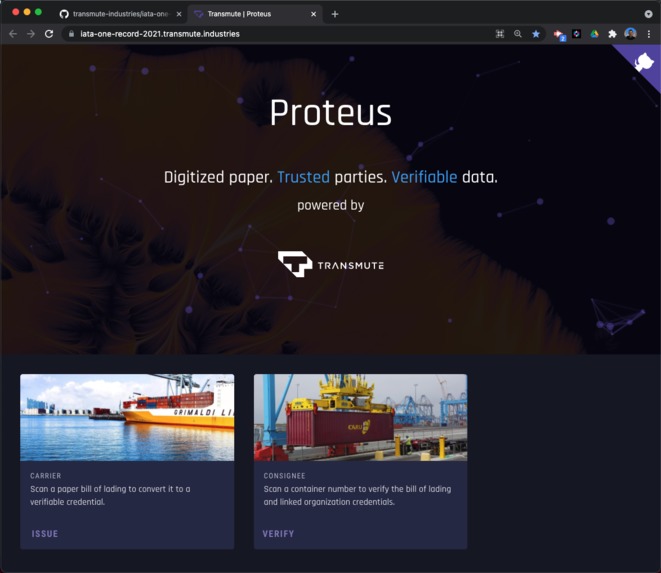
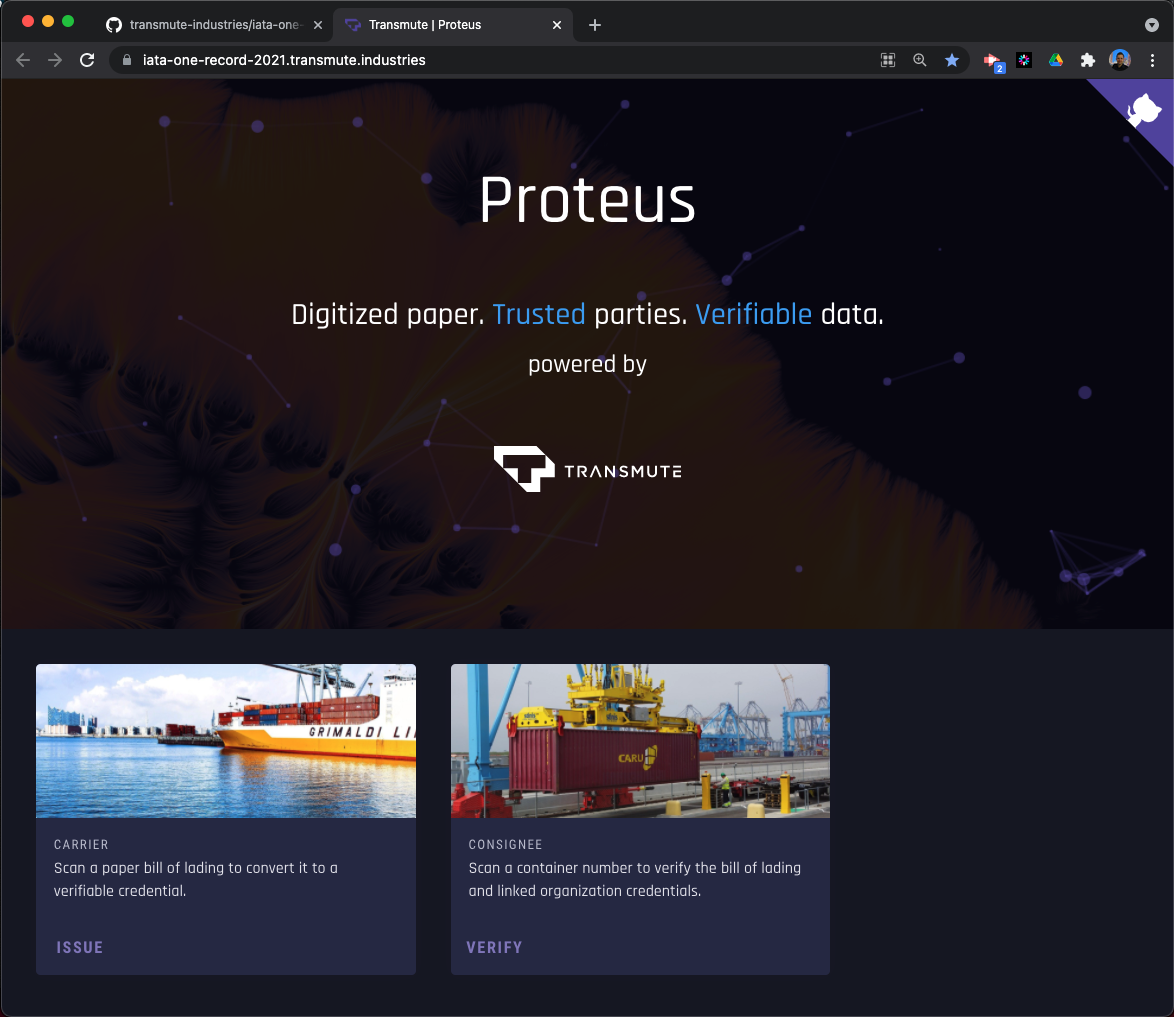
Splash page - select action: Issue or Verify
-
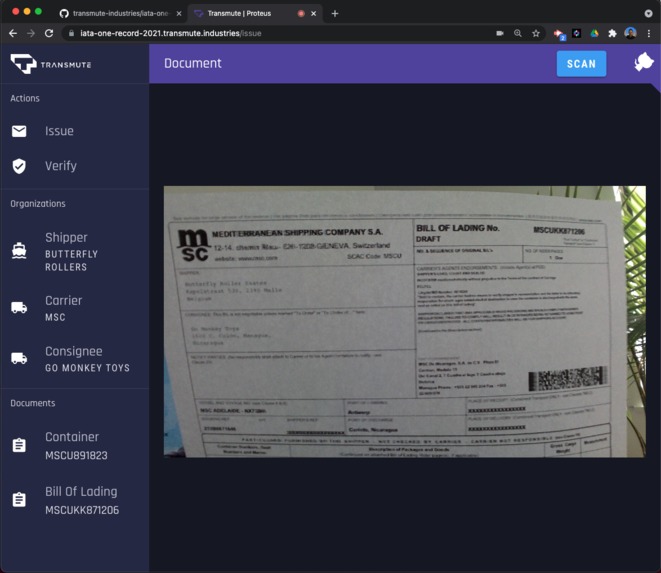
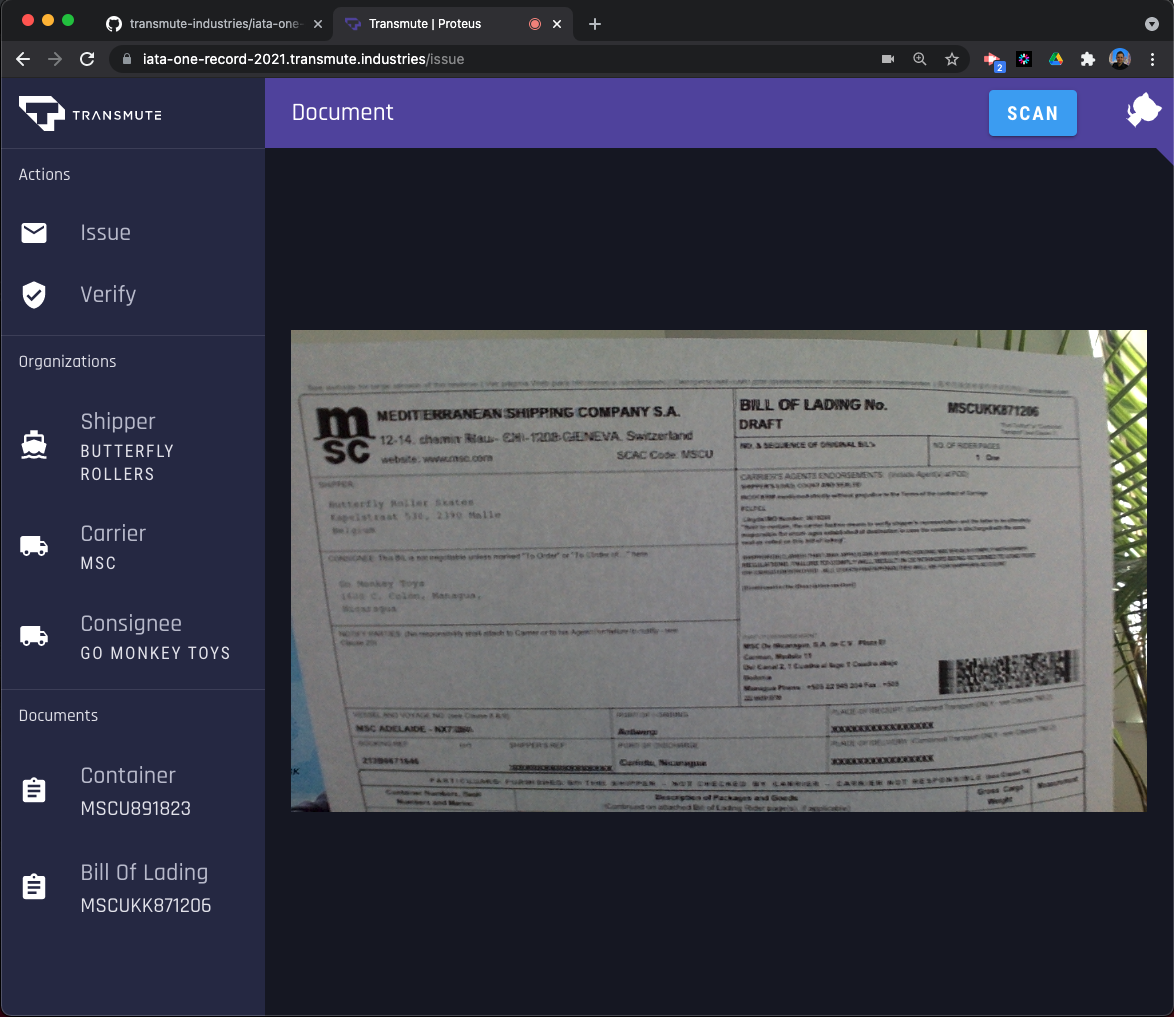
Scan and OCR-interpret a paper Bill of Lading
-
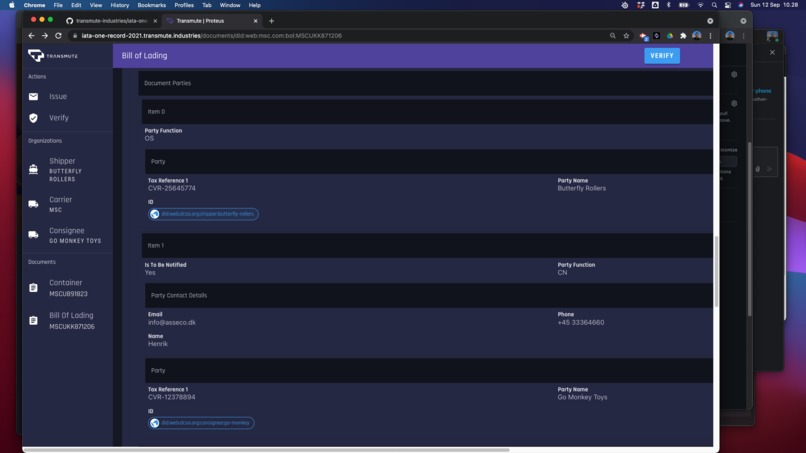
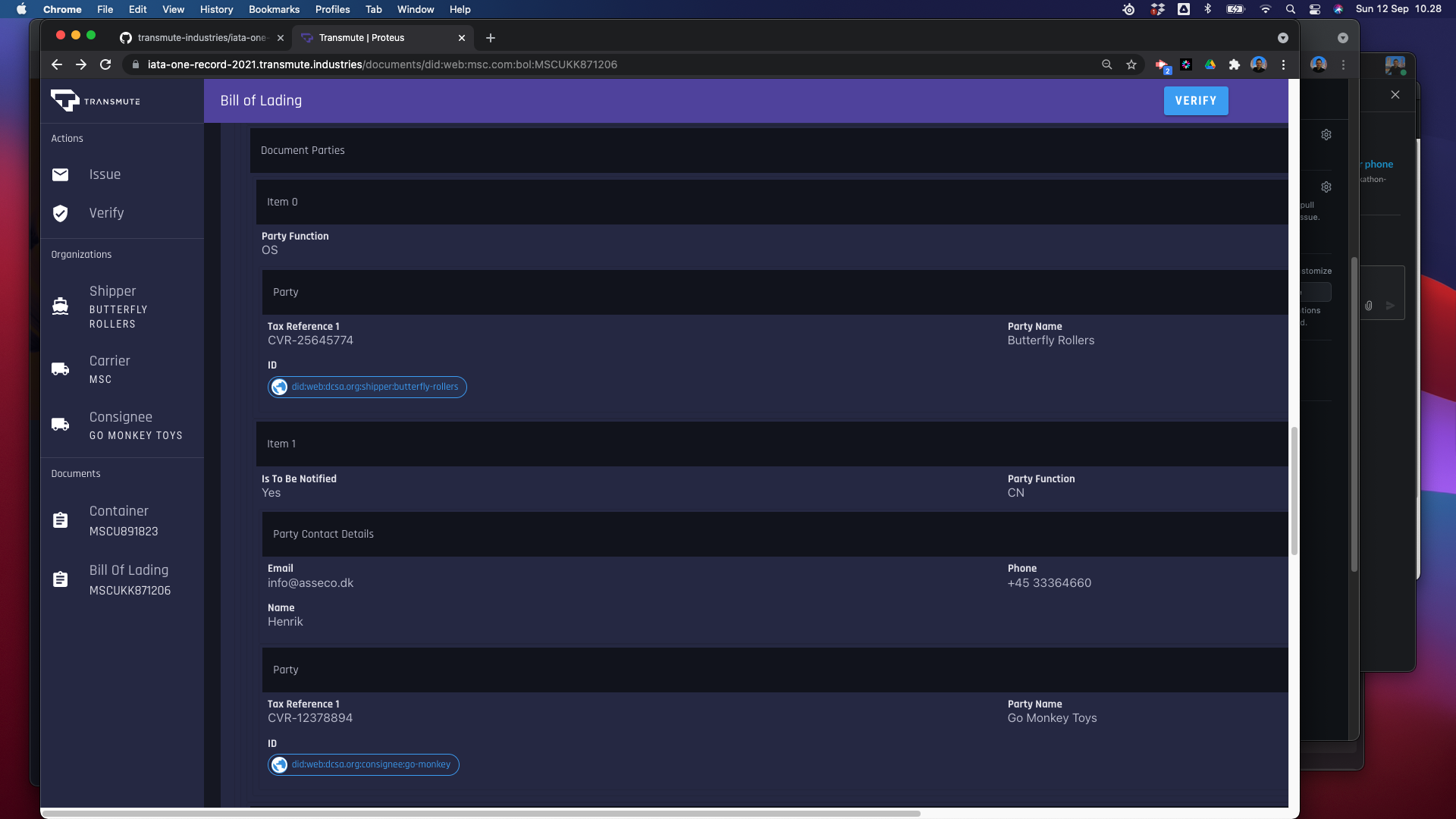
DCSA eBL-compliant Bill Of Lading, issued by MSC as a Verifiable Credential
-
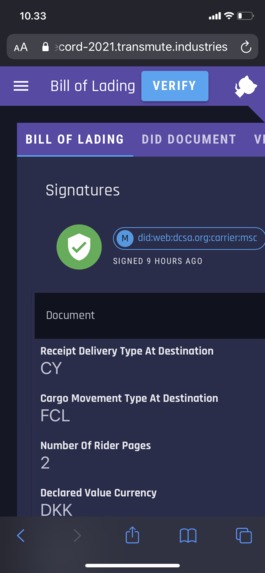
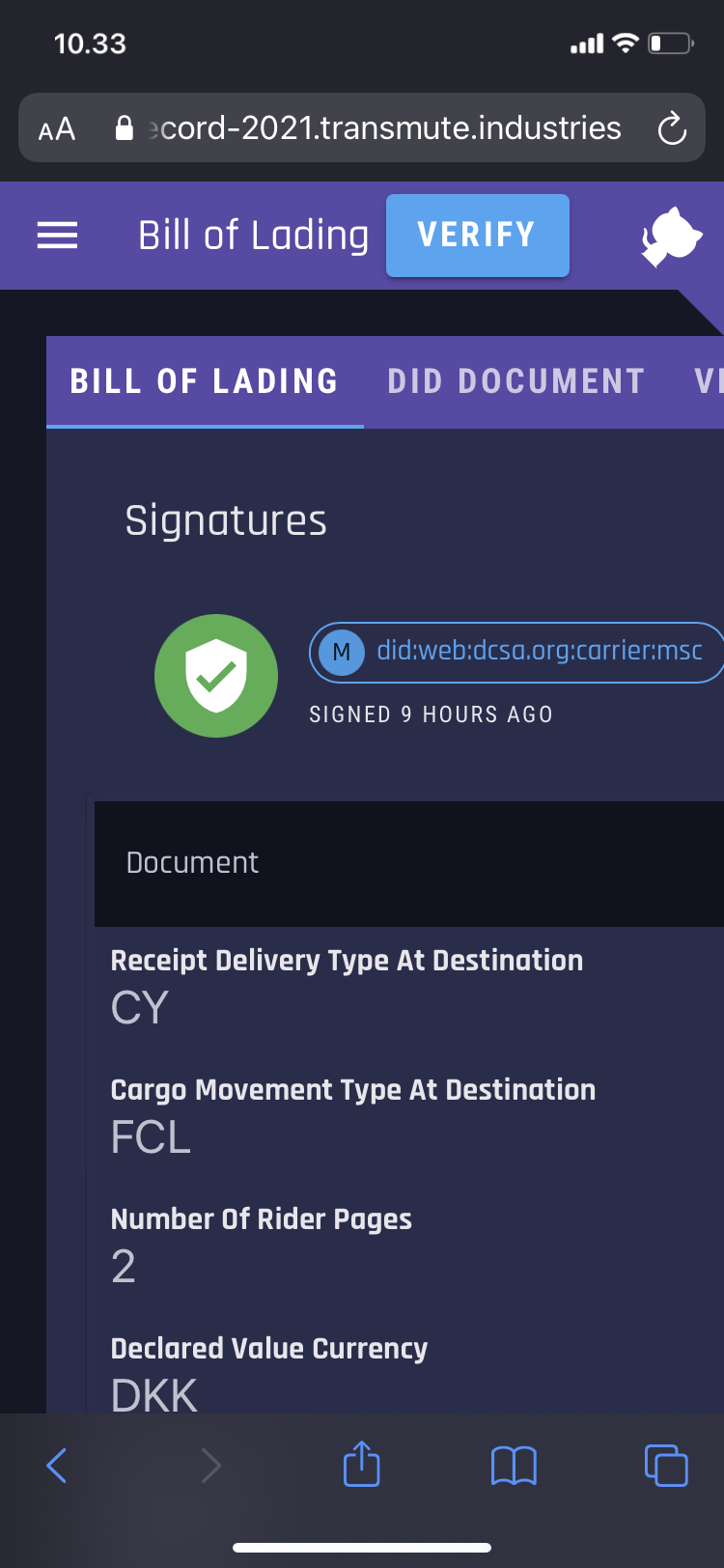
Verifying a Bill of Lading VC (phone)
-
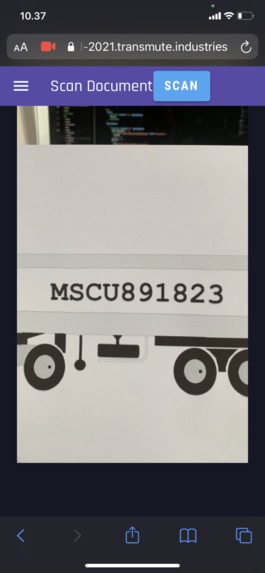
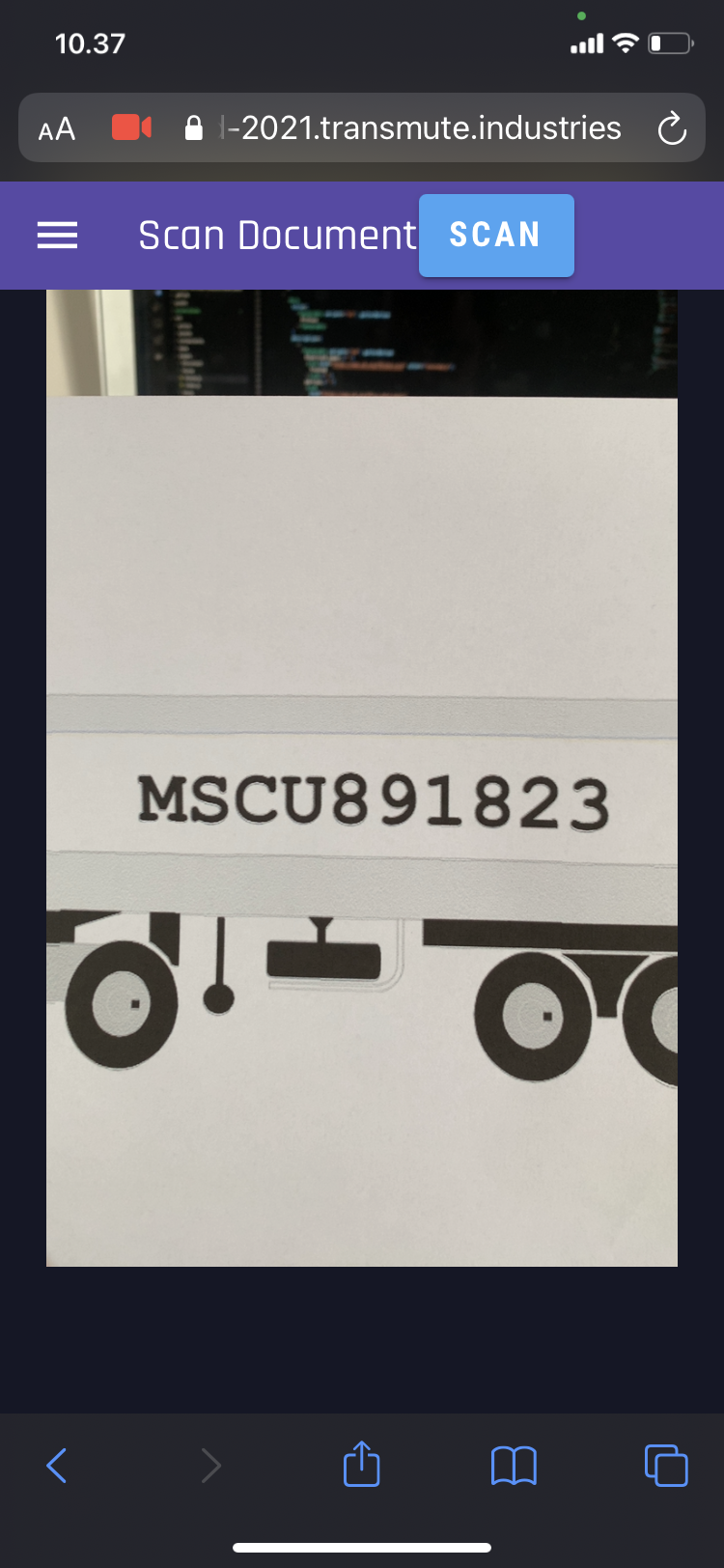
Scanning a container and resolving its DID (phone)
-
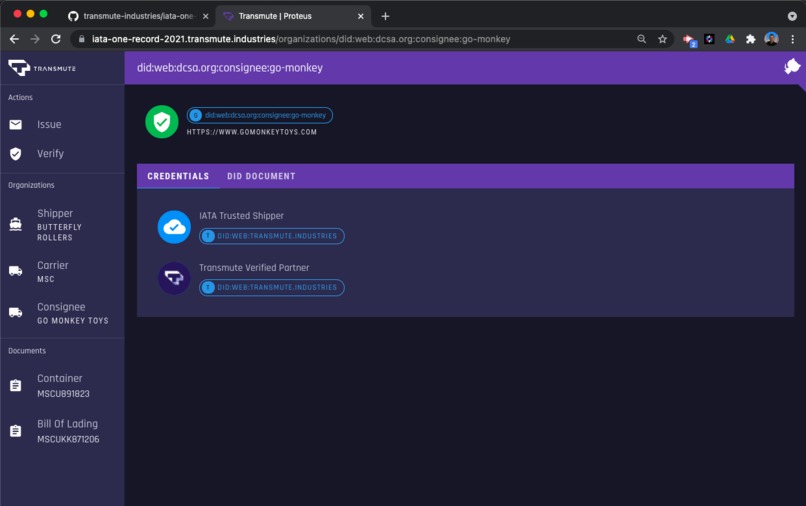
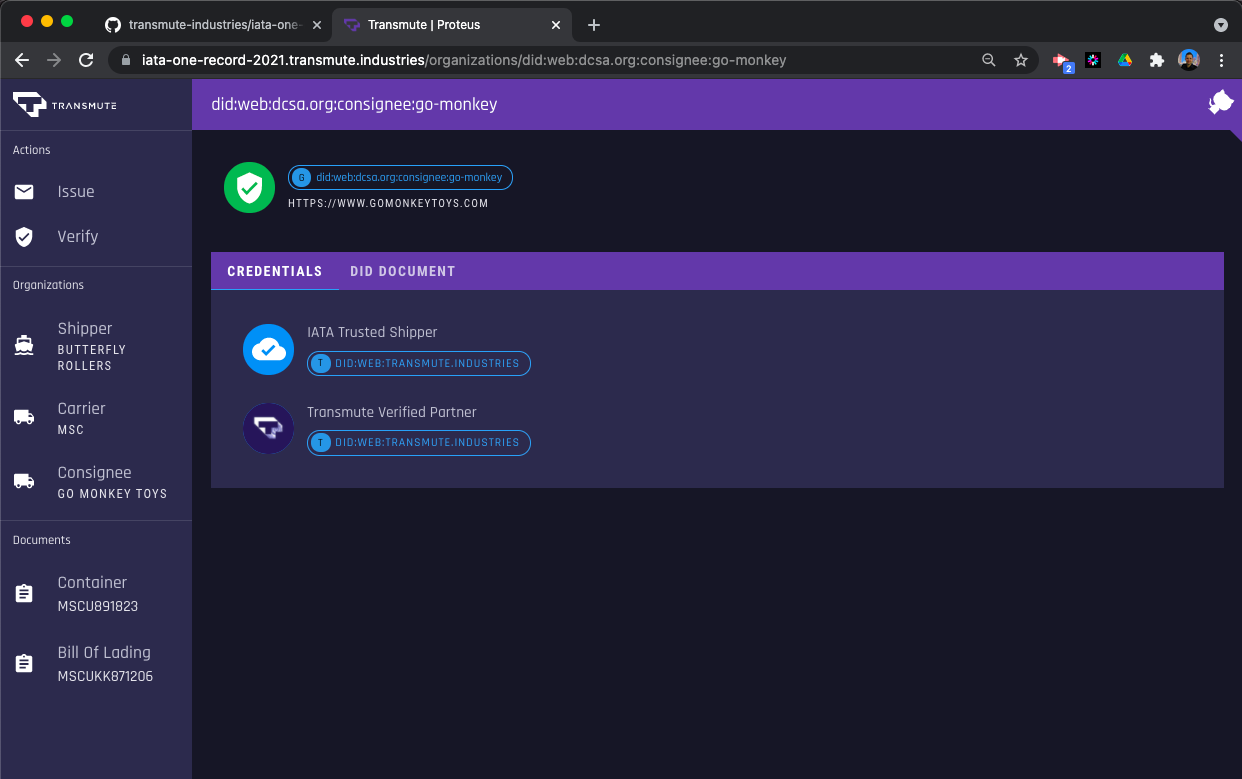
Organization Credentials - establishing trust
-
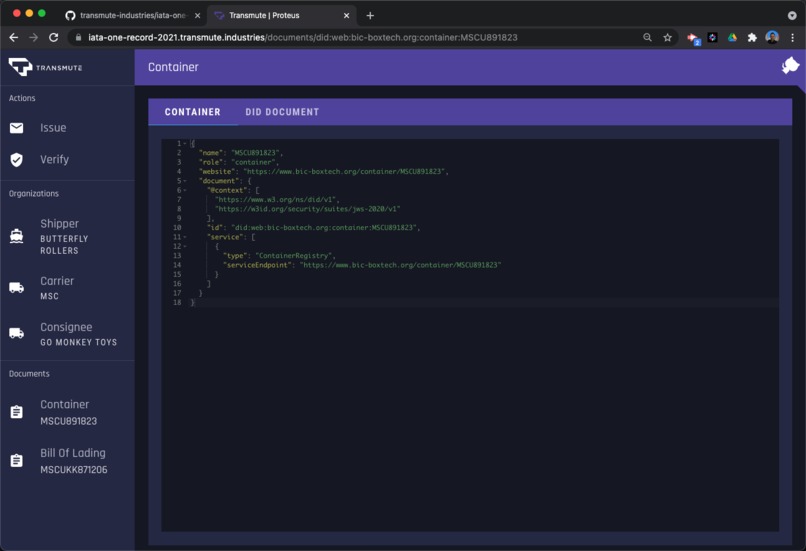
Container DID - did:web leveraging BIC API

Inspiration
Proteus - the ancient god of oceanic bodies of water - was a fitting project name for our ambitions in this hackathon. With the amount of goods on the oceans, the world could use some devine oversight. Our solution isn’t magic, though. It is applying cutting edge cryptography standards to finally solving centuries-old problems in global trade.
What it does
The Proteus app takes no less than three major steps towards reaping digitization benefits, while at the same time establishing a much deeper level of trust amongst supply chain participants.
Digitize
Step one is digitization in arguably its purest form: input paper, output data. Machine readable, process optimizable, lightning speed transferable data. No more excuses - just use our simple OCR feature to drop your paper document into Proteus, and proceed to step two.
Identity
The second part of Proteus solves the supply chain identity problem. A bold statement, but leveraging Decentralized Identifiers we say it with confidence.
Local identity regimes don’t fit in the international nature of supply chains. Identity federation causes more harm than good - carriers feel this more than most. The truth is that today identities of supply chain parties are based literally on string comparison!
DIDs are an emerging W3C standard, ripe for adoption. Not least by this industry which so desperately needs it. Proteus establishes the actual identity of supply chain parties.
Trust
Having established who’s involved, we can move on to how we relate to one another. Buyer procures from a seller; shipper books with a carrier; bank finances a shipment. Every container transported entails a paper trail. Pieces of paper with signatures and company logos on them.
Turning paper into DCSA-compliant JSON data is all well and good - but what about that signature?! No, a byte array of serialized images of a signature is not the answer. The answer is cryptography. Reliable, tried and true public/private key encryption.
Verifiable Credentials are the established W3C standards for digitally signing JSON data. Separate, but working particularly well together with DIDs. What VCs do is make data verifiable. In this third step, Proteus bundles data with trust.
How we built it
Proteus is based entirely on open source libraries. Some of the key libraries are our own, notably:
- https://github.com/transmute-industries/did-key.js
- https://github.com/transmute-industries/verifiable-data
The rest is a happy mix of javascript libs, new and old, boring and fun.
Finally, we turned it into a team building exercise. Hackathons are about having fun, doing something which makes you happy.
Challenges we ran into
OCR turned out to not produce the expected quality of data - probably why many governments are doing away with document imaging systems and moving entirely away from paper to verifiable data. We’ve learned this firsthand as Transmute has been working with US CBP through the US DHS SVIP Program over the last few years. OCR results improves with training, but we didn’t have (nearly) enough samples to feed the learning algorithm library over just a weekend. We have included easy ways for app users to bypass this.
Data linkage was limited. For example, MSC’s BOL search link infrastructure is secured so you can’t make direct network requests resolving a BOL number. BIC’s boxtech API works well but requires a token, which would risk exposure publicly. We could have secured it behind a web server, but we decided it wasn’t worth the time. We recommend that if you want to promote linked data, make your data linkable.
Accomplishments that we're proud of
The full flow process: tangibly turning analogue documents into verifiable data rocks.
What we learned
Supply chain application of DID+VC is our bread and butter. We’ve been applying it to import/export data for years. We learned - or rather confirmed - that these technologies fit just as well on the transport and logistics side.
Targeted Hackathon Challenges
- Challenge 4: DCSA - Using the DCSA API, solve the digital identity challenge for container shipping.
- Challenge 5: Open - Let your creativity roam free and present us an awesome cargo app.
What's next for Proteus
In 10 years people will look at the DID+VC stack as we view HTTP and JSON today. People will frown upon unsigned data. The interesting part is who among the supply chain ecosystem will be the leaders and reap the early adopter goodies. If you want to learn more and work with the team pioneering these standards, get in touch with Transmute via our website or the links in slide 7.


Log in or sign up for Devpost to join the conversation.