-
-
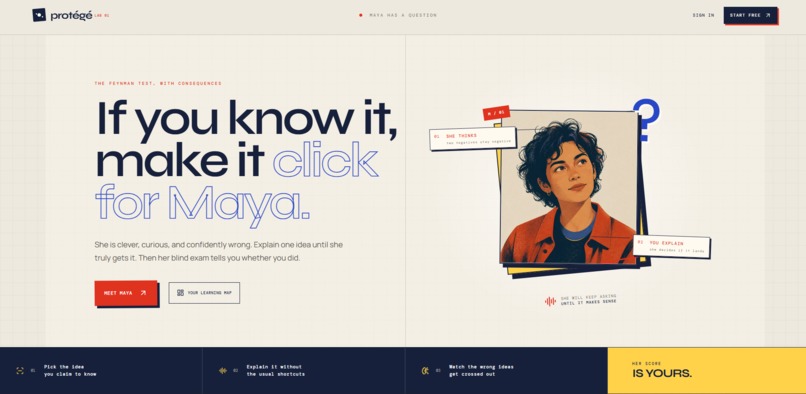
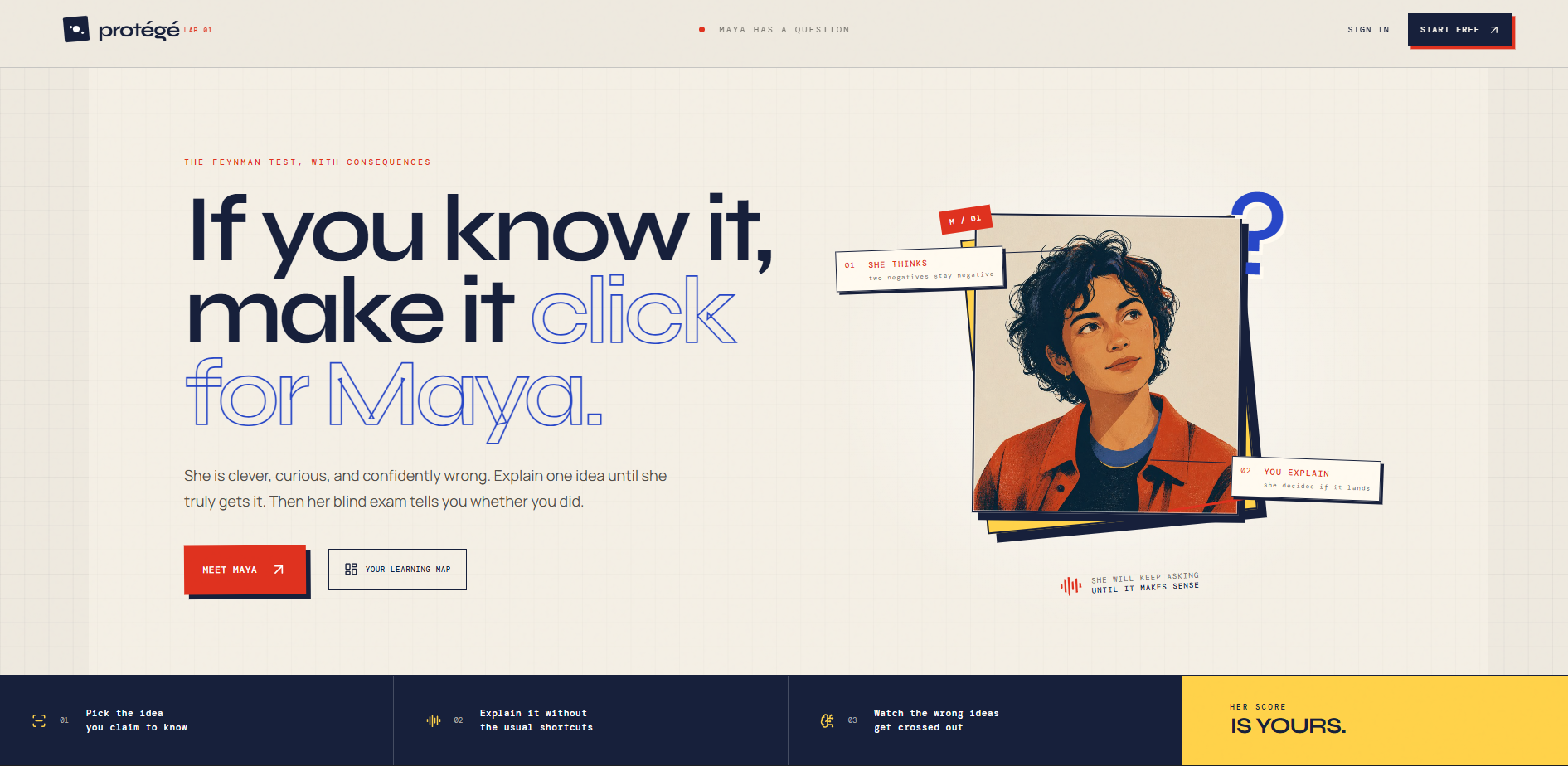
Landing page
-
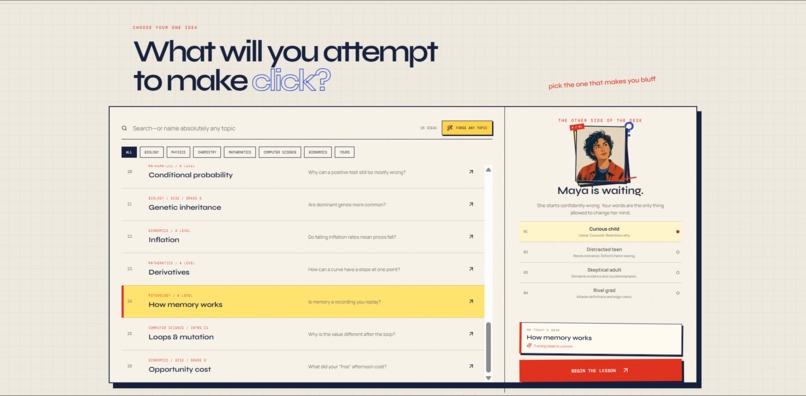
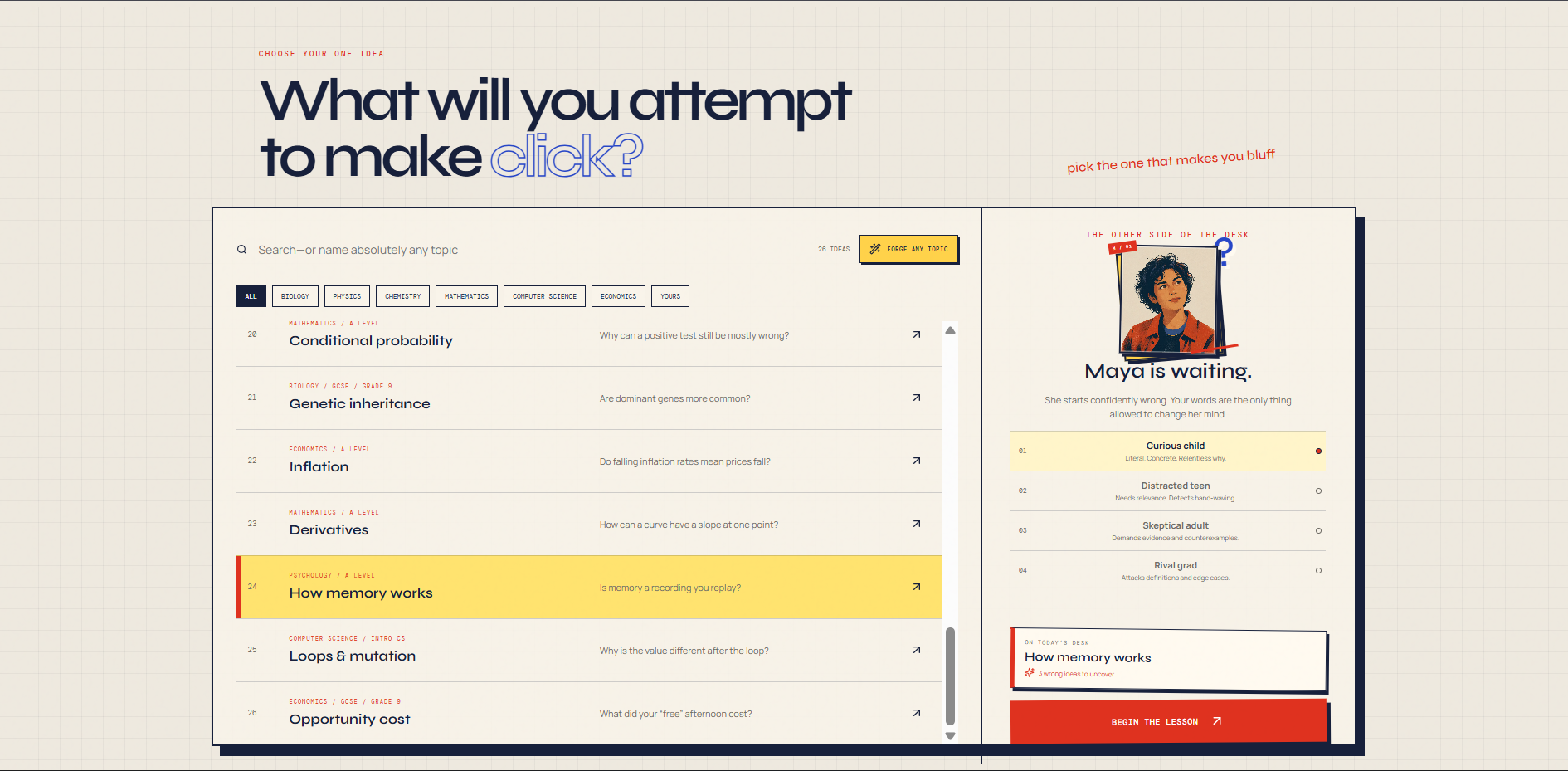
Topic Selection
-
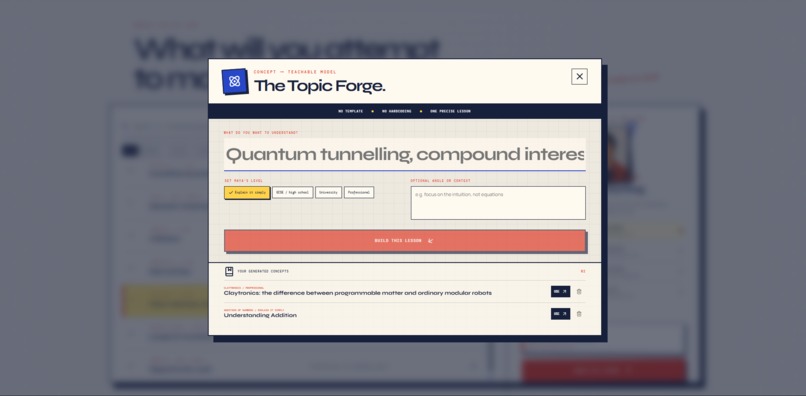
Topic Forge
-
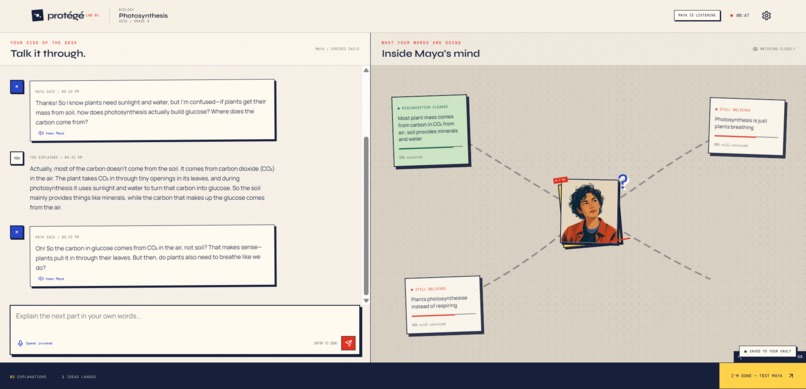
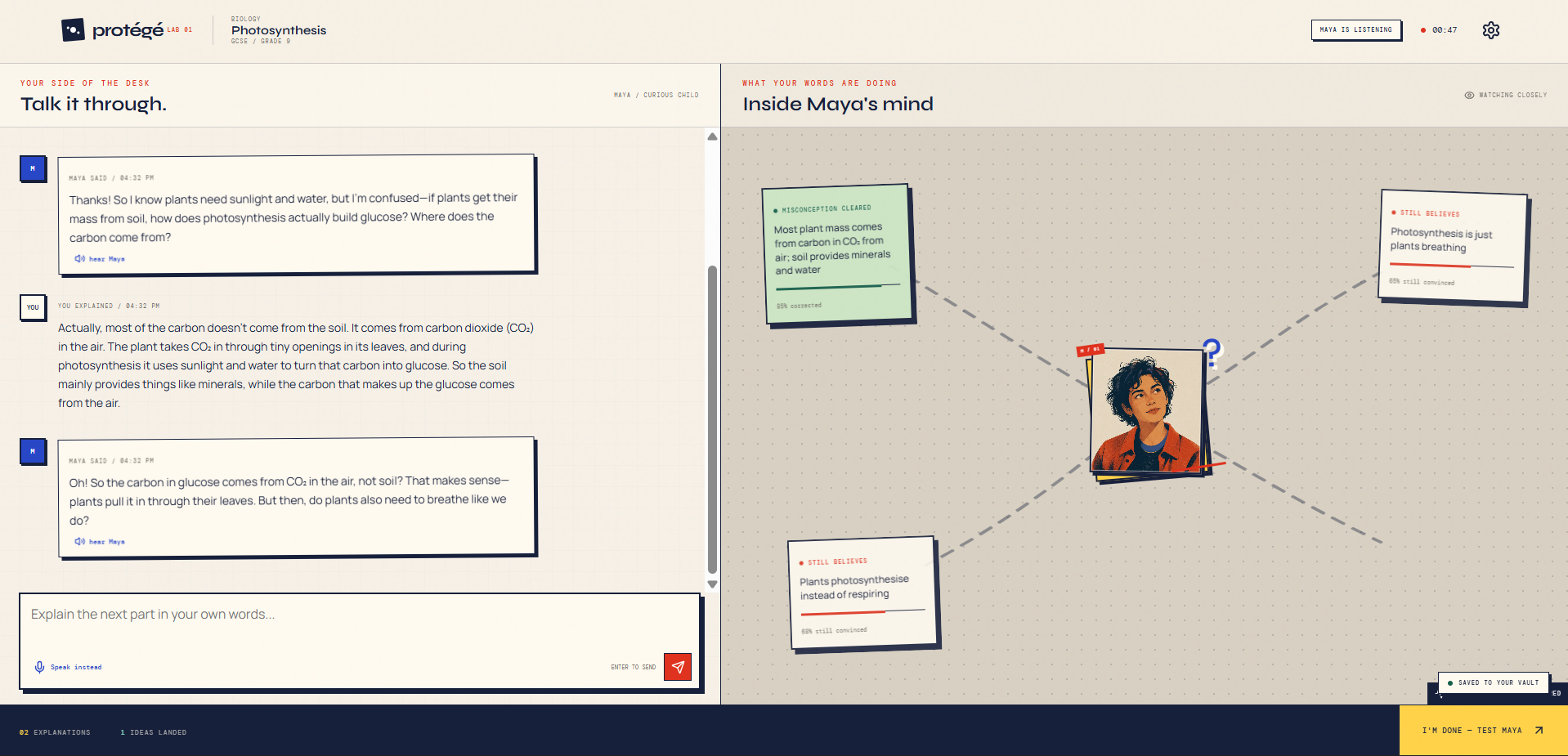
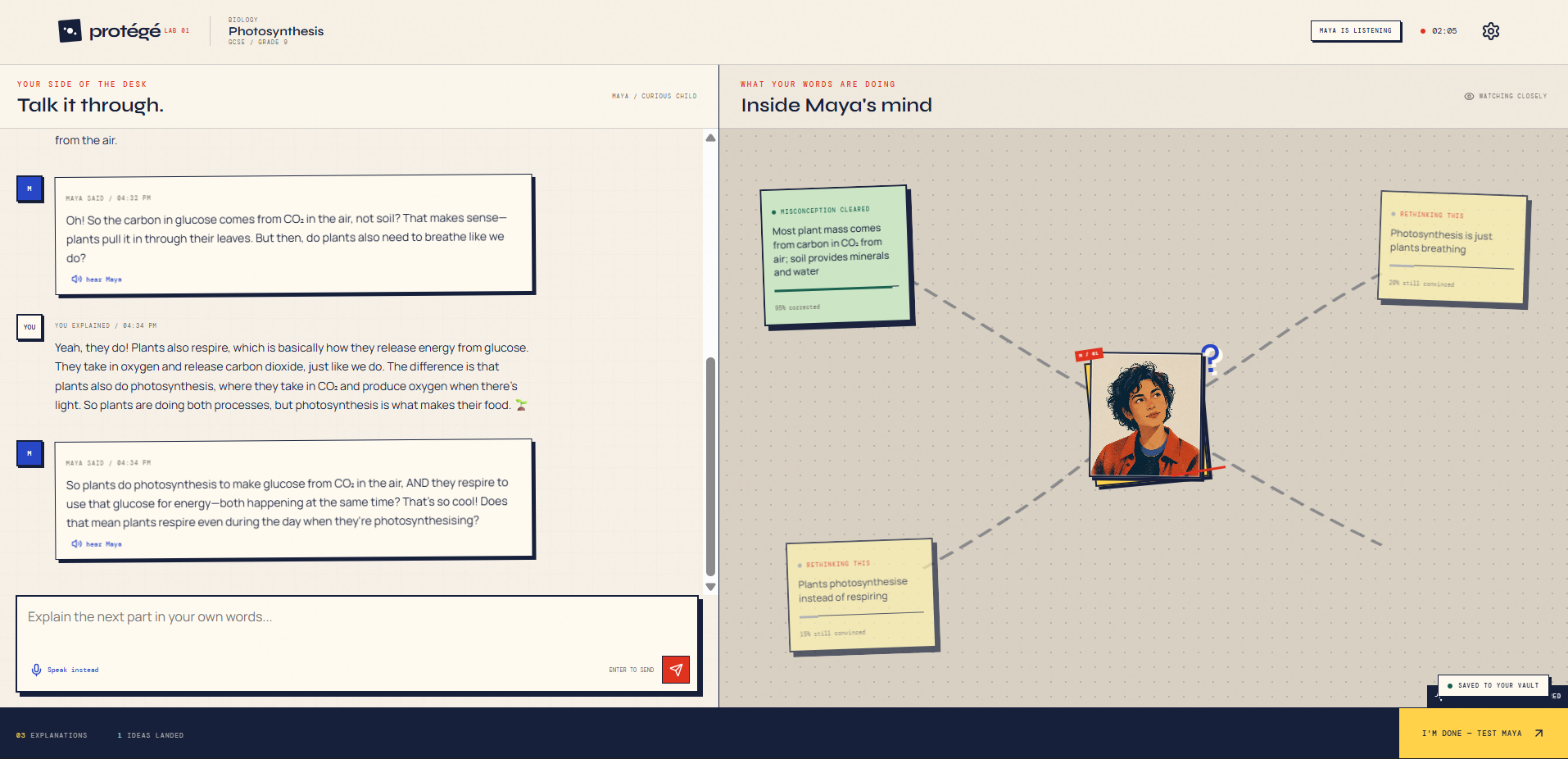
Maya’s lesson with the mental-model panel
-
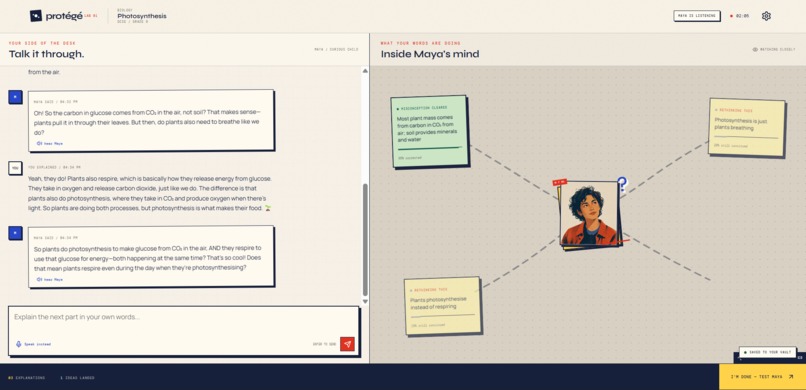
Misconception changing state
-
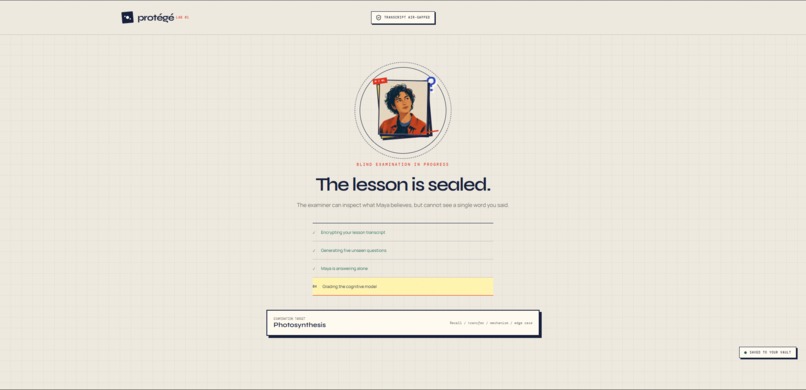
Blind examination
-
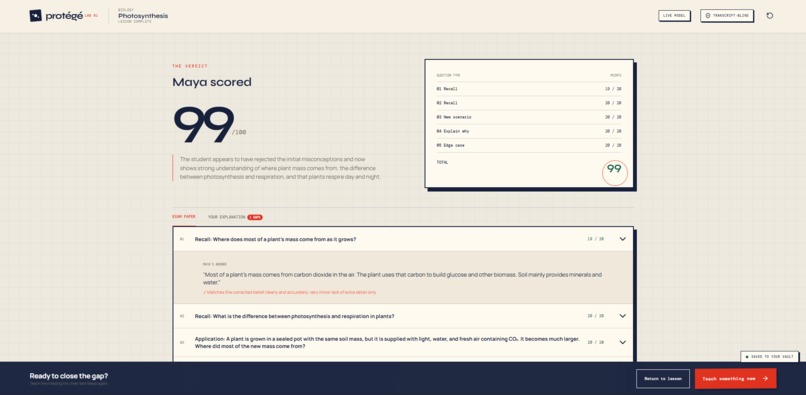
Score and diagonostic evidence
-
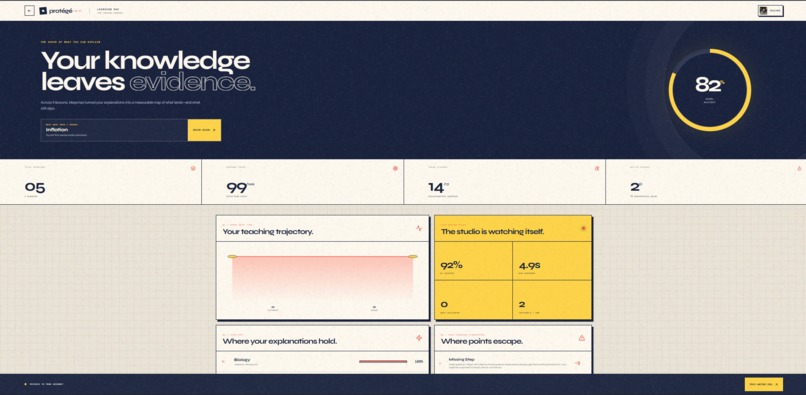
Learning map

Inspiration
AI tutors are extraordinarily good at giving us answers. But recognising a good explanation can feel almost identical to genuinely understanding it.
The clearest test of understanding is often whether you can explain an idea to someone else, respond to their confusion, and help them apply it independently. That is the principle behind the Feynman Technique—and the inspiration for Protégé.
Instead of giving the learner another AI teacher, Protégé gives them Maya: an AI student who begins curious, confident, and wrong.
You teach. Maya learns. Her score is yours.
Protégé turns learning by teaching into an interactive and measurable experience.
What it does
Protégé lets learners choose an existing concept or generate a lesson for almost any subject using the Topic Forge.
Maya begins each lesson with specific misconceptions rather than behaving like a blank chatbot. As the learner teaches through text or voice, Maya asks adaptive questions, challenges vague reasoning, and updates a visible mental model.
Repeating a rule is not enough. Maya’s beliefs change only when the explanation provides enough evidence and mechanism to earn that change.
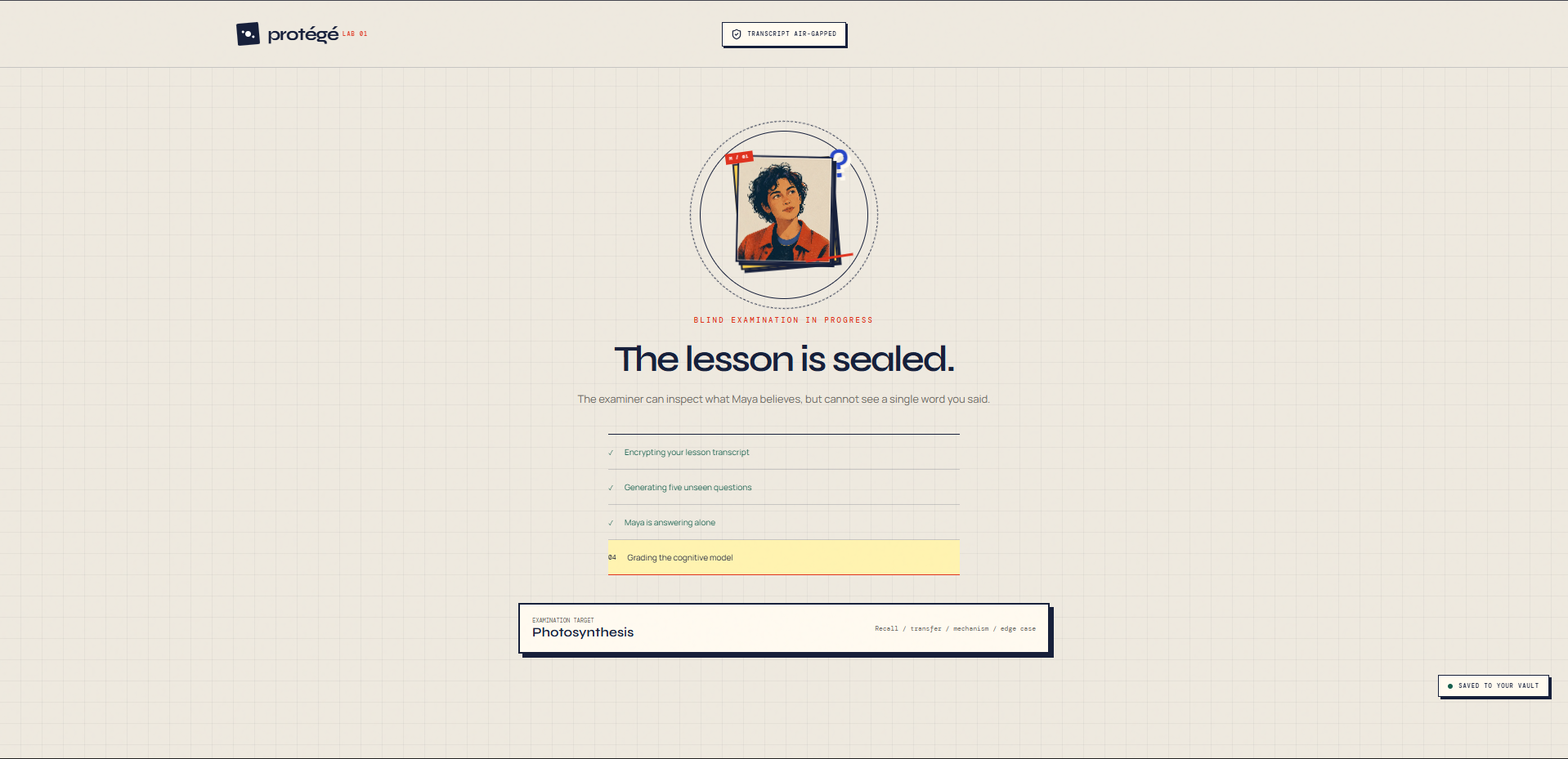
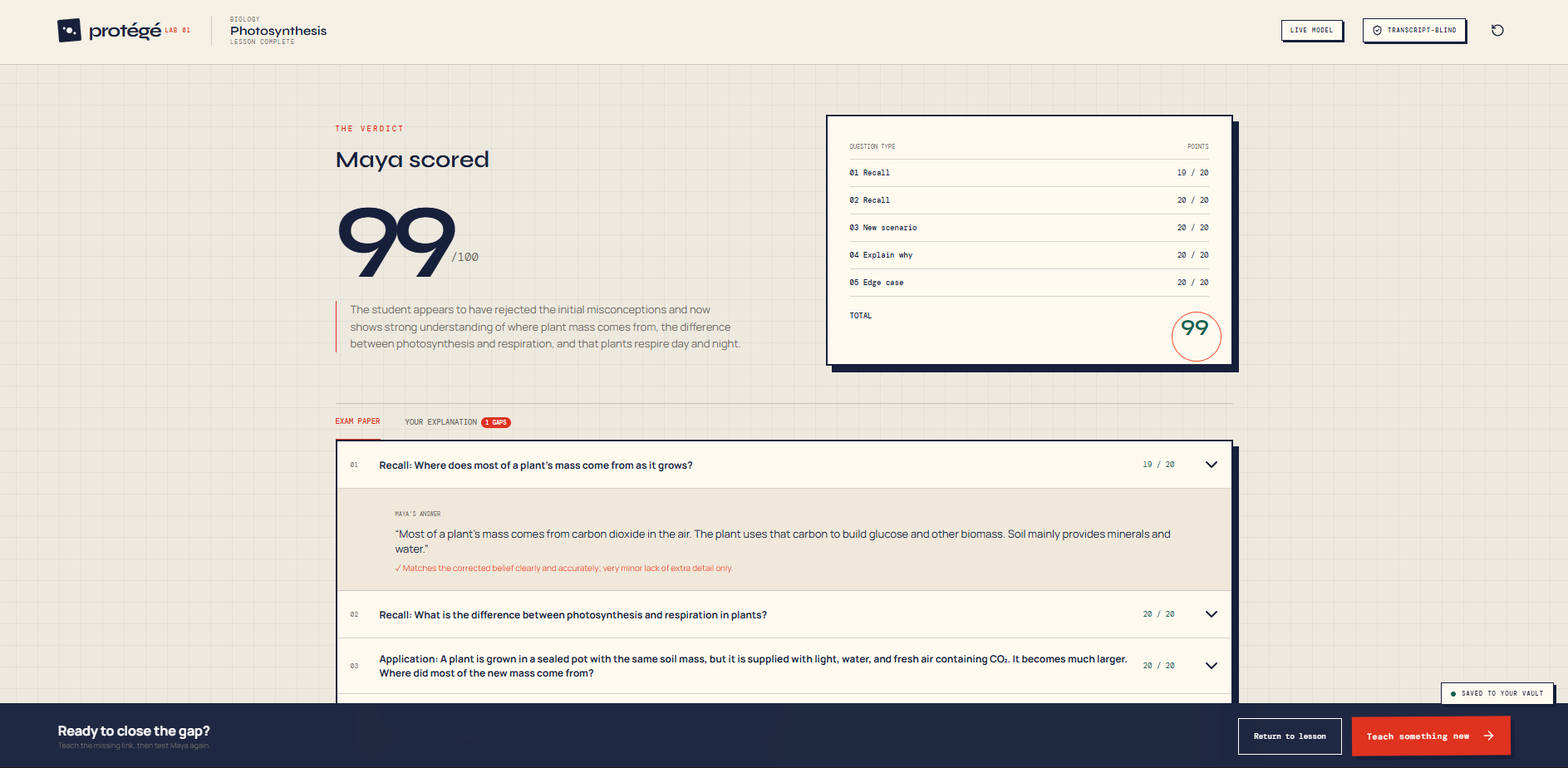
When the lesson ends, Maya takes a five-part blind examination covering recall, transfer, new scenarios, explanation, and edge cases. The examiner receives Maya’s final beliefs—but not the teaching transcript—preventing the lesson model from grading its own conversation.
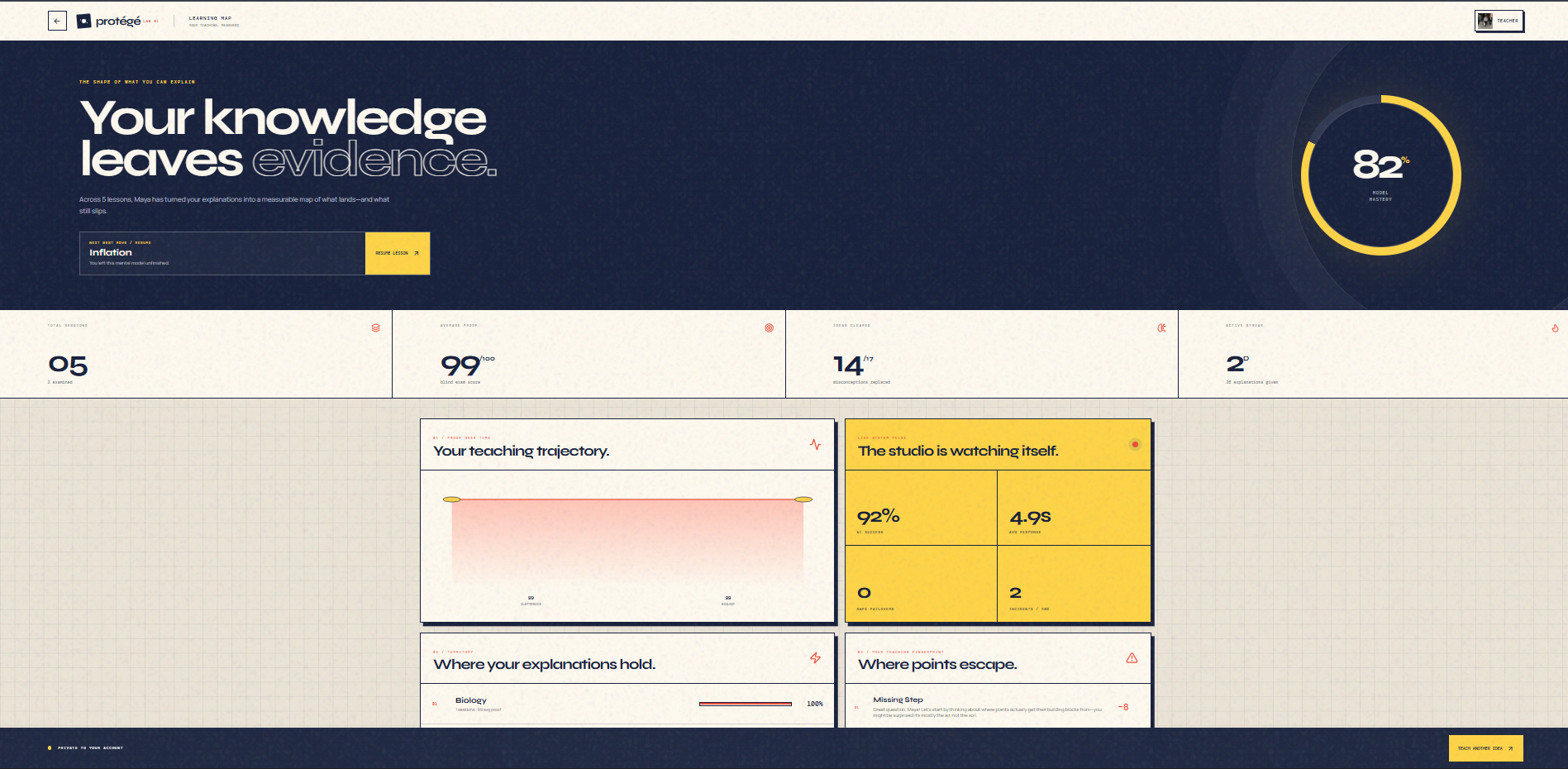
Protégé then reveals Maya’s score, strongest explanation, exact points lost, teaching gaps, and recommended corrections. Every completed lesson contributes to a persistent Learning Map.
Protégé measures what the learner can successfully make another mind understand—not pages viewed, buttons clicked, or time spent inside an app.
How we built it
Protégé is a full-stack React and TypeScript application built with React 18, Vite, Zustand, and Framer Motion.
Clerk provides private authentication, while Neon Postgres stores lessons, generated topics, mental models, examination results, AI usage records, and Learning Map data.
Production inference runs through Vercel AI Gateway and the Vercel AI SDK. Purpose-built routes use models from Google Gemini, Anthropic Claude, and OpenAI for lesson generation, Maya’s responses, blind examination, and diagnosis.
Every structured AI response is validated with Zod before it can affect a lesson.
The most important architectural decision is the separation between teaching and evaluation. The teaching conversation produces Maya’s final mental model. The blind examiner receives only that mental model—not the transcript that created it. A separate diagnostic stage compares the examination evidence with the teaching transcript afterward.
Protégé also includes cross-provider model failover, authenticated rate limiting, duplicate-generation protection, routing telemetry, structured error monitoring, persistent incident records, voice capture, accessibility preferences, and end-to-end testing.
If every teaching model becomes unavailable, Protégé reports an honest failure instead of fabricating Maya’s response or examination score.
Challenges we ran into
The hardest challenge was preventing Maya from becoming an agreeable chatbot.
Conversational models often reward plausible-sounding language and move forward too easily. Protégé needed persistent beliefs with explicit confidence and state transitions: misconception, uncertain, and solid. A belief can change only when the learner’s explanation provides sufficient reasoning.
The second challenge was trustworthy assessment. Allowing the examiner to see the teaching transcript could produce self-grading. We solved this by separating teaching, examination, and diagnosis into different stages with different information access and independently routed models.
Production reliability was another major challenge. Provider quotas, malformed structured responses, and deployment failures initially interrupted lessons. We addressed this with paid cross-provider routing, strict schema validation, bounded retries, rate limits, monitoring, and clear incident reporting.
Finally, the score needed to remain educational rather than game-like. Every lost point is connected to a specific teaching gap and an actionable recommendation for what to explain differently next time.
Accomplishments that we're proud of
We are proud that Protégé is a complete learning system rather than a chat interface wrapped around an API.
It includes:
- Any-topic lesson generation
- Persistent and inspectable misconception states
- Adaptive questioning
- A visible animated mental model
- Text and voice explanations
- A transcript-blind examination
- Sentence-level diagnostic evidence
- Cross-provider AI routing and failover
- Private authenticated accounts
- Persistent lesson restoration
- A longitudinal Learning Map
- Profile management, data export, and account deletion
- Rate limiting, observability, and end-to-end testing
- Responsive layouts and accessibility preferences
Our proudest moment is watching a belief change—not because the learner clicked “correct,” but because their explanation changed the model.
What we learned
We learned that meaningful educational AI depends as much on constraints as intelligence.
Giving Maya persistent misconceptions created more valuable interactions than simply asking a language model to imitate a student. Separating teaching from evaluation made the final score more credible. Persisting evidence across lessons transformed isolated conversations into a meaningful picture of learning.
We also learned that uncertainty should be visible. Incomplete reasoning, provider failures, and unavailable models should not be disguised with fabricated success. Honest system states make both the educational measurement and the product more trustworthy.
Most importantly, we learned that explaining is not merely a way to communicate knowledge. It is a way to discover whether that knowledge exists.
What's next for Protégé
The next step is developing Protégé from a hackathon project into a real learning platform.
Planned directions include:
- Research-backed misconception libraries with citations
- Teacher and classroom dashboards
- Shared teaching challenges
- Spaced follow-up examinations
- Deeper subject-specific evaluation
- Multilingual teaching and voice support
- More accessibility options
- Collaborative learning experiences
- Long-term studies comparing explanation-based evidence with conventional quizzes
Our long-term vision is to establish a new learning metric: not how much content someone consumed, but how clearly they can make an idea survive inside another mind.
Protégé — Teach it. Prove it.
Built With
- ai
- api
- clerk
- framer
- functions
- gateway
- gemini
- html5
- motion
- neon
- openai
- playwright
- postgresql
- react
- sdk
- speech
- typescript
- vercel
- vite
- web
- zod
- zustand

Log in or sign up for Devpost to join the conversation.