-
-
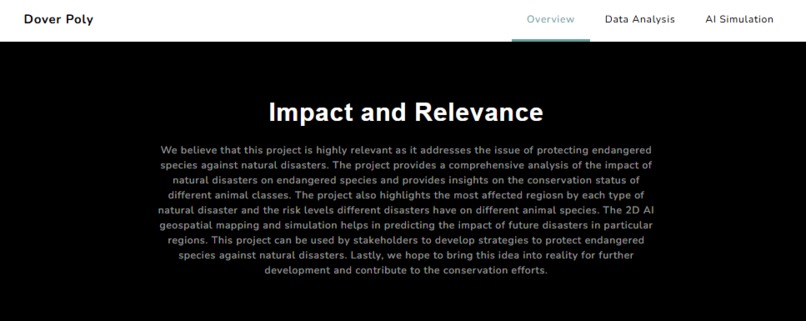
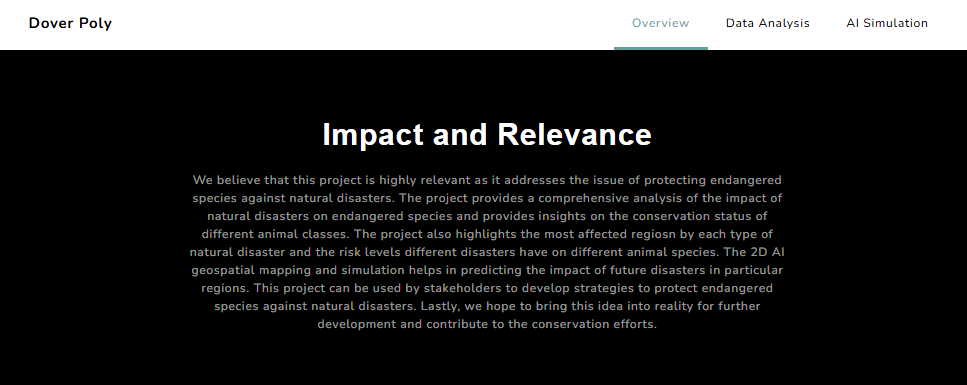
Impact and Relevance of our Project
-
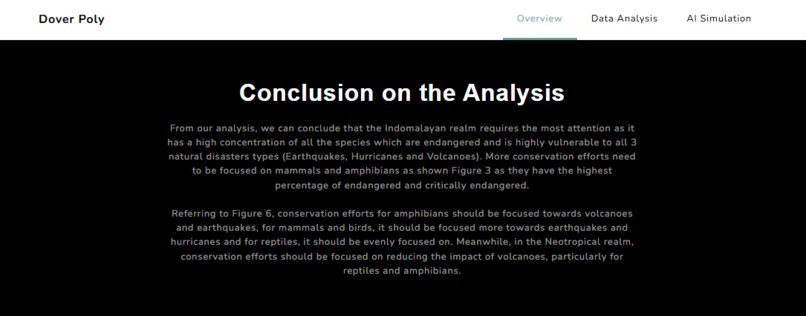
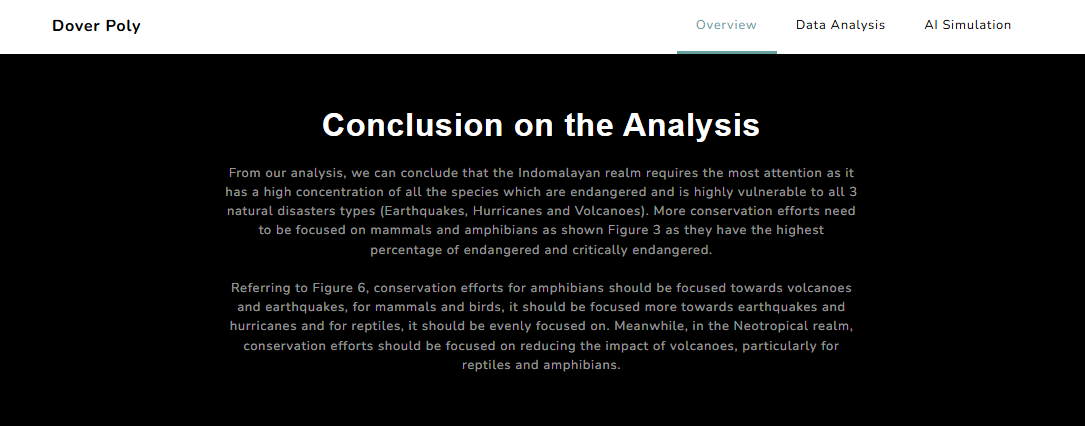
Conclusion on our Data Analysis
-
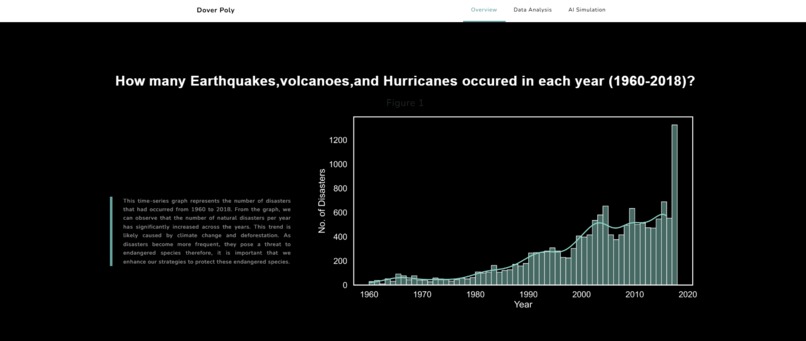
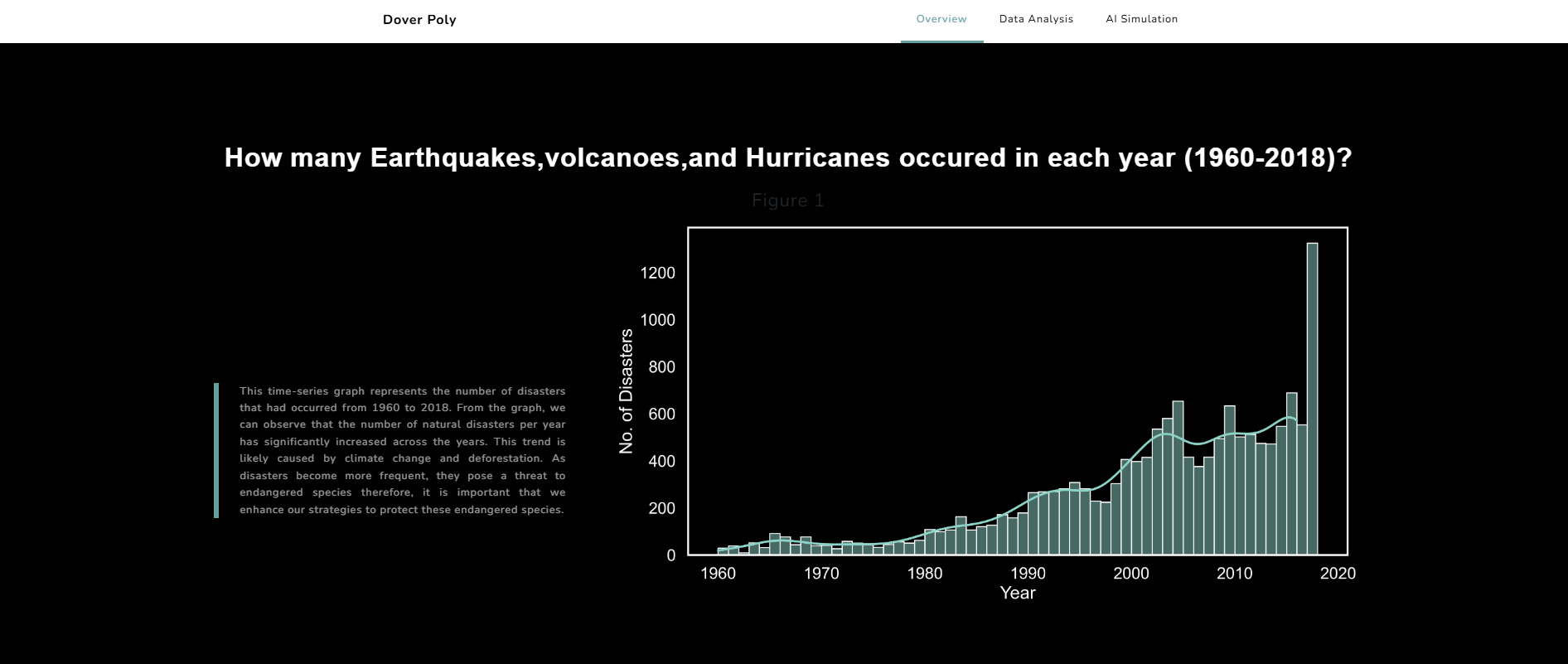
Time-Series Graph representing increasing trend of Natural Disasters
-
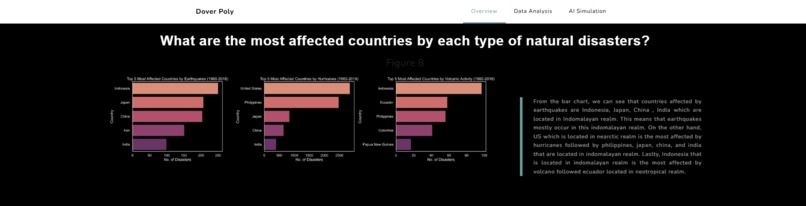
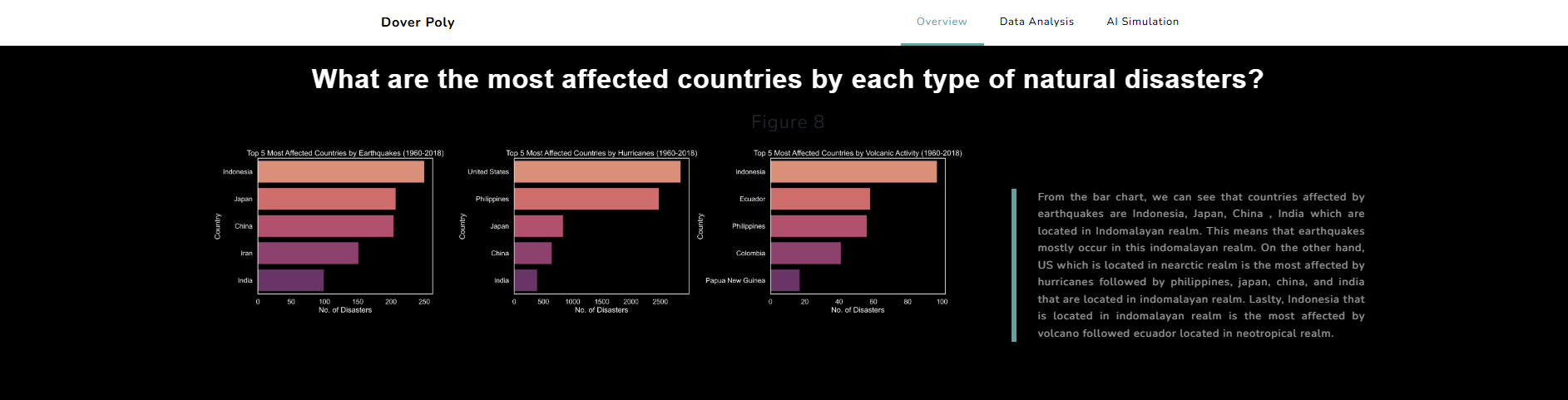
Horizontal Bar Chart of the Top 5 affected countries for each Natural Disaster type
-
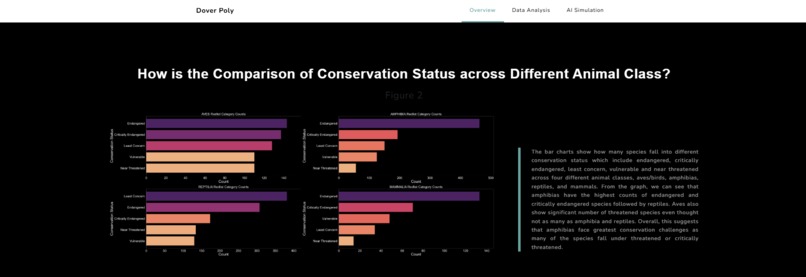
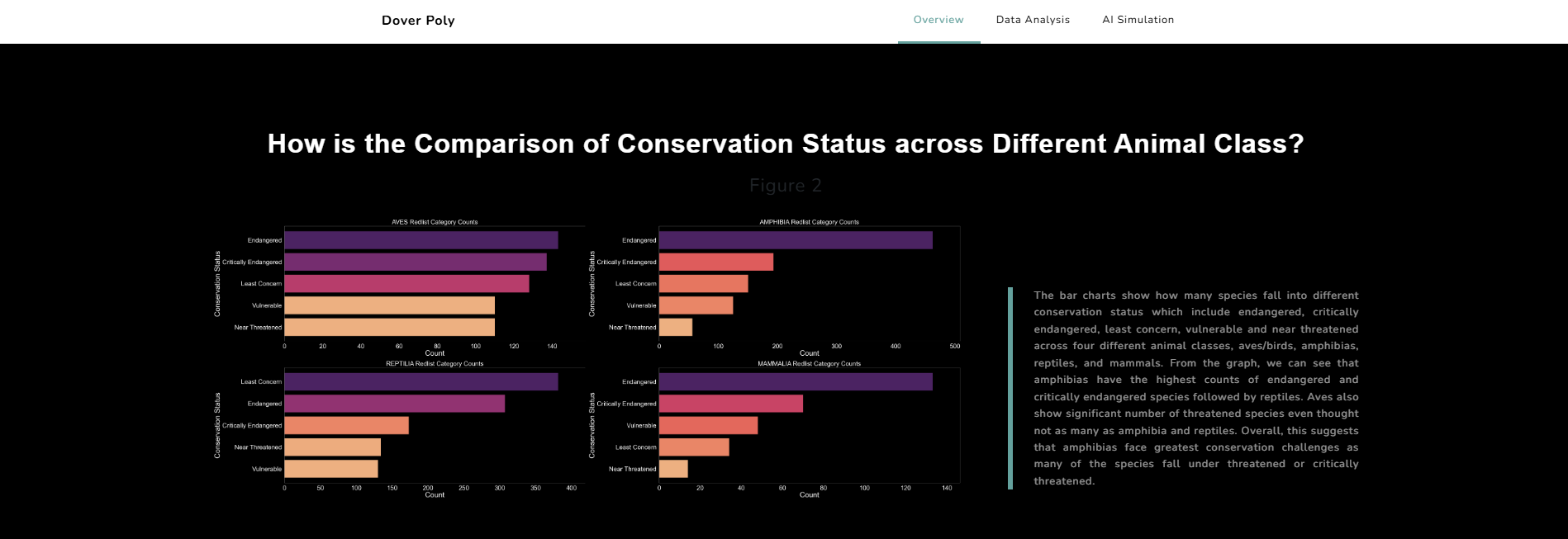
Horizontal Bar Chart comparing Conservation Status across Different Animal Class in numeric value
-
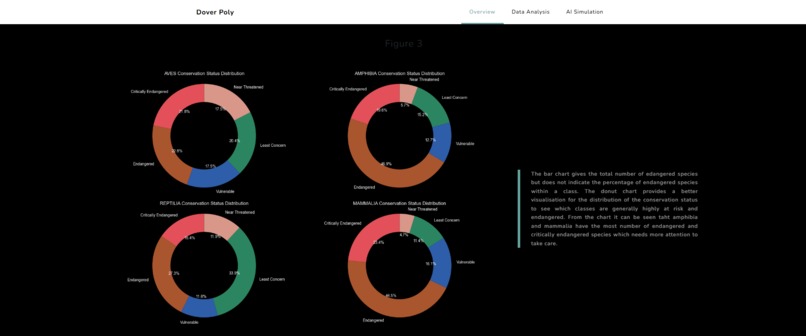
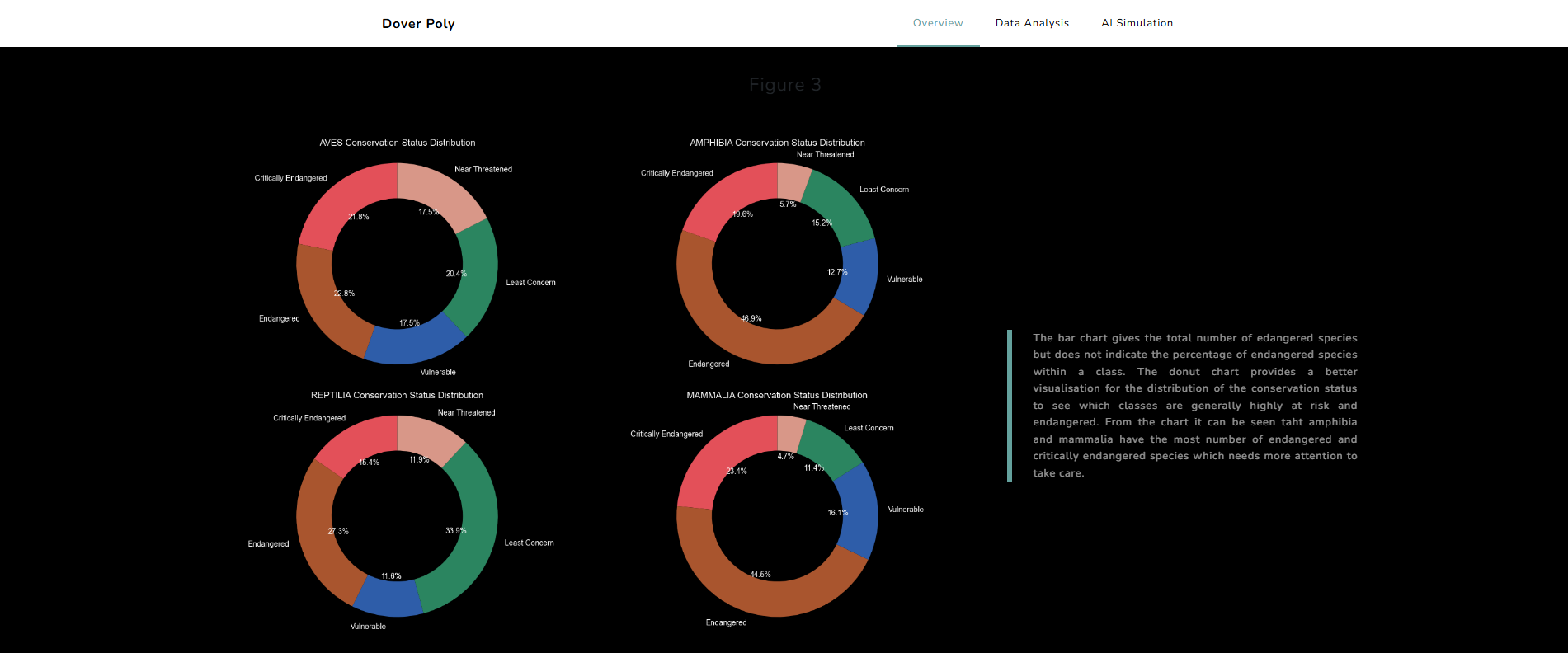
Donut Chart comparing Conservation Status across Different Animal Class in percentage
-
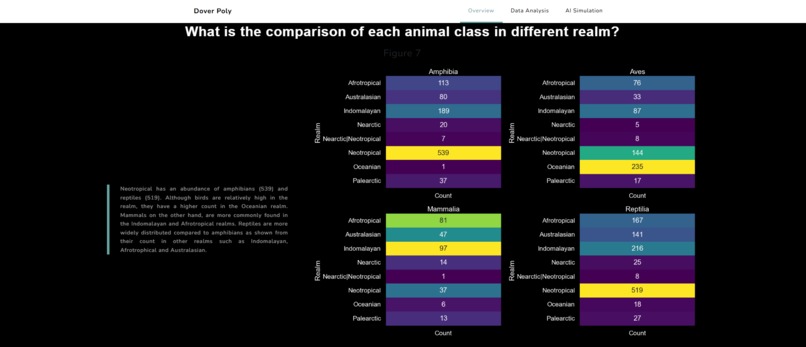
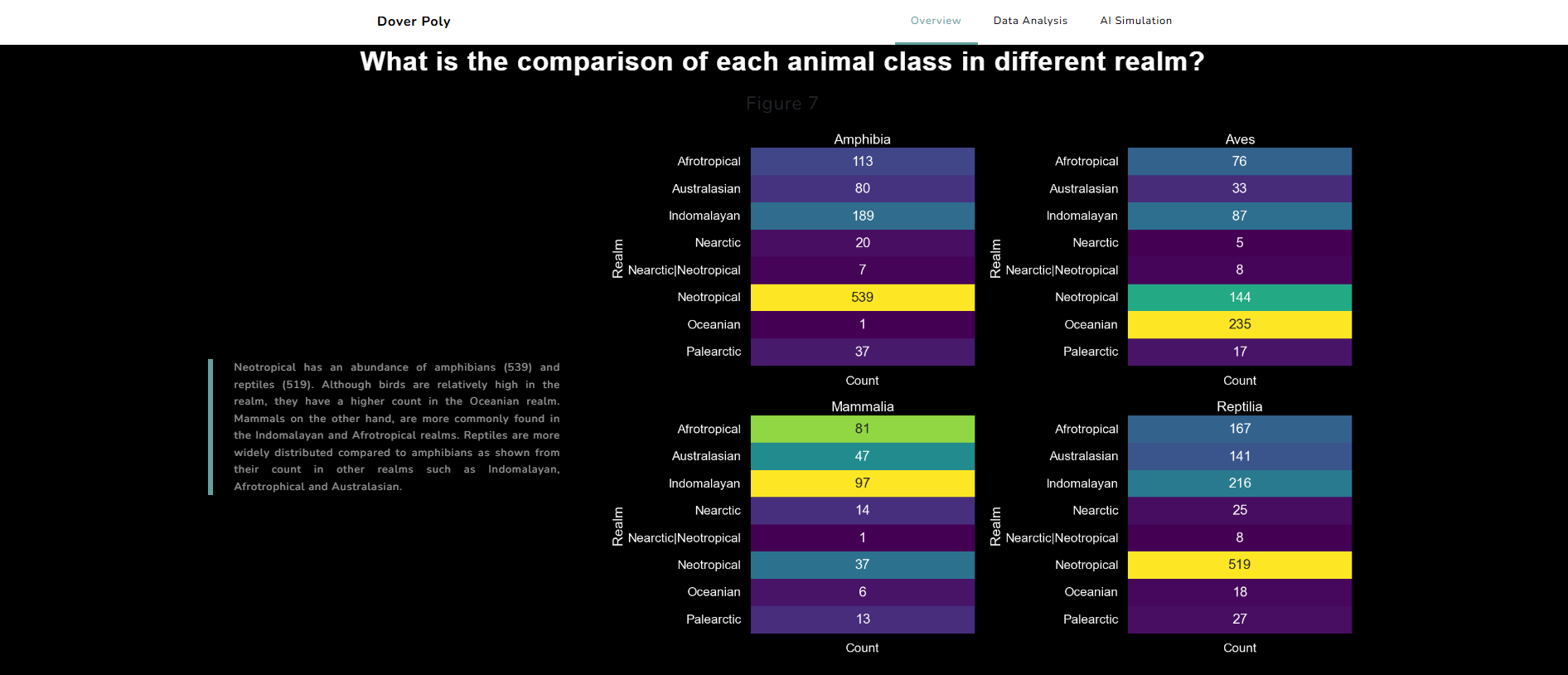
Heatmap of population count of each animal class in different realms
-
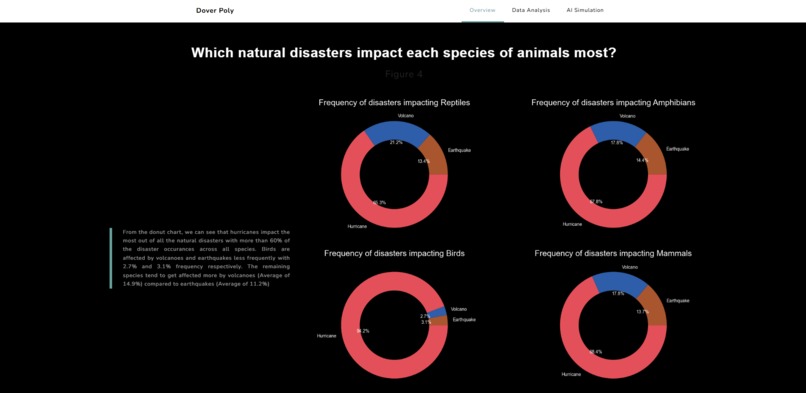
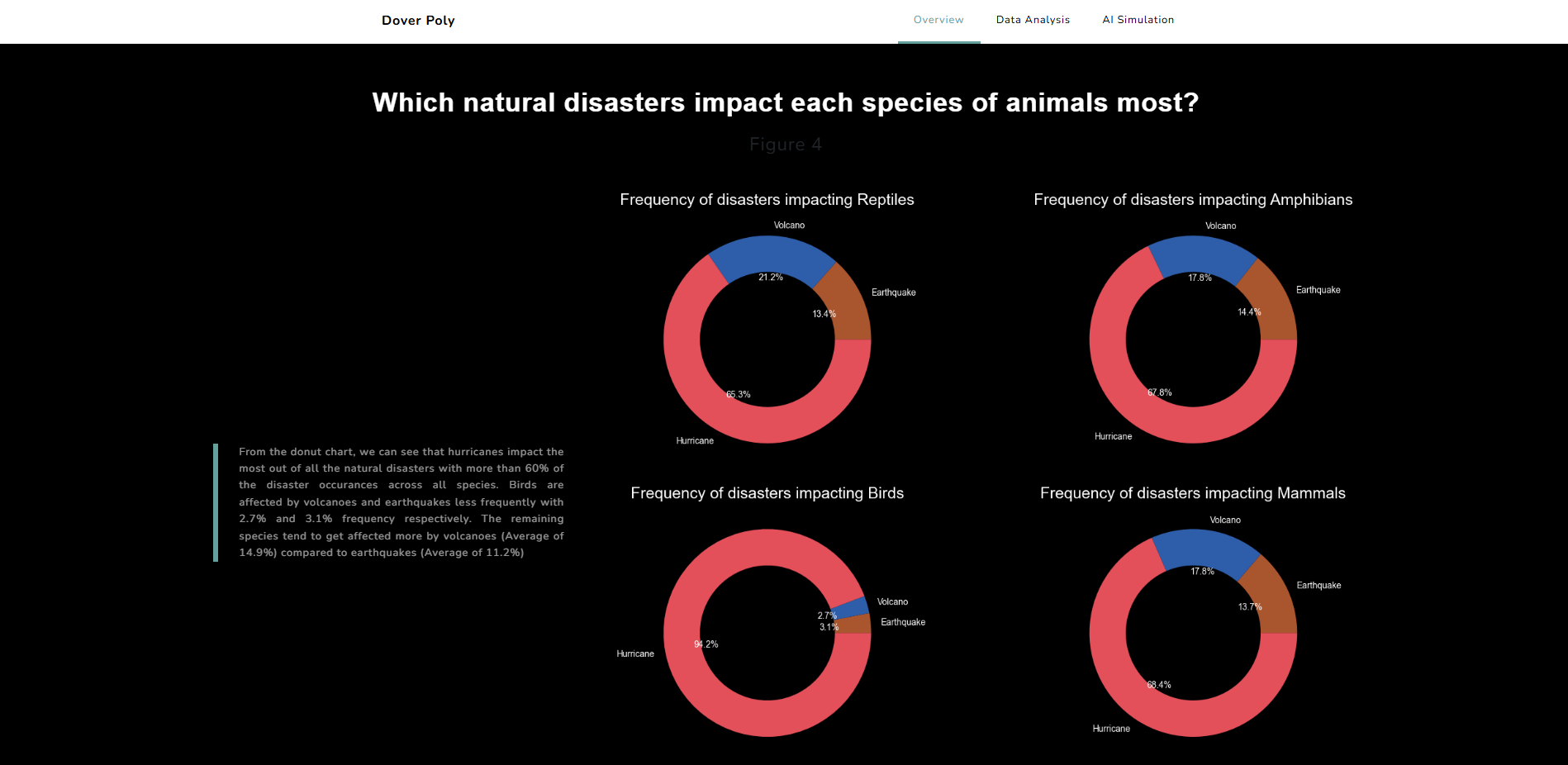
Donut Chart comparing the natural disasters impact each species
-
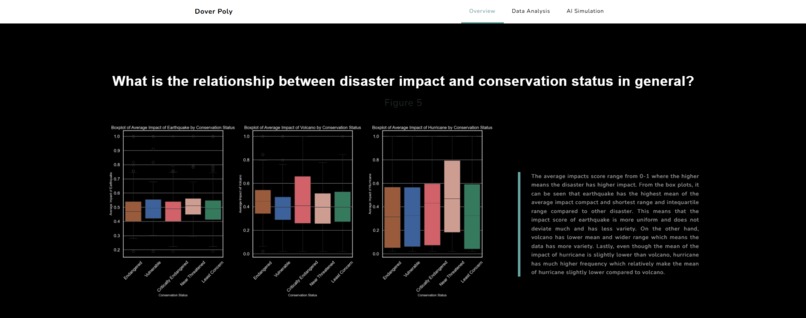
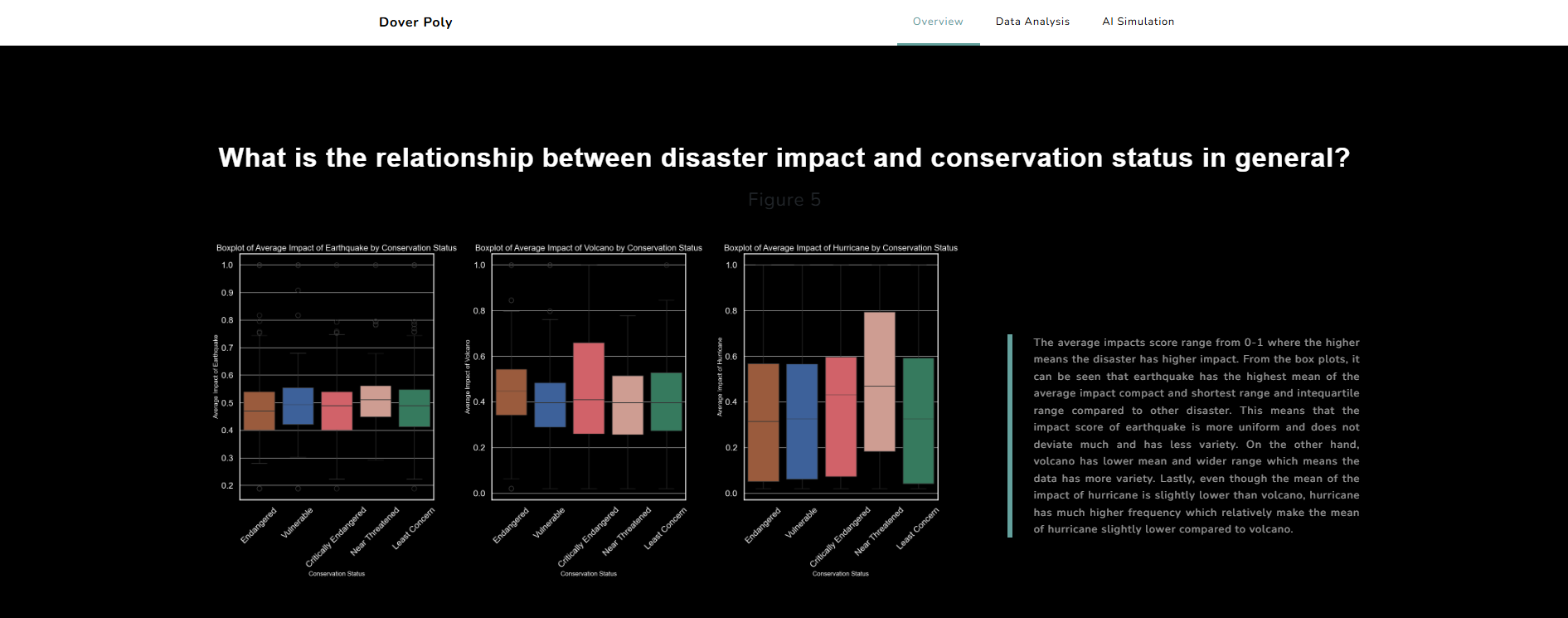
Boxplot representing the relationship between disaster impact and conservation status in general
-
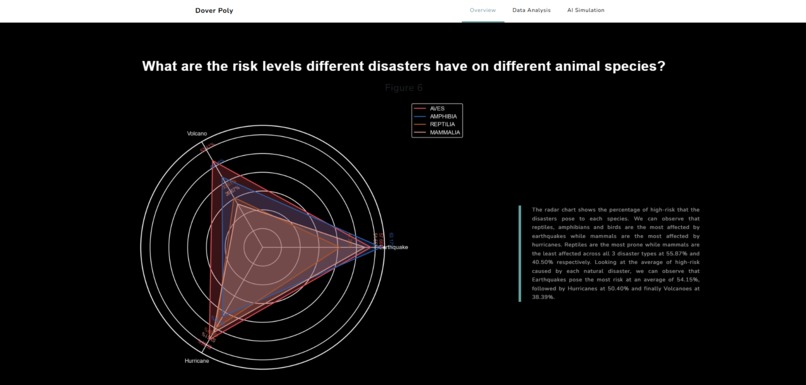
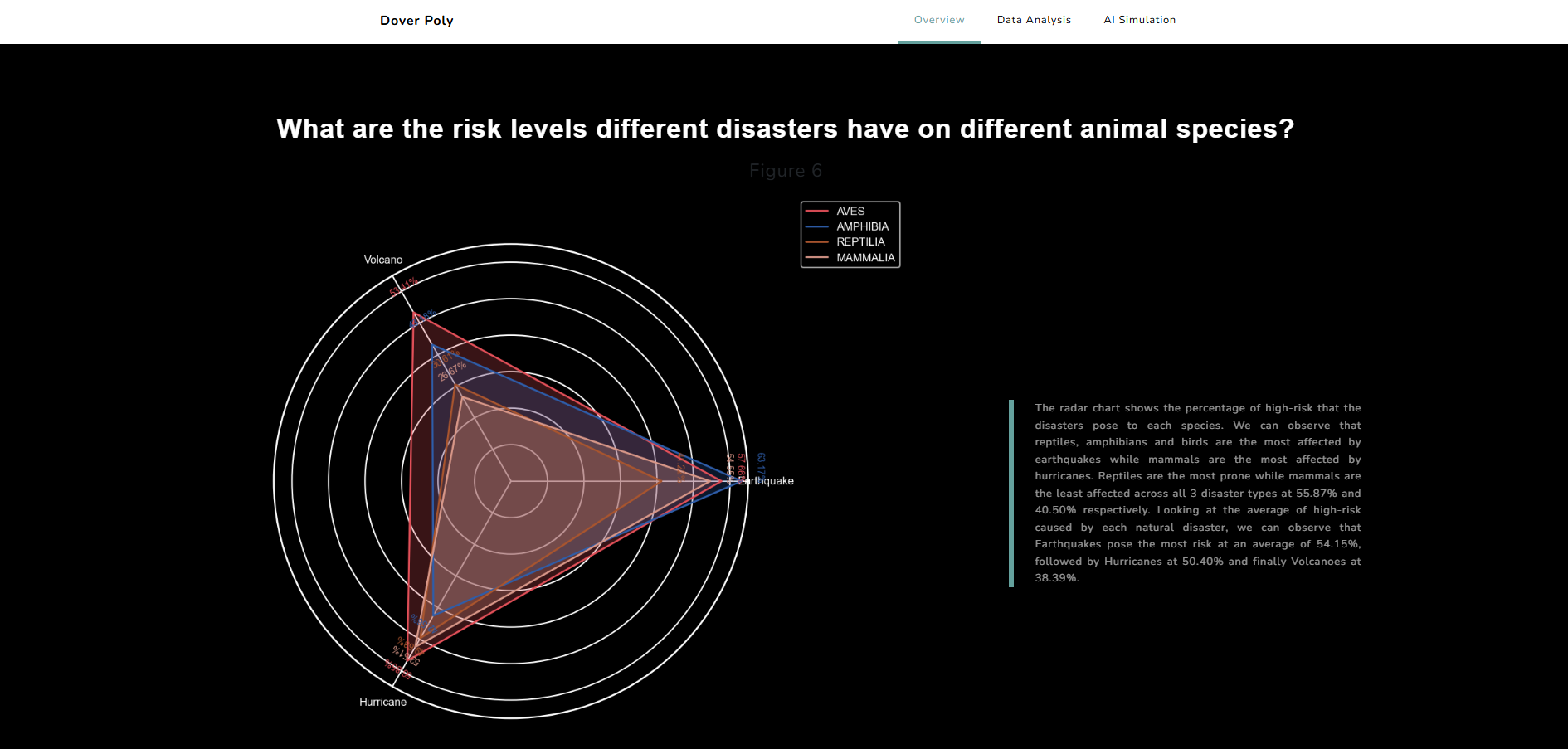
Radar Chart representing the risk levels different disasters have on different animal species
-
Website - Contacts list
-
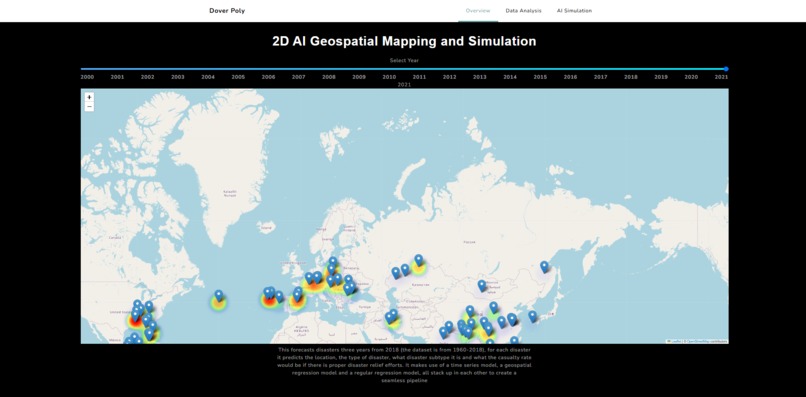
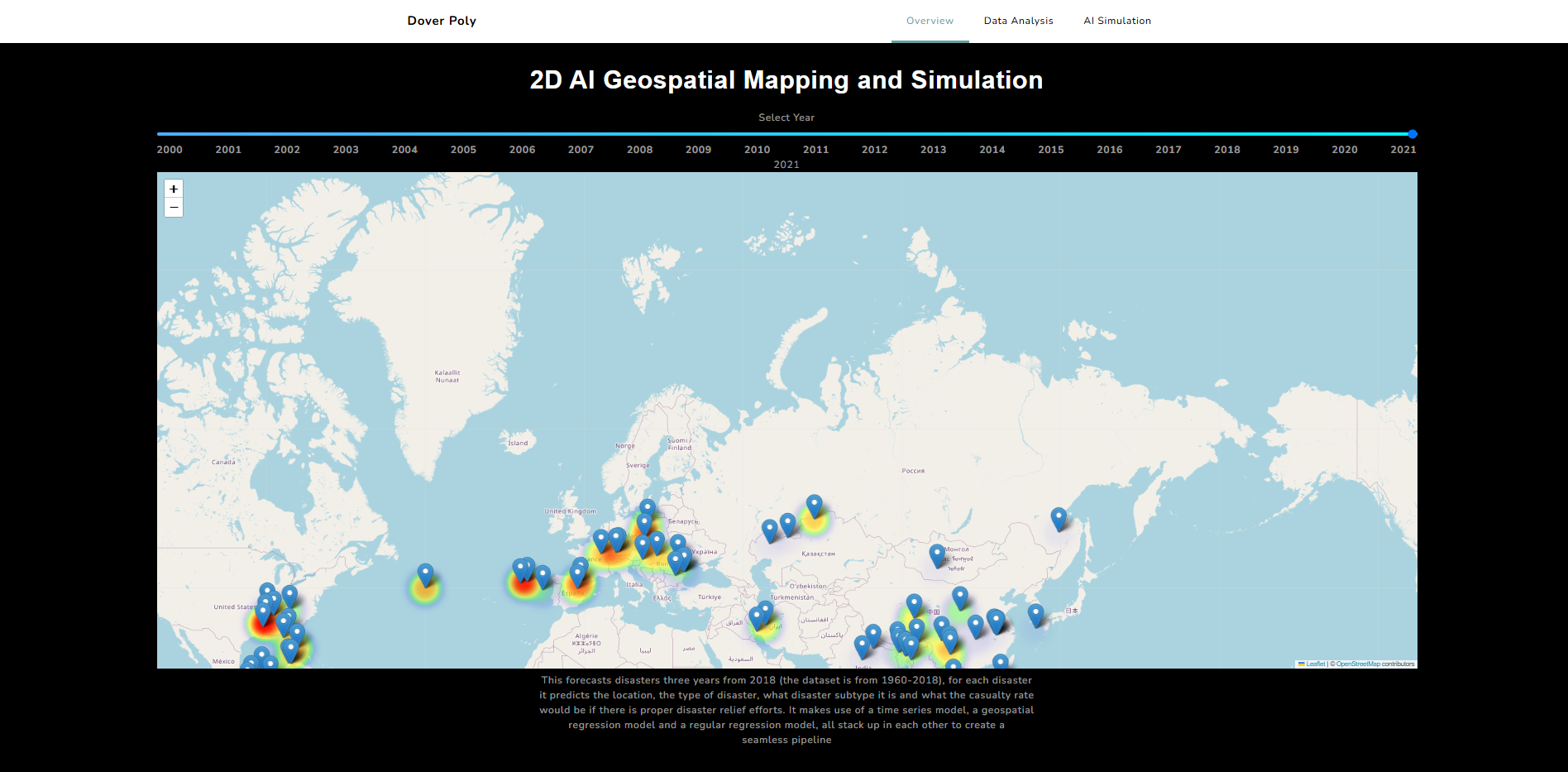
AI Simulation and Prediction showing the locations and various information about Natural Disasters
-
Website - Landing Page
Inspiration
We believe that the conservation of endangered species is important as many of our loved animals may potentially go extinct in the near future. With climate change causing an increase in more unpredictable and violent weather conditions, we decided to research on Natural Disasters and its impact on the Endangered to potentially improve the efficiency and effectiveness of conservation efforts of these species.
What it does
Our solution is the 2D AI Geospatial Mapping and Simulation for Predictive Analysis of Natural Disasters. This is an AI simulator which is able to rely on past data and use them to predict upcoming natural disasters, its location, disaster type, subtype as well as the casualty rate depending on whether there is proper disaster relief efforts.
How we built it
Analysis For analysis, we settled on 5 different datasets (4 -> Natural Disasters on different Species, 1 -> Natural Disaster across the years). We used these datasets, together with python Matplotlib and Seaborn to plot a time series graph, a radar chart, a heatmap, multiple bar charts and donut charts.
Website Since we only have five days to complete the hackathon projects, we decided to use Bootstrap which is CSS framework as our template. We then modify some of the UI and behaviour to tailor our personal needs. For example, we change the main color of the web into dark and attach some of our chart and analysis. We also embed our AI simulation map into the website.
AI Simulation Our AI simulation pipeline consists of three machine learning models, a time-series model and two regression models. These three models are used sequentially, meaning the first model’s output feeds into the second model, and the second model’s output feeds into the third model. Using the results from the pipeline, we can output them onto a 2D geospatial map made using folium and rasterio, helping us to better visualize and prepare for future disasters.
Challenges we ran into
One of the challenges we face is time management. Three of our team members are having internship and it is quite challenge to juggle the work loads. What makes it harder is that we cannot find the time to meet physically and have to rely with online meeting. Despite the challenges, we managed to maximise our times by being discipline with ourselves.
Accomplishments that we're proud of
We were able to analyse a dataset to find out the key causes of risk by natural disasters to endangered species and areas where we should focus conservation efforts on. We are also able complete the AI simulation which is able to predict 3 years into the future with relatively high accuracy.
What we learned
We learnt important insights into Natural Disasters and the Endangered Species such as their habitats. We also managed to pick up new skills in Python programming such as using pandas Dataframes to handle the our dataset, plotting different charts using matplotlib and seaborn and using scikit-learn to build an AI simulation model for our solution.
What's next for Natural Disaster Impact Against Endangered Species Analysis
Our next steps would be to further improve our prediction on the AI simulation to further into the future and its accuracy. This will help us to manage conservation efforts better to be more efficient and potentially saving more endangered species.

Log in or sign up for Devpost to join the conversation.