-
-
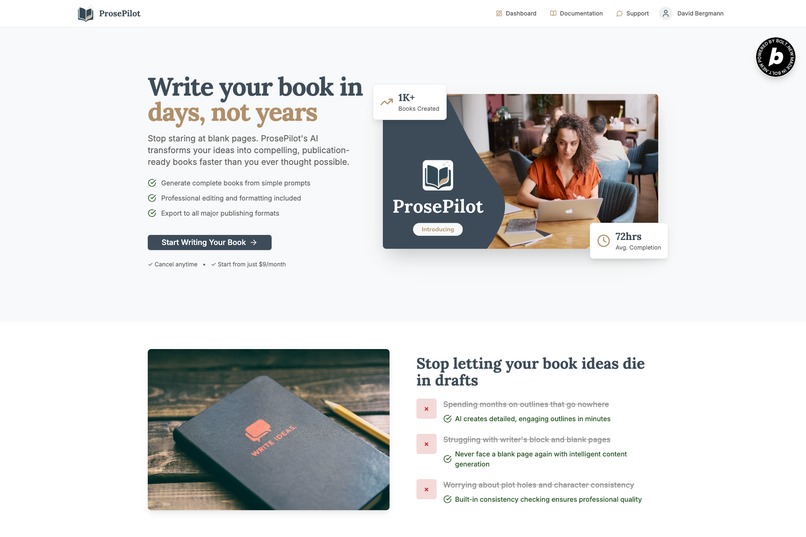
Homepage
-
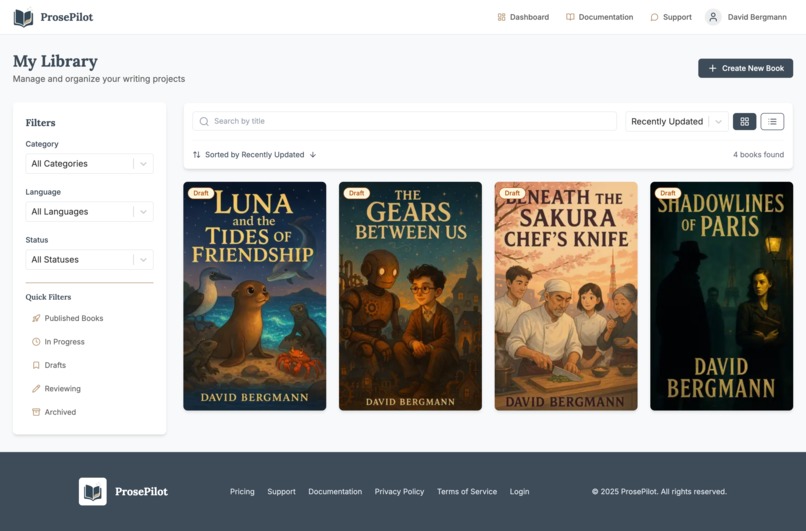
Dashboard
-
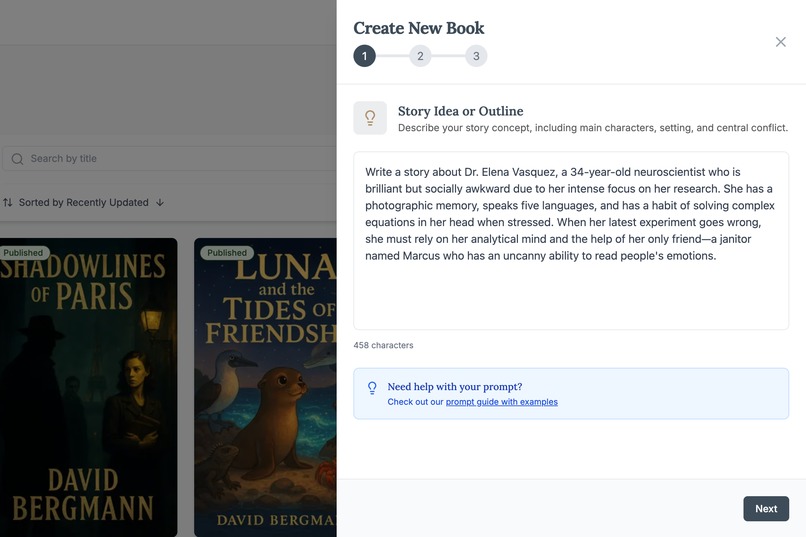
Create New Book - Step 1
-
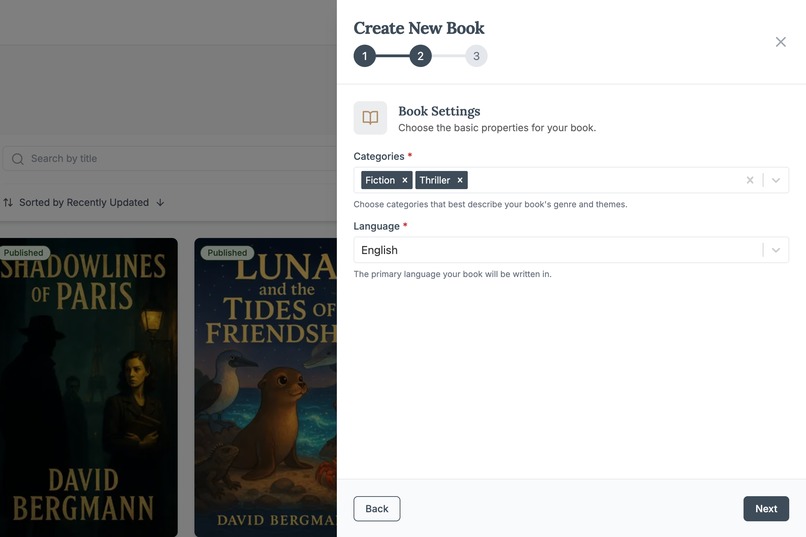
Create New Book - Step 2
-
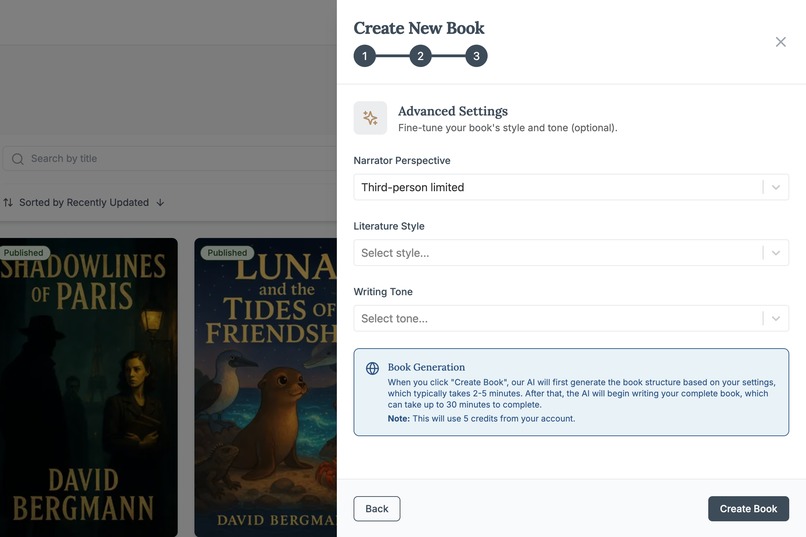
Create New Book - Step 3
-
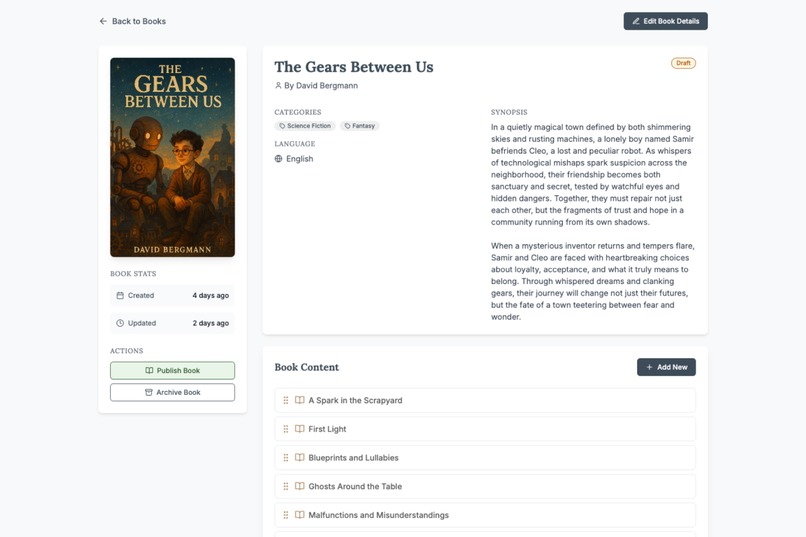
Book Details
-
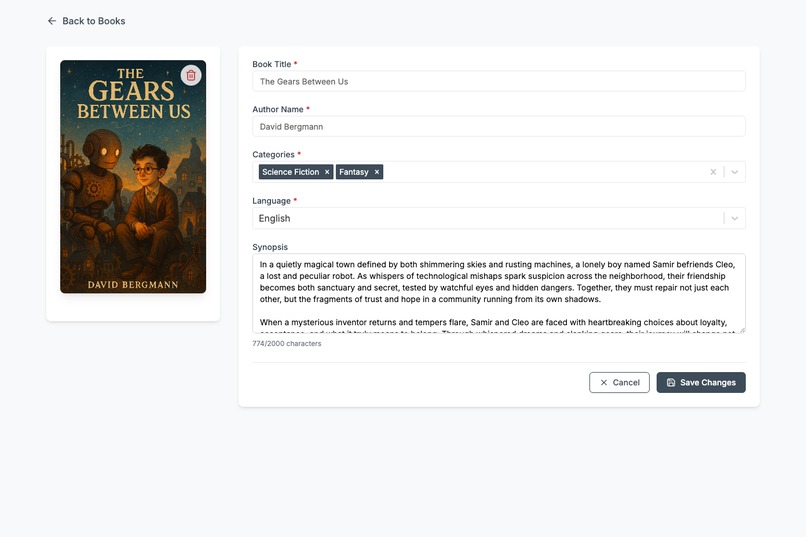
Book Details - Edit
-
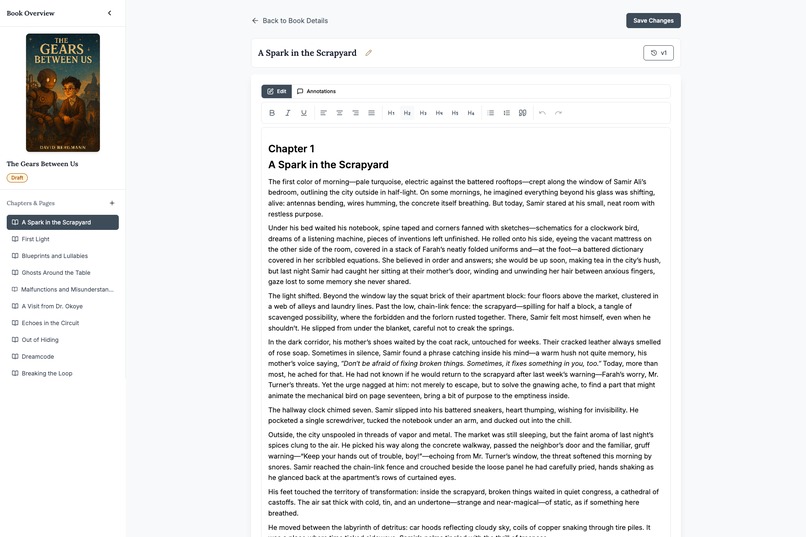
Chapter Editor
-
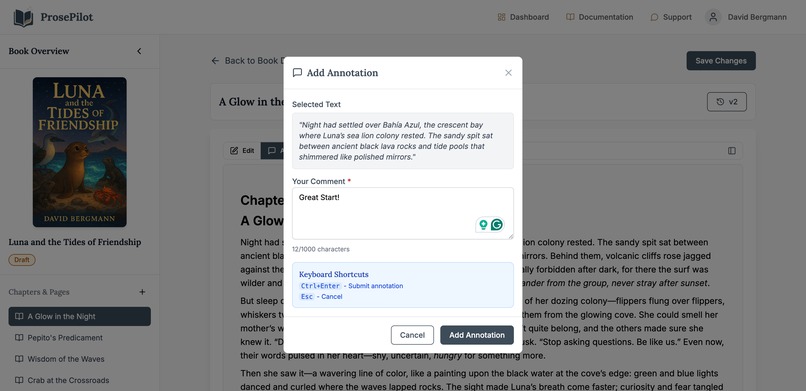
New Annotation
-
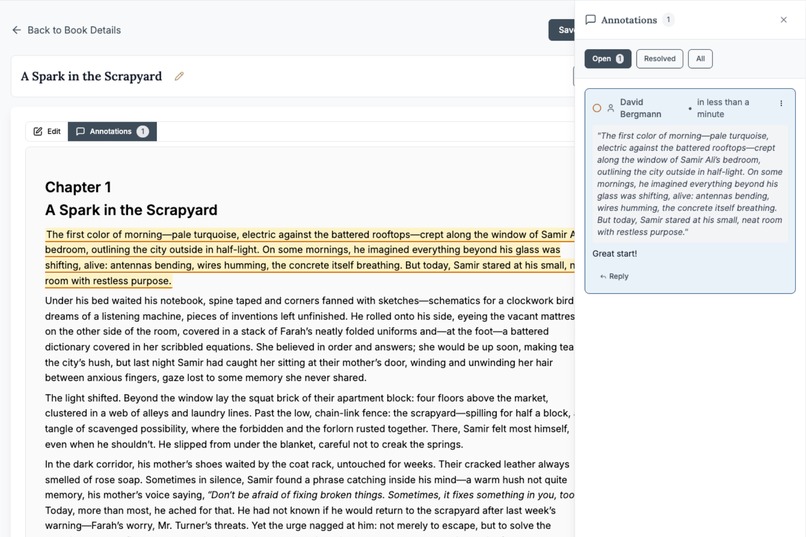
Anotations Sidebar
-
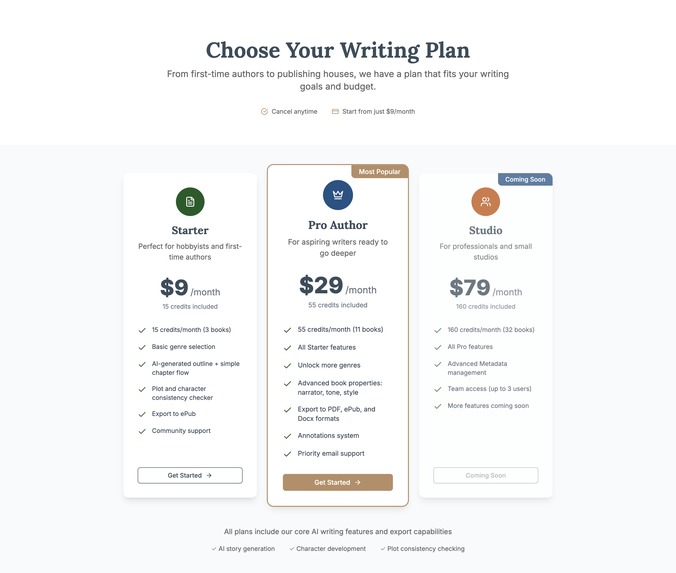
Pricing


Inspiration
We’ve always been fascinated by the idea that everyone has a story to tell, but not everyone has the time, confidence, or professional skills to write a book. That’s what inspired ProsePilot—a platform where anyone can turn a simple prompt into a full-fledged book using AI.
The traditional writing process is fraught with barriers that prevent brilliant ideas from becoming reality:
- Writer's block that turns hours of writing time into staring at blank pages
- Complex plotting that requires months of planning before a single word is written
- Inconsistent characters and plot holes that emerge during the writing process
- Formatting headaches that distract from the creative process
- Publishing barriers that make getting a book to market seem impossible
We believe that AI should be a creative partner, not a replacement for human creativity. ProsePilot was built to remove the technical barriers to writing while preserving the unique vision of every author.
When we heard about the Bolt Hackathon, it felt like the perfect opportunity to finally bring the project to life. We wanted to prove that something that once seemed like it needed a big team and months of work could be built quickly and effectively with the right tools.
What it does
AI-Powered Writing Assistant
Prosepilot is a web-based platform that empowers writers with a smart AI assistant that transforms simple prompts into fully developed chapters, character descriptions, and plotlines. The system is context-aware, meaning it understands the world, characters, and events of your story to ensure narrative consistency throughout. Whether you prefer a poetic tone, a suspenseful mood, or a conversational style, the AI adapts to generate content that matches your unique vision. It also acts as a narrative editor, identifying plot holes and inconsistencies while suggesting improvements to keep your story cohesive.
Complete Book Management
Managing multiple writing projects is seamless with Prosepilot. Users can organize their work into distinct book projects with a clear and intuitive structure. Chapters are easy to manage thanks to a drag-and-drop interface and automatic numbering. With built-in version control, you can track all changes and revert to earlier drafts as needed. When your book is ready, Prosepilot supports exporting to a variety of publishing formats, including PDF, EPUB, and DOCX.
Professional Writing Environment
Writers enjoy a modern, distraction-free text editor powered by TipTap, designed for both functionality and comfort. The interface supports annotations and comments, allowing writers to leave notes, suggestions, or feedback directly in the text, making the editing and collaboration process more efficient.
Flexible Subscription Model
Prosepilot offers a flexible, credit-based subscription system that lets you pay only for what you use. You can choose from several plans, including Starter, Professional, and Studio, based on your needs. With no long-term commitments, you’re free to cancel anytime without penalties, giving you full control over your creative process and budget.
How we built it
We built the entire frontend using Bolt, which provided a smooth development experience and fast integration with external services. Supabase powers the backend data, handling authentication, storage, and user management. Our AI-driven book generation is supported by a Python backend hosted on Heroku. To manage subscriptions and credit usage, we integrated Paddle, allowing users to upgrade their plans or purchase additional credits easily. Resend was used for transactional emails, while Mailchimp helped us manage campaign outreach. We also implemented Google Analytics and Cookiebot for user insights and compliance. The project is deployed on Vercel using a domain registered through Entri. All of this came together in just a few intense days of building.
Challenges we ran into
One of the biggest challenges we faced was implementing the editor interface. Designing a flexible system that allowed users to edit long-form content, track versions, and manage annotations required a lot of logic and careful user experience thinking. Additionally, the credit and subscription model presented its own complexities. We needed to build a system that could track monthly credits, handle recharges, and process refunds in case of generation errors—all while providing a smooth and transparent experience for users. The sheer scope of integrating multiple tools and services in such a short timeframe was demanding, but we embraced the challenge head-on.
Accomplishments that we're proud of
We’re incredibly proud that we managed to build a complete, production-ready platform during the span of the hackathon. What once felt like a project that would require a large team and several months came together in just weeks thanks to focused effort and the right tools. We succeeded in creating a tool that empowers aspiring writers and lowers the barriers to storytelling. Perhaps most rewarding of all, we proved to ourselves that with determination, collaboration, and smart use of resources, we could bring a meaningful product to life in record time.
What we learned
Throughout this project, we discovered that shipping a fully functional, end-to-end application is possible even with limited time and resources. We learned to rely on rapid iteration, prioritize user experience, and make the most of Bolt’s powerful integration capabilities. Working with tools like Supabase, Netlify, and Paddle taught us how to efficiently manage everything from authentication to payments in a unified ecosystem. We also gained a deeper appreciation for planning complex features under pressure and staying focused on the user’s journey throughout the development process.
What's next for Prosepilot
ProsePilot is just the beginning of what we envision as a full ecosystem for creative writing. Our next step is to introduce team collaboration features, enabling writers, editors, and designers to work on books together in real time. We also plan to enhance the editing capabilities by adding more formatting options, the ability to insert images, and other advanced tools to give users greater creative flexibility. Additionally, we aim to integrate AI into more features, such as regenerating individual chapters and generating custom cover images. What started as a hackathon project is now a platform with real potential to democratize storytelling.
Sponsor Challenges
- Custom Domain Challenge
- Deploy Challenge
- Startup Challenge

Log in or sign up for Devpost to join the conversation.