-
-
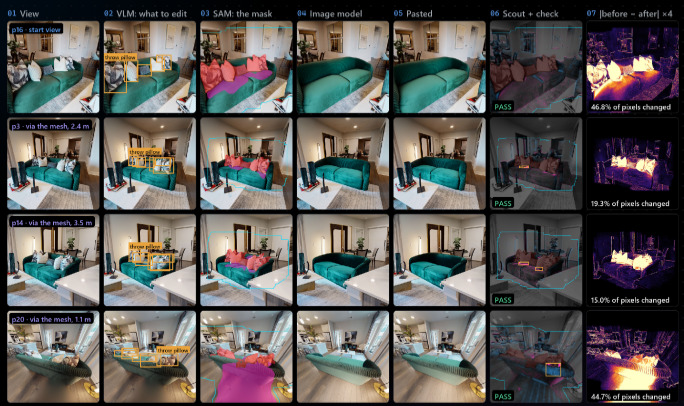
Agent thought process after prompting it to remove throw pillows, across 4 angles/images
-
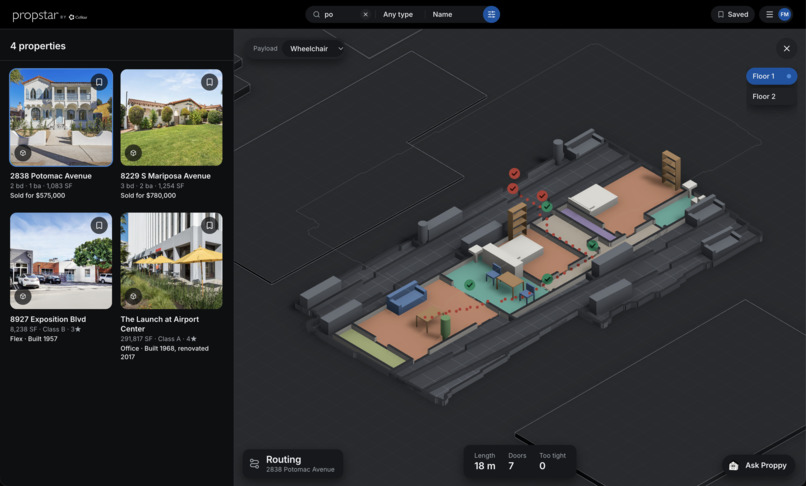
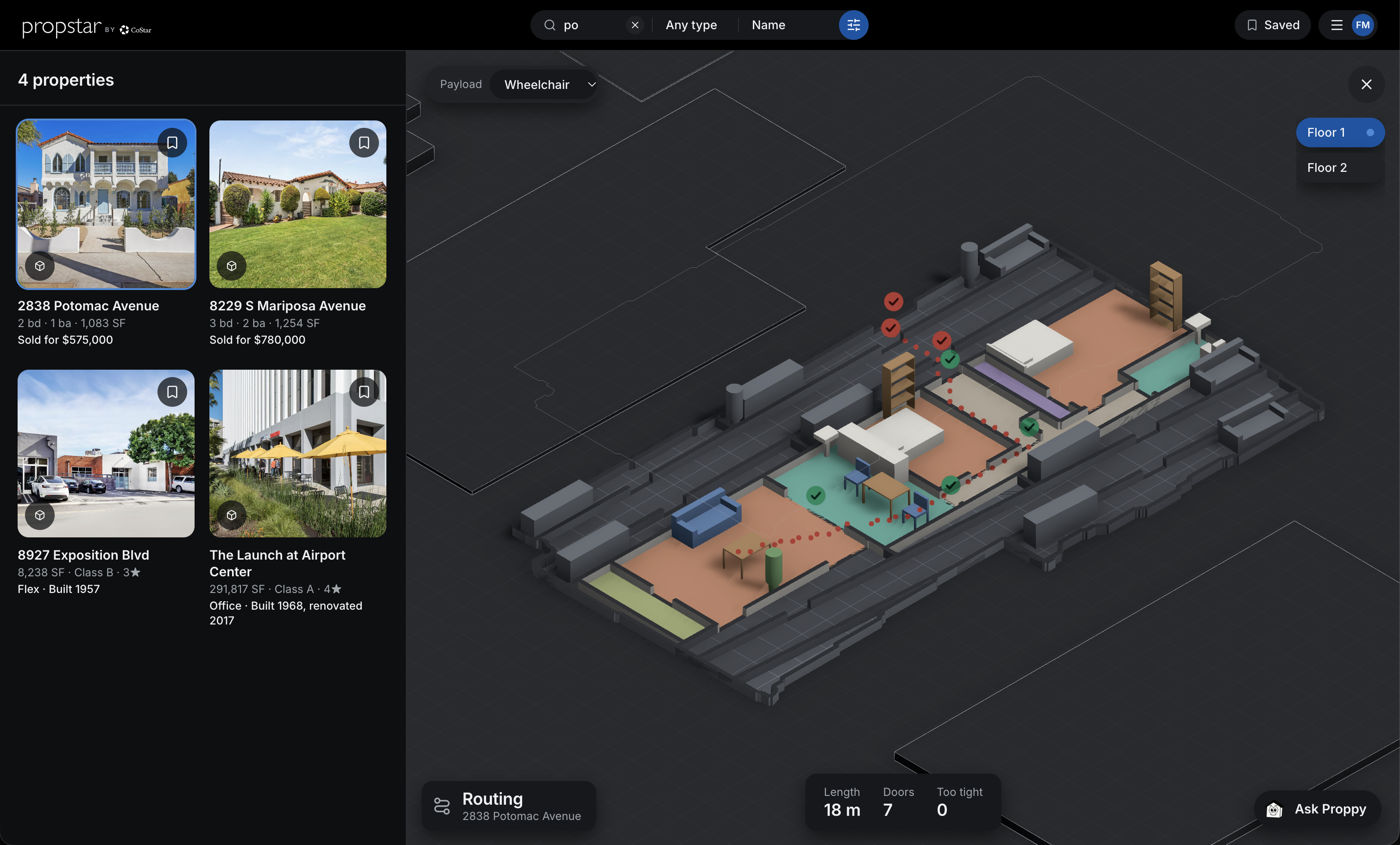
3D Splice + Router
-
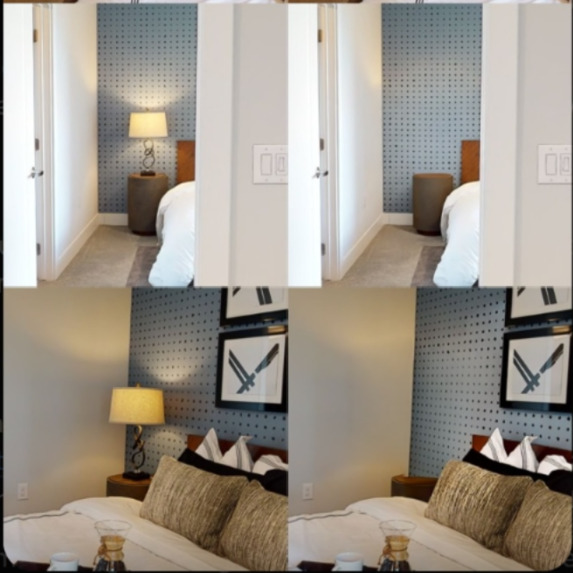
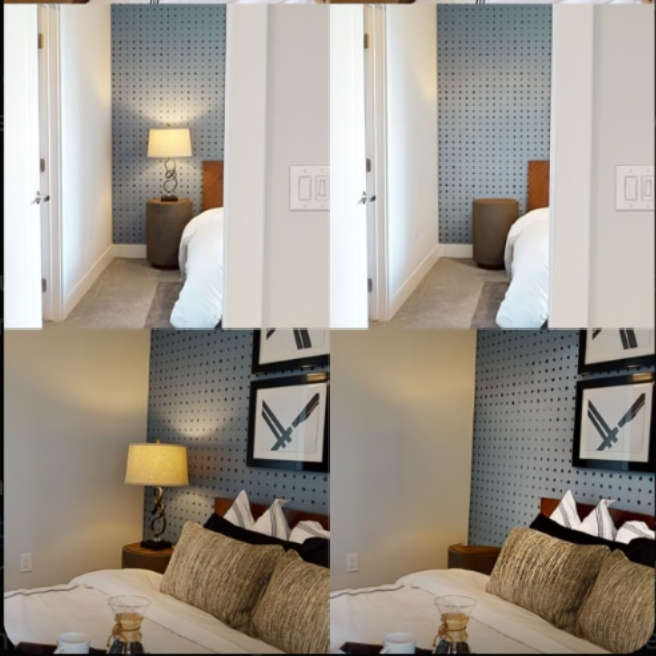
lamp removal, two perspectives
-
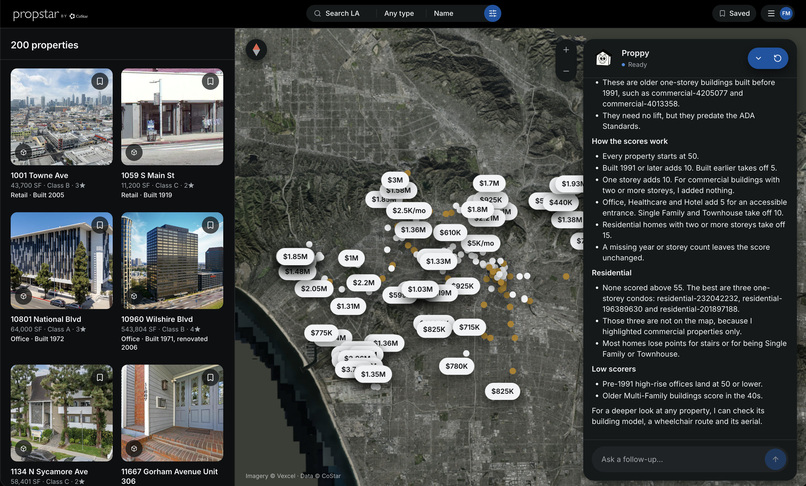
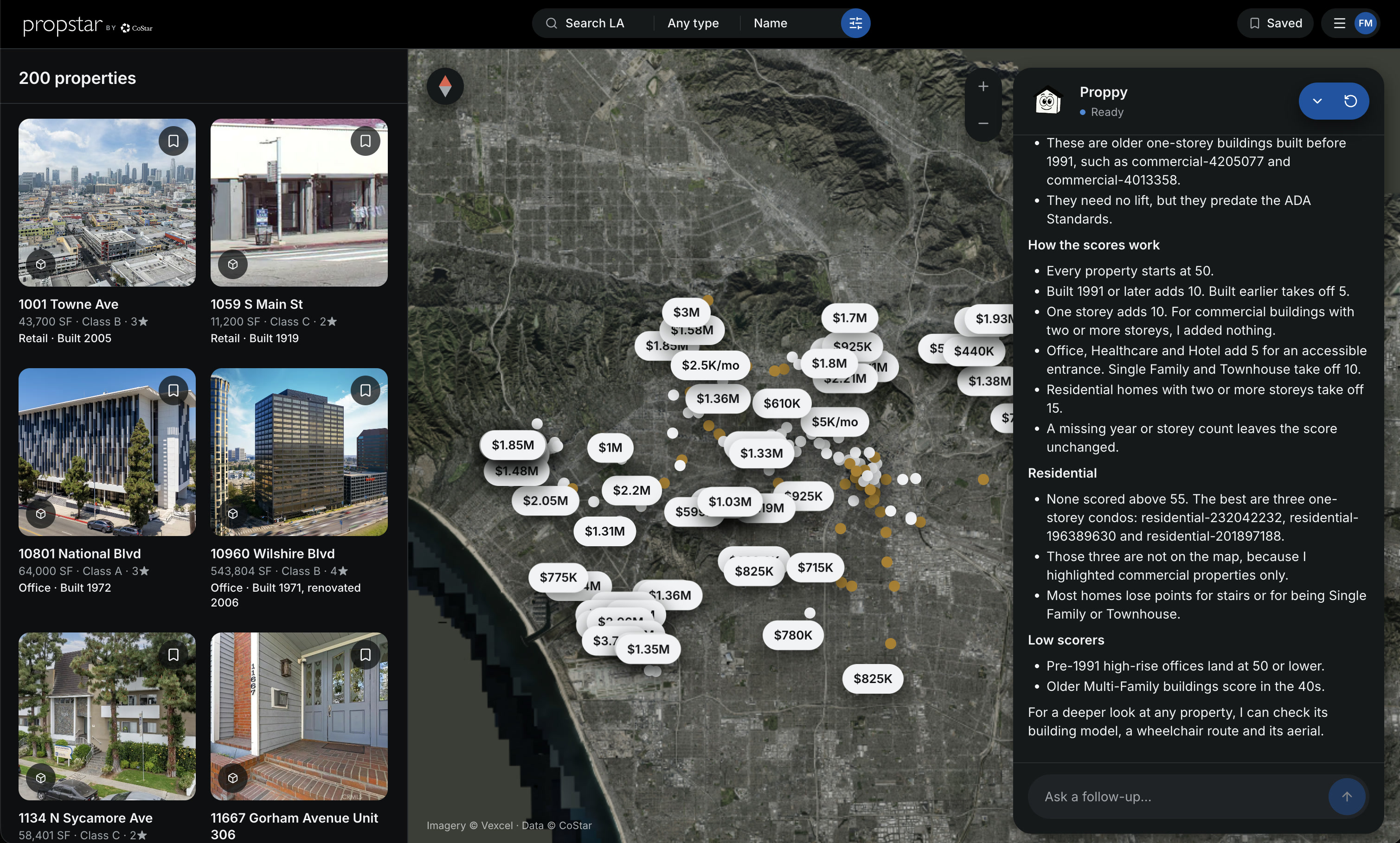
Agent output of selected properties
-
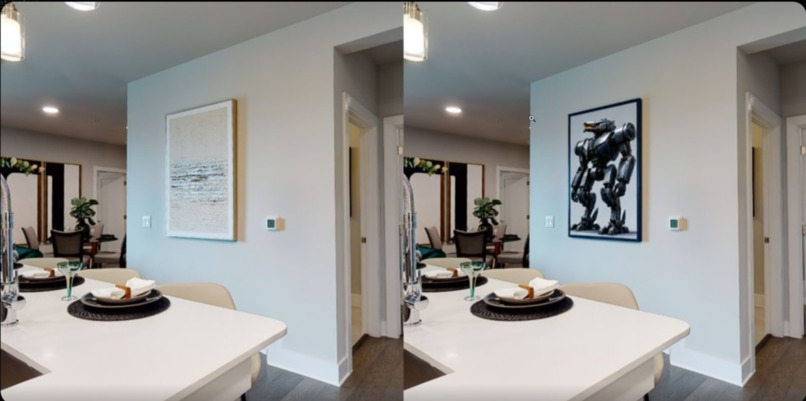
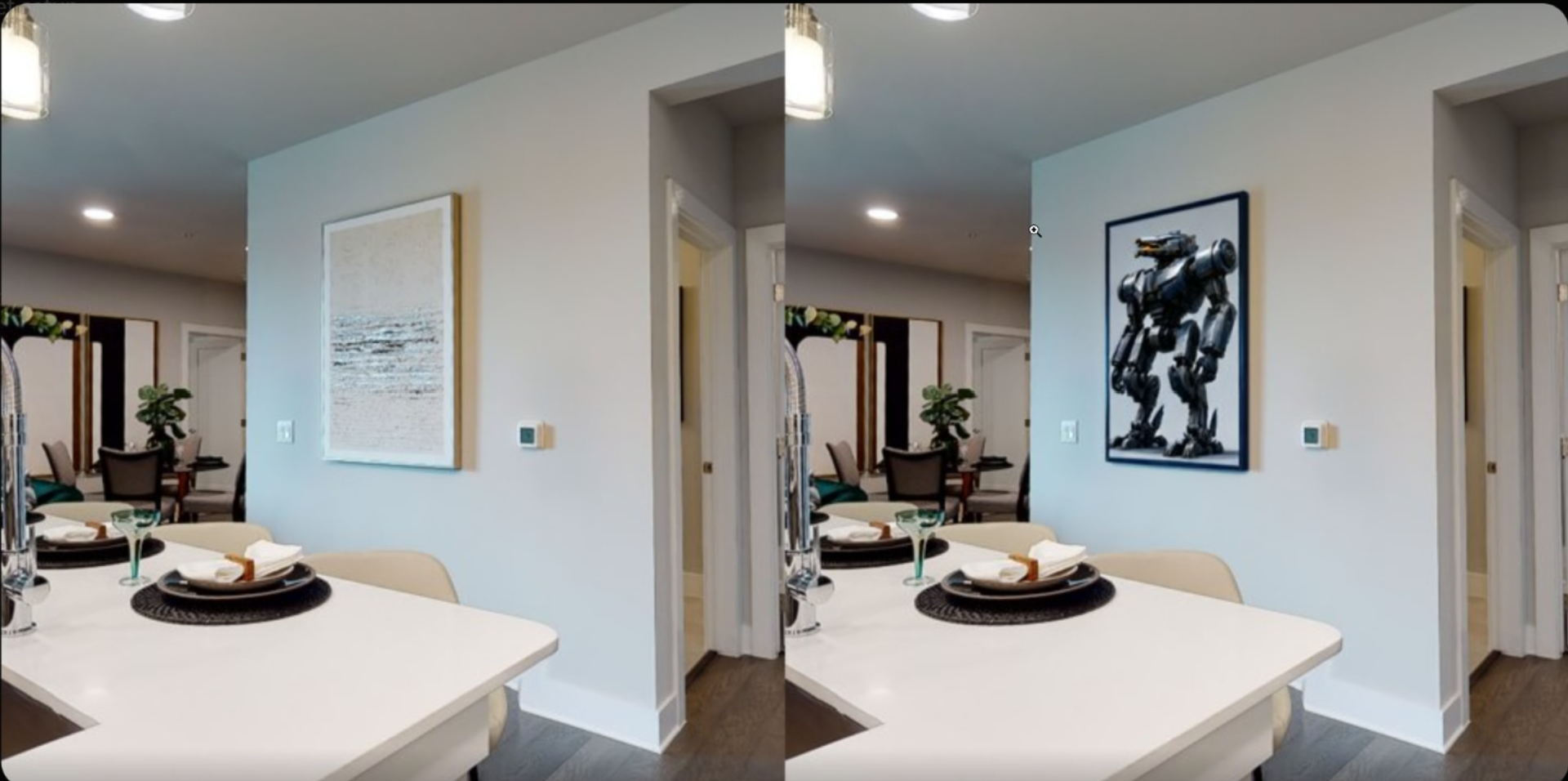
You can retexture stuff, I particularly like redoing paintings

Inspiration
We started with a very simple goal, which was to build out a magic eraser style tool into CoStar, allowing users to make quick and easy modifications to building renders. This quickly expanded into a suite of tools and applications, both for interior design and exterior planning.
What it does
This is an API based toolkit, although we also have an optional chatbot that can help manage it. The primary tooling is rendering buildings, plotting paths through buildings, and then editing (removal + retexturing) of panoramic scenes (i.e. a 360 degree camera of a home interior). This allows realtors to rapidly clean up post-hoc clutter in their staged areas and swap out individual furniture pieces for A/B testing at low cost.
Our platform is fully local hosted to maintain data privacy, and we run a complex pipeline of computer vision models and deterministic checking via LangChain to ensure that 2D edits are consistent across panoramas. In practice this means that when you edit the appearance of a couch in one panoramic image, the models rebuild that edit consistently across all other nearby photos.
How we built it
Our image editor primarily uses Langchain's LangGraph to build an agent harness for a locally hosted VLM (Vision Language Model, Qwen3-VL). This model is prompted by a user to change something (ex. "remove all throw pillows on this couch", then uses SAM 2.1 (Segment Anything Model) and Qwen-Image 2.1 to segment and generate solutions. The VLM acts as an orchestrator, scanning for visual errors and iteratively calling upon premade tools/models to improve the scene until it's ready.
Challenges we ran into
There is some serious math involved in maintaining consistent images across varied angles in a 3D space! Normally a standard generative model would have no trouble adding or removing stuff from images, but it's a big challenge to make sure that the generated changes all are correct and aligned.
We also spent a lot of time dealing with may classic generative imaging issues, particularly around cleaning up stuff like light sources, shadows, and occluded objects. We spent maybe 6 hours repeatedly removing lamps yesterday lmao.
Accomplishments that we're proud of
Not only does this harness work well, but it's fully locally hosted in under 16GB of VRAM on open weight models! This means our product is compartmentalized, easy to deploy, and absurdly cheap.
What we learned
Generative image models are extremely tricky to work with because their outputs are so varied. There are a lot of really interesting problems to solve when you try to stabilize them into a real product.
What's next for propstar
Most of this work has been done across 2D images taken in a 3D space, but we currently don't update the mesh behind the images very much. Updating the mesh alongside our images would be a big step forwards towards fully customizable digital twins.
Built With
- javascript
- langchain
- langgraph
- python
- qwen
- sam
