-
-
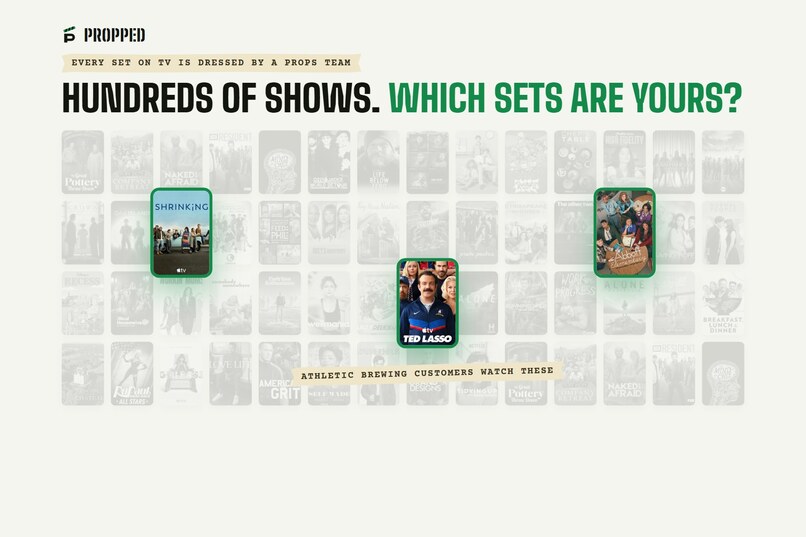
Qloo highlights the shows your customers actually watch.
-
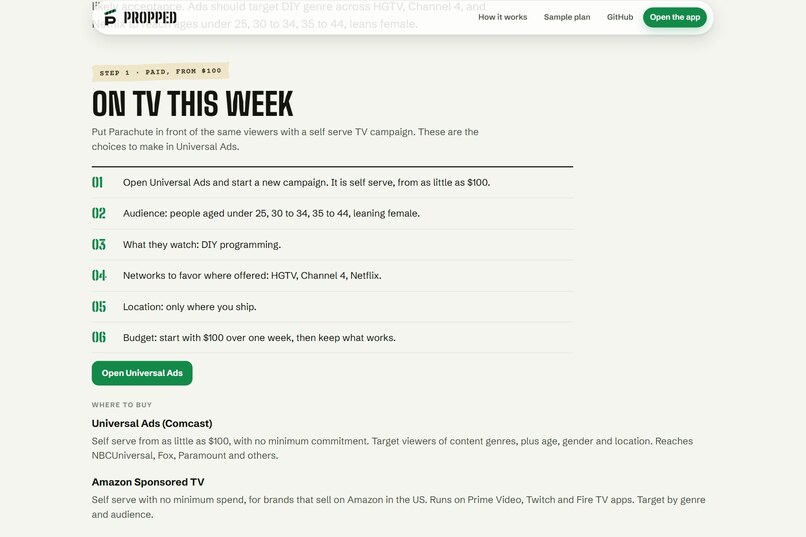
Step 1: run TV ads to those viewers.
-
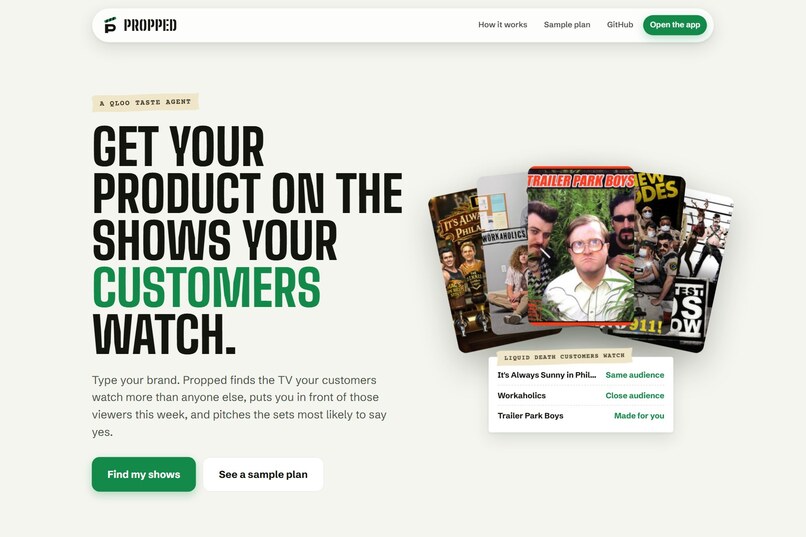
Type your brand
-
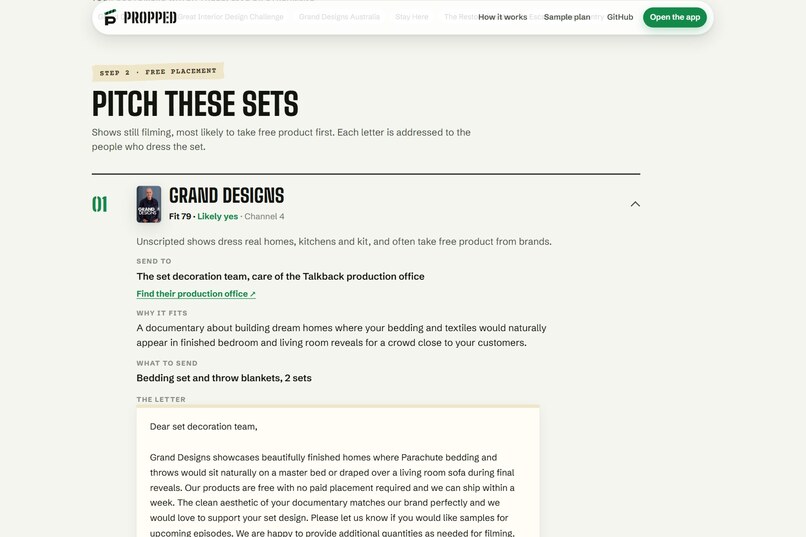
Step 2: pitch the sets likely to say yes.
-
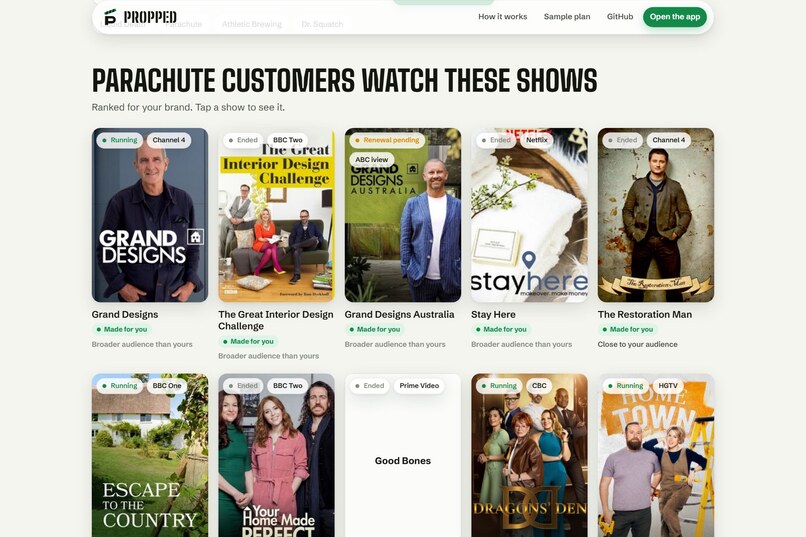
The shows your customer watch
-
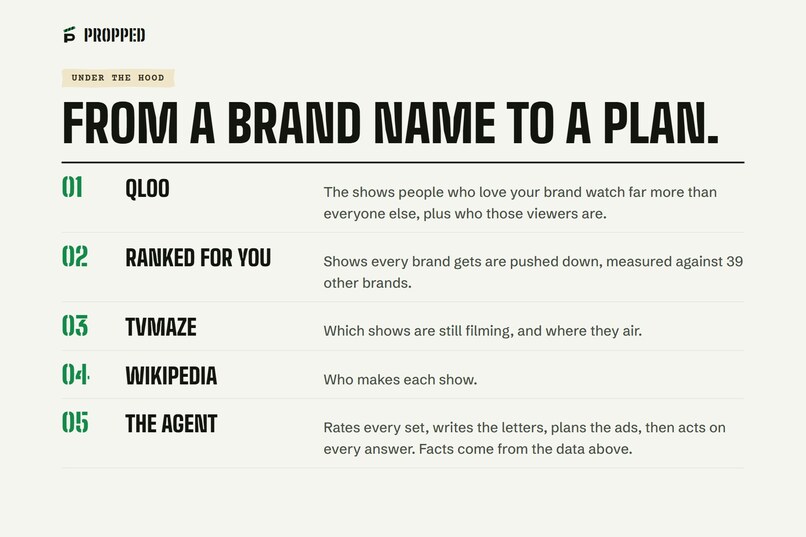
How it works
-
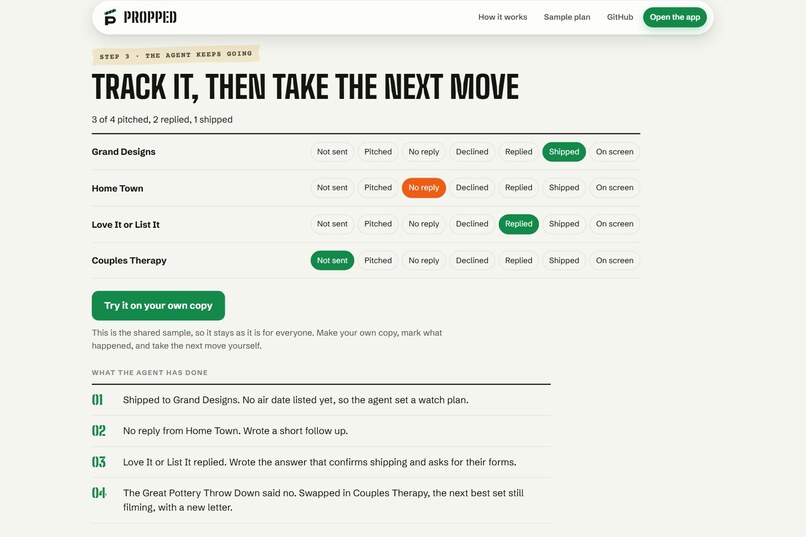
Step 3: the agent acts on every answer.
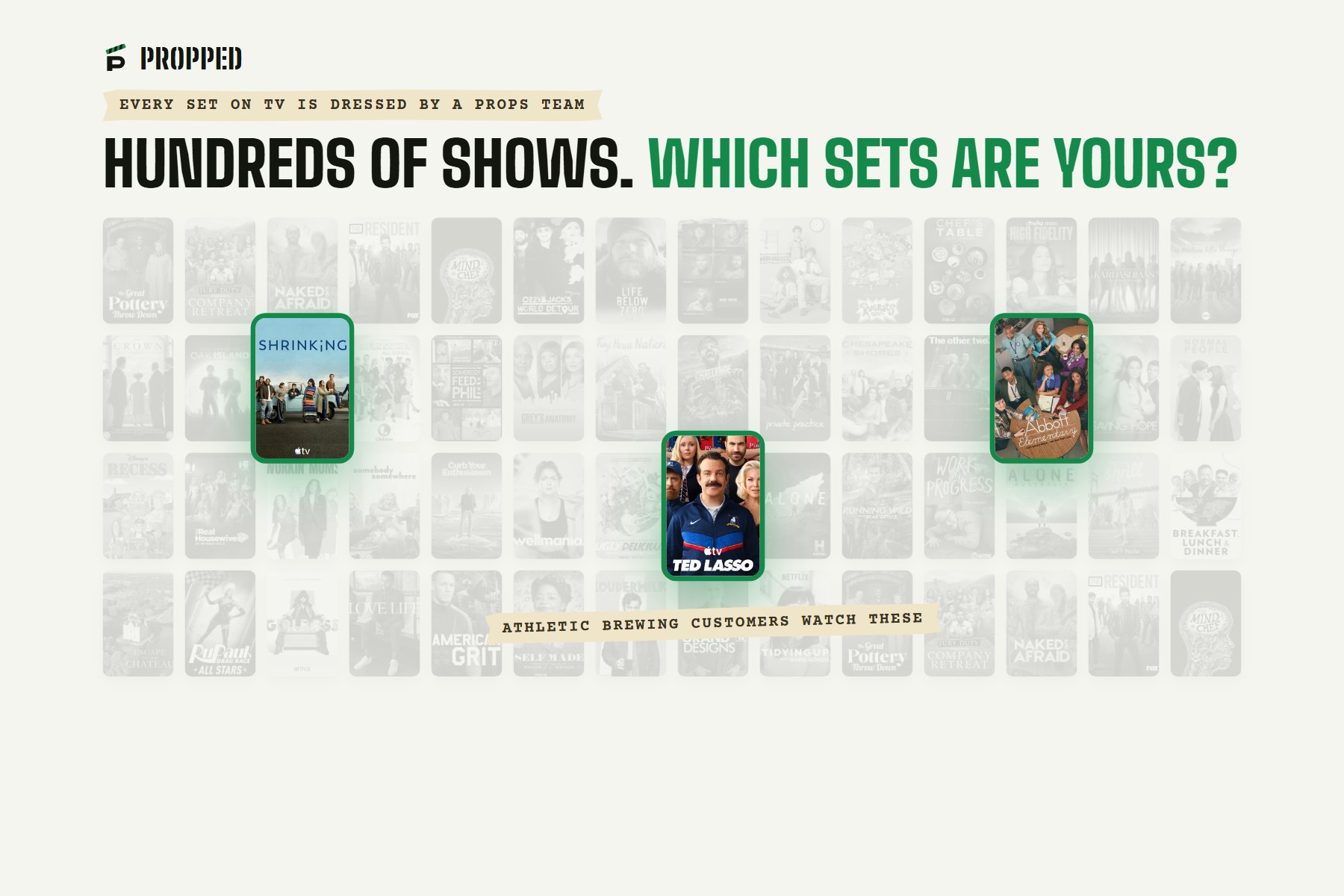
Inspiration
Big brands pay placement agencies anywhere from $15,000 to over $350,000 a year to know which shows their customers watch, who dresses each set and when to pitch.
Not for the placement itself. The drink on the bar in your customers' favourite show didn't cost that brand a cent: about 95% of placements in film and TV involve no money, according to RangeMe. What they paid for was knowing which show to ask.
A small brand has none of that. It guesses, sends product to shows its customers never watch, or never asks at all, and watches the free spot go to someone who could afford to know.
That knowledge is exactly what Qloo has: what the people who love your brand also love, down to the shows they watch far more than everyone else. So we built the agency a small brand can't afford, as an agent that never stops working the campaign.
What it does
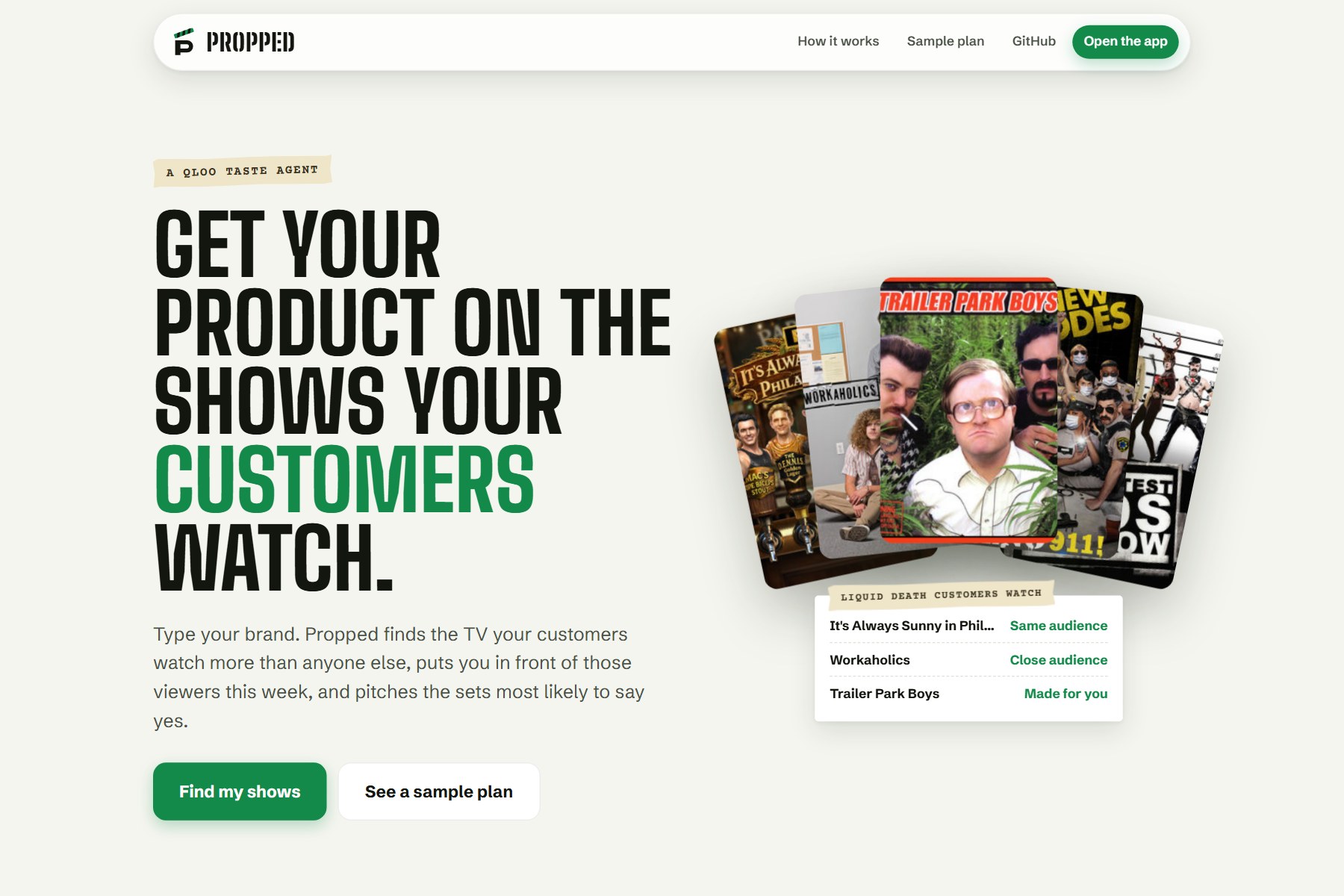
Propped takes a brand name and returns a plan that gets the brand on screen.
- Type your brand. Propped looks it up in Qloo.
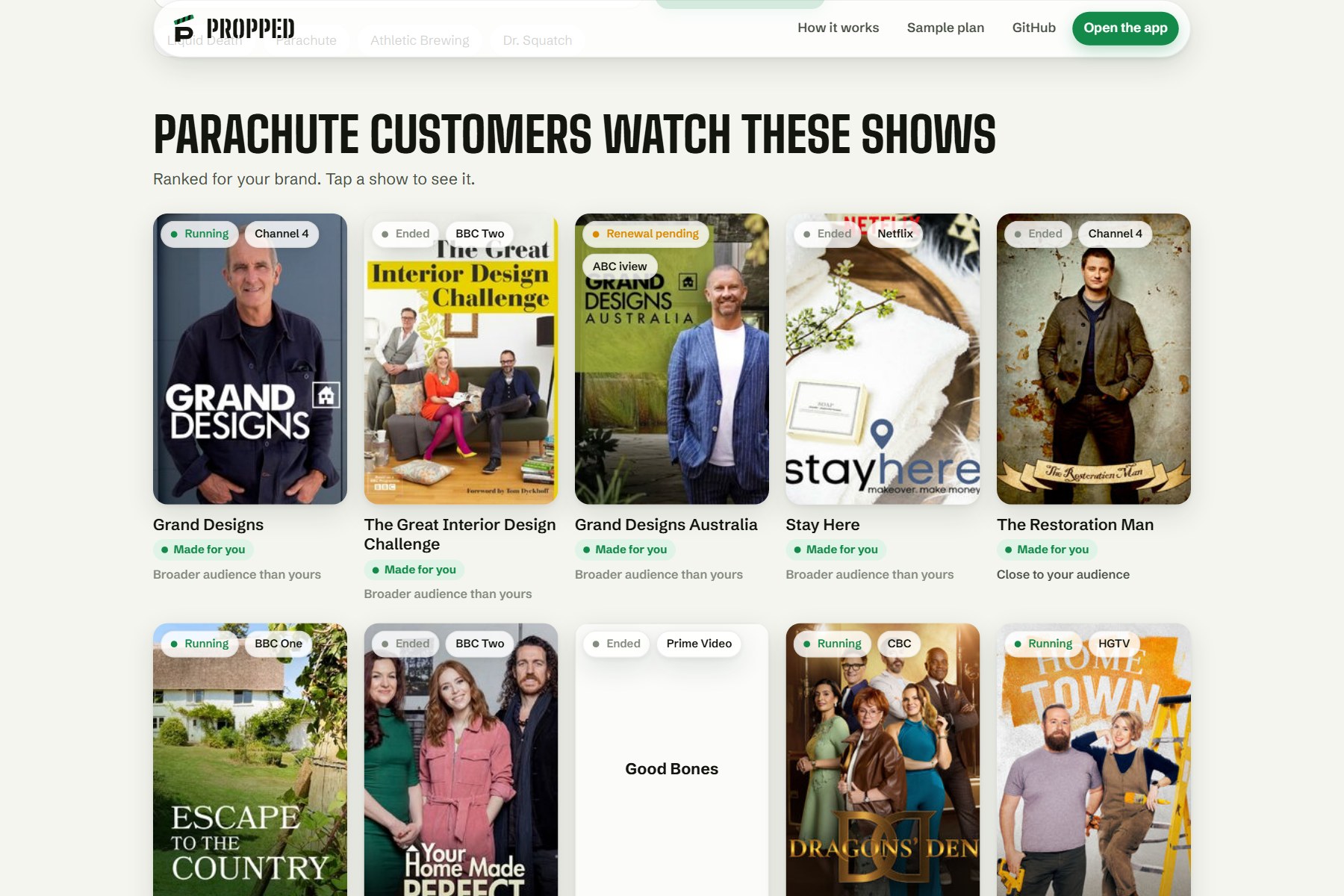
- See your shows. The TV shows your customers watch far more than everyone else, ranked for your brand, with live status, network, poster and how close each audience is to yours.
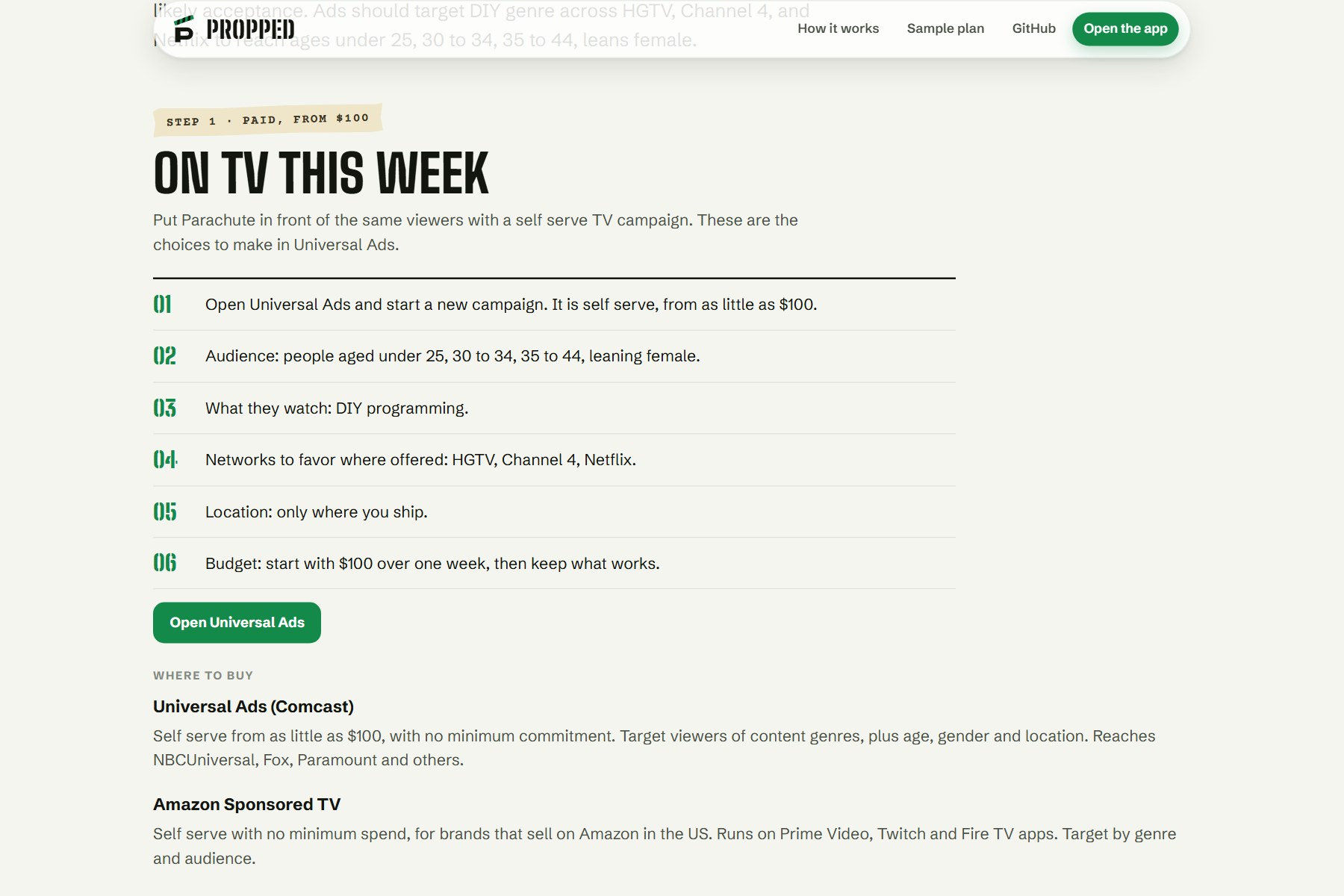
- Be on TV this week. The exact settings for a self serve TV campaign aimed at the same viewers: their ages, the genres and networks they watch, a starter budget from $100. Paste them into Universal Ads and launch.
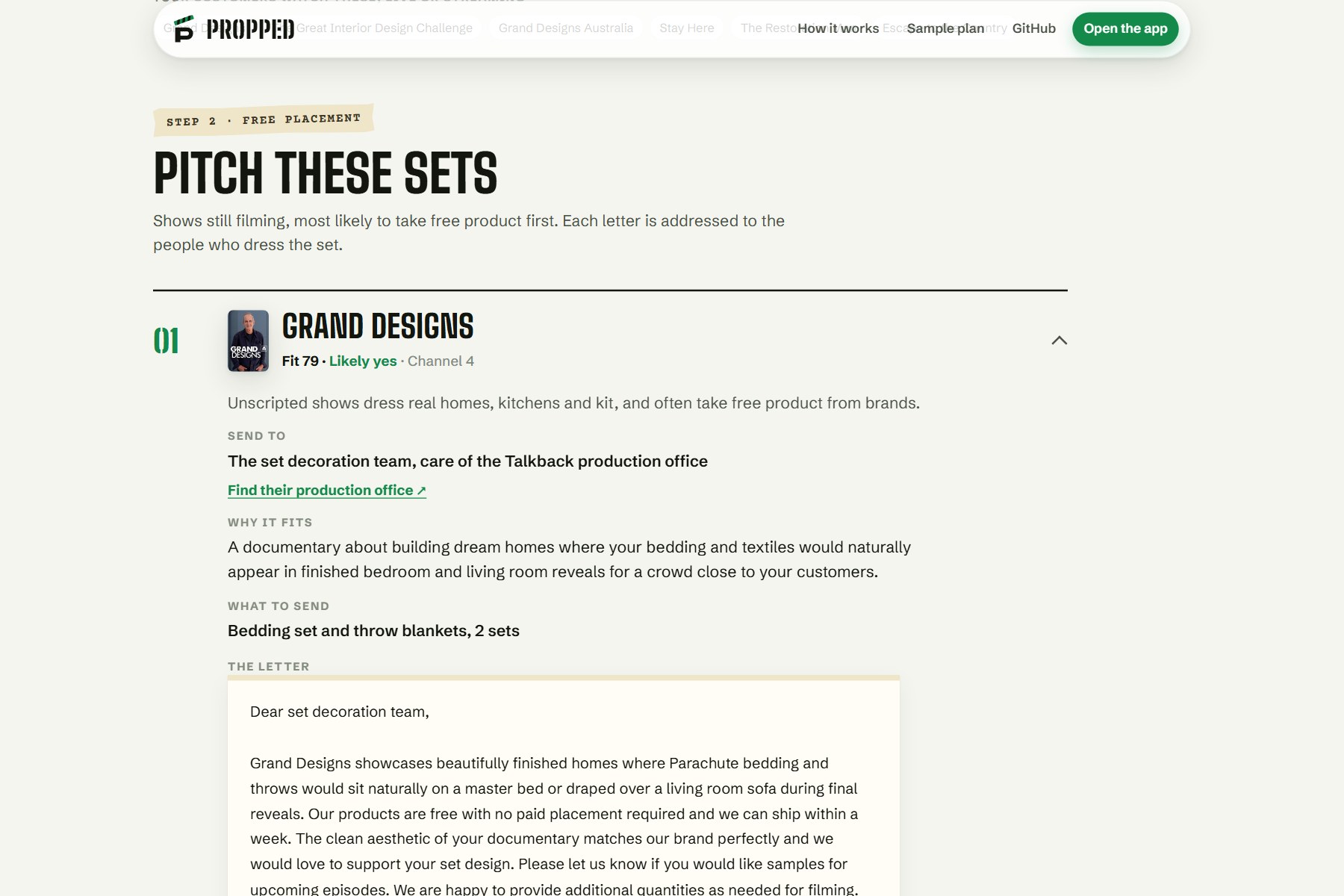
- Pitch the sets that will say yes. The agent checks every show your customers watch that is still filming and rates each one: unscripted shows are likely to take free product, smaller scripted shows are worth a pitch, big network dramas need an ad buy and only get pitched when nothing better is filming. Each letter is addressed to the people who dress the set, the production designer when one is listed, care of the production company, with what to send. For Dr. Squatch soap it picked Dirty Jobs, Primal Survivor and Ice Road Truckers, with ideas like a camp kit and a truck cab console.
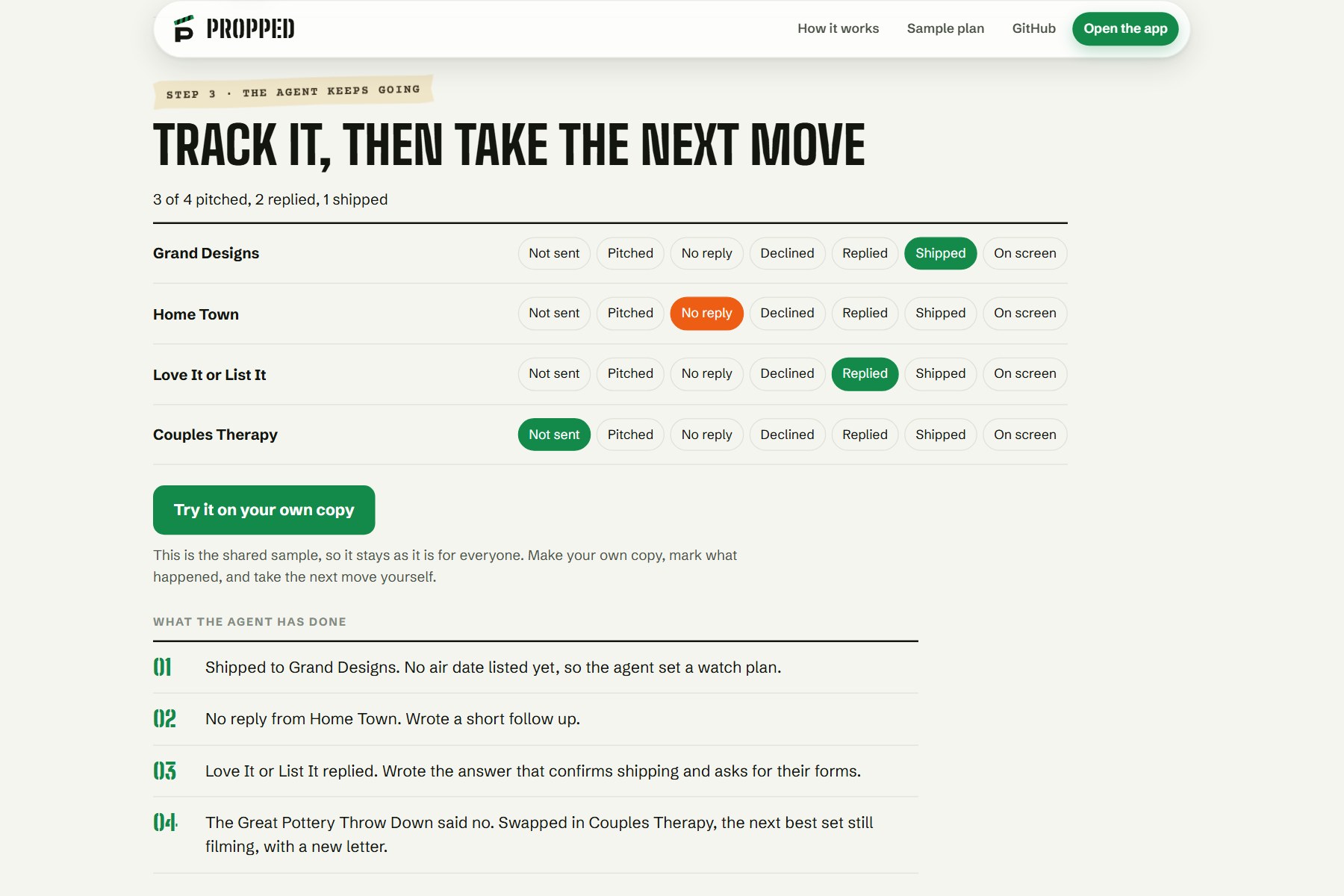
- The agent keeps going. The agent keeps working the campaign. Mark what happened on the pitch board and take the next move: a no gets the next best set and a new letter, silence gets a follow up, a reply gets an answer, shipped product gets a watch plan from the real air dates.
Propped never contacts anyone for you. Each letter links to the production company's website when Wikidata knows it, and to a search for its production office.
How we built it
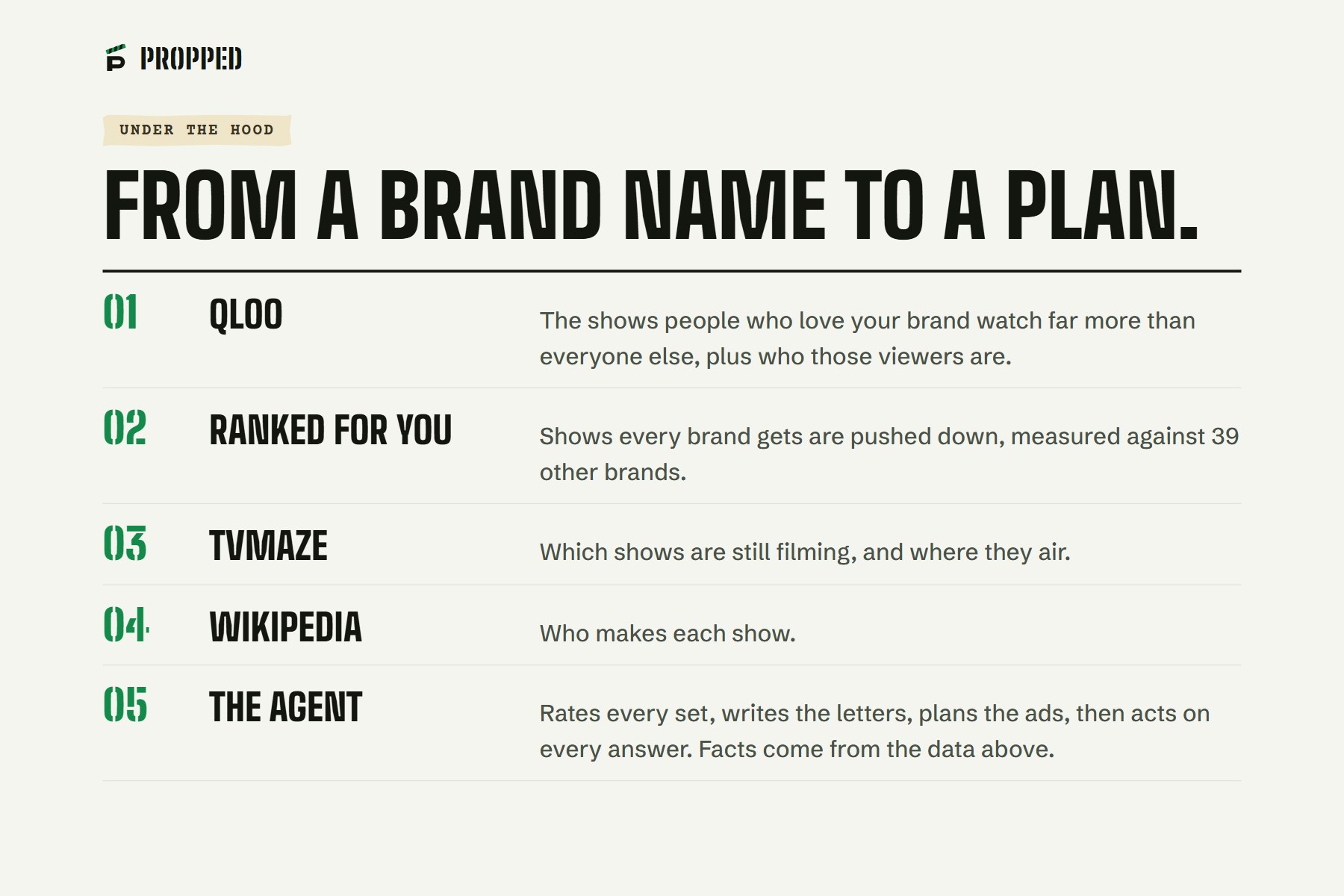
Qloo search finds the brand, and we match the name strictly. Qloo insights, asked which TV shows people who love the brand watch, returns the top 50. Qloo demographics gives the age and gender lean of the brand and of each show, and we compare the two to score audience match.
Raw lists are full of shows that every food or lifestyle brand gets. So we built a specificity ranking. A show's score is its affinity times a weight that is high when few brands share the show and low when many do. We measured shared shows against a reference set of 39 brands.
TVmaze gives status, network, genres and posters. Wikipedia gives the production company, the people you would write to.
Then an agent takes over. It reads every show Qloo returned that is still filming, with a placement chance computed in code from the show type and network, picks the sets to pitch, plans the ads and writes the letters. Code enforces the rules: only live action shows still filming, no big scripted show while realistic ones exist, only genres and networks from the brand's own results, and no networks that sell no ads. TVmaze crew lists name the production designer, and Wikipedia names the production company, so each letter has a real recipient. Plans and pitch boards are saved and shareable by link. A second agent run, the next move, reads the board and acts on it: it swaps a declined set for the next best saved candidate with a new contact and letter, writes follow ups and answers, and builds a watch plan from TVmaze air dates. Public broadcasters that take no placement (the BBC, PBS) are excluded. A show only counts as still filming if a new episode is scheduled or one aired in the last 18 months, because listings keep many finished streaming shows marked as running.
Every set gets a fit score out of 100: up to 40 for how strongly Qloo ties it to the brand, 30 for how close its audience is, and 30 for how realistic a free placement is. The shared sample plan is read only; visitors try the agent's next moves on their own copy.
Why Qloo
Propped only works because Qloo knows what people who love one brand also watch. A general AI model declines to answer this, because it is audience research it was never given. Qloo answers it in seconds, and everything the agent writes rests on that answer.
Challenges we ran into
Generic shows dominated. A few shows turn up for many brands. The specificity ranking pushes them down and lifts the shows that belong to your brand.
Brand names. A loose match turns "Rhode" into "Rhode Island School of Design". We only accept a Qloo name that looks like the name you typed, and a missing brand gets a clear message, not a guess.
Ads can't target one show. Self serve TV platforms sell genres, networks and audiences. So the ad setup targets those, and your shows are the reason it picks them.
A letter is not a placement. Big scripted shows rarely take an unknown brand for free, and a letter to nobody goes nowhere. So Propped rates every set for realism, addresses each letter to a real person or office, and makes the TV campaign the guaranteed first step.
Accomplishments that we're proud of
- A real agent run end to end: Qloo data in, pitch letters and an ad plan out.
- A ranking that gives Liquid Death, Parachute, Athletic Brewing and Olipop visibly different lists.
- Every fact in a plan comes from Qloo, TVmaze or Wikipedia. The model writes the words.
- Live, open source under MIT, and you can try it in ten seconds.
What we learned
Raw taste data needs shaping before it is useful. The most popular answer is rarely the right one for a specific brand.
What's next for Propped
More brands in the reference set, so the specificity ranking gets sharper. More ad platforms in the plan.
Built With
- blob
- demographics)
- insights
- next.js
- next.js-15
- node.js
- playwright
- qloo
- react
- tvmaze
- typescript
- vercel
- vercel-blob
- vitest
- wikidata
- wikipedia

Log in or sign up for Devpost to join the conversation.