-
-
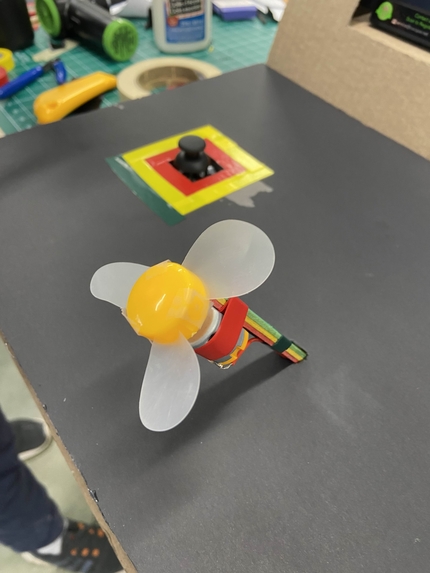
Controls
-
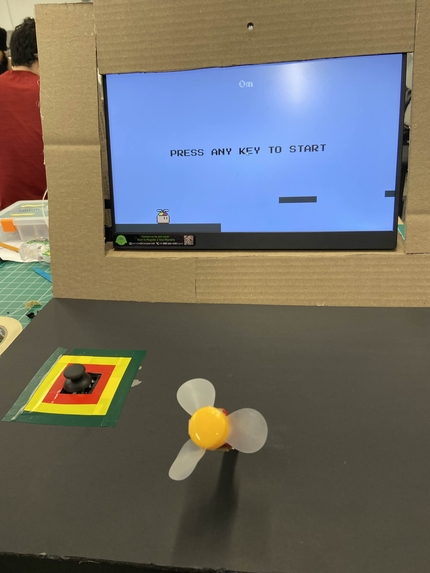
Game Start
-
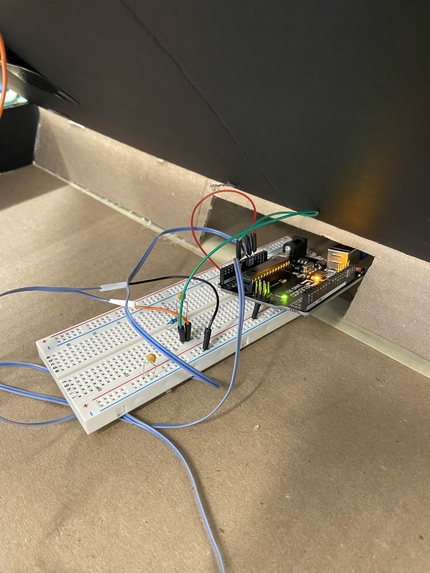
Under the Hood
-
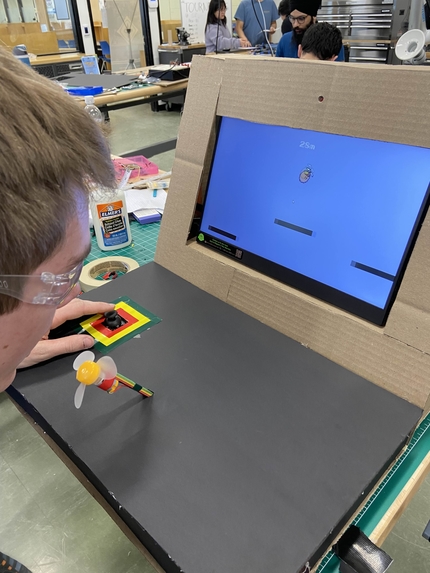
Blowing!
-
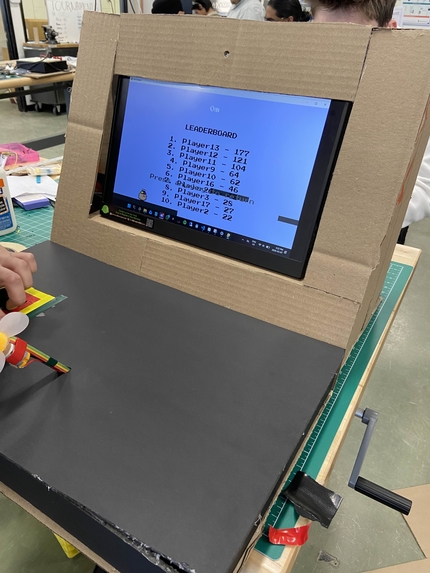
Leaderboard
Inspiration
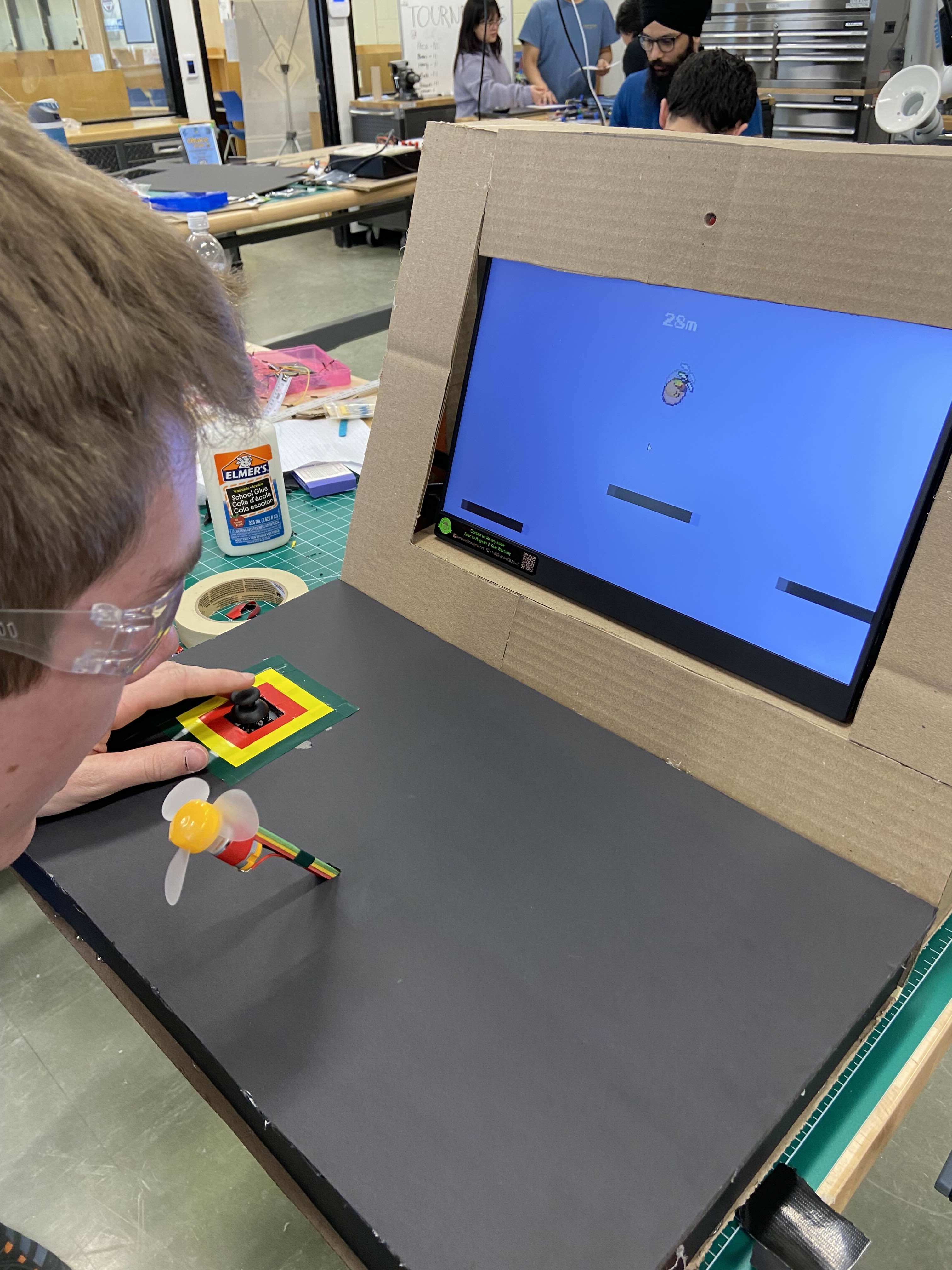
Inspiration began when a team member of ours had the crazy idea to have blowing a fan be the main form of user input. Then, coupled with inspiration of the game that uses sound to move their character, we created Propeller Boy! A tiny arcade machine game fitting nicely into the "game" and "music" categories.
What it does
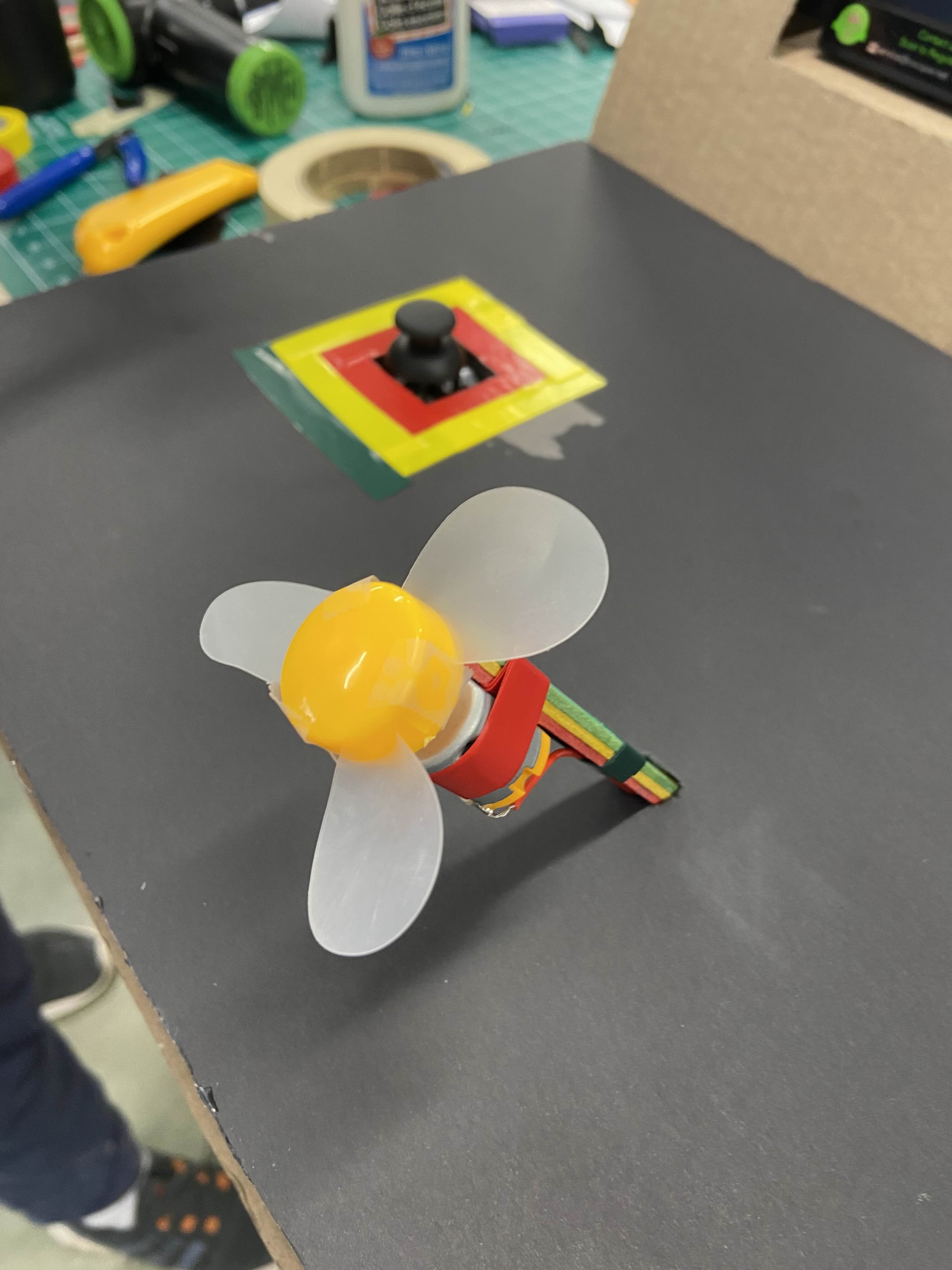
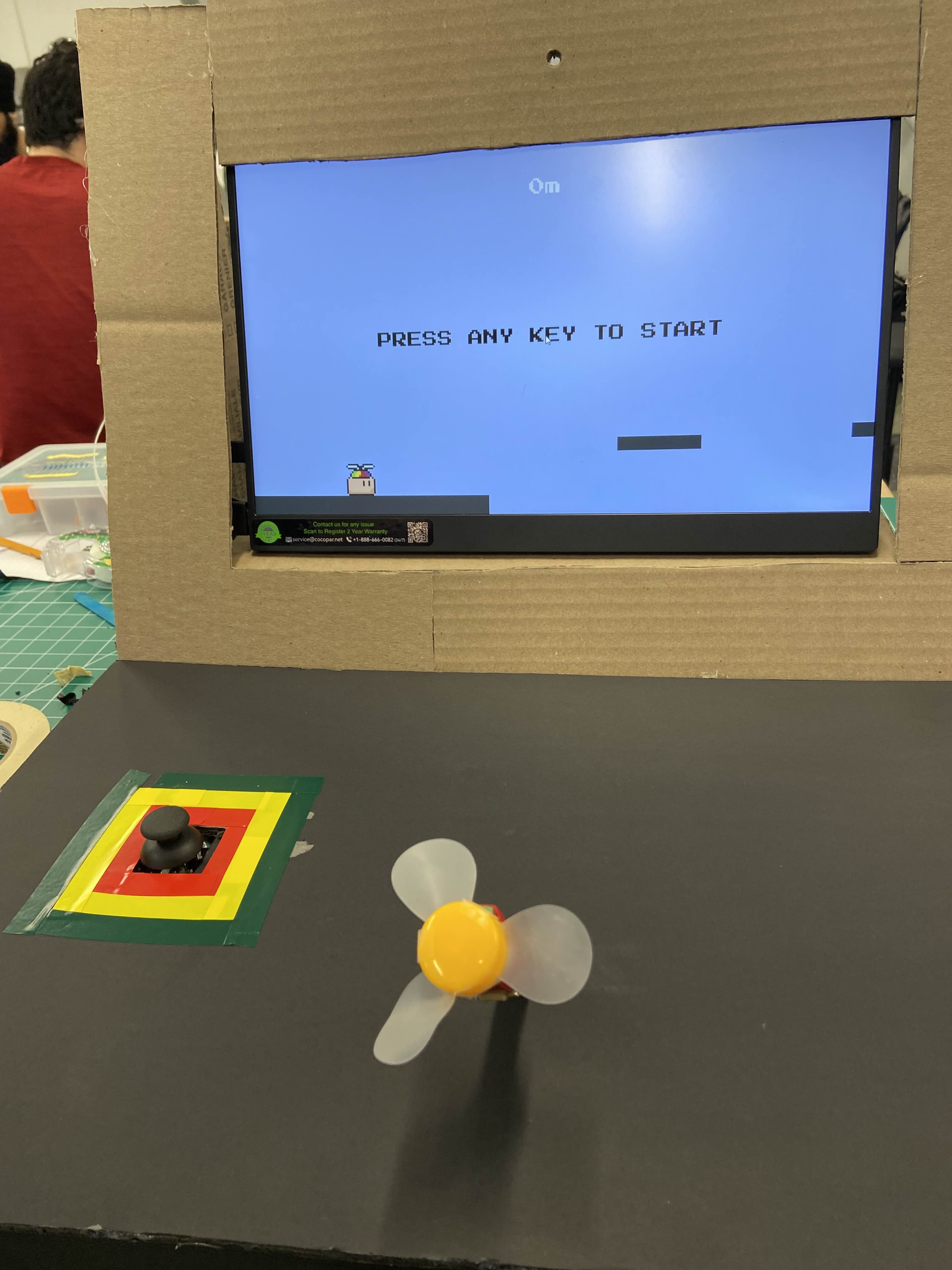
Blow the fan to spin the propeller on top of Propeller Boy's head to elevate him into the sky! Move the joystick left and right to control your landing! The goal is to move to the right as far as possible while you navigate from platform to platform.
How we built it
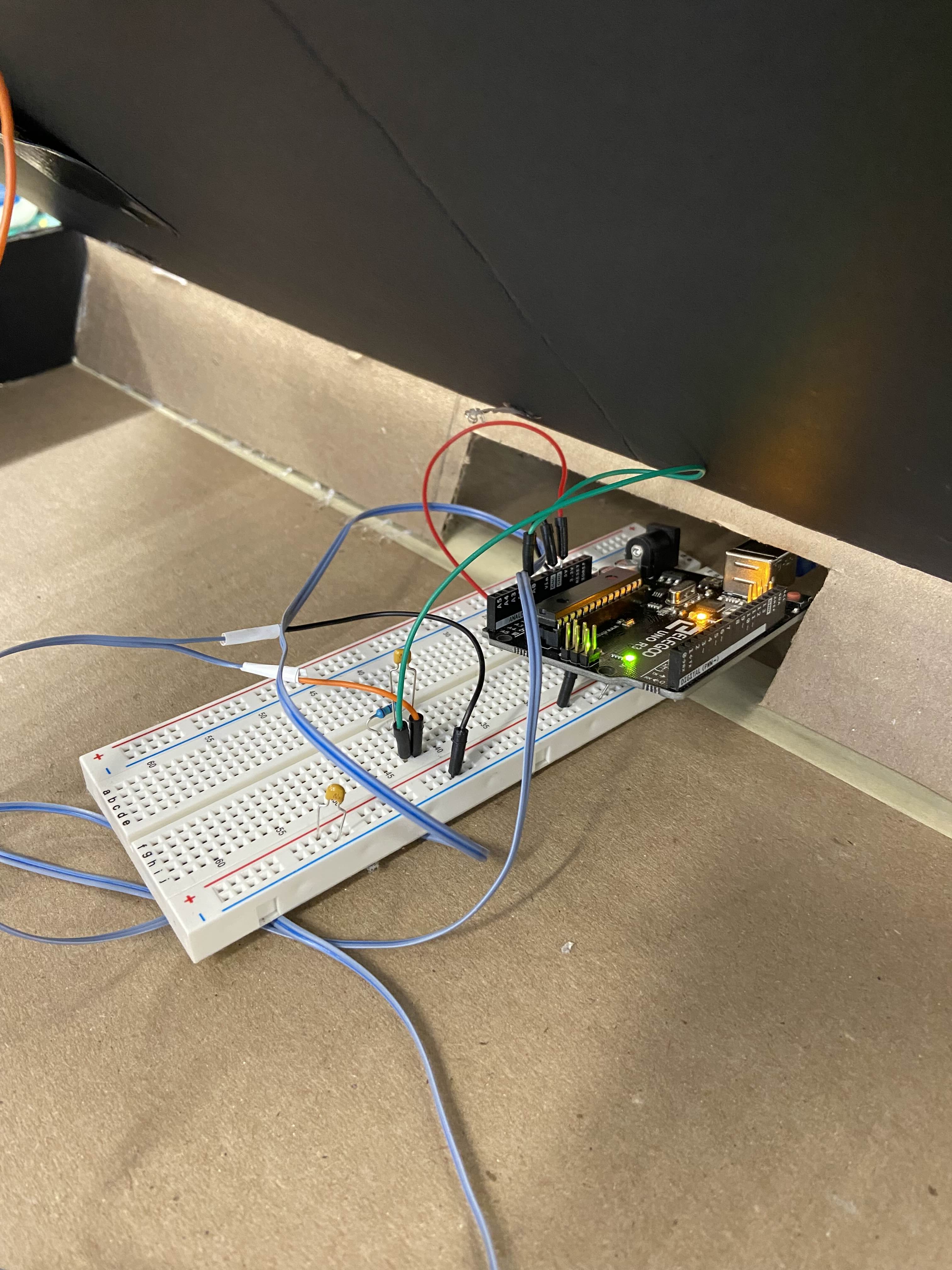
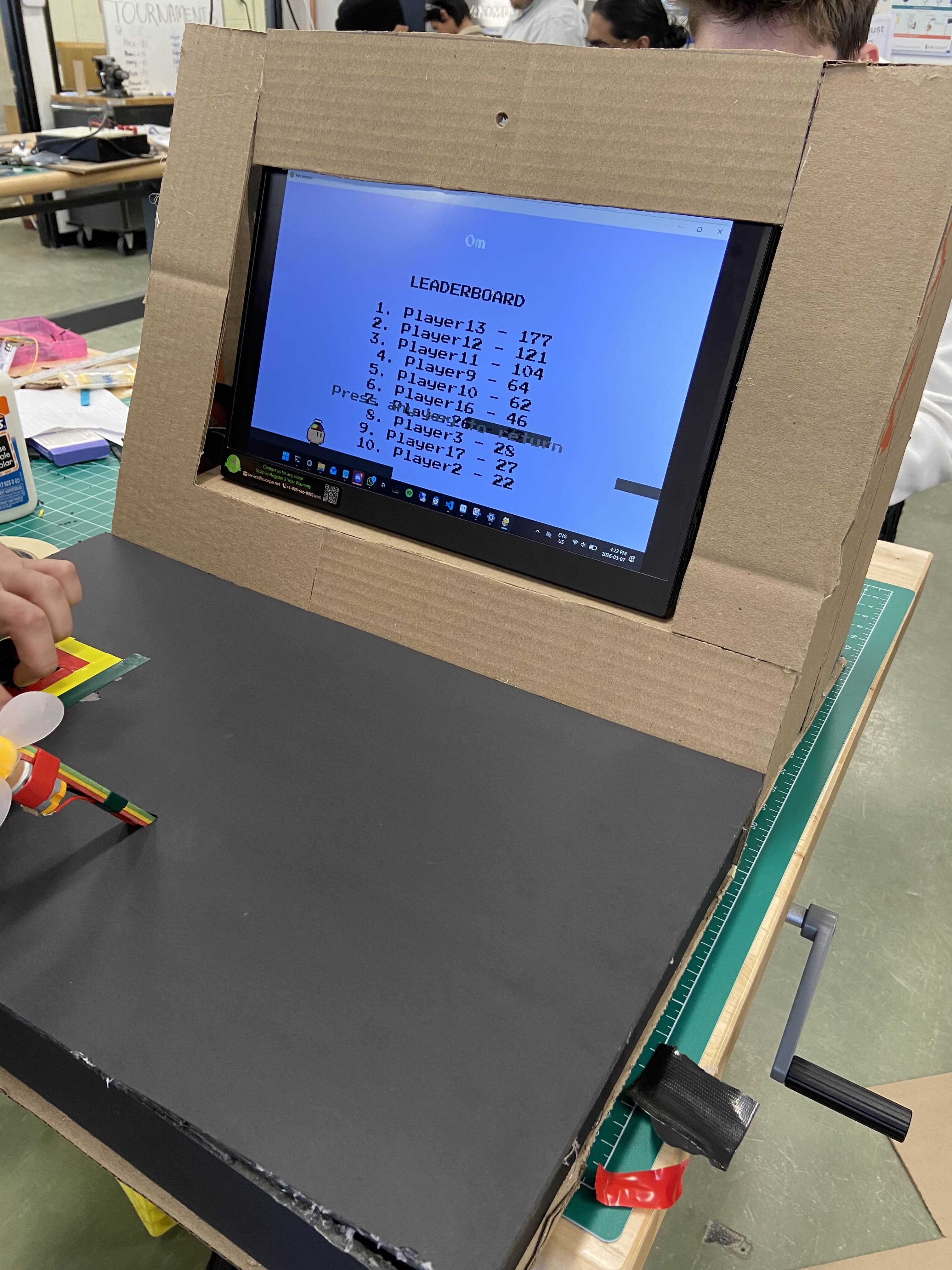
On the embedded side, we connected a joystick and a fan motor up to an Arduino R3. We read in the voltage generated by spinning the fan, as well as the x-axis data from the joystick, and write them into a simple JSON object. This serial data is read in by our frontend running PyGame, which parses and translates the data to move the player (Propeller Boy!) on screen. The frontend handles all the visuals, from the player, to platforms, to the leaderboard (persistent between sessions!).
Finally, we built a small arcade machine out of cardboard, hot glue, tape, and external screen, and of course all of our hardware. The end product is a tiny Propeller Boy arcade machine that you can take turns at and compete for the top score!
Challenges we ran into
We are all in Computer Science, and came in with near-zero hardware and/or electrical knowledge. So even though our hardware is relatively basic, we are proud of what we were able to conjure up. Additionally, our plans were foiled, see the next paragraph for more context.
Accomplishments that we're proud of
We're super proud of finishing our project, which we had absolutely no idea that we would be making going in. We originally were planning on programming and flashing on open-source watch, however upon competition start we got word that that was not allowed! So thinking quickly we sculpted a rather insane idea (but fun!) to build an arcade machine.
What we learned
We learned how breadboards work! They actually aren't that bad once you understand them. We also learned how to work on our toes, after our plans were fumbled we had to get creative and venture out into the hardware world.


Log in or sign up for Devpost to join the conversation.