-
-
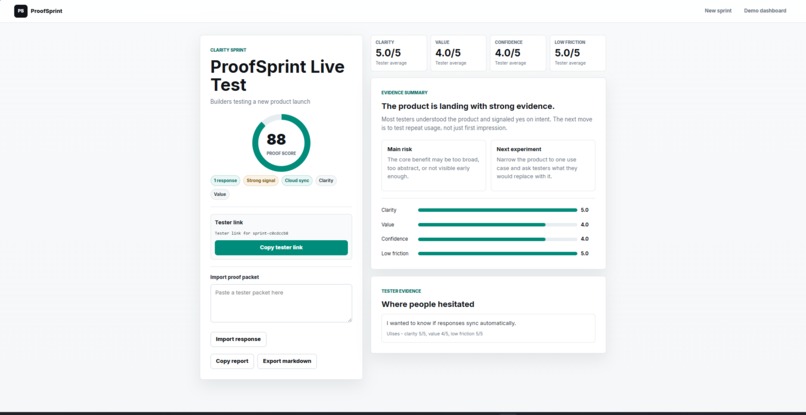
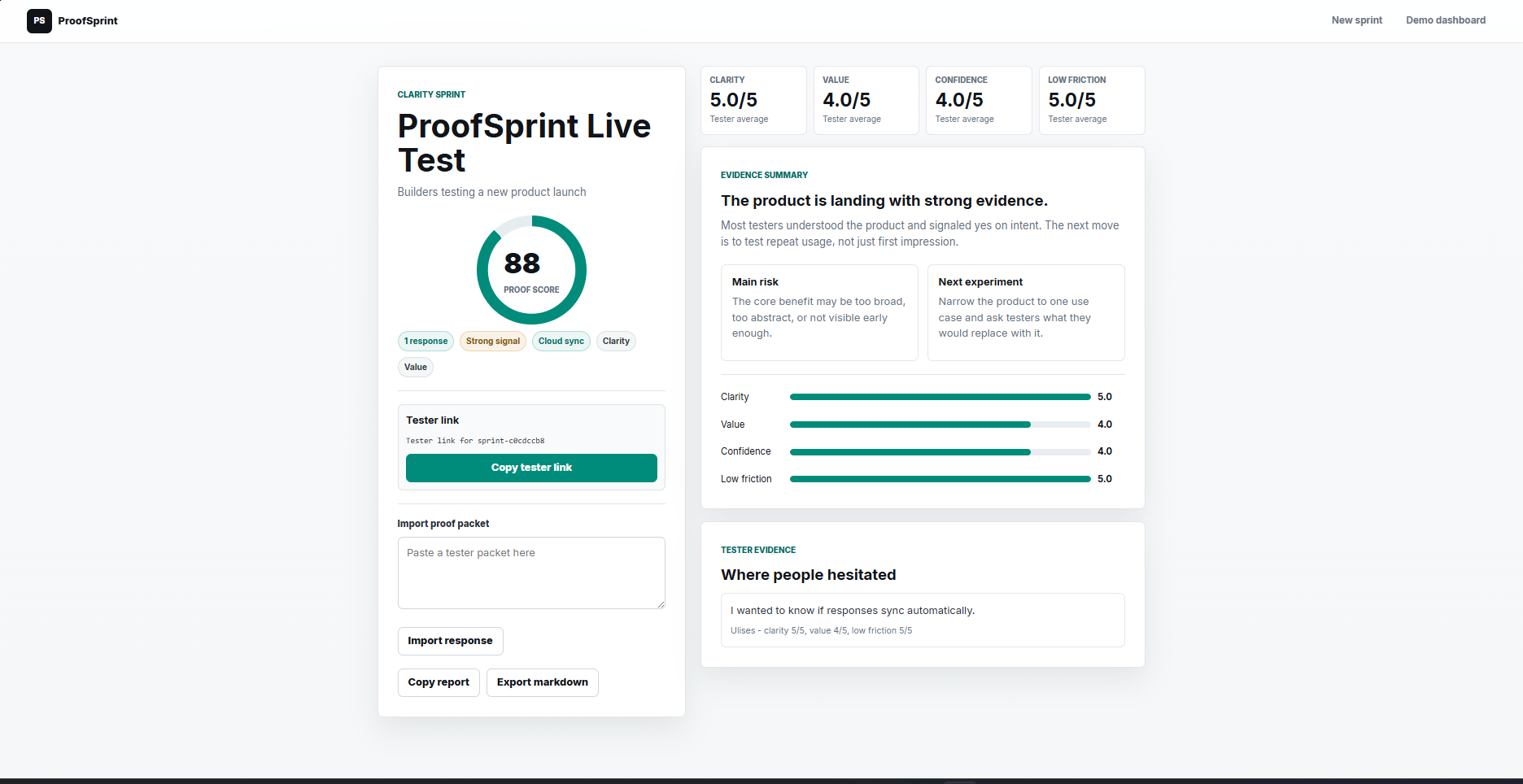
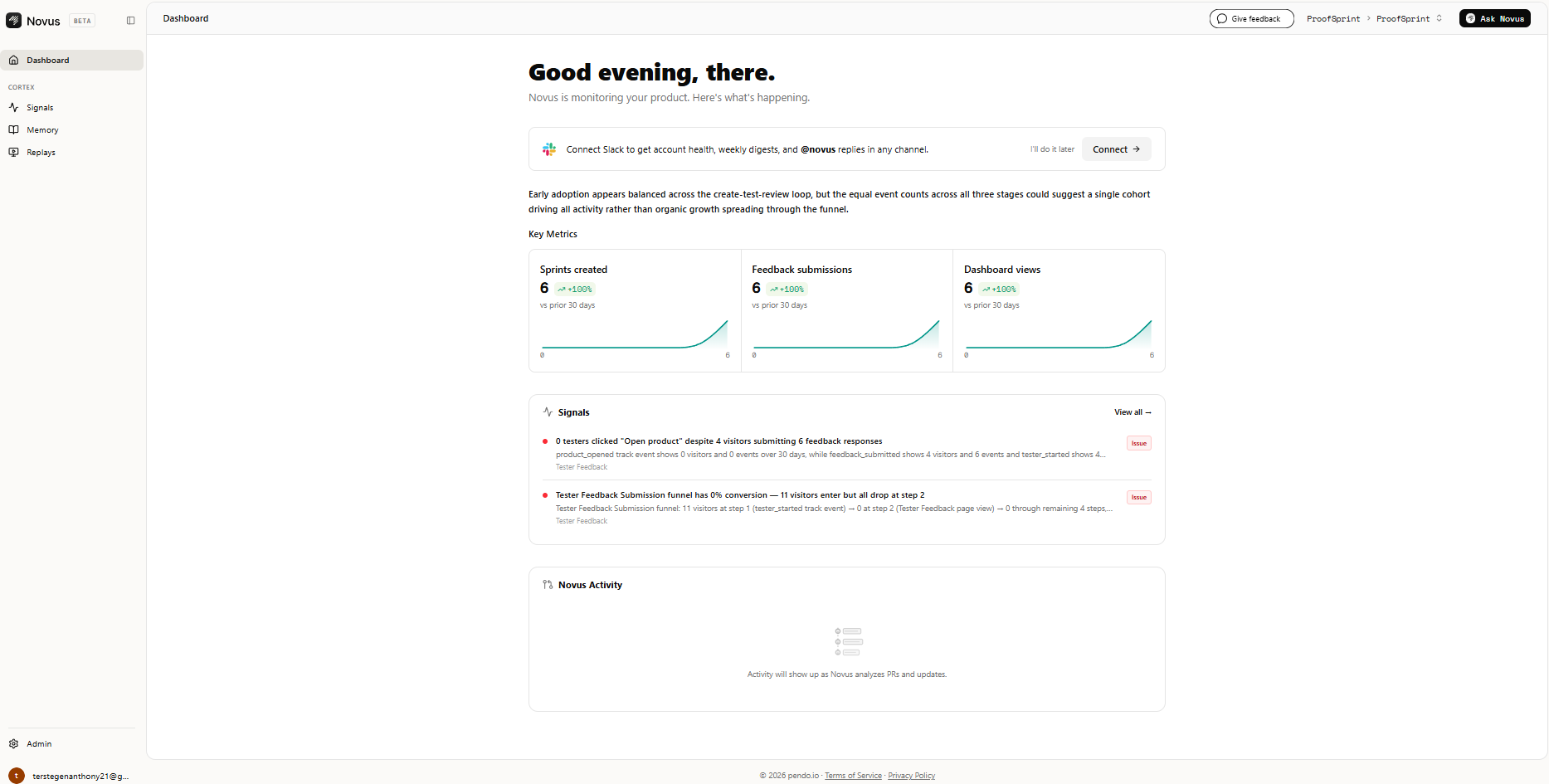
ProofSprint dashboard
-
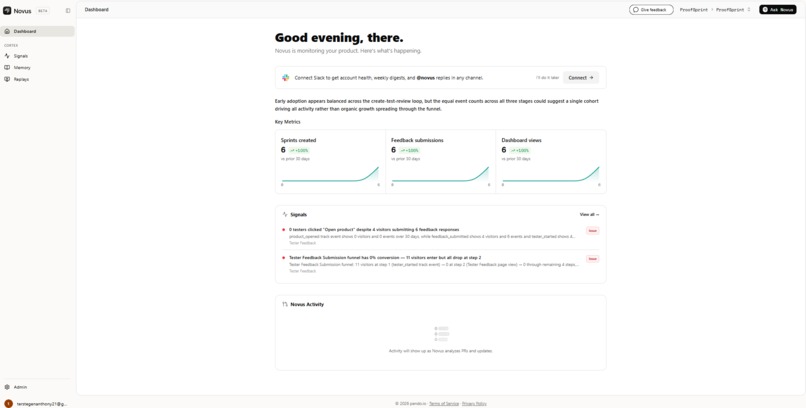
Novus Dashboard
-
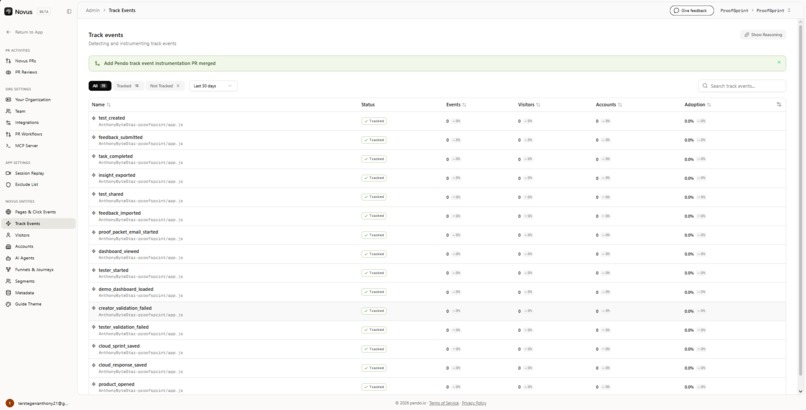
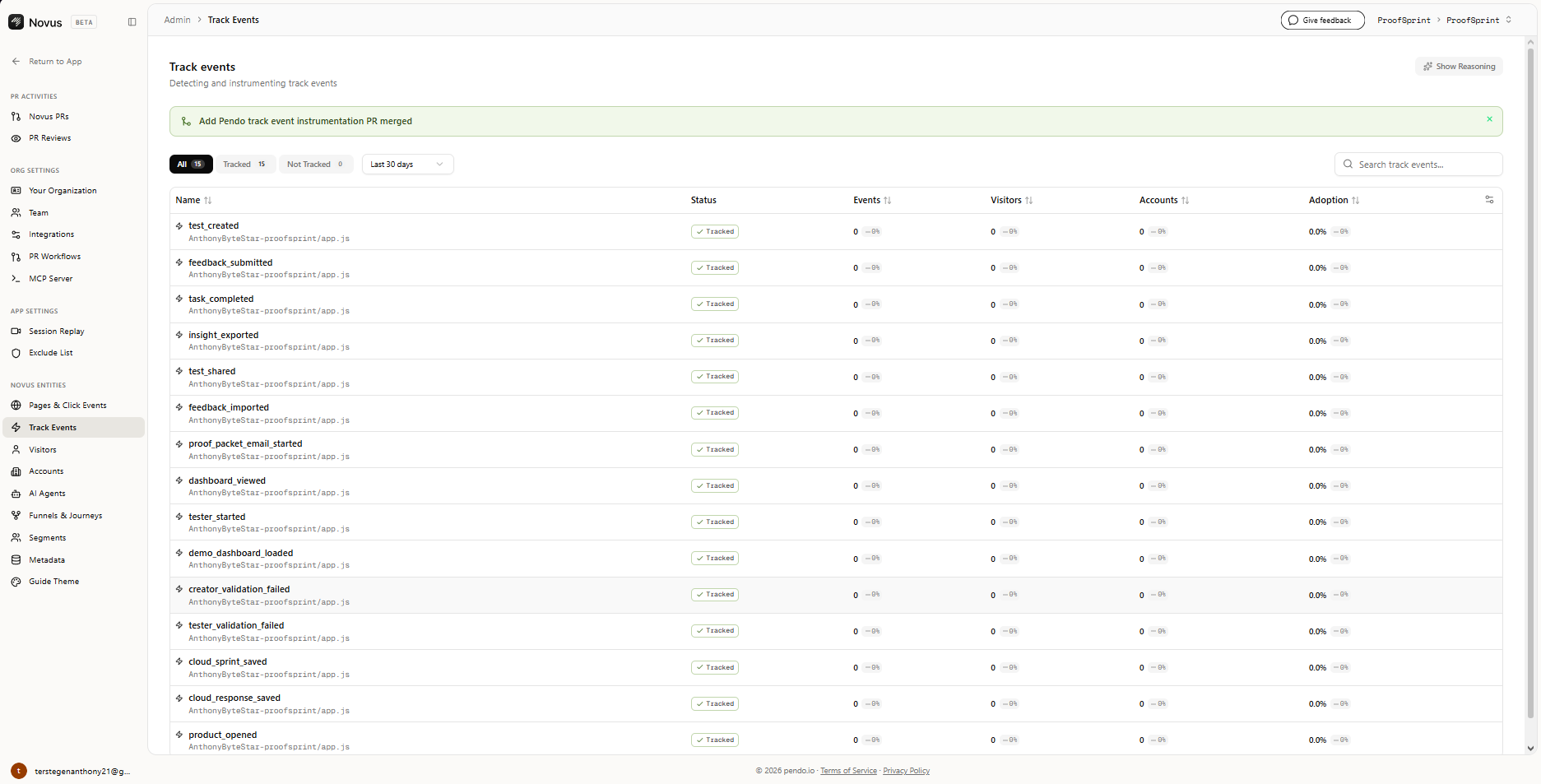
Novus Track Events
Inspiration
I built ProofSprint because shipping is easier than ever, but learning from what you shipped is still messy. Builders often launch a product and then get vague feedback, scattered messages, or no clear signal about whether users actually understood the value.
ProofSprint is built around one idea: everyone can ship now, but we still need better ways to prove what happened next.
What it does
ProofSprint helps builders, product managers, and students run a focused post-ship validation sprint.
A creator adds their product URL, defines the audience, chooses what they want to validate, and generates a public tester link. Testers complete a lightweight feedback flow with ratings for clarity, value, confidence, and low friction, plus short written feedback.
How we built it
ProofSprint is a static web app built with HTML, CSS, and JavaScript. It uses Supabase for cloud persistence, Netlify for deployment, GitHub for version control, and Novus.ai for product analytics.
Novus is installed and tracking key events including test_created, tester_started, feedback_submitted, and dashboard_viewed.
Challenges we ran into
The biggest challenge was making the product feel real end-to-end instead of like a prototype. We had to handle creator flow, tester flow, dashboard logic, validation, cloud sync, and analytics together.
Another challenge was making the feedback score meaningful. We refined the scoring logic and fixed edge cases so the dashboard gives useful signals instead of just displaying raw survey answers.
Accomplishments that we're proud of
I’m proud that ProofSprint works as a complete product: a stranger can land on the URL, create a sprint, share a tester link, submit feedback, and see the dashboard update with real evidence.
I’m also proud that Novus is fully integrated and tracking the product, and that Supabase cloud sync makes tester responses appear in the creator dashboard.
What we learned
I learned that a small product can still be strong if the workflow is complete and focused. The hardest part was not adding more features, but making each step clear, useful, and reliable.
I also learned how important analytics are after launch. Without tracking, you are just guessing. With Novus, ProofSprint can show what users actually do.
What's next for ProofSprint
Next, I would add shareable read-only reports, private creator dashboards, stronger tester templates, and team workspaces. I would also improve the Novus insights and use real user behavior to recommend better next experiments.
Built With
- css
- github
- html
- javascript
- netlify
- novus.ai
- supabase

Log in or sign up for Devpost to join the conversation.