-
-
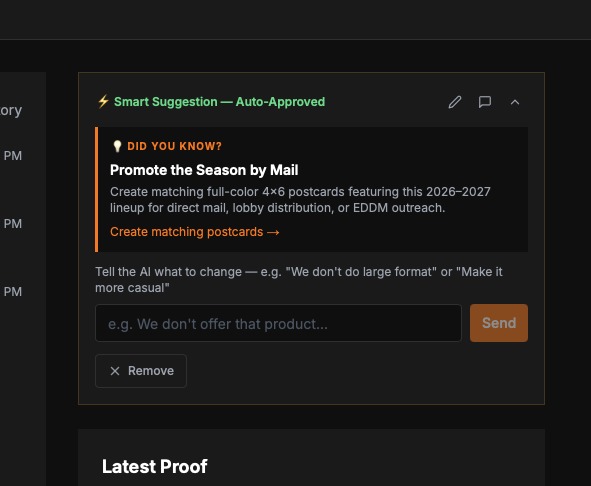
Context from the Proof used for Ai Smart Suggestions Help Sell More Products and Learn from Corrections
-
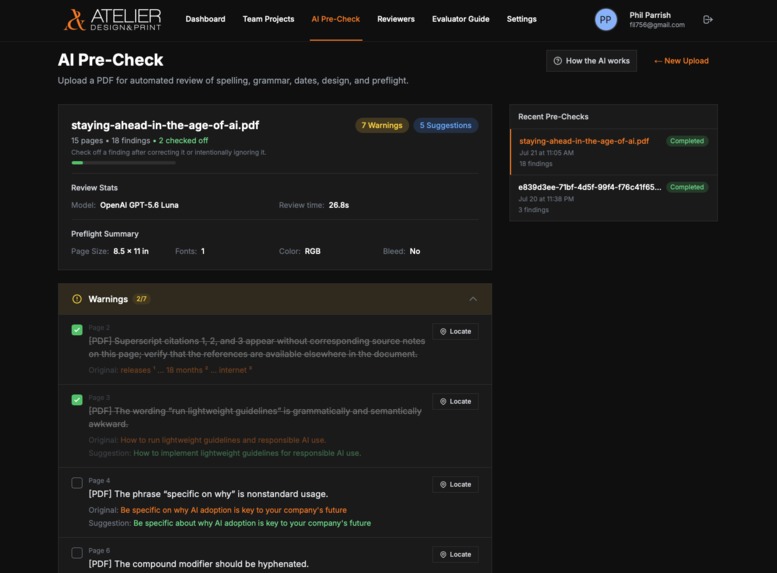
AI Proofreading, Design Help and Preflight Info
-
-
ProofSamur.ai — OpenAI Build Week Submission
Recommended category: Work & Productivity
Inspiration
ProofSamur.ai grew out of a problem we experience every day in commercial printing: one overlooked typo, outdated date, or misunderstood correction can become an expensive reprint.
The moment that crystallized the idea was an event flyer reused from the prior year. The date had been updated, but the day of the week had not—and the two no longer matched. The designer missed it, the customer missed it, and spellcheck could never have caught it. That mistake showed us the need for a system that could check meaning and context, not just spelling.
At the same time, proof feedback was scattered across emails, screenshots, phone calls, and disconnected files. We wanted one calm, accountable workflow where designers and customers could review the same version, communicate precisely, and approve work with confidence. We also saw an opportunity for AI to catch preventable mistakes before a proof ever reached the customer.
What it does
ProofSamur.ai is an AI-assisted proofing workspace for print shops, creative teams, and their customers.
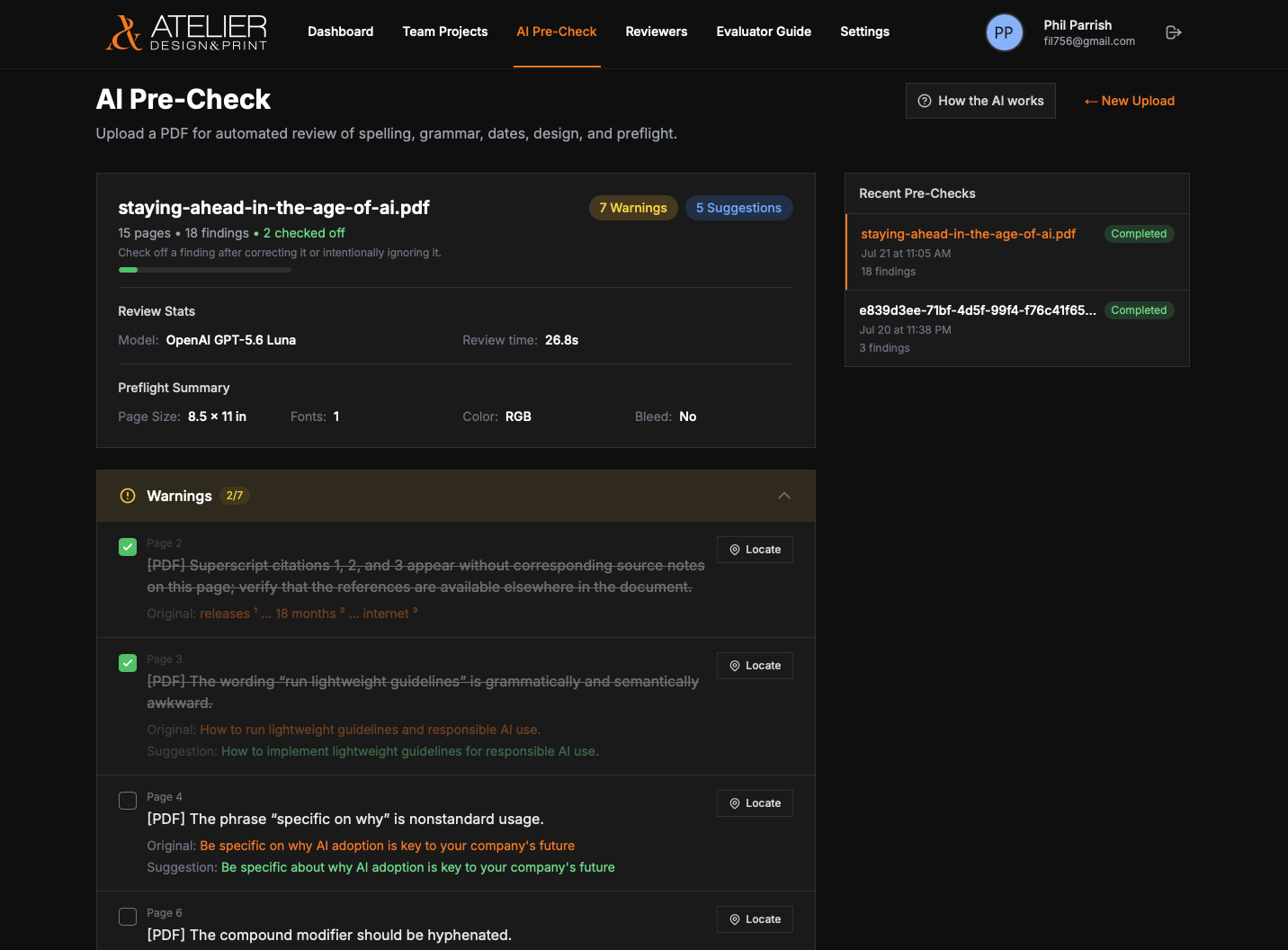
A designer uploads a PDF, and GPT-5.6 analyzes it for spelling, grammar, dates, cross-page inconsistencies, design concerns, and basic print-preflight issues. Findings are organized by severity and connected to the relevant page so the designer can review, locate, and resolve them. The review includes rasterized images as well as live text.
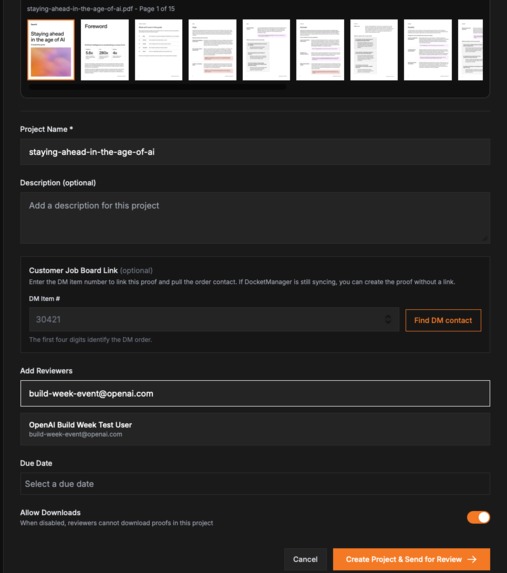
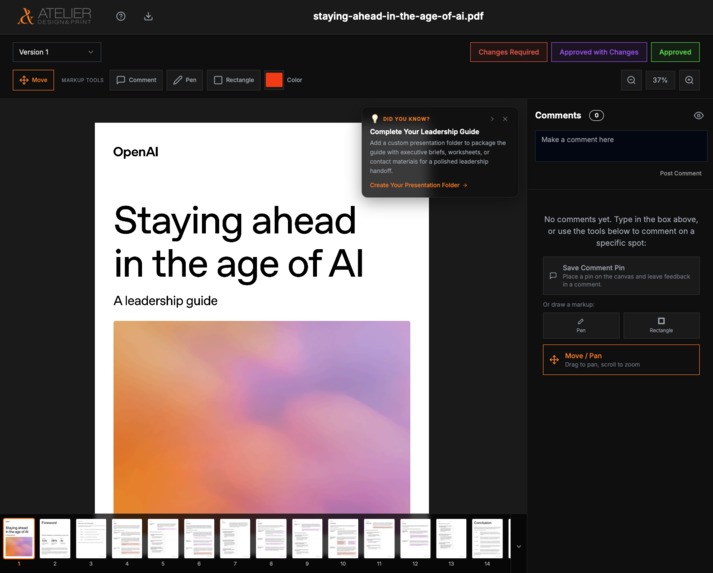
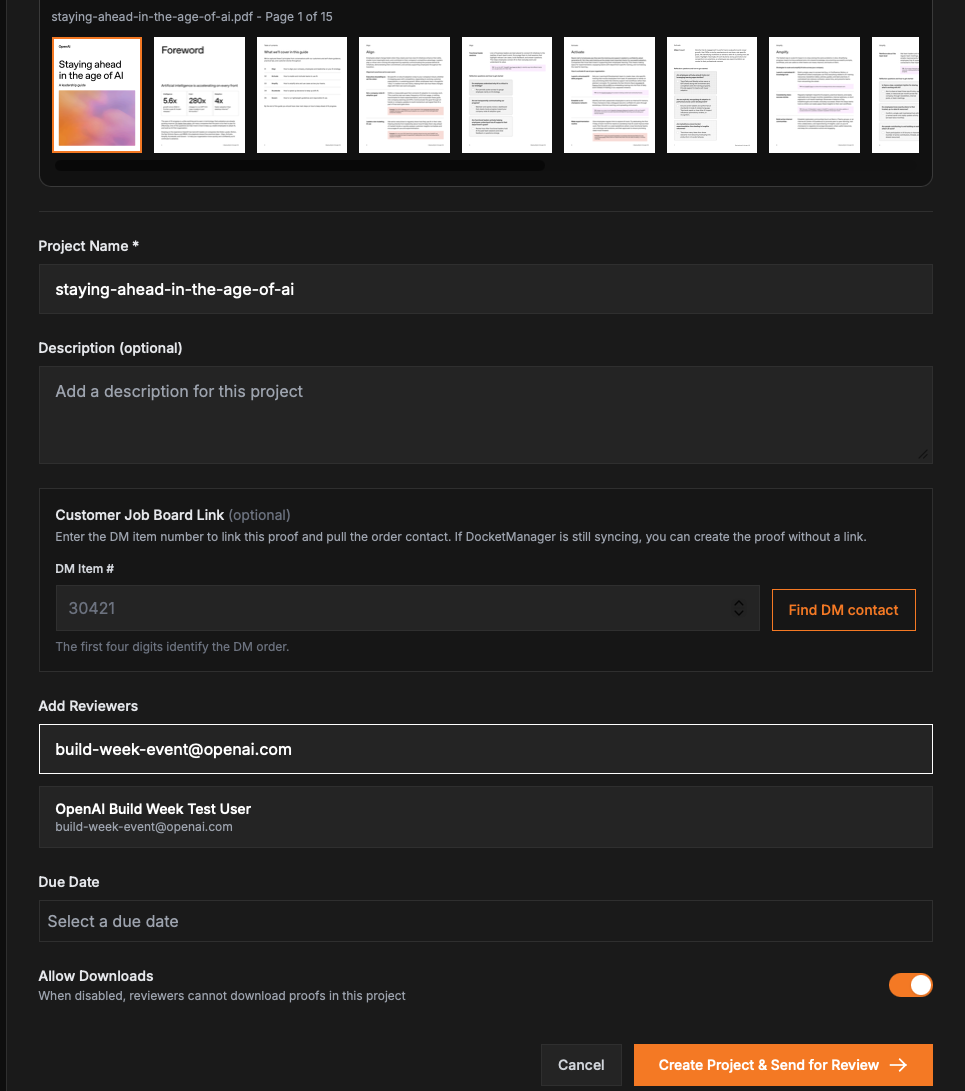
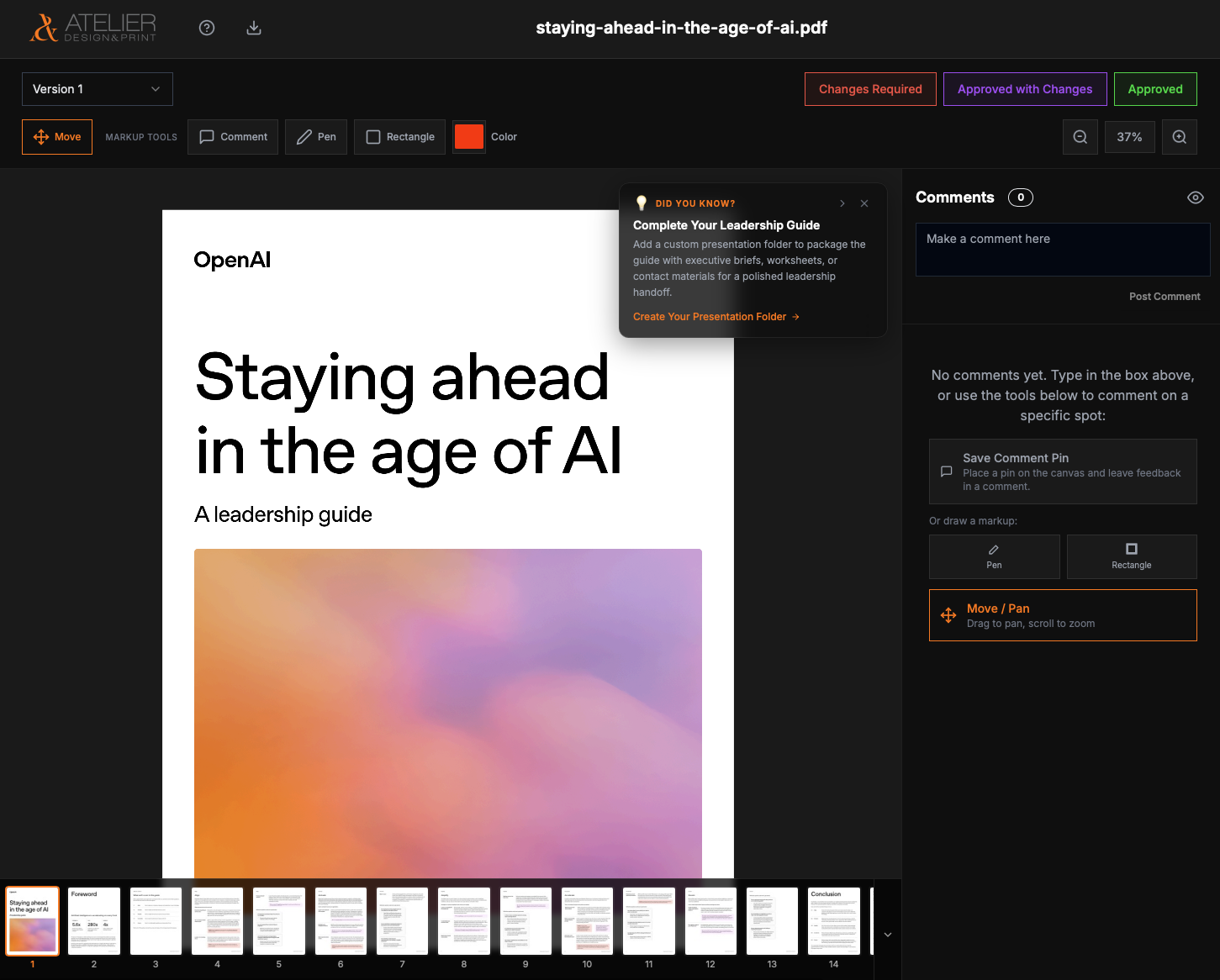
The document can then move directly into a shared proofing workflow where customers securely review the artwork, add comments and visual markups, request changes, or approve it. ProofSamur.ai keeps feedback, versions, notifications, and approval history together from initial review through production.
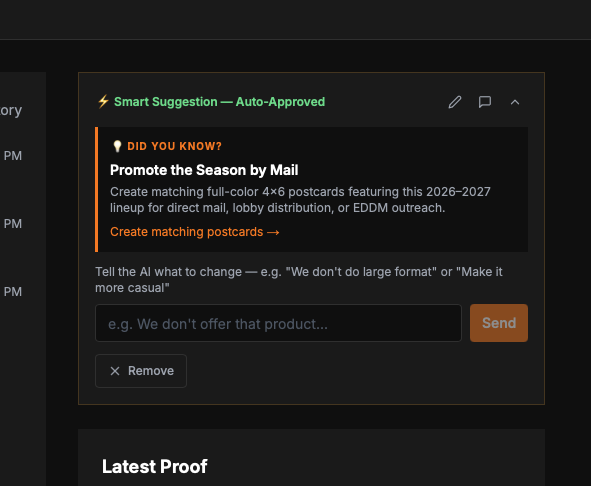
ProofSamur.ai can also generate context-aware product suggestions on the proofing page. While a customer reviews an event postcard, for example, the system might recommend a coordinating vinyl or retractable banner and draft relevant promotional copy. The creator remains in control and can edit, approve, or reject every suggestion and the app learns what to recommend based on our corrections.
How we built it
We used many models prior to and including Codex with GPT-5.6 to develop and refine ProofSamur.ai across a full-stack TypeScript and Next.js codebase. Codex helped us understand existing systems, plan changes across the frontend and backend, implement new workflows, trace difficult shared-link bugs, and validate changes before deployment. GPT 5.6 is helps in leaps and bounds. When I first started the project I spent weeks and weeks on a few issues back and forth with earlier models. A 20 minute task for 5.6 would have taken me a few days of back and forth.
GPT-5.6 powers AI Pre-Check by examining uploaded documents and returning structured, page-specific findings. We combine that intelligence with deterministic PDF processing and post-processing that validates, deduplicates, and organizes the results.
Proof files are stored in S3, workflow data is managed with Prisma and PostgreSQL, and PDF.js/PDFium powers document rendering, previews, navigation, and markup tools.
Challenges we ran into
The hardest challenge was making AI feedback useful rather than merely impressive. Commercial print files vary widely, and the system must distinguish a genuine error from an intentional creative choice.
We had to handle inconsistent PDF text extraction, multi-page documents, cross-page contradictions, malformed model output, duplicate findings, and page-location accuracy. We also needed to preserve human judgment: AI findings are recommendations that designers review and mark as handled, never silent changes to customer artwork.
Outside the AI layer, we worked through secure but frictionless customer access, proof-version history, notification timing, mobile PDF navigation, and keeping comments attached to the correct document and version.
Accomplishments that we're proud of
We are proud that ProofSamur.ai is a complete workflow rather than an isolated AI demo.
In one real job, AI Pre-Check flagged that part of a food label did not meet required size specifications—an issue neither the customer nor our designers knew to look for. We were able to recommend an adjustment before production, helping the customer improve the label while demonstrating expertise beyond basic proofreading.
We also created AI-assisted Smart Suggestions that understand the artwork being reviewed and recommend a relevant complementary product. For an event postcard, the system might suggest a vinyl or retractable banner to “make the celebration feel even bigger.” The creator can modify or reject the recommendation, and those human corrections are used to improve the prompts and business rules behind future suggestions.
An uploaded document can move from automated quality review into a real customer-facing proof, with page-specific findings, durable review checklists, version management, visual annotations, threaded comments, notifications, and formal approval.
Most importantly, it is grounded in a real commercial print environment where overlooked details have measurable consequences. ProofSamur.ai turns AI analysis into an action a working designer can understand, verify, and complete.
What we learned
We learned that the best AI products do not remove people from important decisions—they help people make those decisions with better information.
Model intelligence alone was not enough. Results needed clear severity, reliable structure, page context, persistent state, and a direct path to action. We also learned that placing AI before customer review is especially valuable: it catches avoidable mistakes early, reduces back-and-forth, and improves the customer experience without interrupting the established approval process.
Codex allowed us to improve an interconnected production application much faster while still inspecting, testing, and reasoning about changes across the entire workflow.
What's next for ProofSamur.ai
Our next step is turning ProofSamur.ai from an AI-assisted proofing tool into an intelligent quality agent for creative production.
We plan to improve GPT-5.6's findings using real-world evaluation sets, learn from the issues designers accept or dismiss, compare new versions against previously approved artwork, and detect whether requested corrections were actually completed.
We are already building deeper integrations with print-management and production systems so an approval can safely move work into its next production stage. Longer term, ProofSamur.ai can bring the same combination of AI quality control and human approval to packaging, signage, marketing, and other high-stakes creative workflows.
Built With
- amazon-web-services
- api
- codex
- gpt-5.6
- next.js
- node.js
- openai
- pdf.js
- pdfium
- postgresql
- prisma
- react
- s3
- typescript

Log in or sign up for Devpost to join the conversation.