Inspiration
AI can generate an answer in seconds. But can it prove one?
AI-generated content is becoming incredibly easy to produce, but verifying it is still difficult.
A single AI answer can contain several different factual claims. One may be correct, another may be misleading, another may be contradicted by evidence, and another may simply have insufficient evidence.
Yet most AI interfaces present all of them with the same confident tone.
We wanted to build something that changes that.
What if every important claim had to prove itself?
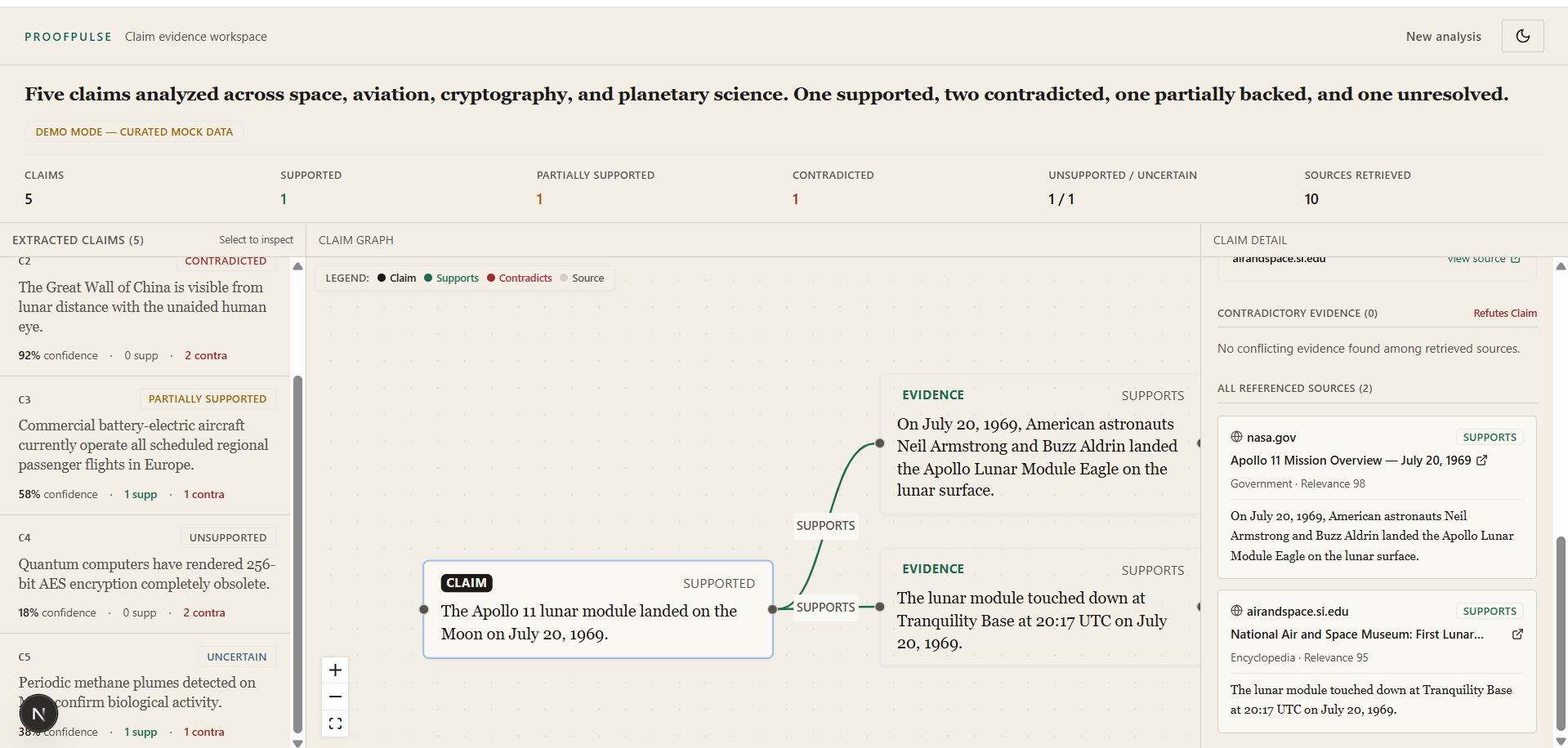
That question became ProofPulse — an evidence verification workspace designed to make the path from an AI-generated claim to its supporting or contradictory evidence visible.
What it does
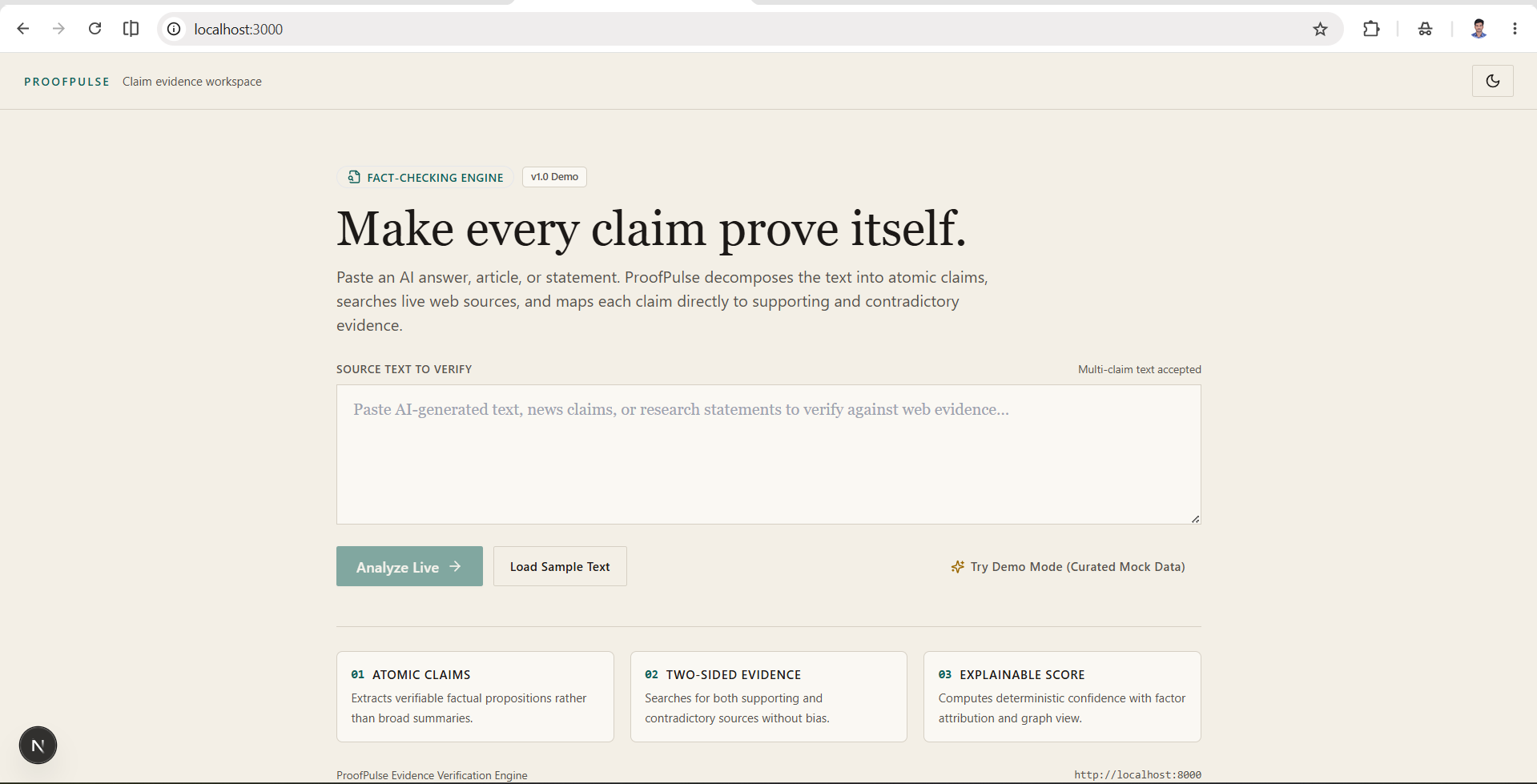
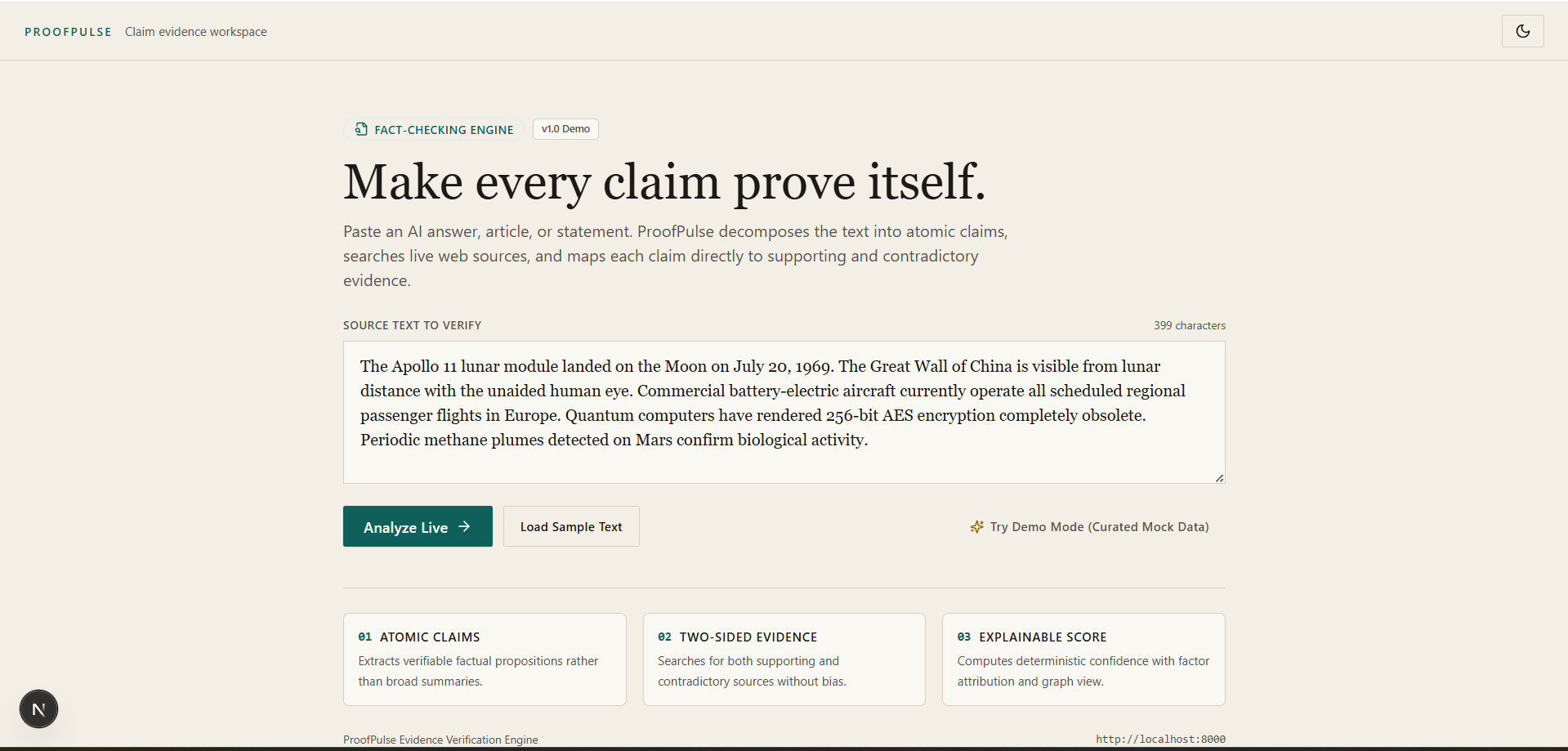
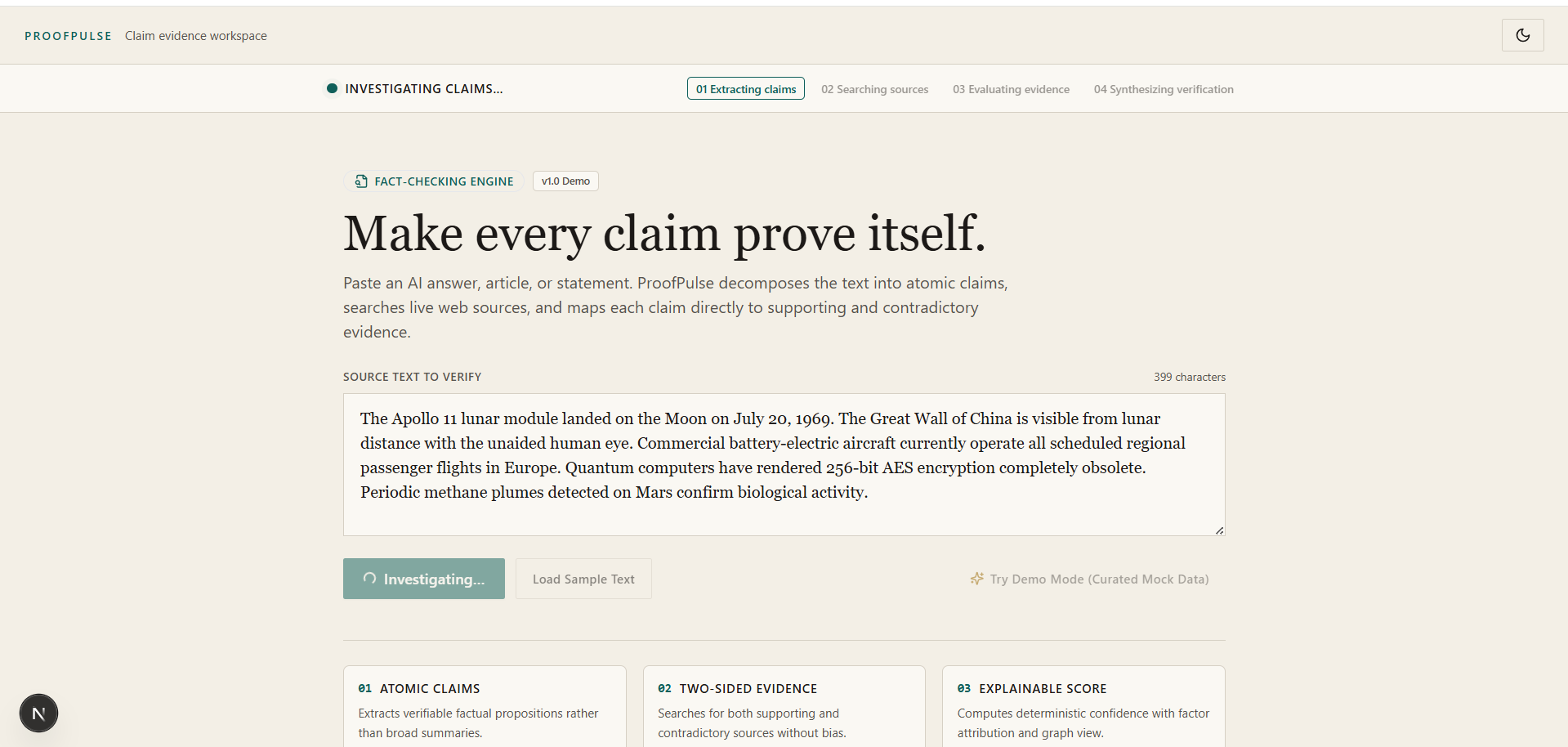
ProofPulse takes an AI-generated answer, article, or collection of statements and turns it into an interactive investigation.
The system:
- Extracts atomic claims that can actually be checked.
- Generates focused search queries for each claim.
- Retrieves web evidence from external sources.
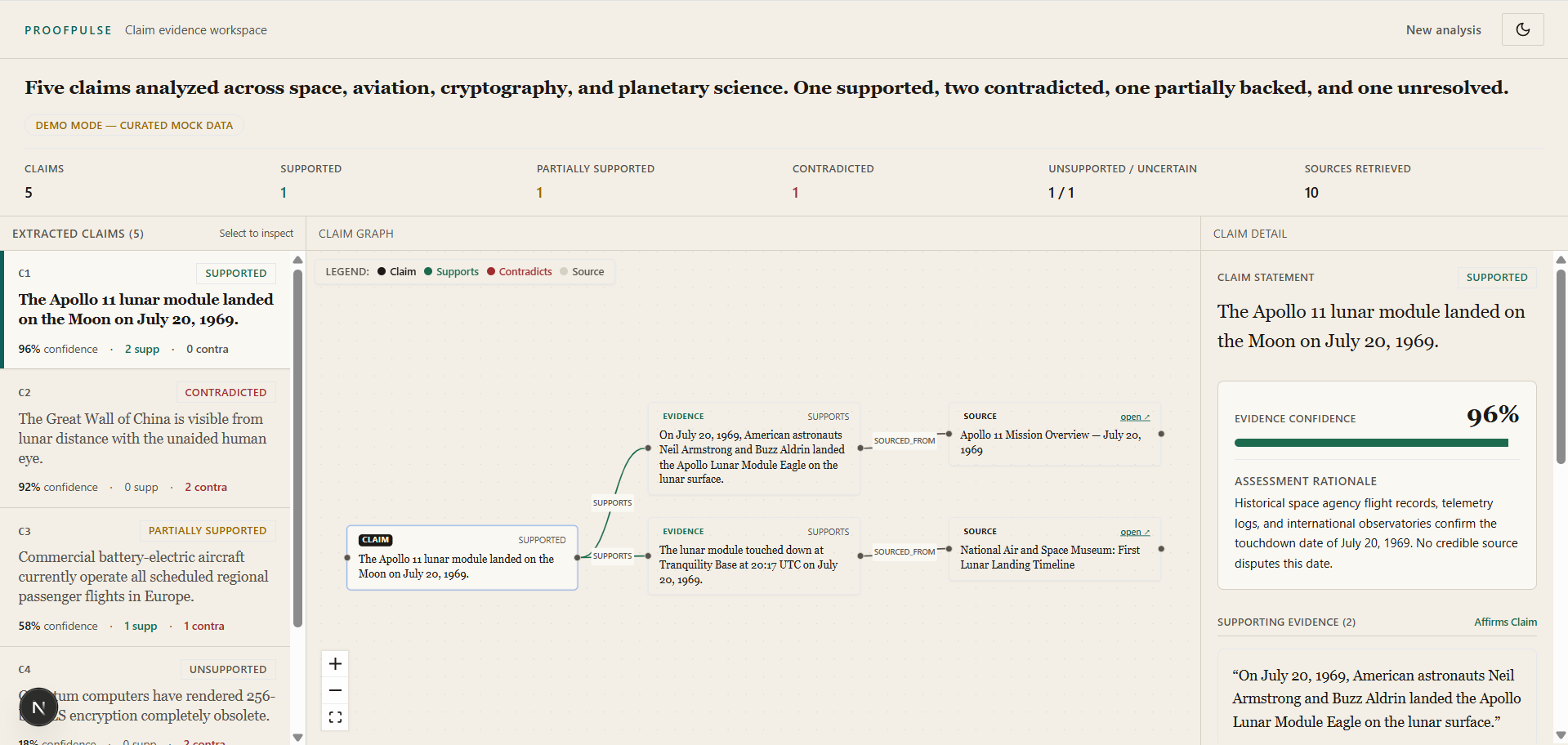
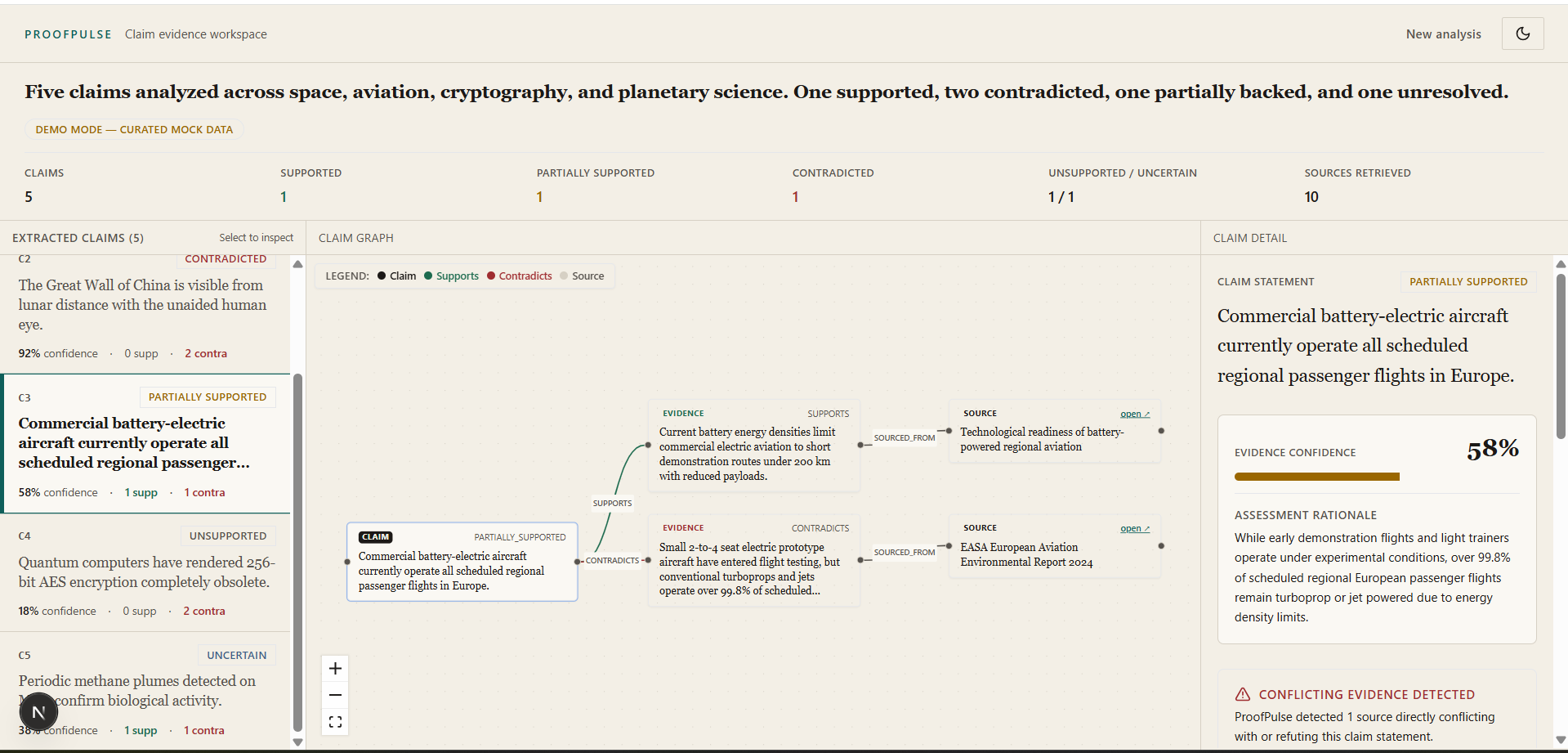
- Analyzes each evidence snippet to determine whether it supports, contradicts, or is insufficient for the claim.
- Synthesizes an explainable verdict for each claim.
- Calculates Evidence Confidence using structured evidence factors.
- Visualizes the provenance as an interactive Claim → Evidence → Source graph.
Claims can receive one of five verdicts:
- ✅ Supported
- 🟡 Partially Supported
- ❌ Contradicted
- ⚪ Unsupported
- ⚠️ Uncertain
A key feature is that ProofPulse actively surfaces contradictory evidence instead of only looking for information that confirms the original claim.
The goal isn't simply to answer:
"Is this true?"
It is to let the user investigate:
"Why did the system reach this conclusion, what evidence supports it, what evidence contradicts it, and where did that evidence come from?"
How we built it
ProofPulse is built as a full-stack application using:
- Next.js
- React
- TypeScript
- Tailwind CSS
- React Flow
- Python
- FastAPI
- SQLAlchemy
- Pydantic
- OpenAI-compatible LLM APIs
- Tavily Search API
The system is organized as a multi-stage verification pipeline:
User Input
    ↓
Claim Extraction
    ↓
Query Generation
    ↓
Web Evidence Retrieval
    ↓
Evidence Stance Analysis
    ↓
Verdict Synthesis
    ↓
Confidence Calculation
    ↓
Interactive Claim Graph
Built With
- css
- fastapi
- flow
- httpx
- next.js
- openai
- pydantic
- python
- react
- sqlalchemy
- tailwind
- tavily
- typescript


Log in or sign up for Devpost to join the conversation.