-
-
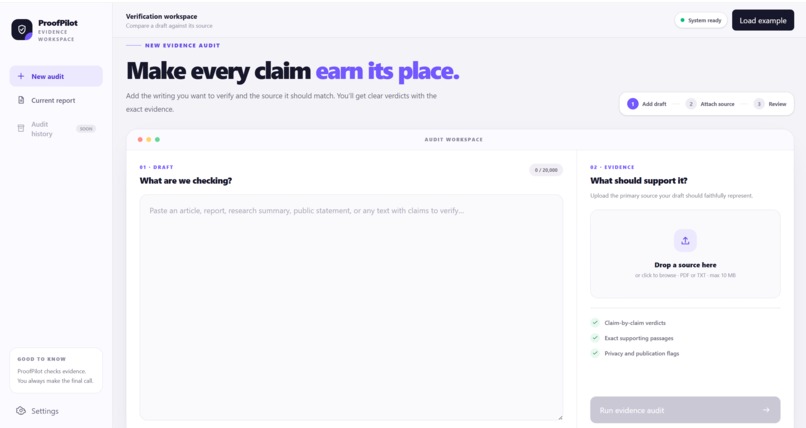
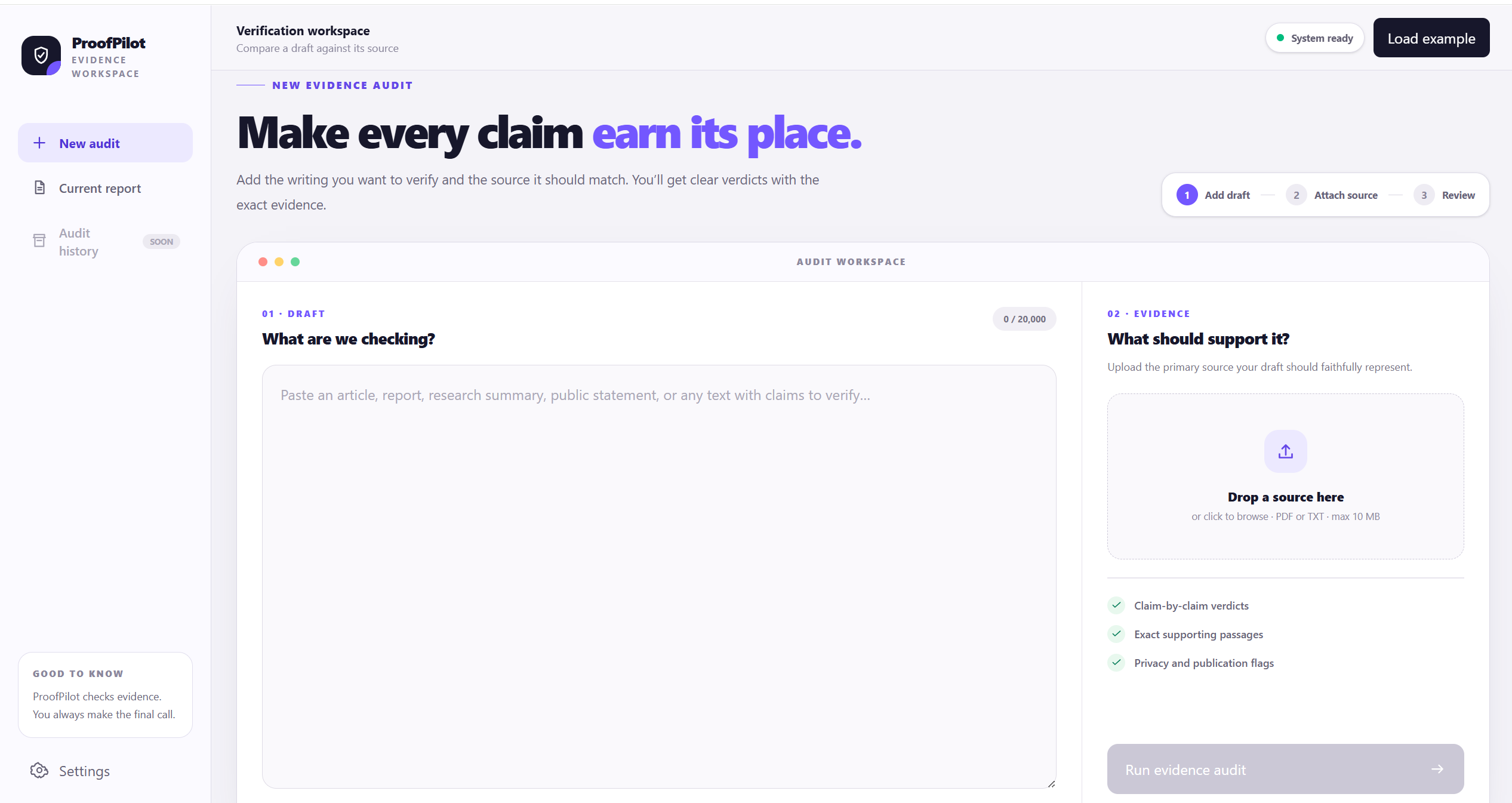
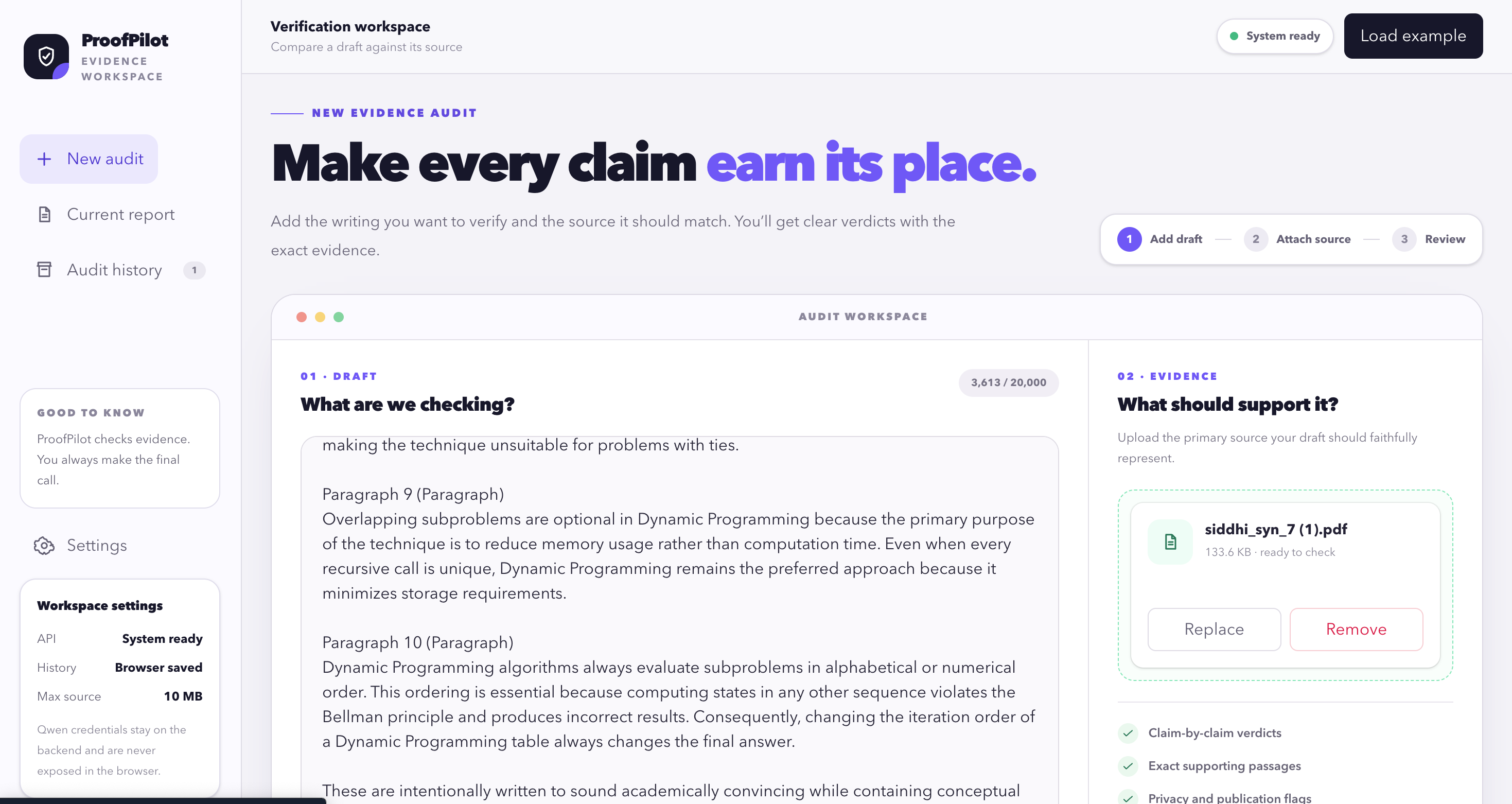
Upload a document
-
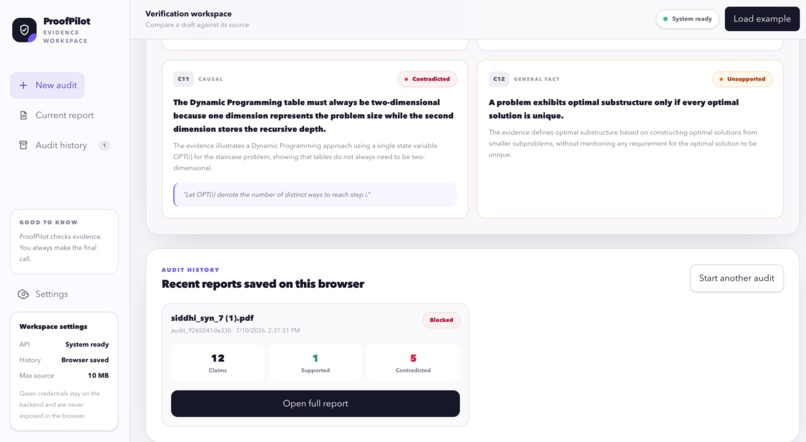
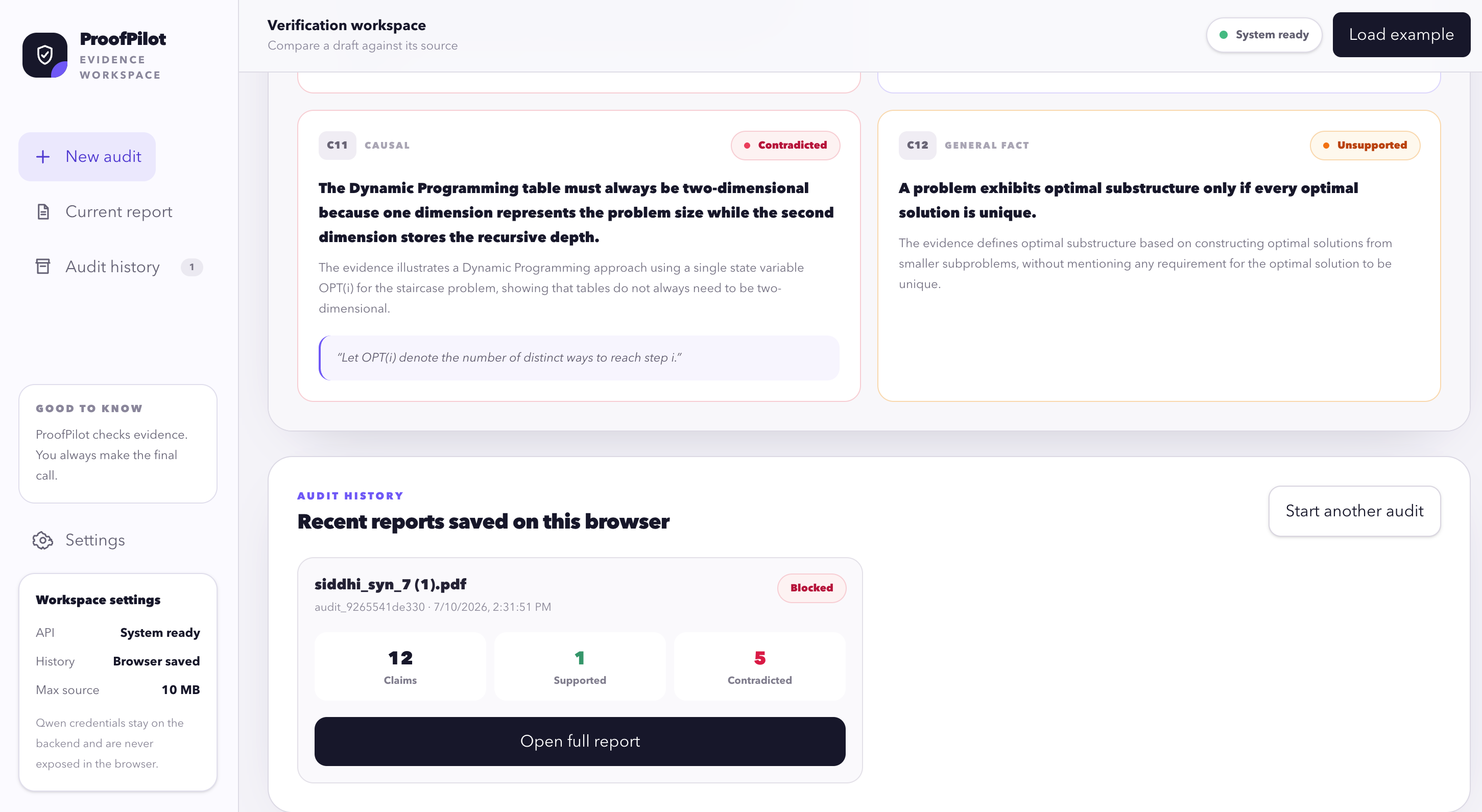
Saving a report
-
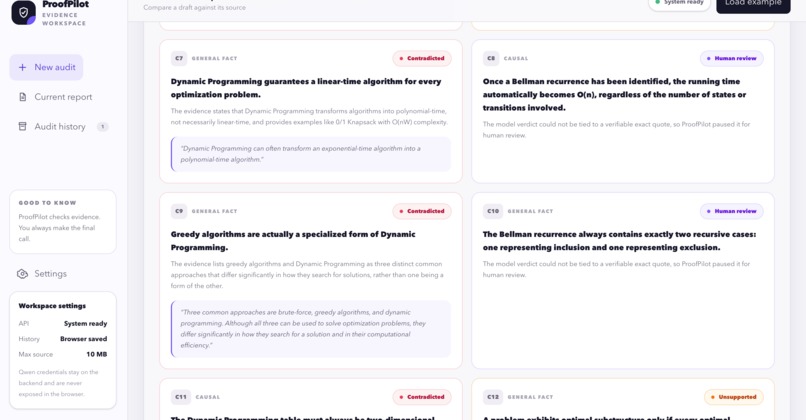
Giving the results
-
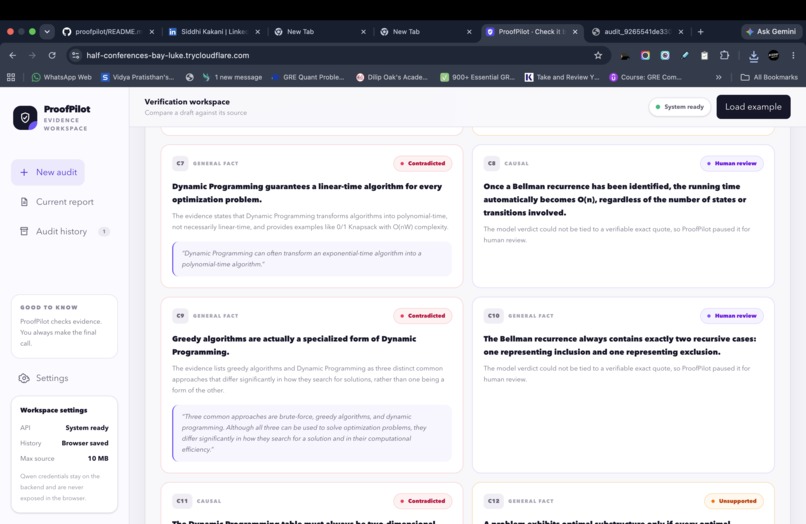
Giving the results and setting the updates
-
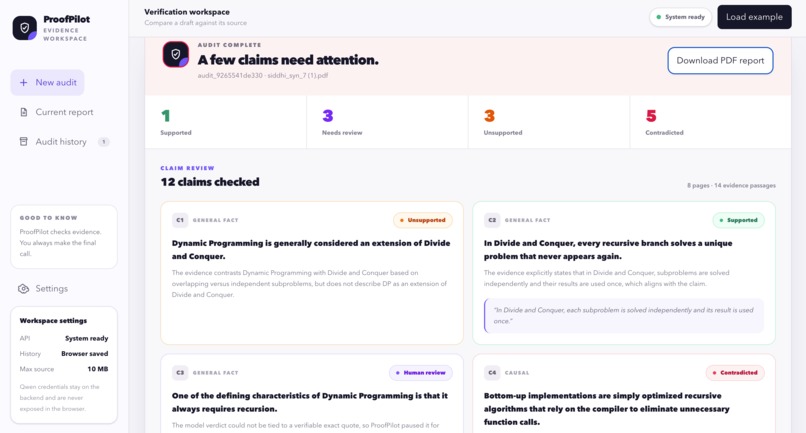
Download PDF reports
-
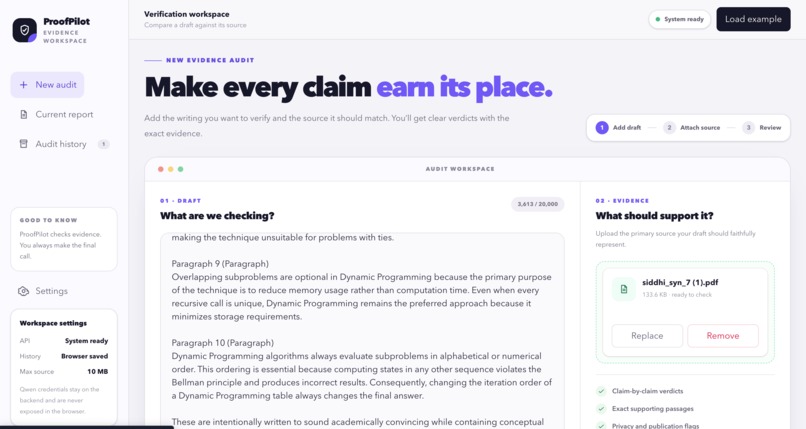
Replace or remove the source document
Inspiration
ProofPilot was inspired by our own experiences with AI hallucinations and by the growing discussion around this problem in podcasts, classrooms, and everyday conversations. We use AI tools ourselves to learn new concepts and understand technical topics, so the accuracy of AI-generated information matters a lot to us. When AI-generated content is used in school, work, research, or public communication, it can eventually represent the person or organization publishing it. We wanted to build a tool that helps users stay in control by checking whether AI-written content is supported by trusted source documents before it is published or shared.
What it does
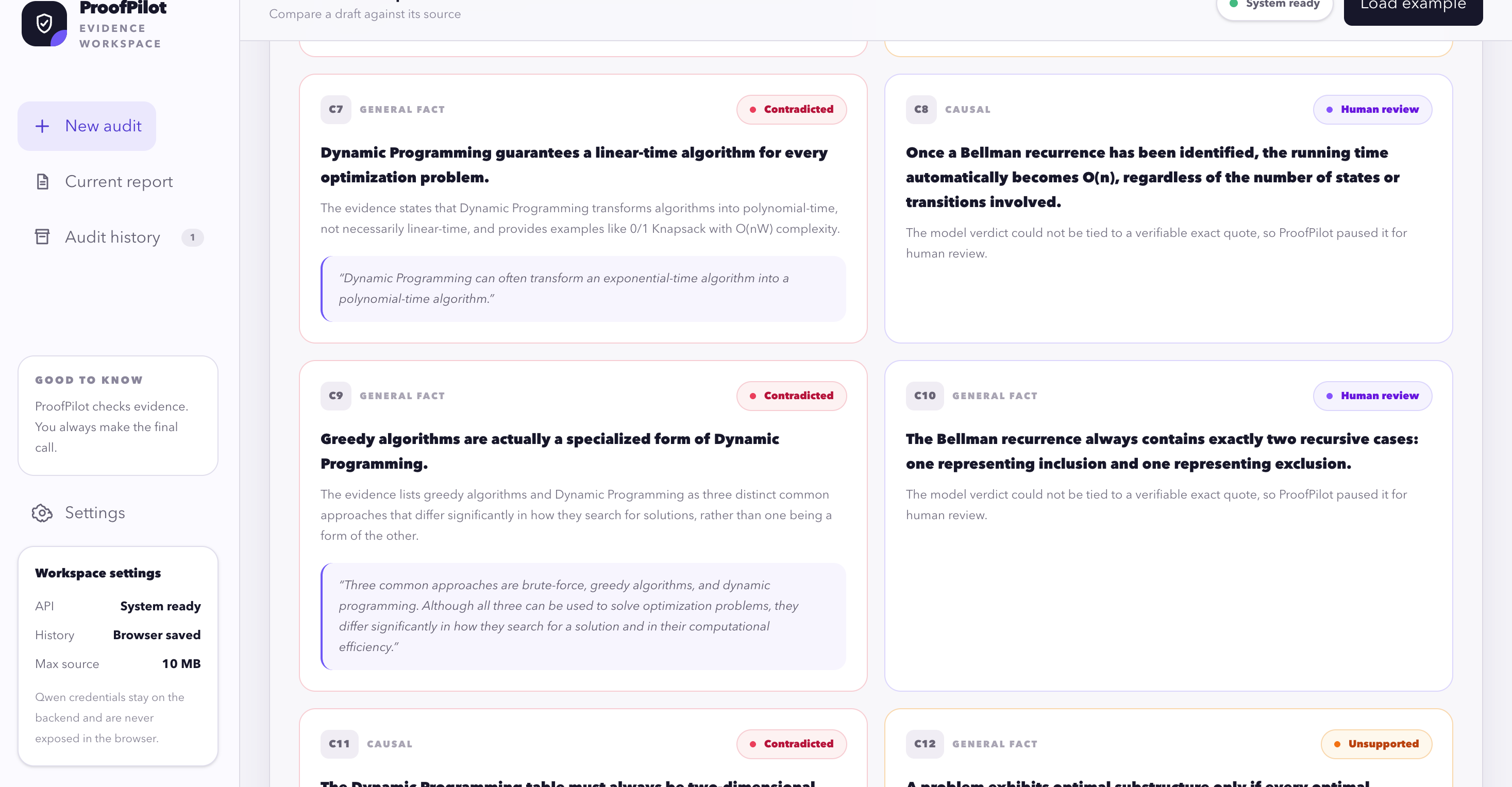
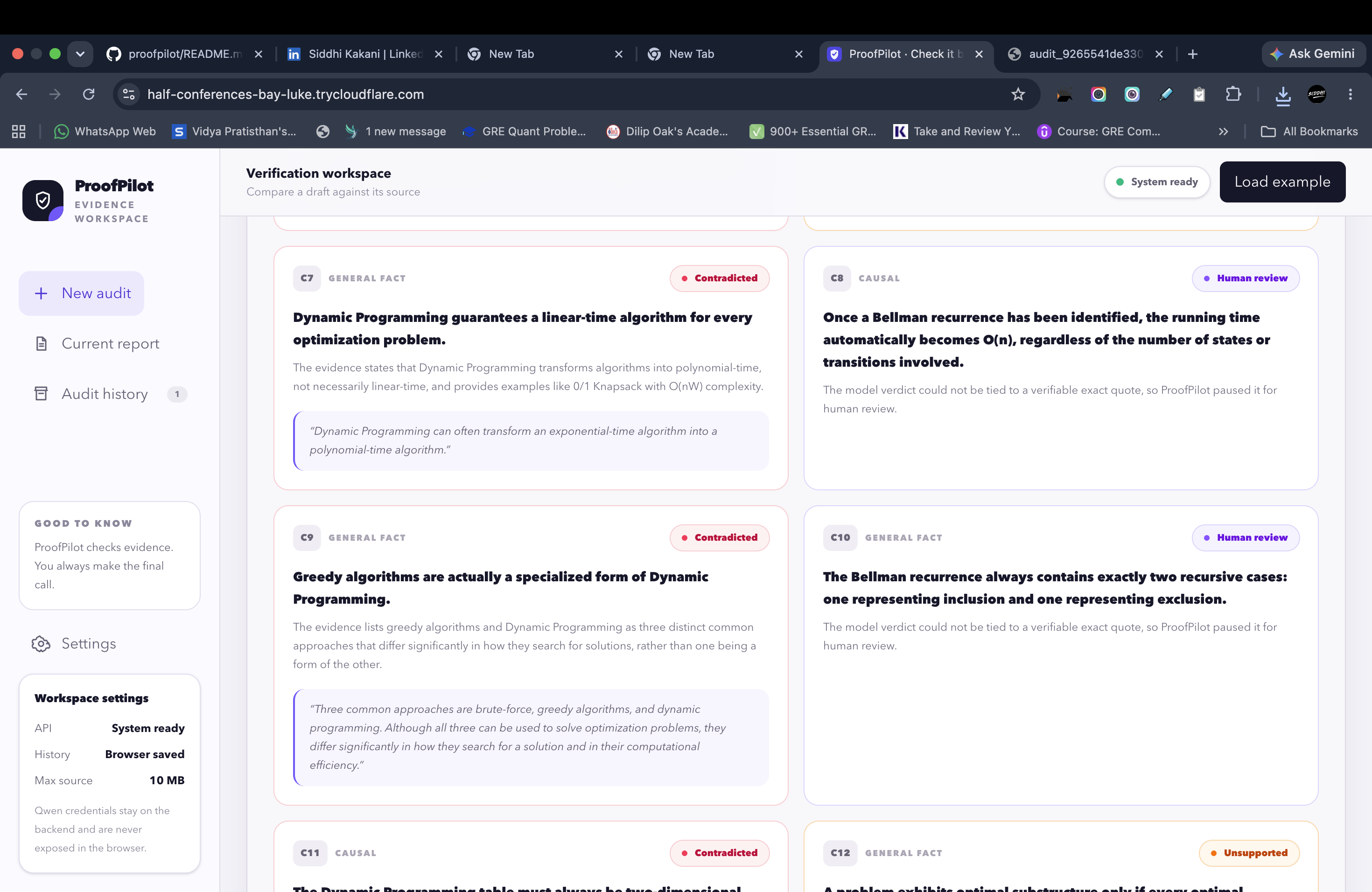
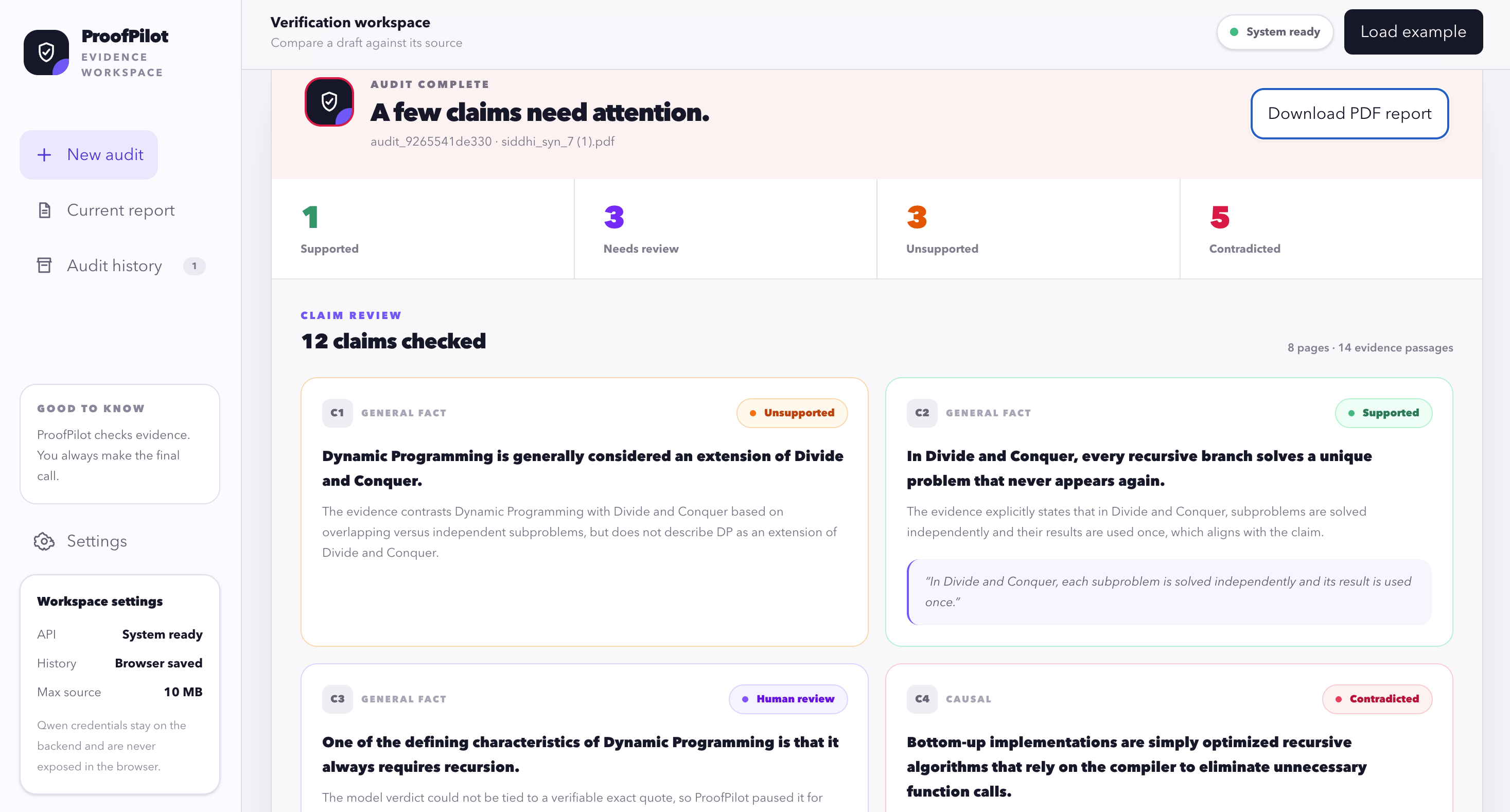
ProofPilot is an AI-powered content audit tool that helps users verify AI-written drafts against original sources. It extracts factual claims, finds supporting evidence from uploaded documents, flags unsupported or contradictory claims, detects possible privacy risks, and requires human review before high-risk content is approved. The goal is not to replace human judgment, but to make human review faster, clearer, and more evidence-based.
How we built it
We built ProofPilot as a web-based AI auditing workflow. Users can upload or paste an AI-generated draft along with source documents. The system processes the source files, extracts checkable claims from the draft, retrieves relevant evidence, and generates verdicts such as supported, weakly supported, unsupported, contradicted, or requiring human review. The project uses Qwen for claim extraction, evidence analysis, and structured AI responses. We used a RAG-based approach to connect each claim back to source evidence, along with a human-in-the-loop review step so users can approve, reject, or request revisions before publication.
Challenges we ran into
One of our biggest challenges was learning Qwen because it is a relatively new technology and there are not many tutorials or examples available yet. RAG was also new to us, so understanding how to retrieve the right evidence and connect it to each AI-generated claim was a major learning challenge. We also had to think carefully about how to present the results clearly. It was not enough to simply say that a claim was unsupported. We wanted to show the user the claim, the closest source evidence, the risk level, and the recommended human action in a way that was easy to understand.
Accomplishments that we're proud of
We are proud that we learned Qwen and RAG from scratch and applied them to a real problem in a short amount of time. Although we started discussing the project idea earlier, the actual development work began only a few weeks before the deadline. We are also proud that ProofPilot is focused on responsible AI use. Instead of only generating more content with AI, our project helps users slow down, verify information, and make better decisions before publishing.
What we learned
This project had a steep learning curve. We learned how to work with Qwen, how to design a RAG-based verification workflow, and how to think about AI-generated content from a safety and trust perspective. We also learned that building responsible AI tools requires more than just calling an AI model. The system needs source grounding, clear evidence, structured outputs, privacy checks, and human review.
What's next for ProofPilot: AI Output Audit Coach
The next step is to turn ProofPilot into a complete live web service. We want to add user accounts, allocate a page number and the first sentence of an actual paragraph in the report, stronger privacy controls, and better support for different document types. In the future, ProofPilot could be used by students, researchers, journalists, educators, and communication teams who want to use AI while still keeping human judgment and source-based verification at the center of the publishing process.
Built With
- cloud
- docker
- embeddings
- fastapi
- github
- html
- javascript
- json
- numpy
- pydantic
- pymupdf
- python
- qwen
- rag
- react
- reranking
- tailwindcss
- typescript
- vite


Log in or sign up for Devpost to join the conversation.