-
-
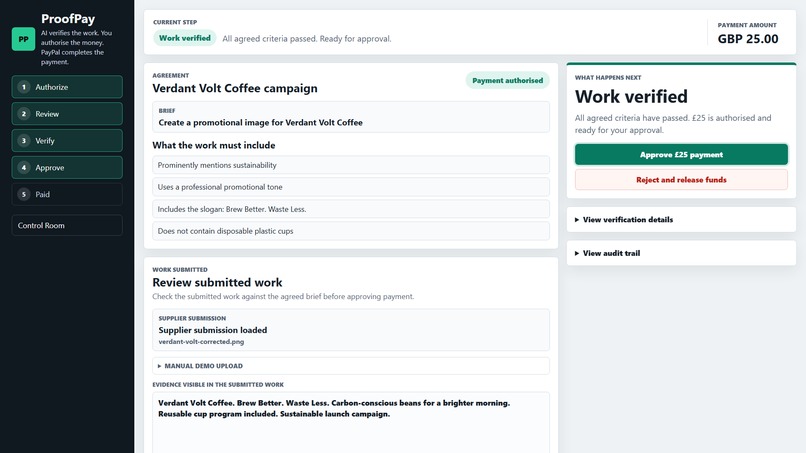
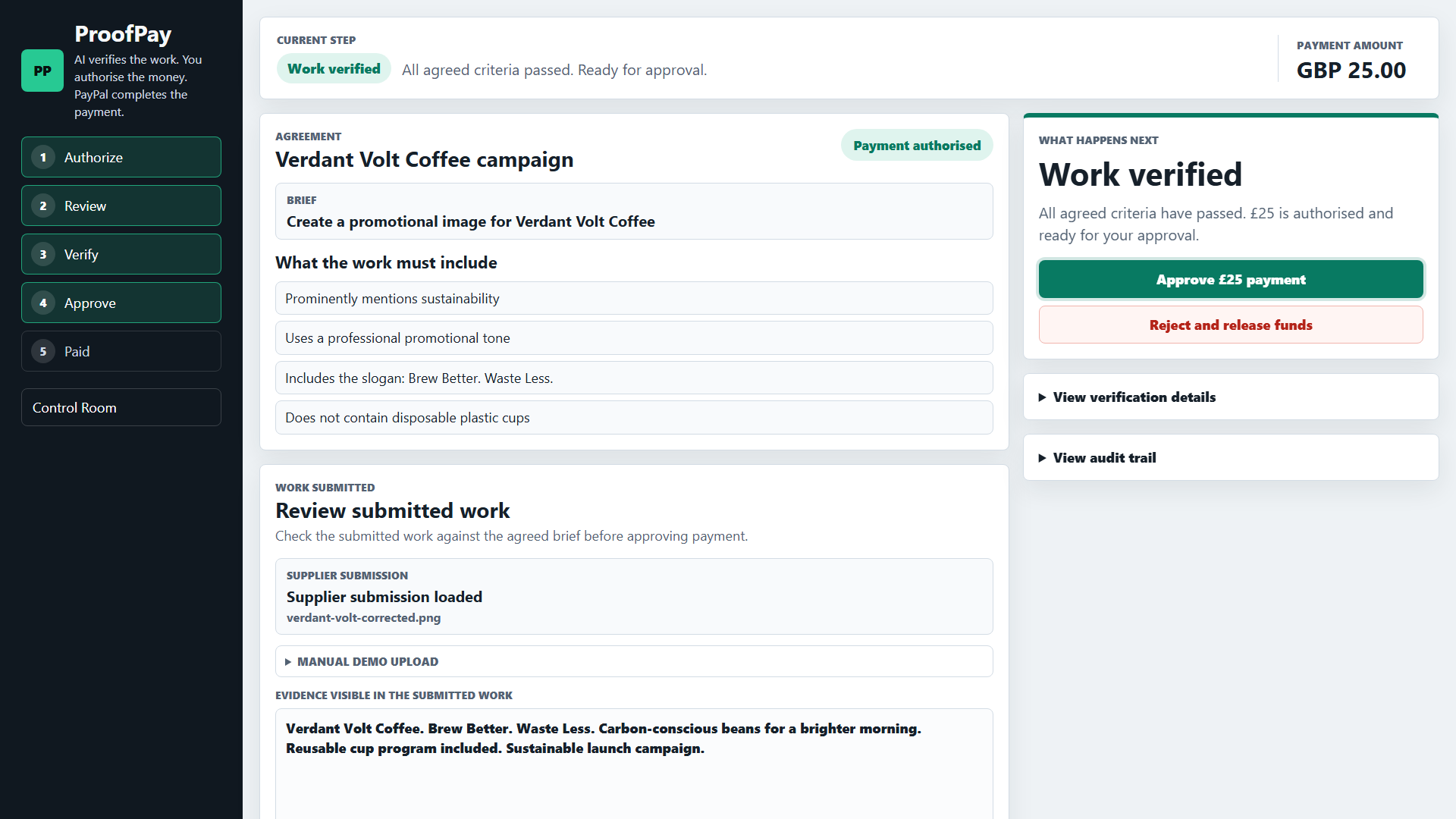
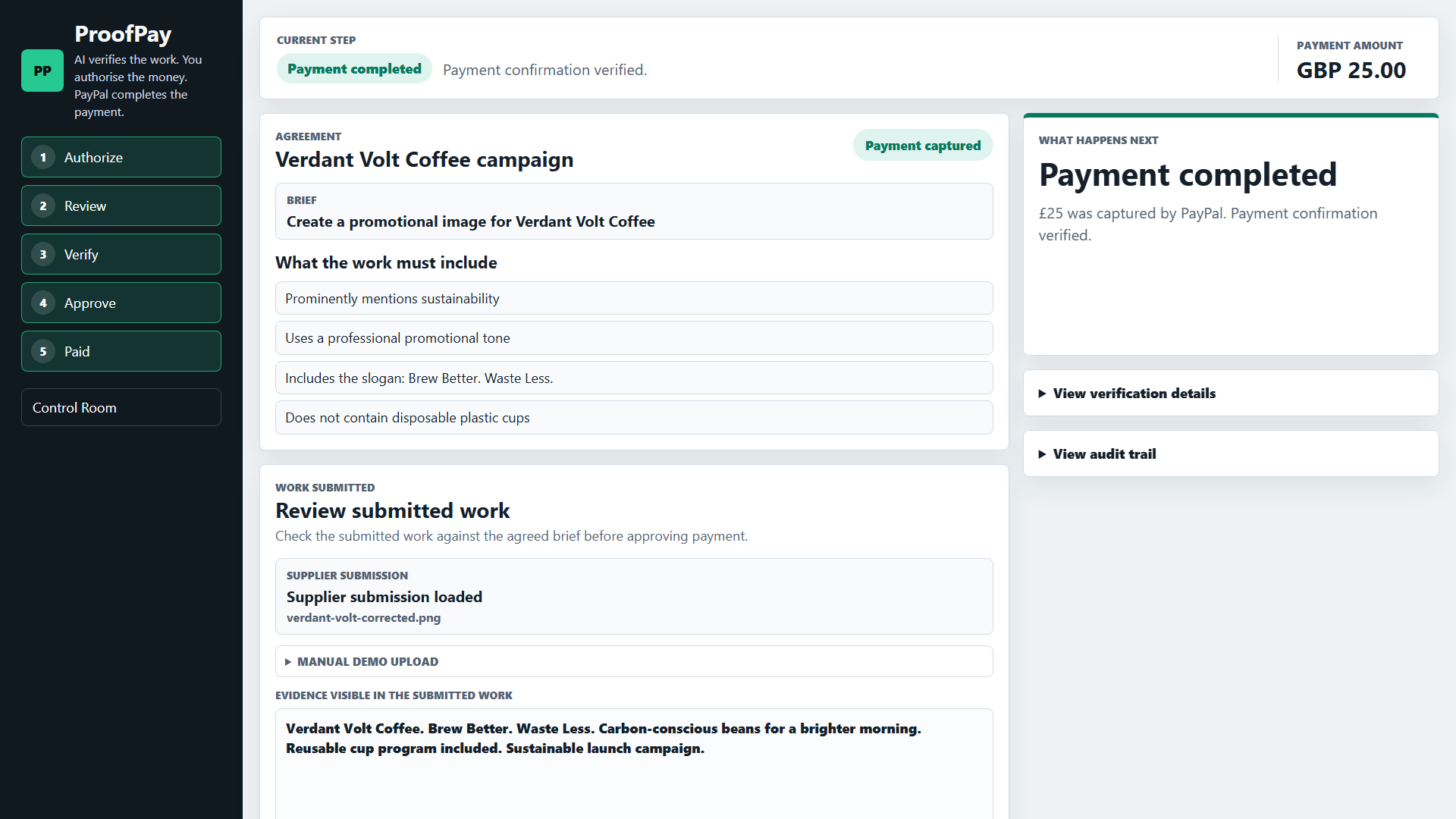
The corrected submission passes all agreed verification criteria.
-
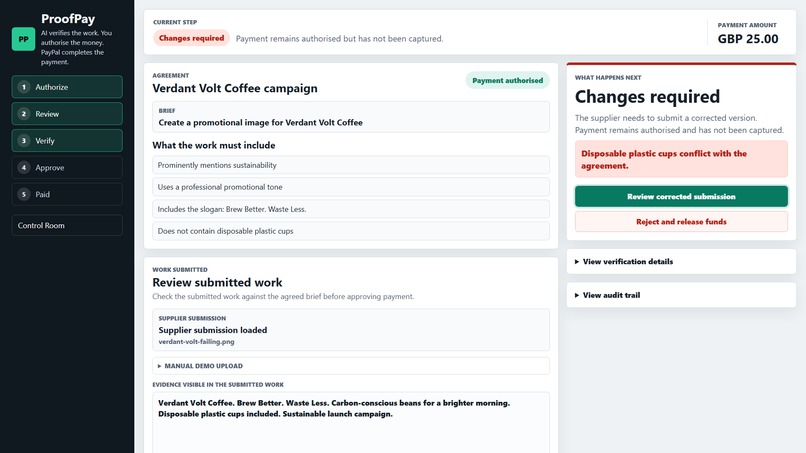
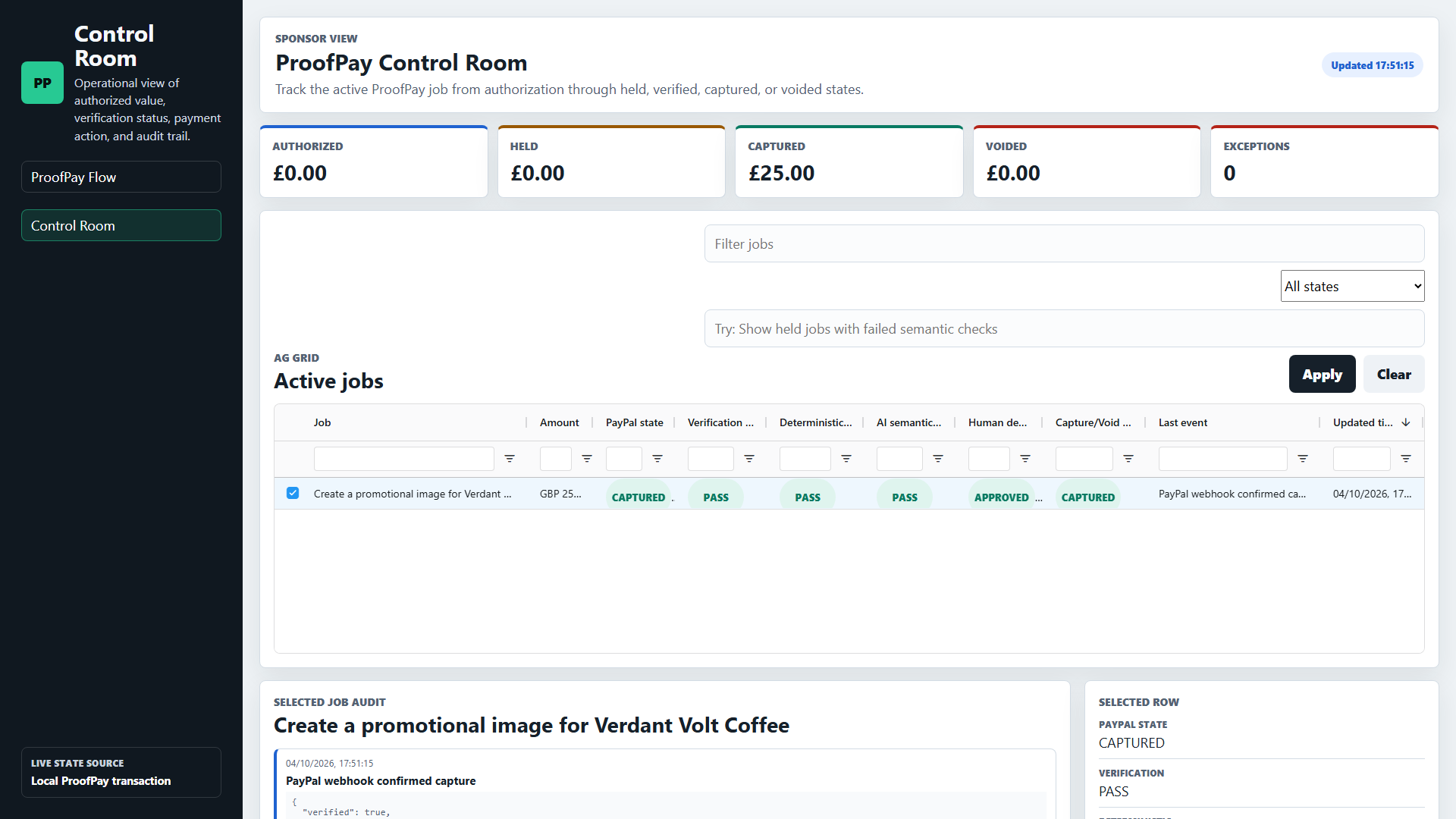
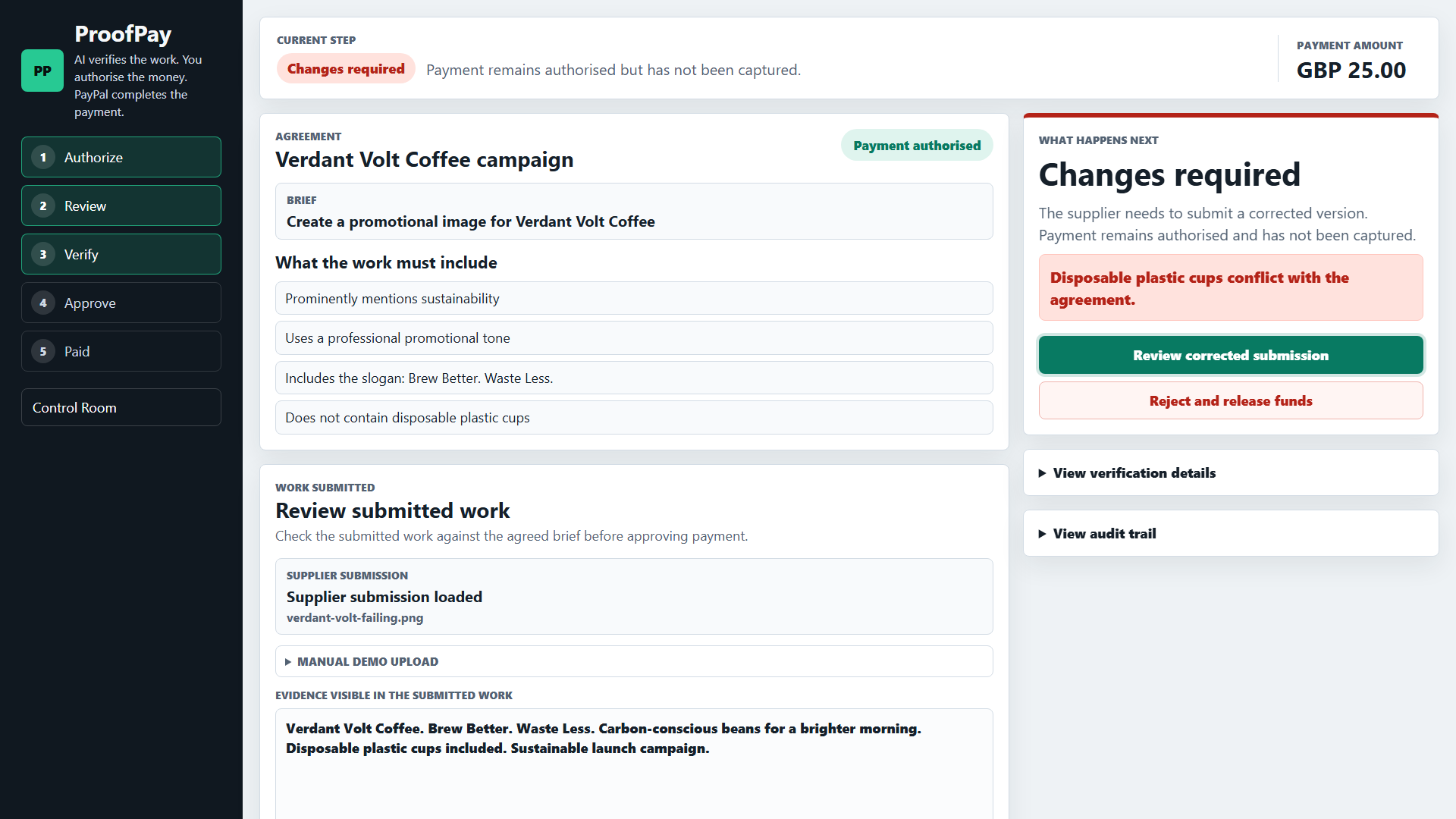
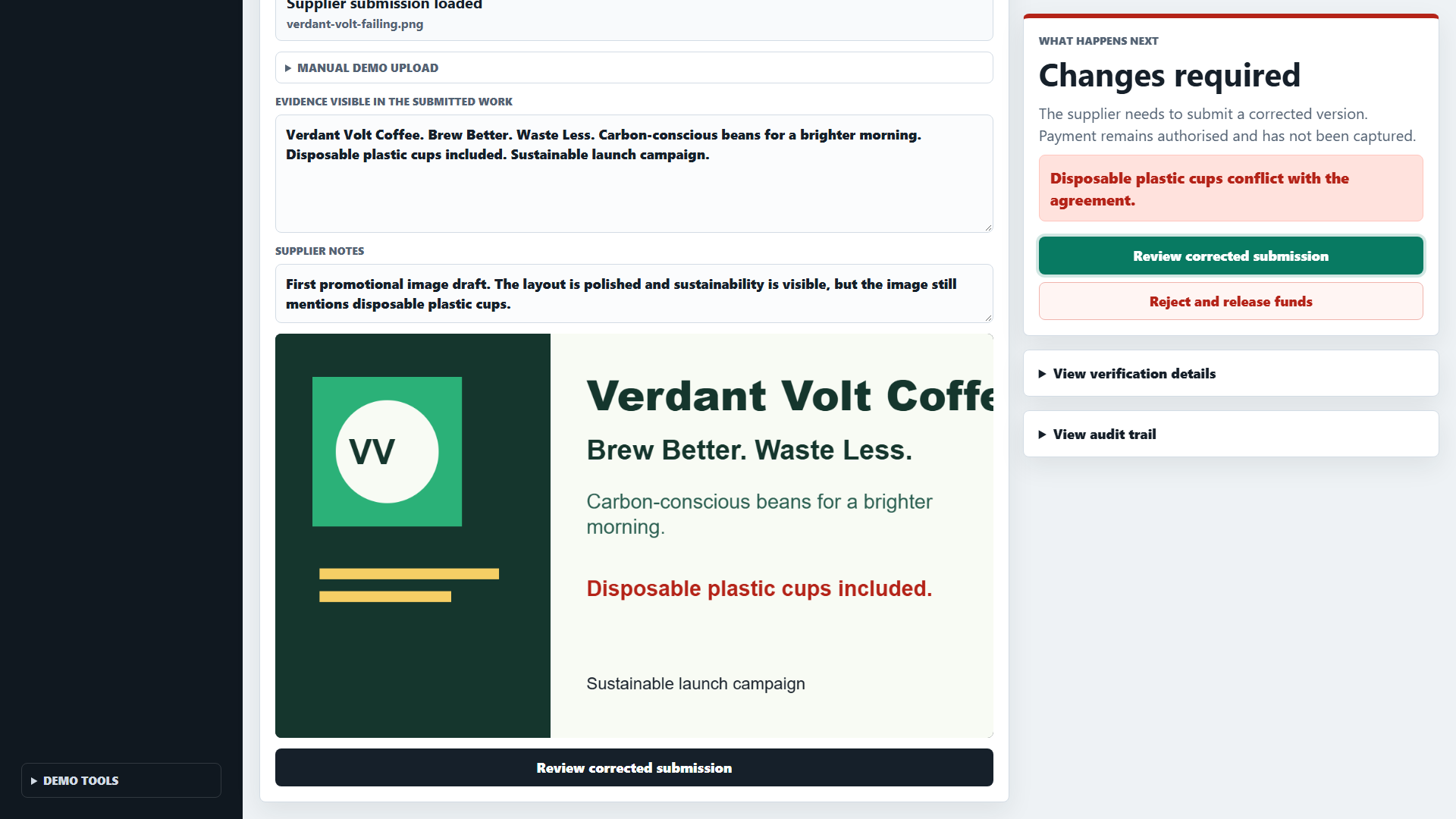
AI verification detects the conflict and keeps the payment authorised but uncaptured.
-
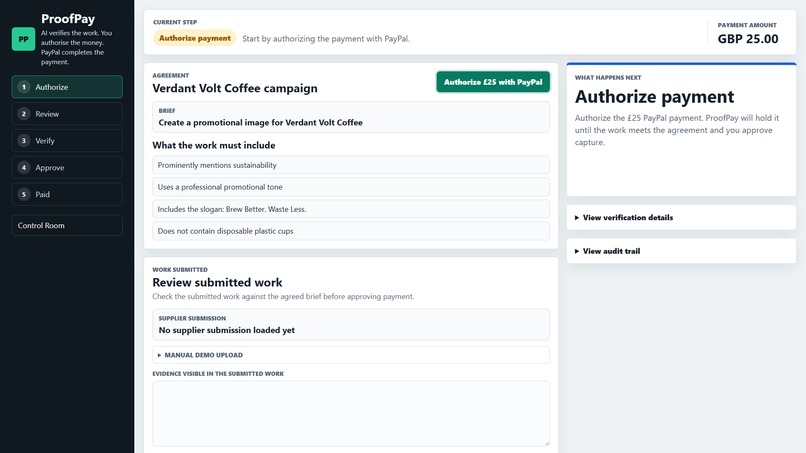
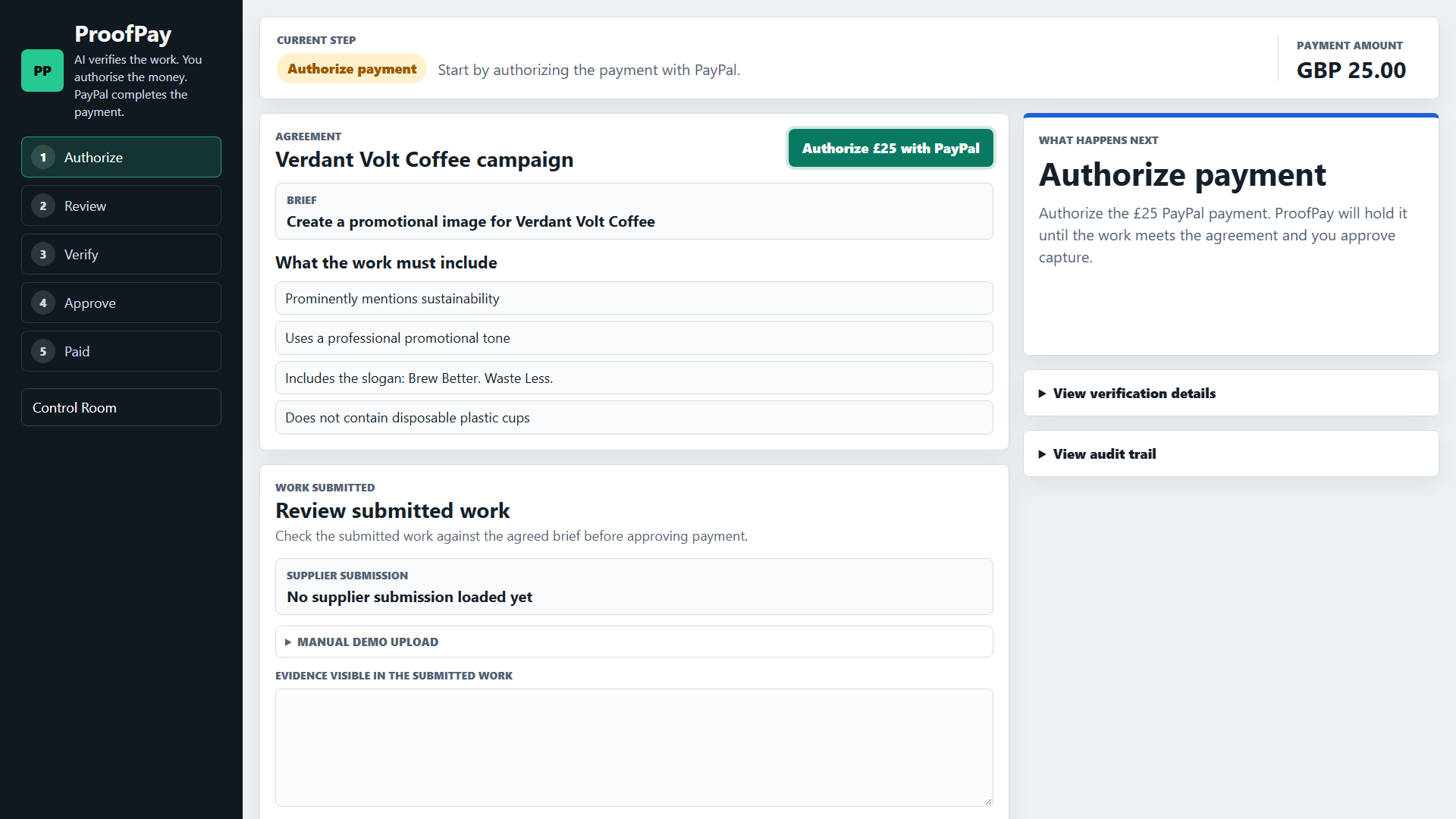
Buyer authorises £25 with PayPal before any work is reviewed.
-
The first supplier submission contains a sustainability violation.
-
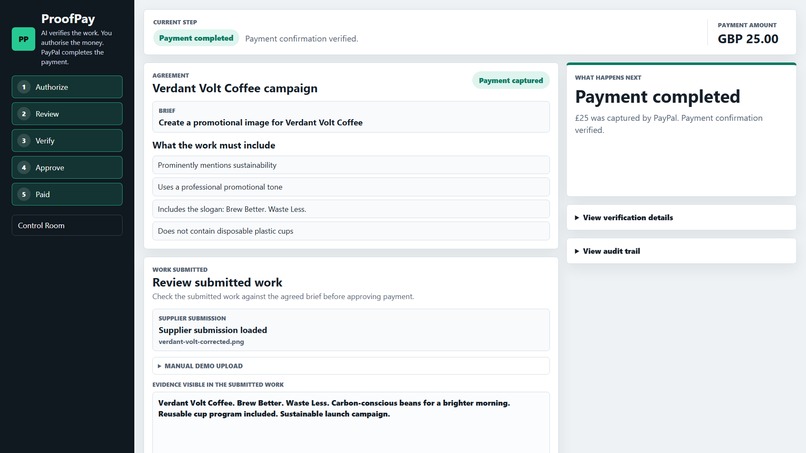
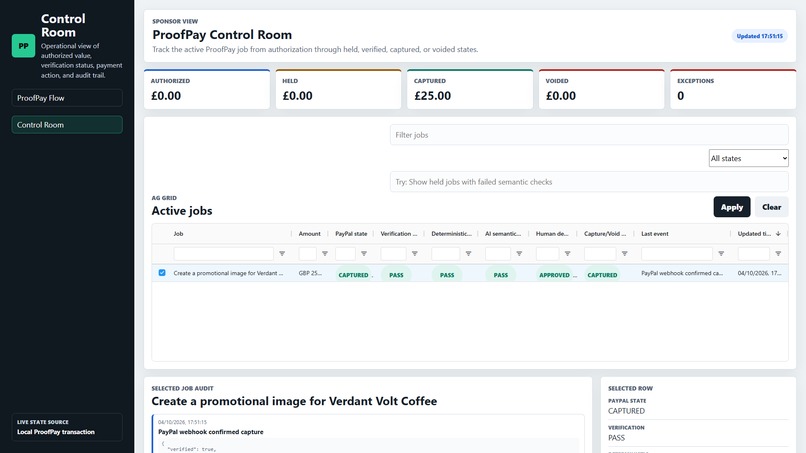
AG Grid Control Room shows the final verification, approval and PayPal capture audit trail.
-
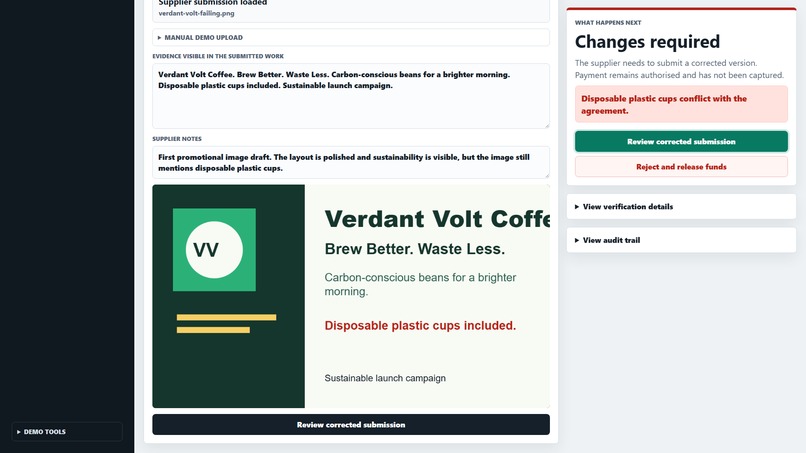
After explicit human approval, PayPal captures the £25 payment.
Inspiration
Digital work is often paid for before anyone has clearly verified whether the final result actually matches the agreed brief. We wanted to explore a safer flow where AI can help check the work, while the buyer still keeps control over the money.
What it does
ProofPay connects work verification with PayPal payment control. The buyer first authorises a payment with PayPal. ProofPay then reviews the submitted work against agreed criteria using deterministic checks and AI semantic verification. If the work does not match the agreement, the payment remains authorised but is not captured. The supplier can provide a corrected version, which is checked again. Once the work passes verification, the buyer makes the final decision. Only after explicit human approval does ProofPay capture the PayPal payment. A Control Room provides a clear operational view of verification status, payment state, human approval, and the audit trail.
How we built it
ProofPay is built with Node.js and Express, with a browser-based buyer interface. We integrated PayPal Sandbox using the authorise, capture, void, and webhook flows. AI semantic verification is powered by the OpenAI API, while deterministic checks handle objective requirements separately. The application keeps AI verification and payment authority deliberately separate: AI can verify and recommend, but it cannot capture money. We also built a Control Room with AG Grid to show authorised, held, captured, and voided payment states, along with verification results and audit events.
Challenges we ran into
One of the biggest challenges was designing the payment flow correctly. We had to ensure that a failed verification could never trigger an accidental capture. We also had to make the webhook flow reliable and verify that the final captured state was confirmed independently by PayPal. Another challenge was the user experience. Early versions exposed too much technical detail and mixed buyer and supplier actions. We redesigned the interface around a simple buyer flow: Authorize, Review, Verify, Approve, Paid.
Accomplishments that we're proud of
We built and tested the complete end-to-end flow:
- PayPal authorisation
- failed work verification
- payment held without capture
- corrected submission
- successful AI verification
- explicit human approval
- PayPal capture
- verified webhook confirmation
- final audit trail in the Control Room We are especially proud that ProofPay keeps the human in control of the financial action while still using AI to reduce the effort required to review work. ## What we learned We learned that AI is most useful in payment workflows when it supports a decision rather than making the financial decision itself. Separating deterministic checks, semantic AI verification, human approval, and payment execution made the system easier to reason about and safer to test. We also learned how important webhook confirmation and clear state transitions are when building around authorised payments. ## What's next for ProofPay Next, we would expand ProofPay beyond the single demo workflow into reusable agreement templates for freelancers, agencies, marketplaces, and digital services. Future versions could support richer evidence, multiple milestones, configurable verification policies, dispute workflows, and production PayPal accounts. The core principle would remain the same: AI verifies the work. You authorise the money. PayPal completes the payment.
Built With
- ag-grid
- agentic-commerce
- ai
- ai-verification
- audit
- css
- deterministic-checks
- express.js
- fintech
- html
- human-in-the-loop
- javascript
- node.js
- openai
- openai-api
- payment-authorization
- payment-capture
- payments
- paypal
- paypal-sandbox
- rest-api
- semantic-verification
- trail
- webhooks

Log in or sign up for Devpost to join the conversation.