-
-
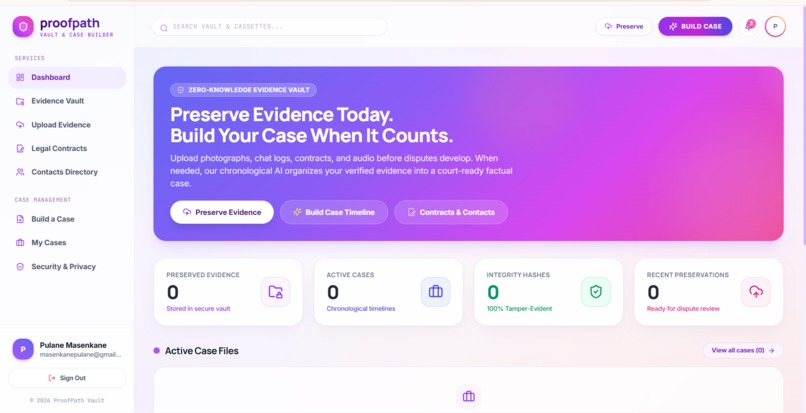
Dashboard
-
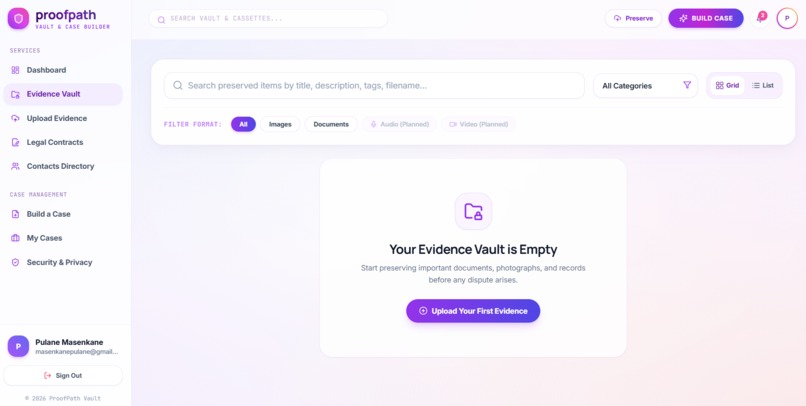
Evidence Vault
-
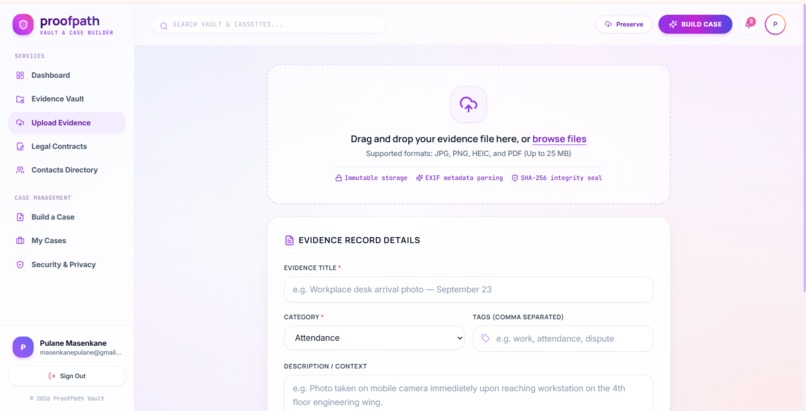
Upload Evidence
-
-
-
-
-
Inspiration
What it does
How we built it
Challenges we ran into
Accomplishments that we're proud of
What we learned
What's next for ProofPath
Inspiration
Important evidence is often scattered across phones, messaging apps, emails, screenshots, photos, and documents. When a workplace, housing, consumer, or contractual dispute happens, people may only begin organizing their evidence after the problem has already escalated. By then, important files may be difficult to find, timestamps may be unclear, and it can become challenging to reconstruct what actually happened.
That inspired me to build ProofPath — a platform designed around a simple idea: preserve the evidence first, then build the case from facts that already exist.
What it does
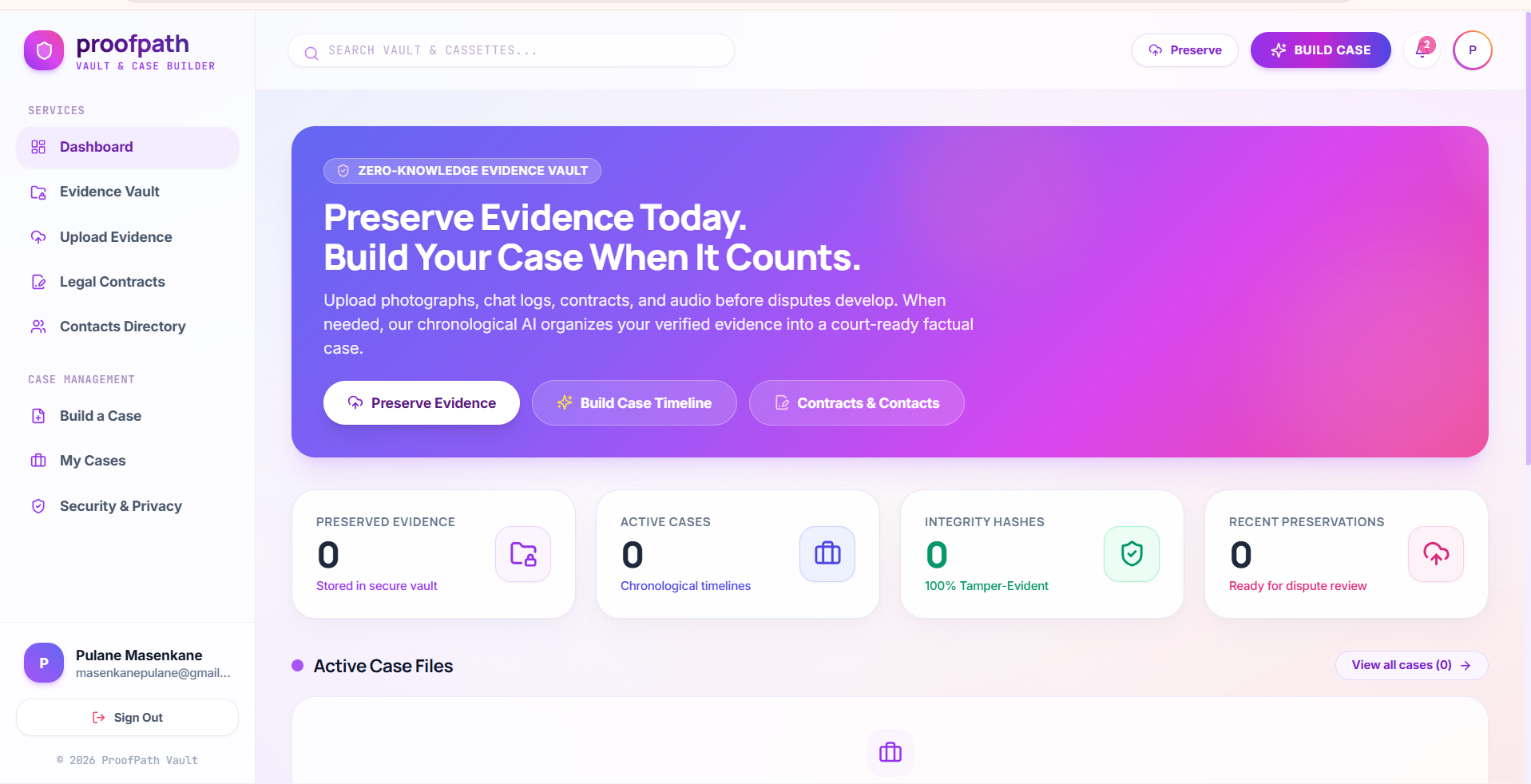
ProofPath is an AI-powered evidence vault and case-building platform.
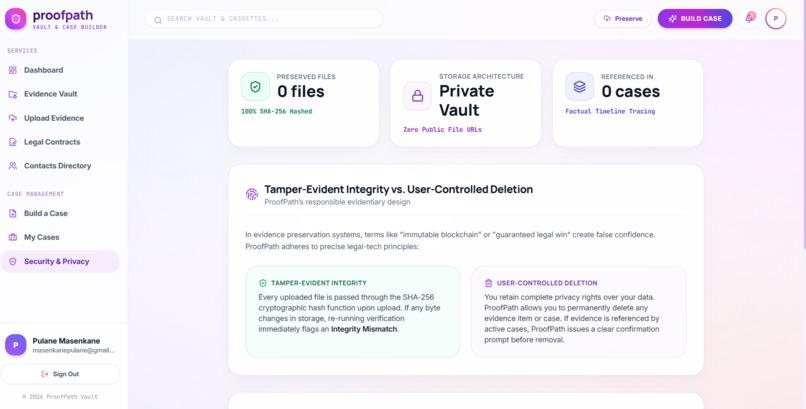
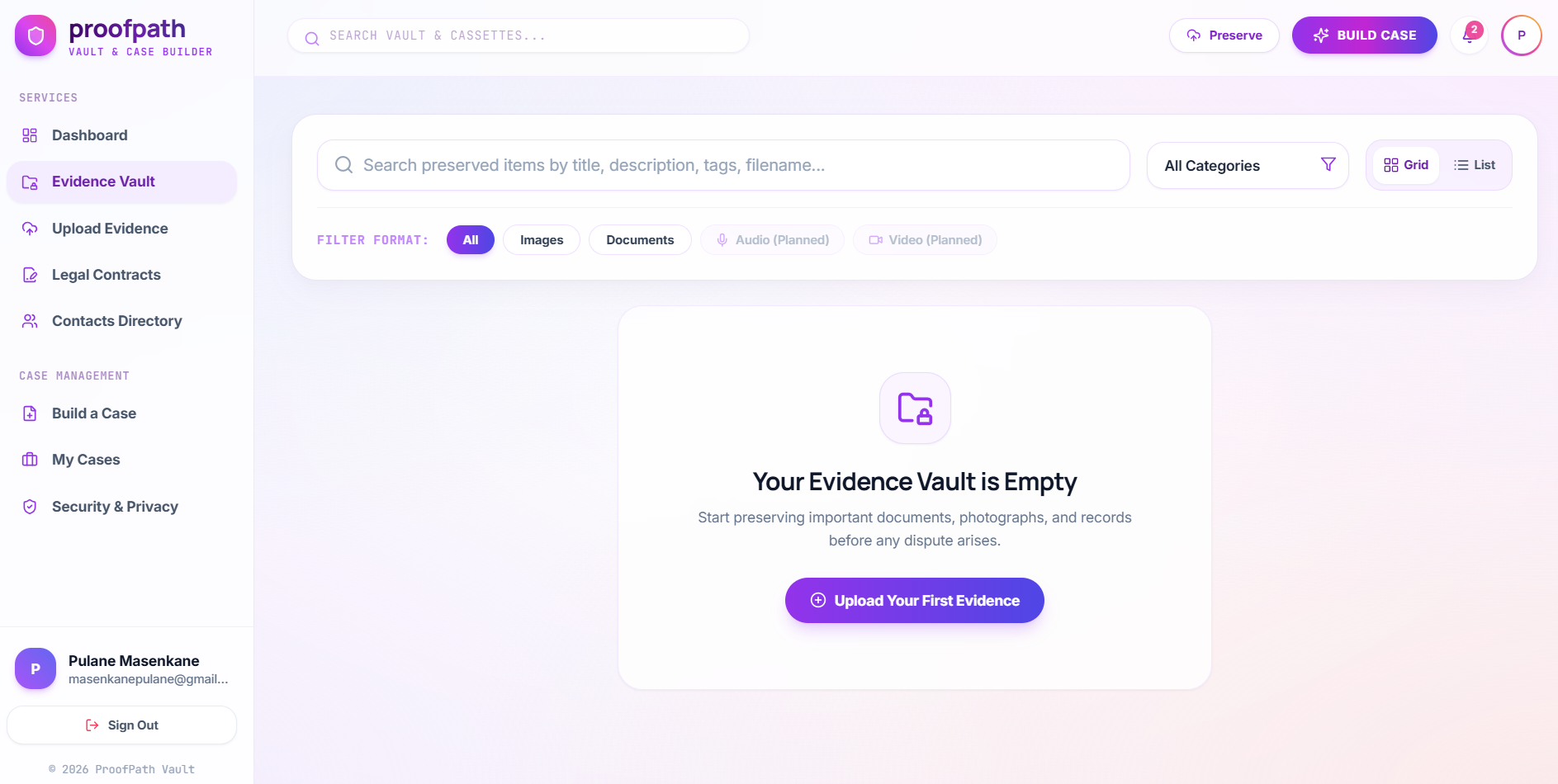
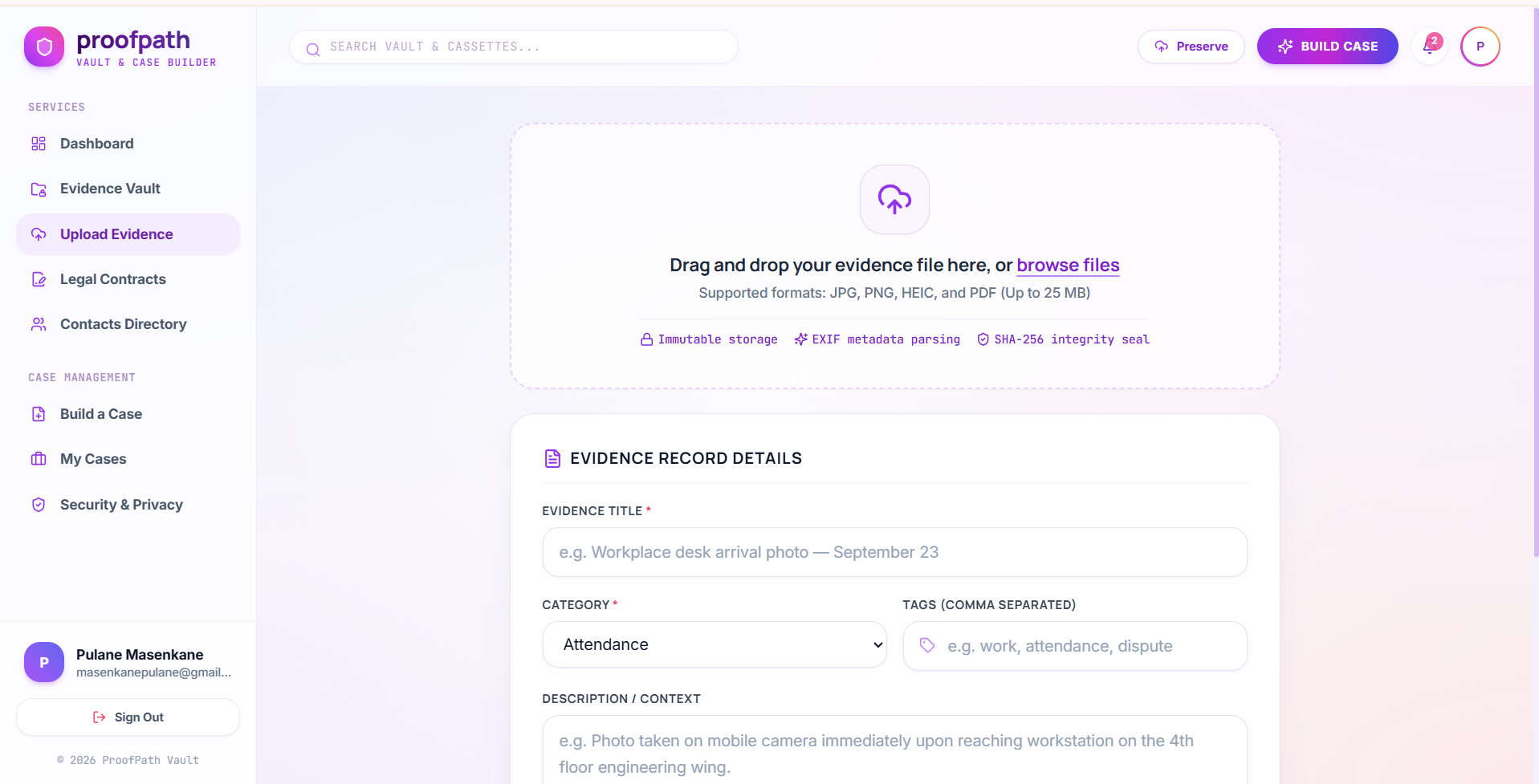
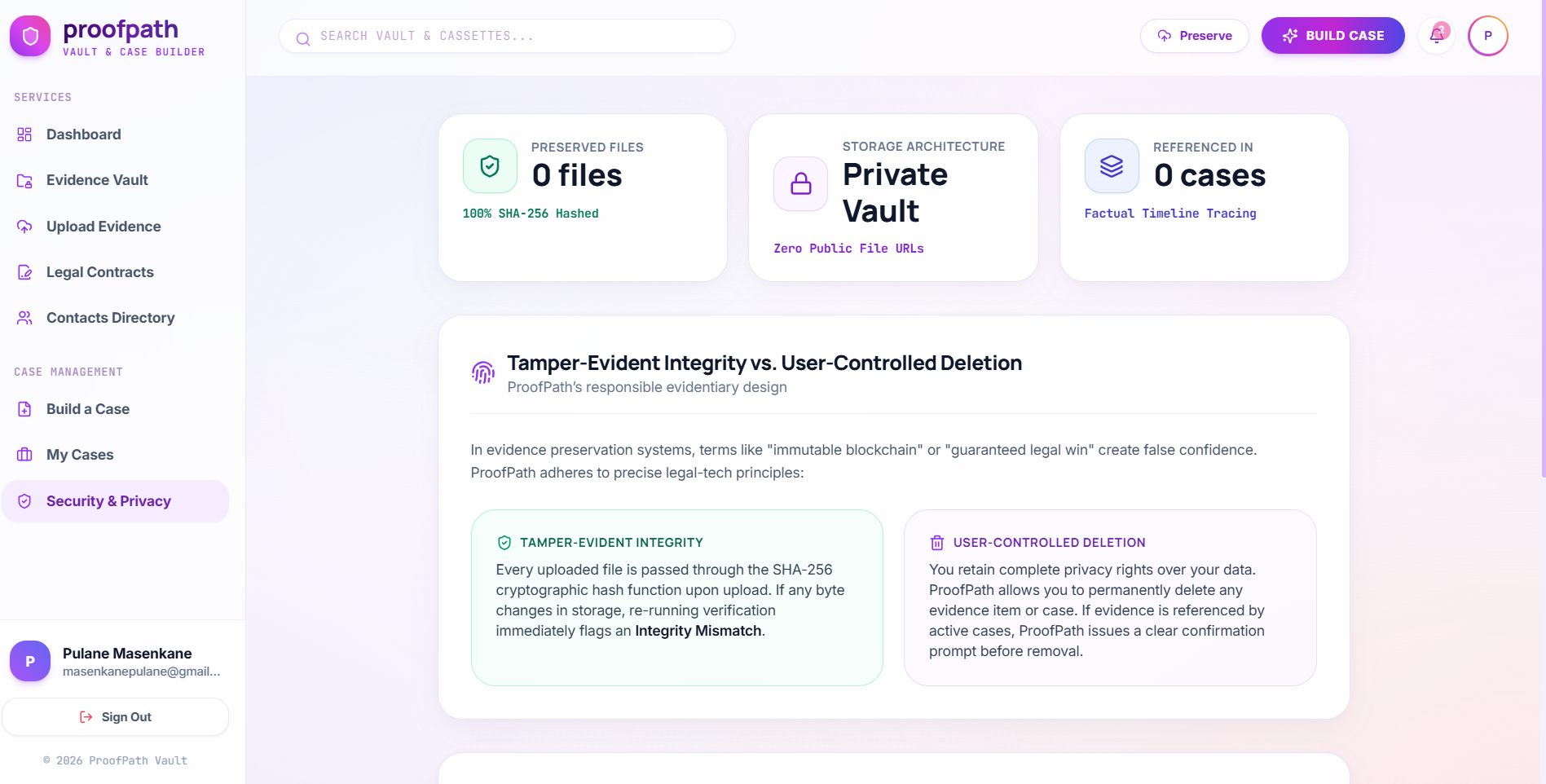
Users can securely upload and organize evidence such as photographs and PDF documents. When evidence is uploaded, ProofPath calculates a SHA-256 hash to create a tamper-evident record and extracts available file metadata, including timestamps, device information, and GPS coordinates when they actually exist.
ProofPath never invents missing metadata. If information such as GPS coordinates is unavailable in the original file, the system clearly displays it as "Not available."
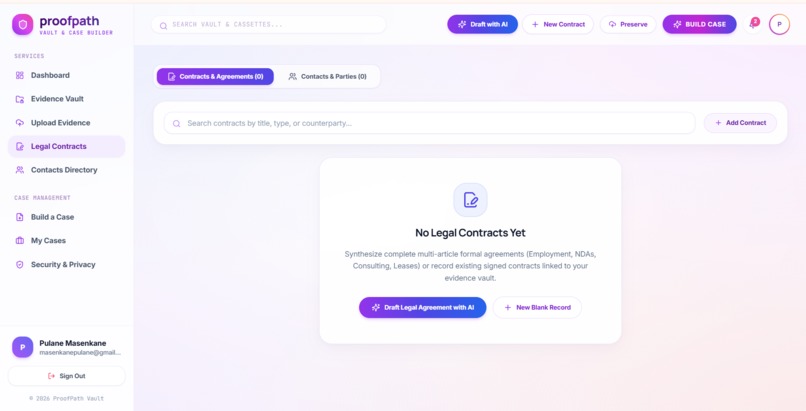
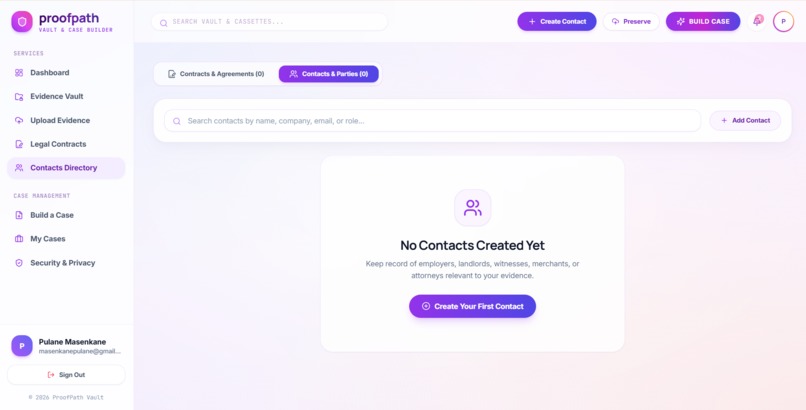
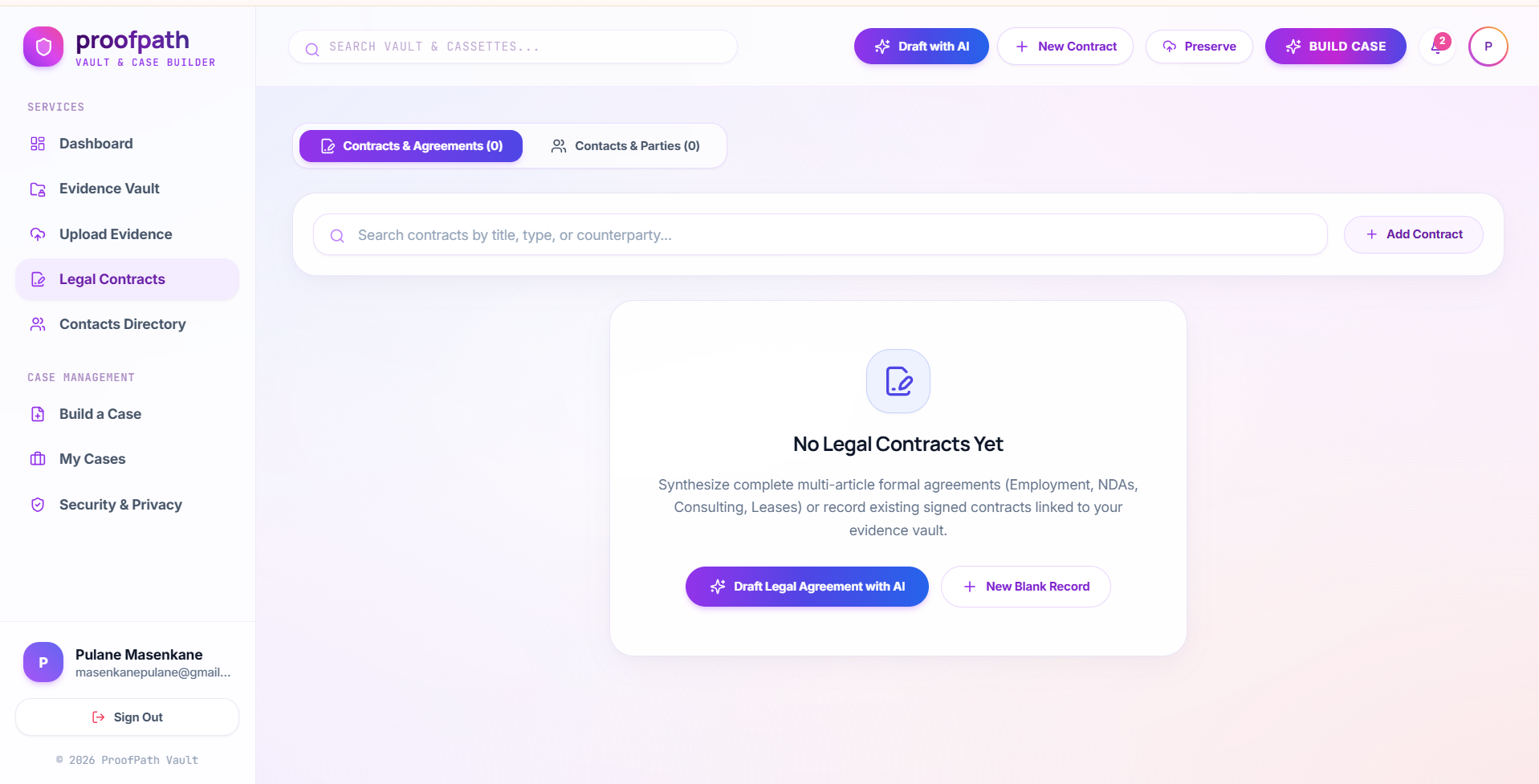
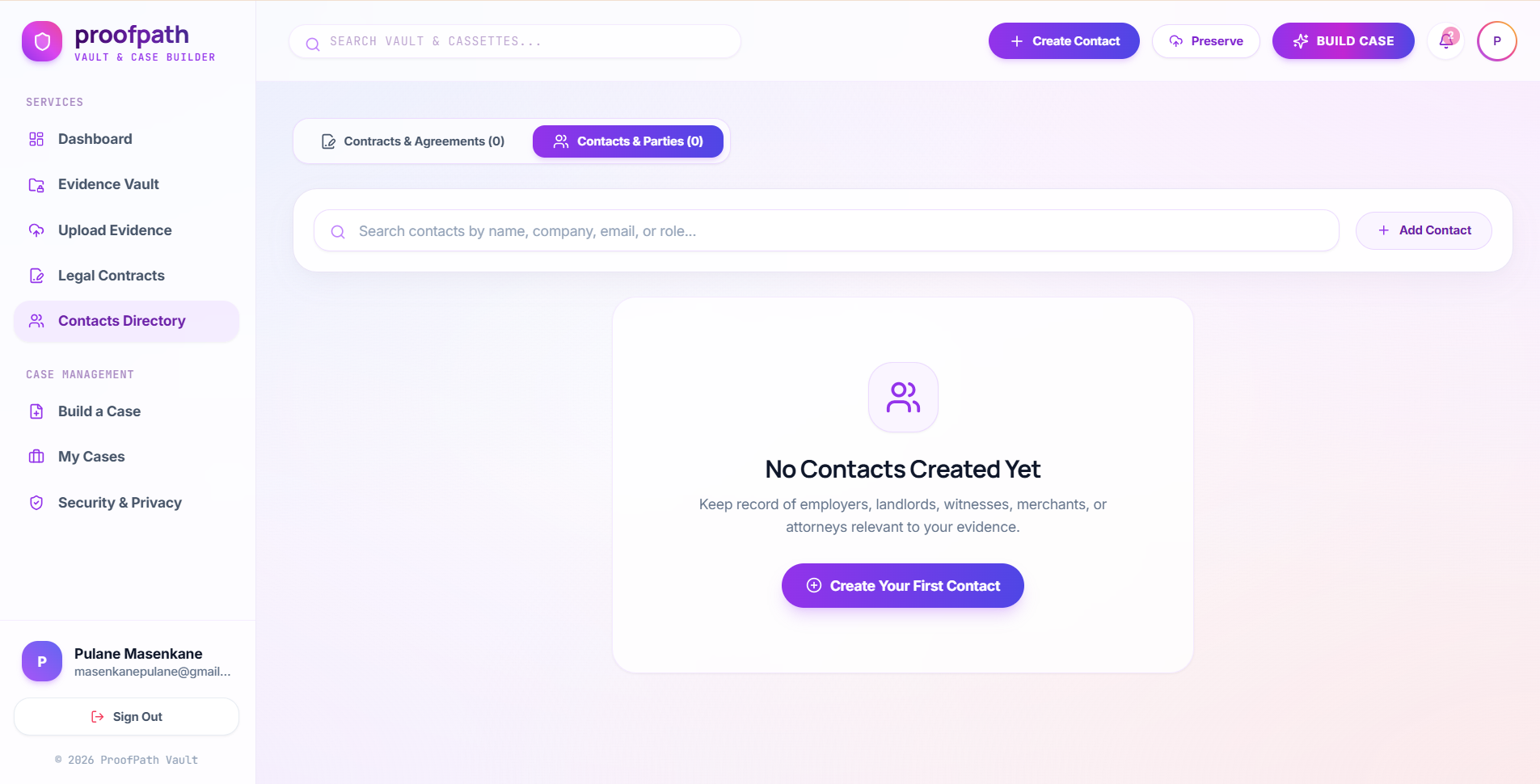
Legal Contracts & Contacts
ProofPath also helps users organize important legal records before a dispute occurs.
The Legal Contracts section allows users to manage contracts alongside their other case-related records, keeping important agreements accessible within the same platform.
The Contacts Directory provides a dedicated place to organize relevant contacts connected to a user's records or cases, reducing the need to manage important case information across multiple applications.
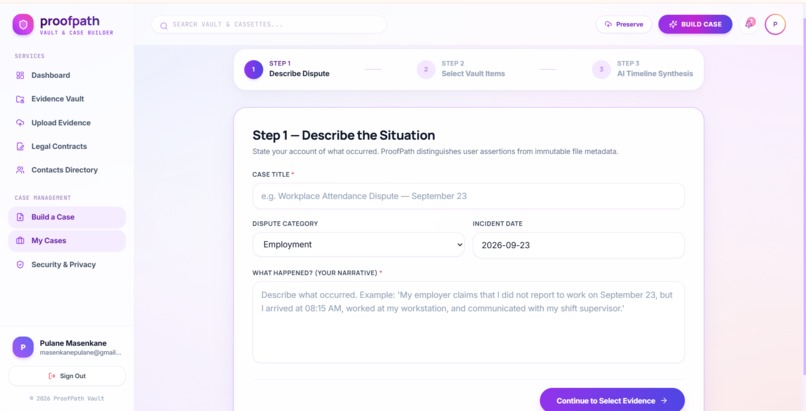
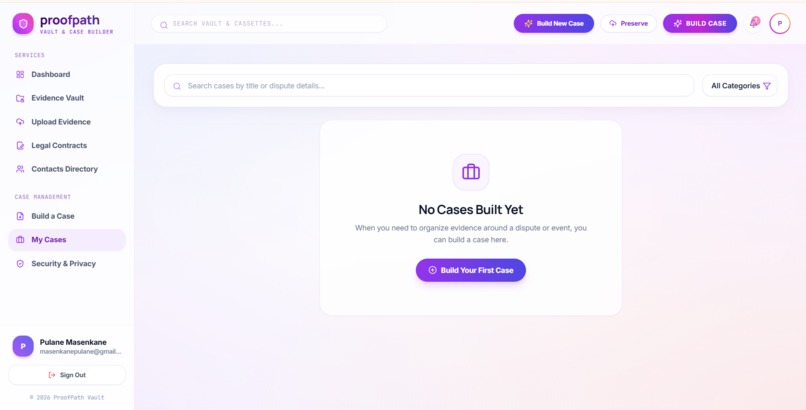
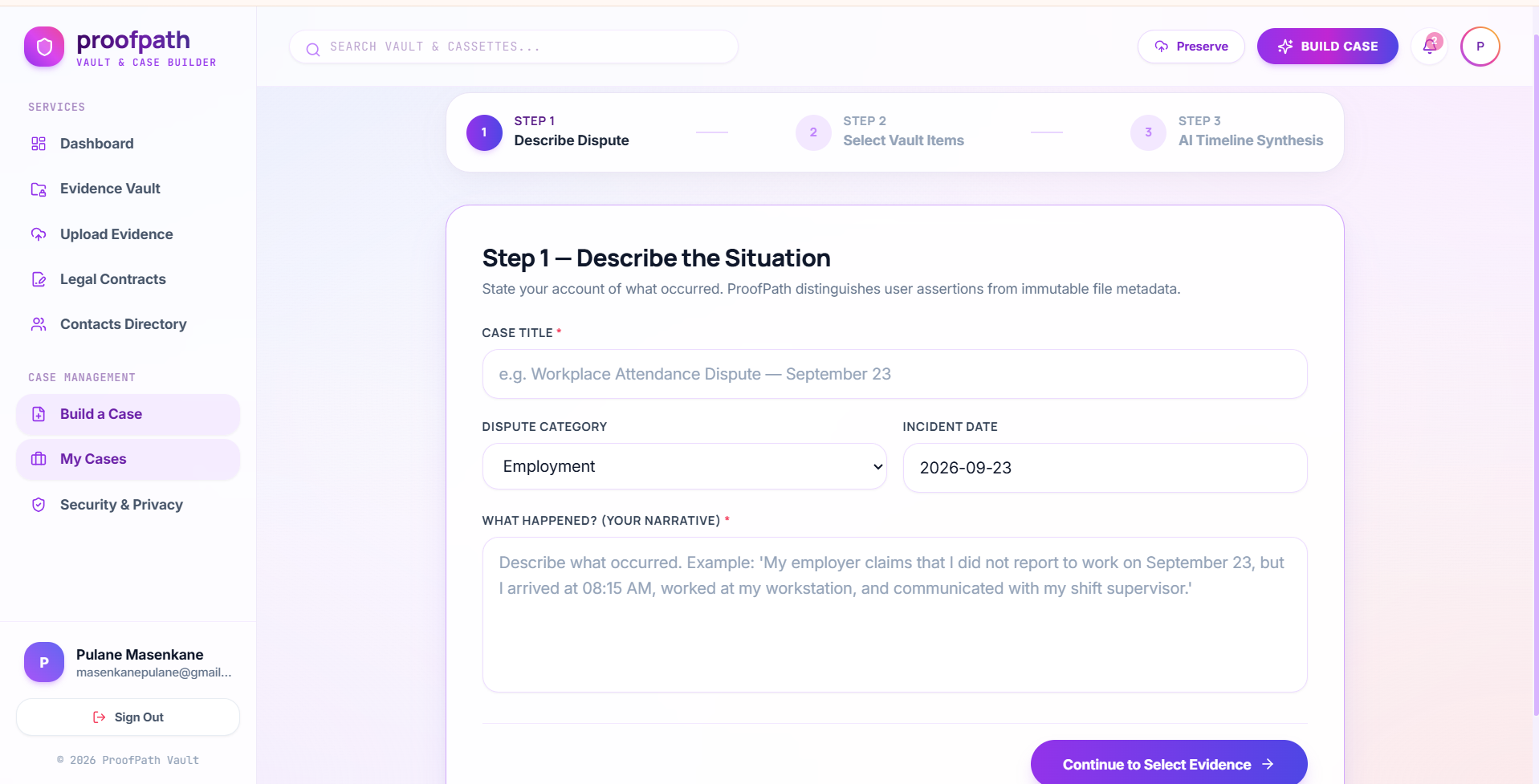
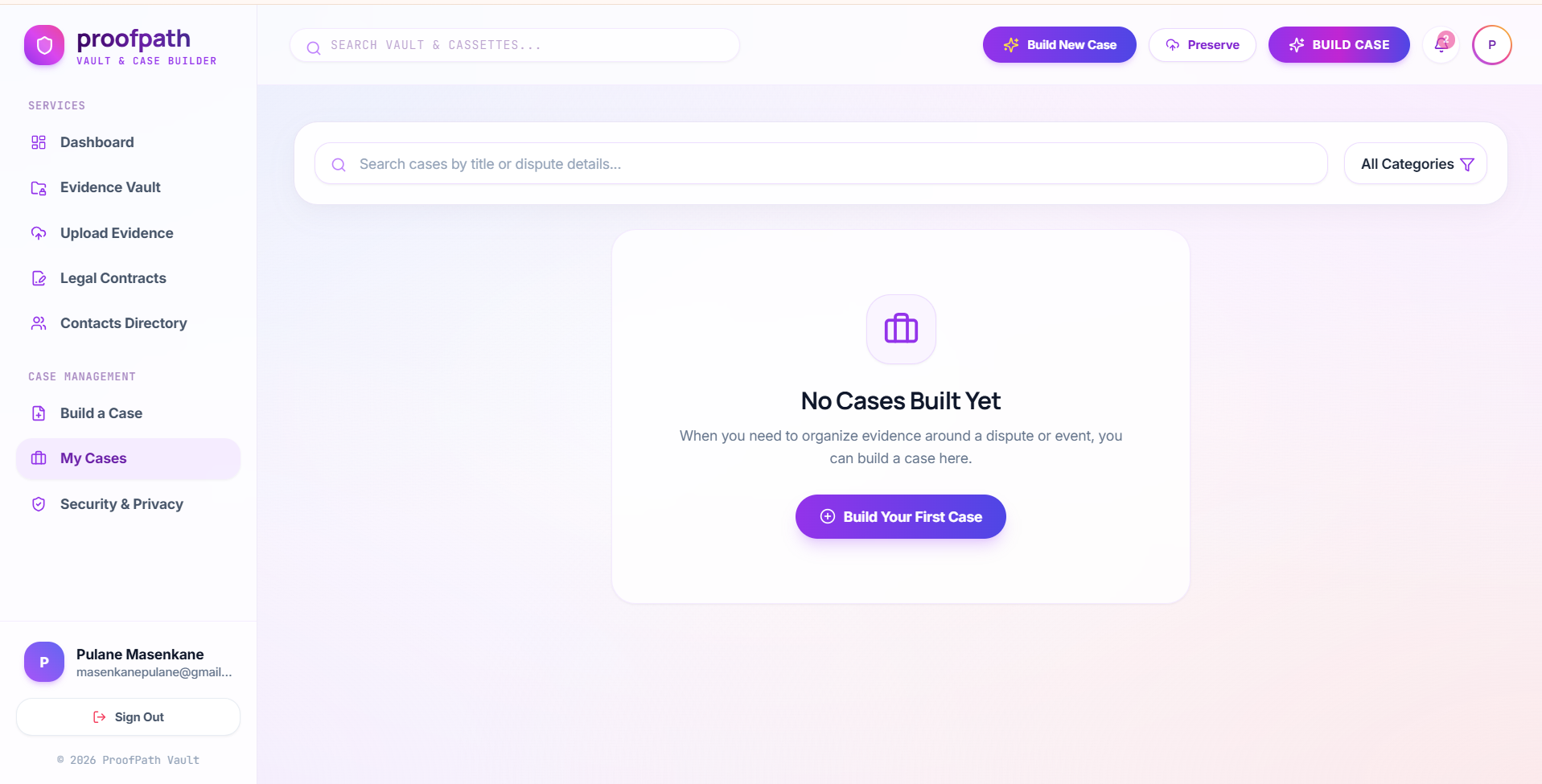
When a dispute arises, users can select previously preserved evidence from their vault and use the AI Case Builder to organize the information into a chronological timeline.
Timeline events are clearly identified according to their source, including:
- Metadata — information extracted from file headers
- Evidence — information contained in preserved files
- User statement — information provided directly by the user
- AI observation — neutral AI-assisted analysis of the available information
Each piece of evidence receives a reference such as E-001, allowing timeline events to be connected back to their original source.
Finally, users can export a structured PDF Case Report containing the case summary, user statement, chronological timeline, evidence index, metadata, SHA-256 hashes, missing information, and appropriate disclaimers.
How I built it
I built ProofPath using the MERN stack.
Frontend
- React
- Vite
- Tailwind CSS
- React Router
- Axios
- Lucide Icons
Backend
- Node.js
- Express.js
- JWT authentication
- bcryptjs password hashing
- Multer for evidence uploads
- Node.js Crypto for SHA-256 hashing
- exifr for EXIF and metadata extraction
- PDFKit for generating case reports
Database
- MongoDB Atlas
- Mongoose
I also designed a modular AI architecture that can support external LLM providers such as Google Gemini or OpenAI, alongside a deterministic local analysis fallback for development and testing.
The application follows the workflow:
Preserve → Organize → Build → Review → Export
Challenges I ran into
One of the biggest challenges was handling digital evidence responsibly.
It would be easy for an application to present extracted metadata or AI-generated information as unquestionable truth. I wanted ProofPath to clearly distinguish between what comes directly from a file, what the user says, and what the AI observes.
Another challenge was maintaining evidence integrity. I implemented SHA-256 hashing so ProofPath can determine whether a stored file remains byte-for-byte identical to the version originally uploaded.
However, I intentionally avoid claiming that hashing proves a file is authentic. A SHA-256 hash can detect changes after upload, but it cannot prove who created the original file or whether it had been modified before being uploaded.
I also had to ensure that evidence belonging to one user could not be accessed by another user. Evidence retrieval, file streaming, integrity verification, and case access are therefore scoped to the authenticated user.
Accomplishments that I'm proud of
- Legal contract management
- Contacts directory
I'm especially proud that ProofPath combines several features into one complete workflow instead of treating evidence storage and case preparation as separate problems.
Some of the features I successfully implemented include:
- Secure evidence vault
- SHA-256 integrity verification
- EXIF and metadata extraction
- Protection against fabricated missing metadata
- Evidence search and filtering
- AI-assisted case building
- Source-linked chronological timelines
- Indexed evidence references such as
E-001 - Cross-user authorization protection
- Professional PDF case report generation
I also created an automated end-to-end test suite covering 11 major workflow steps, including registration, authentication, evidence upload, metadata handling, integrity verification, case creation, AI timeline generation, PDF export, and cross-user access protection.
What I learned
Building ProofPath taught me that using AI in legal-tech requires more than simply generating text.
The system needs to preserve the distinction between facts, metadata, user statements, and AI observations.
I also learned more about cryptographic hashing, EXIF metadata, authorization, secure file handling, MongoDB data relationships, PDF generation, and integrating AI into a full-stack application.
Most importantly, I learned that AI can be more useful when it helps people organize and understand existing information rather than pretending to determine the truth on their behalf.
What's next for ProofPath
I would like to continue developing ProofPath beyond the hackathon.
Future improvements could include:
- Audio transcription
- Video evidence processing and frame extraction
- Per-frame integrity hashes
- Cloud object storage
- Attorney collaboration with time-limited read-only access
- More advanced evidence analysis
- Export formats compatible with electronic discovery workflows
My long-term goal is to make ProofPath a practical tool that helps people preserve important digital records and transform scattered evidence into an organized, transparent, and understandable case file.
Built With
- axios
- exifr
- express.js
- github
- googlegemini
- javascript
- jwt
- mongodb
- mongoose
- multer
- node.js
- openai
- pdfkit
- react
- sha-256
- tailwindcss
- vercel
- vite


Log in or sign up for Devpost to join the conversation.