-
-
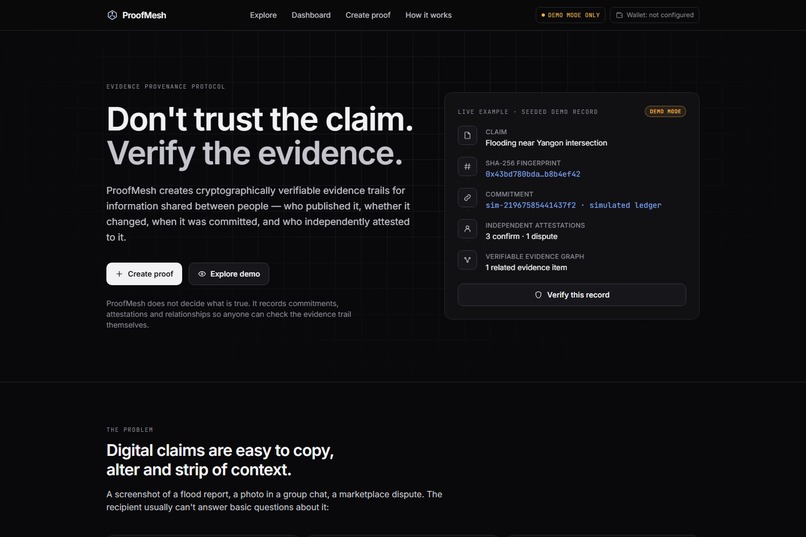
01-proofmesh-hero
-
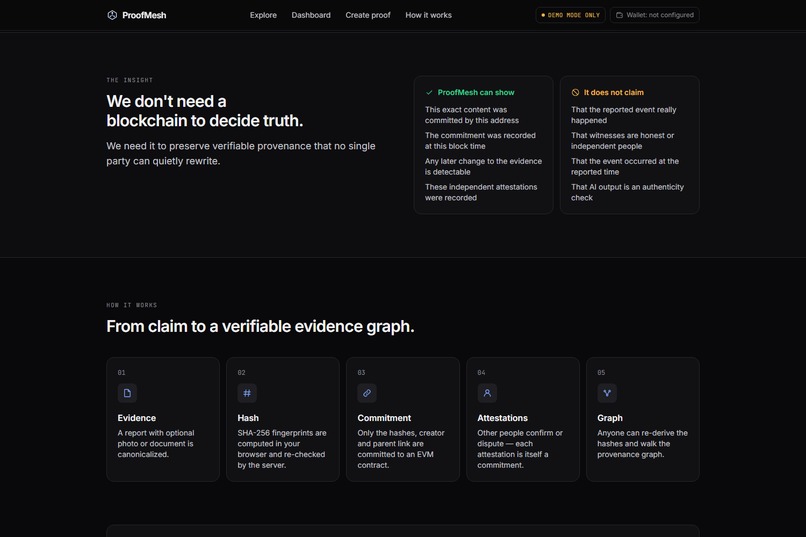
02-landing-page
-
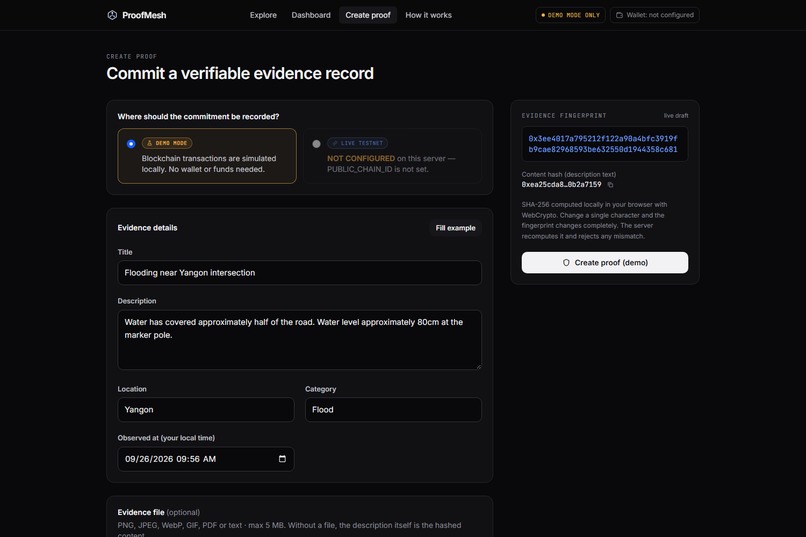
03-create-evidence
-

04-blockchain-proof
-
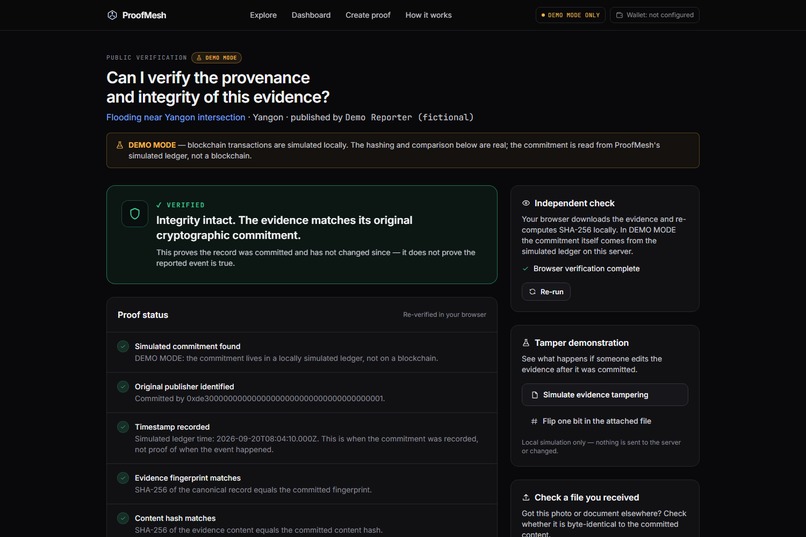
05-verification
-
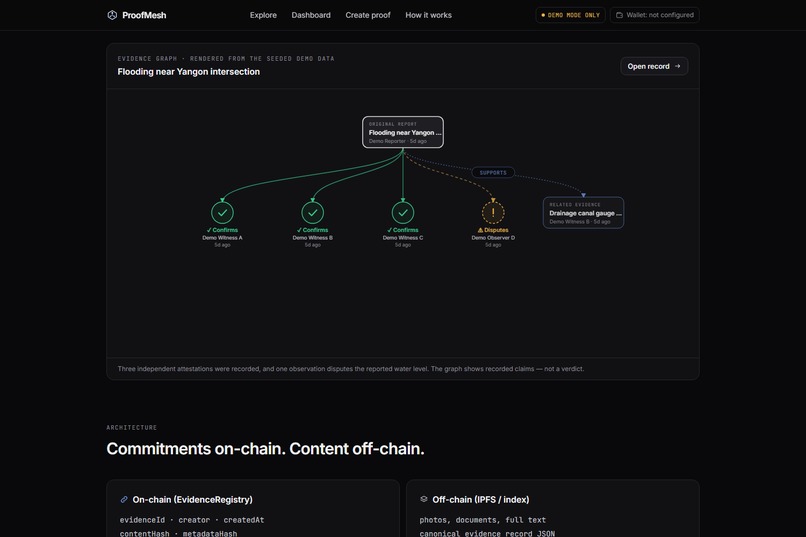
06-evidence-graph
-
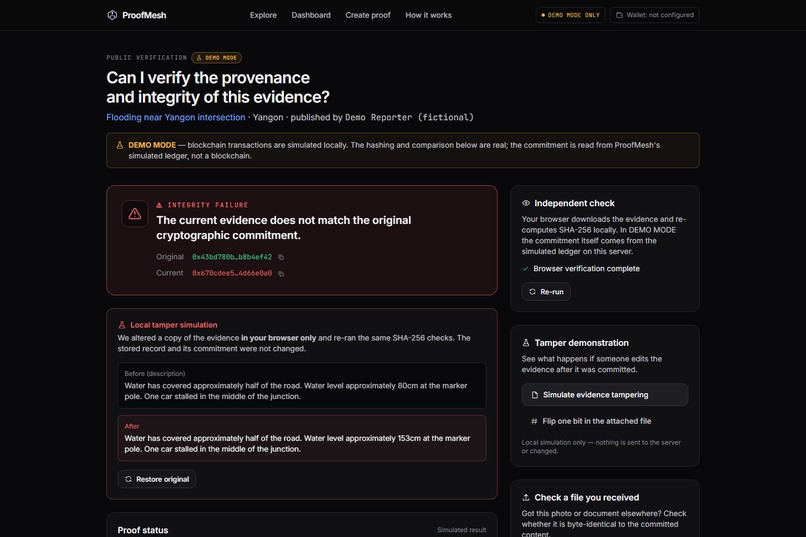
07-tamper-detection
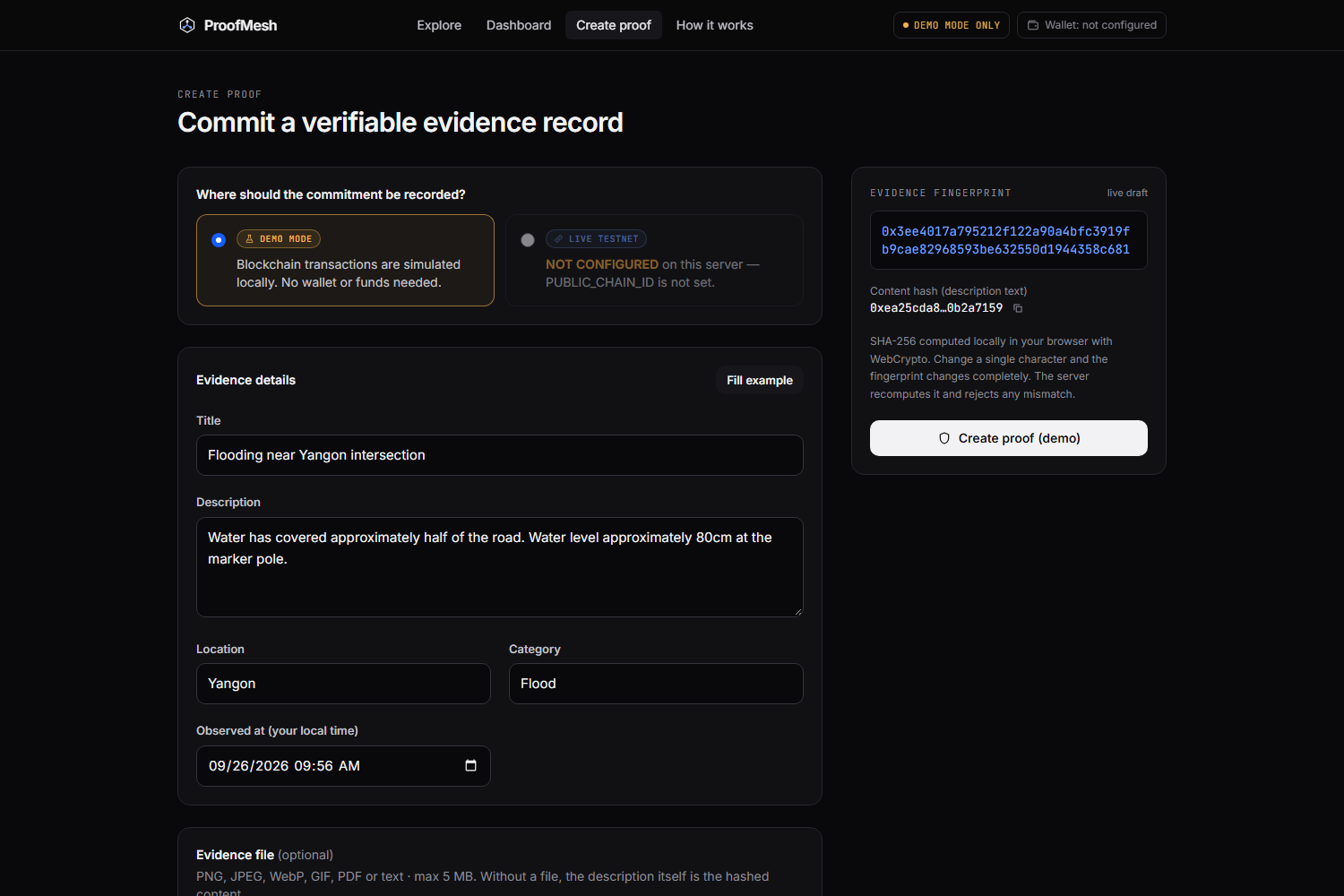

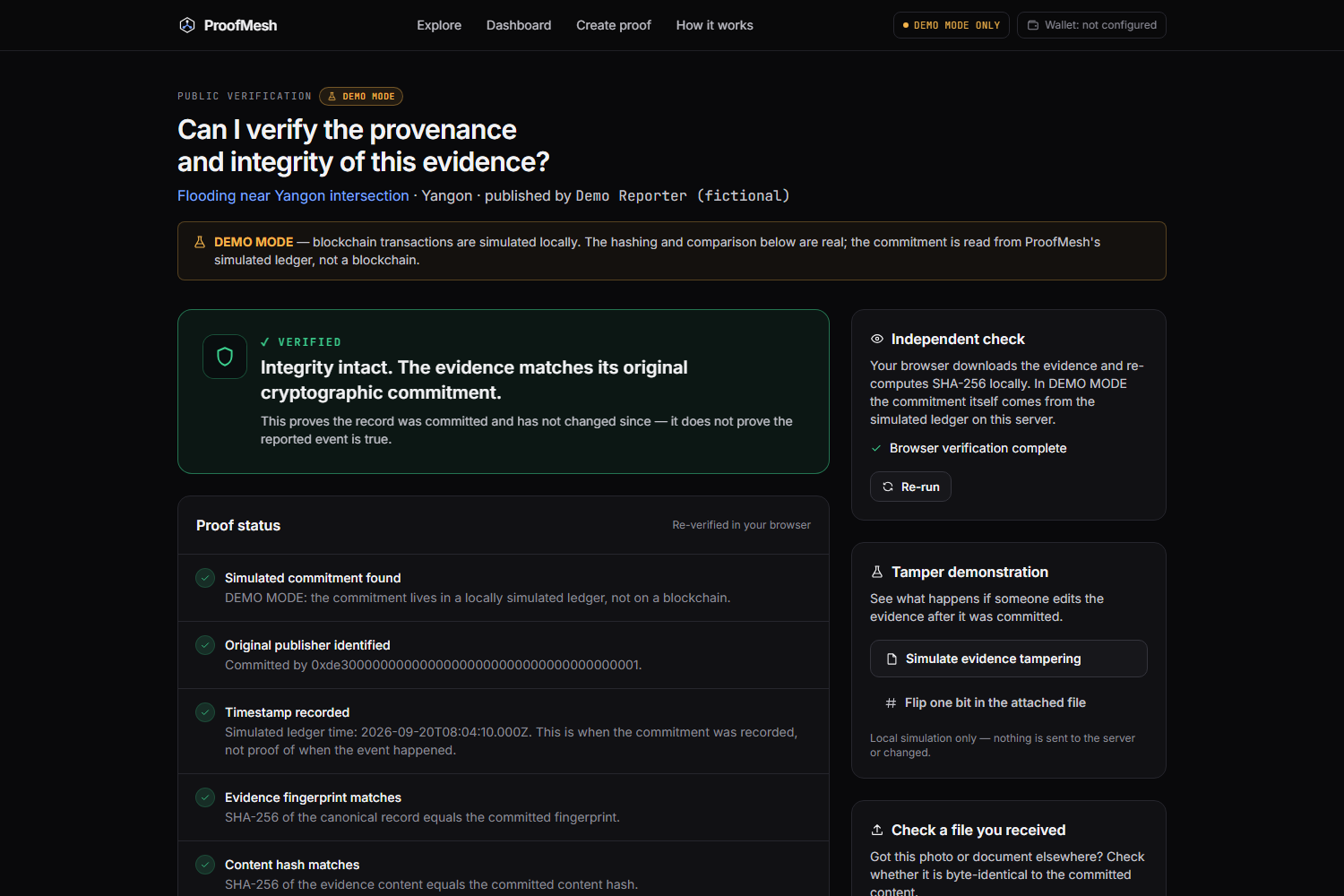
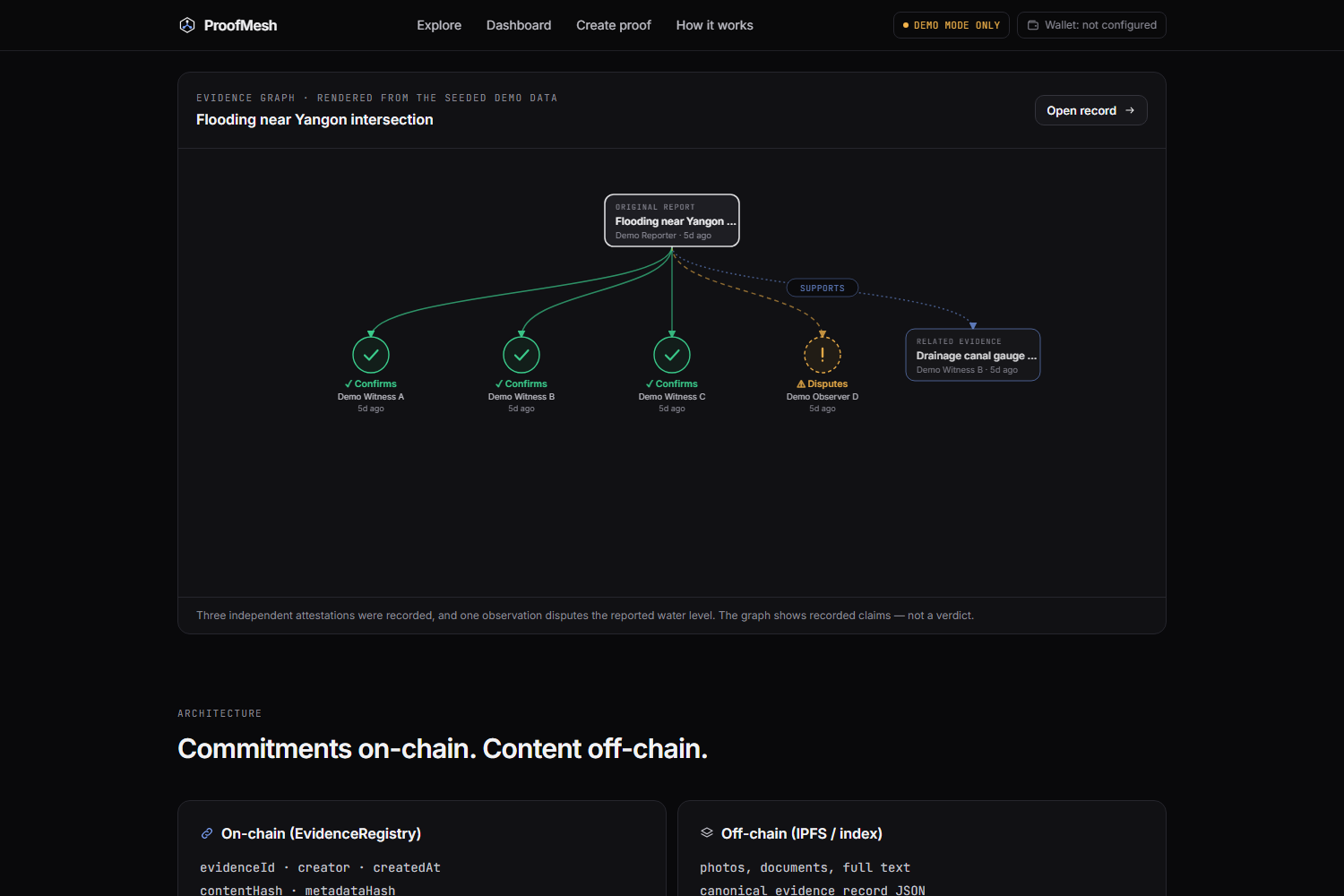
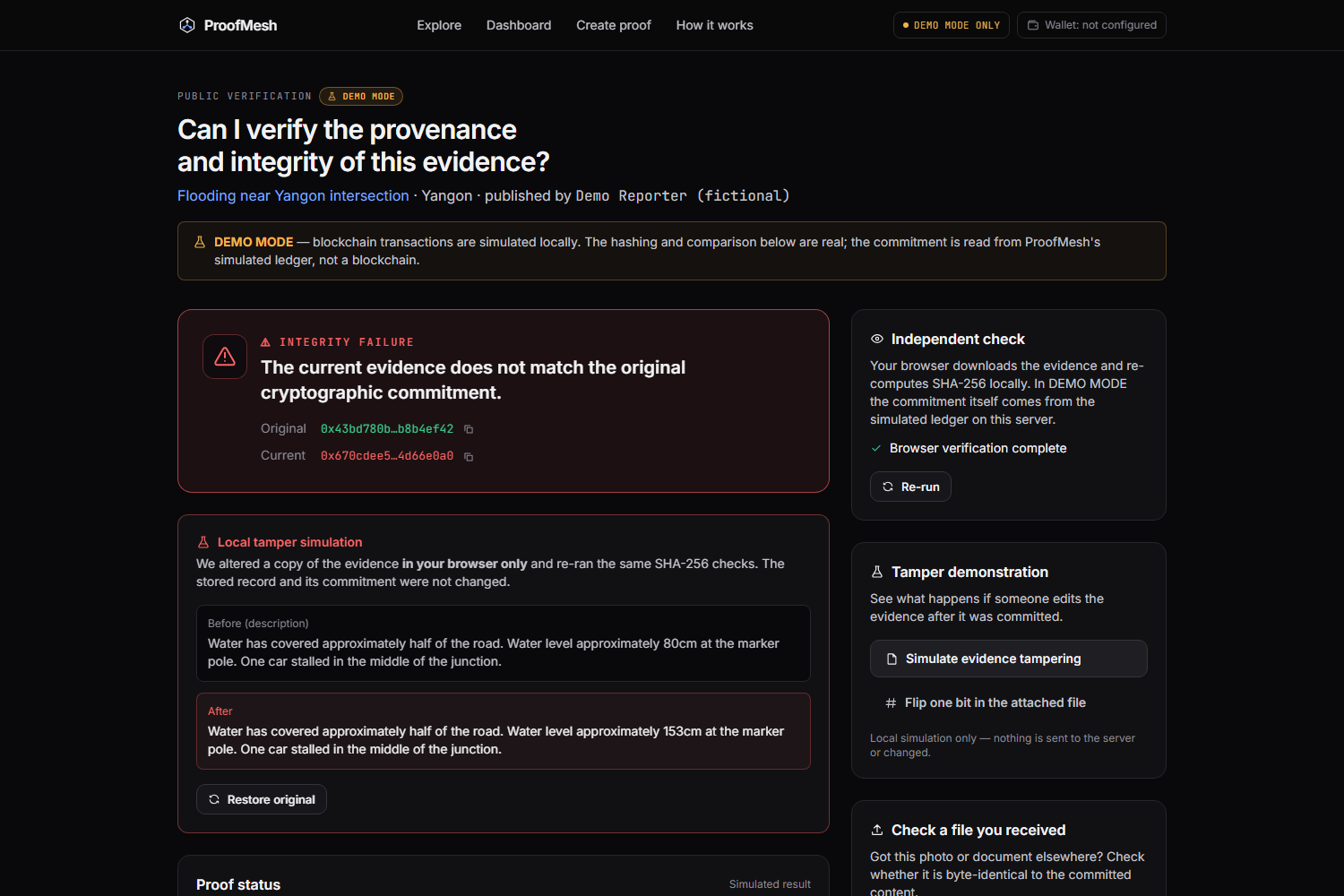
Inspiration
Digital evidence is increasingly shared through screenshots, photos, documents, and online reports, but the original context and integrity of that evidence can be difficult to verify.
We were inspired by a simple question:
What if you didn't have to simply trust a claim, but could inspect and verify its evidence trail?
We wanted to explore a use of Web3 beyond payments and digital ownership: using decentralized infrastructure to make evidence provenance independently verifiable.
That led to ProofMesh.
What it does
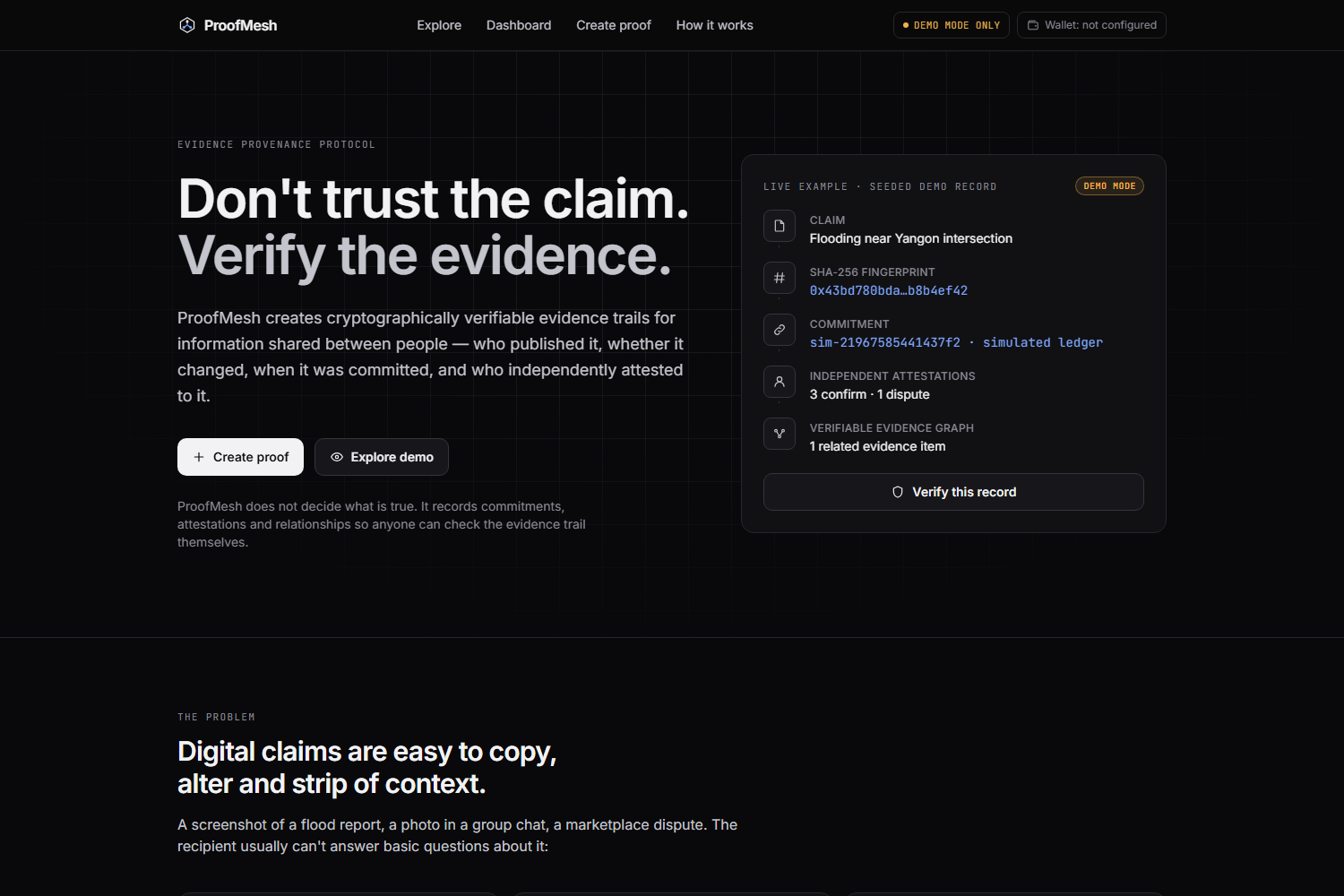
ProofMesh is a decentralized evidence provenance and verification platform.
It allows users to:
Create evidence records Generate cryptographic hashes of evidence Record provenance and integrity commitments Verify whether evidence matches its original cryptographic commitment Add independent attestations Connect related, supporting, or conflicting evidence Explore those relationships through an evidence graph Detect when evidence has been modified
The core workflow is:
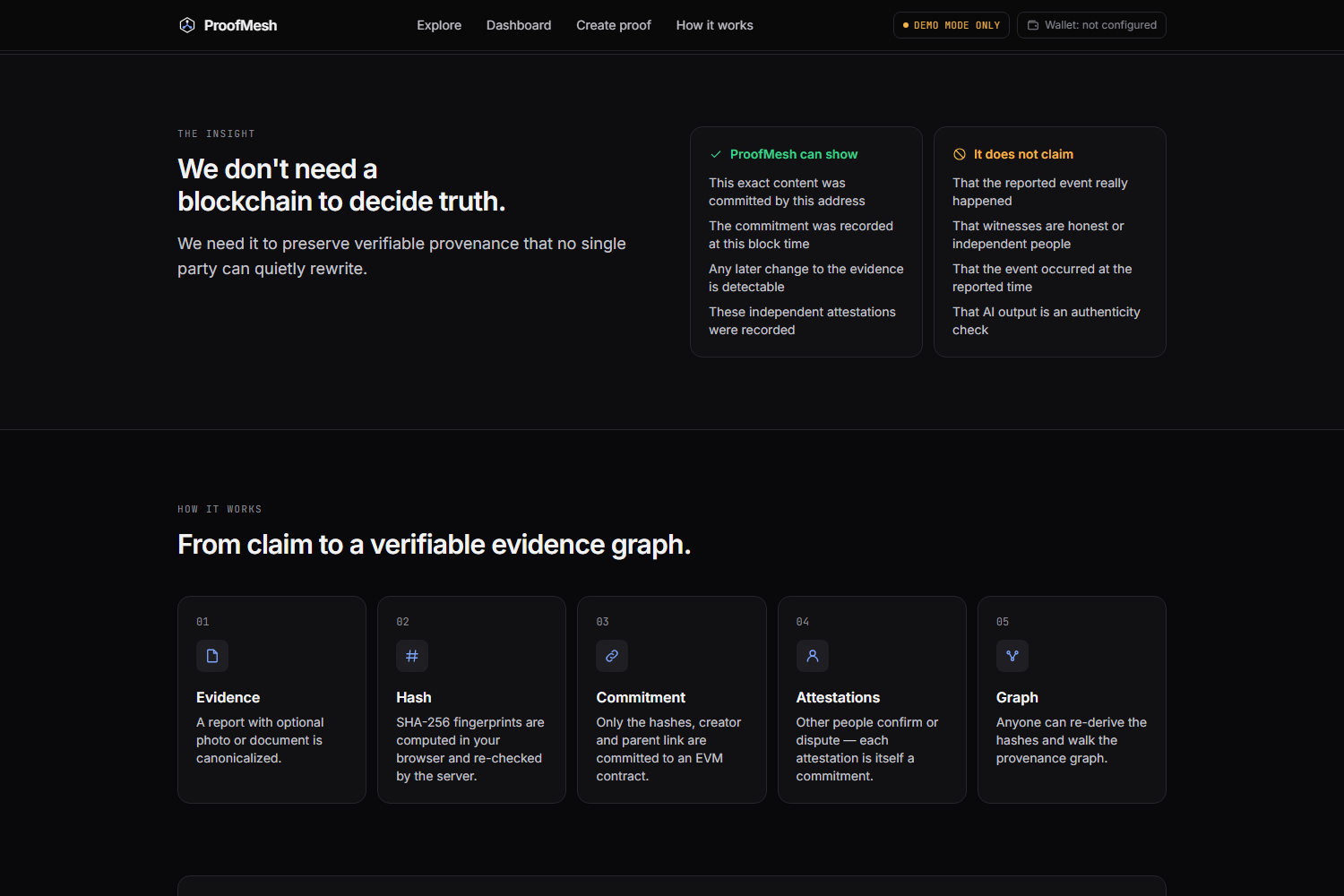
CLAIM → HASH → BLOCKCHAIN PROOF → ATTESTATIONS → EVIDENCE GRAPH → VERIFY
An important design principle is that ProofMesh does not claim that blockchain determines whether something is objectively true.
Instead, blockchain provides a verifiable integrity anchor for evidence and its provenance.
How we built it
ProofMesh uses a modern TypeScript-based web stack.
Frontend SvelteKit 5 TypeScript Tailwind CSS
The interface was designed around a clean, technical visual language so that verification information is easy to understand without overwhelming users with blockchain terminology.
Web3 layer Solidity EVM-compatible blockchain architecture viem for blockchain interaction Smart-contract-based evidence and attestation records
The decentralized layer is responsible for recording cryptographic commitments and important state transitions.
Application layer PostgreSQL Drizzle ORM SvelteKit server-side functionality
Large files and application data remain off-chain, while cryptographic commitments and important provenance information can be anchored to the blockchain.
We also created abstractions around storage and blockchain connectivity so the application can operate in DEMO MODE when live infrastructure or credentials are unavailable.
We deliberately separate simulated functionality from live blockchain functionality instead of presenting fake transactions or fake network activity as real.
Challenges we ran into
One of our biggest challenges was deciding what actually belongs on-chain.
Putting everything on a blockchain would be expensive, inefficient, and potentially harmful for privacy.
We therefore separated the architecture into:
Off-chain
Evidence files Large metadata Search and indexing Application state
On-chain
Evidence identifiers Cryptographic commitments Provenance-related timestamps Attestation commitments Important state transitions
Another challenge was designing verification so that it was understandable to someone who isn't deeply familiar with blockchain.
Instead of exposing only transaction hashes and contract data, we built a visual verification flow that explains what was committed, what is being checked, and whether the evidence still matches its recorded fingerprint.
We also had to make sure our demo environment never confused simulated data with real decentralized infrastructure.
Accomplishments that we're proud of
We're proud that ProofMesh goes beyond simply storing a hash on a blockchain.
The project connects several concepts into one workflow:
Evidence + Cryptographic Integrity + Provenance + Independent Attestations + Evidence Relationships
The evidence graph is particularly important to us.
Instead of treating every claim as an isolated object, ProofMesh allows evidence to be connected to other evidence and attestations.
This creates a structure where users can investigate questions such as:
What evidence supports this claim? Who independently attested to it? What evidence is related to it? Does another piece of evidence contradict it? Has the original evidence been modified?
We're also proud of building the product around transparent verification rather than simply displaying a "verified" badge.
What we learned
We learned that blockchain does not automatically make information true.
Its value in this context is providing a shared, tamper-resistant record that can help establish integrity and provenance.
We also learned that good Web3 applications need a clear boundary between decentralized infrastructure and conventional application infrastructure.
The blockchain should be used where public verifiability and integrity matter, while large files, sensitive information, search, and application logic can remain off-chain.
Most importantly, we learned to think about verification as a relationship between pieces of evidence, rather than simply a yes/no label attached to a claim.
What's next for ProofMesh
We see ProofMesh as a foundation that could be extended into a broader evidence verification network.
Future versions could include:
Decentralized storage integrations Multiple blockchain networks Cryptographic identity Organization-level verification Privacy-preserving verification More advanced evidence relationship types Evidence provenance standards Forensic analysis tools AI-assisted evidence analysis
AI would remain an assistive tool rather than the authority deciding whether evidence is authentic.
Our long-term goal is to make evidence provenance understandable and independently verifiable without requiring users to blindly trust a single platform.
ProofMesh: Don't trust the claim. Verify the evidence.
Built With
- base-sepolia-viem
- css
- drizzle
- evm
- foundry
- postgresql
- solidity
- sveltekit
- tailwind
- typescript

Log in or sign up for Devpost to join the conversation.