-
-
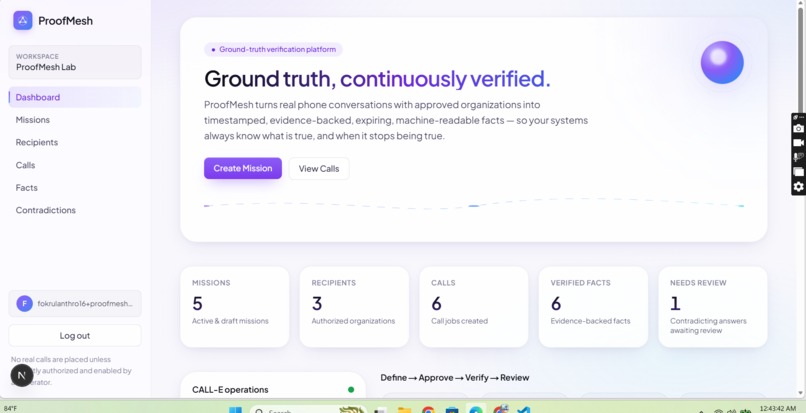
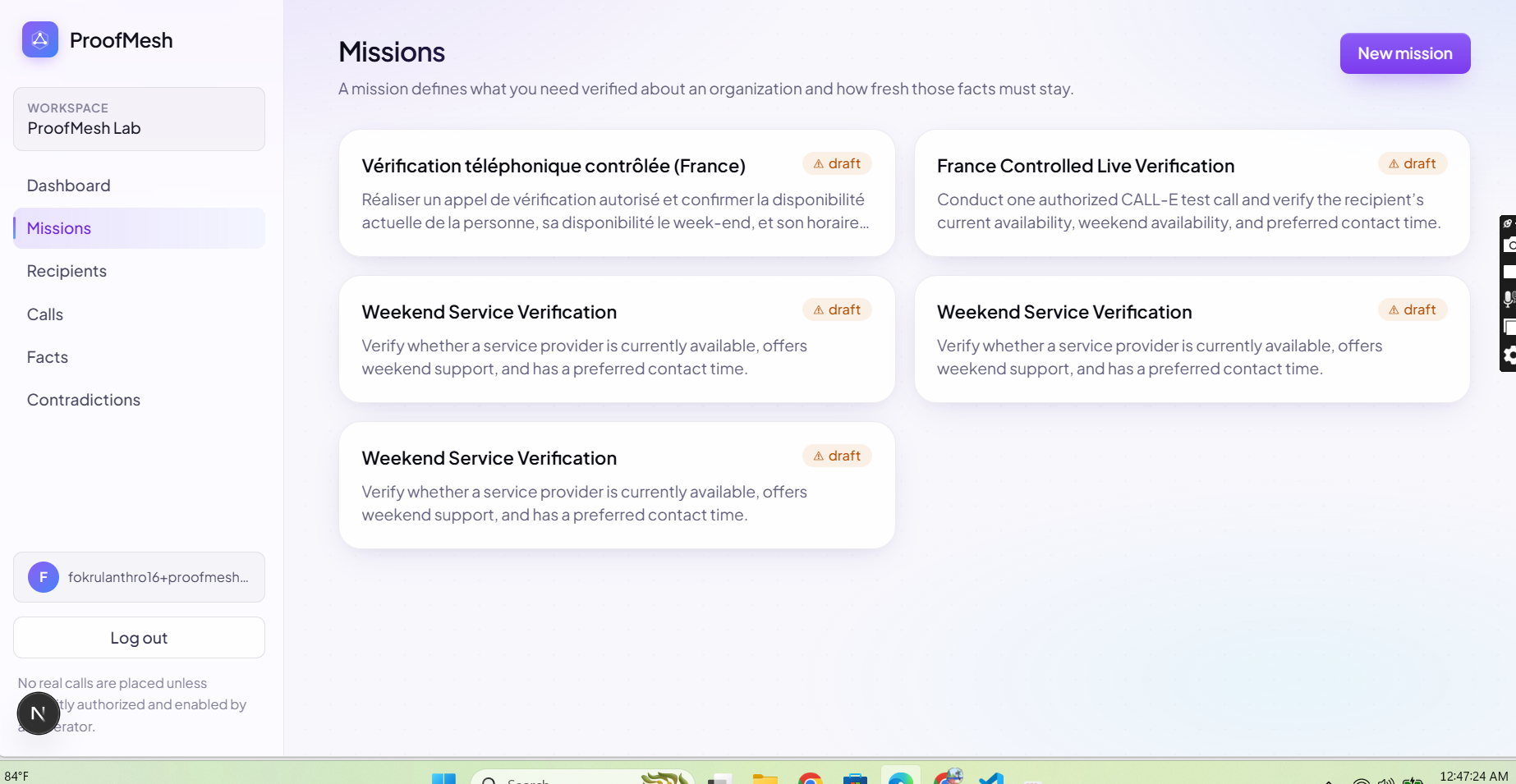
Structured verification mission with defined fields, authorized recipient, and explicit human approval.
-
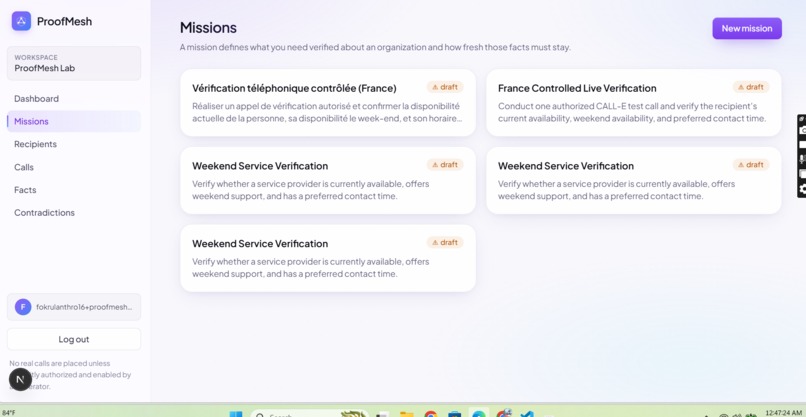
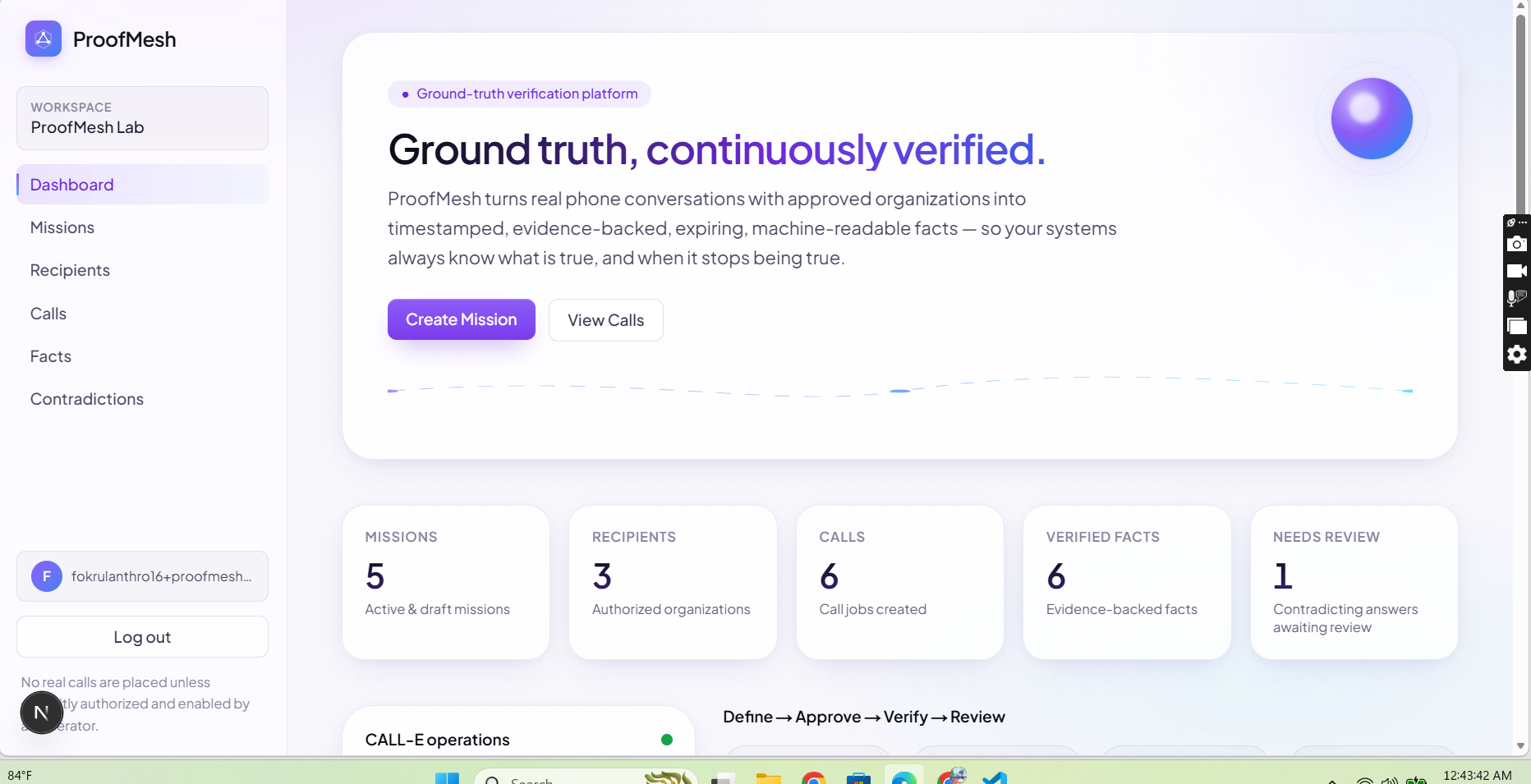
ProofMesh dashboard showing system status, safety controls, and real-call operations at a glance.
-
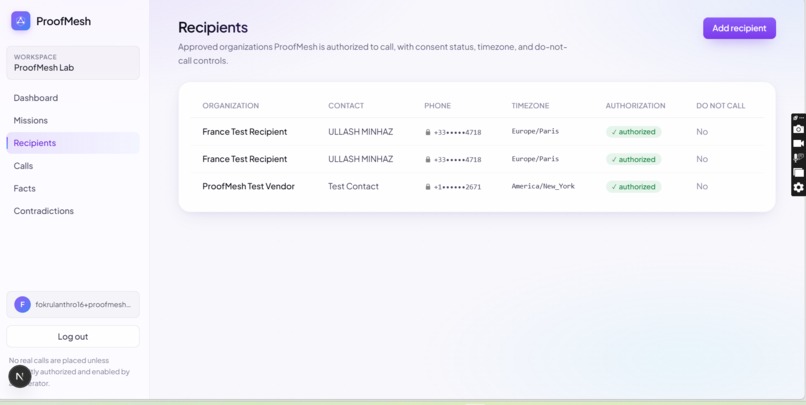
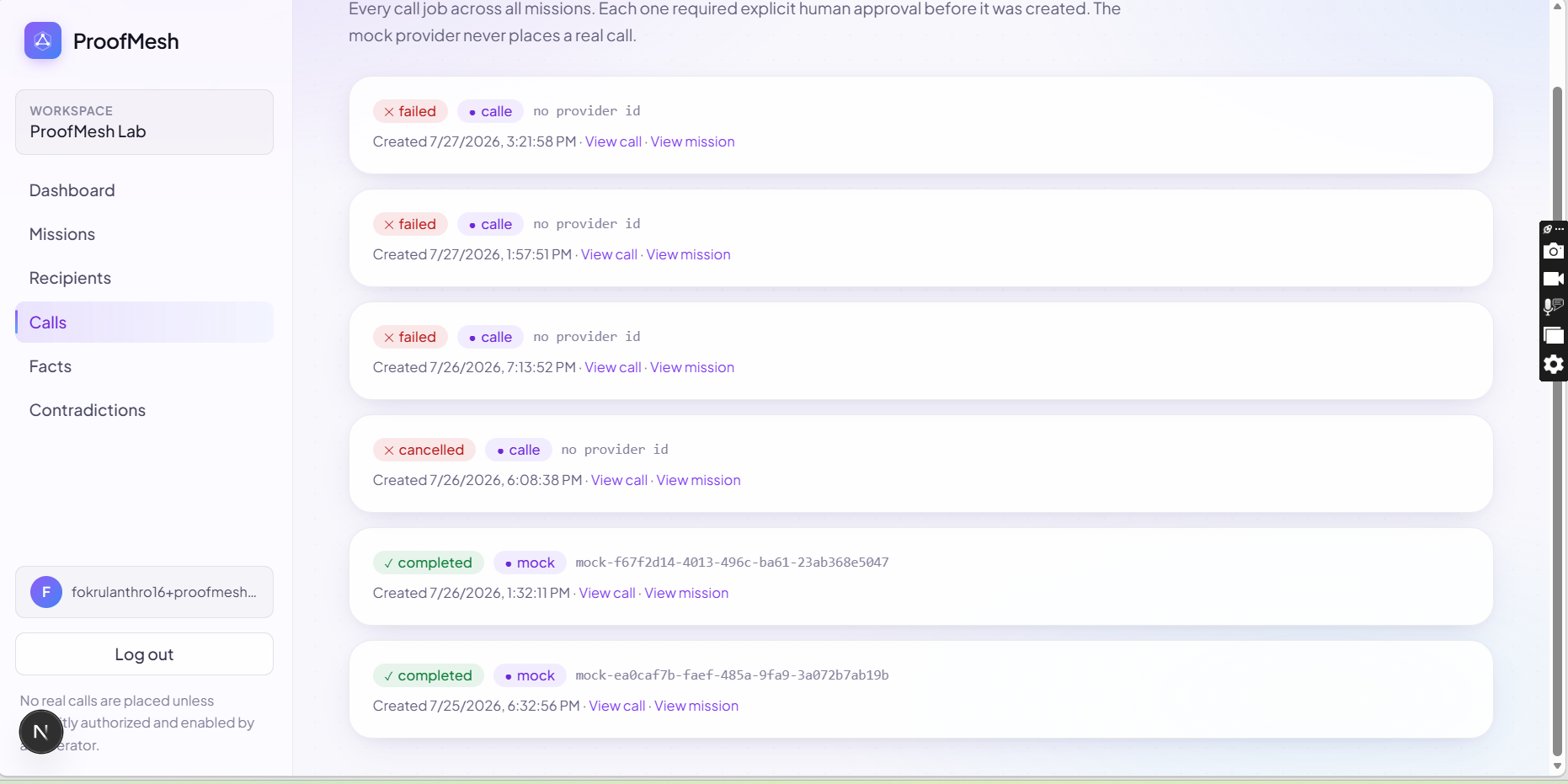
CALL-E call jobs with provider, status, destination, and lifecycle visibility.
-
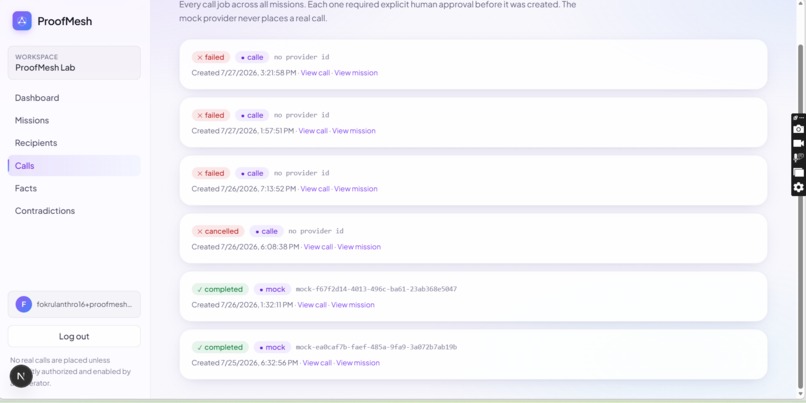
Chronological audit timeline preserving approvals, dispatch events, provider acceptance, and sync activity.
-
Real CALL-E evidence showing HTTP 201 acceptance and an honestly reported UNKNOWN final outcome.
Inspiration
What it does
How we built it
Inspiration
Many important facts are not available online. To verify them, someone often needs to call a real person. Existing AI calling tools can make calls, but they do not always provide strong consent controls, structured evidence, or an honest audit trail.
What it does
ProofMesh is a consent-first AI phone verification platform powered by CALL-E.
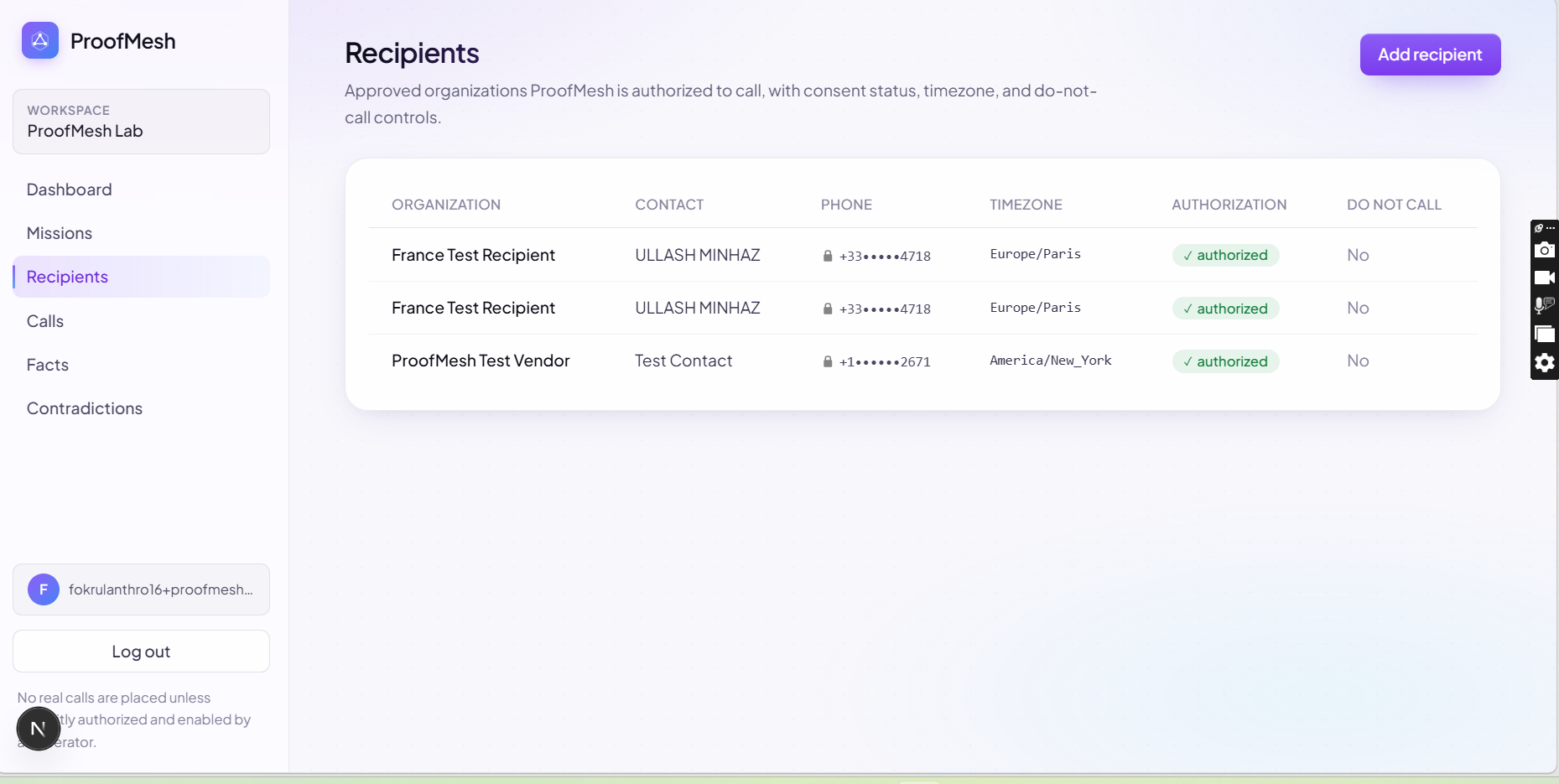
An operator creates a structured verification mission, assigns an authorized recipient, reviews the call plan, and explicitly approves the call. Before dispatch, ProofMesh checks consent, do-not-call status, destination region, calling hours, approval integrity, and the live-call safety limit.
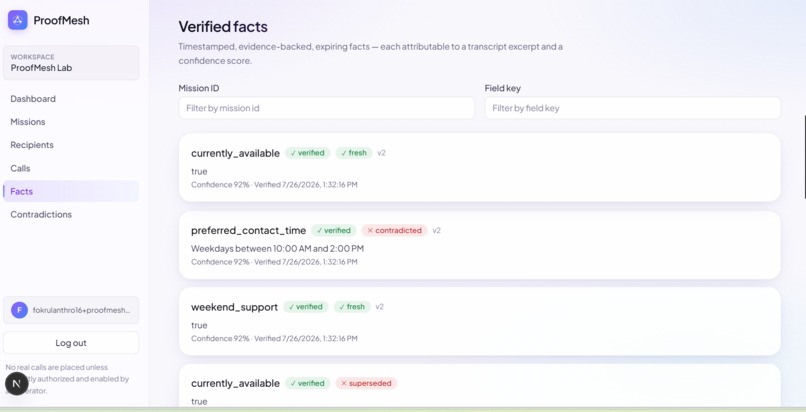
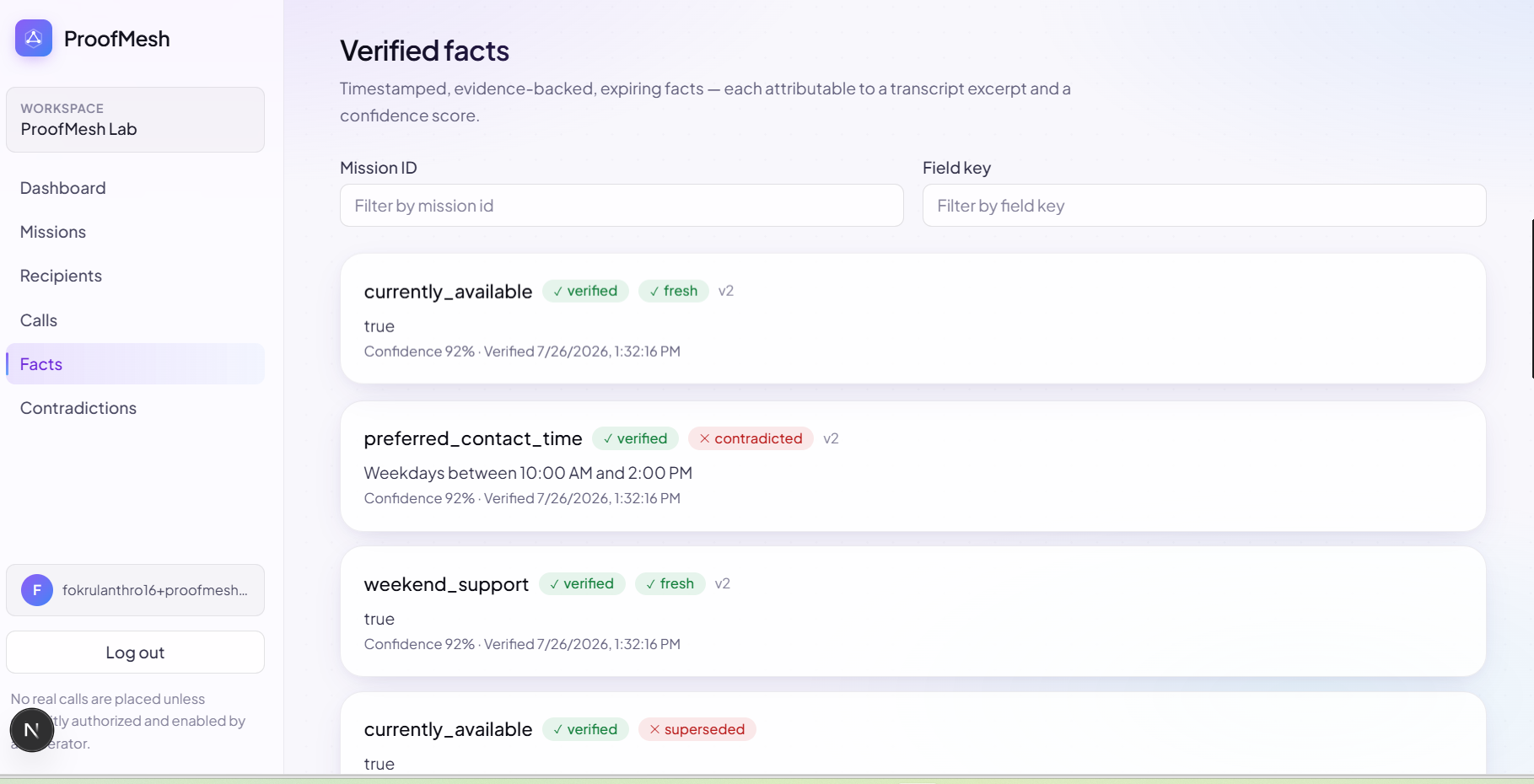
CALL-E then performs the phone call, while ProofMesh converts the result into structured, timestamped facts with linked evidence and contradiction tracking.
Real CALL-E validation
During our supervised live test, CALL-E accepted a real French-language call with HTTP 201, and the consenting recipient’s phone rang.
ProofMesh preserved the authorization, safety checks, approval fingerprint, timestamps, and provider-acceptance evidence.
The original adapter did not retain the returned provider call ID, so the final status and transcript could not be recovered. Instead of fabricating success, ProofMesh honestly reports the outcome as UNKNOWN. The parser and timeout handling were then fixed and regression-tested.
How we built it
ProofMesh uses FastAPI, SQLAlchemy, Next.js, React, TypeScript, and the CALL-E REST API. It includes structured missions, recipient authorization, audit events, real-call safety gates, evidence-backed facts, and contradiction detection.
Accomplishments
- Real CALL-E request accepted with HTTP 201
- Recipient’s phone successfully rang
- Full consent and audit workflow
- Honest UNKNOWN outcome handling
- 305 automated tests passing
- Real calls disabled by default in the submitted build
What’s next
Next, we plan to add provider webhook synchronization, durable call reconciliation, multilingual mission authoring, stronger observability, and expanded verification workflows.
Challenges we ran into
Accomplishments that we're proud of
What we learned
What's next for ProofMesh
Built With
- call-e
- fastapi
- next.js
- python
- react
- sqlalchemy
- sqlite
- tailwind
- typescript

Log in or sign up for Devpost to join the conversation.