-
-
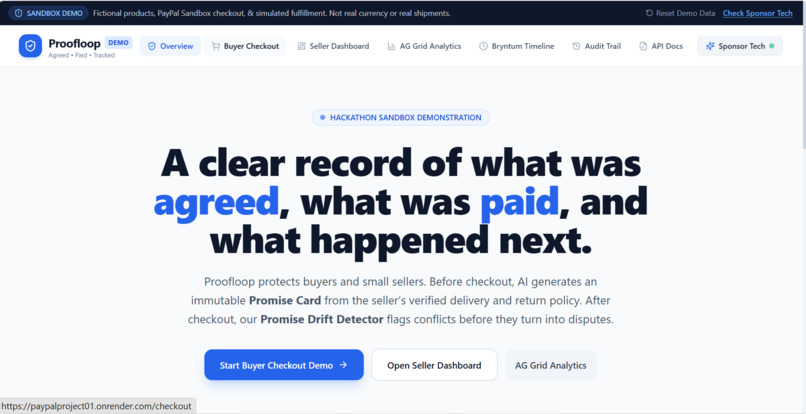
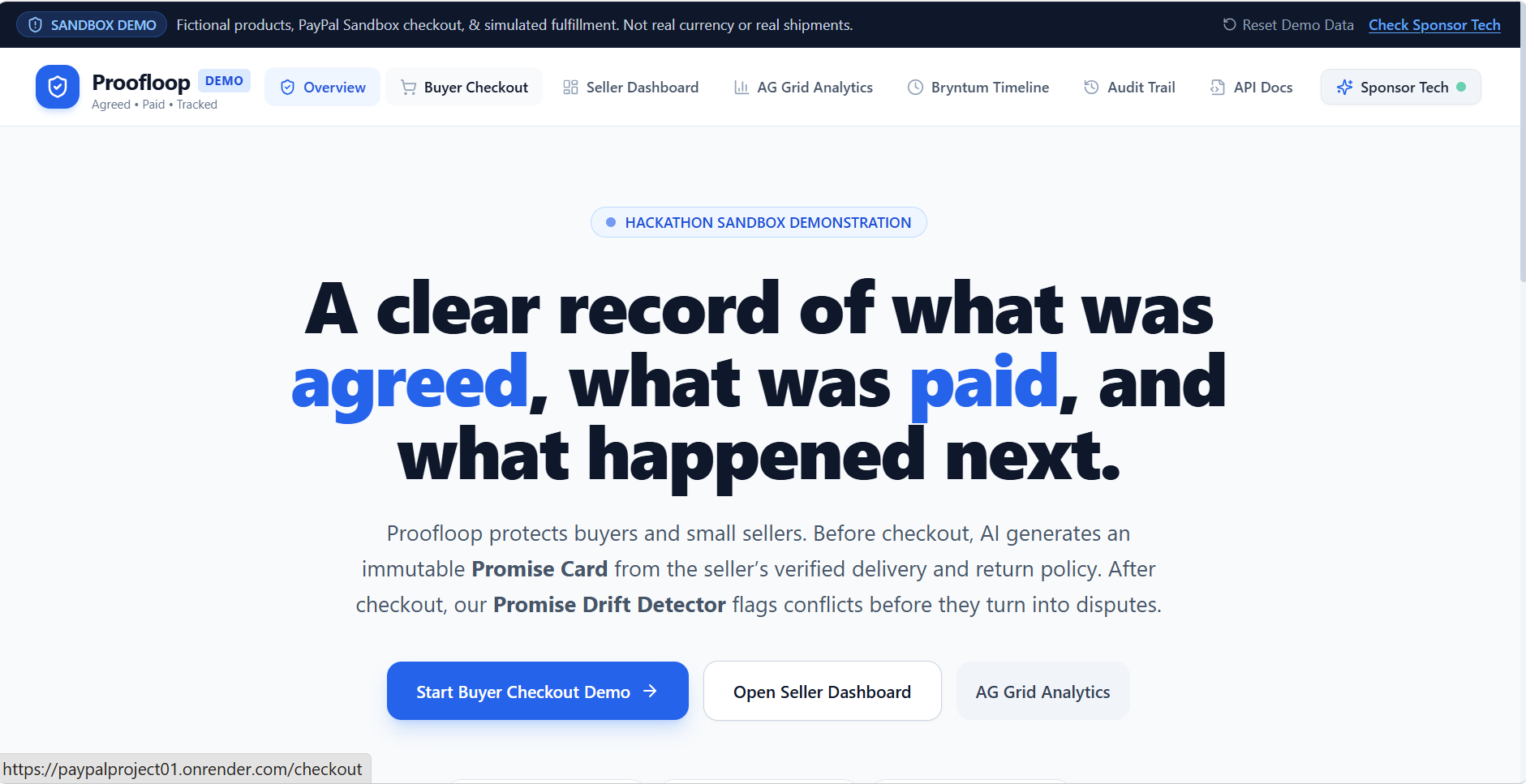
OUR PROJECT DASHBOARD
Inspiration
Online purchases can lead to misunderstandings when delivery expectations, shipping choices, and store policies are unclear. Buyers may have to search through emails or messages to remember what was promised, while sellers may not realize that an order update conflicts with a buyer’s needs.
We wanted to make that experience clearer. Proofloop was inspired by a simple question: what if the buyer and seller had one shared record of what was agreed before payment—and could compare it with what happened afterward?
What it does
Proofloop creates a Promise Card before checkout. The card summarizes the selected product, total price, shipping method, delivery estimate, the buyer’s stated requirement, and relevant seller policy. The buyer can review the terms and see a warning if the chosen shipping option may not meet their stated need.
After the buyer approves the card, they can check out through PayPal Sandbox. The seller dashboard then shows the order’s payment and fulfillment status. If a later update—for example, a delivery delay—conflicts with the Promise Card, the Promise Drift Detector highlights the difference and provides an AI-assisted explanation and draft message for a person to review.
How we built it
We built the application with Next.js, React, and TypeScript. Prisma connects the app to a PostgreSQL database, where it stores demo products, orders, Promise Cards, payment records, fulfillment updates, and audit events.
PayPal Sandbox provides the test checkout flow. The server creates orders and verifies payment captures before marking an order as paid. The OpenAI API supports AI-assisted Promise Card wording and Promise Drift explanations using information supplied by the app, such as the buyer’s requirement and the seller’s published policies.
We also built pages for the seller dashboard, AG Grid analytics, order timelines, audit history, integration status, and API documentation. The application clearly labels sandbox payments and simulated fulfillment activity.
Challenges we ran into
Getting the application to work across local development and deployment took careful debugging. During deployment, the build could not find a required component. We traced the problem through the component’s file name and import path, then corrected the mismatch so the application could build and run.
We also had to keep the data flow clear across checkout, payment, and order tracking. In particular, payment status must come from PayPal’s verified response, while AI can explain order information but must not decide whether a payment succeeded or issue a refund.
Accomplishments we’re proud of
We’re proud to have turned Proofloop from an idea into a deployed, interactive application. The buyer can review an agreement before checkout, and the seller can track orders and inspect their history afterward.
The feature we’re most proud of is the Promise Drift Detector. It compares a later fulfillment update with the buyer-approved Promise Card, explains the mismatch, and drafts a possible response while leaving the decision to a person. We also built analytics and an audit trail to make the demo’s order and payment events easier to inspect.
What we learned
We learned that building a working application involves more than implementing the main feature. Data consistency, API boundaries, deployment configuration, and useful error handling all affect whether the experience feels reliable.
We also learned to give AI a limited role. It can make policy and order details easier to understand, but application data and PayPal’s verified response must remain the source of truth for order facts and payment status.
What’s next for Proofloop
Next, we’d like to make the demo data consistent across every page, improve the checkout experience, and add more useful buyer and seller feedback. We’d also like to connect optional services such as Channel3 product discovery, Elastic search, and Zapier notifications where credentials and access are available.
Our longer-term goal is to make Proofloop useful for more kinds of orders and fulfillment workflows while keeping the core experience simple: agree clearly, pay securely, and track what happens next.
Built With
- ag
- api
- bryntum
- grid
- next.js
- openai
- orders
- paypal
- postgresql
- prisma
- sandbox
- typescript
