-
-
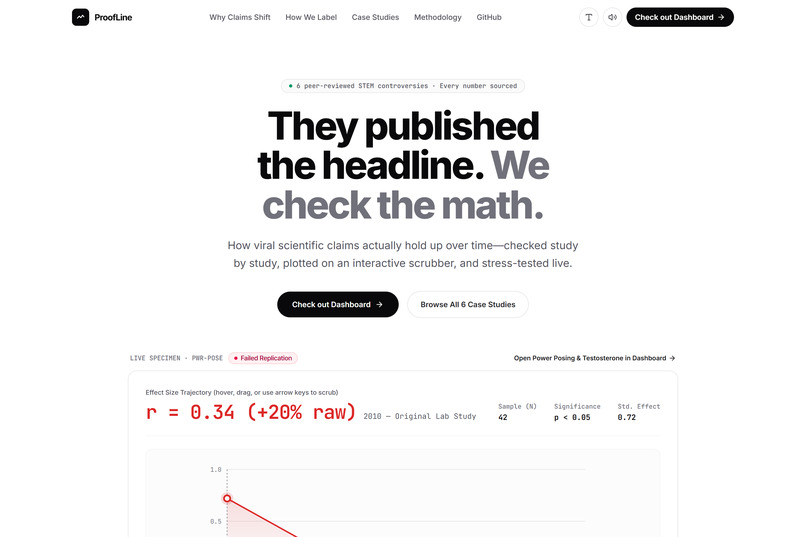
Home/Landing Page
-
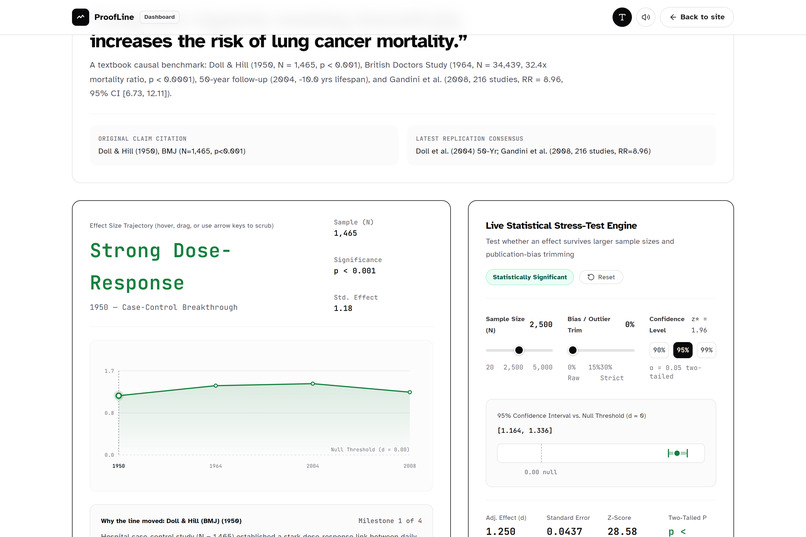
Dashboard Lesson #1
-
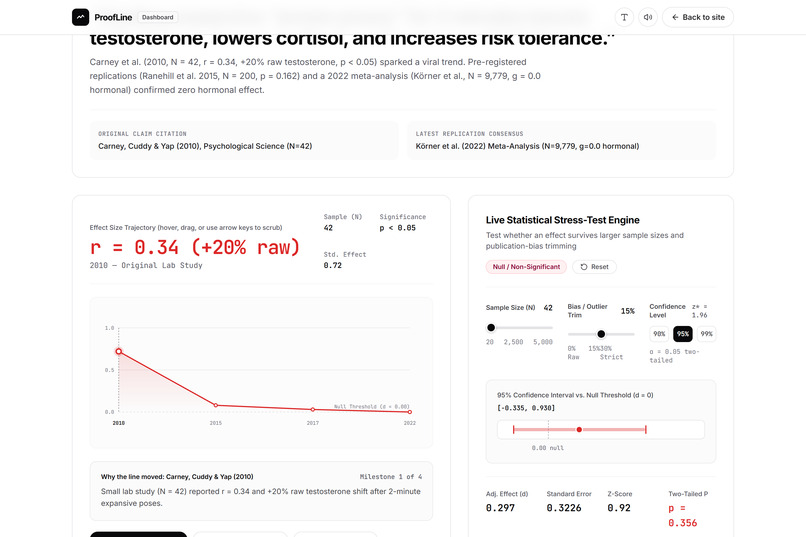
Dashboard Lesson #2
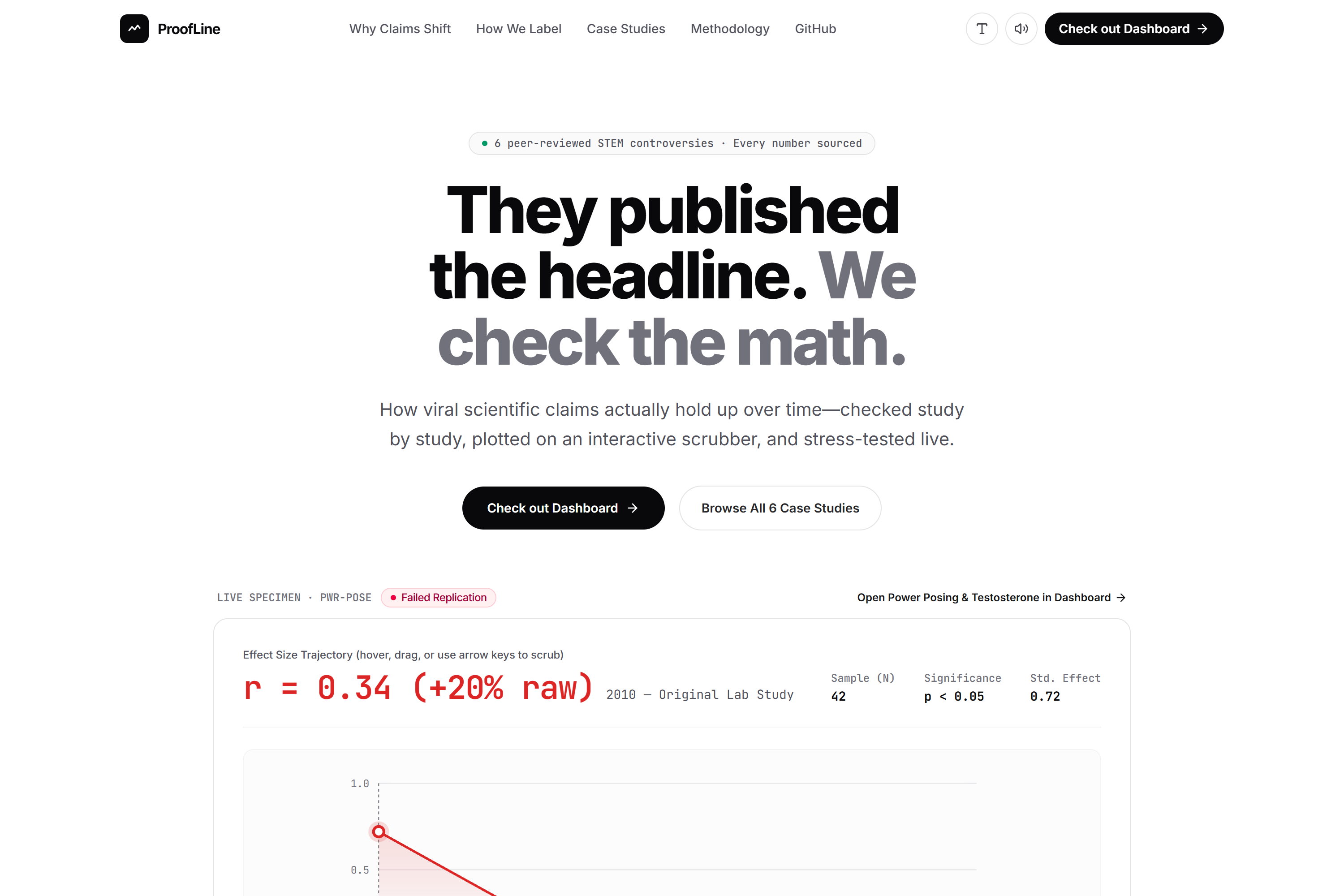
Inspiration
Viral science headlines sound permanent, but scientific truth actually changes over time. A tiny study with 42 people can spark a huge headline, get
quoted in school essays and videos, and stay popular for years even after much bigger studies show the effect was not real.

When students look up a famous claim, normal articles and PDFs only show one snapshot in time. Textbook statistics feel dry and hard to picture, so I
built ProofLine to let students watch how scientific evidence holds up over the years and test the numbers themselves.

## What it does

ProofLine is an interactive science claim tracker and statistical dashboard built around 6 real STEM controversies and 23 peer-reviewed studies.

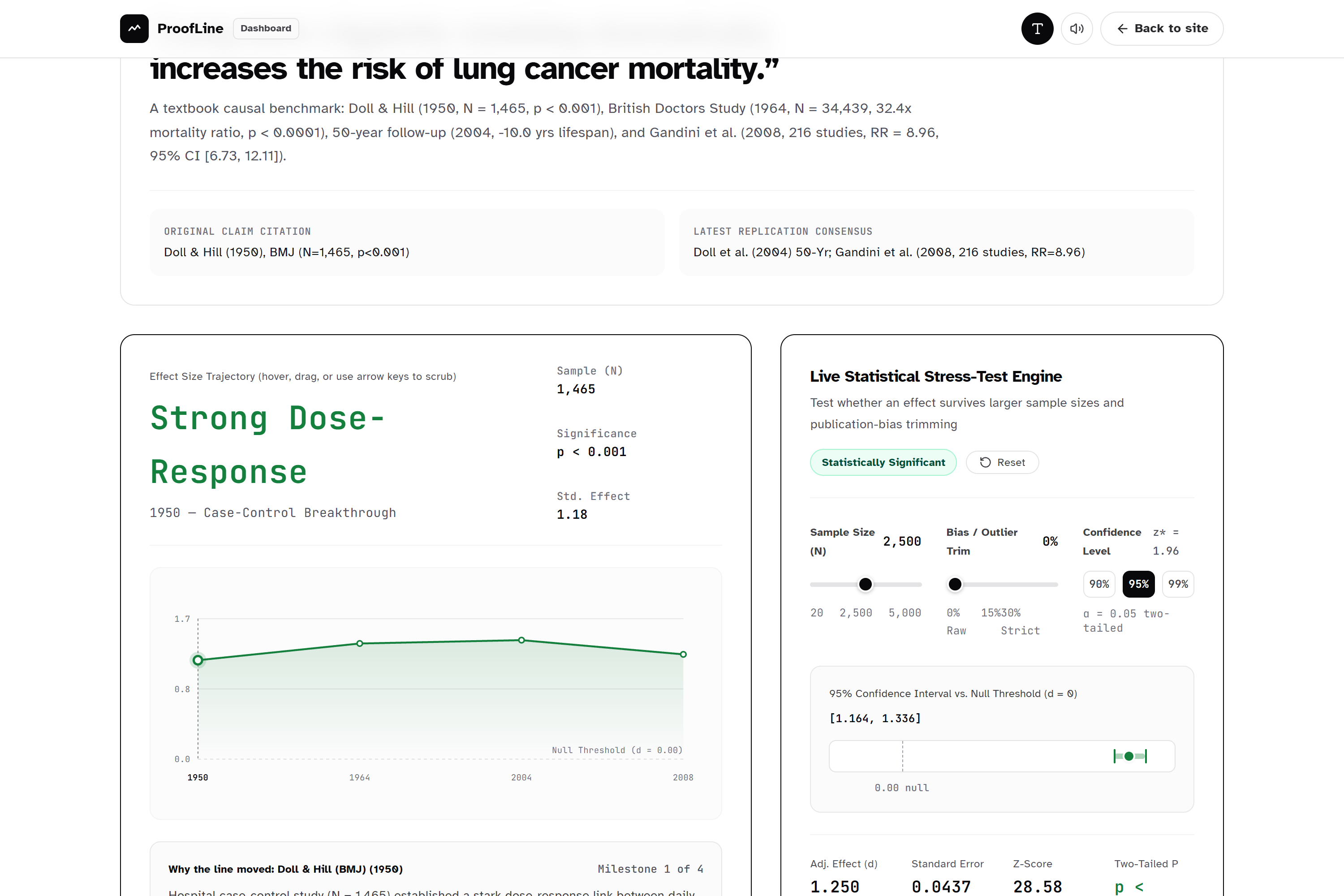
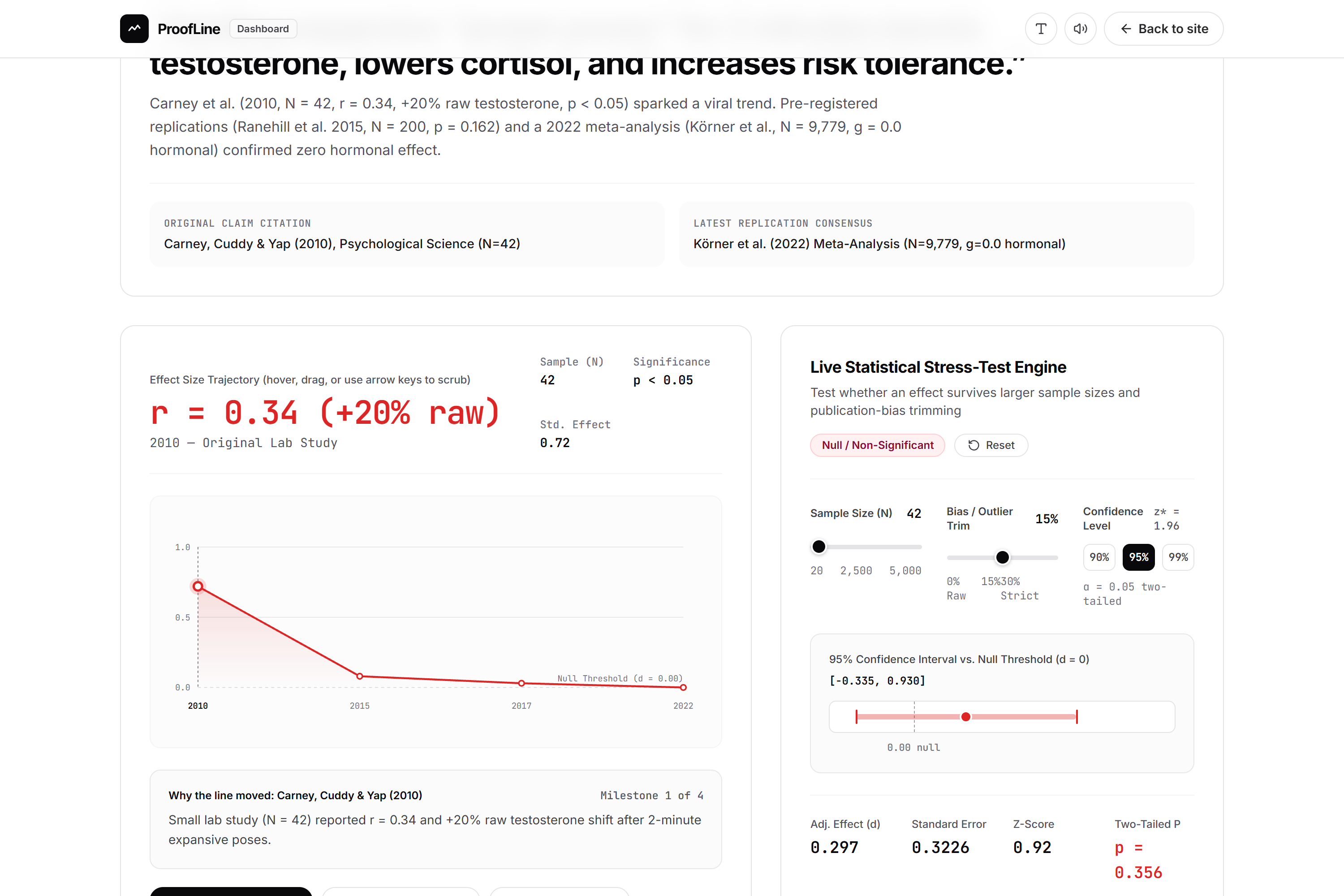
Users can drag across a timeline chart to watch famous claims shift as sample sizes grow. For example, you can watch Power Posing drop from a 42-person
study in 2010 down to zero effect across nearly 10,000 people by 2022, compare different estimates for AI water usage, or check a proven benchmark like
smoking and lung cancer. Every stop on the chart explains in plain English why the result changed.

Inside the dashboard, students can also drag sliders for sample size, bias trim, and confidence level to see confidence intervals and p-values update
live. Each claim includes a 3-question checklist to review before citing a paper, plus a dyslexia-friendly reading mode and a natural audio summary so
anyone can listen hands-free.

## How we built it

I designed the interface in Paper using a clean white editorial layout, then built the web app with React, TypeScript, Vite, and Tailwind CSS, and
deployed it on Vercel.

Instead of relying on slow external APIs, I wrote a lightweight statistical engine in TypeScript that calculates standard error, z-scores, p-values,
and confidence intervals directly in the browser at 60 frames per second. I built the interactive timeline chart with custom SVG pointer tracking and
keyboard arrow-key support, verified all 23 study citations and DOIs in a research folder, and generated natural voice audio summaries using
open-source edge-tts.

## Challenges we ran into

The hardest part was comparing real studies fairly when different papers use different measurements, like correlation, IQ points, milliliters of water,
or relative risk. I solved this by showing each paper's exact original numbers on the card while plotting a clear trajectory on the chart.

My early dark-mode layout also felt cramped and hard to read. Redesigning the site into a clean landing page that leads into a side-by-side dashboard
made it much easier to scrub the timeline on the left while adjusting sliders on the right.

## Accomplishments that we're proud of

I am proud of turning abstract ideas like sample size, statistical power, and publication bias into something visual that clicks in a few seconds
without needing any API keys. I am also proud of verifying 23 real peer-reviewed studies and building in real accessibility through Atkinson
Hyperlegible fonts, full keyboard navigation, and clear audio summaries.

## What we learned

Working through the research showed me how easily small studies under 50 people can produce exaggerated results just by chance, and why larger
pre-registered replications matter so much. I also learned how conflicting STEM headlines, like AI water usage estimates, often come from measuring
different boundaries rather than bad math.

## What's next for ProofLine

Next, I want to add a DOI lookup bar where students can paste any study link to automatically pull its sample size and replication history onto a
timeline. I also plan to add a classroom mode where teachers can share a single claim link as a quick critical-thinking exercise before research
essays.

Disclosures: Built solo by Brendan Lau during the official STEM Innovation Challenge 2026 hackathon period with no pre-existing project code.
AI-assisted tools (Antigravity, Paper, and open-source edge-tts) were used for UI iteration, documentation, and audio generation, with all code, math,
and citations reviewed and verified by the author.
