Inspiration
AI makes learning easier — but it can also make students dependent on explanations instead of building real understanding.
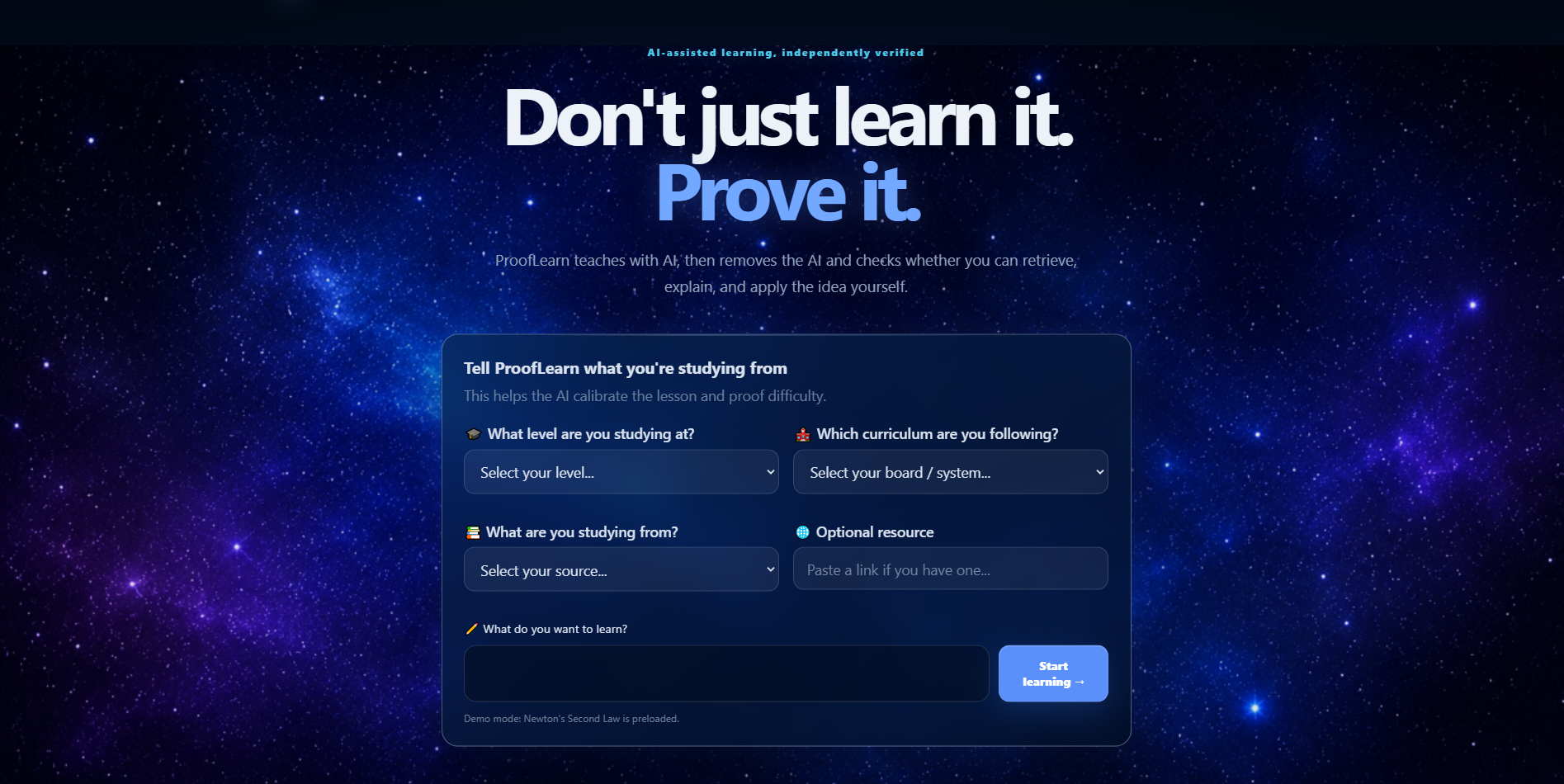
ProofLearn was built around one question:
Can a student still prove what they know after the AI is gone?
What it does
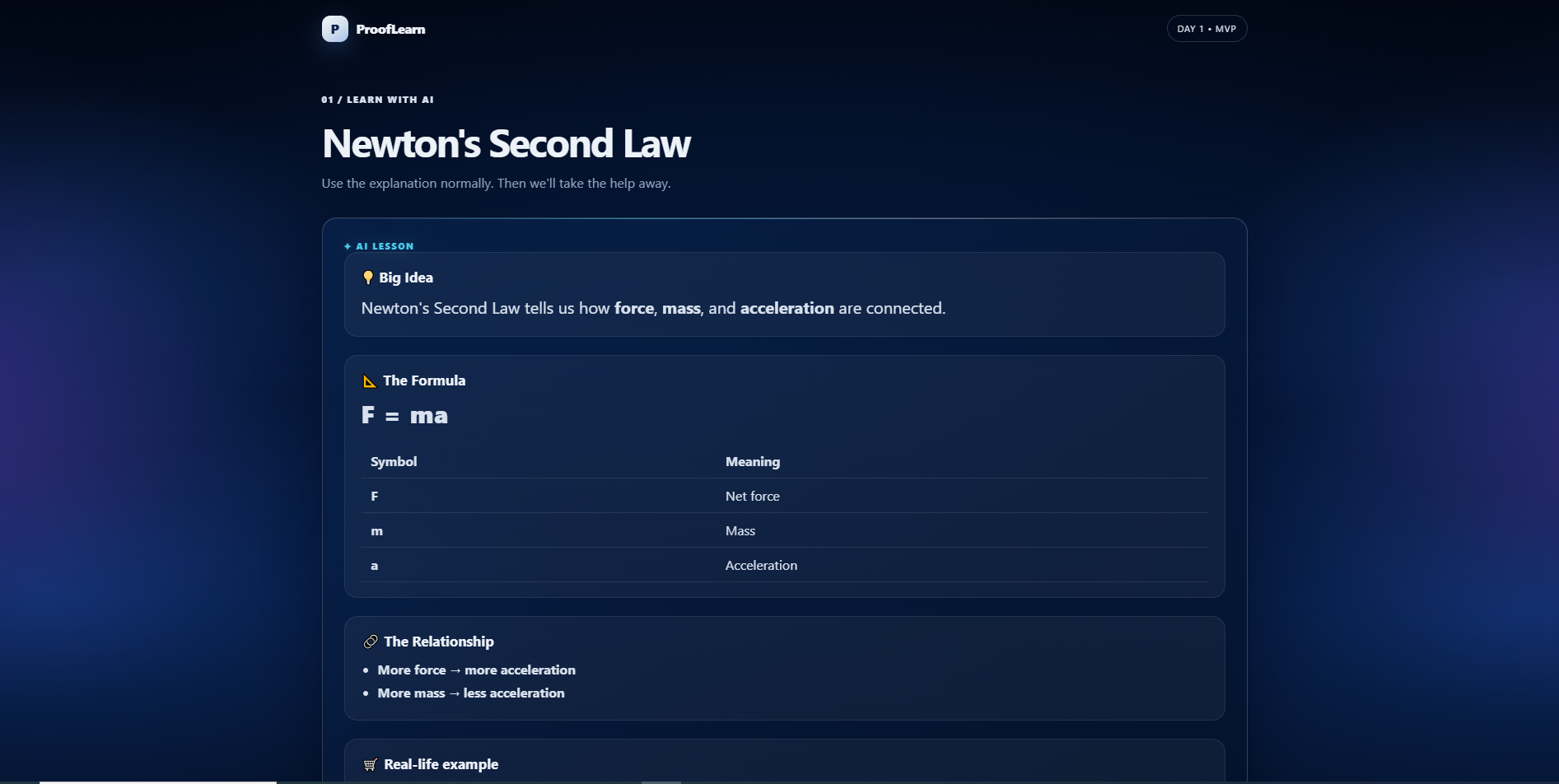
ProofLearn uses AI to teach a concept first. Then it deliberately removes AI assistance and asks the student to independently:
- Retrieve — recall the core idea.
- Explain — explain it in their own words.
- Apply — solve a problem using the concept.
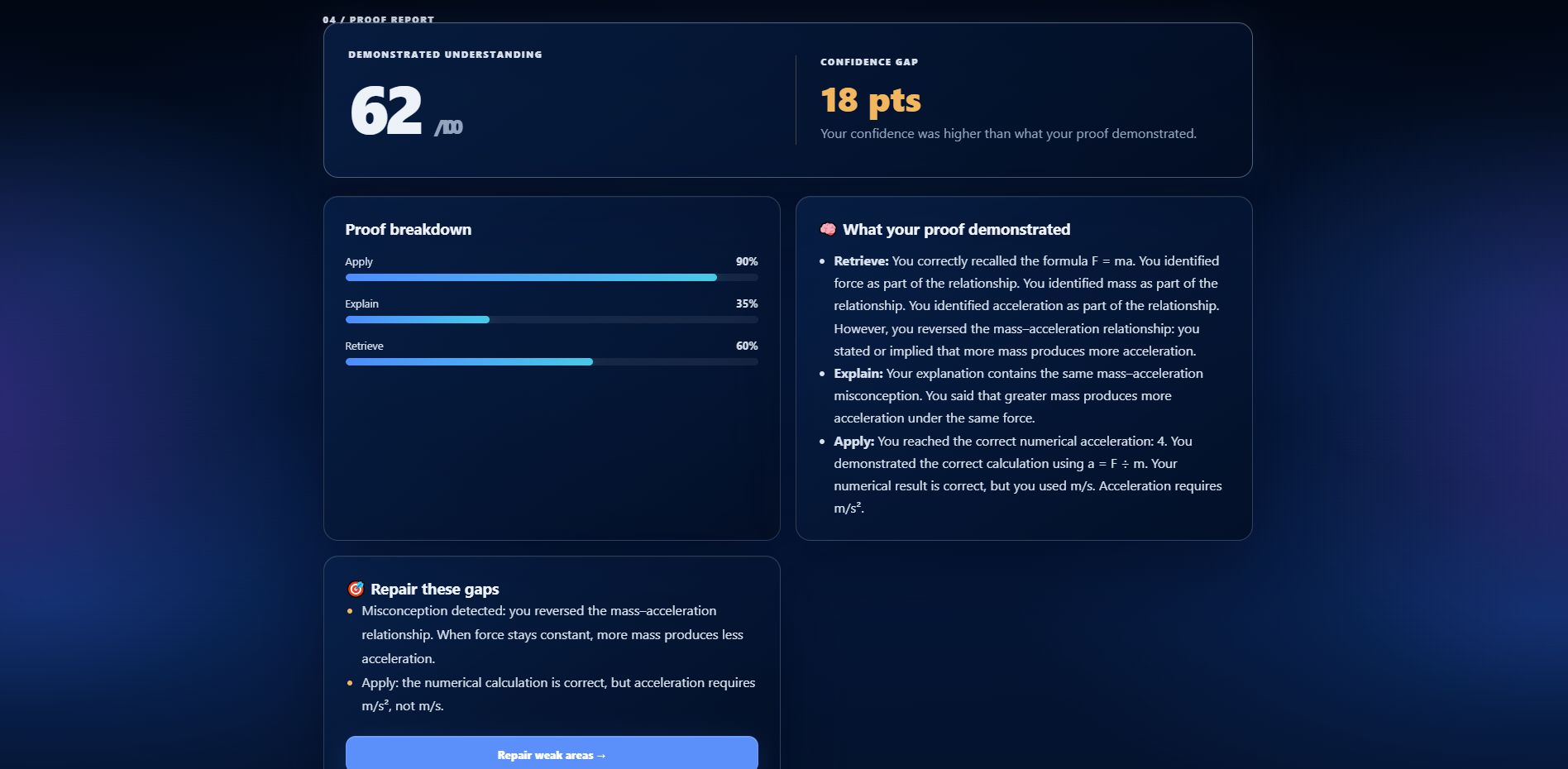
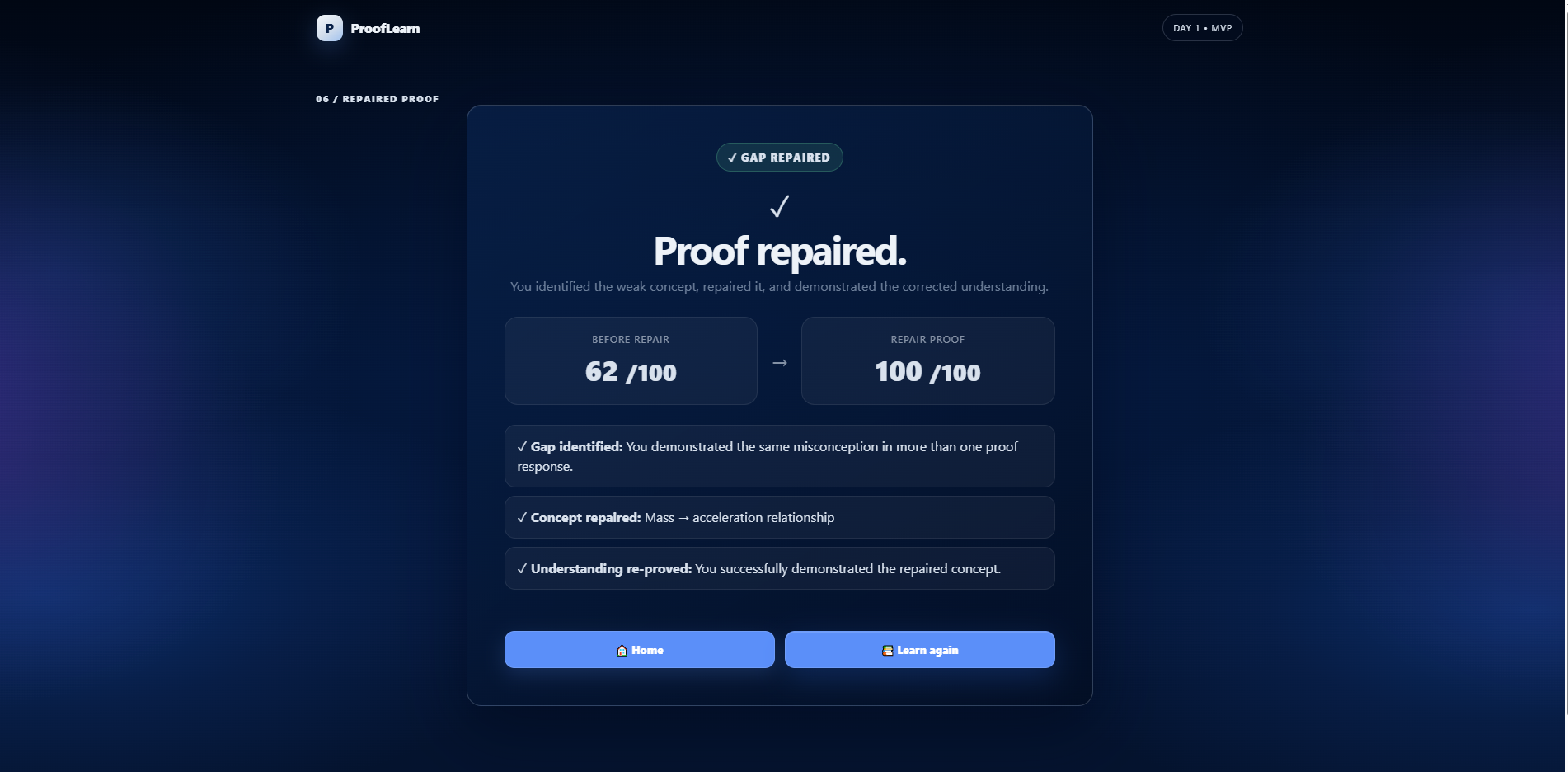
The system evaluates the student's responses and identifies whether they actually demonstrated understanding or still have a knowledge gap.
How we built it
The MVP was built as a lightweight web application using Python, Flask, HTML, CSS, JavaScript, and an OpenRouter-powered AI model.
We also designed the experience around a simple learning loop:
AI-assisted learning → AI removed → Independent proof → Evaluation
Challenges we ran into
One of the biggest challenges was designing an experience that was more than a traditional AI tutor. We wanted AI to help the learner initially, but not remain available during the proof stage.
We also had to balance the learning flow, evaluation logic, and user experience while building the MVP within a very limited hackathon timeframe.
Accomplishments that we're proud of
We built a working end-to-end MVP that demonstrates the complete ProofLearn concept.
The learner can study with AI, enter an independent proof stage, retrieve the concept, explain it in their own words, apply it to a problem, and receive an evaluation of their demonstrated understanding.
What we learned
Building ProofLearn showed us that an AI tutor should not only measure whether a student can get an answer. It should also measure whether the student can produce the understanding themselves.
The goal is not to make AI disappear from education.
The goal is to know when the learner no longer needs it.
What's next for ProofLearn
Future versions could track learning history, identify recurring knowledge gaps, improve personalized proof difficulty, and provide stronger long-term learning analytics.
The larger vision is to make AI-assisted learning more accountable by measuring demonstrated understanding, not just AI-assisted completion.
Built With
- ai
- css
- edtech
- education
- education.com
- flask
- generative
- html
- javascript
- openrouter
- personalization
- python
- retrieval
- webapp

Log in or sign up for Devpost to join the conversation.