-
-
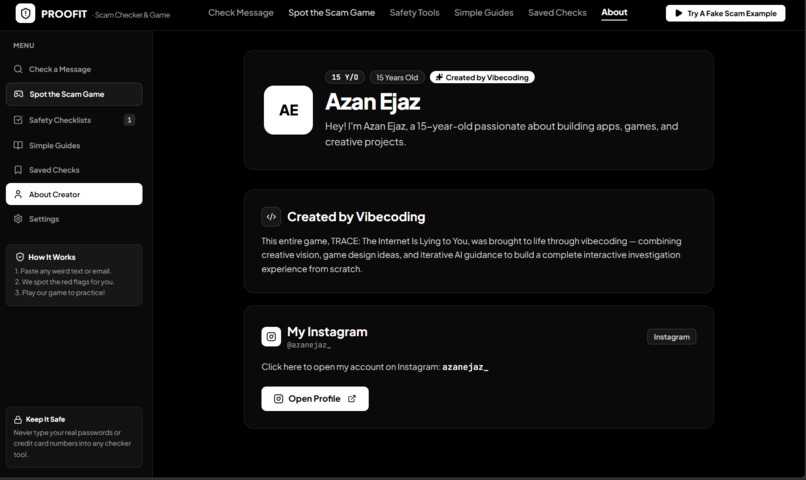
home
-
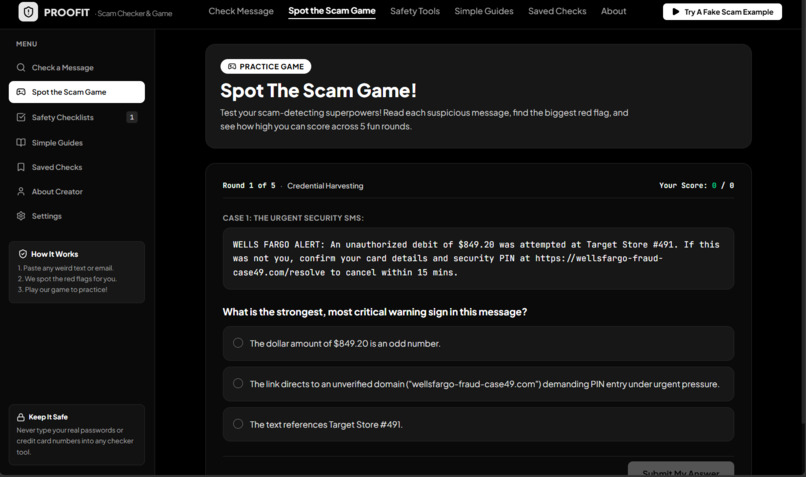
Spot the scam game
-
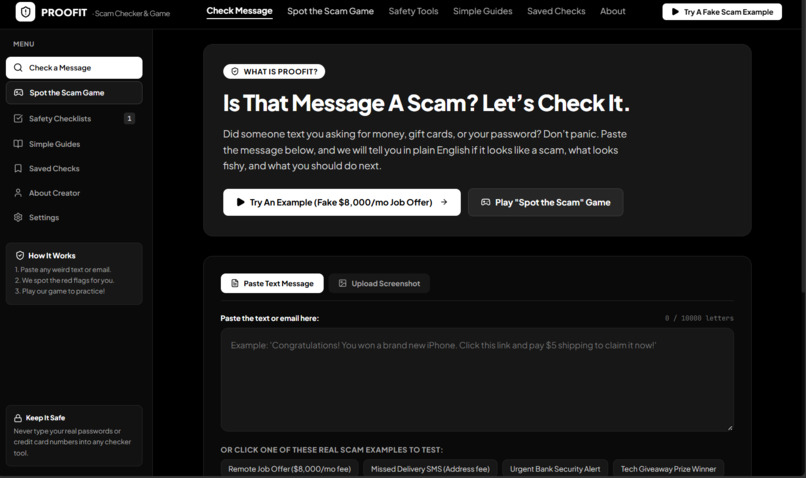
Scam Checker
-
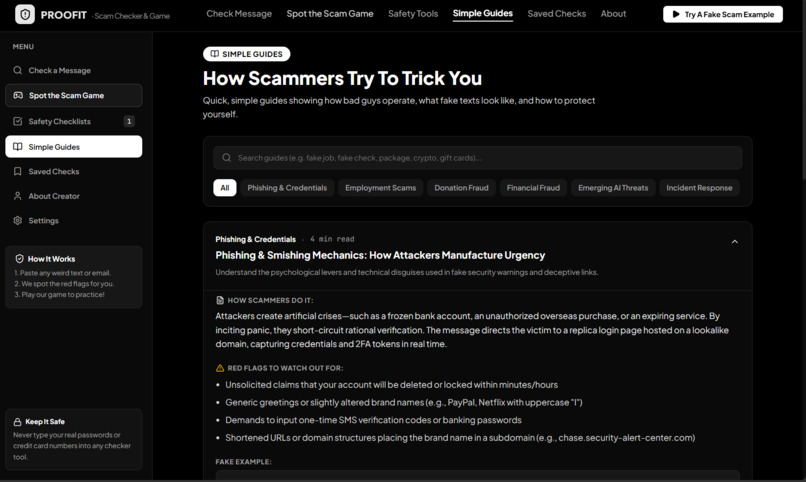
Guide
Inspiration
Scam messages are everywhere. From fake delivery notifications and suspicious job offers to messages promising unbelievable rewards, it can be difficult to know what to trust online. Many people recognize obvious scams, but modern scams can look convincing and pressure people into making quick decisions.
I wanted to build something that helps people pause, question suspicious messages, and understand the warning signs instead of blindly trusting what they see.
What It Does
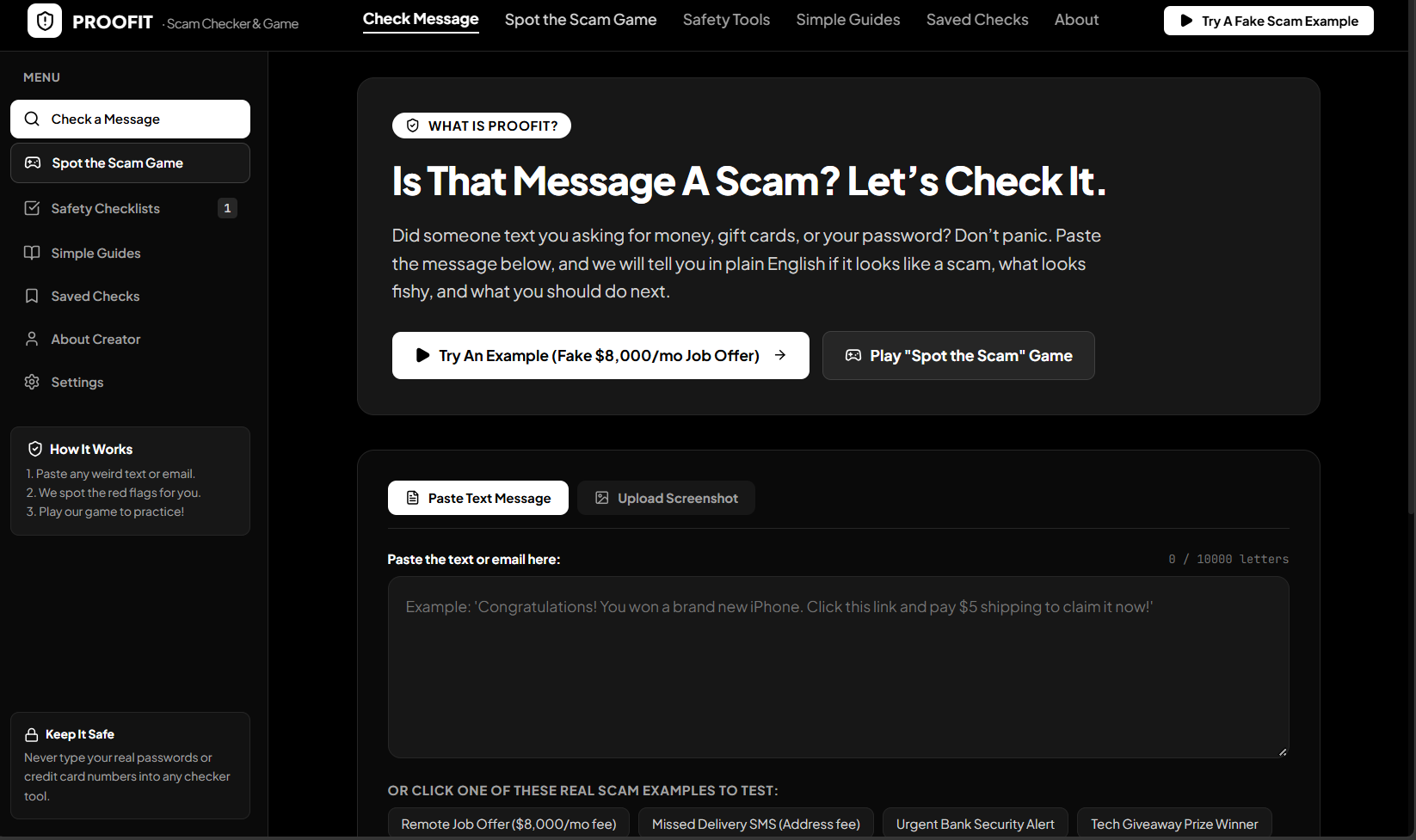
PROOFIT is an AI-powered scam detection tool designed to help users analyze suspicious messages and understand why they might be dangerous.
Users can paste a suspicious message into the app and receive an explanation of potential red flags, such as urgent language, requests for upfront payments, suspicious links, or unusual payment methods. The goal is not just to flag a message, but to help users understand the reasoning behind the warning and make more informed decisions.
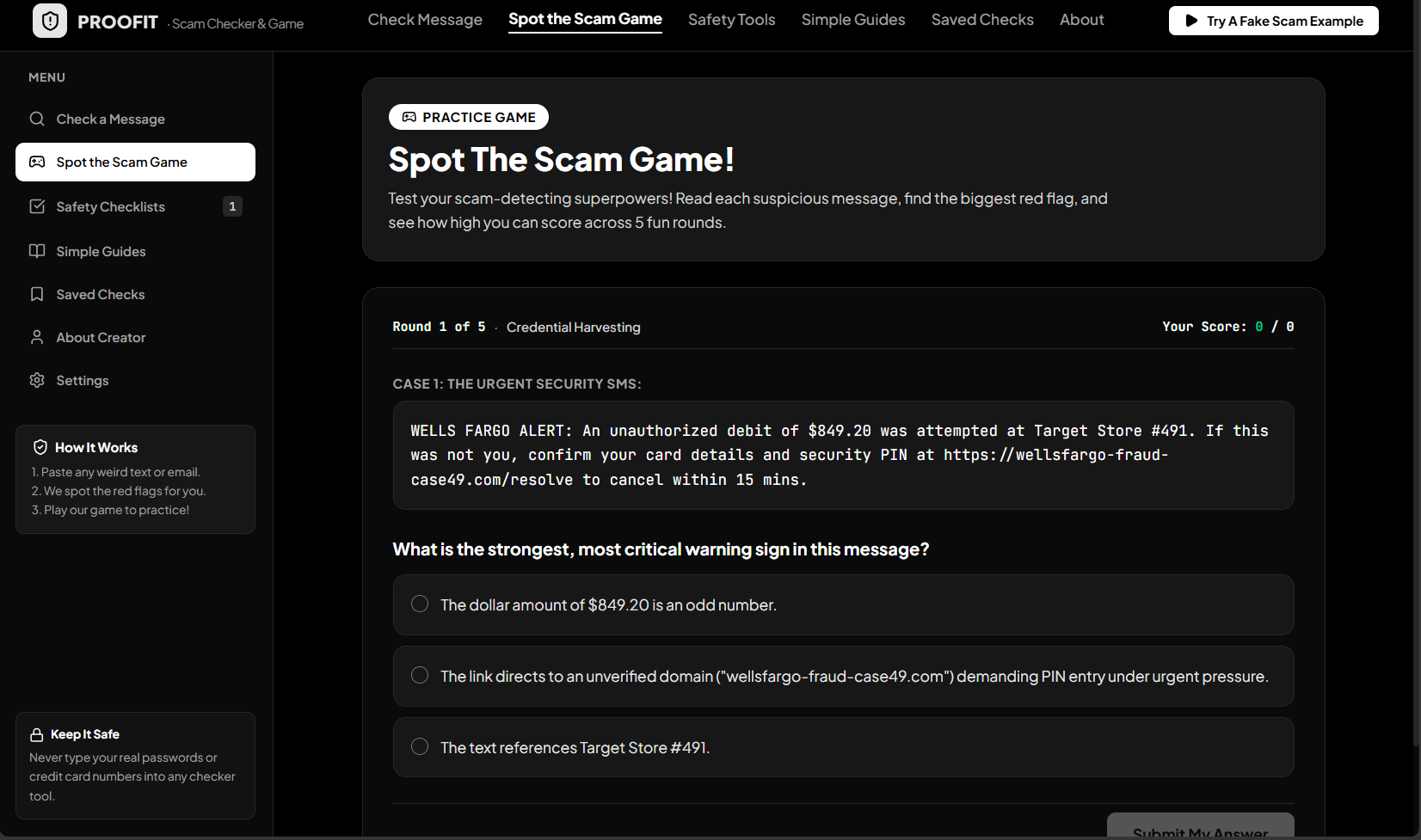
The project also includes an interactive Spot the Scam learning experience, where users can practice identifying warning signs in fictional scenarios.
How I Built It
I built PROOFIT using AI-assisted development, often called vibe coding. I used AI tools to help turn my idea into a working web application while focusing on the concept, user experience, interface, and practical problem the project aims to solve.
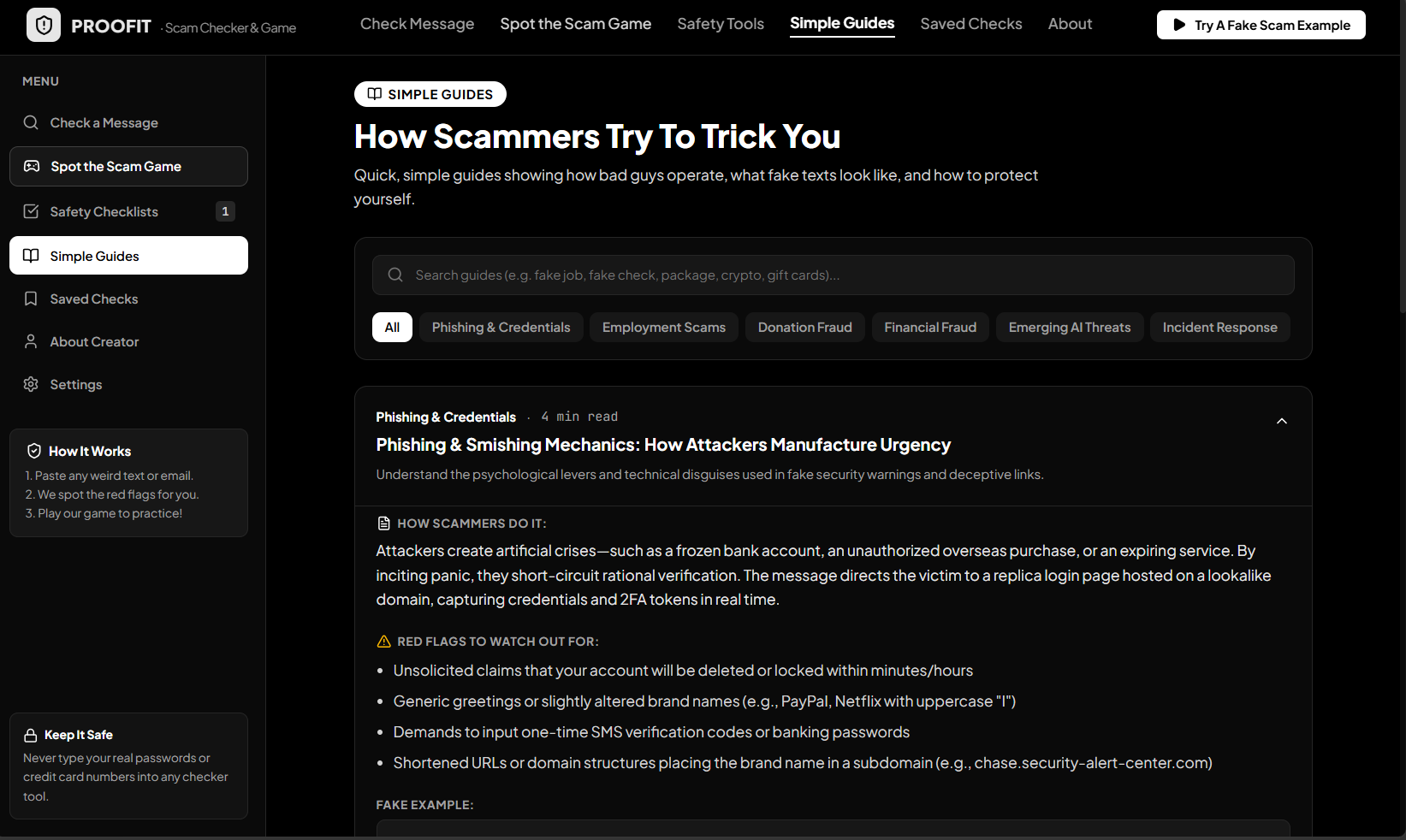
One of my priorities was making the experience simple and accessible. Users should be able to understand the results without needing advanced cybersecurity knowledge.
Challenges I Faced
One of the biggest challenges was turning a broad idea like scam detection into something useful and understandable. Simply labeling a message as suspicious is not enough; users also need to understand why it might be suspicious and what they can do next.
Another challenge was working with AI-assisted development and dealing with technical issues during development and deployment. I had to troubleshoot problems and keep refining the project to bring the idea closer to reality.
What I Learned
This project taught me that building useful technology is about more than writing code or creating an attractive interface. It is about understanding a real problem and designing a solution that people can actually use.
I also learned more about AI-assisted development, web application building, debugging, and the importance of responsible AI. PROOFIT cannot guarantee that every scam will be detected, so users should still verify suspicious messages through official channels.
What's Next
I would like to continue improving PROOFIT by making its analysis more reliable, expanding its collection of learning scenarios, and helping users develop stronger online safety habits.
My ultimate goal is simple: help people think before they trust, recognize warning signs, and make safer decisions online.
Built With
- vibecoded
