-
Process of verifing the resume
-
Process of verifing the resume
-
Process of verifing the resume
-
Process of verifing the resume
-
Process of verifing the resume
-
Process of verifing the resume
-
Process of verifing the resume
-
Process of verifing the resume
Inspiration
We were thinking about how much easier AI has made it to create polished resumes and applications. The problem is that a polished resume doesn't necessarily tell a recruiter how much of the candidate's experience can actually be supported.
We didn't want to build another AI resume detector. Instead, we wanted to focus on a more useful question:What evidence supports the claims a candidate is making?
We also wanted to make sure the system was fair to people who worked on confidential projects. Just because something isn't available on GitHub or the public internet doesn't mean it didn't happen.
That idea became ProofHire: Don't judge the application. Verify the evidence.
What it does
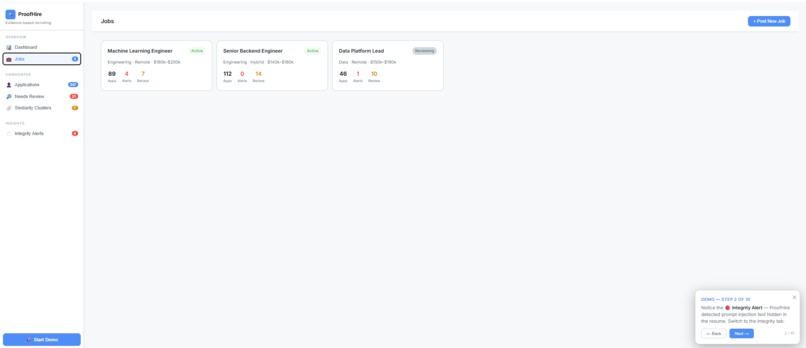
ProofHire helps recruiters look deeper into job applications.
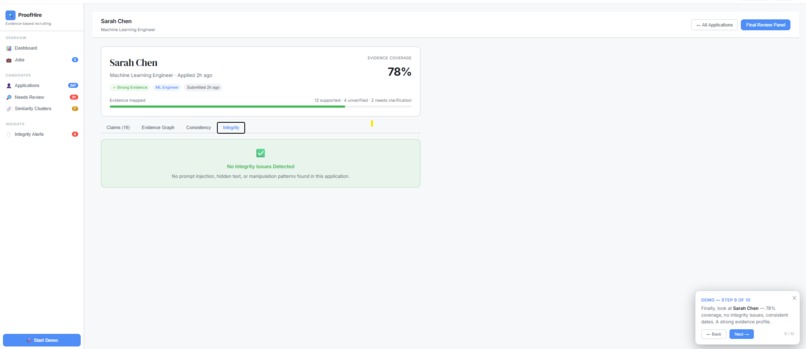
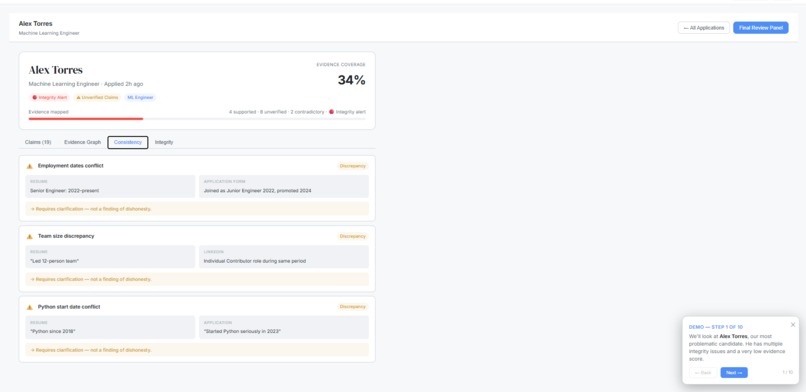
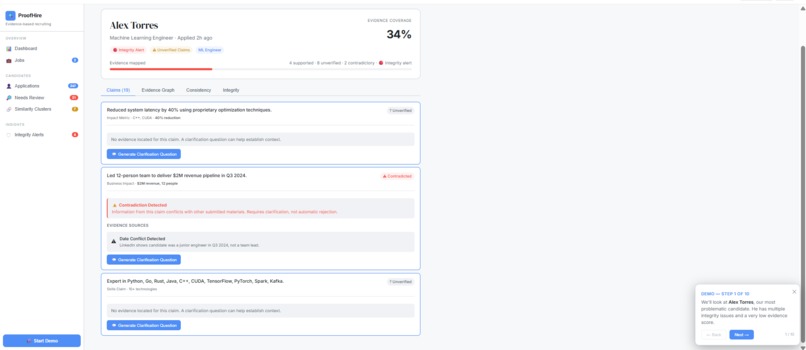
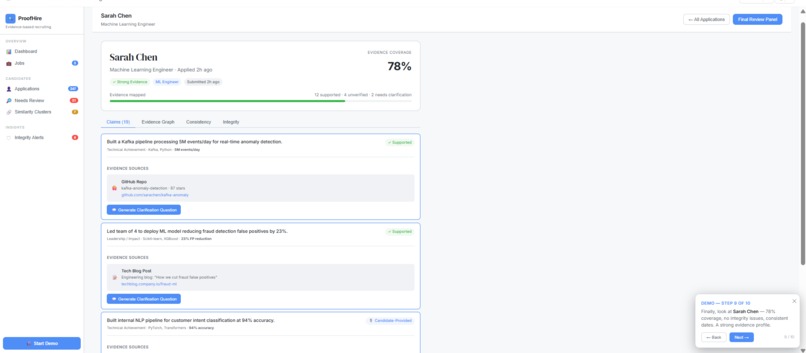
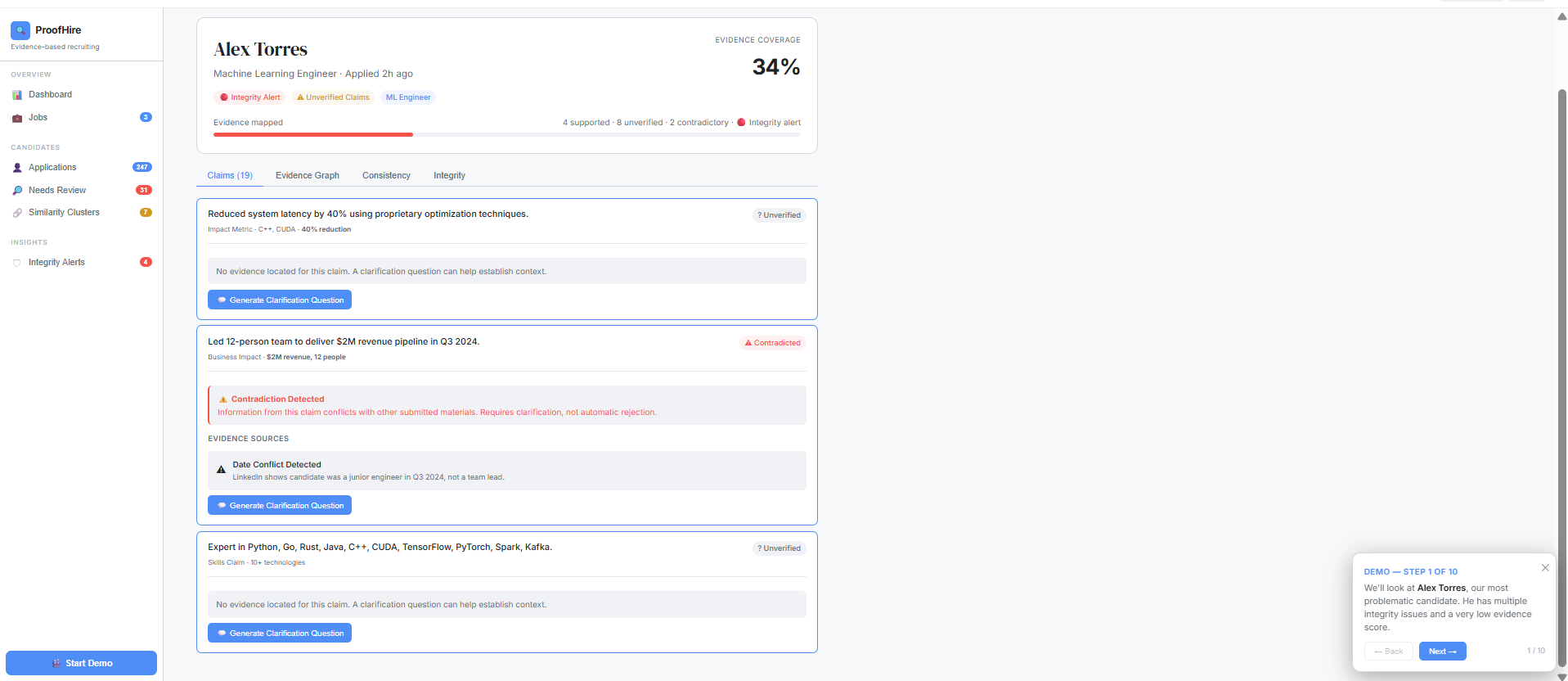
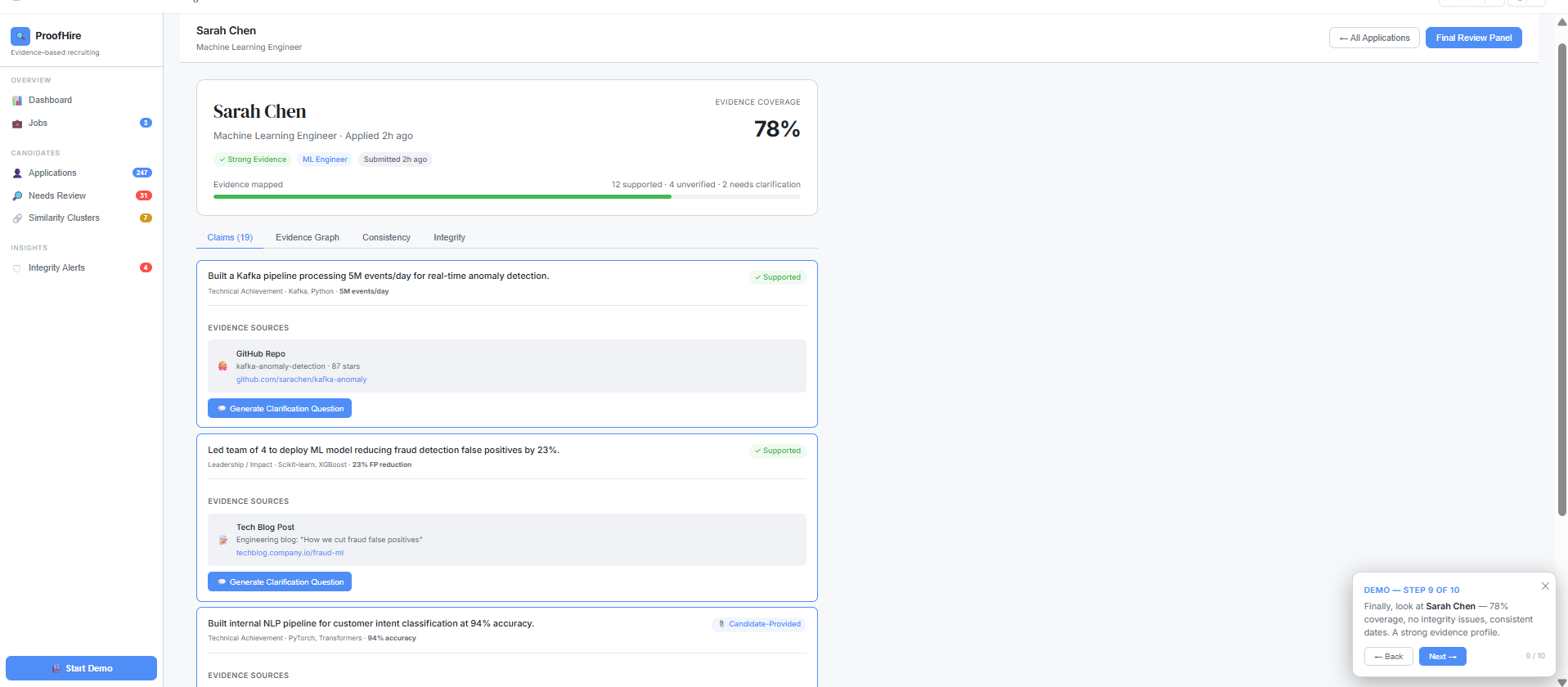
It breaks a resume into important claims, such as experience, projects, technologies, responsibilities, and achievements, and then looks at what evidence is available for each claim.
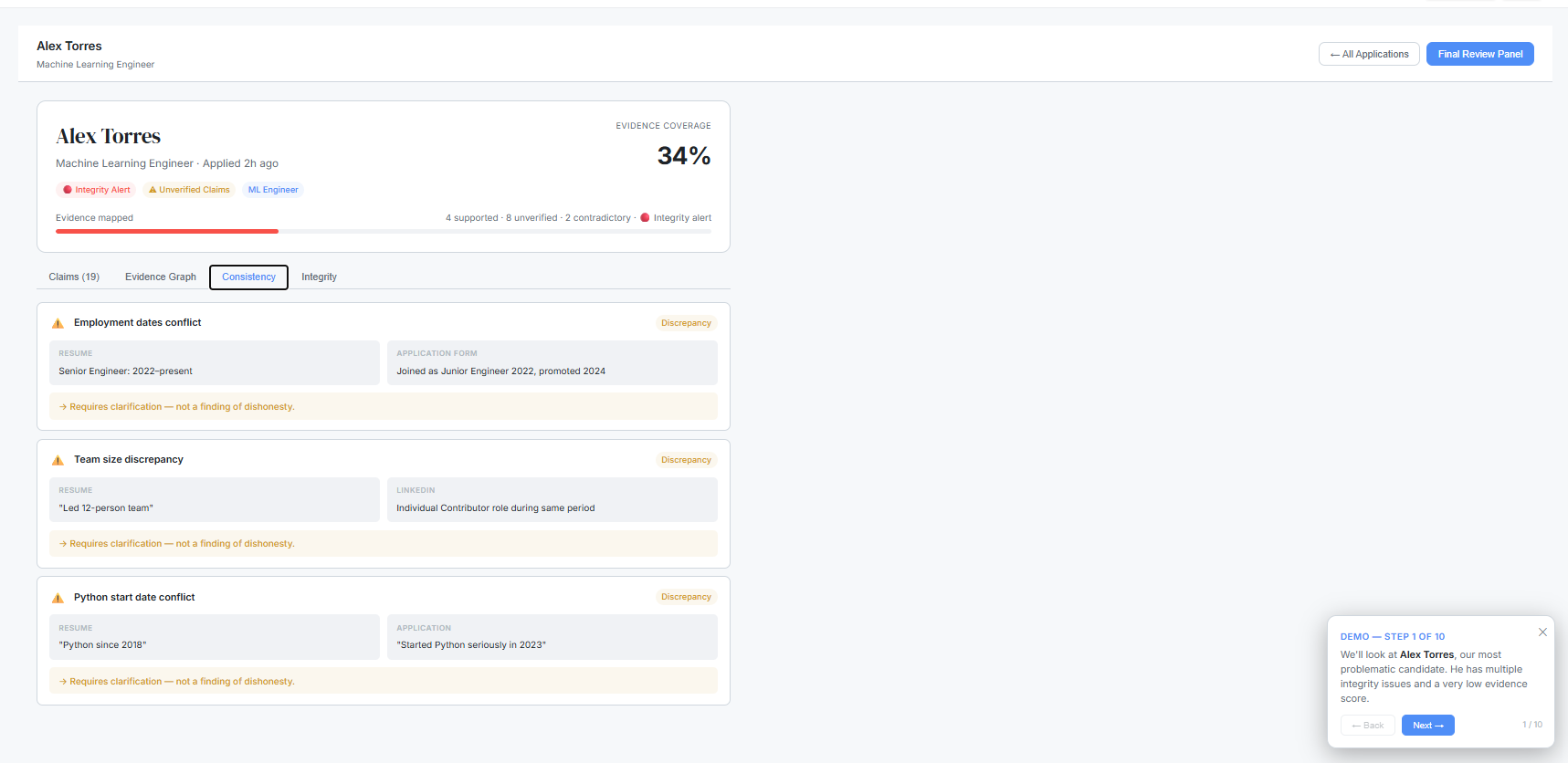
It can identify publicly supported claims, candidate-provided evidence, private or internal work, inconsistencies, and claims that need clarification.
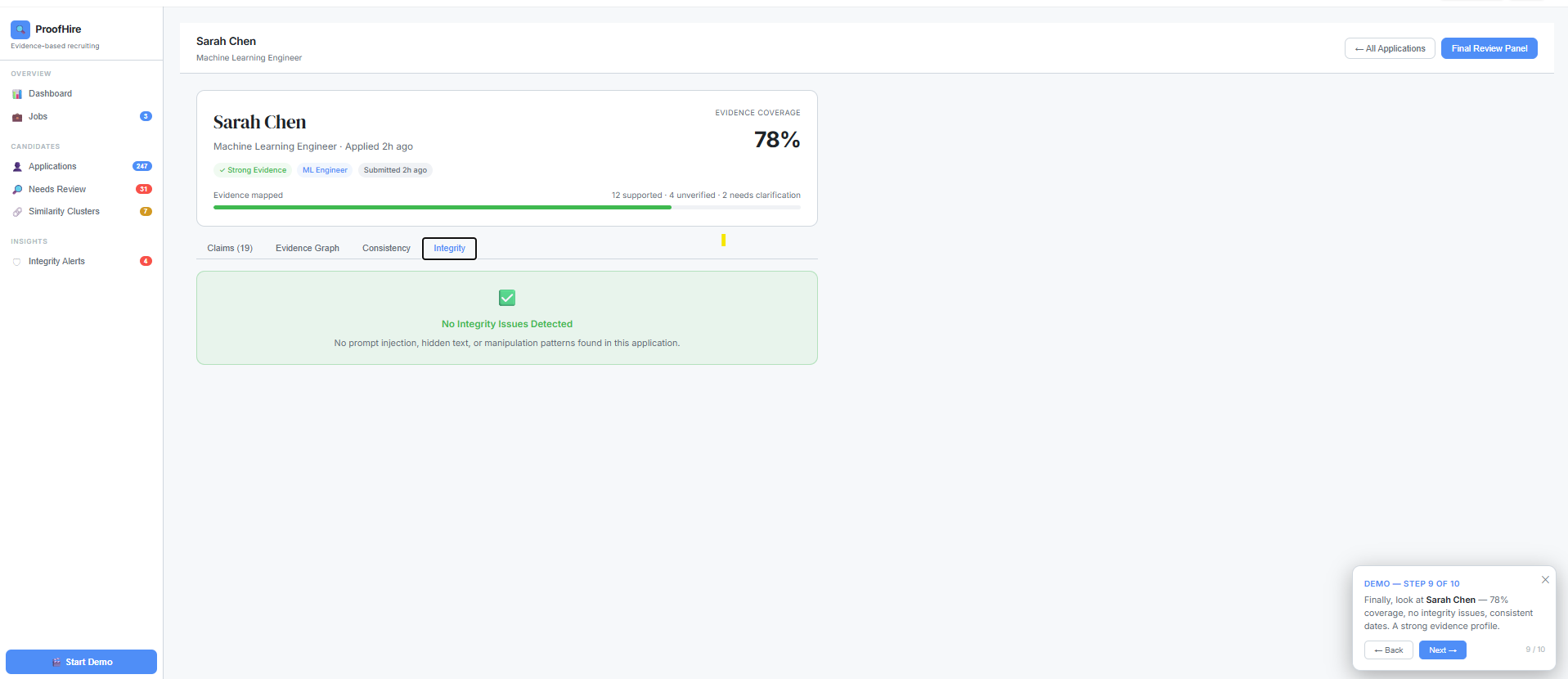
We also added prompt injection detection because resumes themselves can contain instructions designed to manipulate AI screening systems. ProofHire treats candidate documents as untrusted content rather than allowing them to influence the system's instructions.
The goal isn't to give a candidate a single "trust score." Instead, we show recruiters what is supported, what is unclear, and what they may want to investigate further.
How we built it
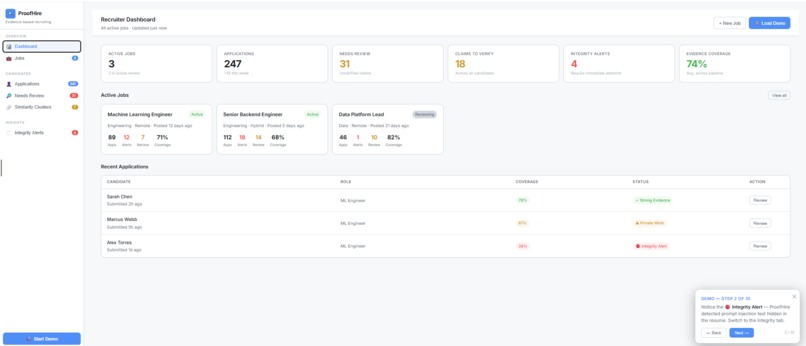
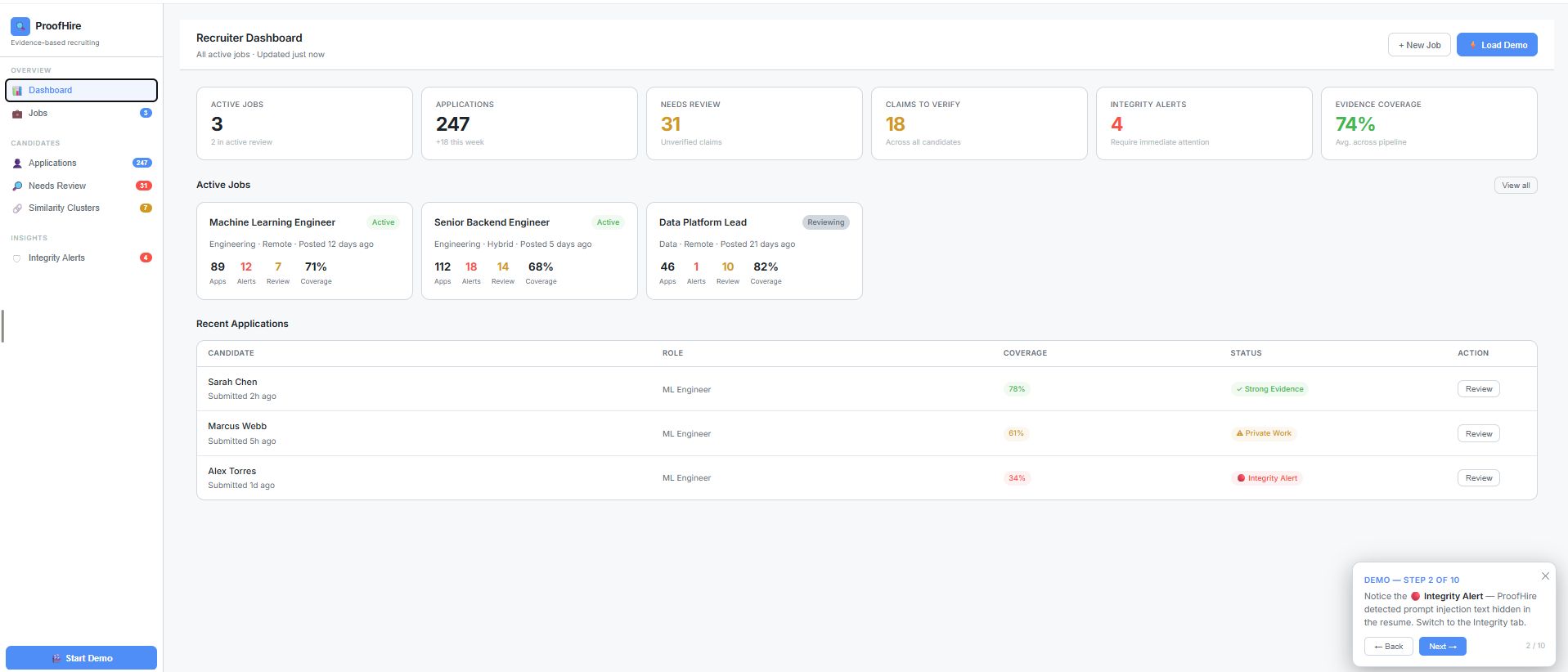
We built ProofHire as a web application with a recruiter-focused dashboard and candidate analysis workflow.
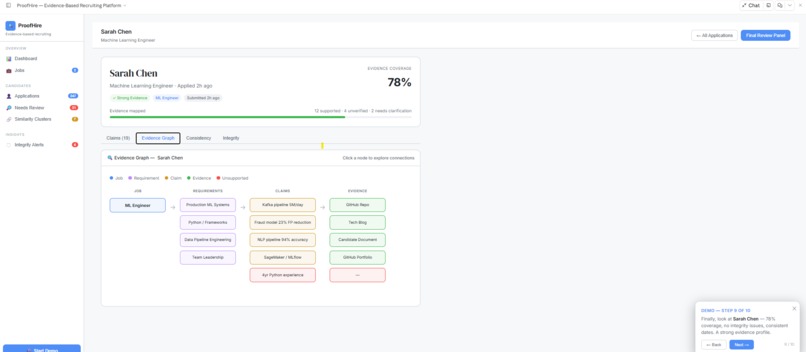
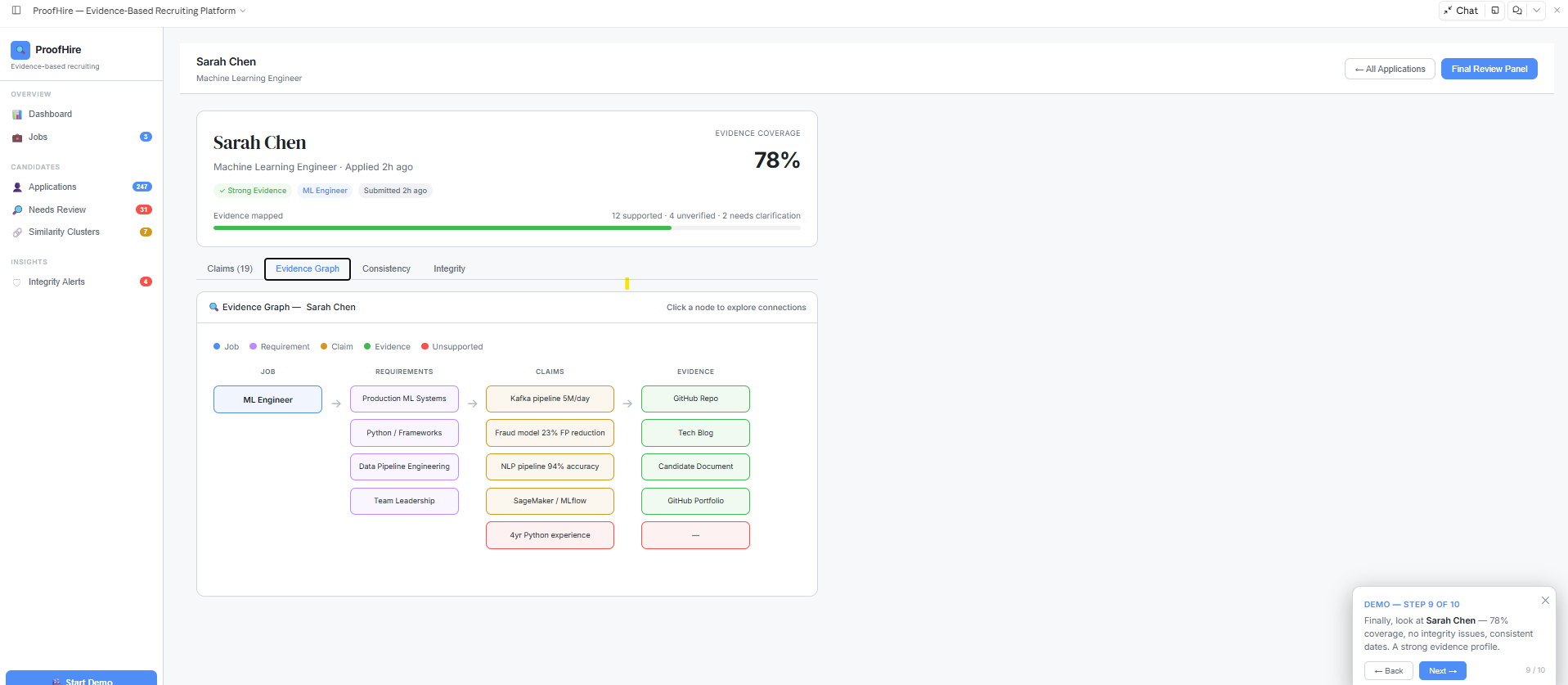
The application takes a job and candidate application, extracts the important claims, maps those claims to available evidence, checks for inconsistencies, and presents everything through an interactive evidence view.
We use AI for tasks that require understanding language, such as extracting claims, explaining inconsistencies, and generating follow-up questions. We use deterministic logic for things like dates, structured comparisons, similarity calculations, and security checks.
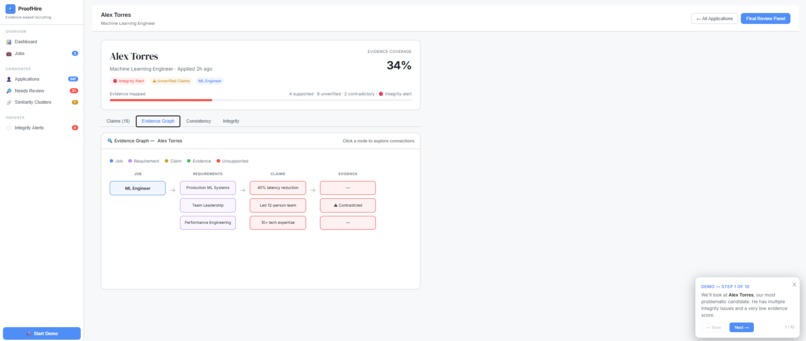
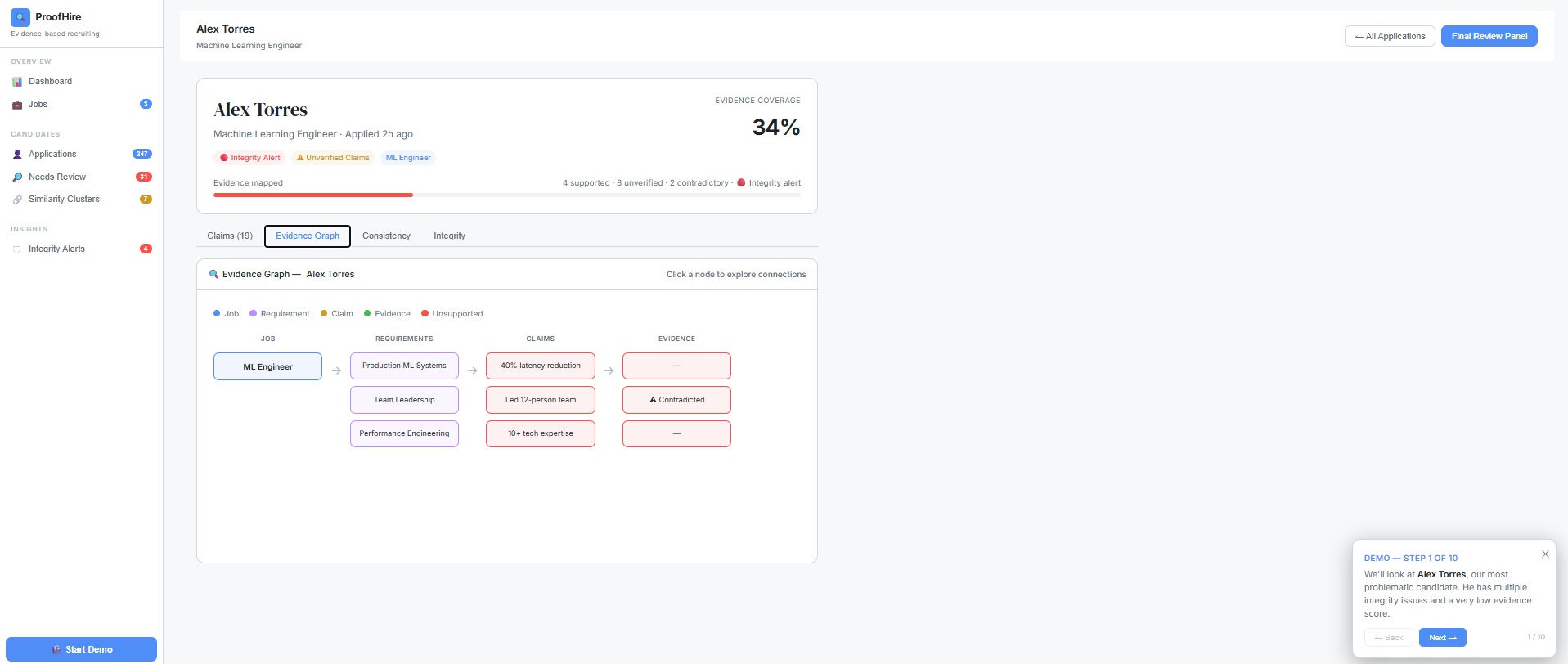
One of the main parts of the project is the Evidence Graph, which connects the job requirements to candidate claims, projects, and supporting evidence.
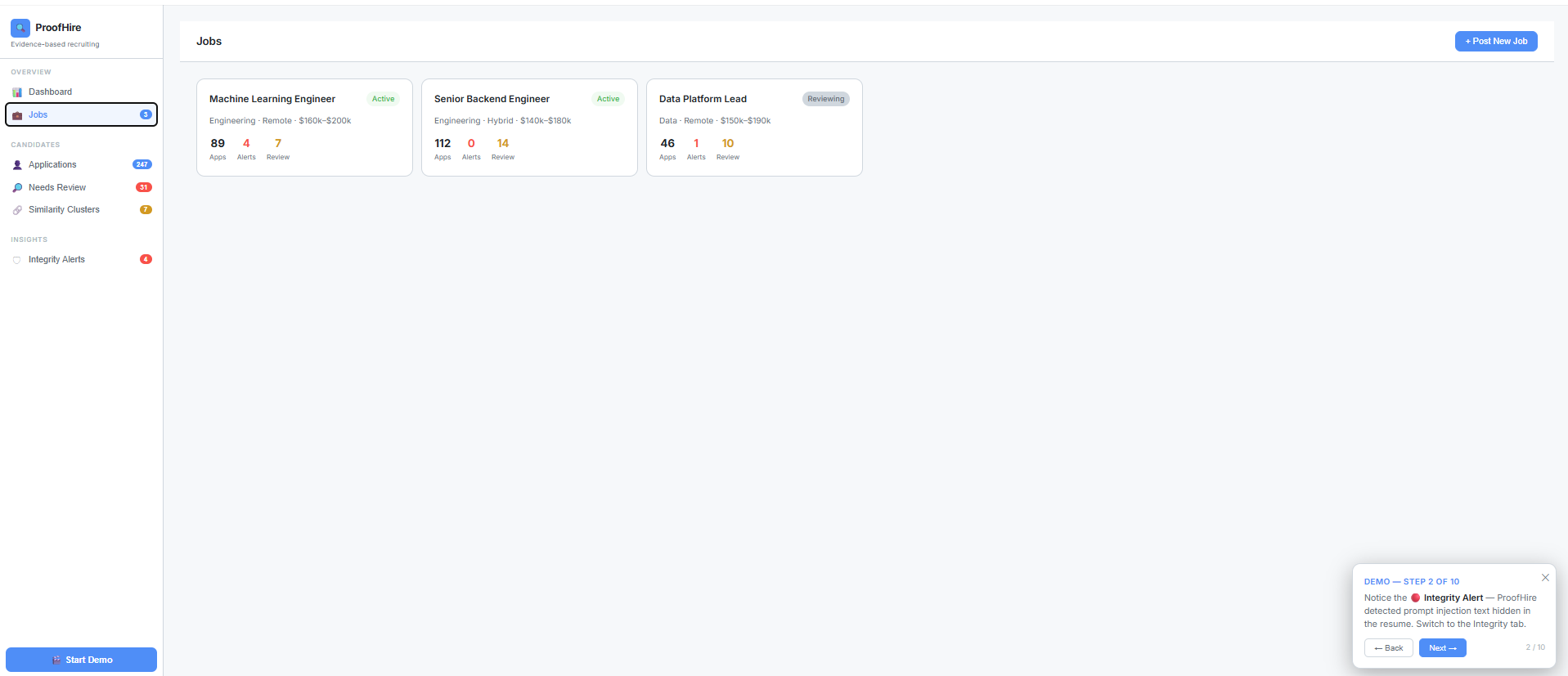
For the hackathon, we also created demo candidates that show different situations: a candidate with strong public evidence, a candidate whose experience is mostly internal, and a candidate with several issues that require further review.
Challenges we ran into
One of the biggest challenges was figuring out how to handle AI-generated applications without unfairly assuming that AI use means something is wrong.
We also had to think carefully about private company work. A candidate might have genuinely built something at their previous company but be unable to share the code or documentation. We didn't want our system to punish them for that.
Another challenge was prompt injection. Since we're processing resumes with AI, we had to make sure that instructions inside a candidate's resume couldn't become instructions for our AI system.
Finally, we wanted every warning to be understandable. Instead of simply saying something is "suspicious," ProofHire explains why something was flagged and what the recruiter could check next.
Accomplishments that we're proud of
We're most proud of the fact that ProofHire doesn't try to make the hiring decision for the recruiter.
Instead of giving someone a mysterious score like "Trust: 82/100," we show the actual evidence behind the application.
We're also proud of the way we handle confidential work. If a candidate says they built an internal system and there is no public evidence, ProofHire doesn't automatically treat that as a red flag. It recognizes it as something that may need a different type of verification.
The Evidence Graph and the prompt injection protection were also important parts of the project because they make the system both more explainable and more security-aware.
What we learned
We learned that building trustworthy AI is often more about knowing 'what not to conclude' than simply making the model more powerful.
A lack of evidence doesn't necessarily mean something is false, and AI-generated writing doesn't necessarily mean a candidate is unqualified or dishonest.
We also learned how important it is to keep humans involved in decisions where the available information is incomplete.
For us, the biggest takeaway was that AI can be much more useful when it helps someone ask better questions instead of pretending it already knows the answer.
What's next for ProofHire
The next step would be connecting ProofHire to real recruiting workflows and applicant tracking systems so recruiters can use it without changing the way they work.
We'd also like to expand the types of evidence candidates can provide, while still protecting confidential information. A candidate could eventually have a reusable collection of verified or shareable project evidence that they can selectively provide to employers.
We also want to make the technical deep-dive feature much stronger, so recruiters can ask questions based specifically on the technologies and accomplishments mentioned in a candidate's application.
Ultimately, we want ProofHire to make hiring a little less dependent on how polished an application looks and a little more focused on what the candidate can actually support and demonstrate.
Built With
- backend
- frontend
- python

Log in or sign up for Devpost to join the conversation.