Inspiration
Freelance work happens across conversations, files, and invoices. A client requests a revision in WhatsApp, sends billing details by email, and later says they have paid. Understanding what needs attention means piecing those records together.
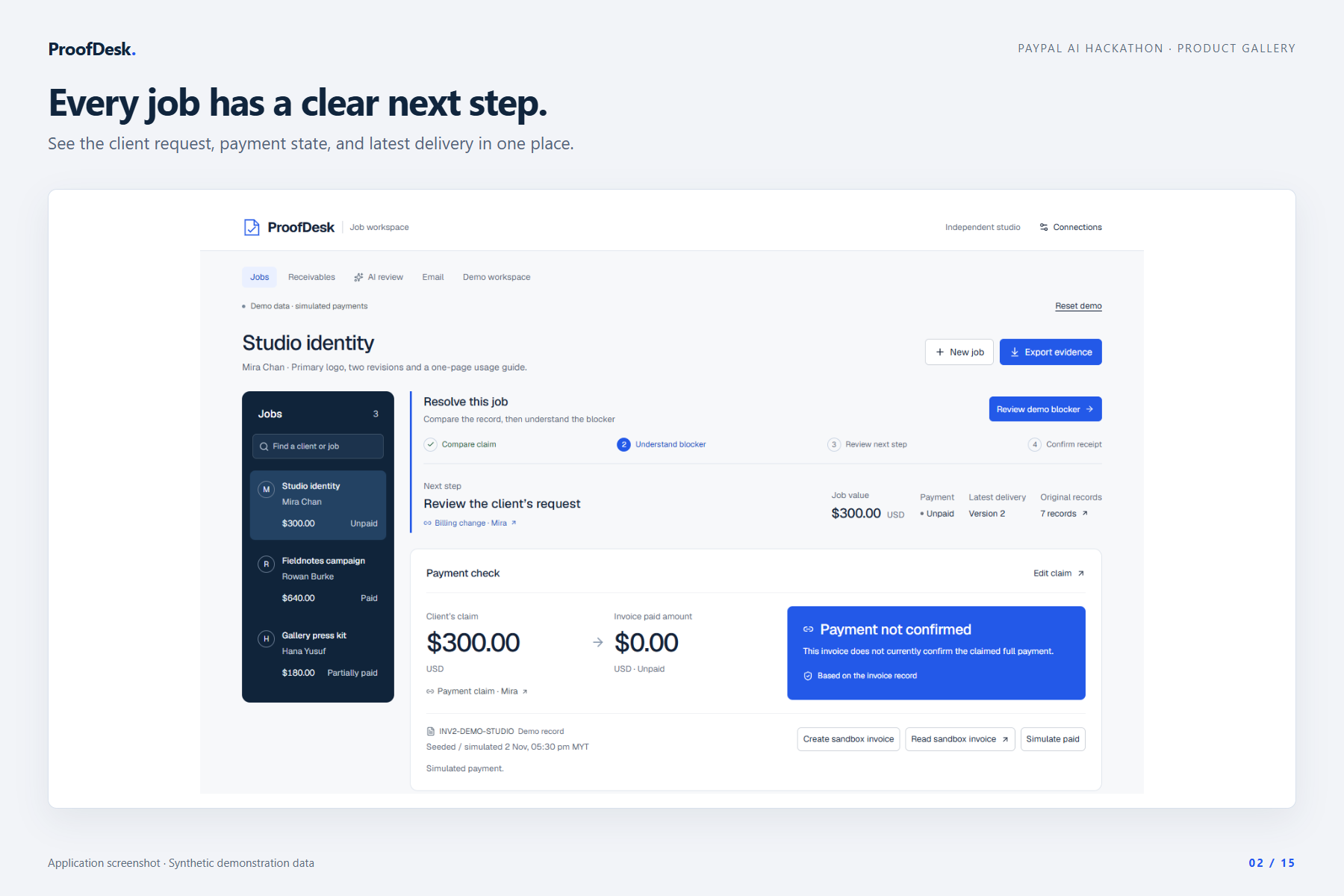
We built ProofDesk to bring that context into one job workspace. Our starting question was: can AI help a freelancer understand the next step while keeping the original evidence and payment record easy to check?
What it does
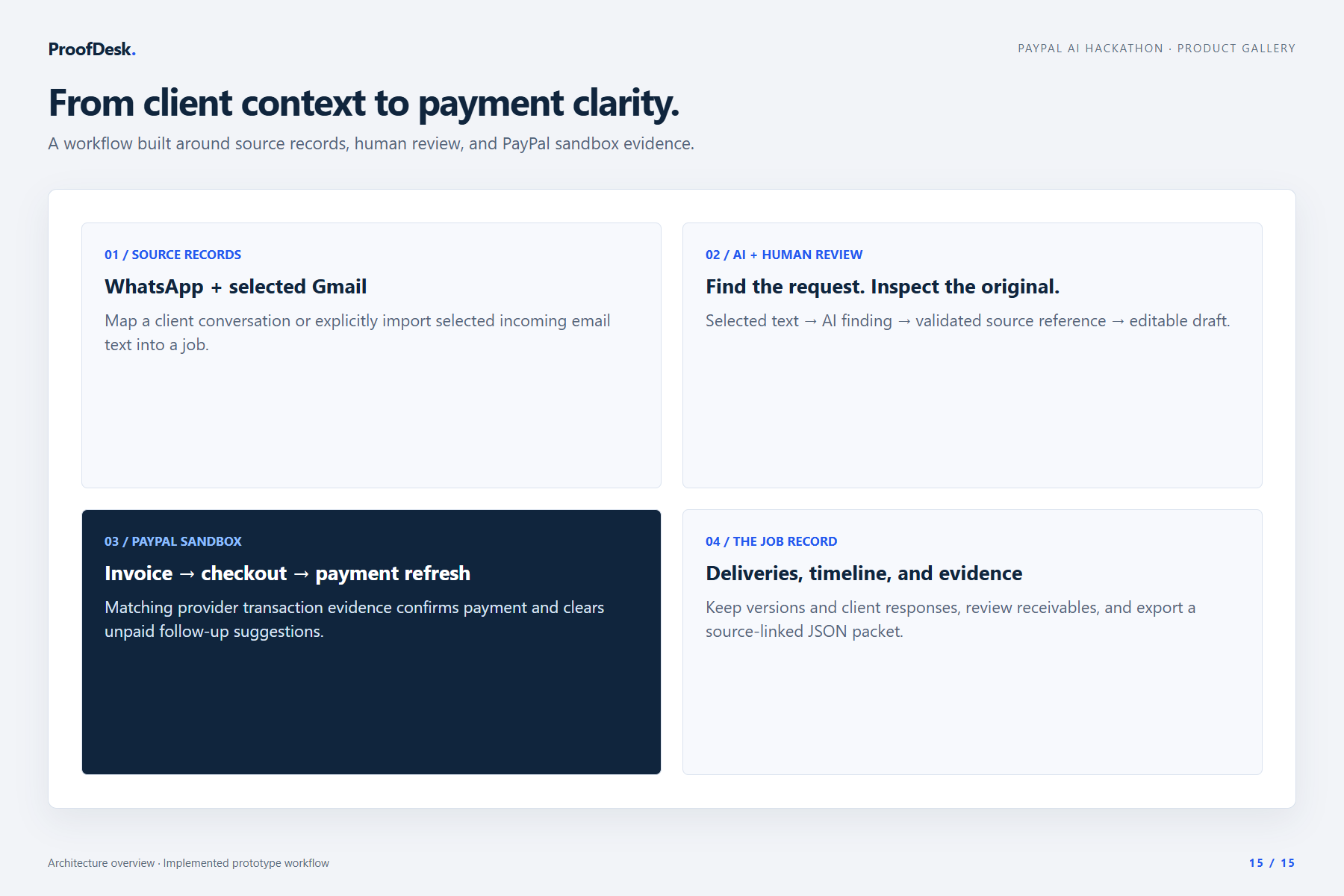
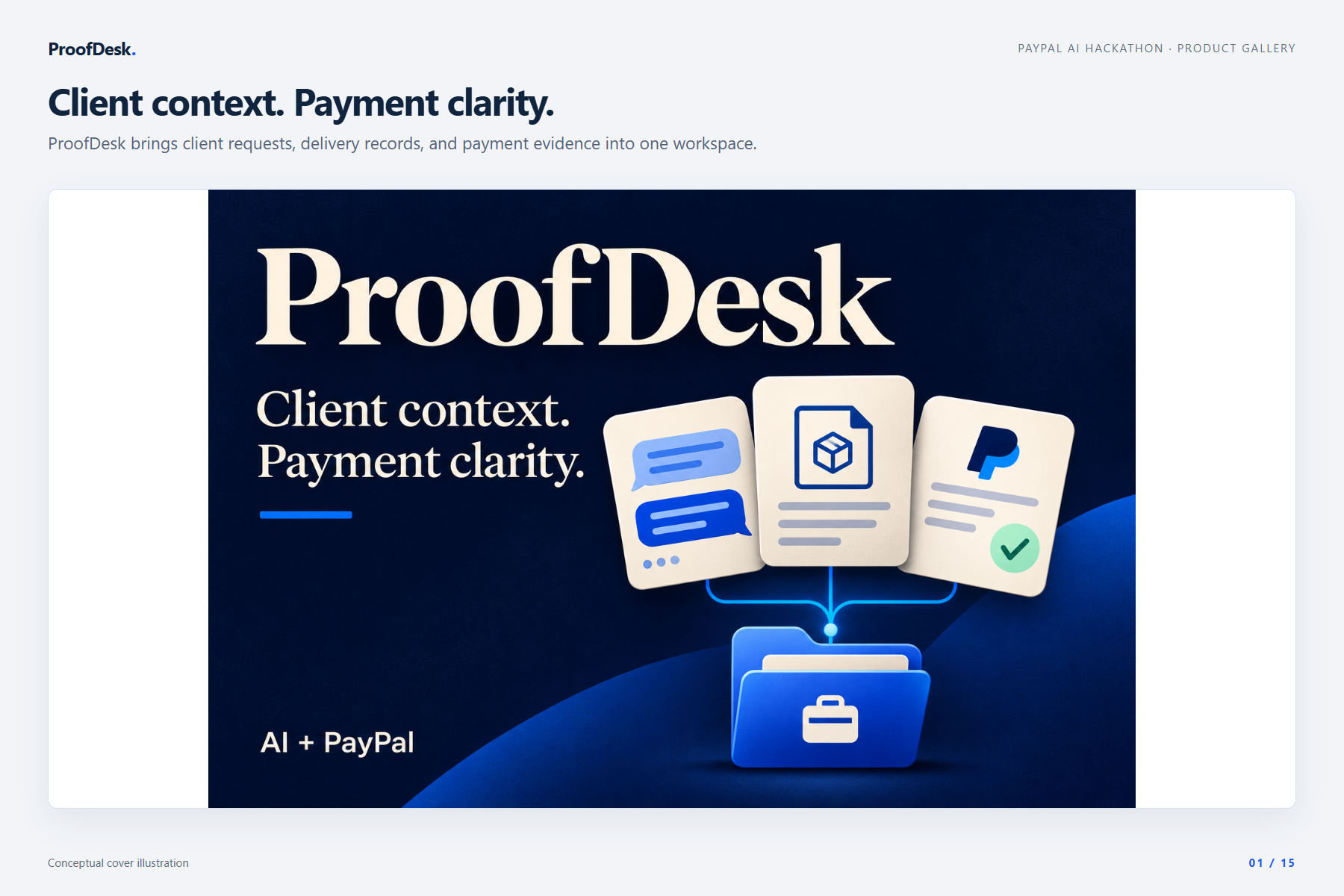
ProofDesk connects client conversations, delivery records, and PayPal sandbox invoices.
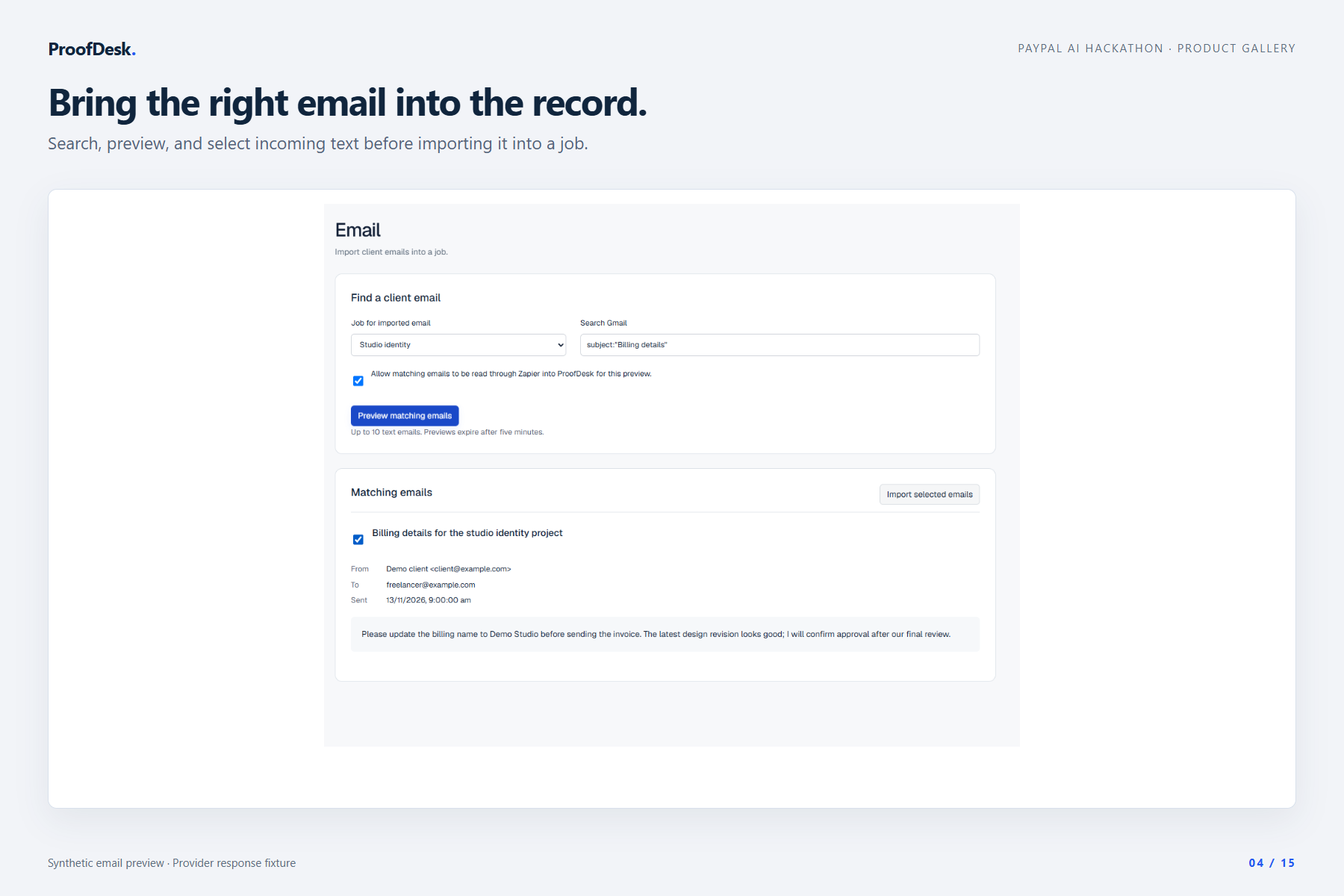
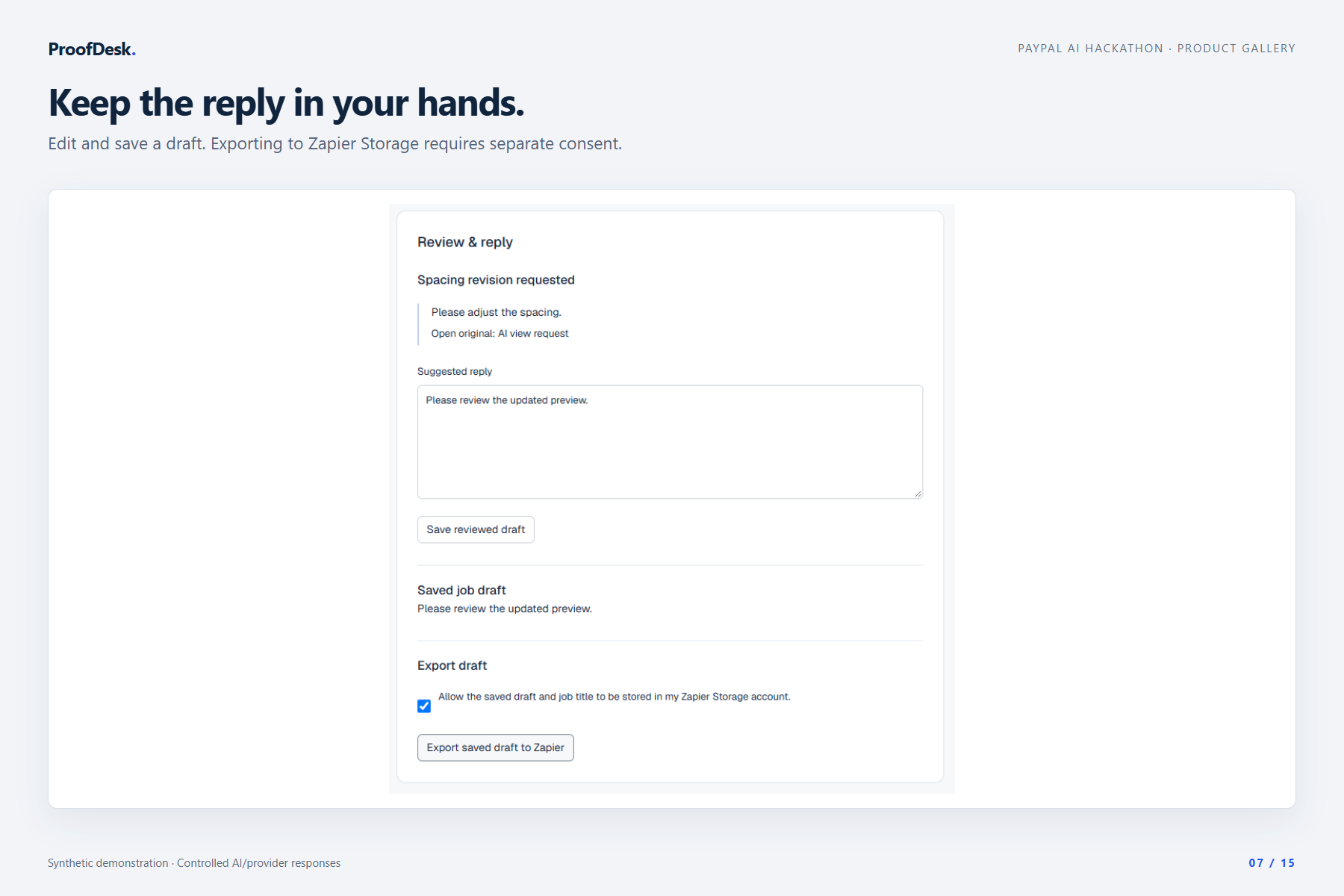
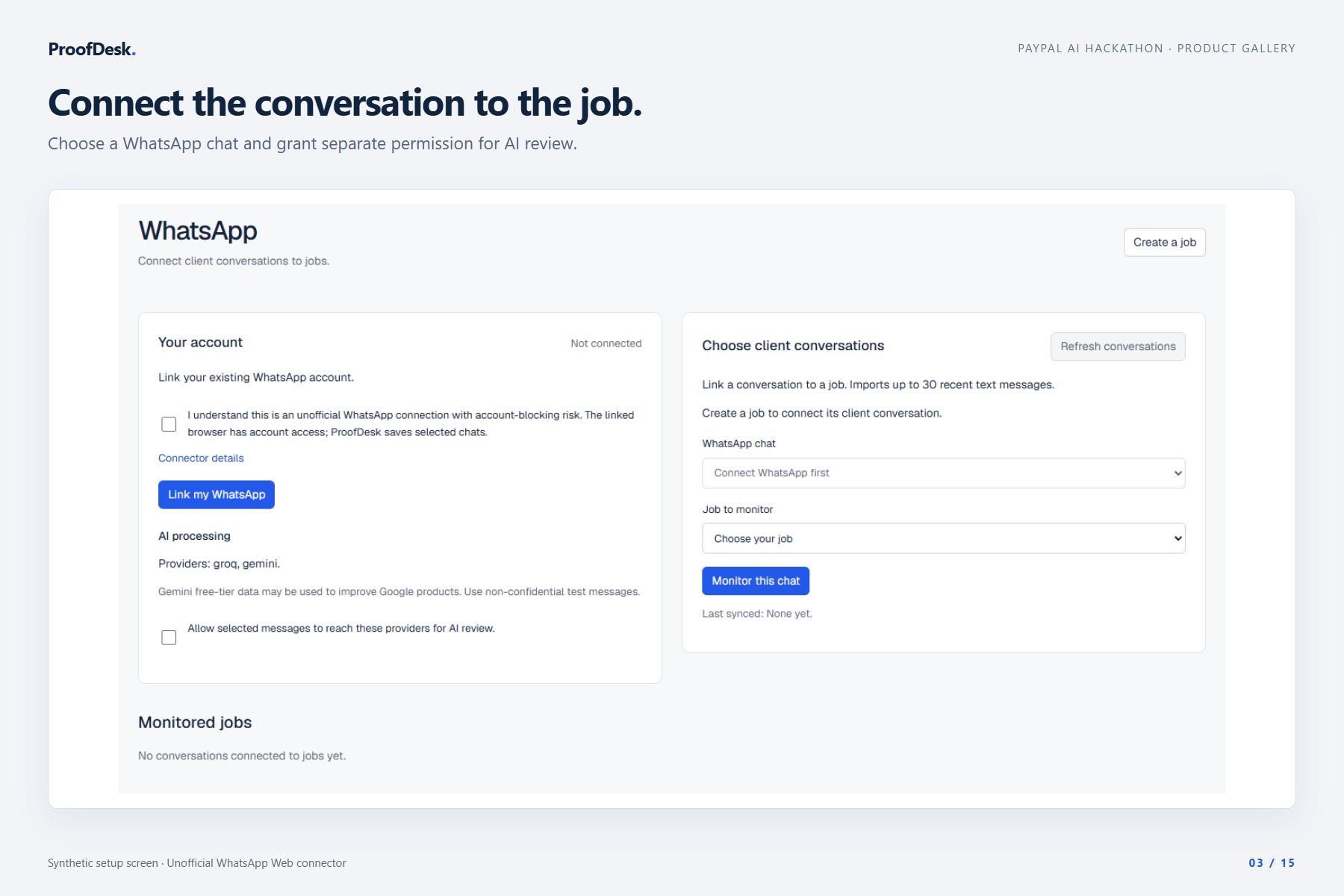
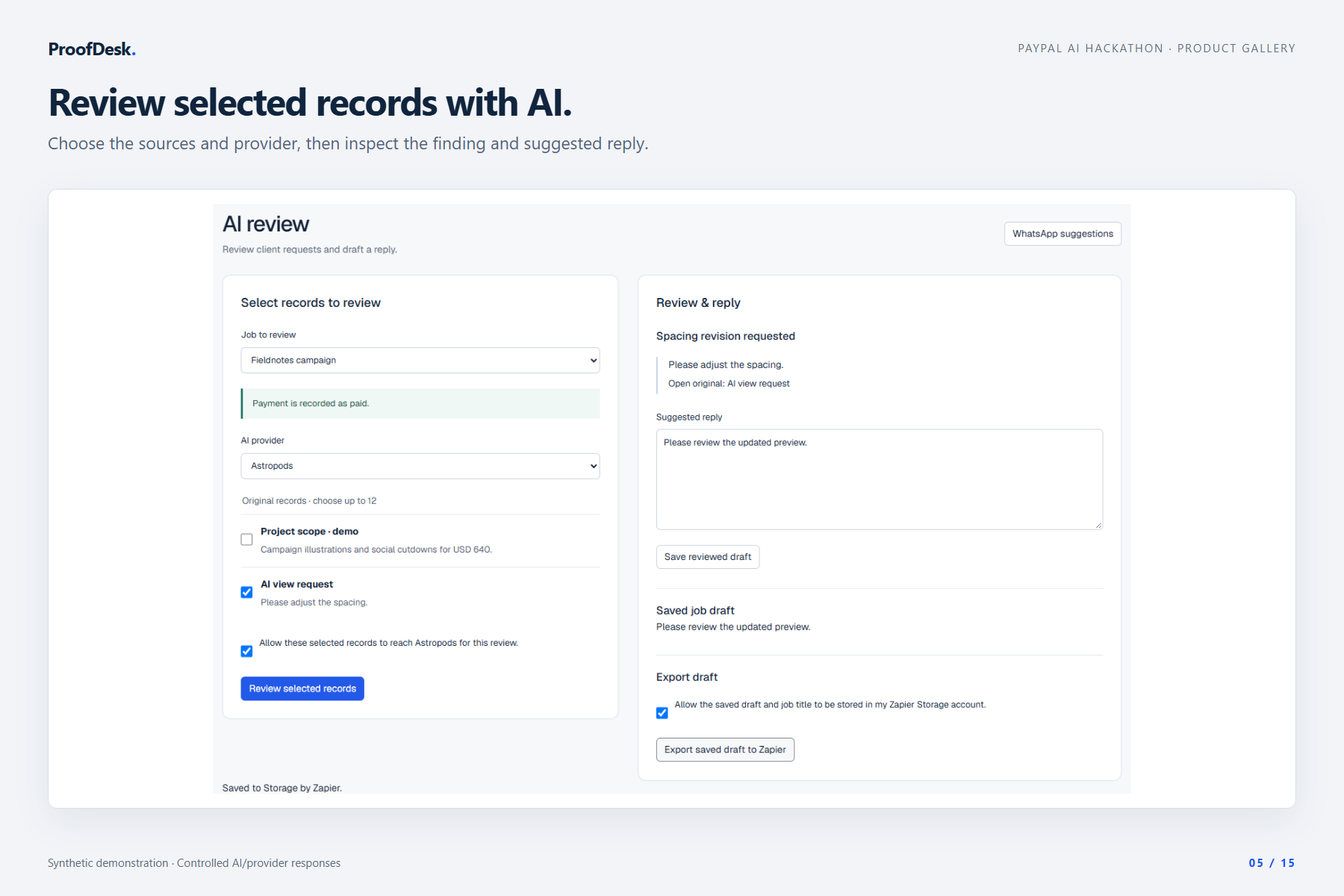
A freelancer can monitor a selected WhatsApp conversation or search, preview, and explicitly import selected incoming Gmail messages. AI identifies requests in the selected text, links its findings to the original records, and prepares an editable reply for human review.
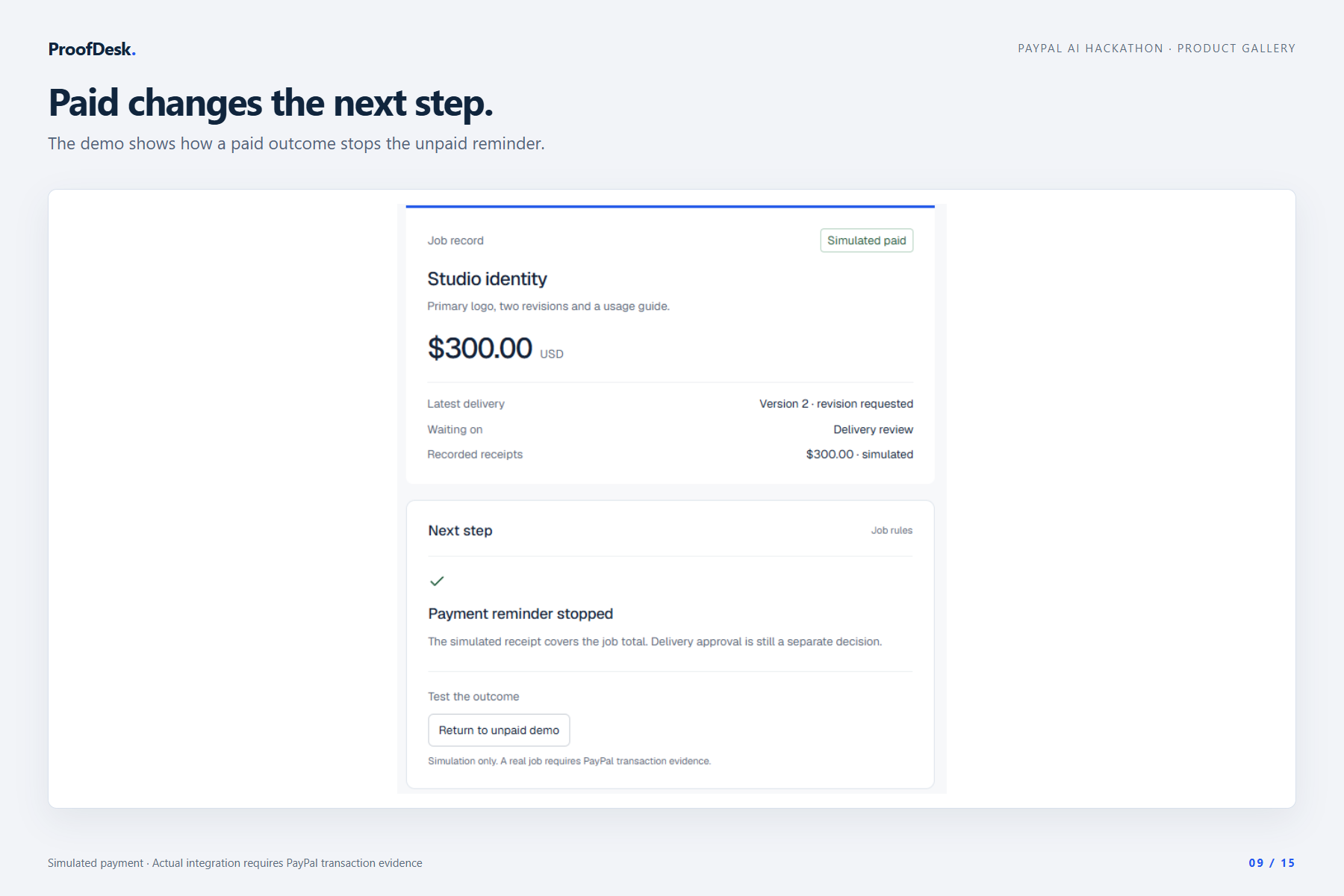
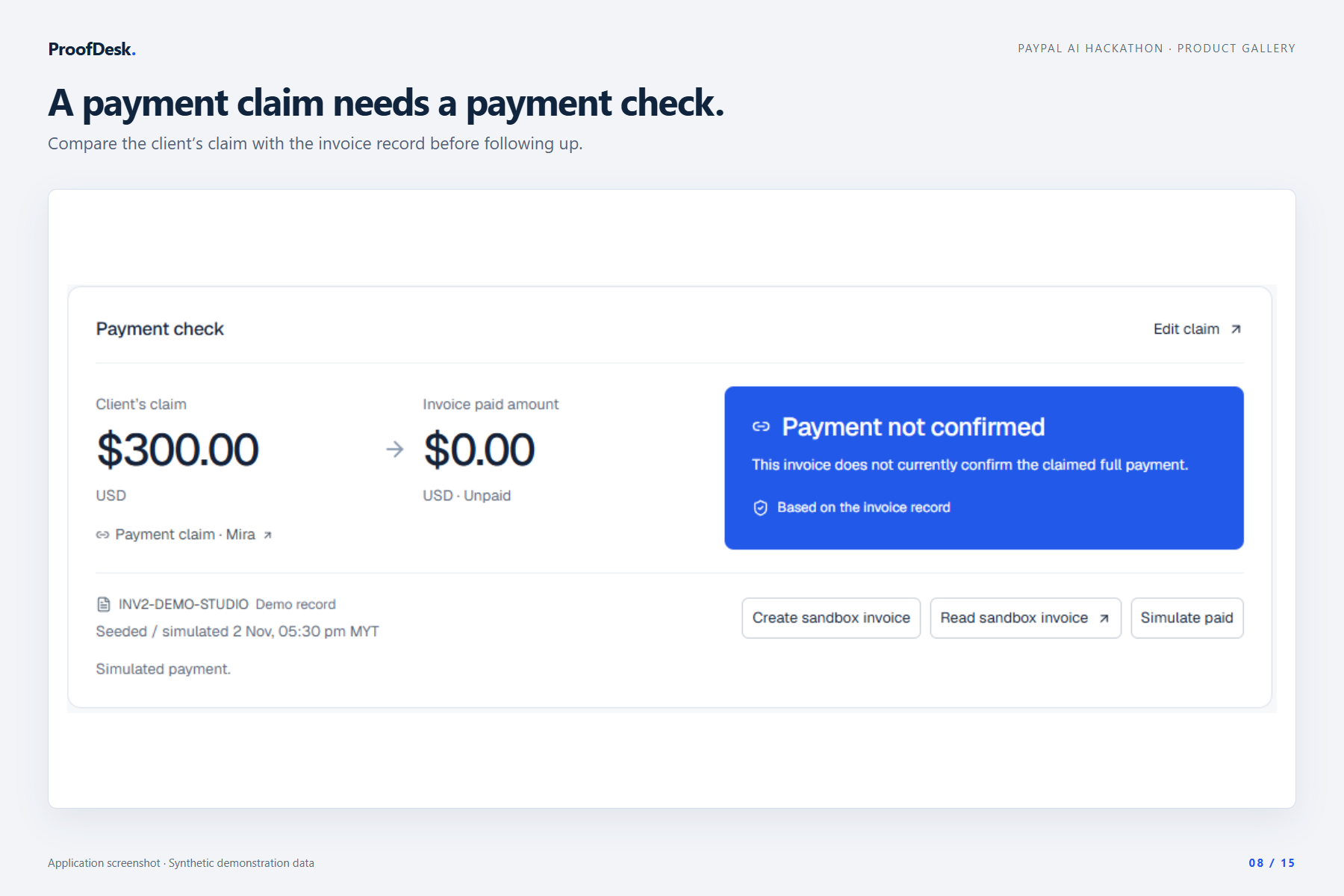
The payment workflow uses PayPal directly. The assigned merchant workspace can create a sandbox invoice, activate its payment link, and refresh its status after buyer checkout. A client's message or payment screenshot cannot mark a job paid: confirmation requires matching transaction evidence from PayPal. Fresh confirmed payment clears unpaid follow-up suggestions.
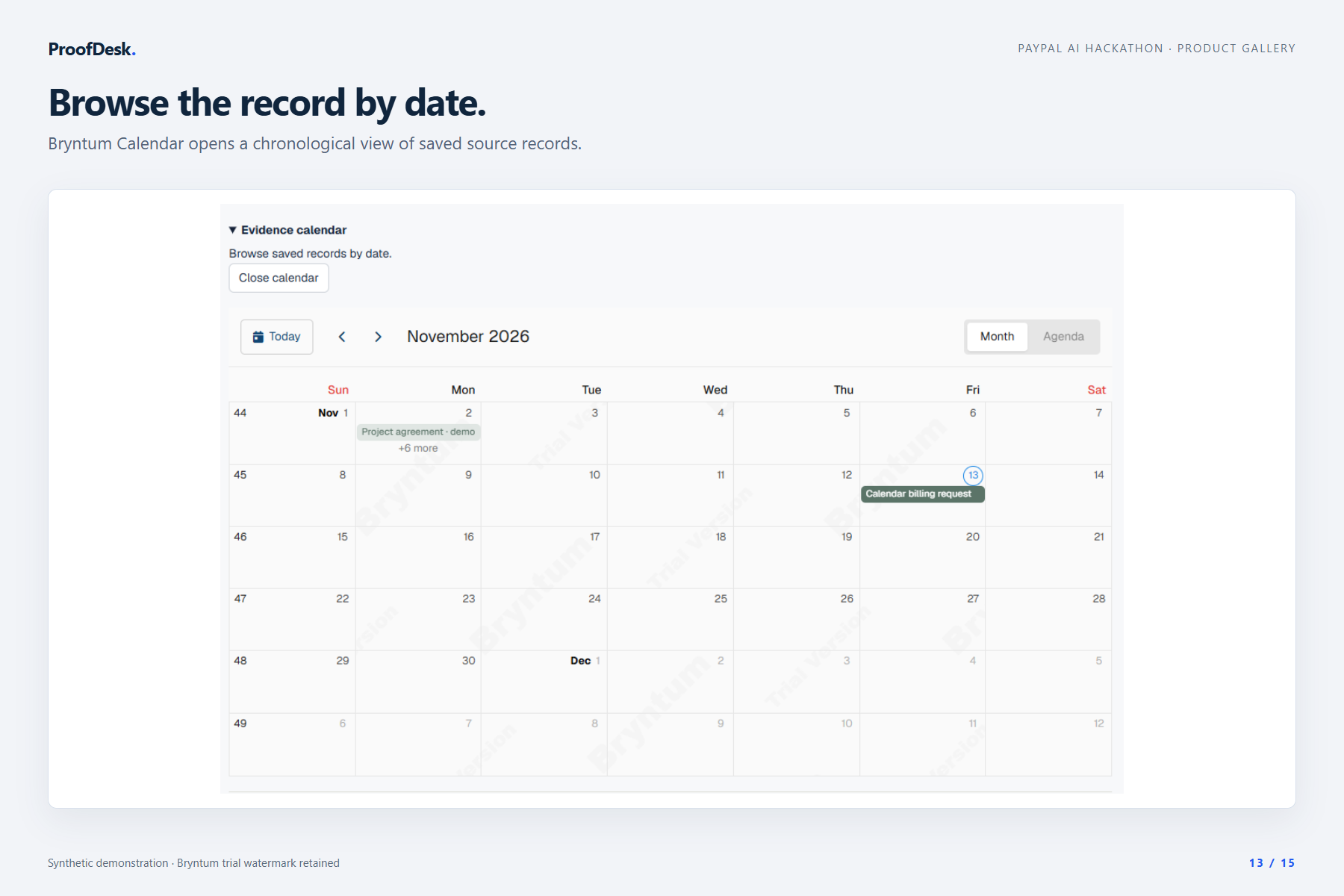
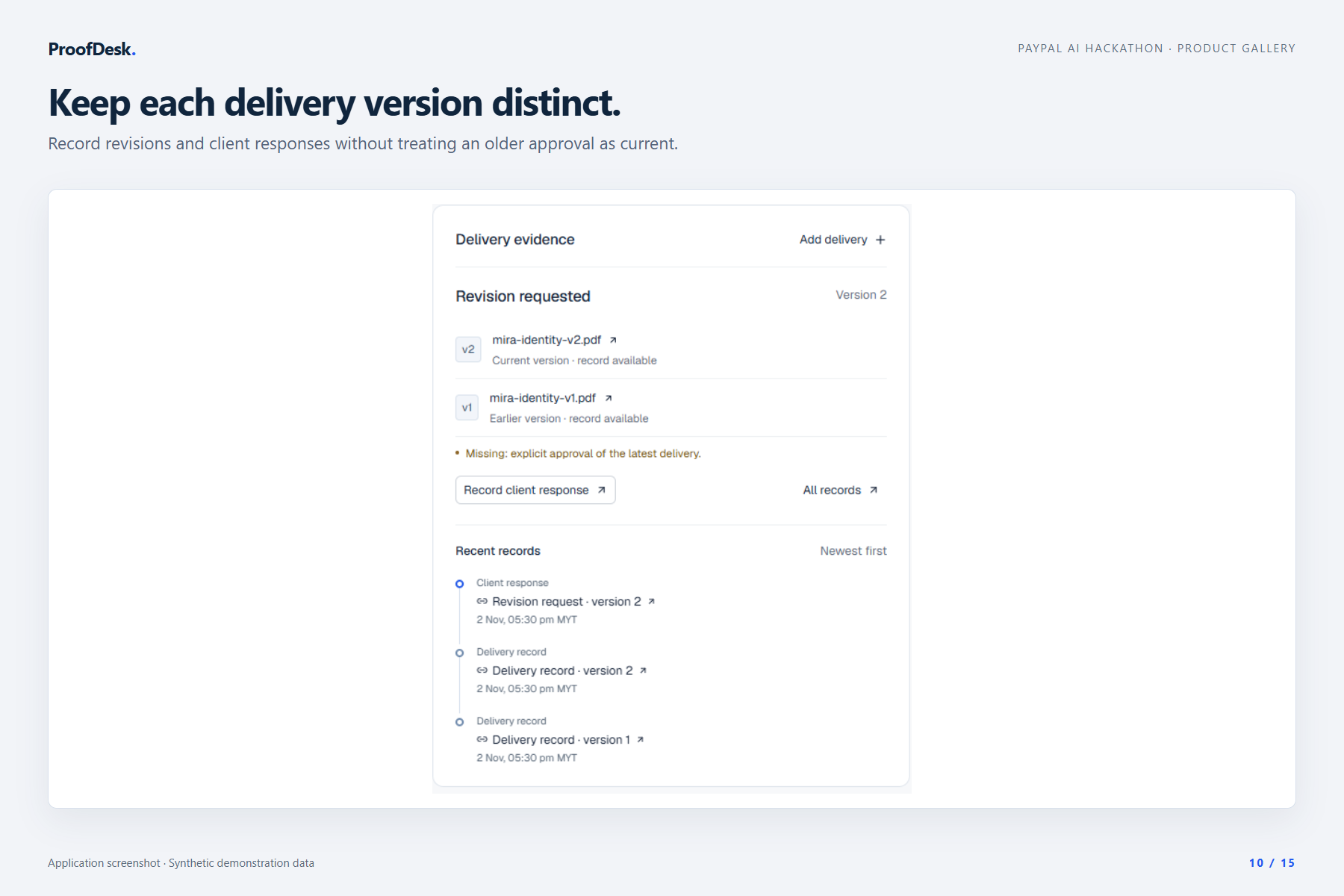
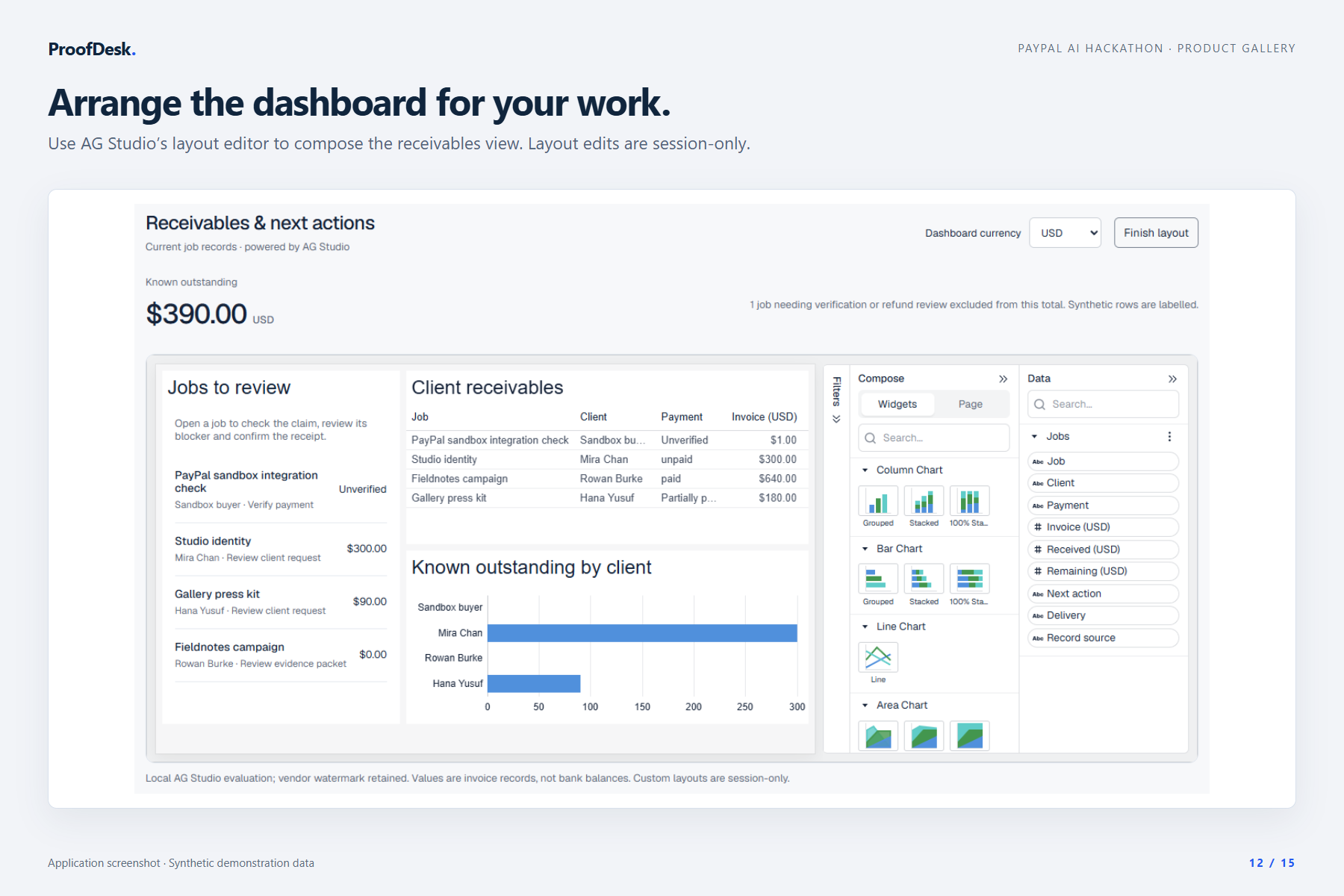
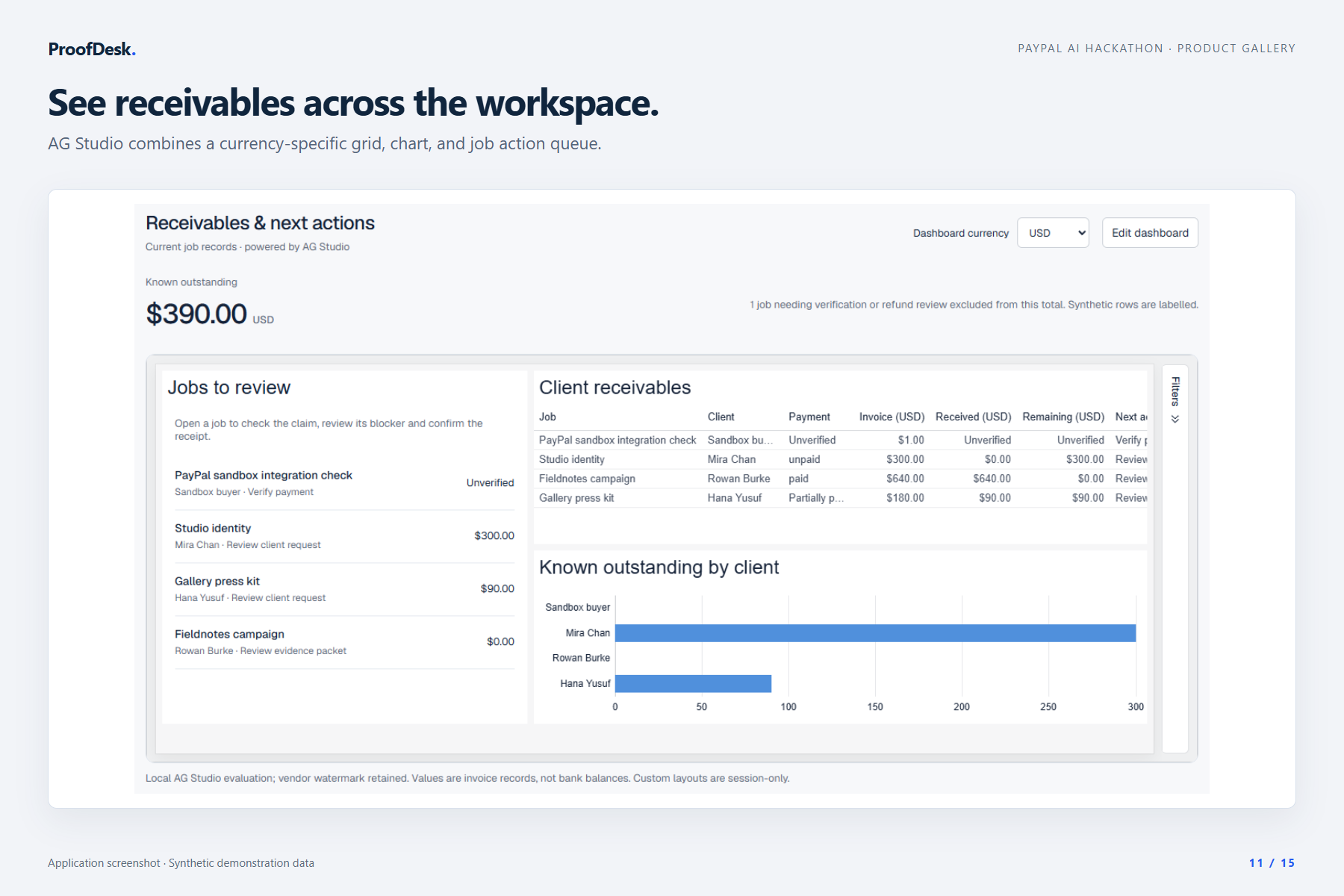
Freelancers can also record delivery versions and client responses, inspect a chronological evidence calendar, and export a JSON evidence packet with references to the underlying records. The receivables dashboard brings jobs into a currency-specific grid, chart, and action queue.
How we built it
We built the interface with React and TypeScript, with a Node.js backend handling authentication, workspace isolation, provider credentials, and PayPal OAuth and Invoicing REST calls. Money calculations use integer minor units.
AI performs source selection and classification. Deterministic checks validate source references and exact excerpts before the application presents the result. Groq and Gemini support configured cloud review, while a private Astropods worker handles explicitly selected review tasks. A separate local development route uses eve and Ollama.
Zapier MCP powers selected Gmail search and import, plus an optional export of a saved draft to Storage by Zapier. Export success requires reading the stored value back and checking it.
AG Studio powers the receivables dashboard. Bryntum Calendar provides the read-only evidence timeline. Optional Elastic search retrieves selected indexed originals, and Channel3 supports explicit materials searches. The application is hosted on Render with persistent storage.
Challenges we ran into
One challenge was separating what a client says from what the application can verify. “I've paid” is useful context, but it is not a payment receipt. We kept conversation analysis separate from PayPal confirmation and made payment observations expire so old information would not appear current.
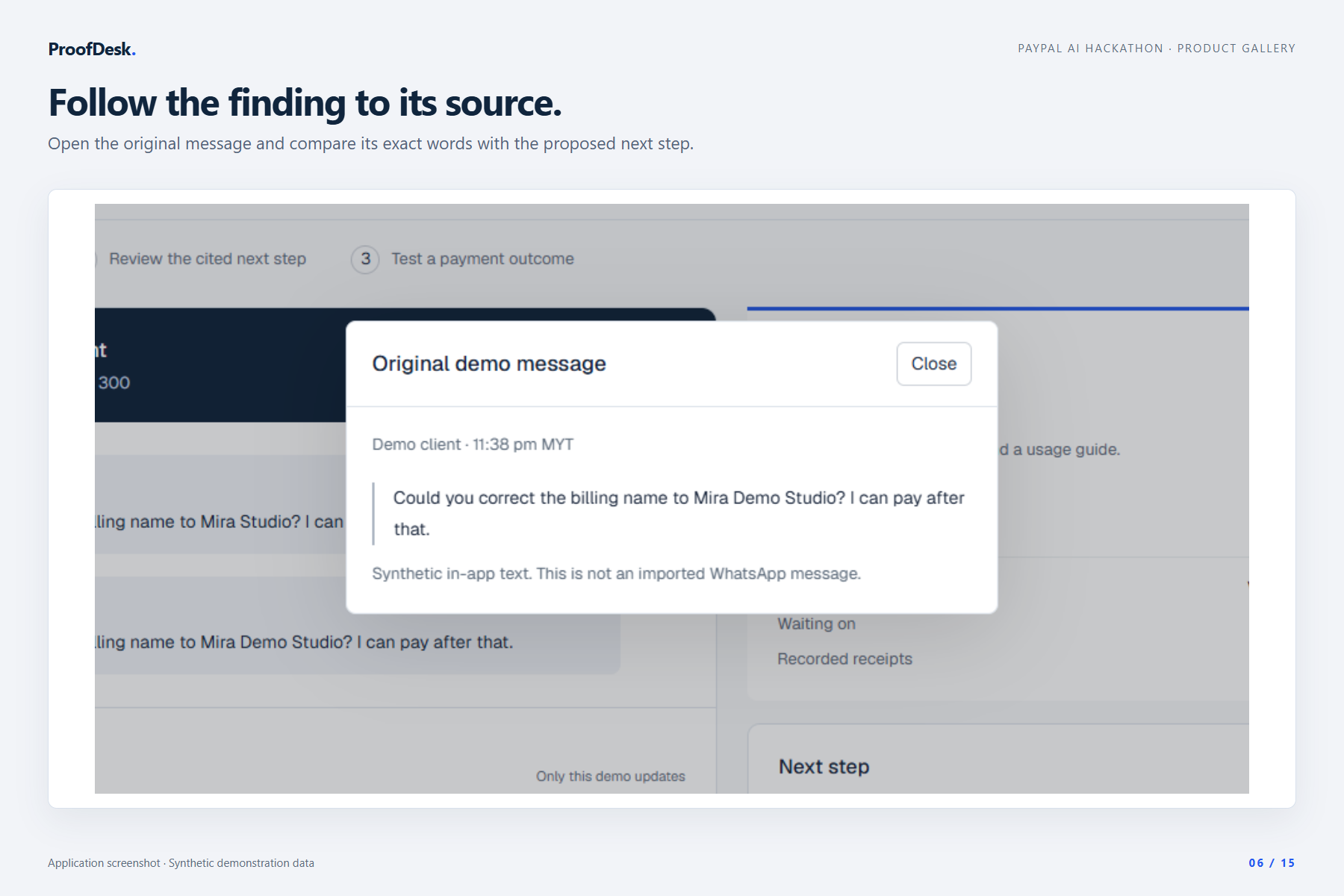
AI output also needed a clear path back to its source. We added exact-excerpt validation, original-record viewers, and separate draft-saving actions. A citation helps someone inspect a finding; it does not guarantee that the interpretation is correct.
Connecting services exposed practical integration problems too. The WhatsApp connector needed a pinned compatibility patch, and Gmail returned recipient data in a different shape from its advisory schema. We added regression coverage for the observed behavior and made failures visible in the interface.
Accomplishments we're proud of
We rehearsed a hosted journey from an incoming WhatsApp message through cited AI review and a saved draft to a completed PayPal sandbox payment. Refreshing the invoice confirmed payment and cleared the unpaid suggestion.
We also exercised the hosted Astropods review and Zapier save/read-back flow. Selected Gmail import and AI review were confirmed in the cloud workspace. Automated API and browser checks cover access boundaries, payment states, source references, and key user flows.
What we learned
The right next step depends on both the conversation and the payment state. Better suggestions require careful handling of context, freshness, and uncertainty.
We also learned that consent works best at the point of action: choosing a conversation, importing an email, allowing model review, or exporting a draft are distinct decisions.
What's next
We want to validate ProofDesk with freelancers, improve onboarding, and strengthen retention and operational controls. We would also explore an official WhatsApp Business integration and PayPal webhook updates.
The current project is a single-merchant sandbox prototype. It does not automatically send messages, submit disputes, or guarantee payment recovery.
Built With
- ag-studio
- astropods
- bryntum-calendar
- channel3
- elasticsearch
- eve
- gmail
- google-gemini
- groq
- model-context-protocol
- node.js
- ollama
- paypal
- playwright
- react
- render
- typescript
- vite
- whatsapp-web.js
- zapier
