-
-
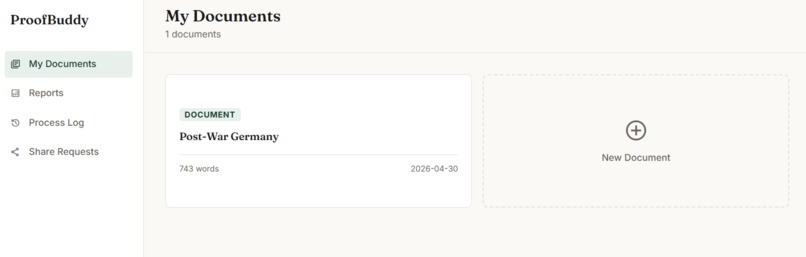
Student Interface
-
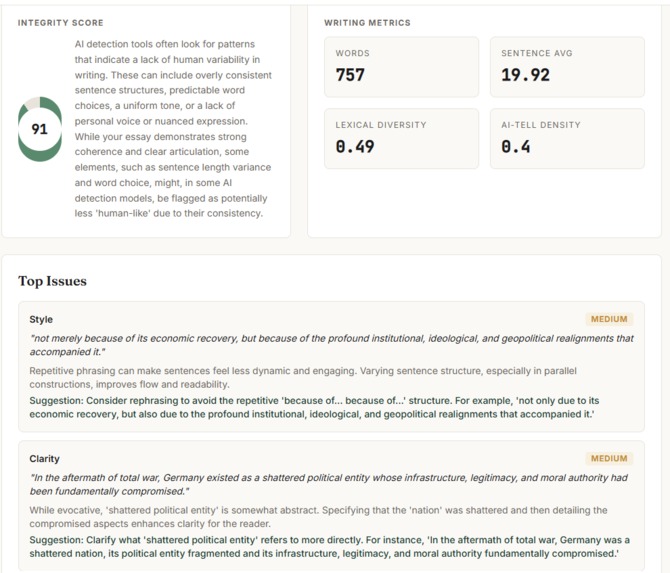
Integrity Report
-

Text Editor
-

Landing Page


Inspiration
AI writing tools are becoming normal in education, but most AI detection tools are unreliable, stressful, and often framed like accusation engines. We wanted to build something more fair: a tool that helps educators understand writing patterns, citation quality, prompt alignment, and student process without pretending it can “prove” AI use.
ProofBuddy was inspired by the idea that academic integrity conversations should be based on context, transparency, and evidence — not fear.
What it does
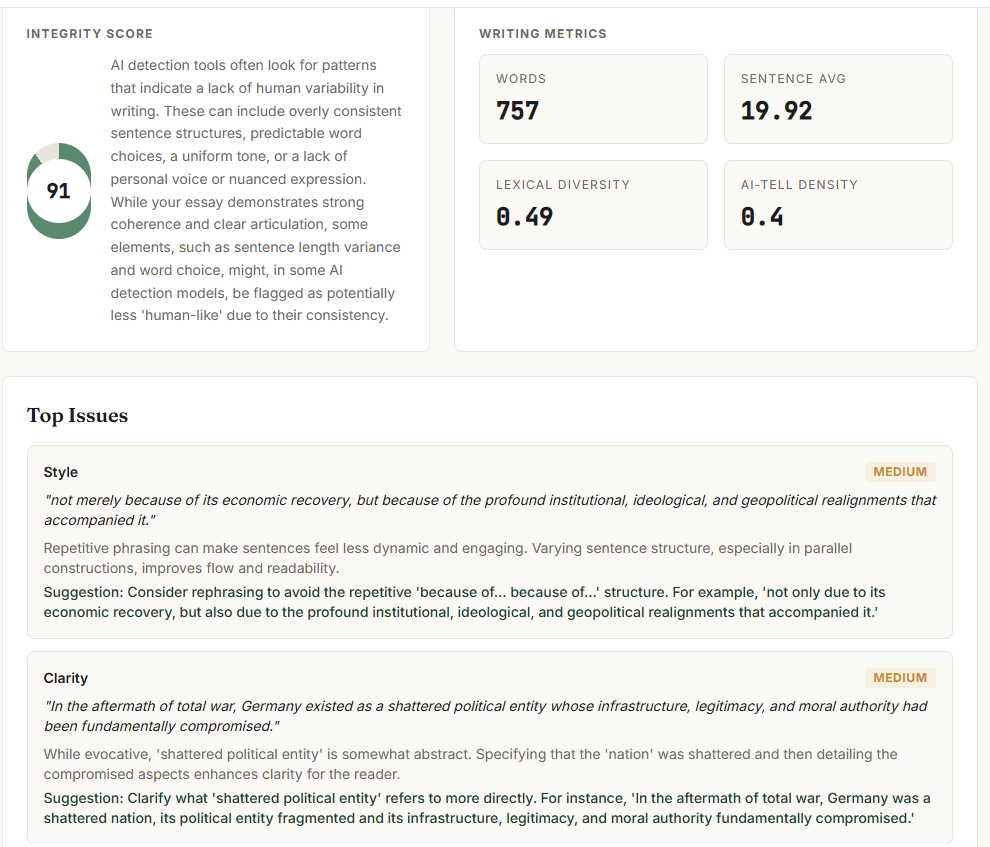
ProofBuddy helps educators review student writing in the AI era. An educator can enter an assignment prompt, student submission, rubric, AI policy, and optional previous writing sample. ProofBuddy then generates a review report that highlights:
Writing consistency and style shifts Prompt and rubric alignment Citation and source signals Possible AI-assistance indicators Alternative explanations Fair follow-up questions Recommended next steps
The key difference is that ProofBuddy does not accuse students. It surfaces discussion signals and helps educators ask better questions before making any judgment.
How we built it
We built ProofBuddy as a full-stack web app using React, Vite, Tailwind CSS, and React Router for the frontend. The backend uses Node.js, Express, and TypeScript. We integrated the Gemini API to generate cautious, structured educator review reports, and used Supabase as the data/auth infrastructure layer.
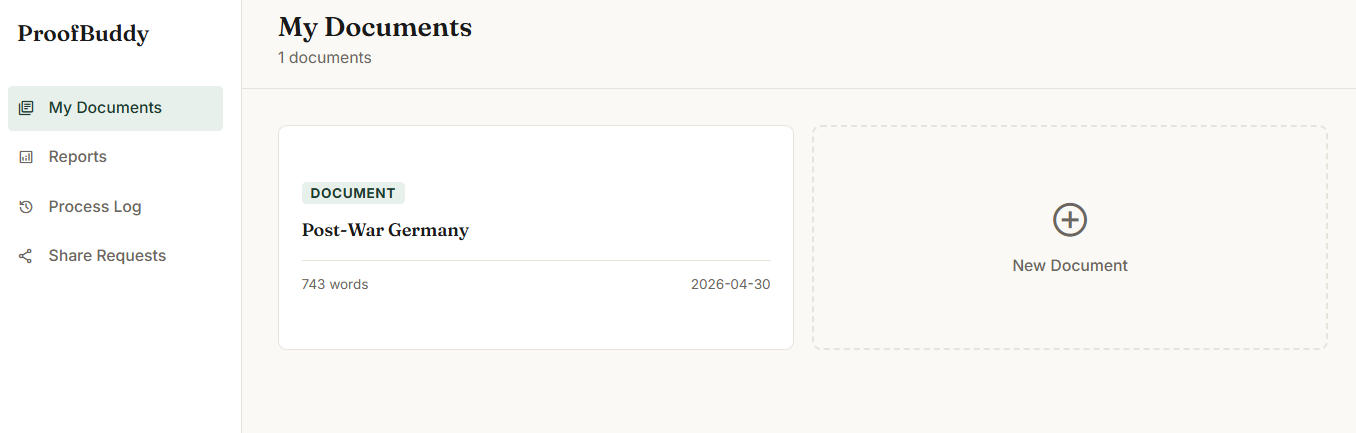
The UI includes separate educator and student flows, including an educator dashboard, submission intake page, review report, process-log request modal, student writing editor mockup, document library, and writing process replay screens.
Challenges we ran into
One major challenge was balancing usefulness with fairness. We did not want ProofBuddy to behave like a traditional AI detector or grammar checker that gives a suspicious percentage or a final verdict. We had to design the system language carefully so reports stay cautious, educational, and discussion-based.
We also ran into technical challenges with model availability, API configuration, local environment variables, routing, and merging UI work across different branches. Syncing between various versions of ProofBuddy Another challenge was turning static UI screens into a connected product flow within a short hackathon timeline.
Accomplishments that we're proud of
We are proud that ProofBuddy has a clear ethical stance: it supports academic integrity without creating an accusation machine. The generated reports include alternative explanations and follow-up questions, which makes the tool feel more responsible and educator-friendly.
We are also proud of the polished multi-page interface, the educator review workflow, the AI-powered report generation, and the process-log concept that gives students a way to show how their work developed over time.
What we learned
We learned that building AI tools for education requires more than just model integration. The wording, framing, and user experience matter just as much as the technical output. We also learned how important it is to design for uncertainty, especially when dealing with high-stakes academic decisions. The Gemini integration and free tier limitations were a regular display of such.
On the technical side, we learned more about connecting a React frontend to a TypeScript Express backend, managing API keys and environment variables, working with Gemini, and structuring a full-stack app under hackathon time pressure.
What's next for ProofBuddy
Next, we want to make the writing process log fully functional so students can voluntarily share draft history, revision patterns, and source usage with educators. We also want to improve citation verification, add more transparent writing metrics, support LMS integrations, and create separate student/educator authentication flows.
Further on, ProofBuddy could become a fairness-first academic integrity platform that helps schools adapt to AI writing tools without relying on unreliable accusation-based detection.
Built With
- axios
- express.js
- git
- github
- google-gemini-api
- javascript
- jsx
- node.js
- npm
- react
- react-router
- supabase
- tailwind-css
- typescript
- vite


Log in or sign up for Devpost to join the conversation.