-
-
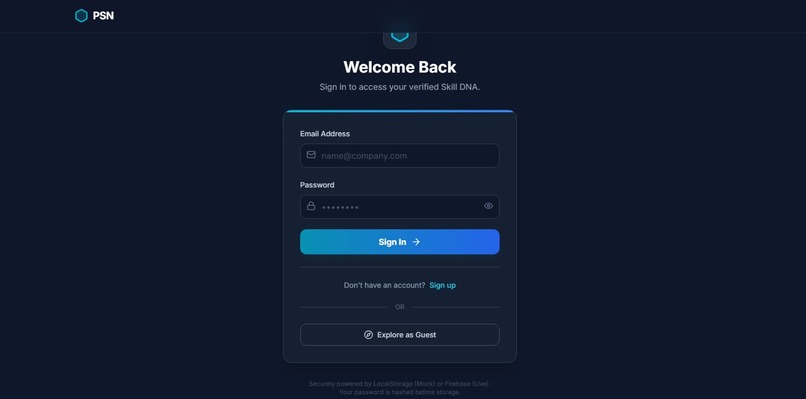
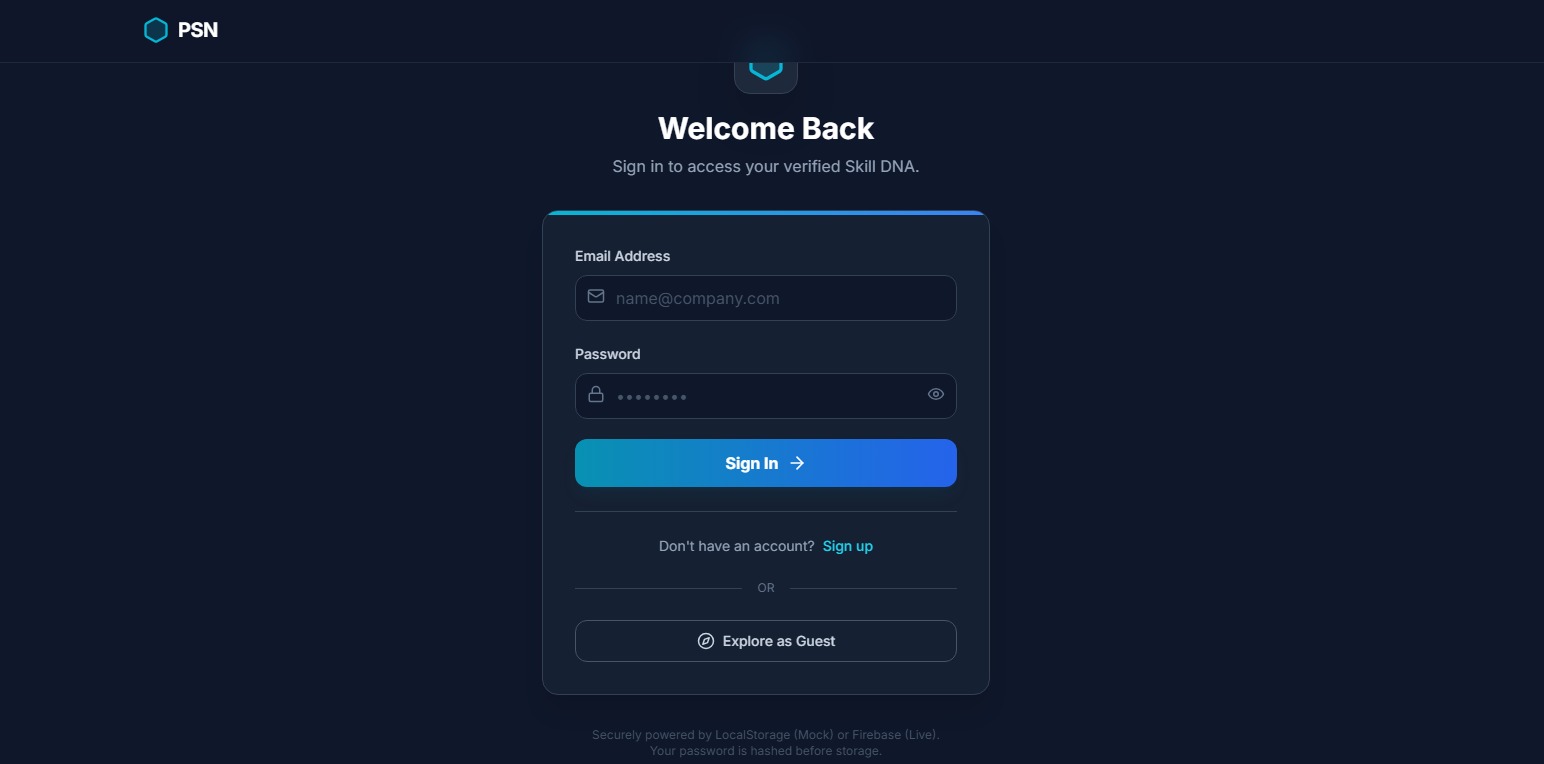
Main Login page integrated with firebase as a database
-
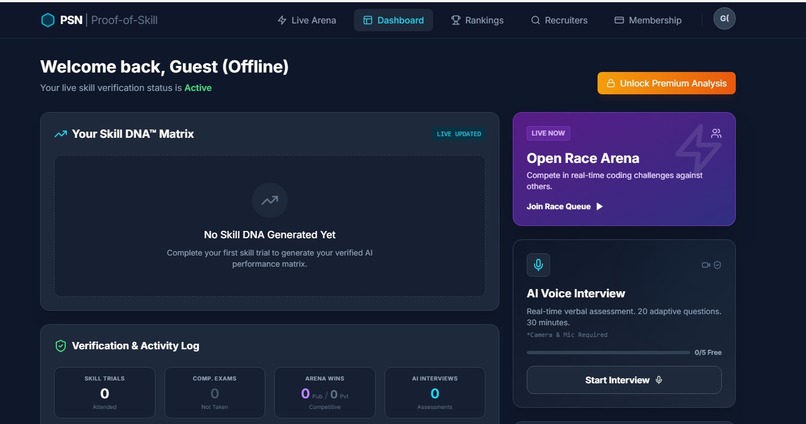
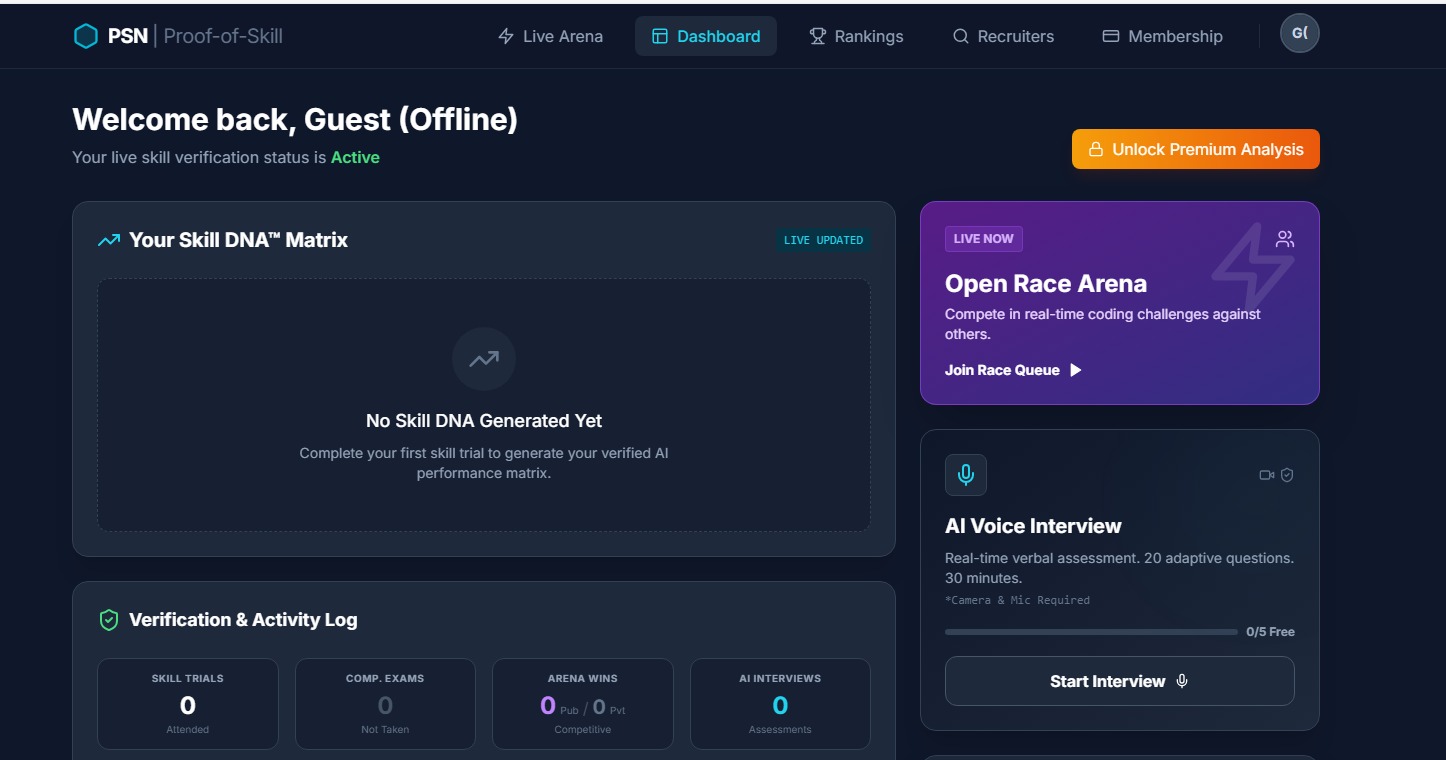
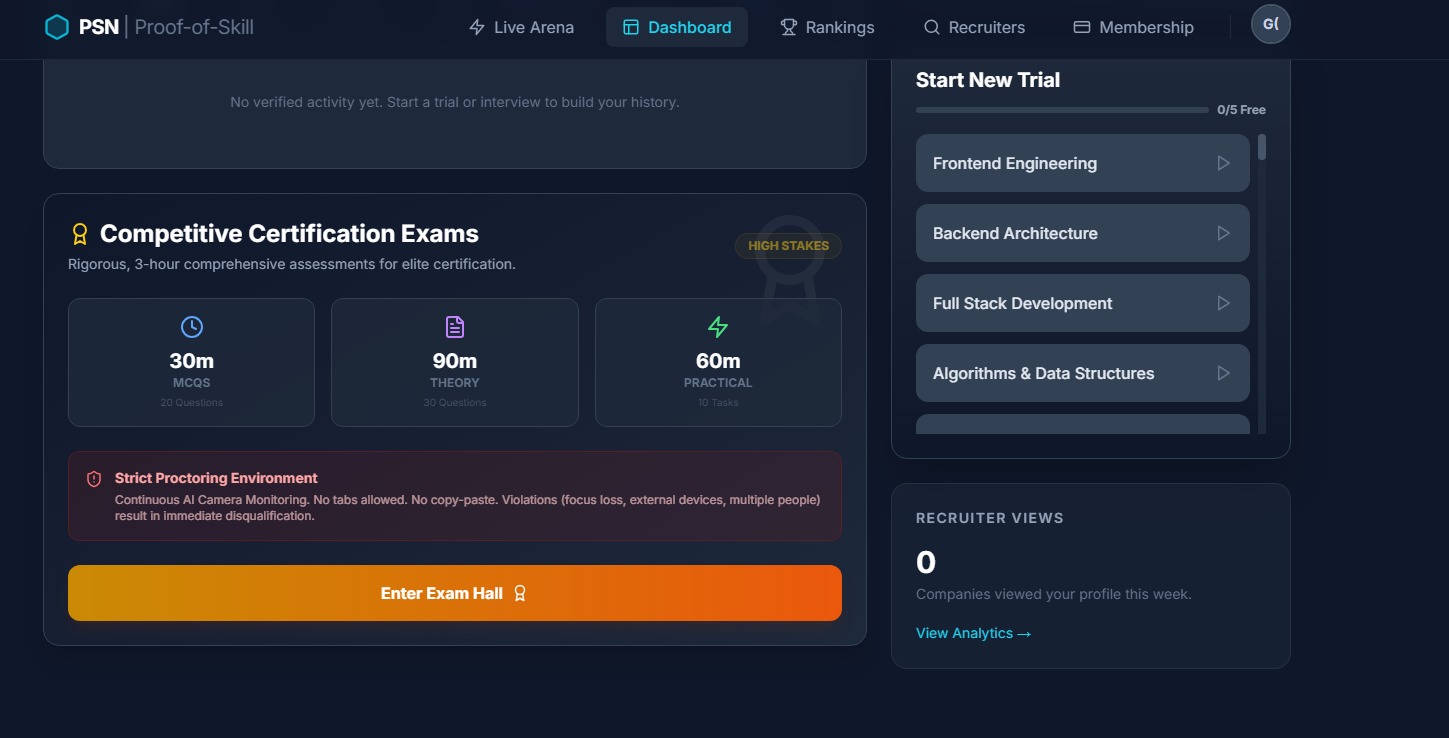
Main Dashboard
-
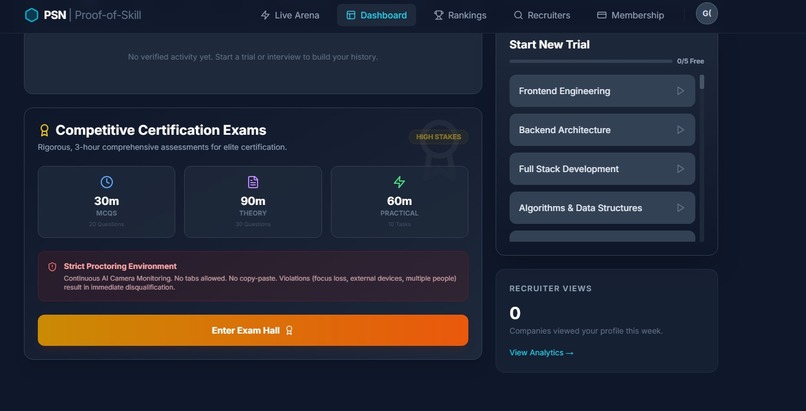
Competitive exam section
-
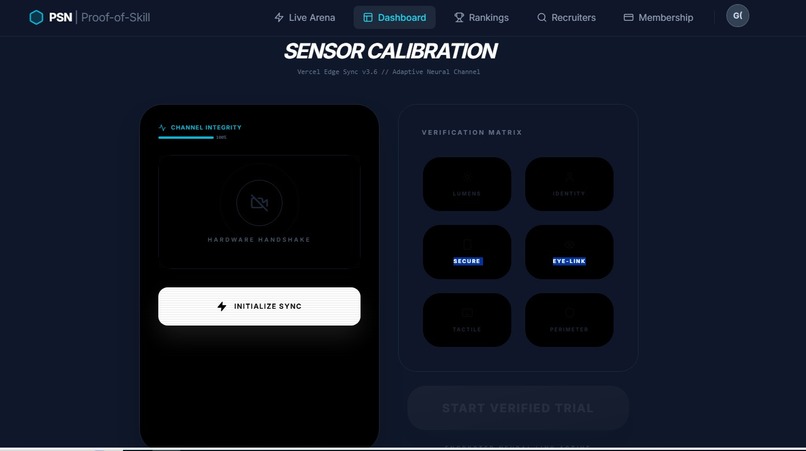
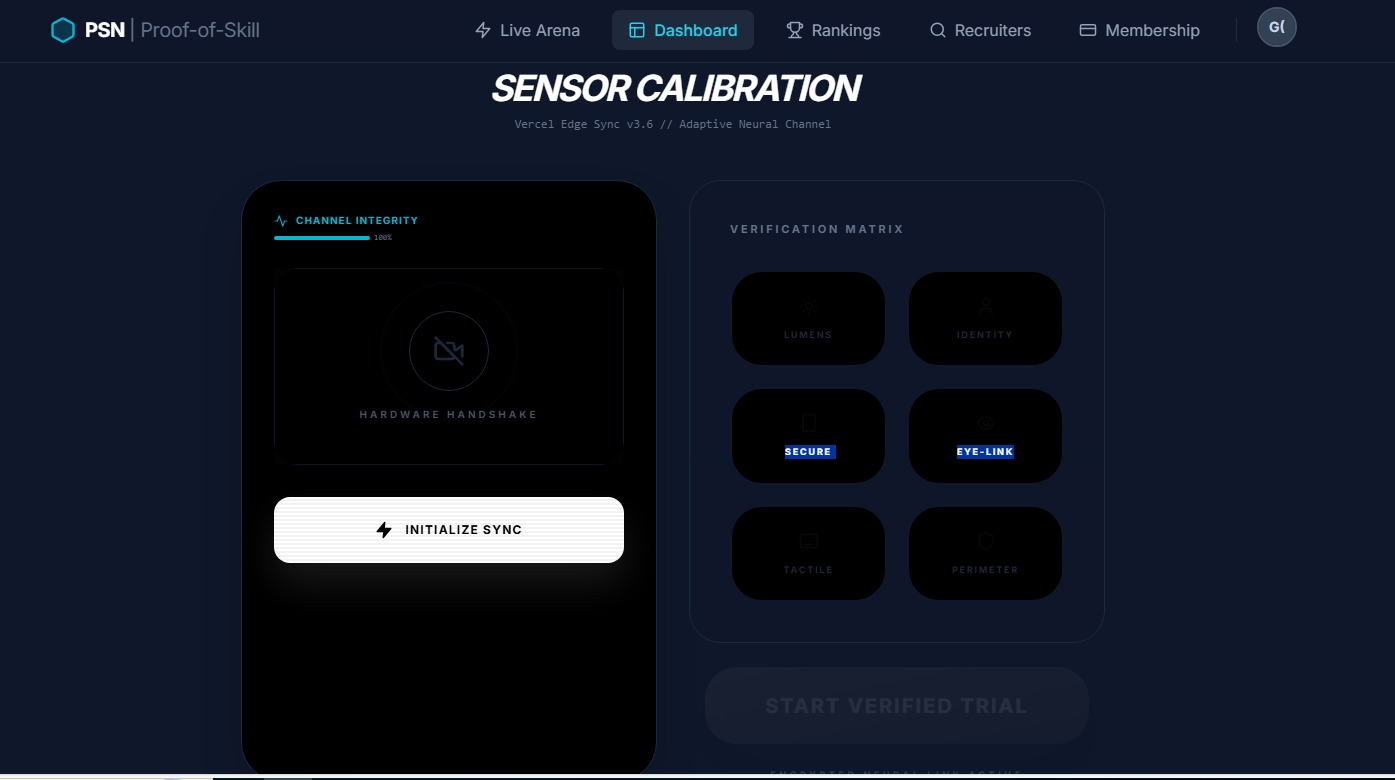
Proctor Sensors
-
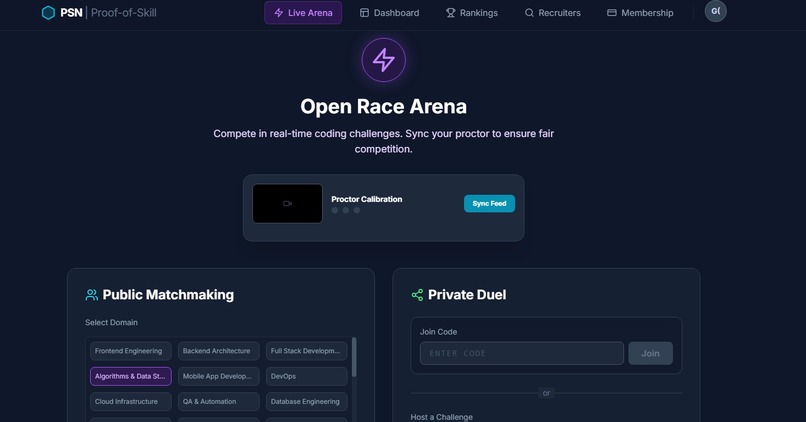
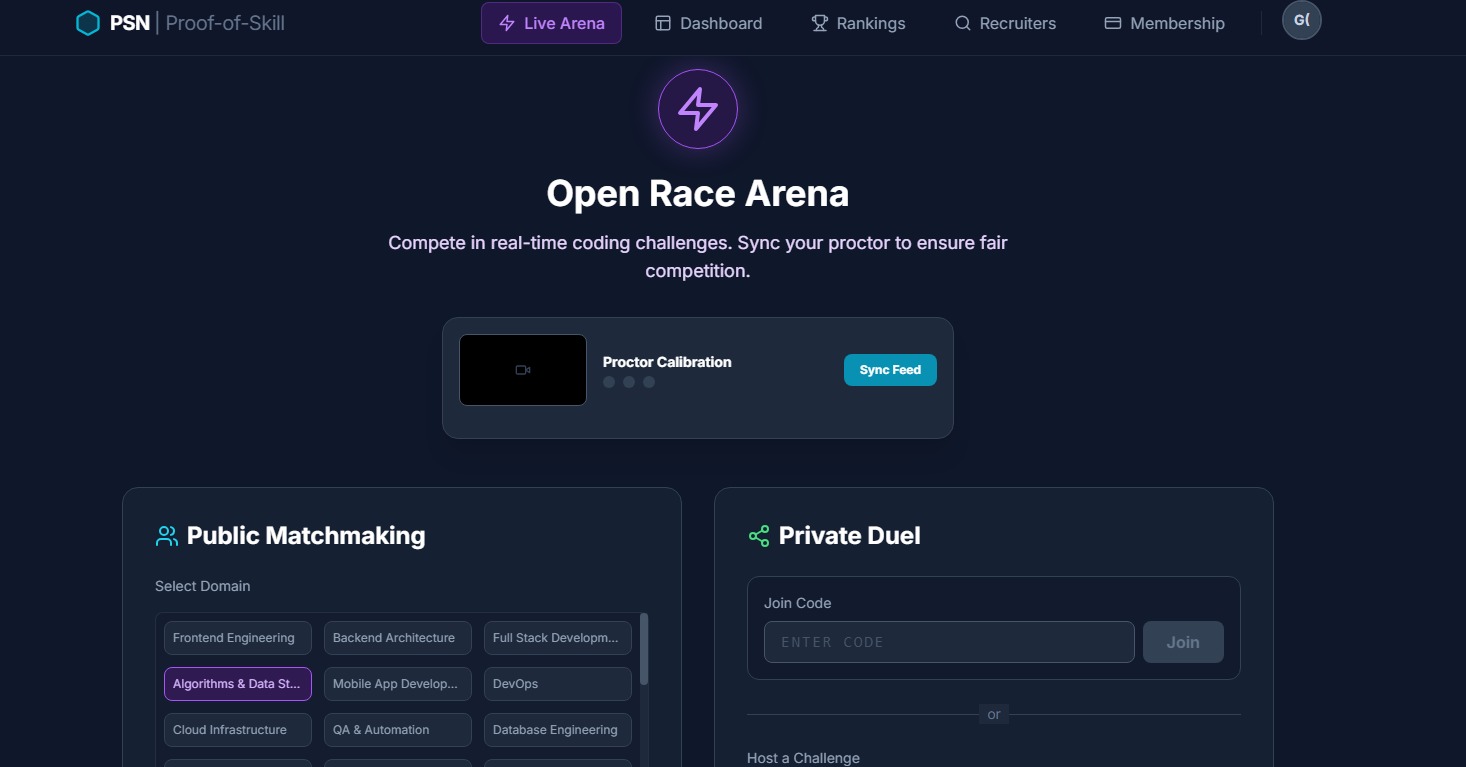
Live Arena with global joining support with a backend
-
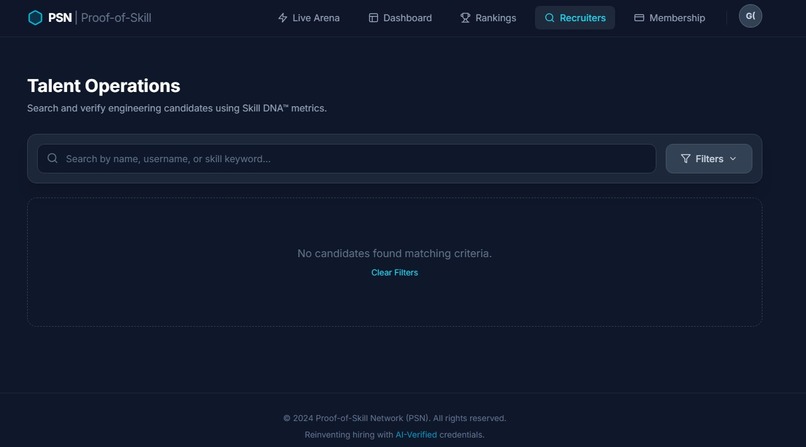
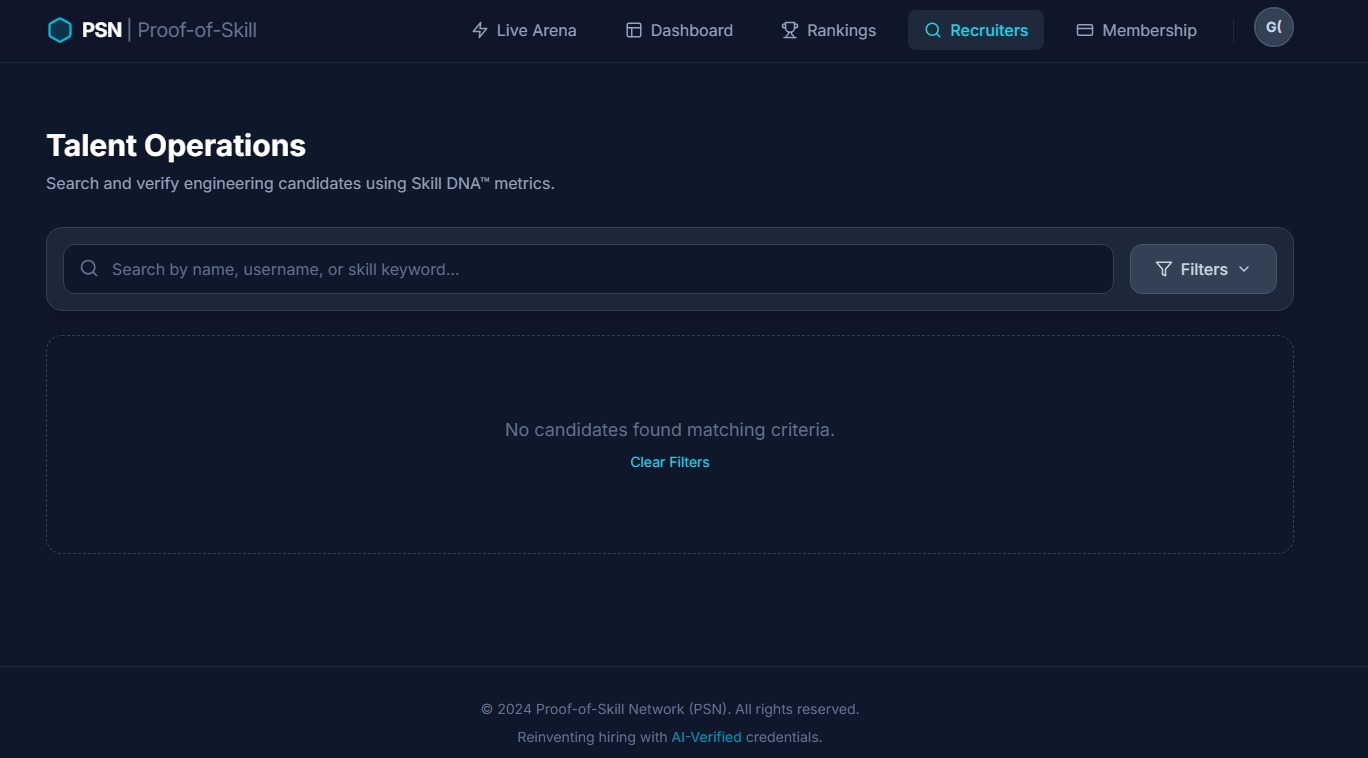
Search recruiters section
Inspiration
The idea for Proof of Skill Network (PSN) was born from a simple frustration: traditional resumes and online profiles do not truly prove skill. Platforms like LinkedIn rely heavily on self-reported experience, endorsements, and certifications — but they rarely validate real ability under pressure. I asked myself: What if skills could be verified in real-time using AI? What if resumes were replaced with proof? This led to the concept of an AI-powered robotics simulation platform where candidates demonstrate ability through live trials, monitored interviews, and anti-cheat systems.
What I Built
PSN is a software-based robotics simulation system that verifies user skills through: 🎙️ AI Voice Interviews (questions spoken, not shown) ⏱️ Timed responses 📷 Camera monitoring 🔍 Background and lighting checks 🚫 Tab-switch & paste detection 🎯 Competitive scoring system 🏟️ Live Arena for real-time skill battles Instead of trusting claims, PSN measures performance. Mathematically, performance scoring follows a weighted model: Where: Accuracy = Correct technical responses TimeEfficiency = Speed under constraints IntegrityScore = Anti-cheat compliance This ensures fairness and real skill validation.
How I Built It
The project was built using: Frontend deployed on Vercel Backend APIs handling interview logic and scoring AI voice systems for spoken questions Browser event detection for anti-cheat enforcement Real-time state management for live evaluation The system acts like a robotic software agent — observing, evaluating, and scoring user behavior dynamically. No physical robots were required. The robotics element is simulated through intelligent system monitoring and automated decision-making.
What I Learned
Through building PSN, I learned: How distributed systems handle real-time event detection How to balance user experience with strict security How AI can simulate robotic supervision through software The importance of system architecture and event-based design Deployment strategies using modern cloud infrastructure I also learned that building something ambitious requires strong problem-solving under constraints.
Challenges Faced
Anti-Cheat Implementation Preventing tab-switching, paste actions, and unfair behavior without breaking user experience was difficult. Voice-Only Interview Logic Designing an interview where questions are not displayed required careful UX thinking. Infrastructure Constraints I was unable to use paid services or add billing details for cloud providers, so I had to optimize within free-tier limits. Scalability Planning Designing the system in a way that it could later scale to thousands of concurrent users.
Future Vision
PSN could evolve into: A decentralized skill-verification network A hiring trust protocol A LinkedIn alternative based on proof, not claims A standardized global AI-based certification layer If funded, the project could integrate blockchain verification, expand into enterprise hiring, and build a full AI robotics evaluation engine.
Final Thought
Proof of Skill is not just an app. It is a shift from “Tell us what you can do” to “Show us what you can do.”
Built With
- ai
- authentication
- cloud
- css
- express.js
- firebase
- framer
- gemini
- geminiapi
- hosting
- javascript
- motion
- next.js
- node.js
- python
- react.js
- recharts
- stripe
- studio
- tailwind
- typescript
- vercel


Log in or sign up for Devpost to join the conversation.