-
-
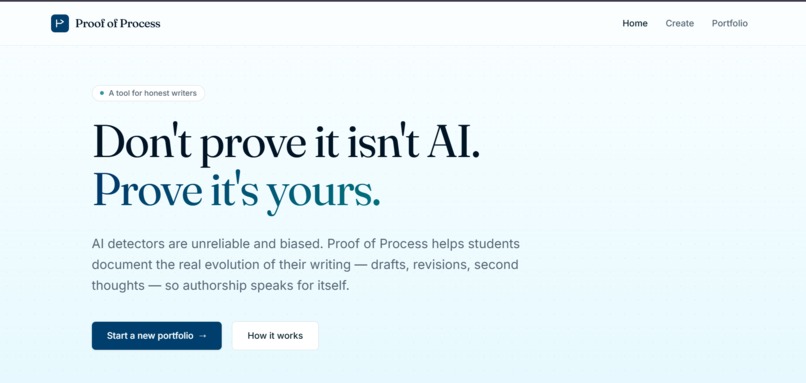
Landing page
-
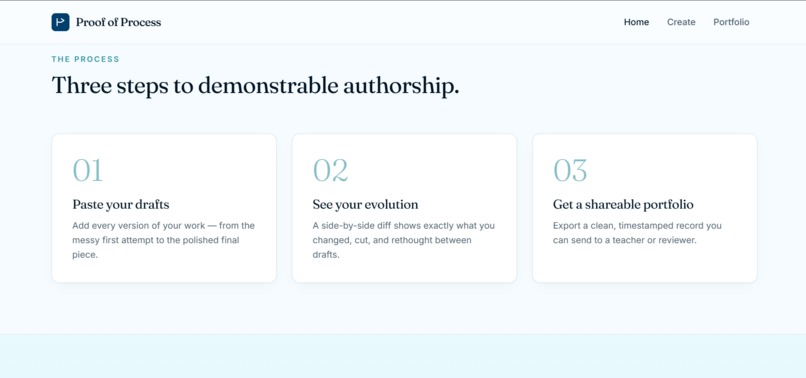
Instructions
-
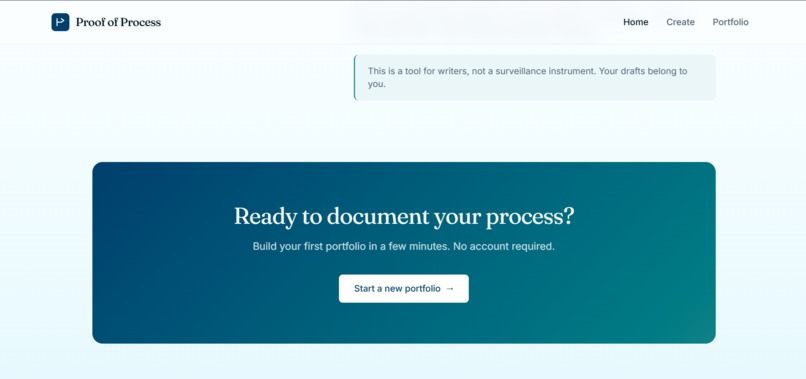
Start documenting
-
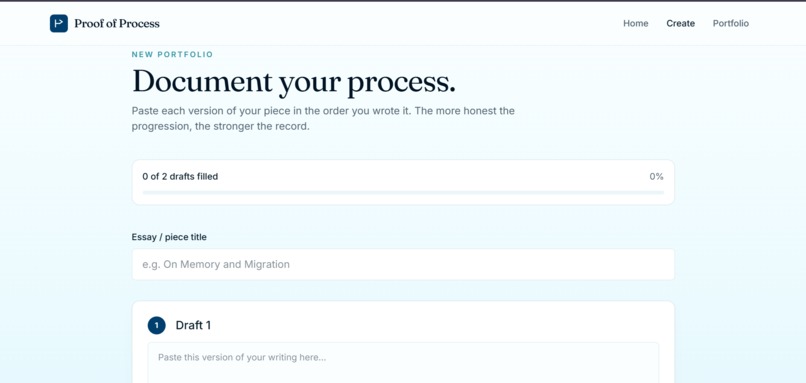
Beginning the process
-
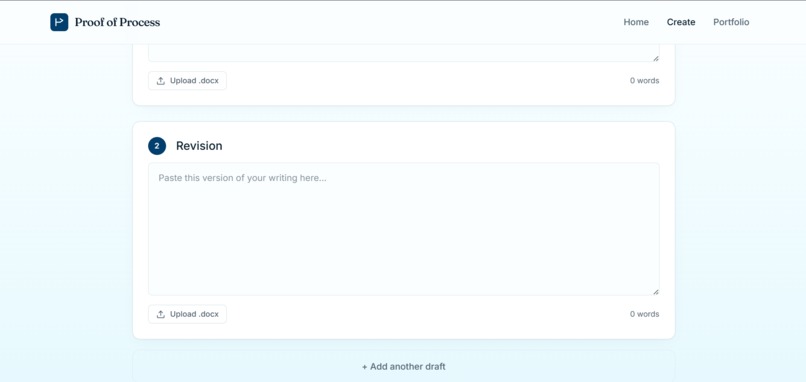
Adding drafts
-
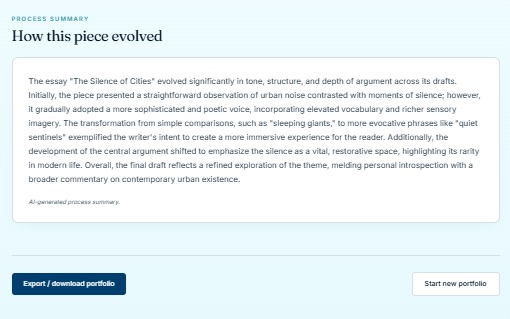
Process summary
-
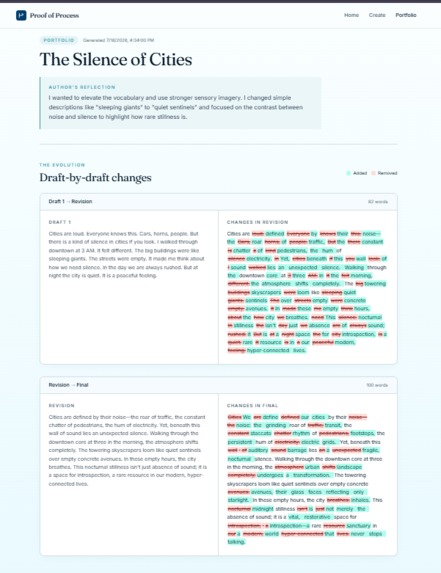
Results
-
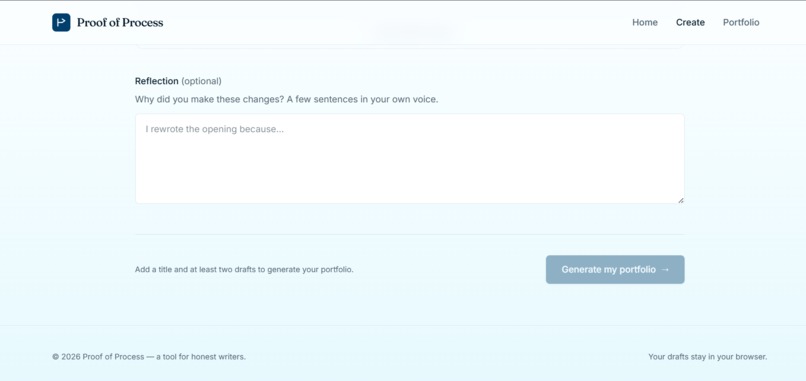
Generating portfolio
Proof of Process
Inspiration
The idea came from a very specific, well-documented problem: AI writing detectors used in schools are unreliable and biased. A 2023 Stanford study found that GPT detectors correctly identified essays written by native English speakers almost every time, but flagged more than half of essays written by non-native English speakers as AI generated. Real cases have followed the same pattern. One professor's use of Turnitin's AI detector flagged over 90 percent of a student's paper as AI written, and the student had to sit through a meeting defending work they actually wrote themselves.
That struck me as a real, present-day crisis for students, not some distant scenario. It's happening in classrooms today, and it's punishing the wrong people, often the students with the least power to push back. I wanted to use AI not to police students but to protect them, flipping the problem on its head: instead of trying to prove a student's writing is not AI generated, why not give students an easy way to show that it is genuinely theirs.
What it does
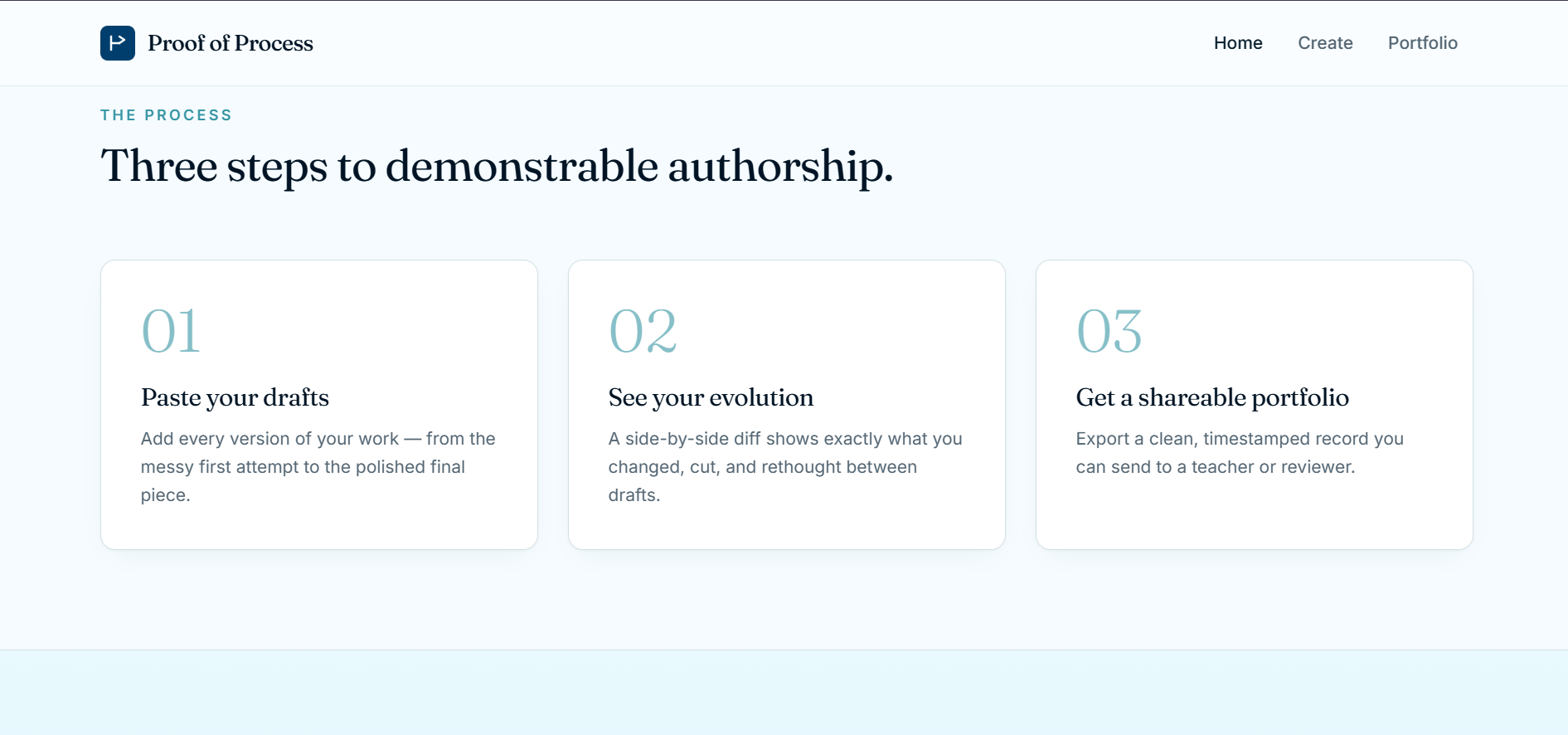
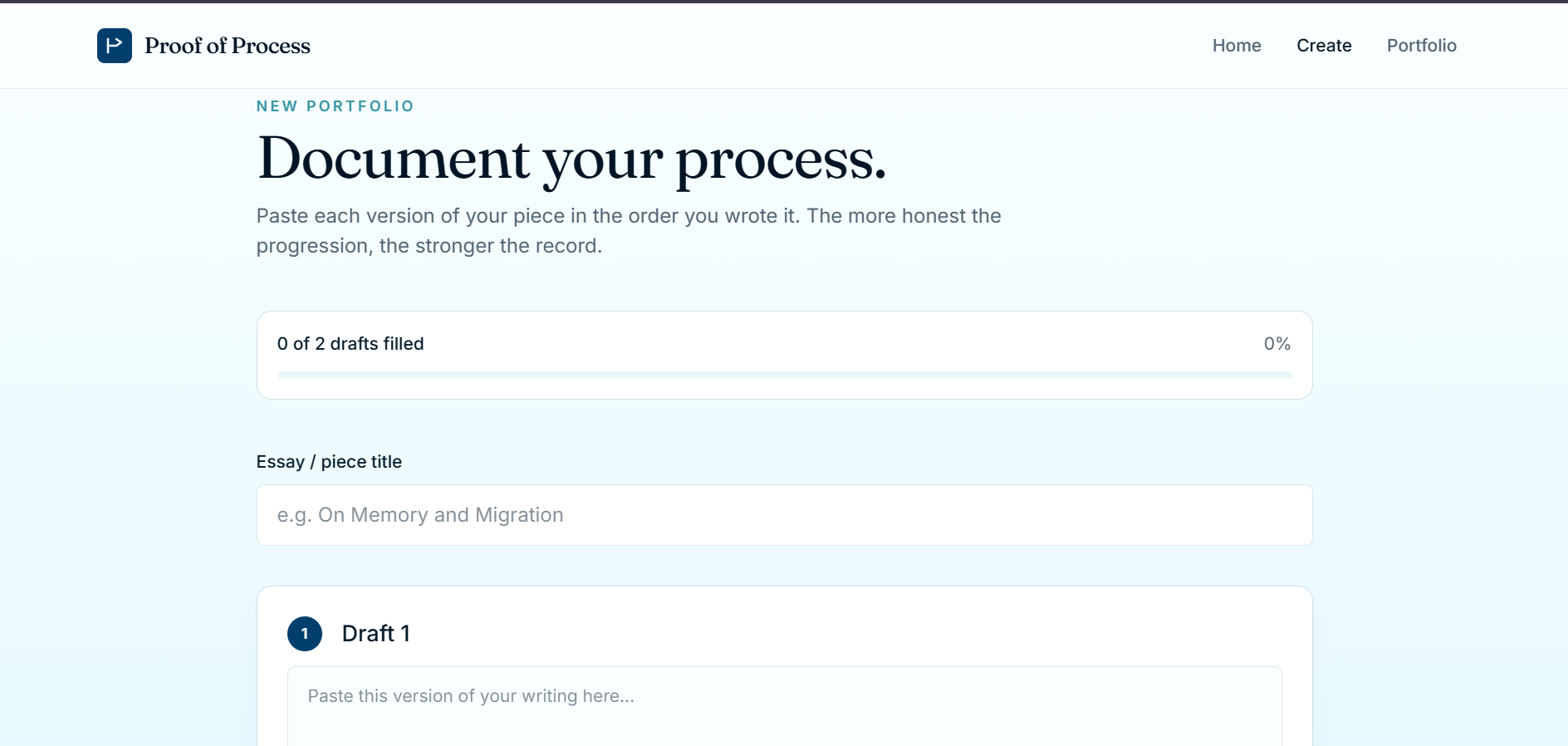
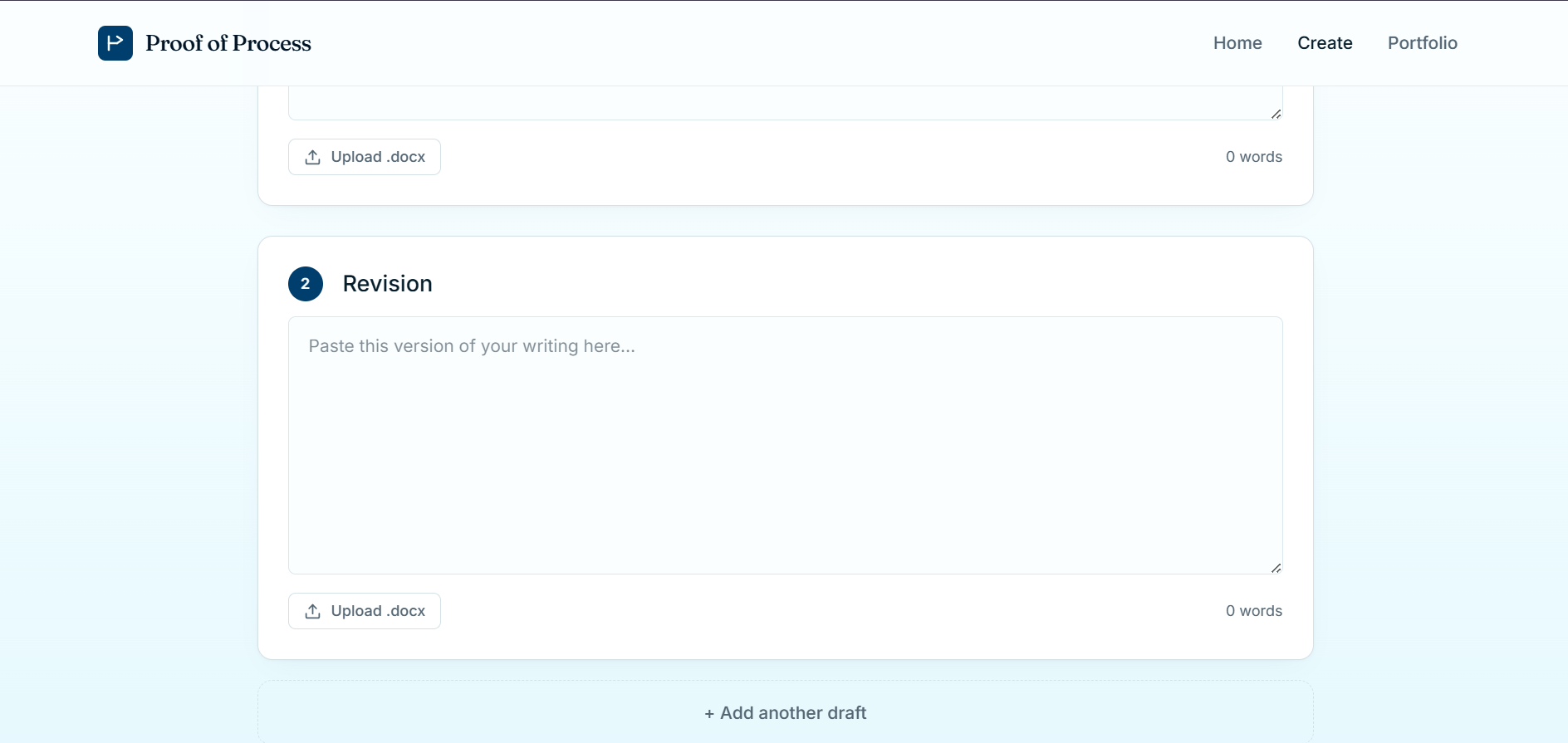
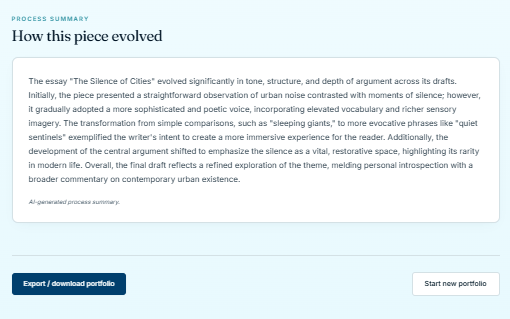
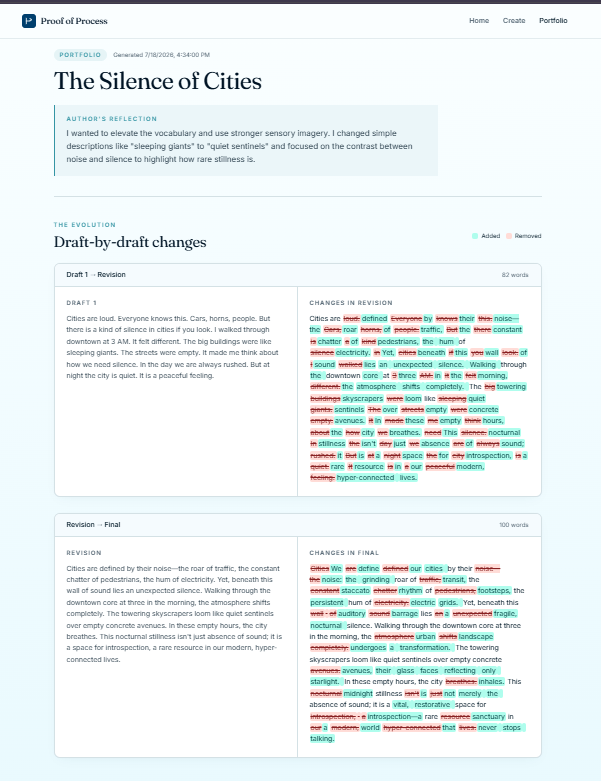
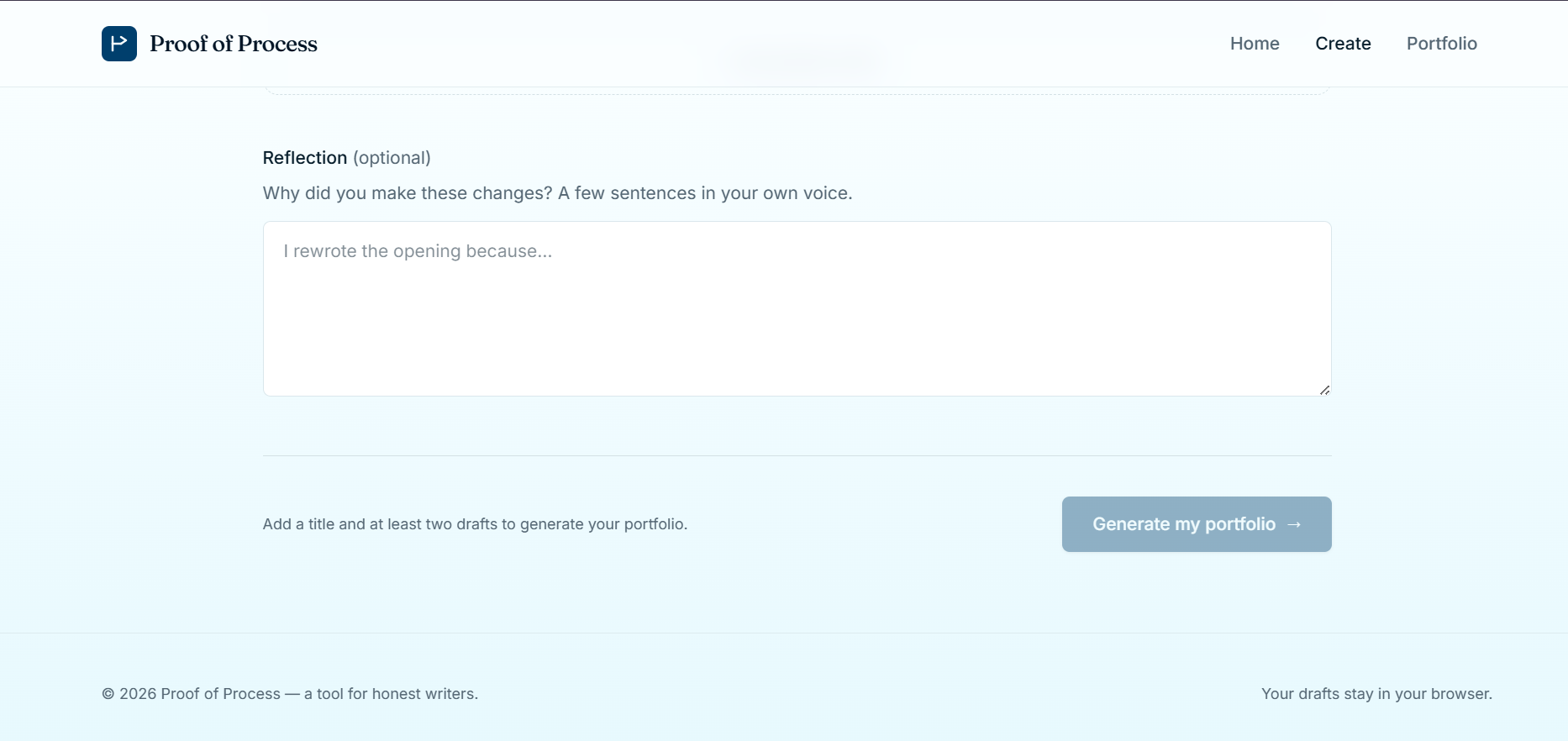
Proof of Process lets a student paste in multiple versions of a piece of writing, a rough draft, a revision, a final version, along with a short optional note about why they made certain changes. The tool shows a visual diff between the drafts so you can actually see the writing take shape, and it uses an AI model to generate a short, neutral summary describing how the piece evolved across those drafts. The output is a shareable portfolio a student can attach to their work as honest evidence of their process, instead of hoping a detector doesn't falsely flag them.
Target users: high school and college students, especially multilingual and non-native English speakers who are disproportionately misflagged by AI detectors, along with the teachers and academic integrity offices who need a fairer way to evaluate authorship.
Real-world impact: rather than adding another layer of surveillance to the classroom, Proof of Process gives students agency over their own defense. It turns a stressful, often biased accusation process into a simple act of showing your work, which is something every student is already capable of doing.
How I built it
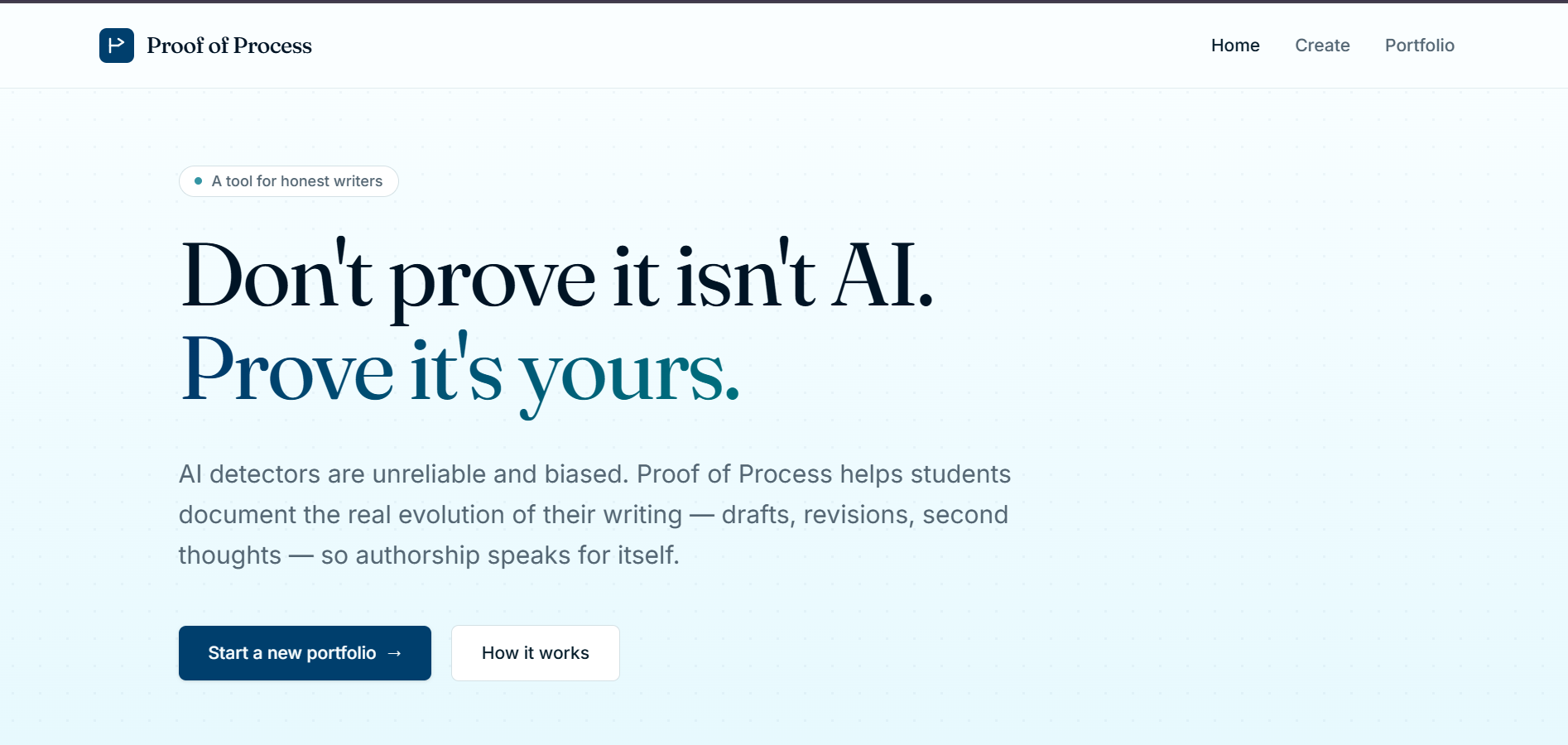
I started with the frontend: a clean, professional interface centered on a blue and teal palette, with three main screens, a landing page explaining the concept, a form for entering draft versions and a reflection, and a results page showing the diff view alongside the generated summary.
For the backend, I built a small REST API with a single endpoint that accepts the draft versions and reflection, sends them to an LLM, and returns a generated process summary as JSON. I kept the backend intentionally minimal since this is a proof of concept: no user accounts, no database of past submissions, just a straightforward request and response flow. The API key lives in an environment variable and is never committed to the repository.
Challenges I ran into
Getting the frontend and backend talking to each other locally took longer than expected, mostly around cross-origin configuration and making sure the frontend was pointing at the right server address. I also had to think carefully about the prompt I send to the AI model. Early versions of the summary sounded judgmental, almost like it was grading the student's honesty, which is exactly what I didn't want. I rewrote the prompt several times until the tone stayed neutral and descriptive rather than evaluative, since using AI responsibly and for genuine social good was a priority for me from the start.
What I learned
I learned that the most convincing "AI powered" feature isn't always the flashiest one. My AI call is a single, focused task, summarizing how a piece of writing changed, and keeping it that narrow made it much easier to get right. I also learned a lot about the actual research behind AI detection bias, which changed how I talked about the project. Instead of a vague pitch about AI being scary, I could point to a specific, cited failure mode and explain exactly how the tool addresses it. Digging into AI fundamentals along the way also pushed me to think harder about designing AI features that are transparent and fair by default, not just functional.
What's next
If I kept building this, I'd want to add support for exporting a portfolio as a proper PDF, and possibly a lightweight way for teachers to view a class of portfolios in one place. I'd also want to test the tool with real students and teachers to see whether a process summary like this actually changes how conversations about academic integrity happen in practice, and explore partnering with schools serving multilingual student populations, the group most affected by the bias that inspired this project in the first place.


Log in or sign up for Devpost to join the conversation.