-
-
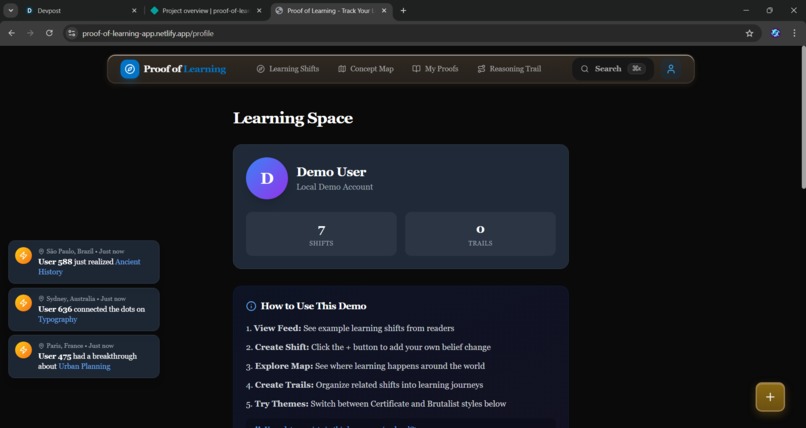
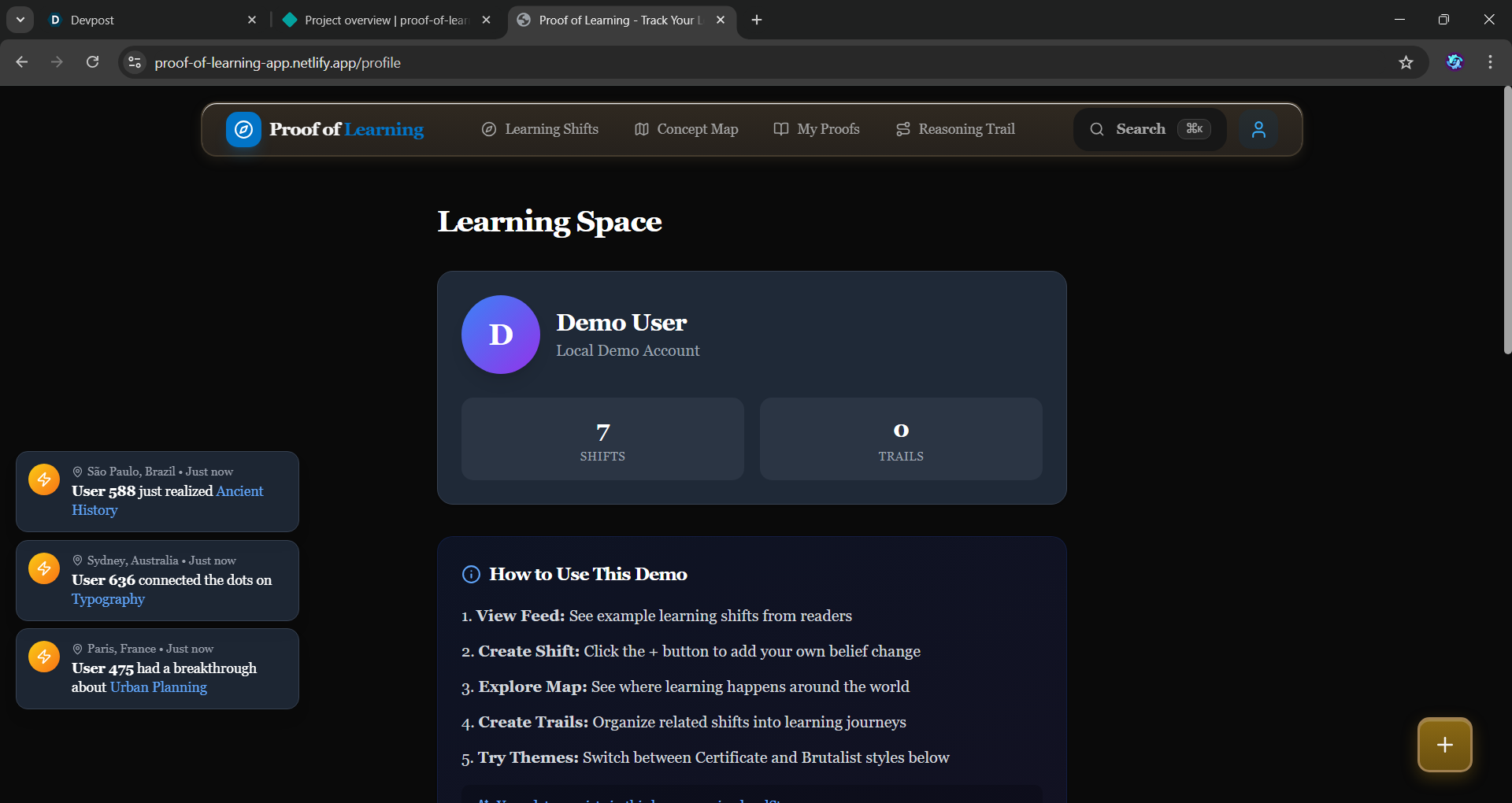
A personal learning space showing how understanding evolves through recorded shifts and trails.
-
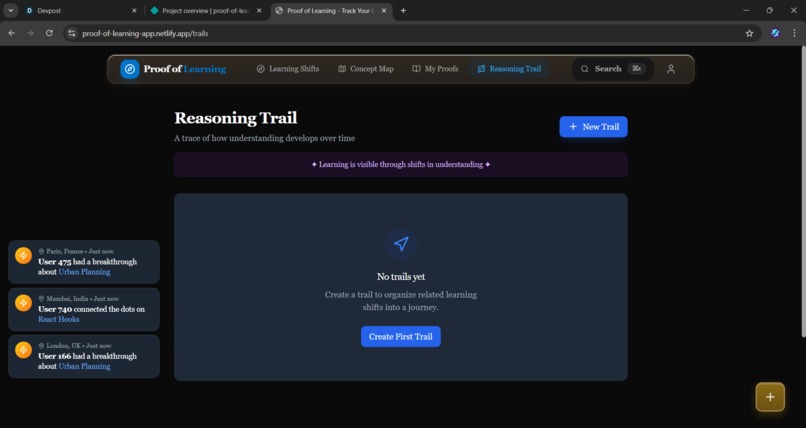
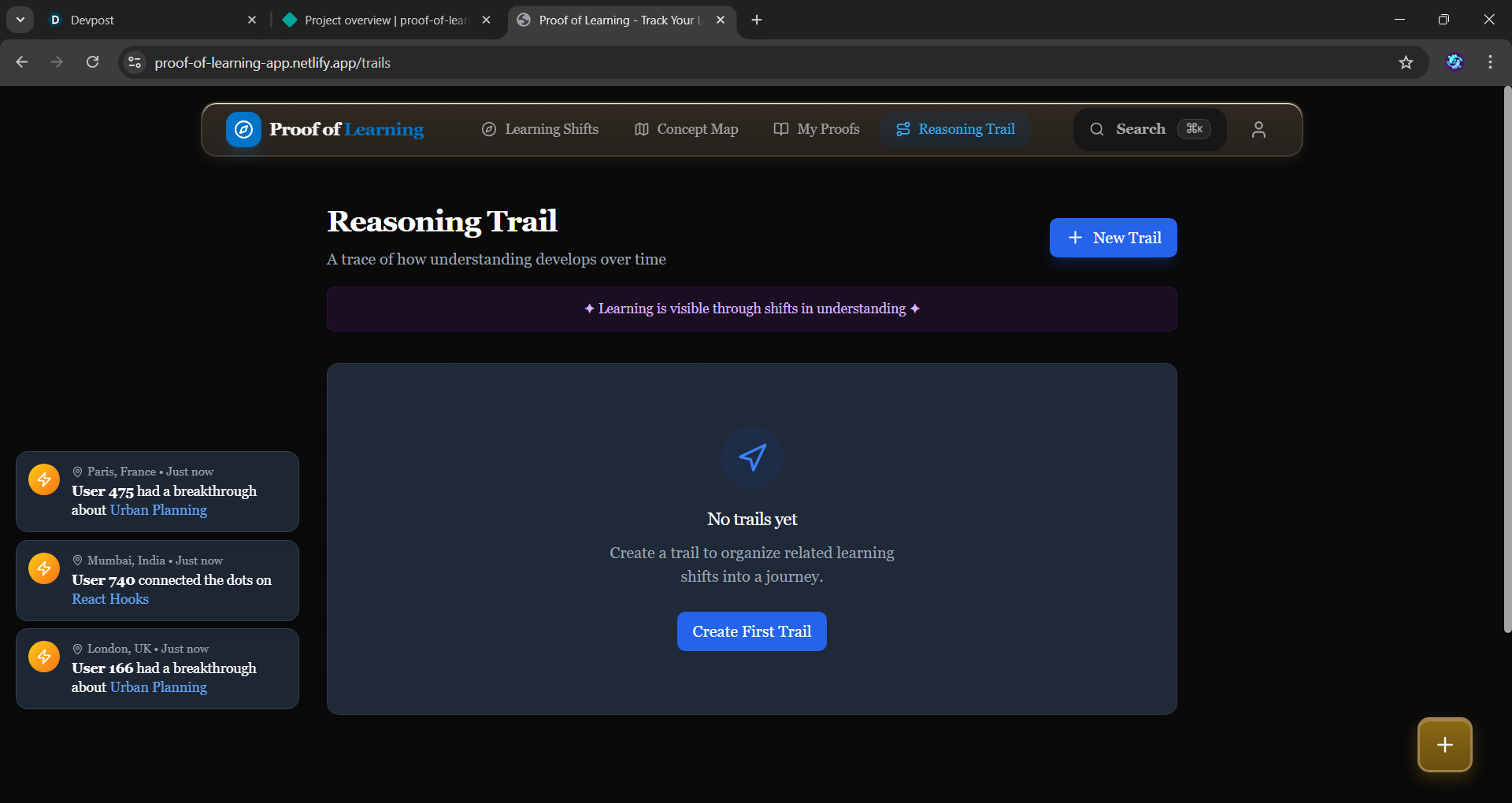
Reasoning trails organize related learning shifts into a coherent journey of understanding over time.
-
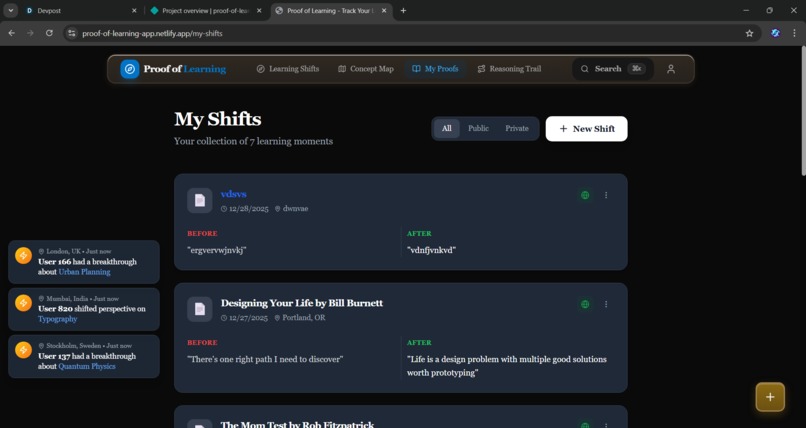
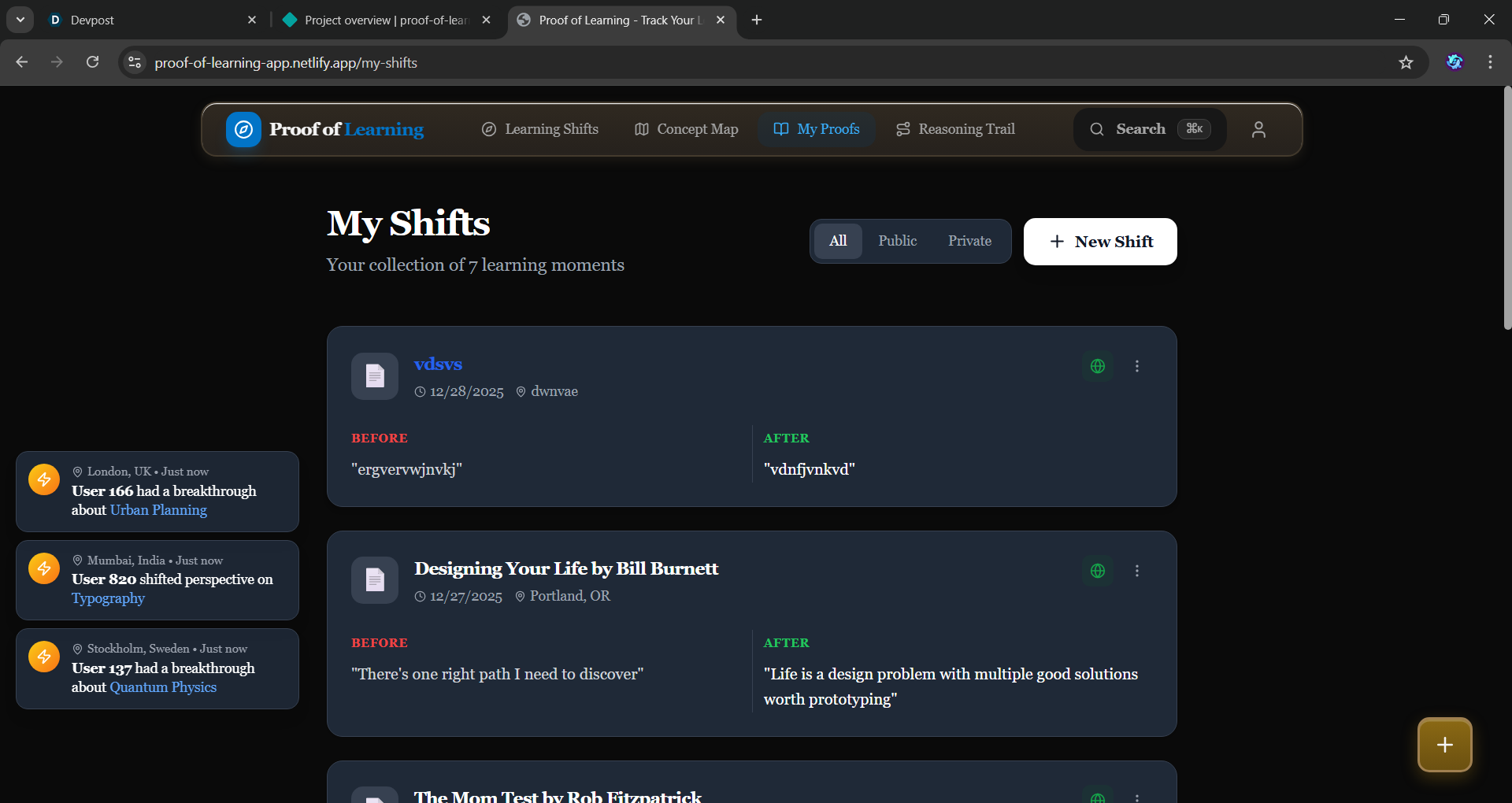
Each proof captures a concrete change in thinking, turning insight into visible evidence.
-
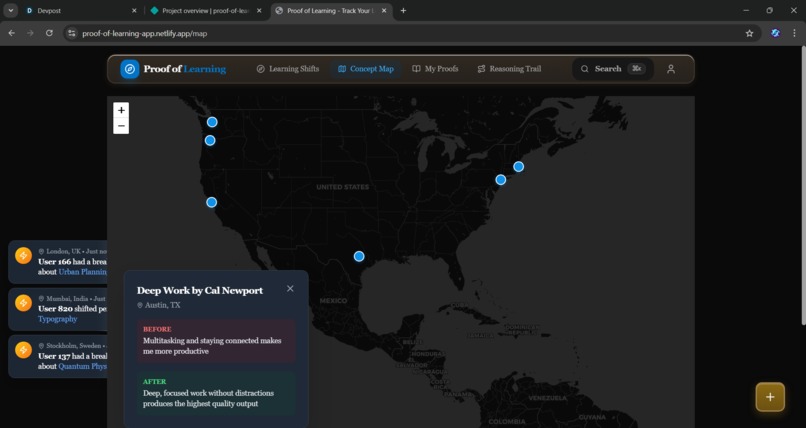
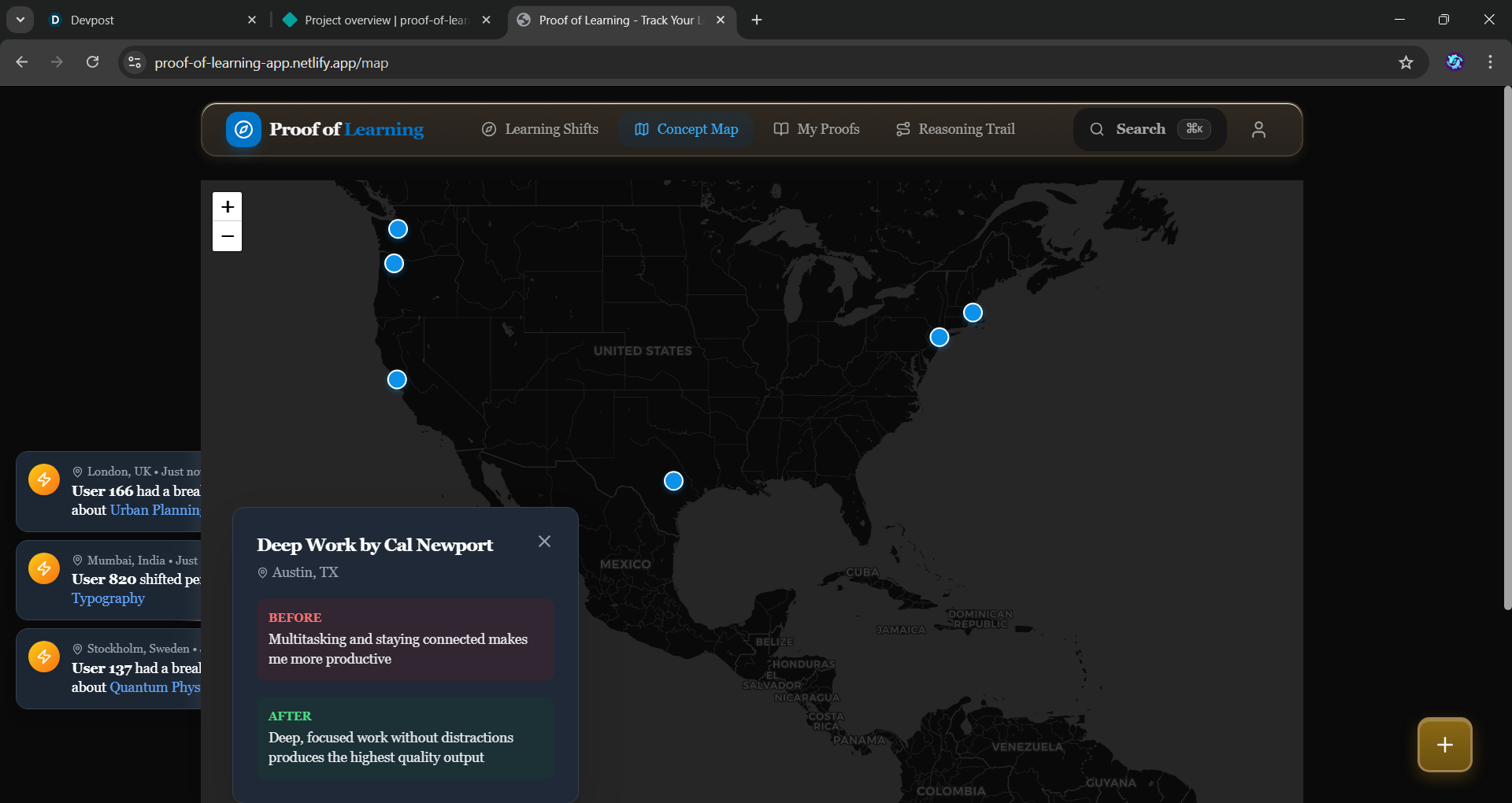
A conceptual map showing where learning moments originate and how ideas connect globally.
-
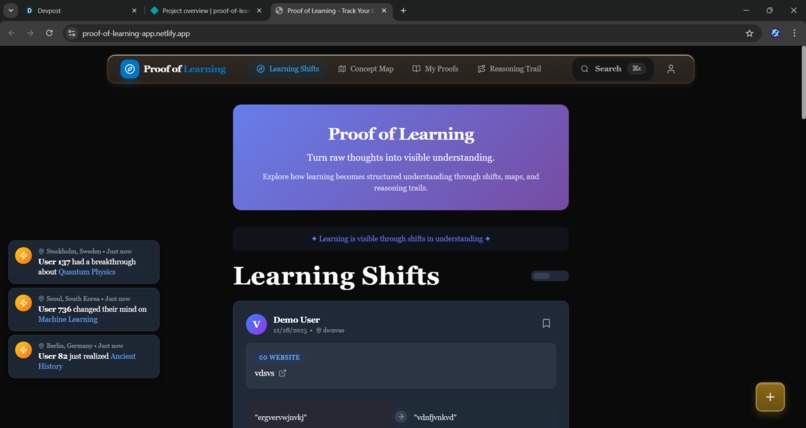
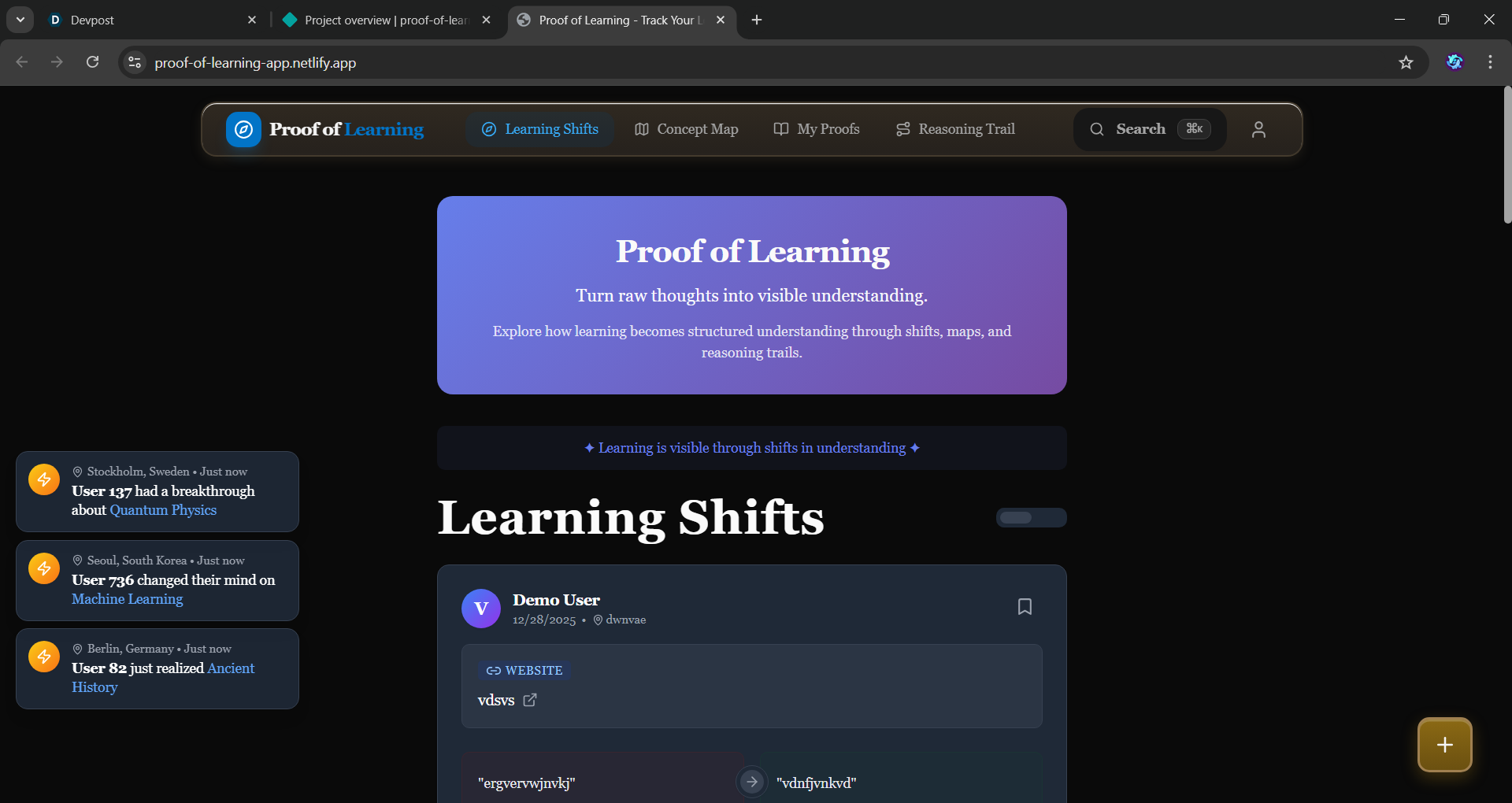
A live stream of learning shifts that makes the process of understanding visible and explorable.
Inspiration
Most tools help us store information, but very few help us see how understanding actually changes. Learning is not static — it evolves through small shifts in belief, perspective, and reasoning. Yet those shifts usually disappear the moment they happen.
Proof of Learning was inspired by this gap: the lack of a way to make learning itself visible.
Instead of focusing on outcomes, grades, or summaries, this project explores a different question: What if we could track how understanding forms, changes, and connects over time?
What it does
Proof of Learning is a lightweight system for capturing and exploring learning shifts — moments where a person’s understanding changes from “before” to “after.”
The app lets users:
Record learning shifts as short before → after statements
Organize related shifts into reasoning trails
Explore a concept map that visualizes where learning emerges
Browse a learning stream showing evolving ideas over time
Revisit past thinking to reflect on growth and insight
Instead of testing knowledge, the system makes thinking visible.
How it works
Each learning moment is stored as a simple structured object:
what was believed before
what changed afterward
optional context like topic and location
These moments can be grouped into trails that represent longer reasoning journeys. The interface emphasizes clarity, minimal friction, and reflection.
Everything runs locally in the browser, allowing fast interaction without accounts or backend setup.
Why this matters
Learning is often treated as a final state — something you either “know” or don’t. This project treats learning as a process.
By externalizing thinking:
learners can reflect more honestly
educators can observe conceptual change
ideas become traceable instead of abstract
understanding becomes something you can see
Proof of Learning is an experiment in making cognition legible.
What I learned building this
While building this project, I learned how much clarity comes from reducing complexity rather than adding features. Designing around a single idea — “learning as visible change” — helped shape both the interface and the data model.
I also learned how small UX decisions, naming, and structure can strongly influence how people interpret meaning and intent in a system.
What’s next
Future directions could include:
Linking trails into higher-level concept graphs
Exporting or sharing learning journeys
Reflection prompts and pattern discovery
Collaborative or classroom use cases
The goal is not to gamify learning, but to make understanding observable.
Built With
- antigravity
- css
- google-antigravity
- netlify
- react
- storage
- tailwind
- typescript
- vibecoding
- vite


Log in or sign up for Devpost to join the conversation.