-
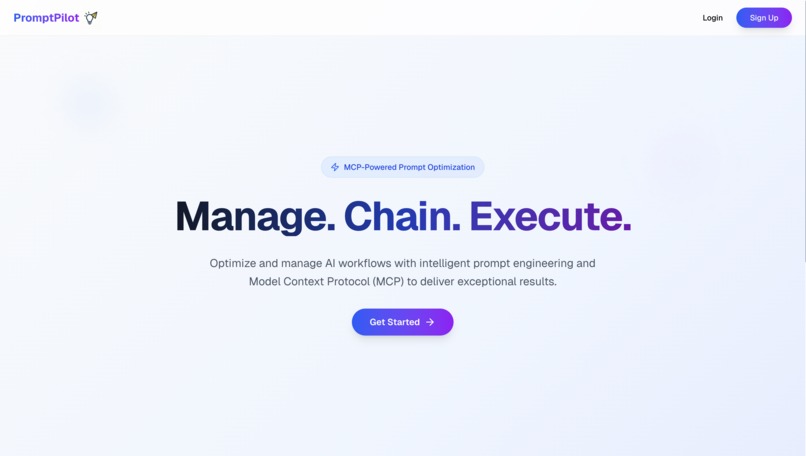
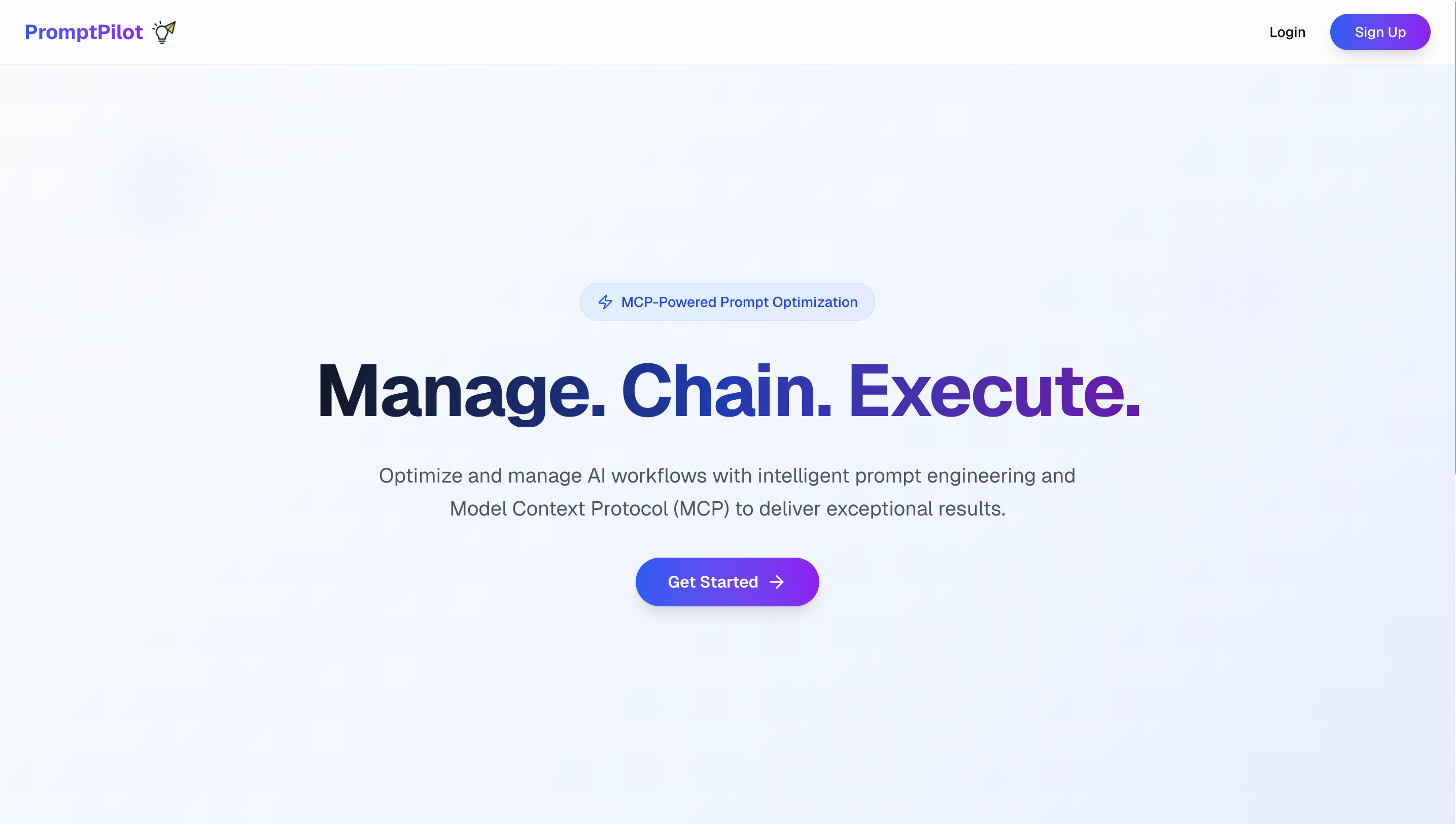
Landing page
-
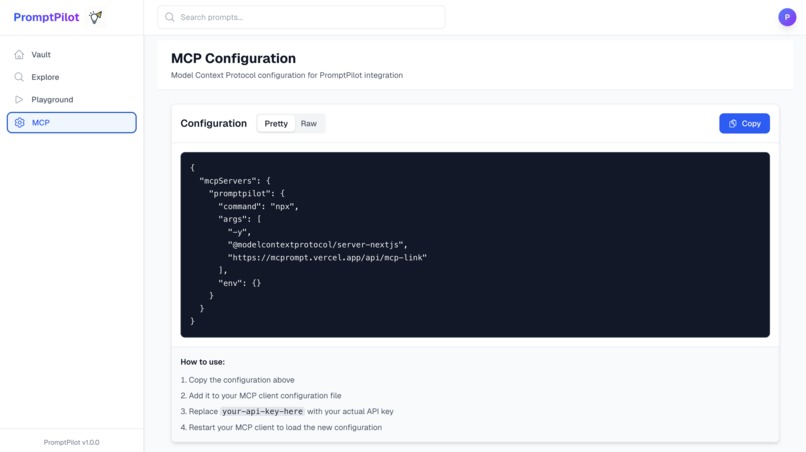
MCP
-
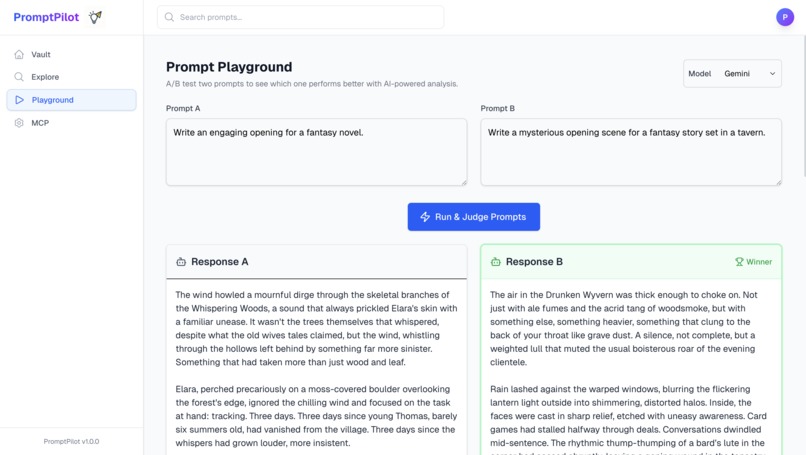
Playground
-
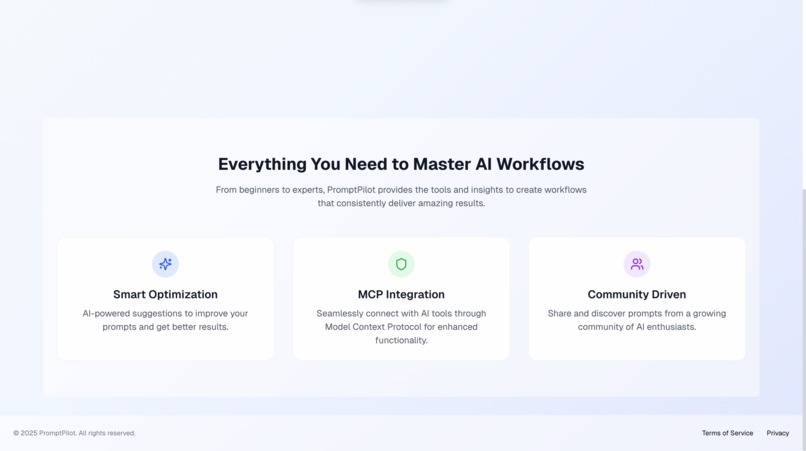
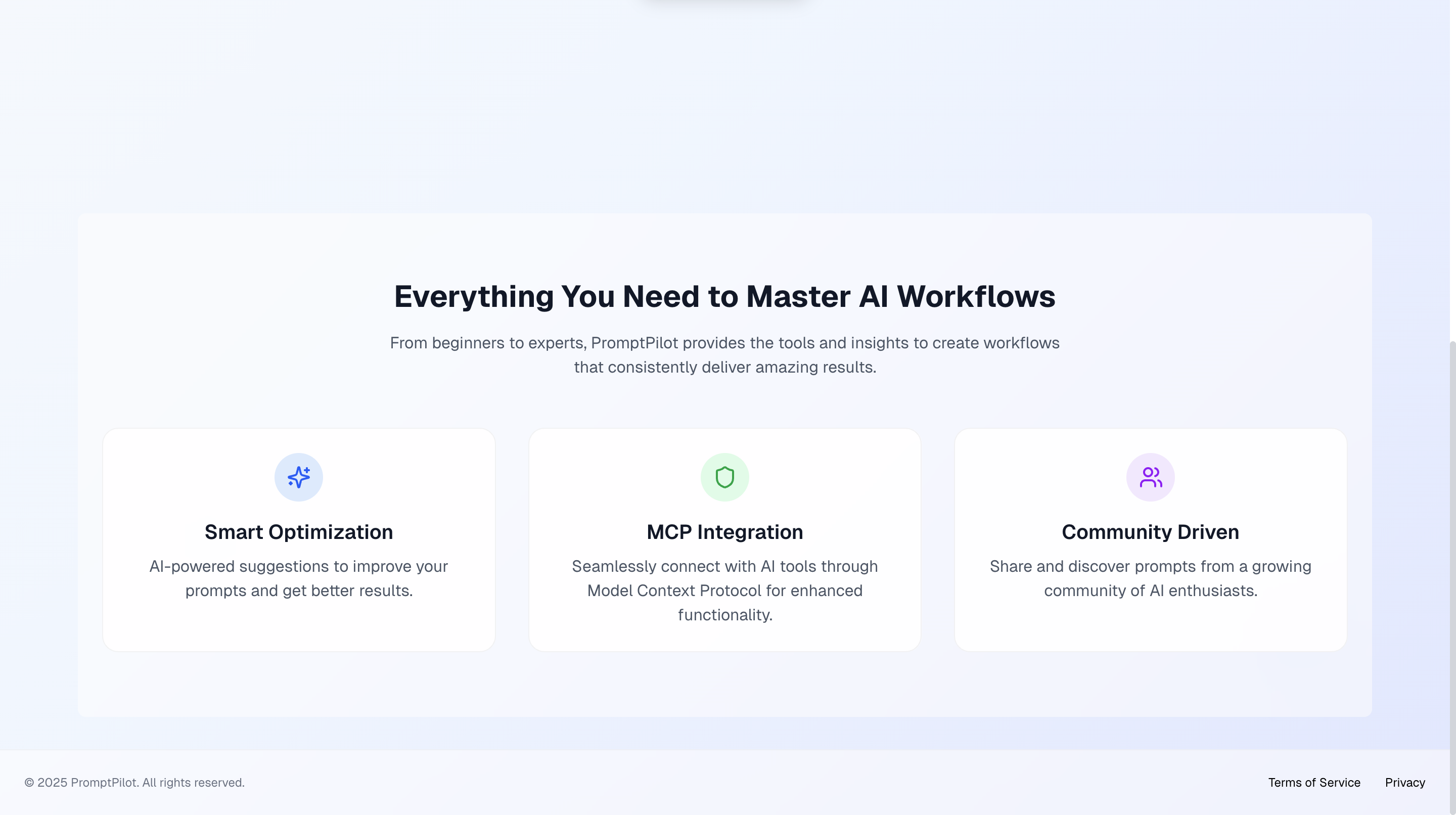
Features
-
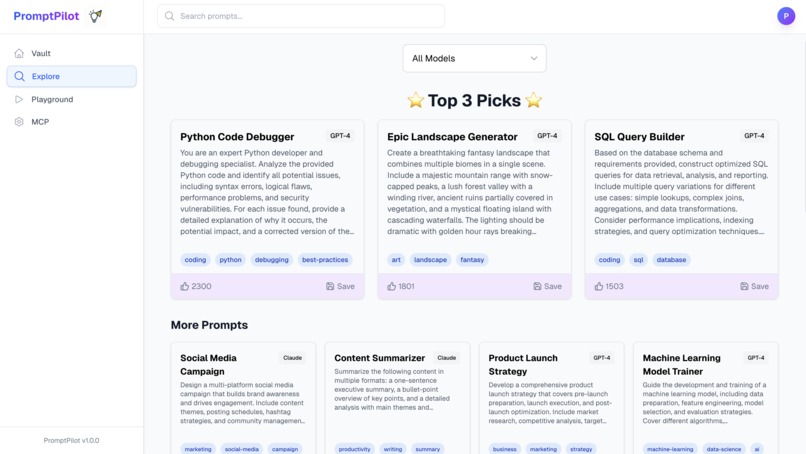
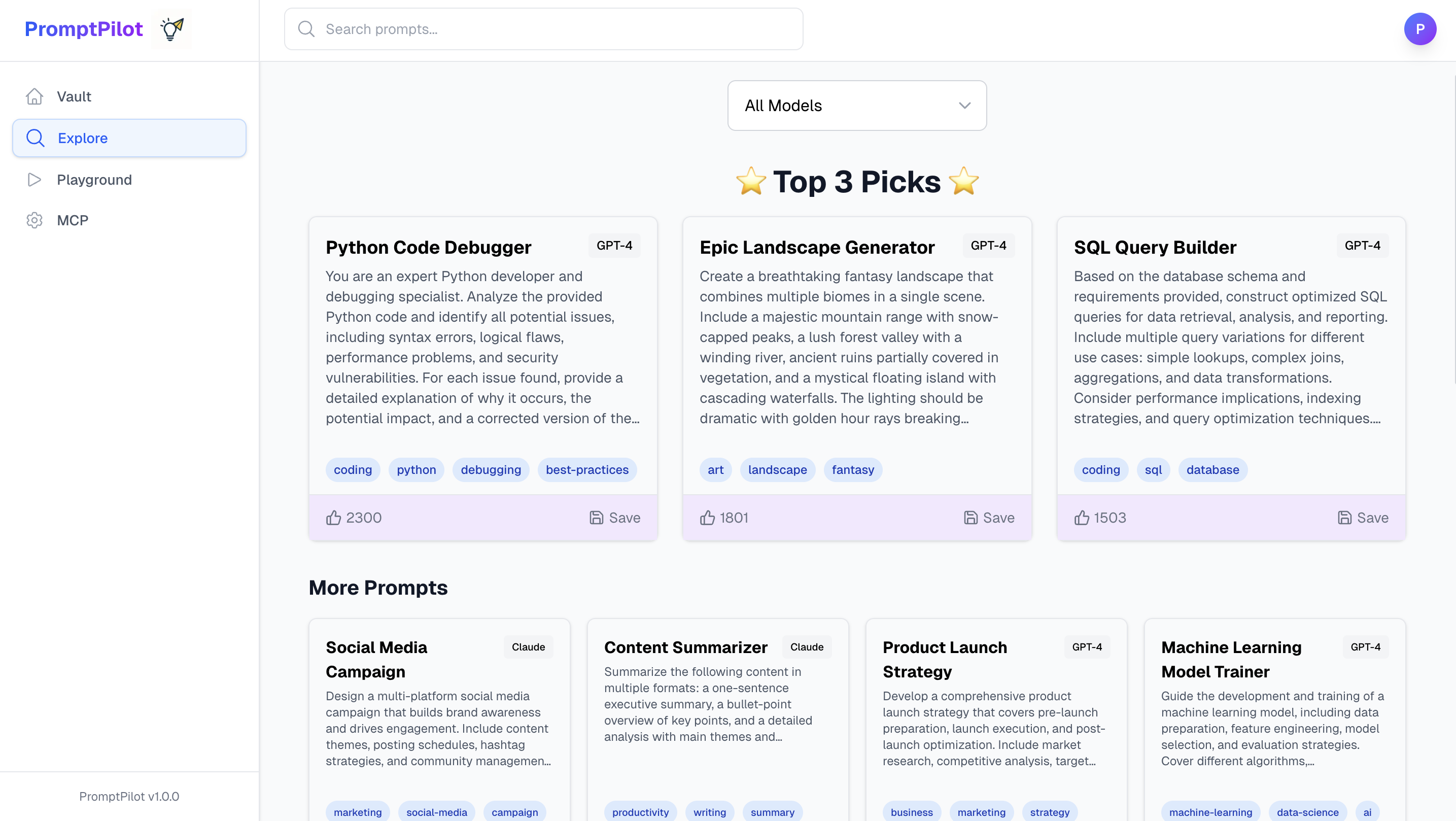
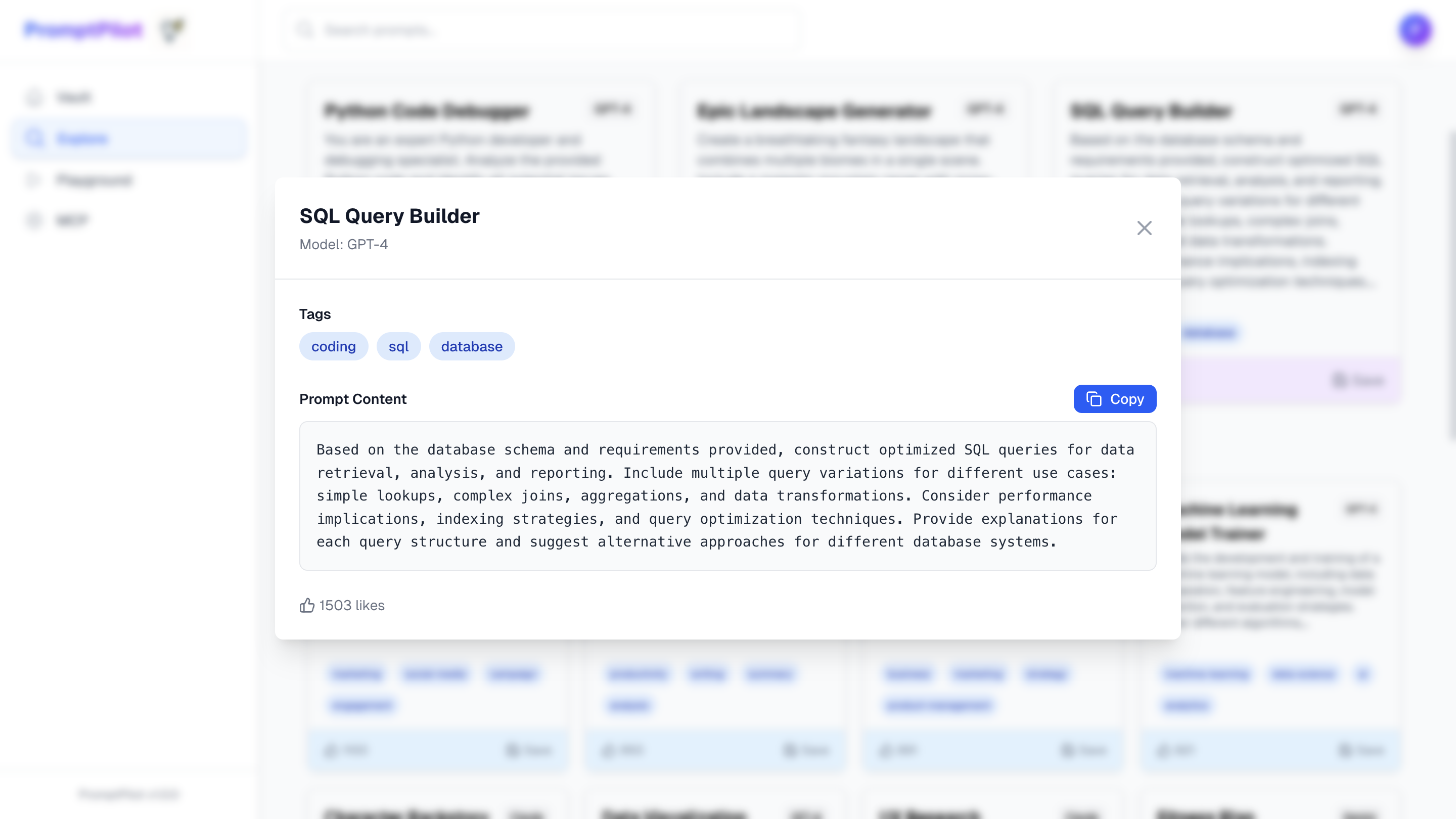
Community Prompts
-
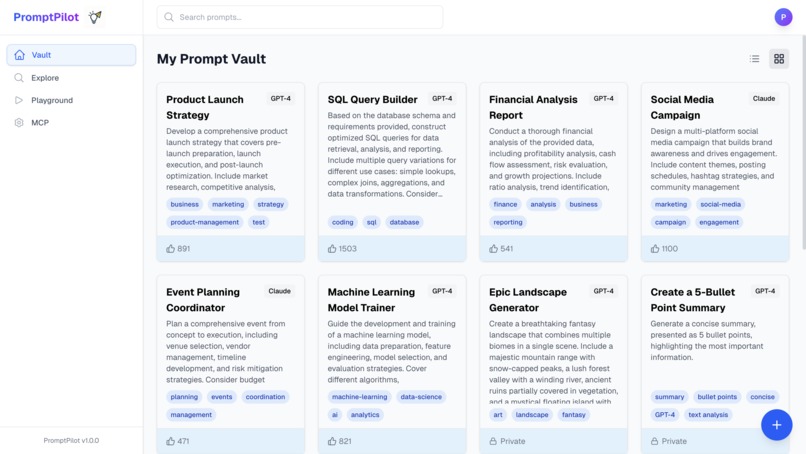
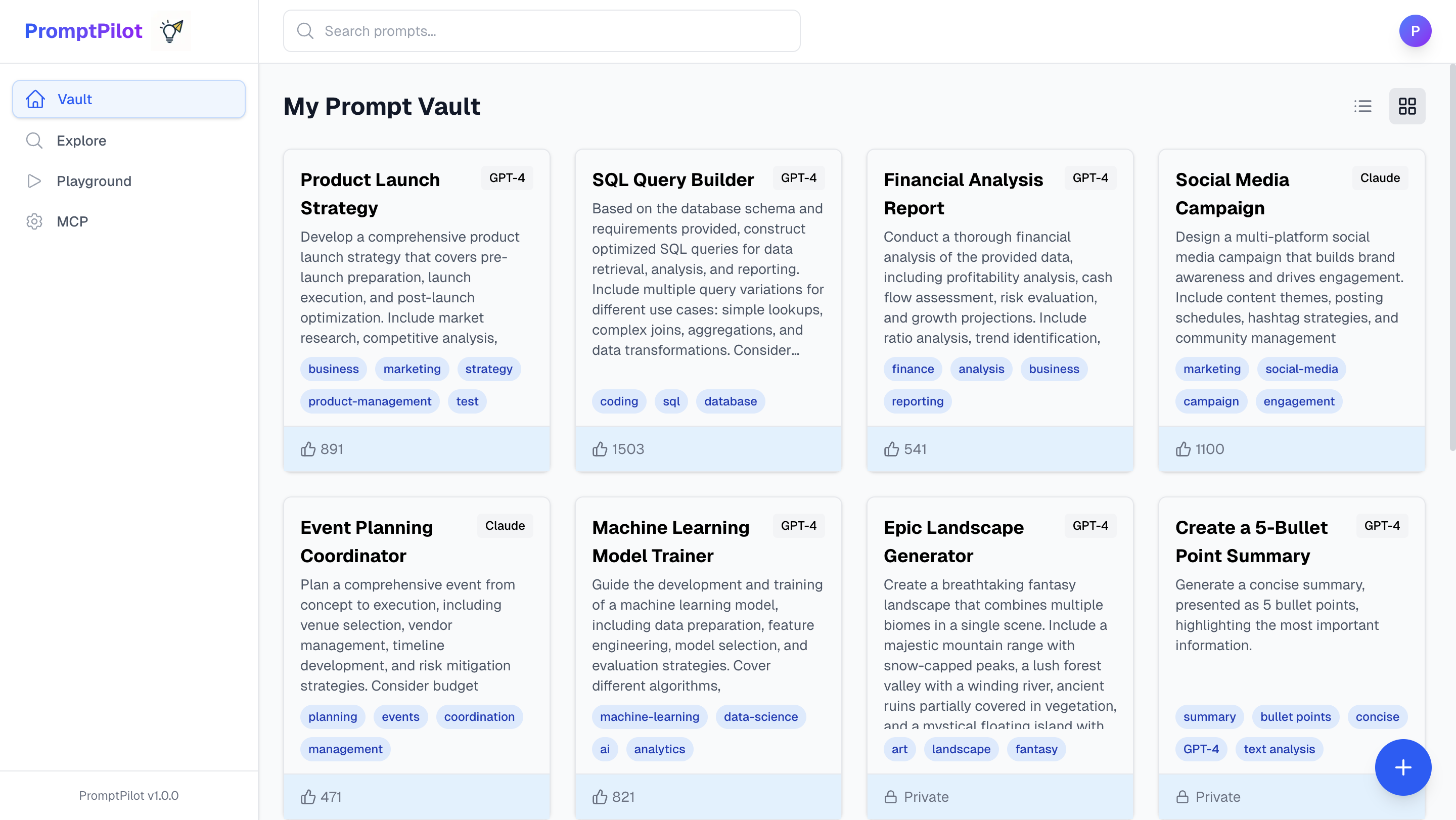
My Vault
-
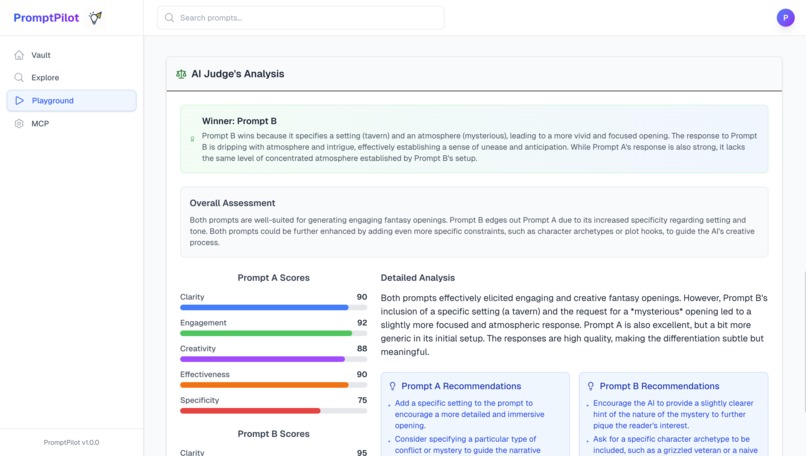
Playground
-
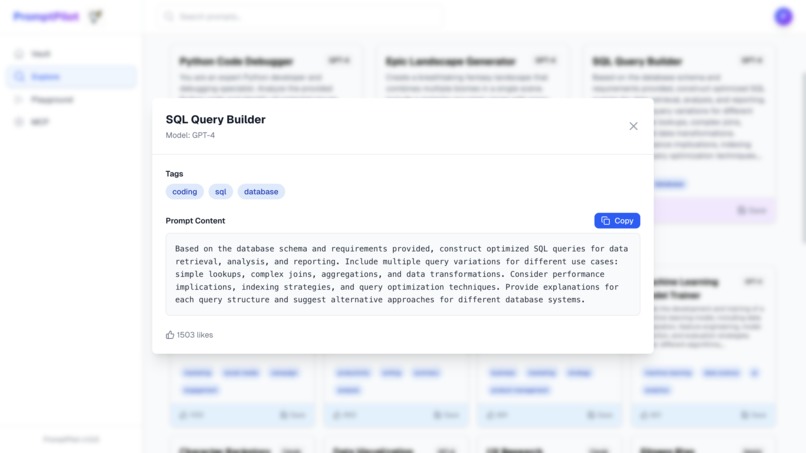
Prompt


Inspiration
As the use of AI tools surged, we noticed a critical bottleneck: while users rely heavily on prompts, there's no standardized way to manage, share, or execute them across tools and teams. More importantly, users were stuck manually selecting or crafting prompts for each task—wasting time and reducing consistency.
We were inspired by the potential of a new standard: MCP (Model Context Protocol). Imagine a world where any AI tool—like Cursor, Claude, or VSCode extensions—can automatically pull the best prompt for your task, intelligently selected and explained. That’s the vision PromptPilot is helping make real.
What it does
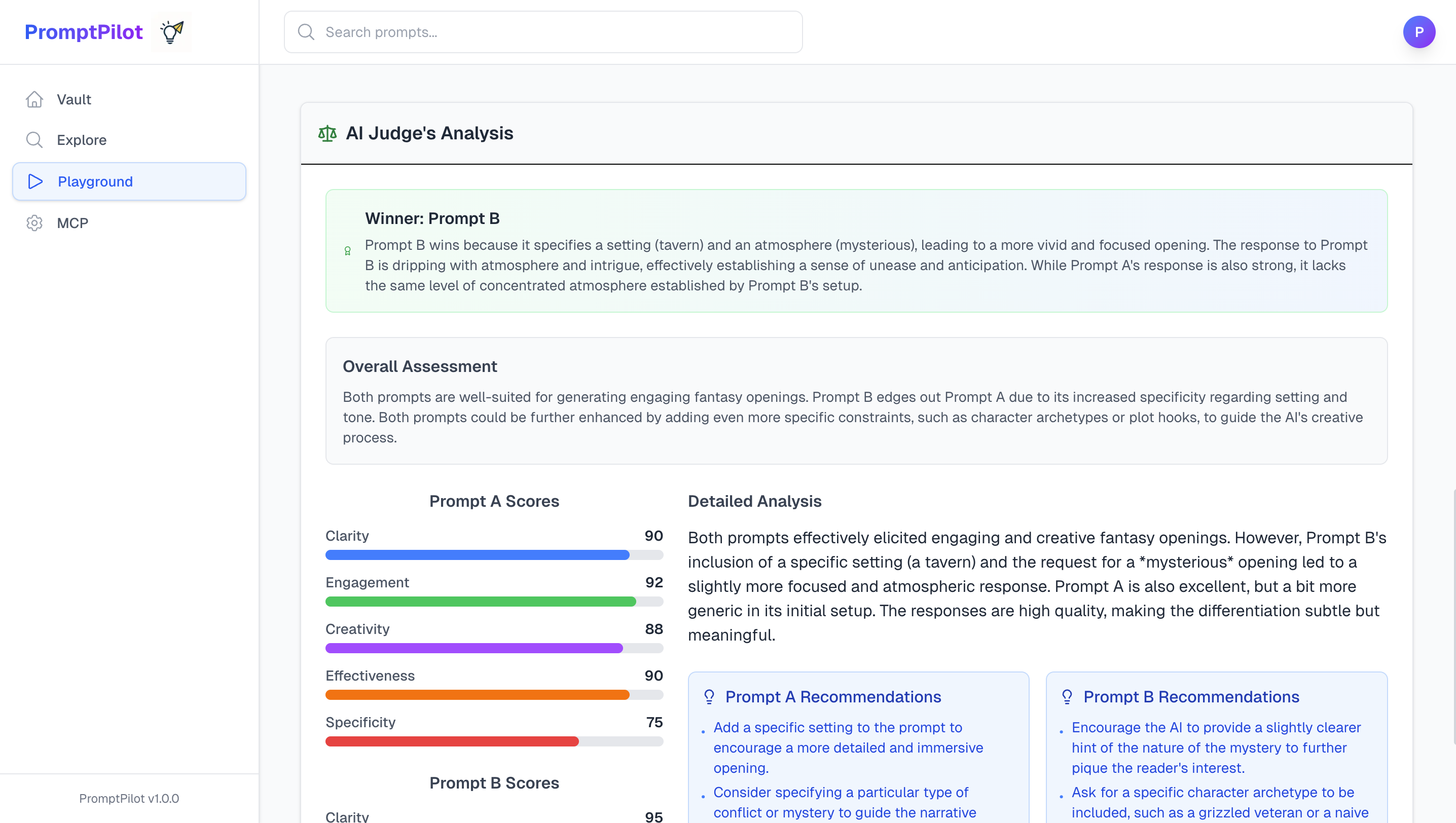
Stores, optimizes, and versions AI prompts. Runs an MCP server that understands user intent and intelligently returns the best-fit prompt for external tools or in-app tasks. Lets users configure personal MCP endpoints to plug PromptPilot directly into apps like Claude desktop or IDEs. Includes a Prompt Playground with an AI judge (built using Agentverse) that compares multiple prompts and provides objective, model-based feedback. Encourages community-driven prompt reuse and remixing. But the heart of the platform is its intelligent MCP integration—a game-changing layer for automated prompt delivery and AI workflow optimization.
How we built it
We used Next.js with TypeScript and TailwindCSS for the frontend, and Supabase for the database. The website is deployed using Vercel.
Challenges we ran into
Defining the MCP standard: There was no widely adopted format for AI prompt delivery over API. We had to build a usable, minimal configuration system and ensure it worked smoothly with tools expecting different levels of flexibility. Prompt selection logic: Building a reliable scoring model for prompts based on task intent took time and experimentation. Security concerns: Since MCP endpoints expose access to user data, we had to ensure strict token-based access and private-by-default behavior. Cross-tool compatibility: Ensuring the MCP server could be consumed by tools like Claude, Cursor, or AI-powered extensions required us to maintain a clean, well-documented API spec.
Accomplishments that we're proud of
Launched one of the first working MCP server interfaces for prompt selection, opening up a new paradigm for AI task execution. Developed a plug-and-play MCP configuration system, making PromptPilot instantly usable as a backend for third-party AI tools. Enabled automated, intelligent prompt selection, removing friction for users and enhancing the quality of outputs. Created a version-controlled, remixable ecosystem that combines utility and creativity in the prompt design space.
What we learned
The future of AI tooling lies in interoperability. MCP showed us that standardizing how models receive prompts unlocks huge productivity gains. Prompt reuse isn’t enough—intelligent selection and automation must follow. Users want results, not prompt engineering. People will remix and collaborate when given clear attribution and useful defaults—but only if privacy is preserved. Model feedback can be trusted when combined with structured scoring and AI judges—empowering users with real metrics over guesswork.
What's next for PromptPilot
MCP 2.0 Spec: Add support for multi-step workflows (e.g., generate → critique → rewrite), prompt chaining, and fallback prompts. Multi-model execution: Allow the MCP agent to select prompts and models across OpenAI, Claude, Gemini, and local LLMs based on performance history. CLI + IDE Plugins: Let developers use MCP directly inside their coding environment. MCP Prompt Marketplace: Allow verified creators to offer premium prompts via MCP endpoints. Analytics + Feedback Loop: Use real-world execution data to continuously retrain and improve prompt selection.
Built With
- mcp
- next.js
- supabase
- tailwindcss
- typescript
- vercel


