-
-
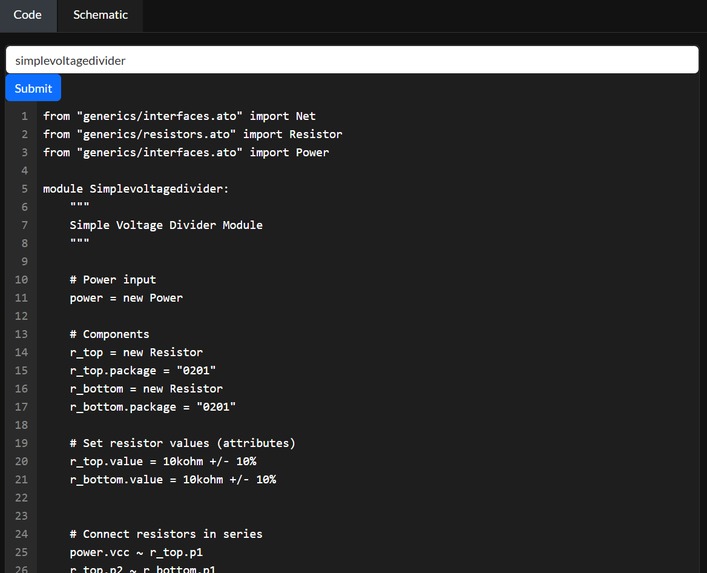
.ato for voltage divider
-
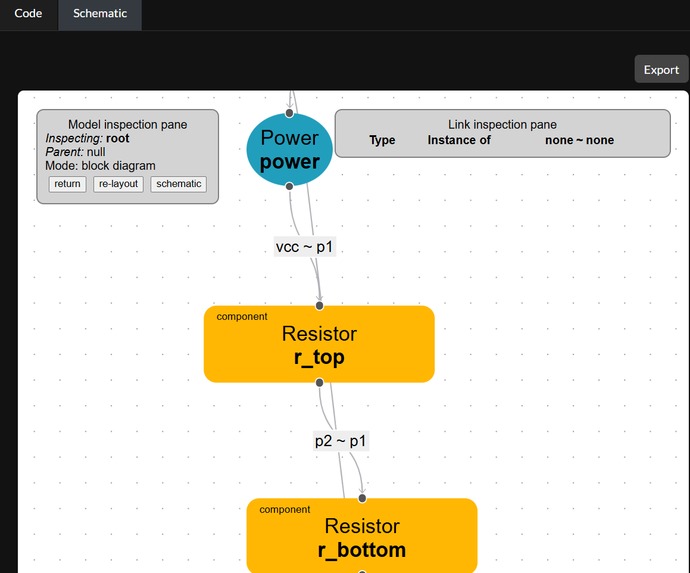
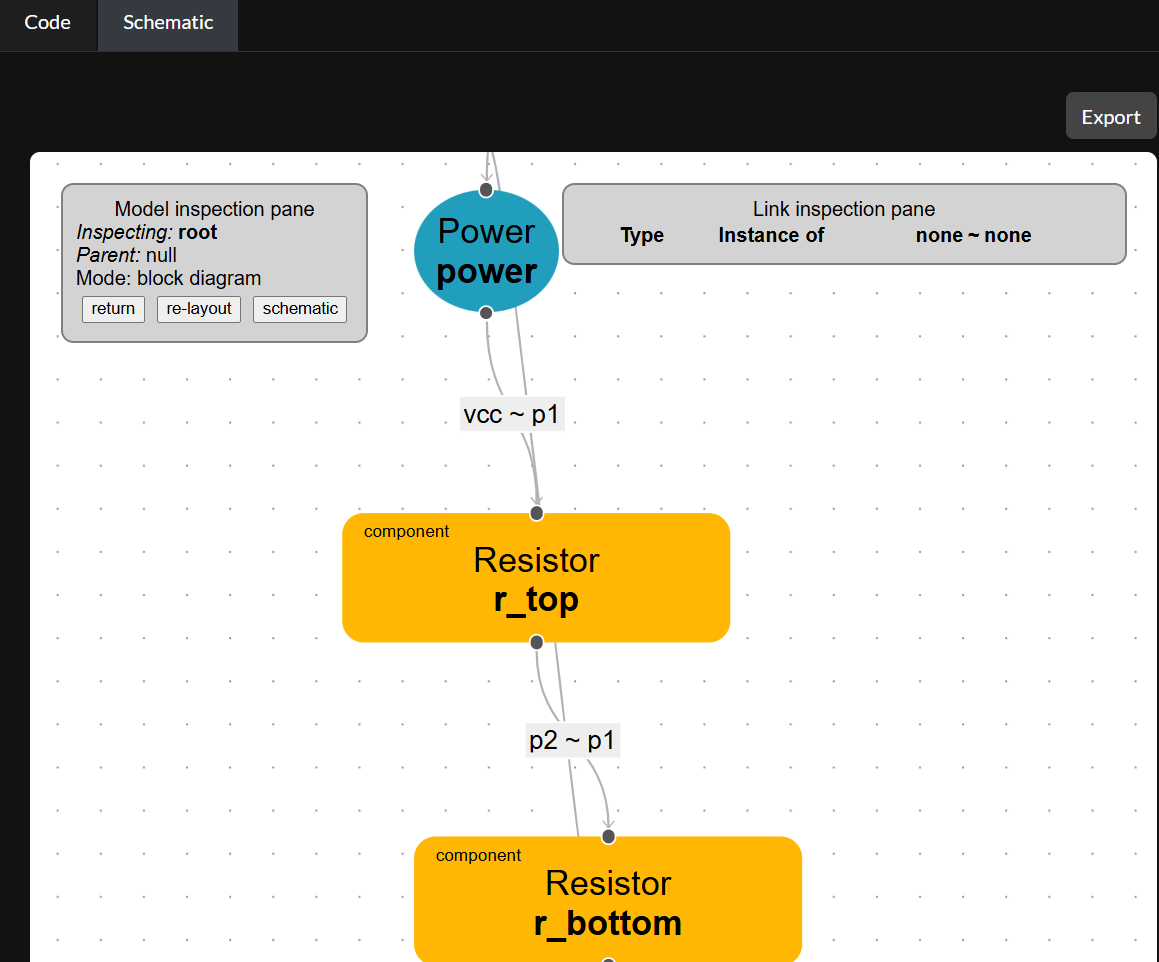
schematic
-
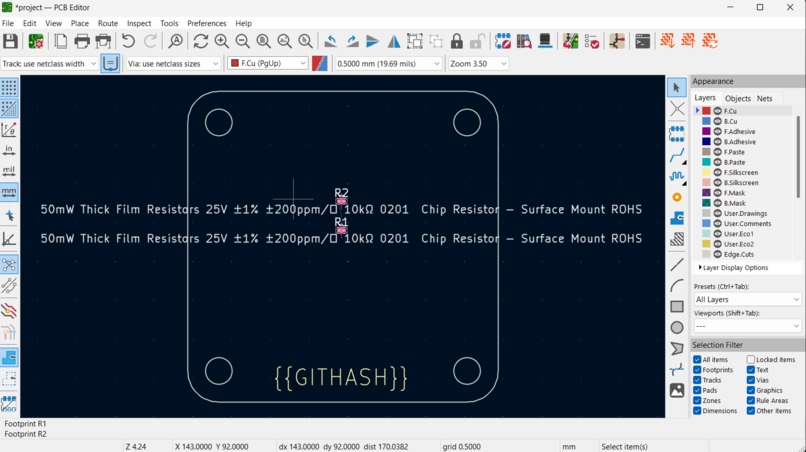
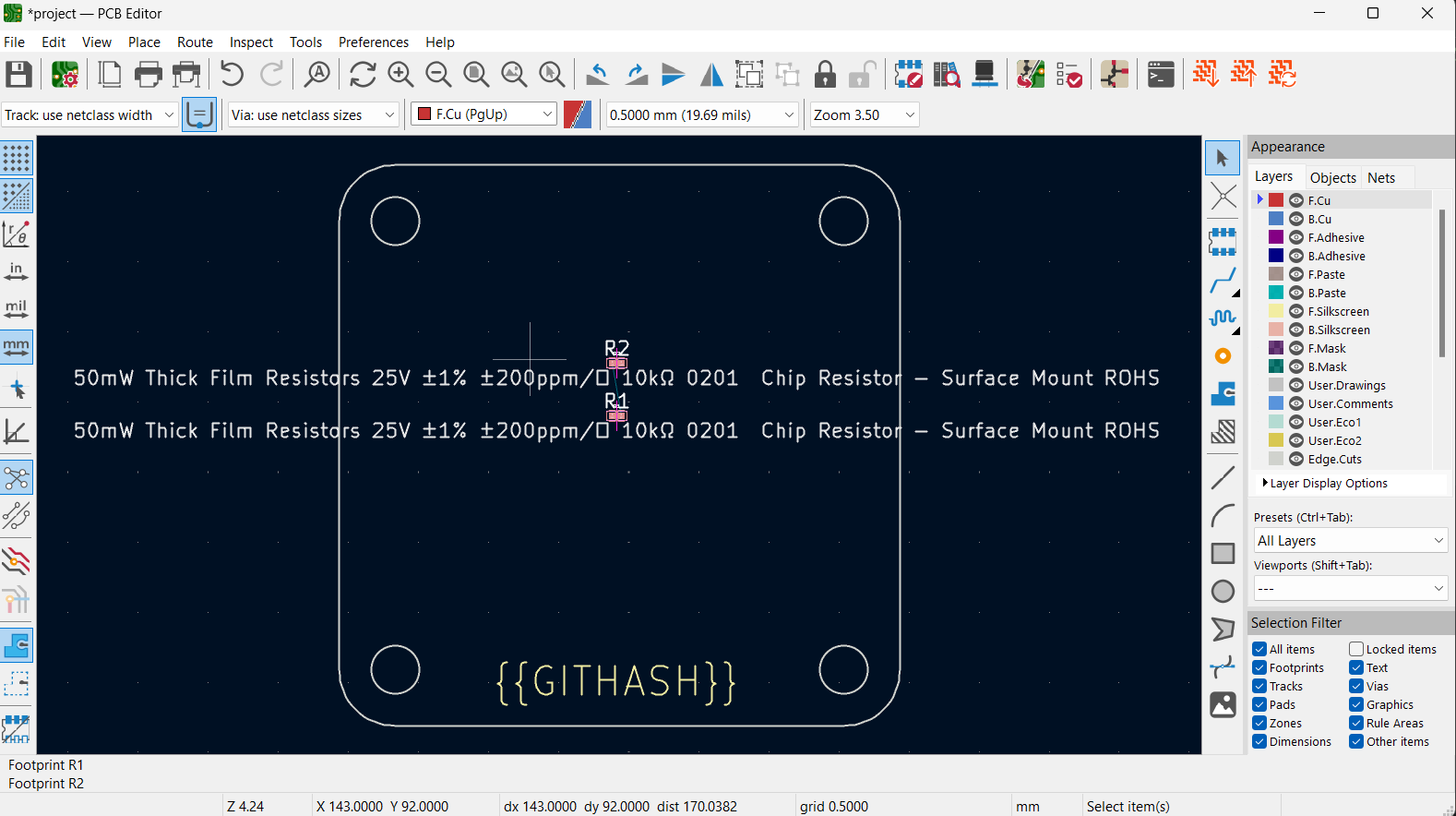
KiCAD output from generated netlist
Inspiration
Our inspiration stemmed from our experiences as Electrical and Software Engineers, where PCB design is often tedious and time-consuming. We wanted to create a tool that could streamline the design process, making it easier and more accessible for students, hobbyists, and professionals alike. By integrating AI into PCB design, we aimed to reduce the complexity and improve efficiency, especially for our coursework and club projects.
What it does
PromptPCB is an AI-powered PCB design assistant that allows users to generate circuit board schematics using natural language prompts. By describing the desired features, users can initiate the creation of an Atopile project, which then outputs PCB schematics. Future iterations will incorporate autorouting via the FreeRouting API and generate 3D models of the PCB using Blender integration.
How we built it
The core functionality of PromptPCB is built using:
- Atopile API for PCB schematic generation
- AWS for hosting and deployment
- A custom AI chat window to process user input and translate it into design specifications
Development followed an iterative testing process, starting on local machines and culminating in deployment on our AWS server.
Challenges we ran into
- Outdated and sparse documentation: The Atopile API lacked up-to-date examples, making integration challenging.
- Connecting AI with the Atopile project: Ensuring seamless communication between the AI-generated specifications and Atopile was a significant hurdle.
- Overcoming ambitious expectations: While we had high hopes for a fully automated design pipeline, we had to adjust our scope to produce a functional MVP.
Accomplishments that we're proud of
- Successfully creating an MVP that translates text prompts into PCB schematics.
- Establishing a foundation for future enhancements, including autorouting and 3D modeling.
- Navigating complex API limitations and developing a working solution despite the challenges.
What we learned
- The importance of iterative development and testing.
- How to integrate multiple APIs and overcome documentation limitations.
- Practical insights into AI-assisted PCB design and automation.
What's next for PromptPCB
- Implementing autorouting using the FreeRouting API.
- Adding 3D modeling support by integrating PCB-to-Blender functionality.
- Refining AI responses to generate more accurate and optimized PCB schematics.
- Expanding the tool’s usability for broader applications in electronics design.
Built With
- amazon-web-services
- atopile
- css
- html
- javascript
- kicad
- python
- react


Log in or sign up for Devpost to join the conversation.