Inspiration
Designing a room is visual and spatial, but most AI assistants only return text. We wanted an AI collaborator that can act directly inside a room design—not just suggest furniture, but place it, respect boundaries, and react to user changes.
What it does
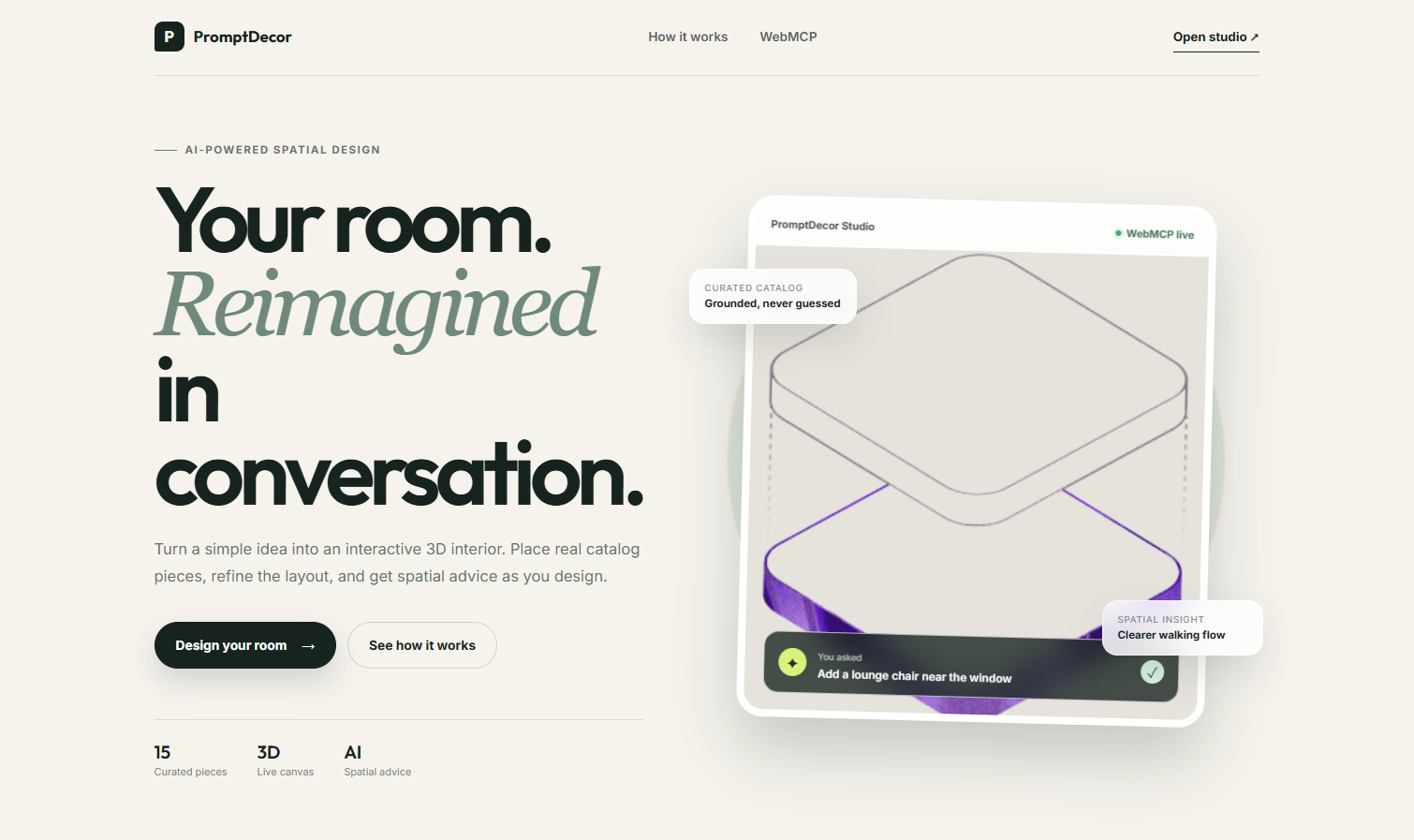
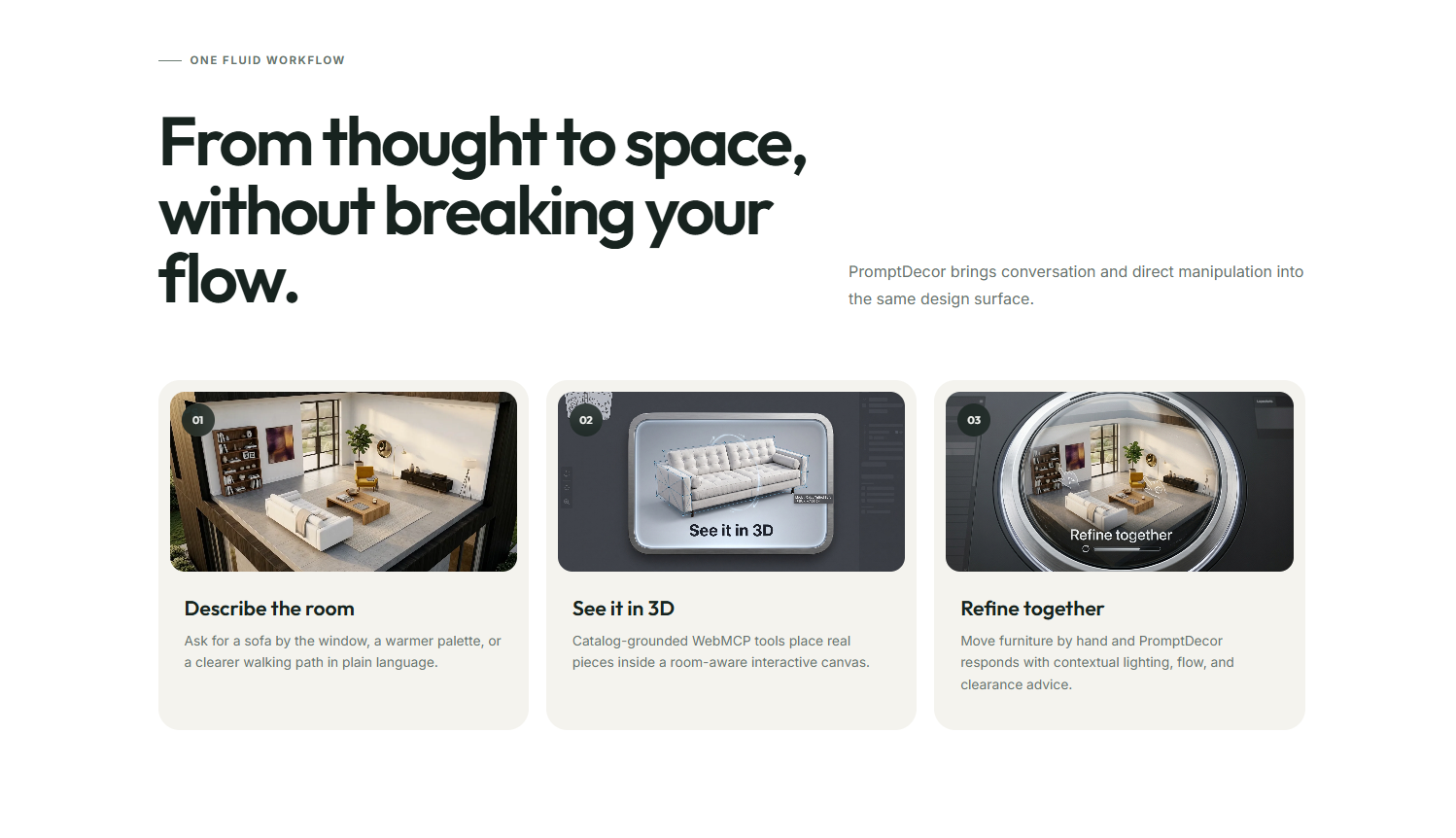
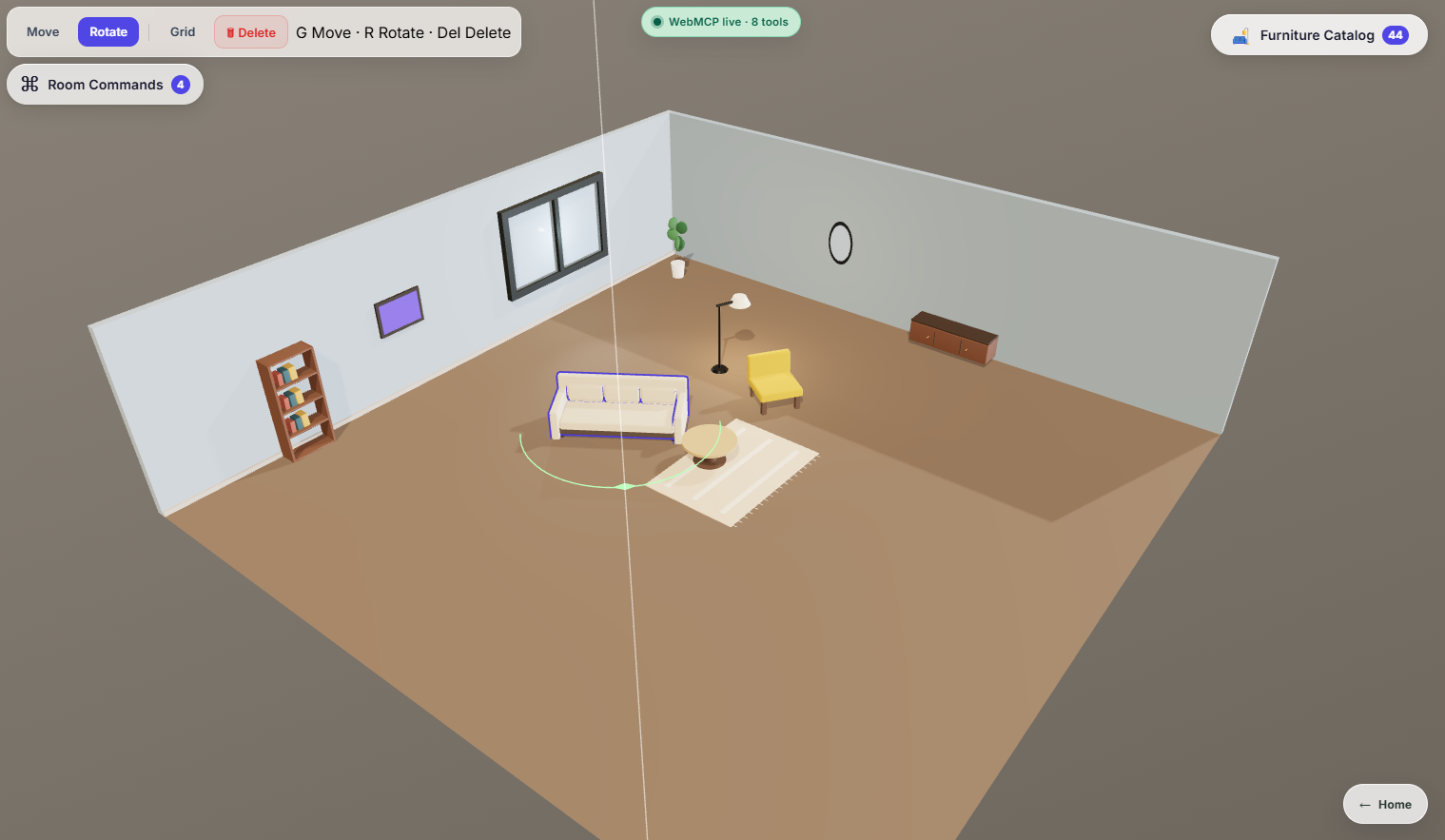
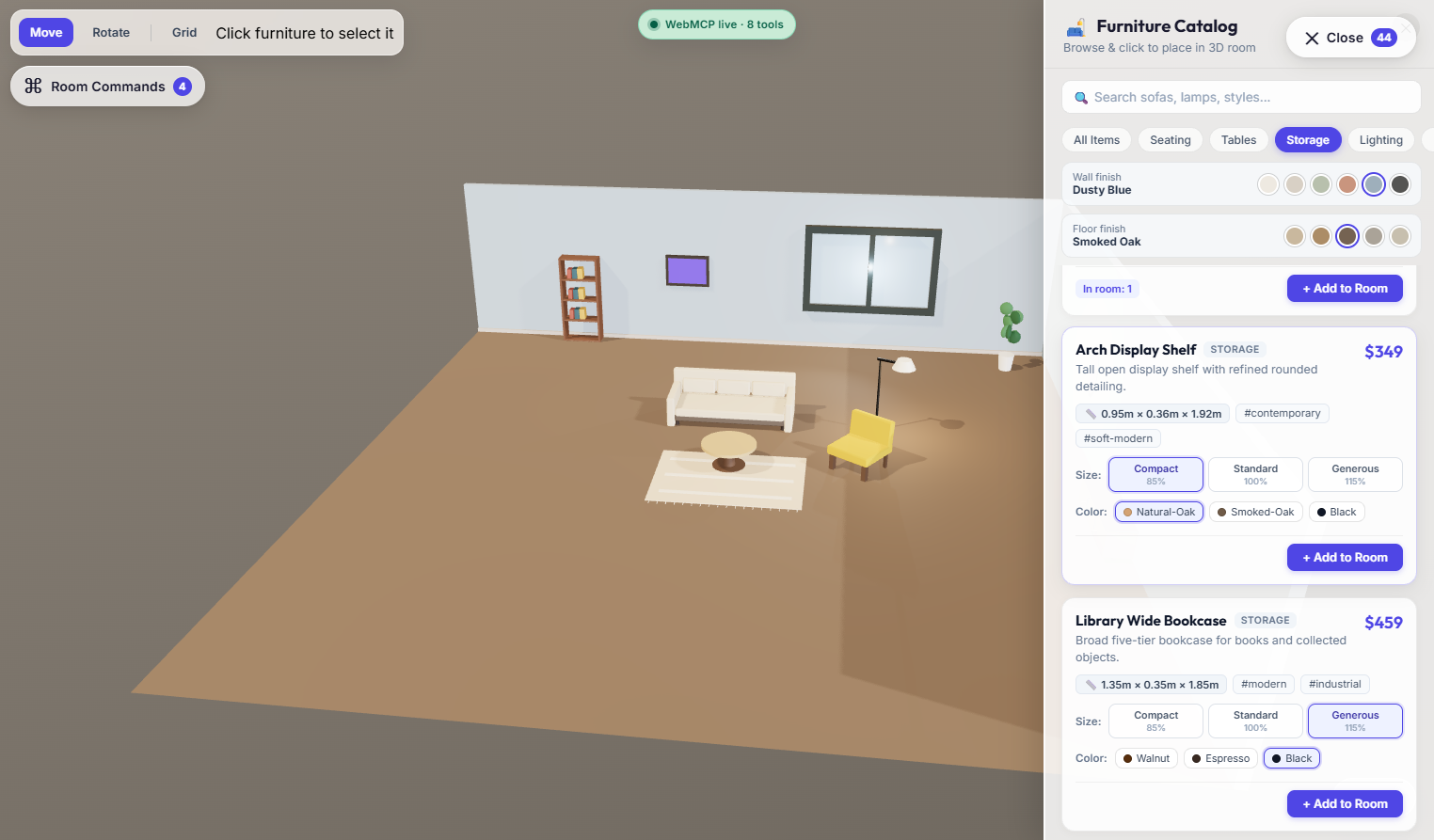
PromptDecor is an interactive 3D room designer. Users can browse a curated furniture catalog, add and customize pieces, move or rotate them in a 3D room, and receive layout guidance about lighting, walking flow, and clearance.
External AI agents can use WebMCP tools to inspect the catalog and live room state, then place, update, or remove furniture safely.
How we built it
We built PromptDecor with React, React Three Fiber, Drei, and Zustand.
- React Three Fiber renders the interactive 3D room and low-poly furniture.
- Zustand holds shared room, furniture, position, rotation, color, and finish state.
- A curated static catalog provides real item IDs, dimensions, styles, colors, and prices.
- WebMCP exposes structured tools for catalog search, live scene context, placement, updates, removal, room finishes, and spatial advice.
- Gemini-powered WebMCP testing validates that an external agent can interact with the live scene.
- Collision and room-boundary logic keep furniture inside the platform and prevent overlaps.
Challenges we ran into
The hardest challenge was spatial state synchronization. A dragged object must update the 3D canvas, Zustand store, collision system, and agent-visible room context without jumping back to an old position.
We also had to distinguish catalog IDs from individual scene-instance IDs, prevent hallucinated furniture and colors, handle rotated furniture footprints, and make the WebMCP tool layer safe enough for an agent to use.
Accomplishments that we're proud of
We created more than a chat interface: PromptDecor is a shared visual workspace where users and agents can affect the same 3D scene.
- Live WebMCP tools update the visible 3D room.
- Catalog-grounded placement prevents invented furniture.
- Room bounds and collision-aware placement keep layouts usable.
- Manual drag/rotate controls work alongside agent-driven changes.
- Spatial feedback considers window light, furniture clearance, and walking flow.
- A polished catalog drawer, room finishes, size choices, and camera views improve the experience.
What we learned
We learned that agent tools need strict contracts. Clear JSON schemas, exact IDs, validation, and state ownership are essential when an AI agent can change a visual application.
We also learned that 3D AI experiences need more than natural-language reasoning: they need reliable coordinate systems, collision rules, visual feedback, and safe fallbacks.
What's next for PromptDecor
Next, we want to add real GLTF furniture models, richer material previews, saved room layouts, and more sophisticated design recommendations.
We also plan to improve the reverse collaboration loop so an external agent can make more catalog-aware suggestions—for example, recommending a lower-profile bookshelf near a window rather than only warning that it blocks light.
Built With
- css
- javascript
- json
- jsx
- react
- react-19
- react-three-fiber
- three.js
- zustand


Log in or sign up for Devpost to join the conversation.