-
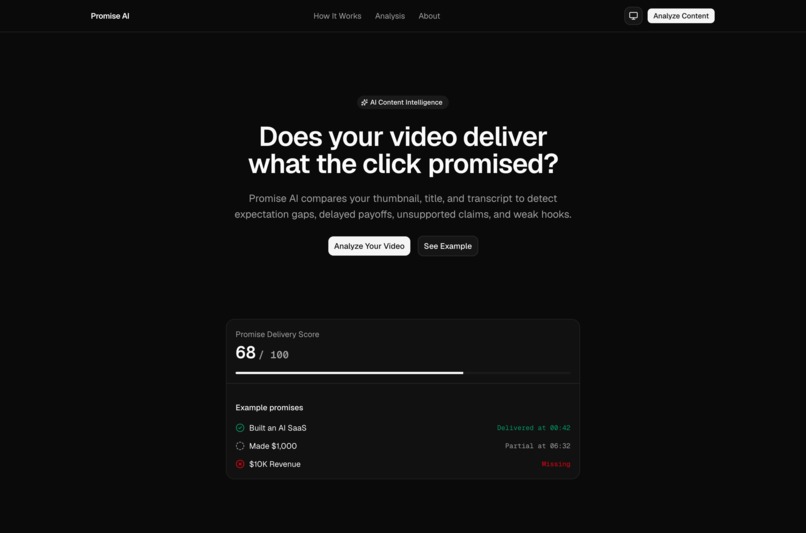
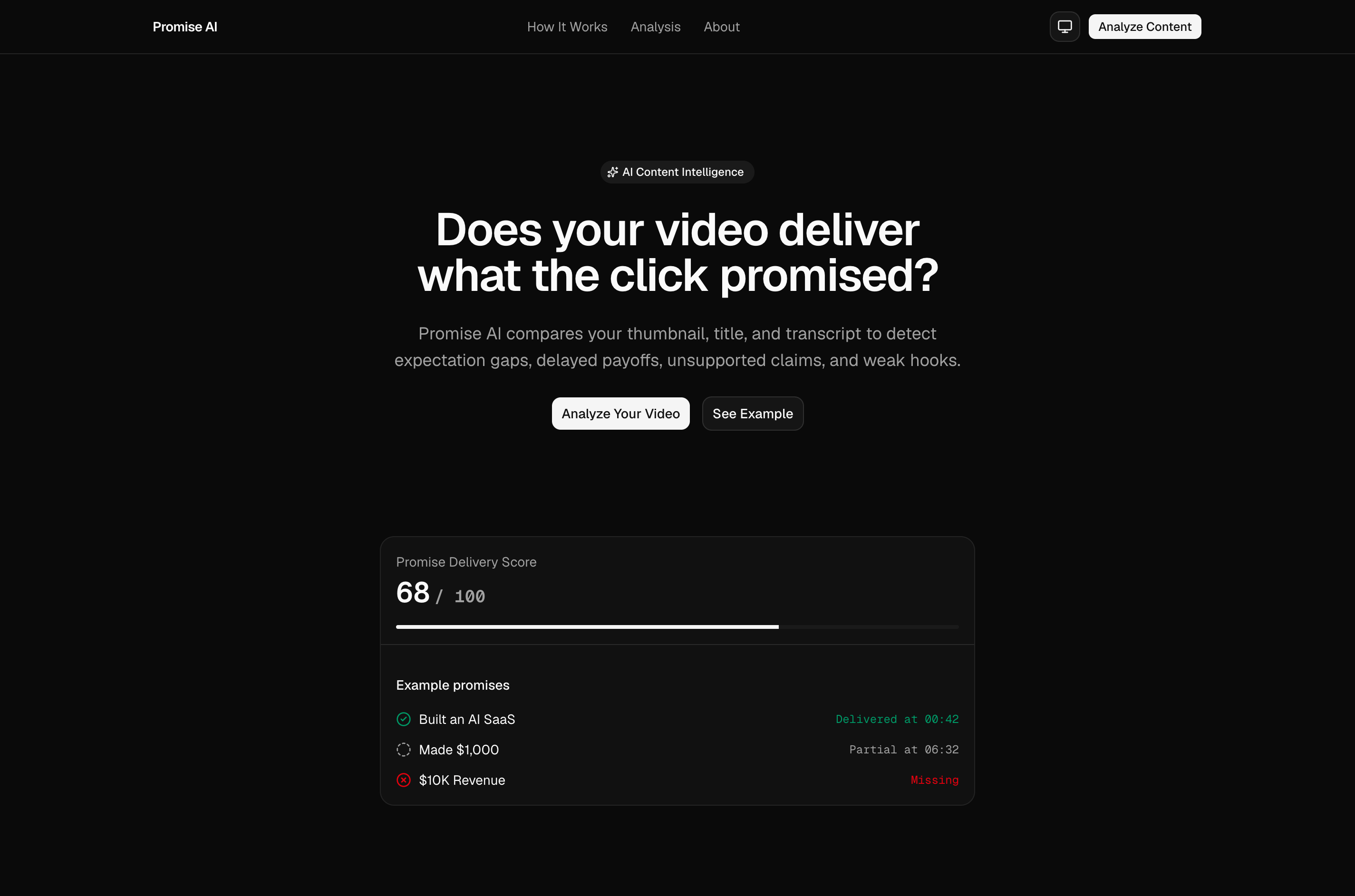
Landing page
-
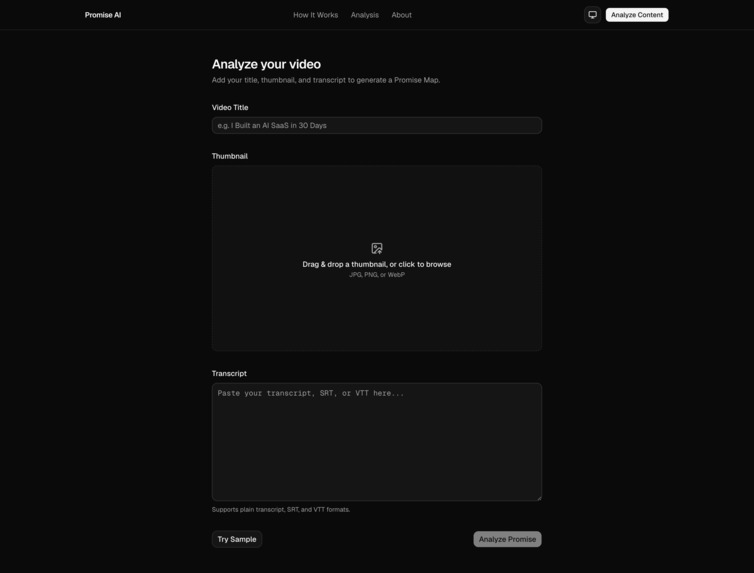
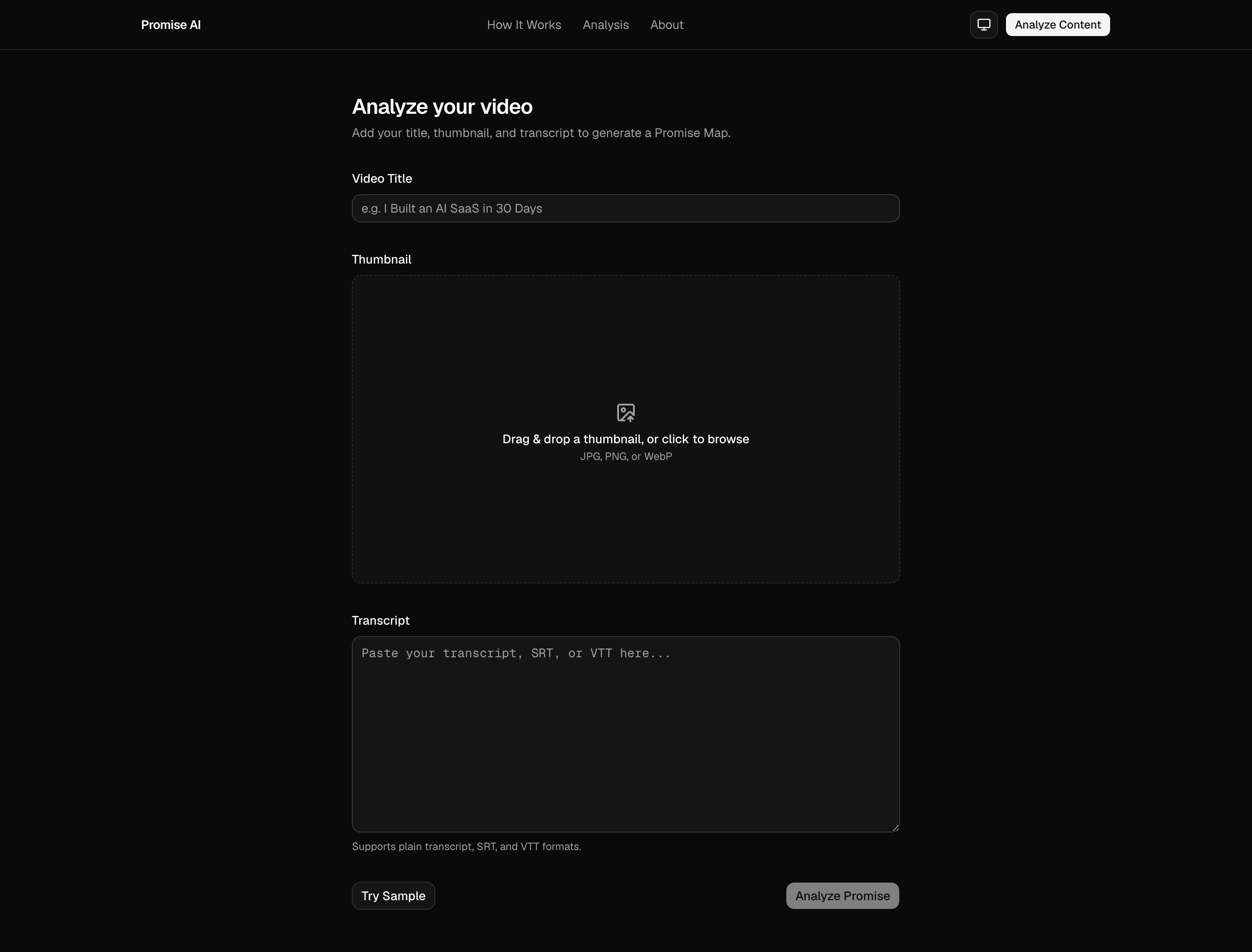
Analyze Screen
-
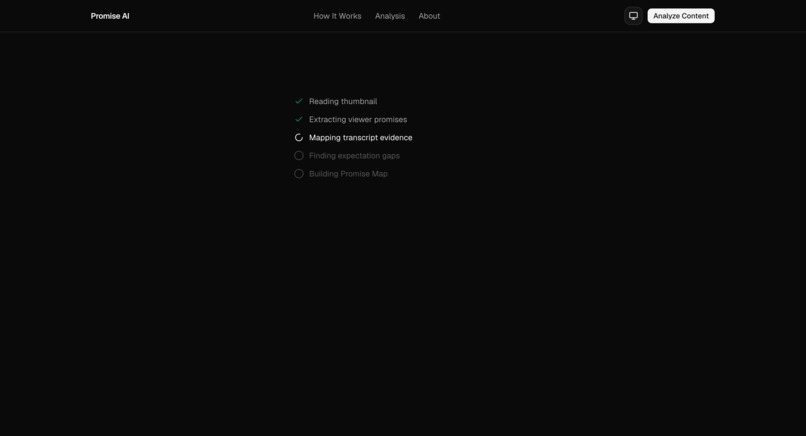
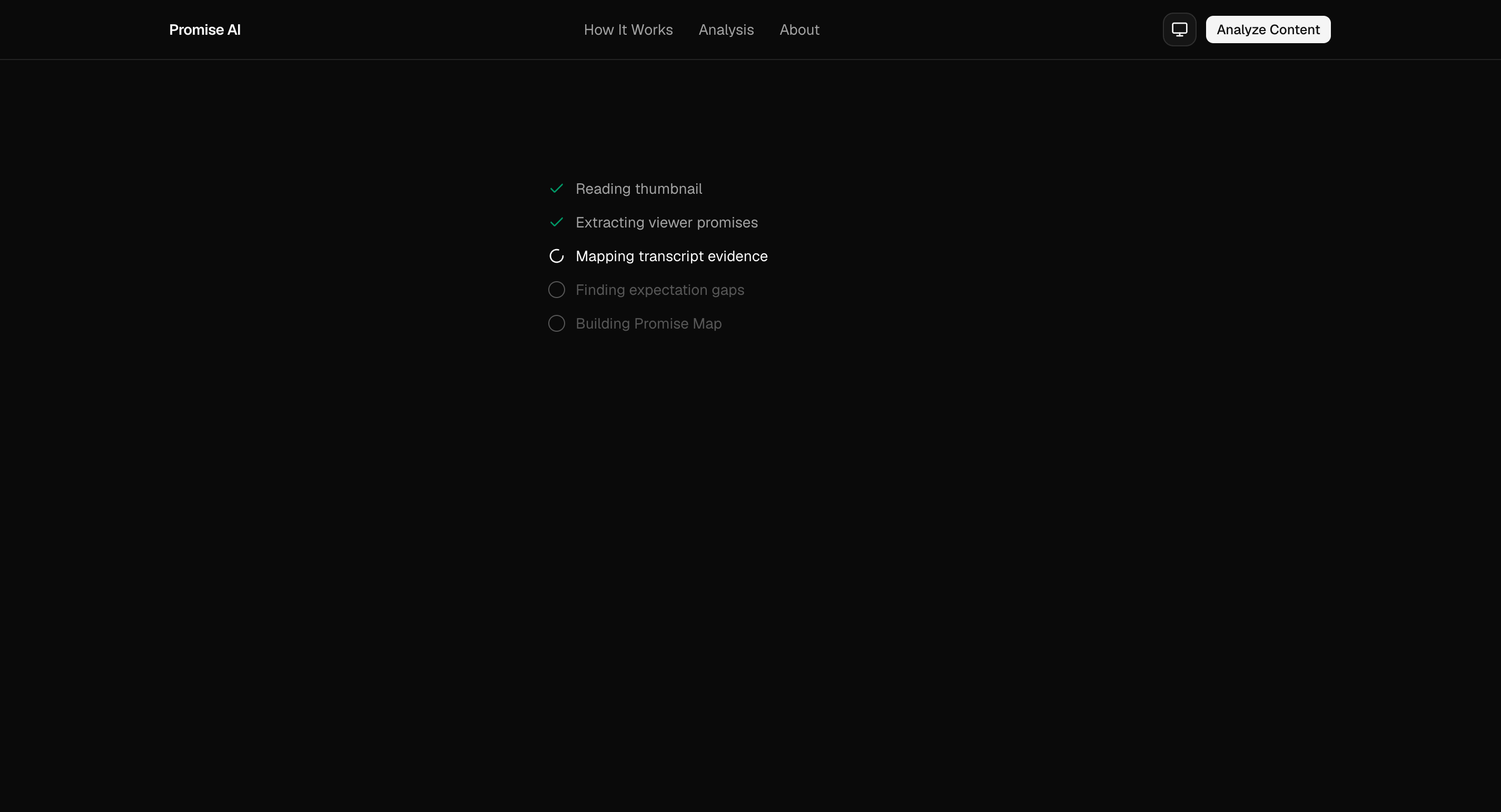
Analysis Going on
-
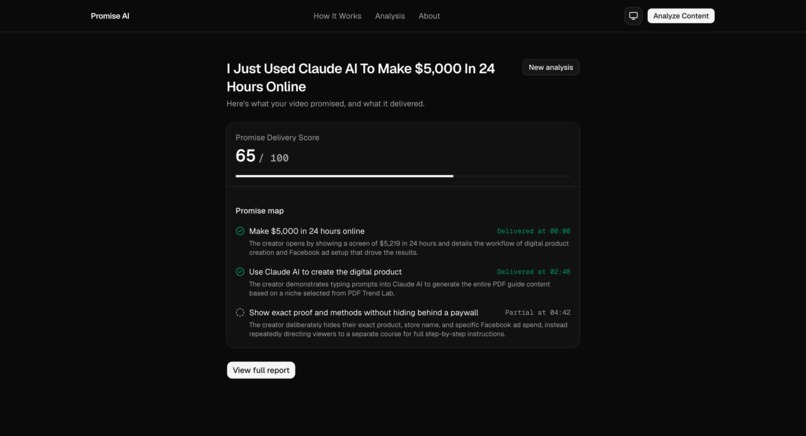
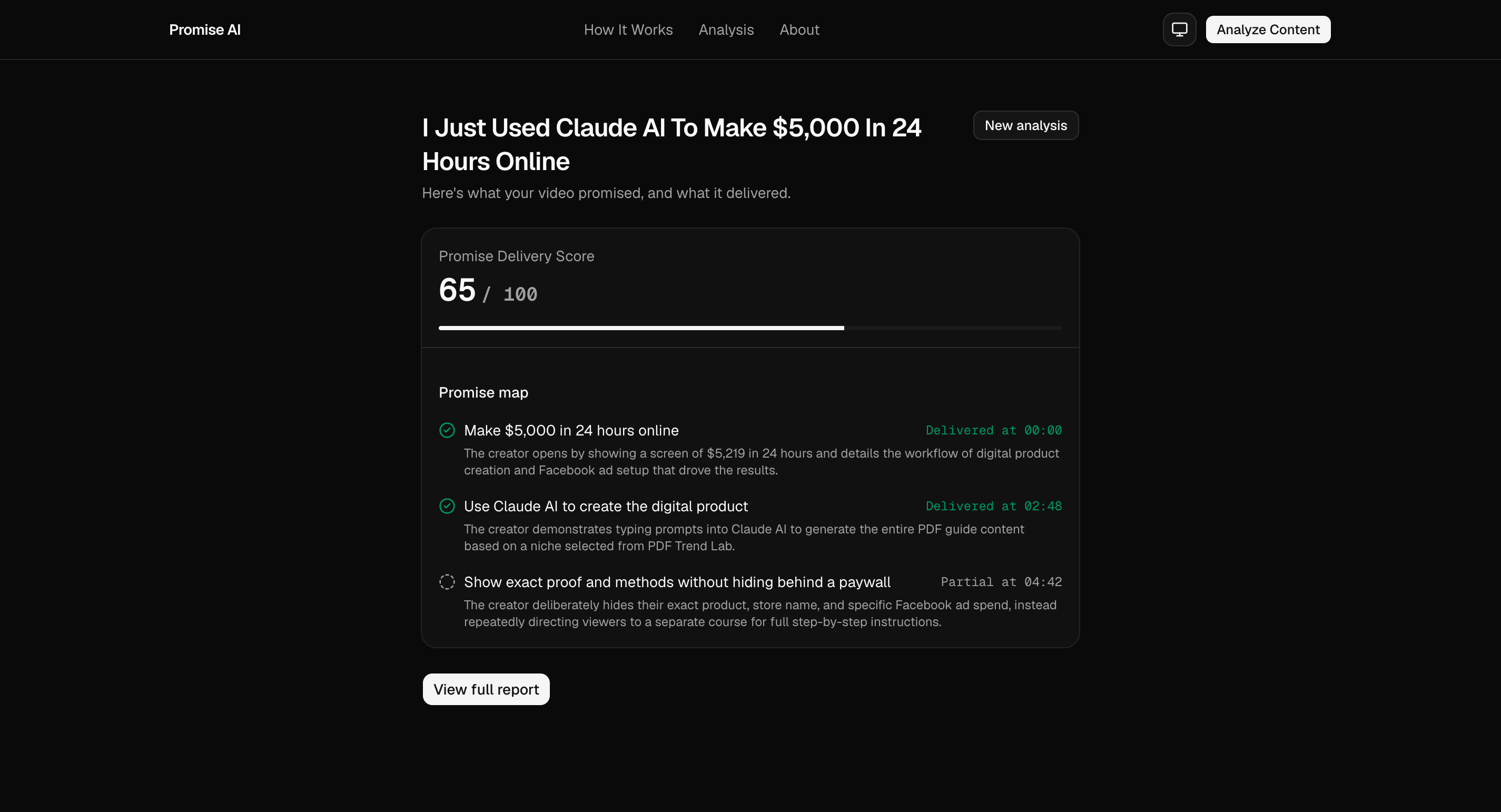
Analysis Done
-
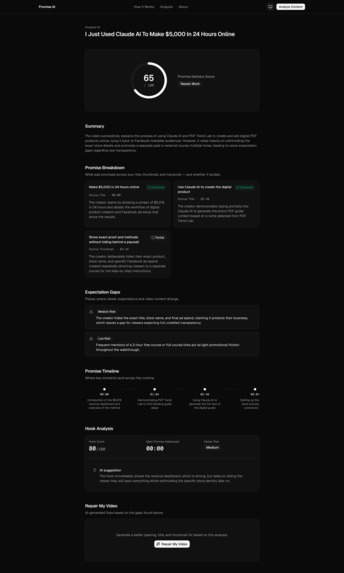
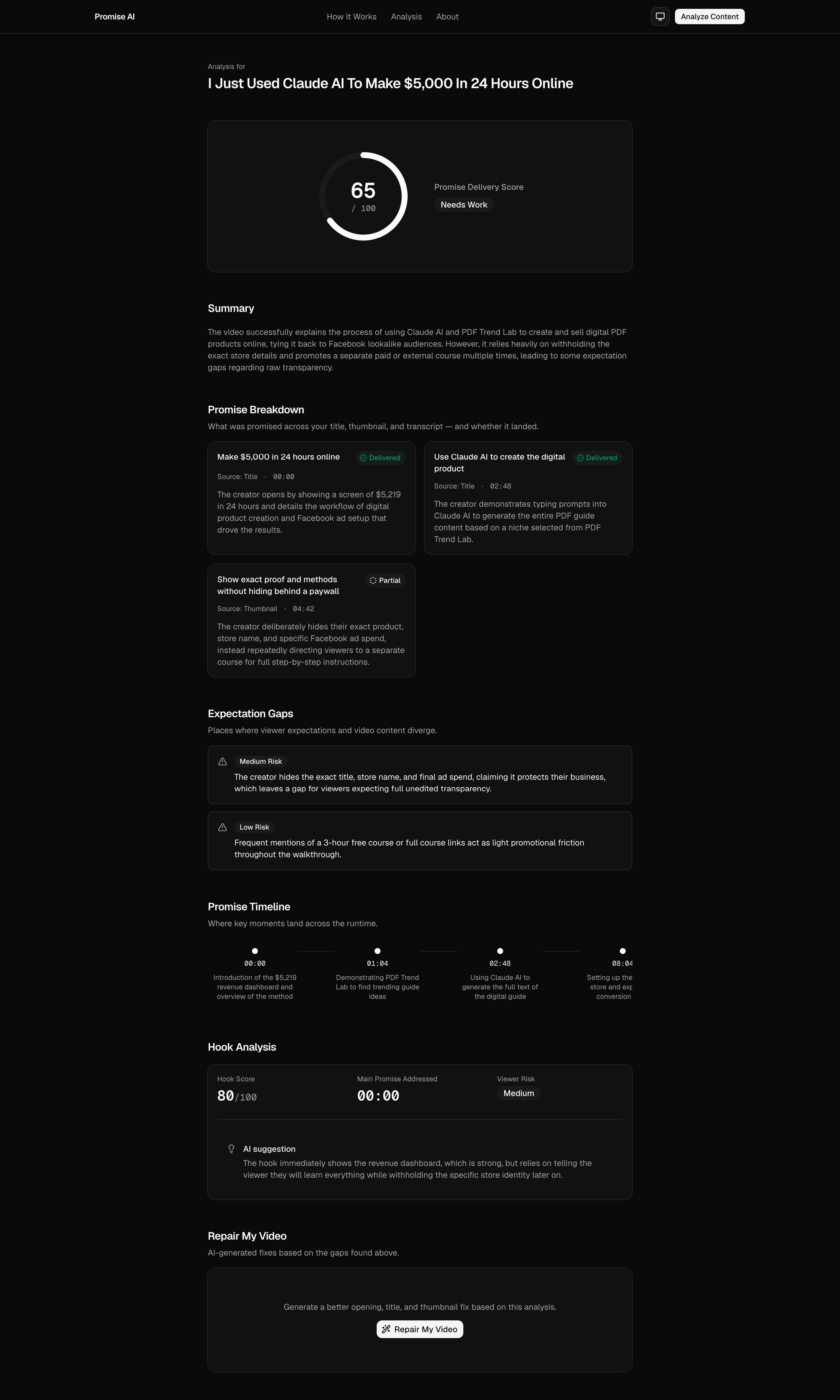
Full report of Analysis
Inspiration
Creators spend a lot of time optimizing titles, thumbnails, hooks, and scripts, but these pieces are usually reviewed separately.
A thumbnail may promise "$10K in 24 hours", while the actual video only shows $1K in revenue. A title may promise a result that is not revealed until several minutes into the video.
That creates an expectation gap between why someone clicked and what the content actually delivers.
We built Promise AI to answer one simple question:
Does your video actually deliver what the click promised?
What it does
Promise AI analyzes three parts of a video:
- Thumbnail
- Title
- Transcript
Using multimodal AI, it identifies the promises and expectations created before the viewer starts watching and compares them against the actual content.
It generates a Promise Delivery Score and detects:
- Delivered promises
- Partially delivered promises
- Missing claims
- Delayed payoffs
- Unsupported title or thumbnail claims
- Weak opening hooks
- Viewer expectation gaps
It also creates a Promise Timeline showing where important claims are actually fulfilled in the video.
Finally, the Repair My Video feature suggests:
- A stronger opening hook
- A more accurate title
- A better thumbnail direction
How we built it
Promise AI is built with Next.js, TypeScript, Tailwind CSS, shadcn/ui, Base UI, and Google Gemini.
The user uploads a thumbnail, enters the video title, and pastes the transcript.
The backend sends the thumbnail, title, and transcript together to Gemini for multimodal analysis.
Gemini returns structured analysis containing:
- Promise Delivery Score
- Promise breakdown
- Expectation gaps
- Timeline events
- Hook analysis
- Content repair suggestions
The AI response is validated using Zod before being rendered in the results dashboard.
The interface uses a minimal near-monochrome design so the analysis remains the main focus.
Challenges we faced
One challenge was turning an open-ended AI response into predictable structured data that the frontend could reliably display.
We solved this by defining a strict response schema and validating AI output before using it.
Another challenge was handling thumbnail, title, and transcript context together while keeping the analysis focused on viewer expectations instead of producing generic content advice.
We also had to handle temporary AI model availability issues and design the application so failures could be surfaced cleanly instead of breaking the user experience.
What we learned
We learned that content quality is not only about generating better titles or thumbnails.
There is another important problem: alignment between packaging and payoff.
Analyzing what a viewer expects before clicking and comparing it with what the content actually provides creates a useful new feedback layer for creators.
We also learned a lot about multimodal AI analysis, structured LLM outputs, prompt design, validation, and building an AI product around a focused creator workflow.
What's next
Next, we want to add:
- Direct YouTube URL analysis
- Automatic transcript extraction
- Automatic thumbnail fetching
- Retention-aware promise timing
- Side-by-side title and thumbnail testing
- Creator history and score tracking
- Batch analysis for multiple videos
The goal is to make Promise AI a pre-publish quality check for creators before a video goes live.
Built With
- ai
- api
- base
- css
- dropzone
- gemini
- generative
- lucide
- multimodal
- next-themes
- next.js
- react
- recharts
- shadcn/ui
- tailwind
- typescript
- ui
- zod

Log in or sign up for Devpost to join the conversation.