-
-
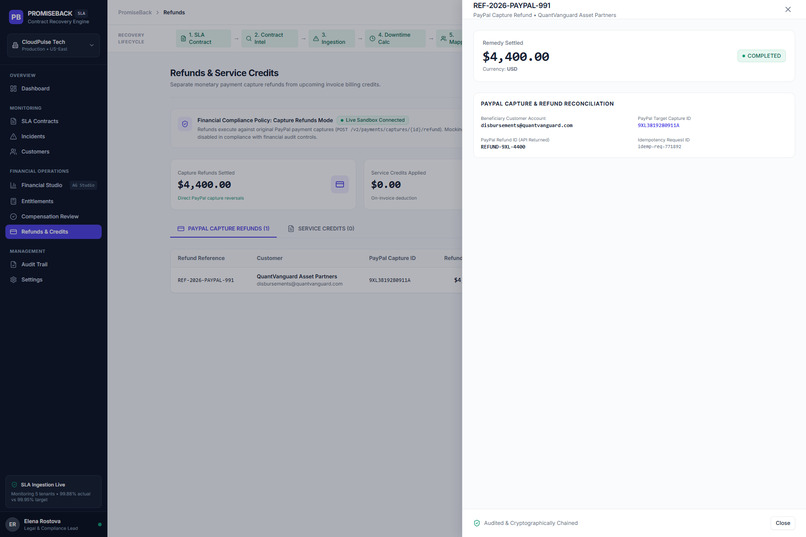
PayPal Integration
-
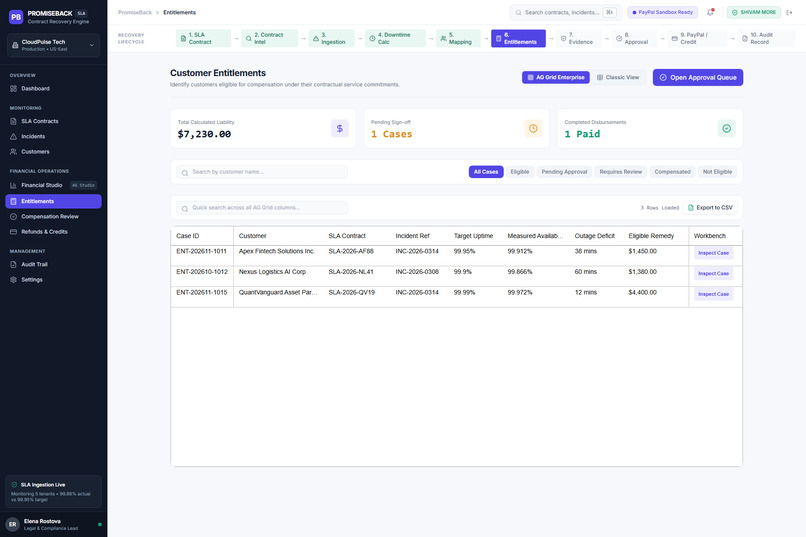
SLA - Recovery
-
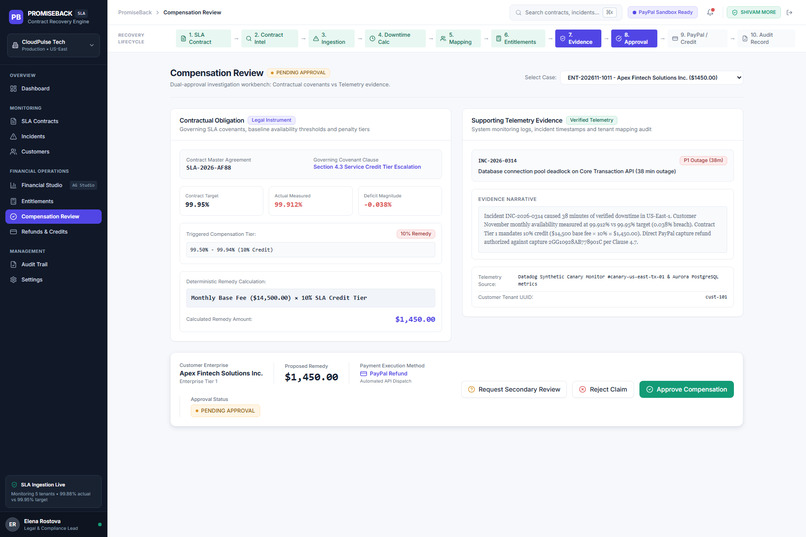
Approval - Governance
-
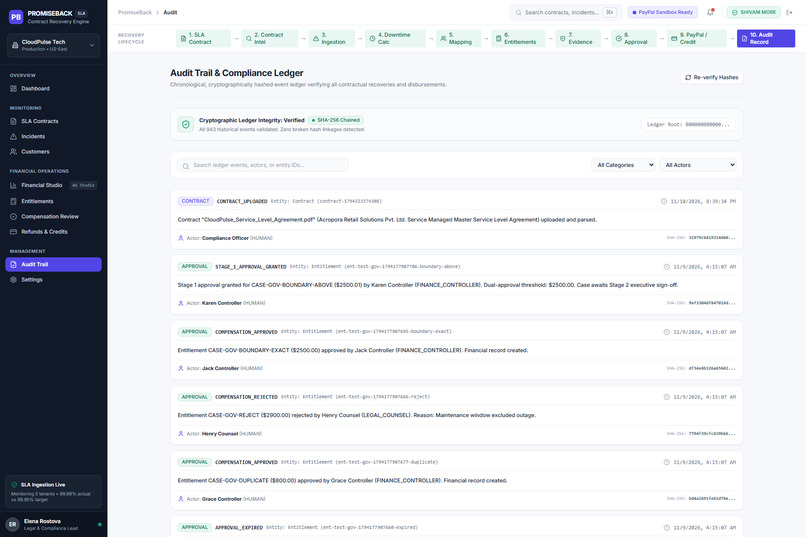
Audit Ledger
-
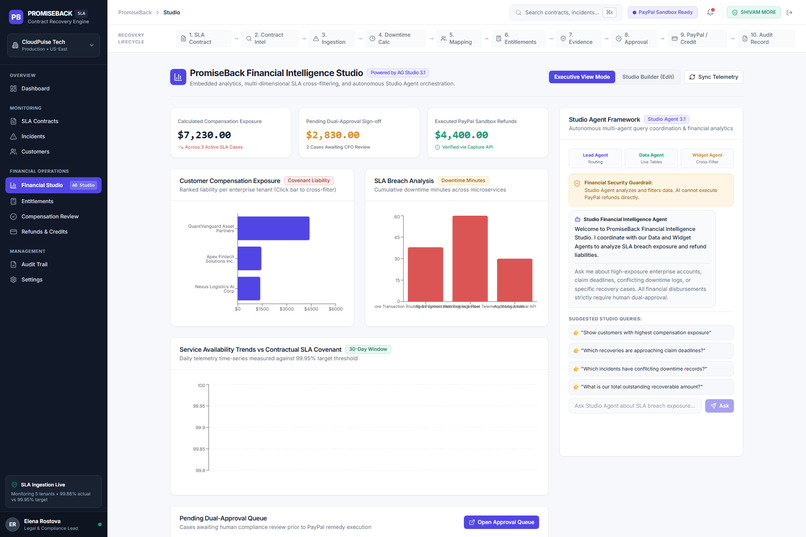
Financial Studio
-
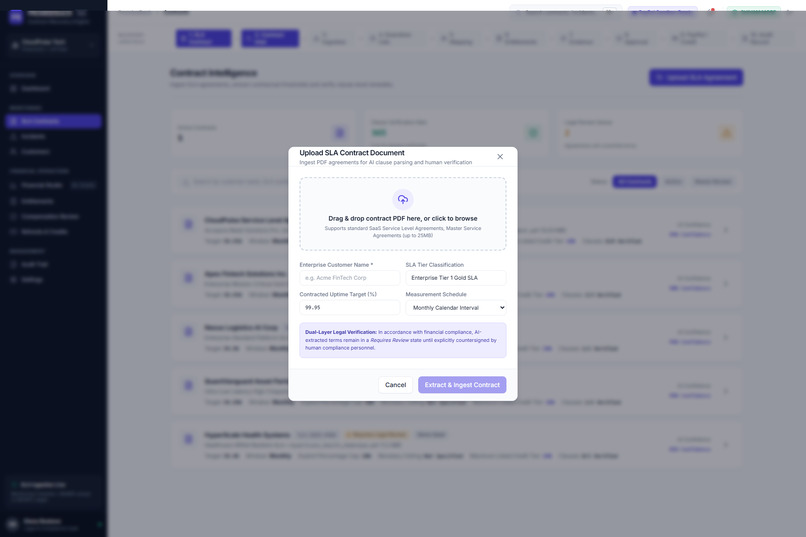
Contract Upload Popup
-
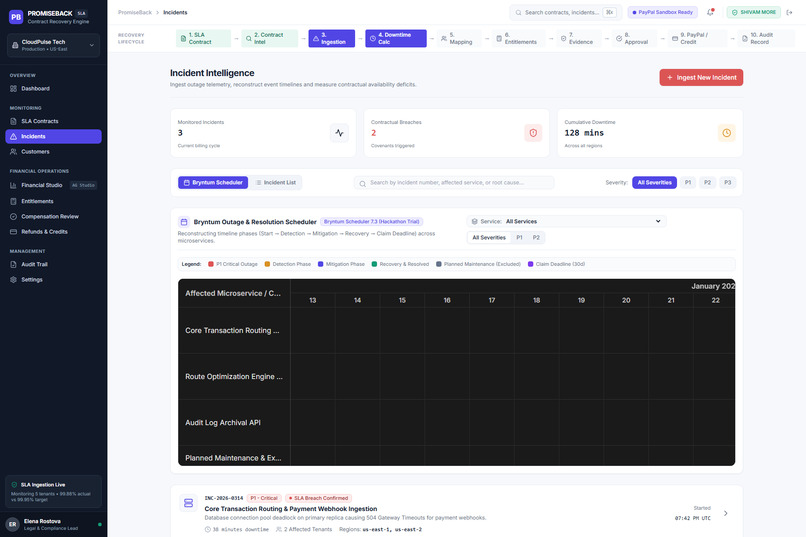
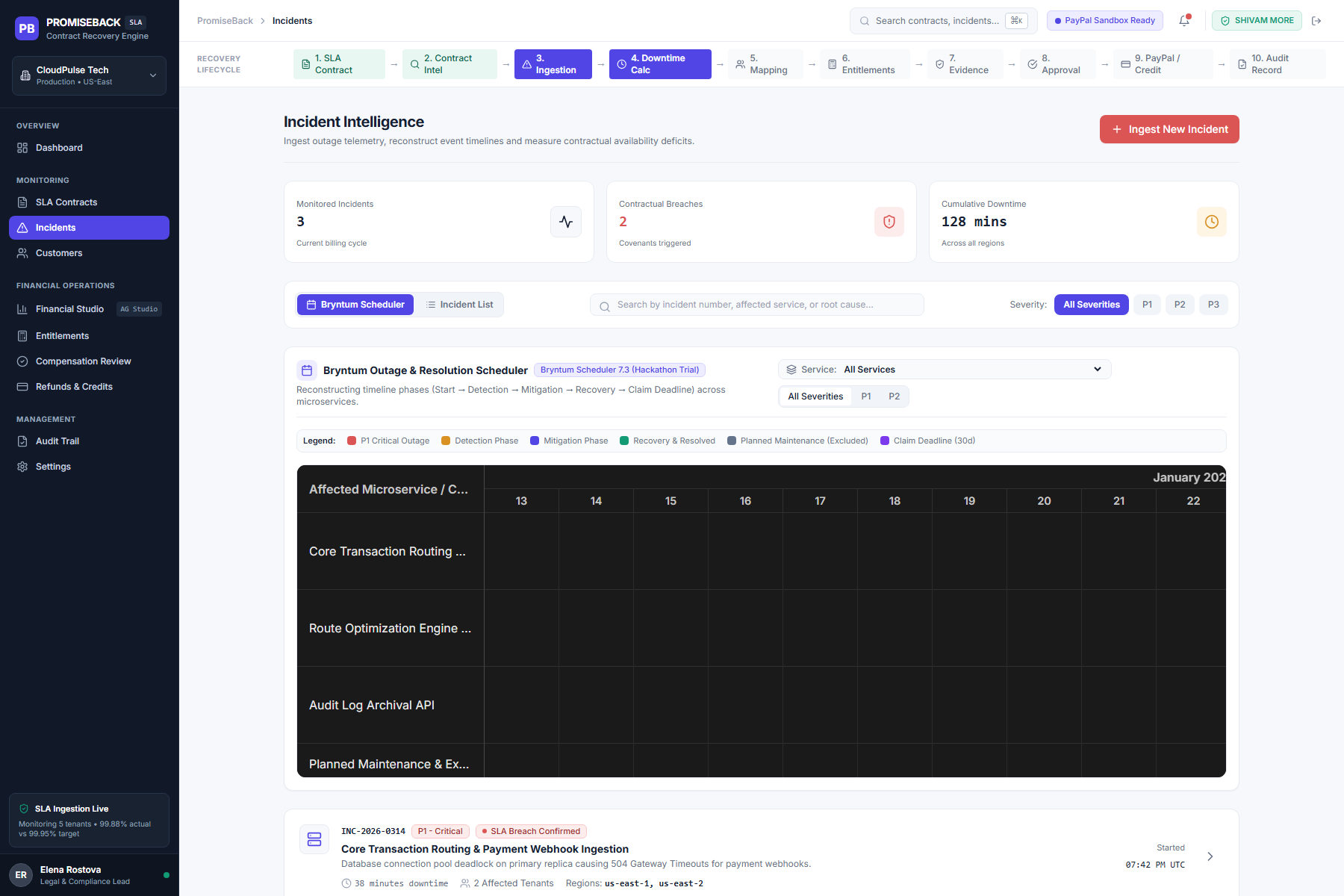
Incident Timeline
-
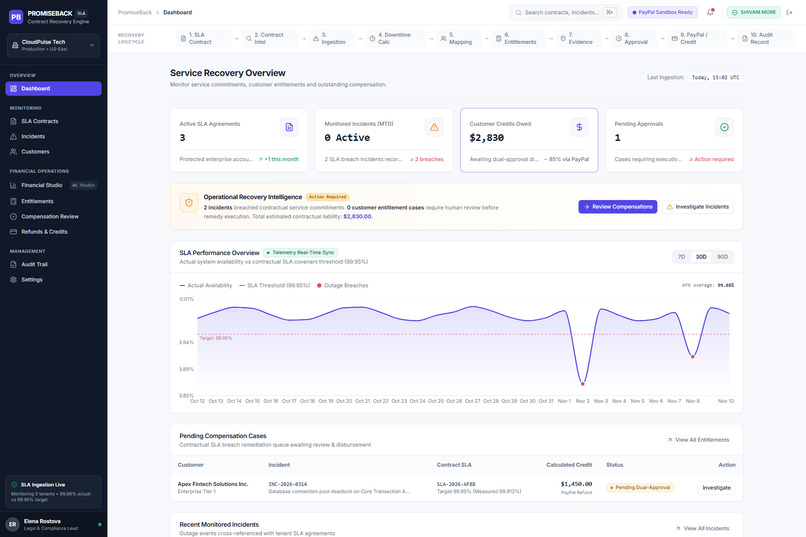
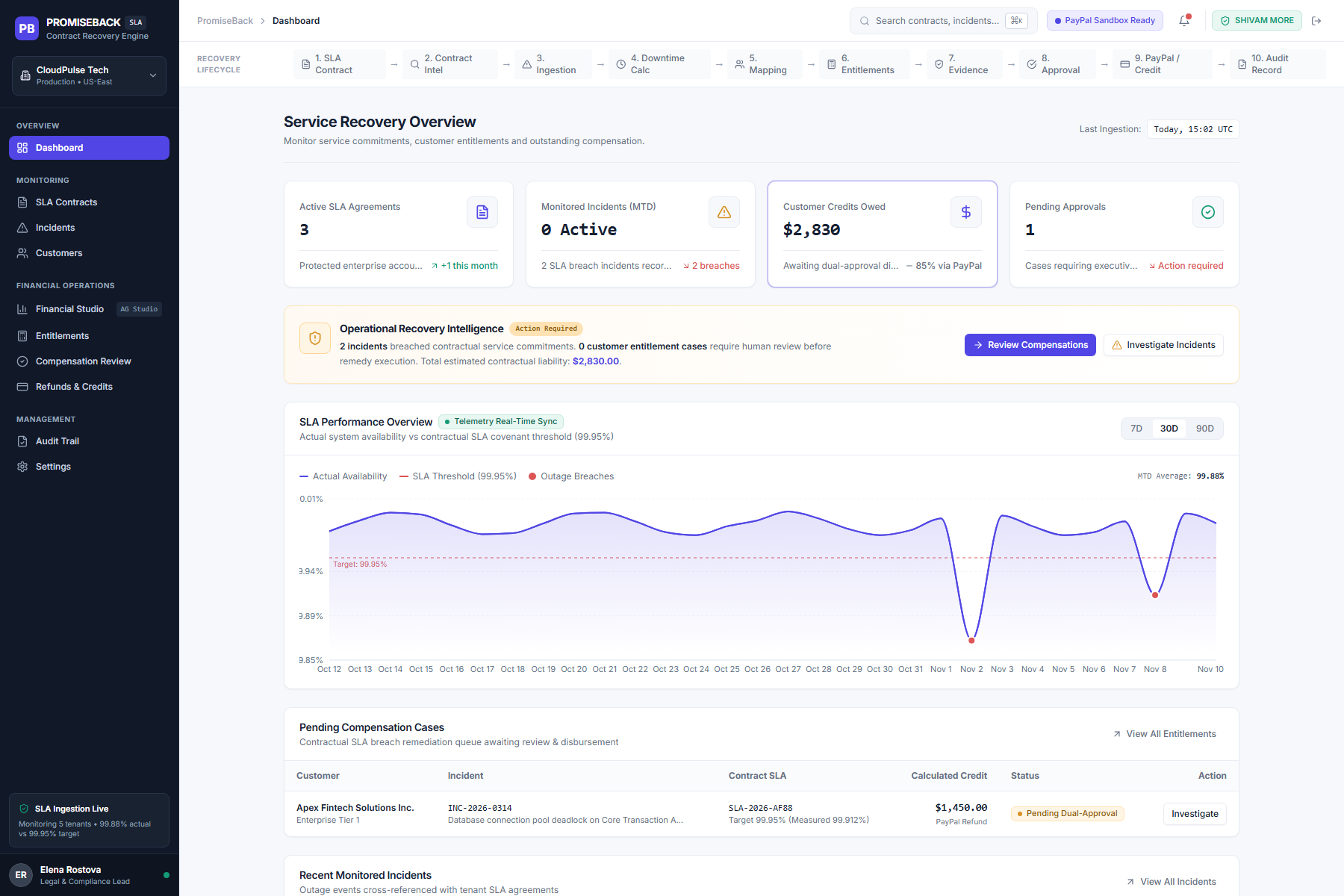
DASHBOARD
-
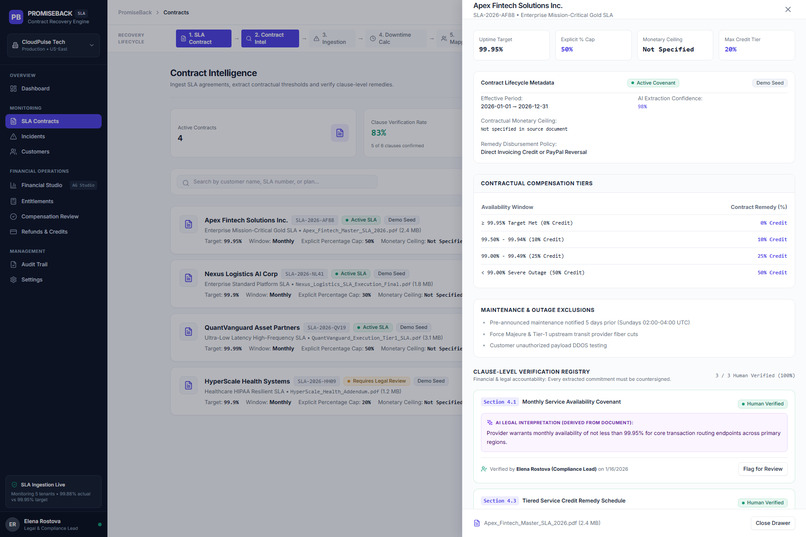
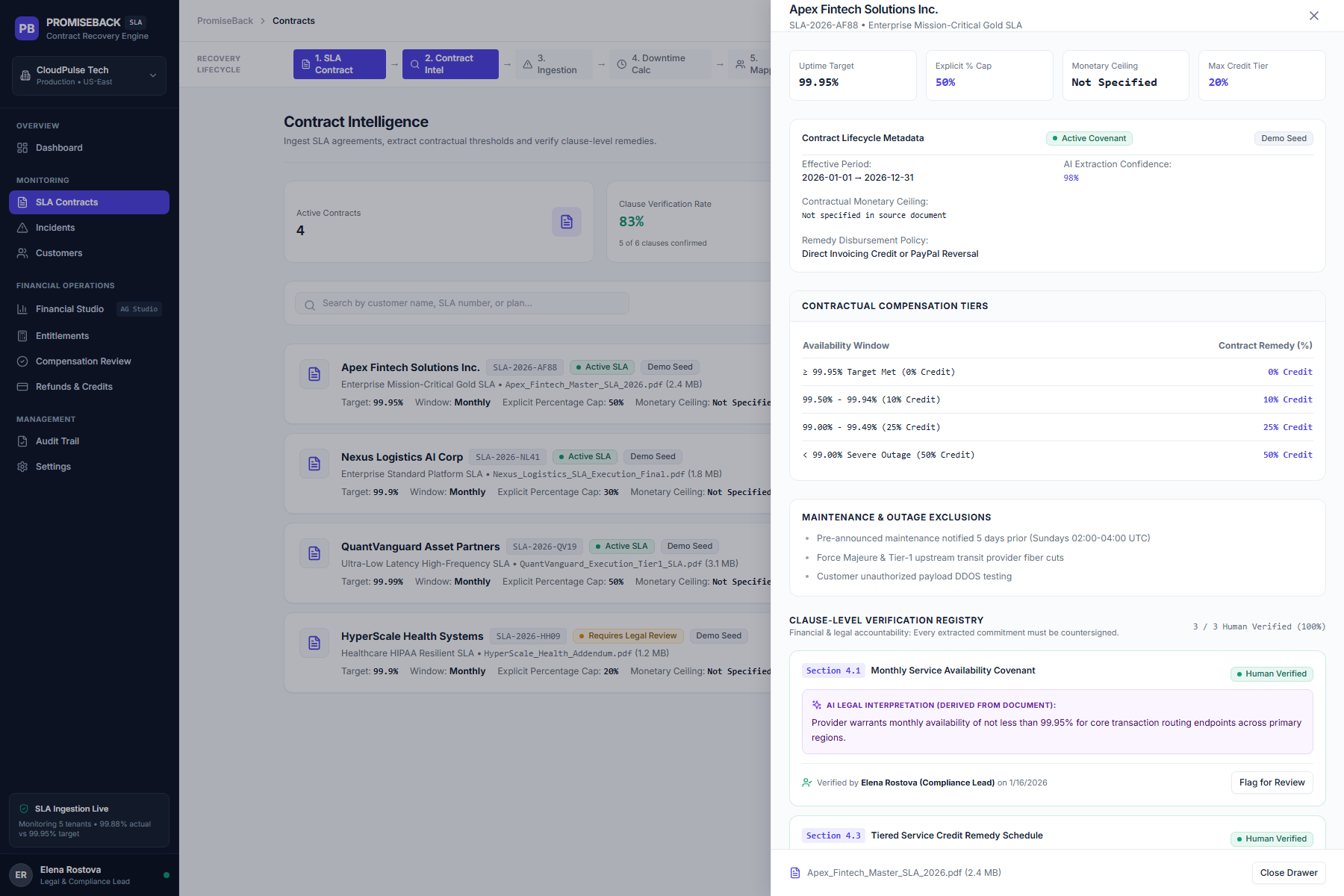
Contract Intelligence using Gemini
-
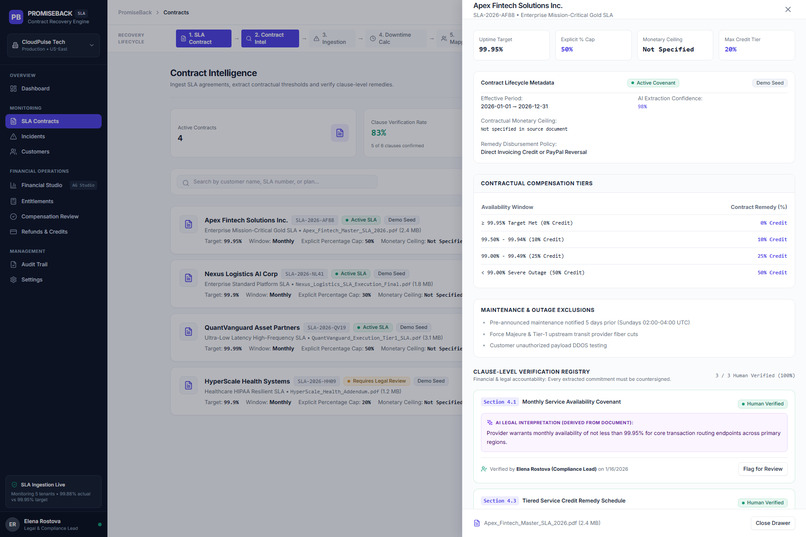
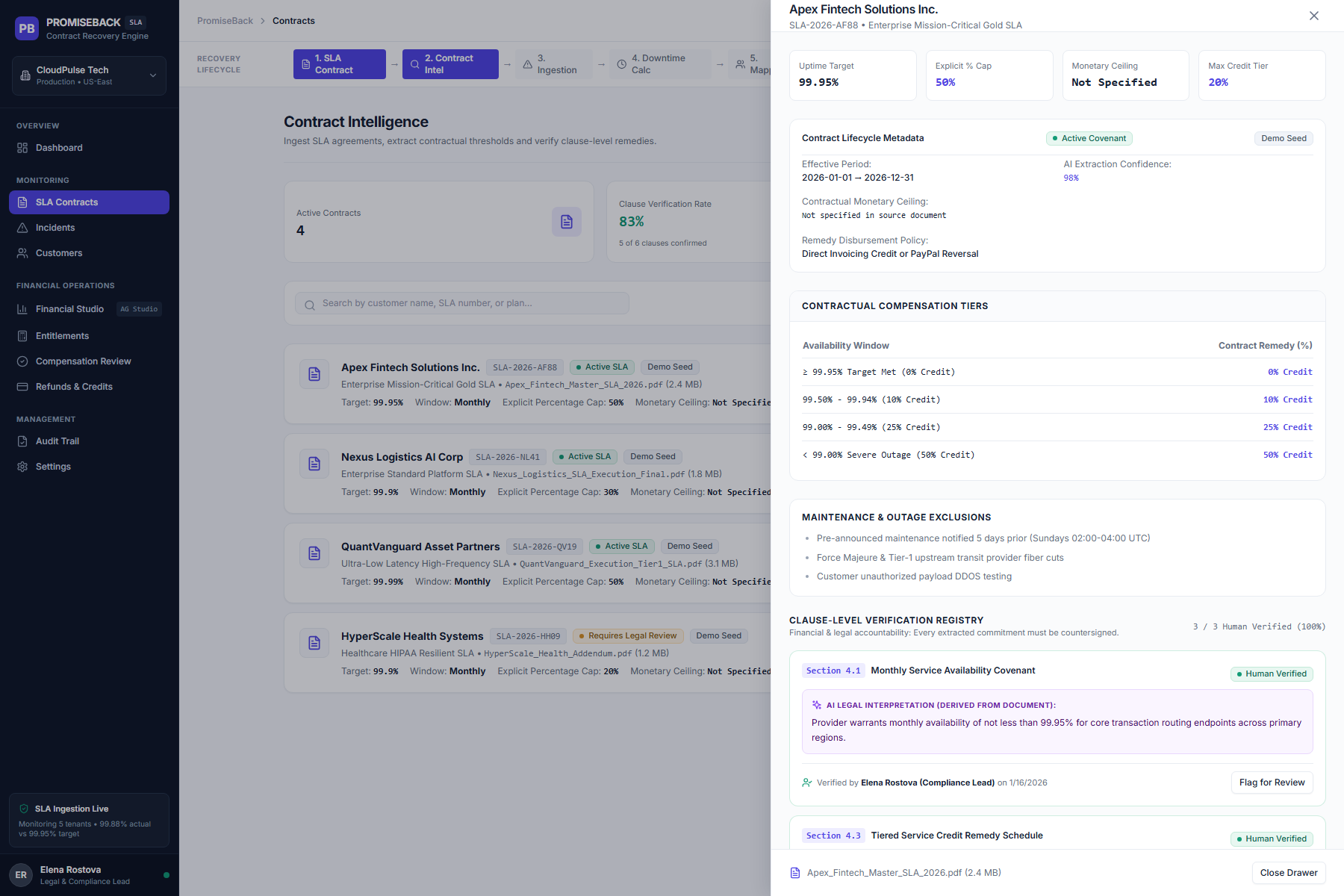
Clause Verification
Inspiration
In modern environments, many aspects of a business will be delivered by third-party service providers. Service Level Agreements will be in place to provide an understanding of what level of service is being offered by the third-party. This can range from cloud services, payment services, telecommunication services and logistics services.
When a service provider doesn’t deliver the service as expected there is usually a lot of work to be done to understand what the outage is, what your contractual obligations are, what the incident was, what evidence you have to back up the incident, what financial compensation will be due. From this IT can become quite challenging to identify and take advantage of any financial compensation opportunities.
According to the Uptime Institute’s Annual Outage Analysis 2026, 57% of people in their 2025 Annual Survey said that their most recent major outage caused them to spend over $100,000. One in five had spent over $1million. The research also shows that 2/3rds of public outages tracked over 9 years were from third-party IT and Data Centre service providers.
This shows that although businesses are becoming increasingly reliant on third party service providers, the process of turning service failures into financial compensation can be quite complex.
We asked ourselves,
"What if businesses could convert any missed service commitments into tangible financial compensation opportunities?"
From this we wanted to create PromiseBack, an AI driven SLA recovery and financial governance tool.
Our aim was to ensure businesses are taking full advantage of any financial opportunities they are entitled to.
What IT does
PromiseBack takes a SLA breach and turns IT into a financial recovery opportunity.
This tool is not just an incident monitoring dashboard. It covers 5 key areas; Understanding your contractual obligations, Investigate incidents, Audit evidence, Determine compensation and Govern recovery.
Key features:
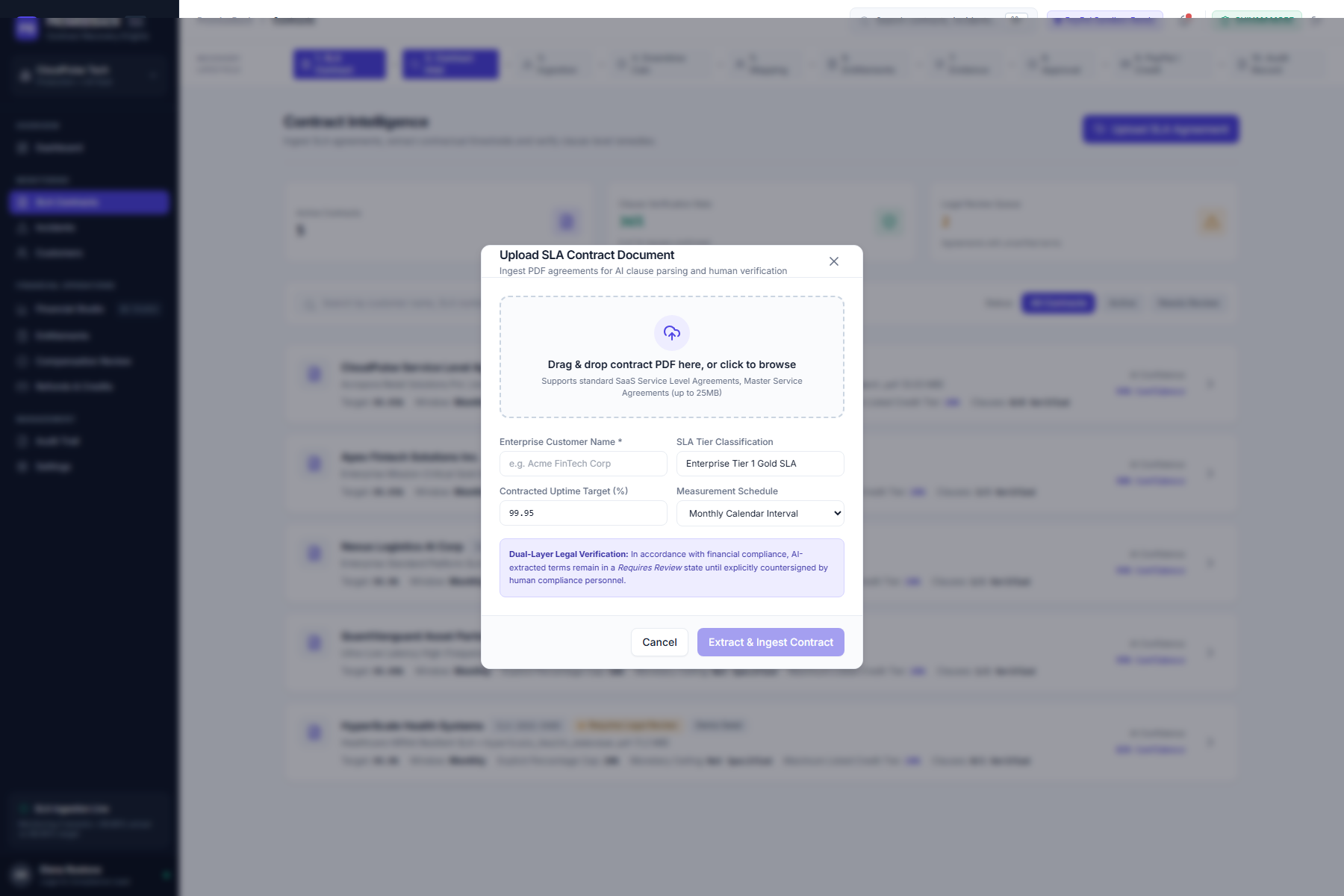
AI Contract Understanding: This uses a specialised Gemini AI agent to understand your SLA contracts. It will understand your contracts and extract any commitments you have such as uptime requirements, downtime allowance, timeframes and compensation.
Investigate Incidents: This uses the AI agent to analyse the incident data to see if IT falls under any contractual commitments. The AI agent will look at the incident details and when IT happened to identify any potential breaches of SLA. It will also distinguish between known facts and assumptions.
AI Evidence Audit: This looks at how complete and consistent the evidence is. It will identify any missing evidence and inconsistencies.
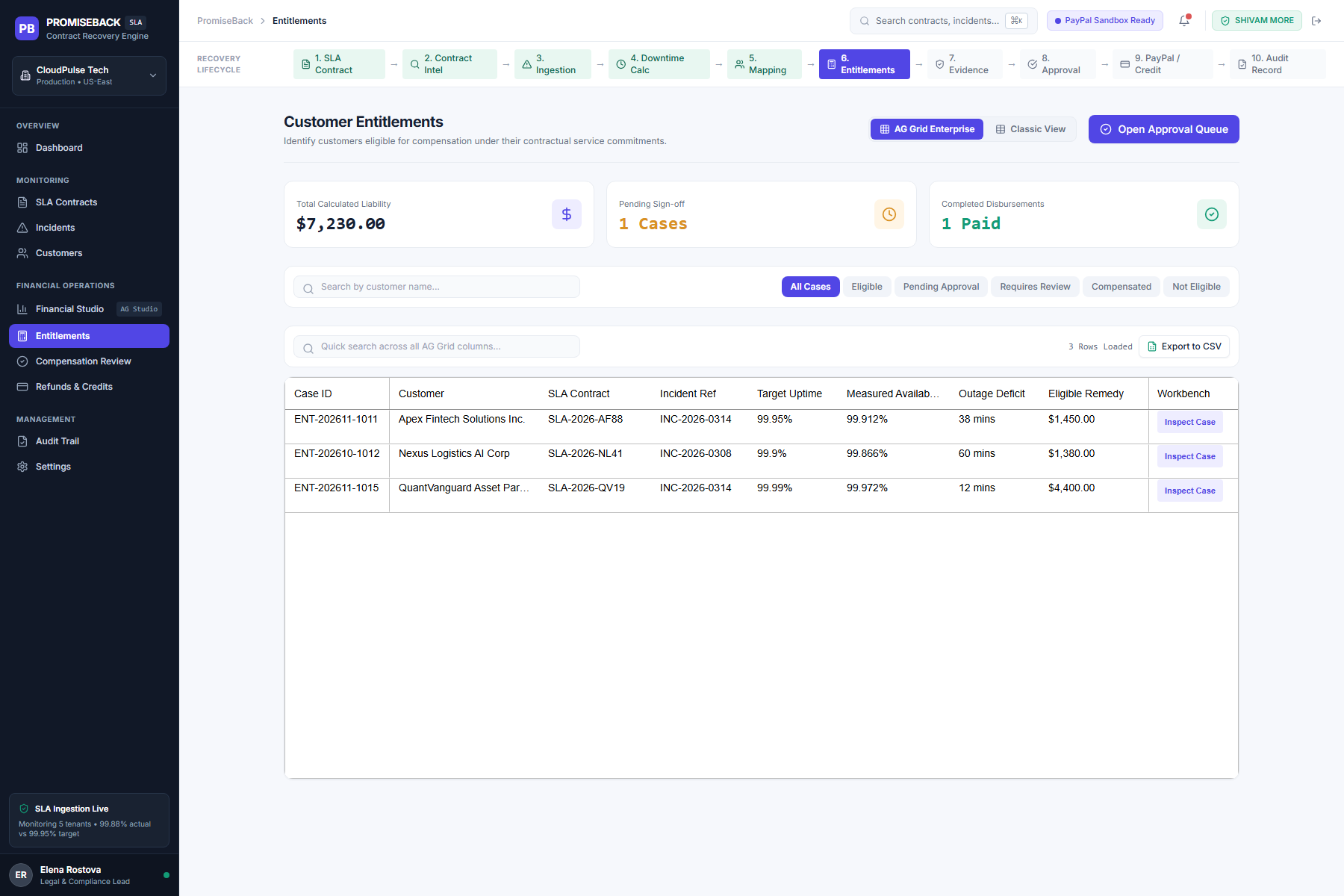
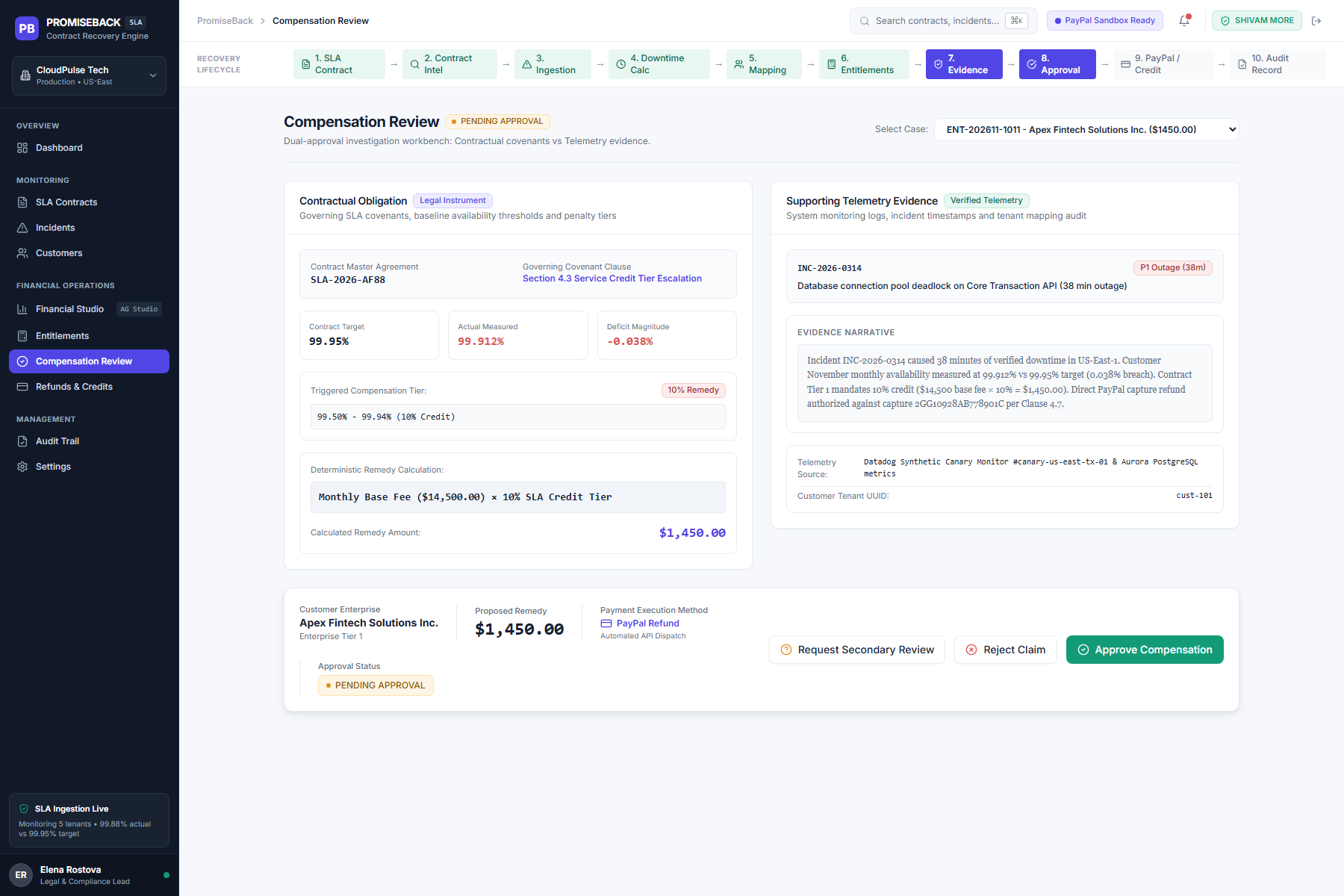
Financial Recovery Intelligence: Using AI to understand what compensation is available in your contract. The AI does not calculate the exact amount. Instead we have a deterministic financial Calculation Engine to ensure accurate calculations are made by using the correct rules from the contract.
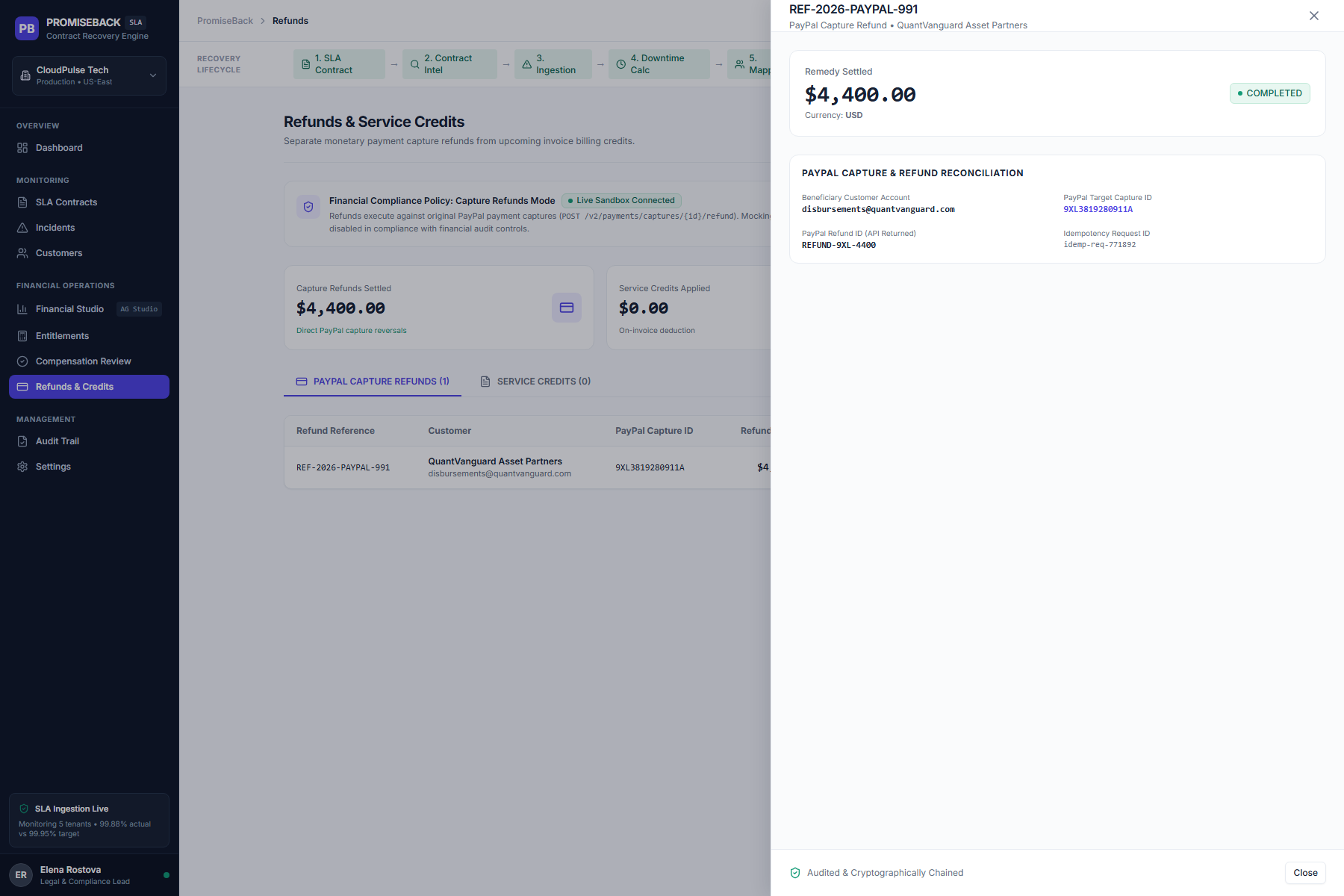
PayPal Recovery: Using PayPal Sandbox to allow refunds to be made on any eligible payments. This will only be possible once all the governing and approval criteria has been met.
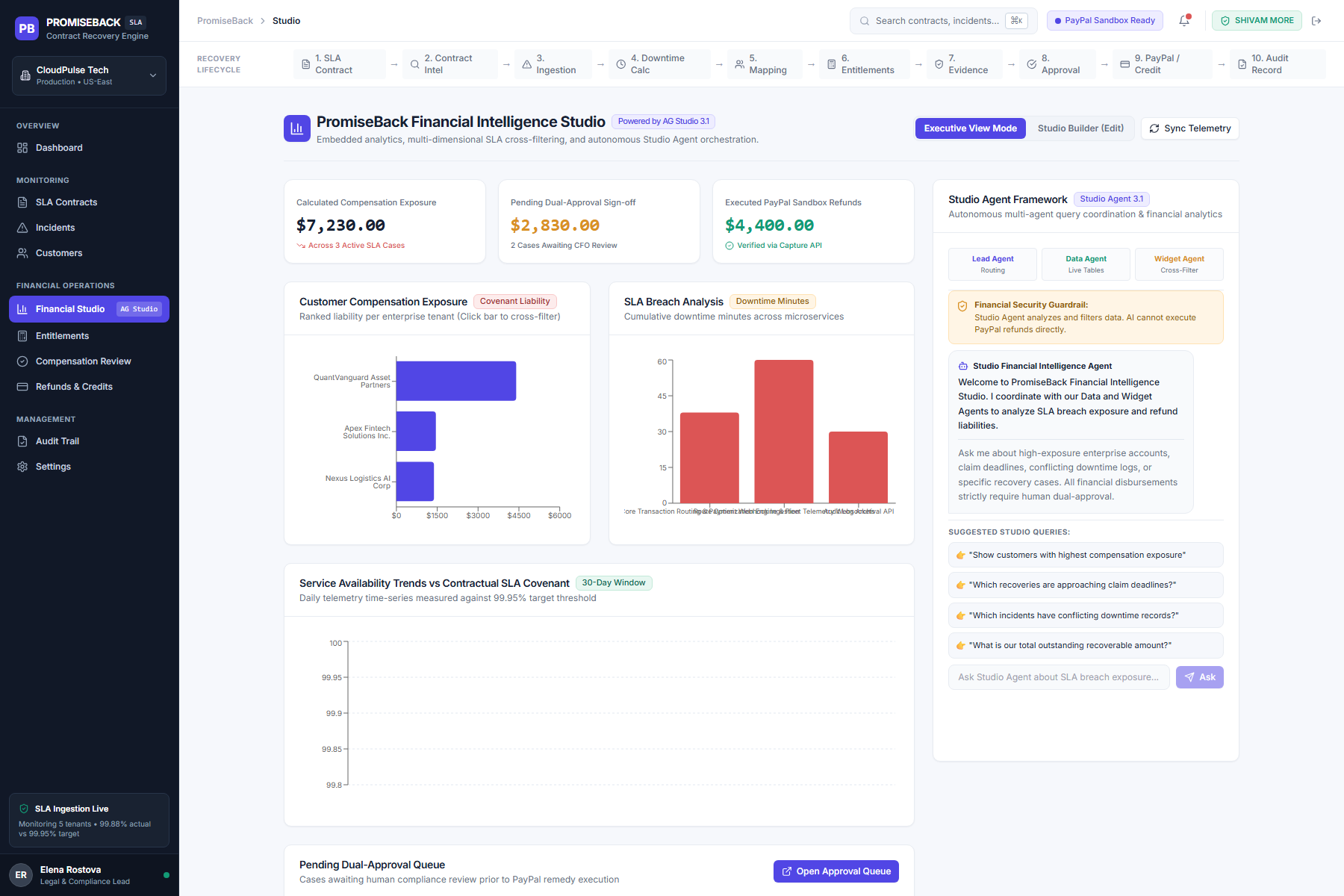
Financial Intelligence Studio: This uses a specialised Financial Intelligence Agent to provide a natural language interface. You can ask any questions relating to your finances and receive answers based on the context. This does not give the AI any power to perform any transactions.
Financial Governance: This adds an approval process. Higher value recoveries will need double approvals. It will also add an expiry to any approvals and prevent any unauthorised changes to the amount.
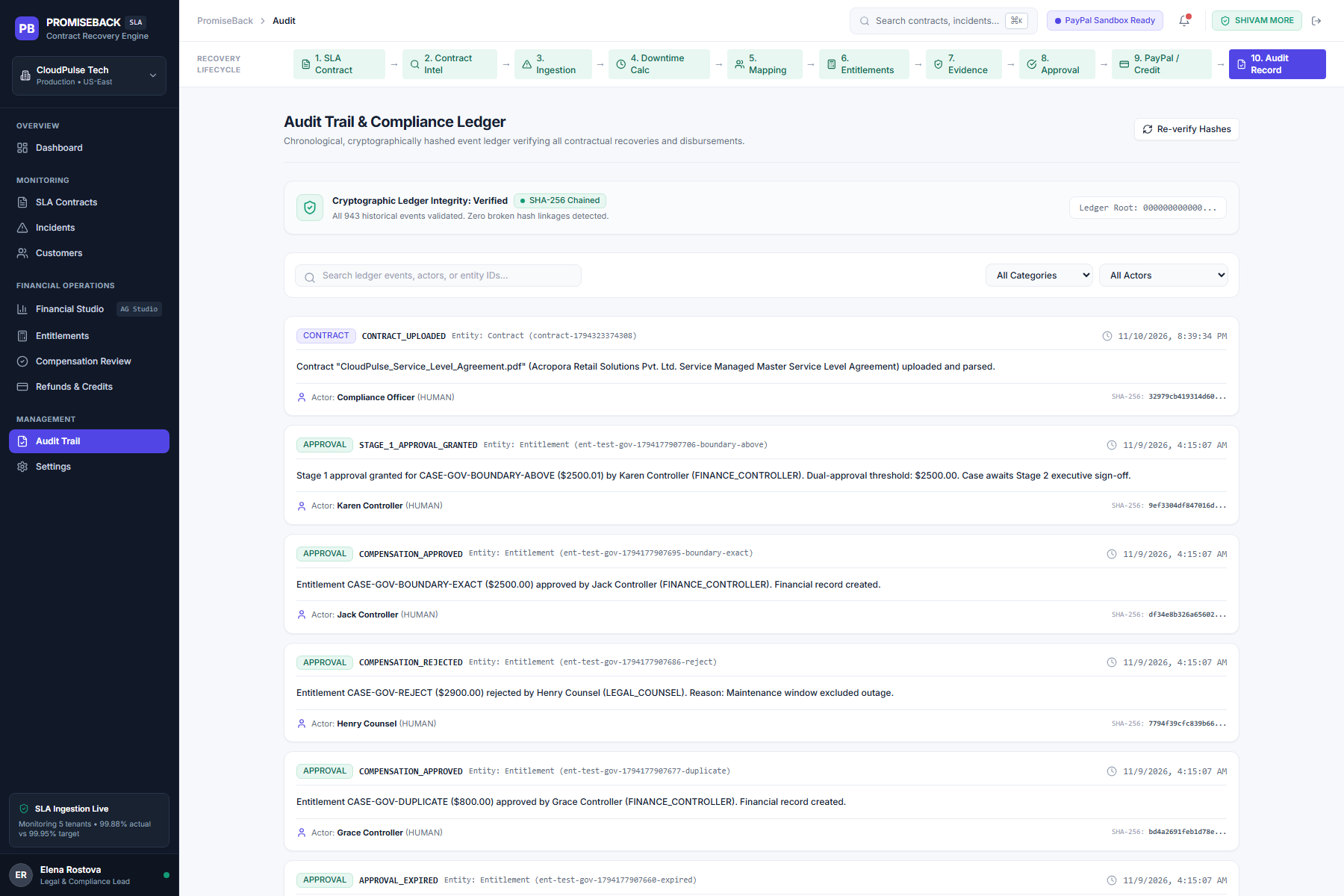
Audit Ledger: This creates a tamper evident ledger using SHA-256 hashing. All key financial and governance events will be recorded and linked to the previous event.
Dashboard: This allows you to view your contracts, incidents, recovery opportunities and financials in one place.
The main aim of PromiseBack is to ensure that when a service fails IT becomes an identifiable, evidence backed and financially recoverable opportunity.
How we built IT
PromiseBack was created using Next.js, React & TypeScript. We have used a modular approach to separate the AI, deterministic financial calculations, payment and audit.
Multi-AI Implementation
AI plays a large role in this project. We have created a specialised multi-AI using Google’s Gemini models.
There are 5 different agents:
Contract Understanding Agent: Understands your SLA contracts to extract any commitments. It will structure any relevant clauses.
Investigate Incidents Agent: Analyses incident data against the extracted SLA commitments to identify any potential breaches.
Evidence Audit Agent: Understands how complete your evidence is. It will identify any missing evidence.
Recovery Intelligence Agent: Understands what recovery options are available to you. It will recommend suitable compensations.
Financial Intelligence Agent: This powers the Financial Intelligence Studio. It will understand questions asked in natural language and provide read-only financial data.
Deterministic Financial Calculations
We have separated the probabilistic AI from the financial calculations.
The AI will understand the information, investigate incidents, audit evidence and recommend suitable compensations. However, the exact financial calculations will be done using a deterministic SLA Calculation Engine.
All financial actions will also need to be approved by a human before moving onto PayPal.
Gemini AI Agents -> Deterministic SLA Calculation -> Human Approval -> PayPal Refund -> SHA-256 Audit
This is particularly important when dealing with financials so we can ensure things are explainable, consistent and accountable.
Payment Integration
We have integrated the PayPal REST APIs to allow us to view captured payments and issue refunds. We have used the PayPal Server SDK (generated using APIMatic) with OAuth authentication and webhook handling.
Tech Used
- Next.js, React & TypeScript – Front-end and Back-end.
- Google Gemini – Specialised multi-AI.
- PayPal Payments REST APIs – To view captured payments and issue refunds.
- PayPal Server SDK – Using the APIMatic generated SDK.
- OAuth 2.0 – Authentication for the PayPal APIs
- Webhooks – Handling transactions.
- SHA-256 – Audit ledger using hashing.
- AG Grid – Structured data.
- Bryntum Scheduler – Scheduling recovery.
- JSON – To store demo data.
We focussed on integrating the technologies to create a fully working financial recovery tool.
Challenges
One of the biggest challenges we had was converting contractual information into financial decisions.
SLAs can be quite complex. There can be many different uptime requirements, timeframes, downtime allowances, exceptions and compensation clauses. We had to understand how they interacted with each other to see if there was any recovery opportunities.
Creating a reliable multi-AI was also a big challenge. We had to ensure each agent knew exactly what they were doing, provided structured results and had enough context to help the next part. We also had to account for incomplete evidence, conflicting evidence and assumptions.
A big challenge was to ensure the AI was not directly calculating any financials. We used a deterministic Calculation Engine to ensure the money was calculated based on predetermined rules from the contract.
Integrating with PayPal was another challenge. We had to deal with authentication, communications, viewing captured payments, issuing refunds, managing transactions and verifying webhooks.
We also had to ensure any financial actions were accountable. We added human approvals, double approvals and a SHA-256 audit.
Overall one of the most important things we learnt was that whilst we can use AI to make intelligent decisions, we need to ensure the financial side is controlled.
Achievements
We are proud to have built a working prototype. It uses multi-AI, SLA analysis, financial recovery and governance.
Some of our key achievements are:
- Built 5 specialised Gemini AIs. Contract Understanding, Investigate Incidents, Evidence Audit, Recovery Recommendations and Financial Intelligence.
- Multi-AI to convert contract and incident data into structured recovery insights.
- Built Financial Intelligence Studio with natural language and read-only financial data.
- Deterministic SLA Calculation Engine.
- Integrated PayPal Sandbox to view captured payments and issue refunds.
- Integrated APIMatic generated PayPal Server SDK.
- Handled webhooks for transactions.
- SHA-256 audit ledger.
- Human approvals, Double approvals and Financial Governance.
- Unified interface for contracts, incidents, compensation review, refunds and financial intelligence.
Our biggest achievement is that we have not just integrated AI and PayPal but we have integrated AI generated business intelligence with a controlled financial process. We have created a flow of recommendations, calculations, approvals, transactions and audit.
What we learnt
We learnt that using AI in financial processes is much more involved than just implementing a language model.
We learnt how to design specialised AI’s, what they should do, what they should return and how to integrate them into a business process.
We learnt how important IT is to separate the AI from the deterministic calculations. Whilst language models are great for understanding unstructured data and assisting with decisions, we need to ensure the key financial calculations are predictable and the financials are controlled.
We also learnt how to use the PayPal APIs, OAuth, captured payments, refunds, SDK, webhooks and manage transactions.
PromiseBack has allowed us to understand how important IT is to include financial governance, evidence and audit when implementing AI into critical business processes.
Most importantly we have learnt how AI can be used to become an essential part of a business process. Helping organisations turn complex information into decisions.
Built With
- ag-grid
- apimatic
- bryntum-scheduler
- gemini
- generative-ai
- javascript
- multiagent-ai
- natural-language-processing
- next.js
- oauth
- paypal
- react
- rest-api
- sha-256
- typescript
- webhooks

