-
-
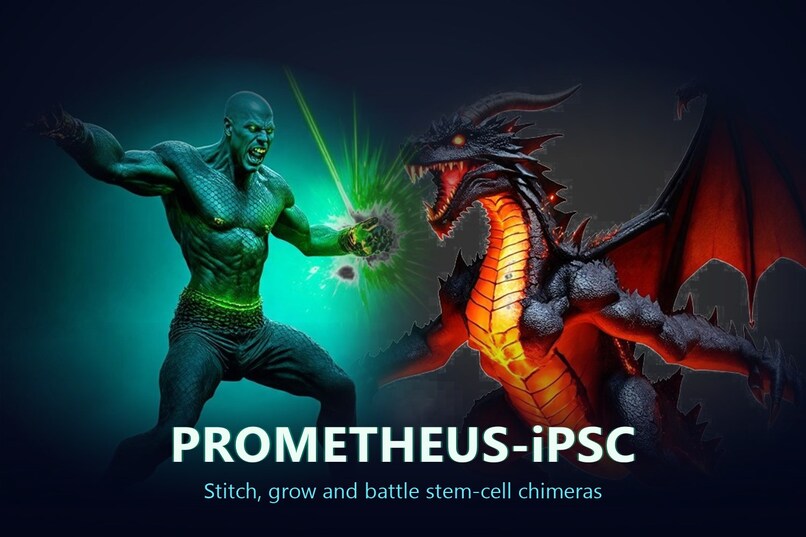
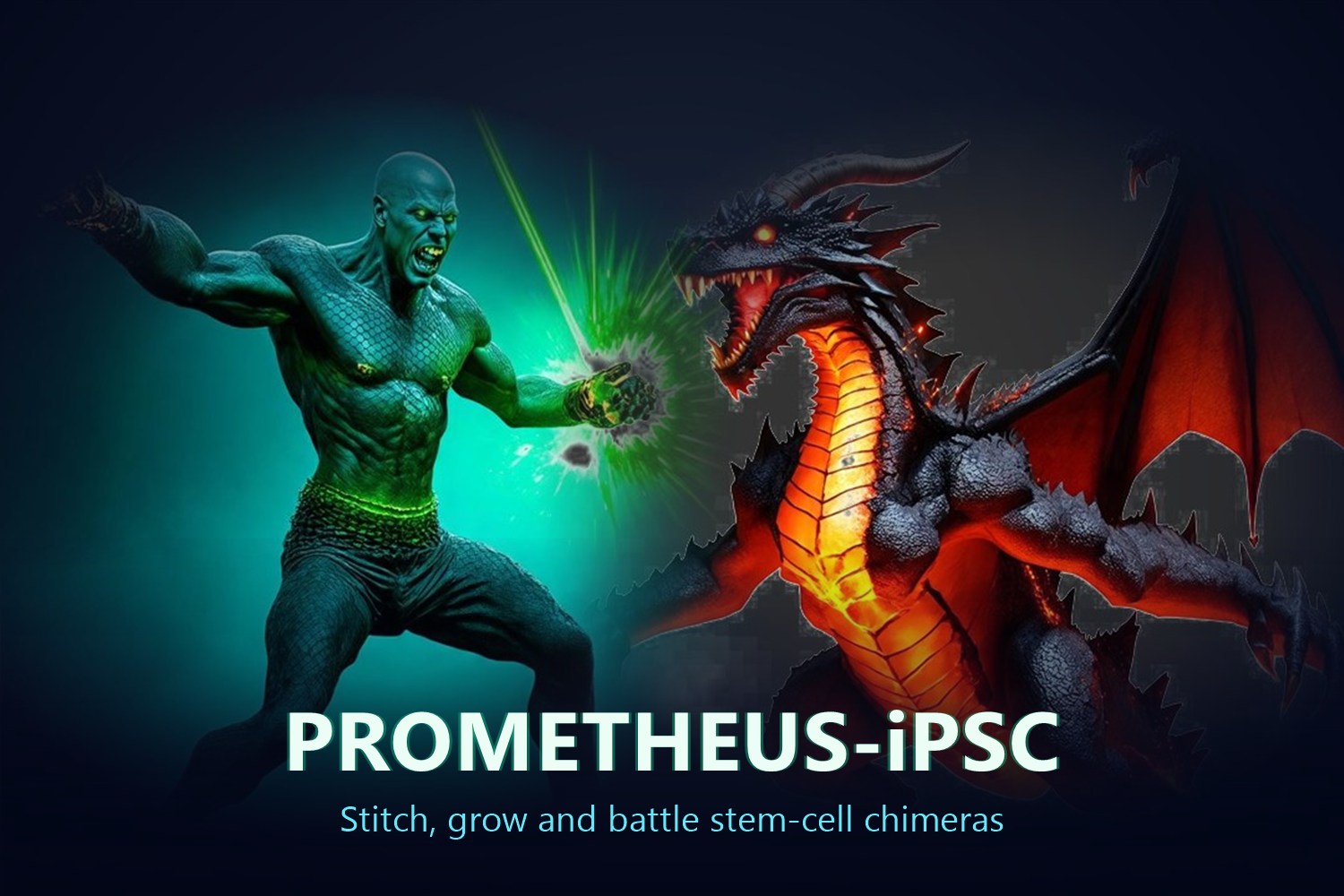
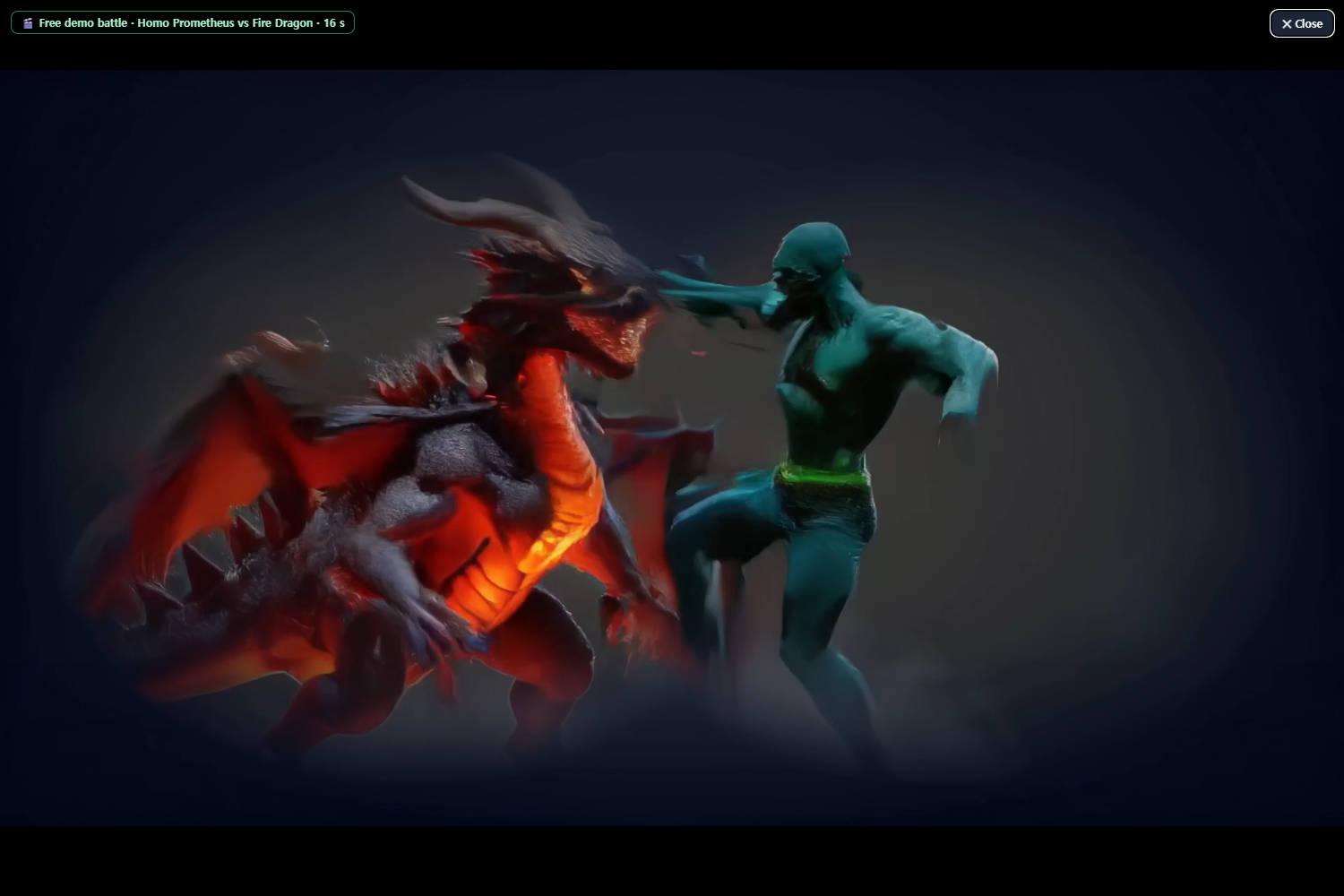
Homo Prometheus vs Fire Dragon: a 16-second AI battle built from the monsters' stats
-
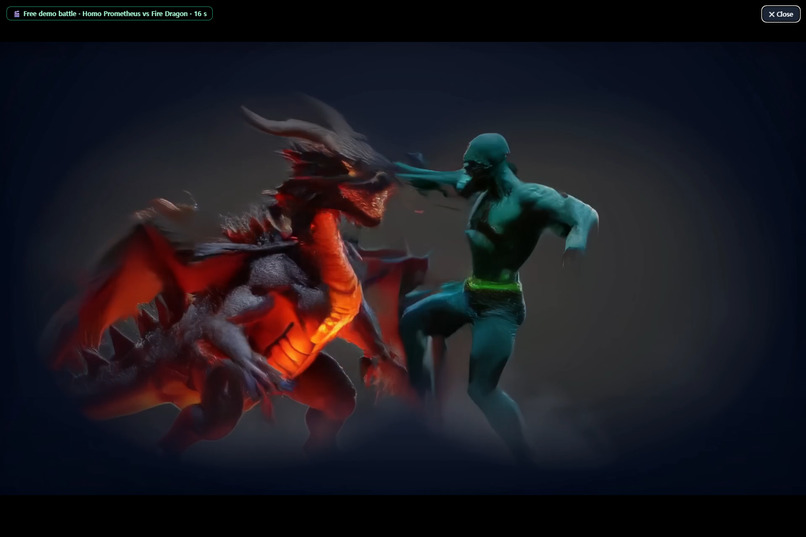
Free demo battle: full-contact fighting in one continuous take, watchable at no cost
-
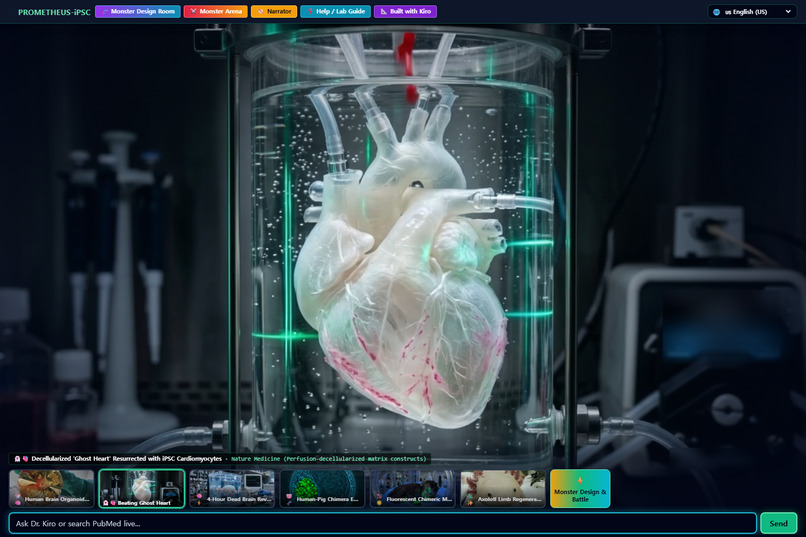
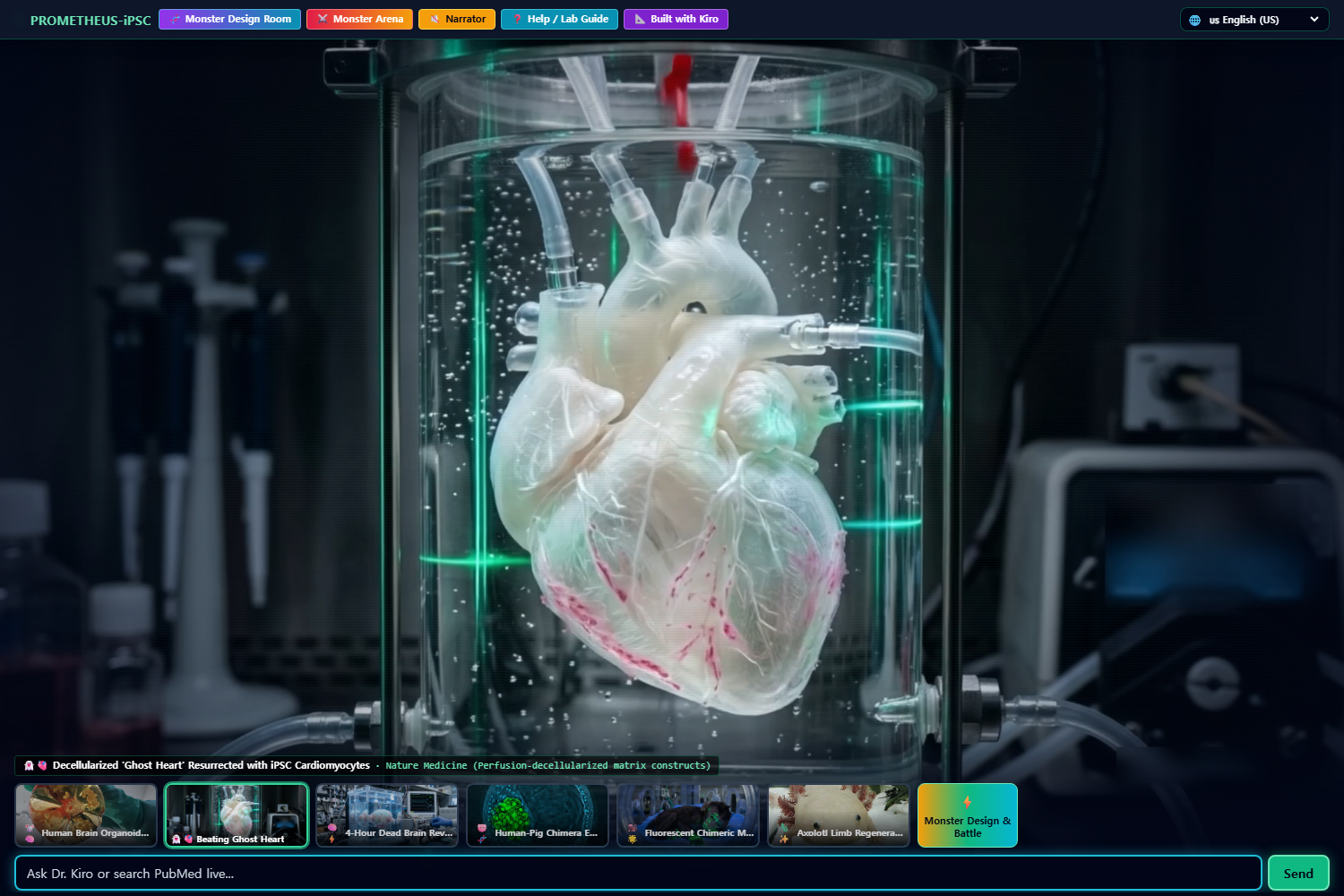
Ghost Heart: a stripped white heart re-seeded with cells until it beats again
-
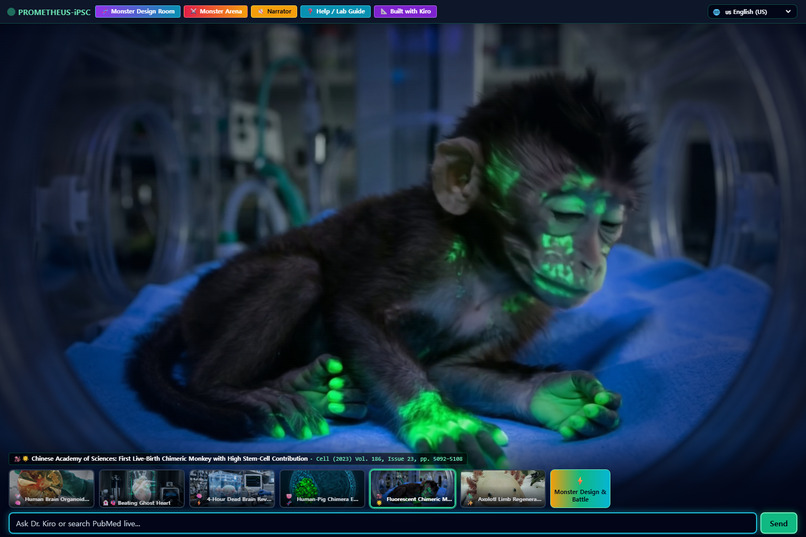
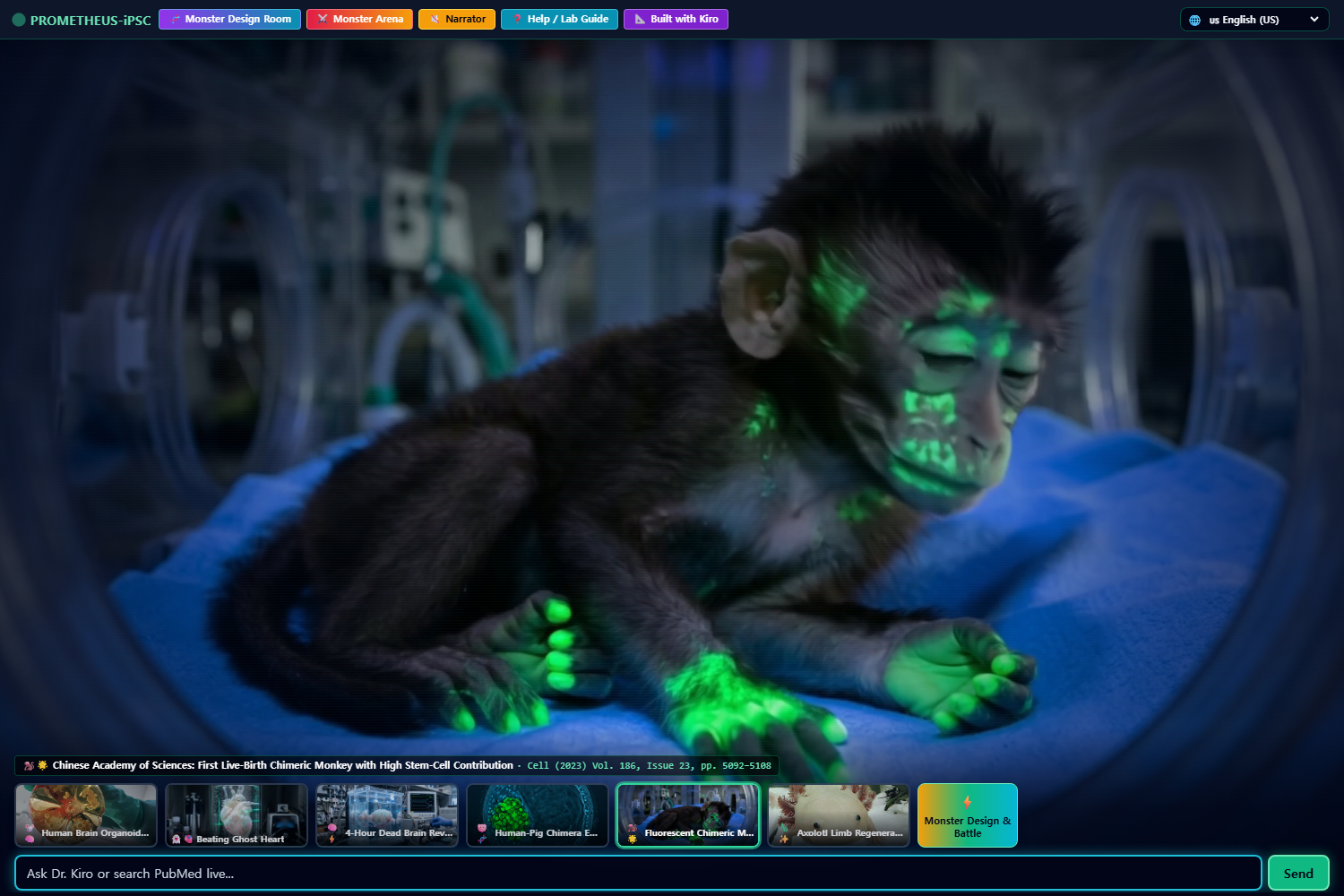
Chimeric monkey (Cell, 2023): the green glow comes from its own stem-cell-derived cells
-
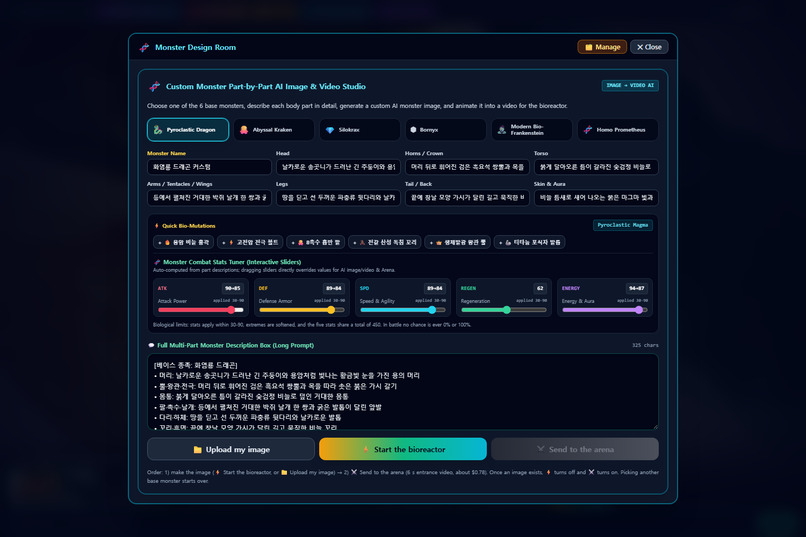
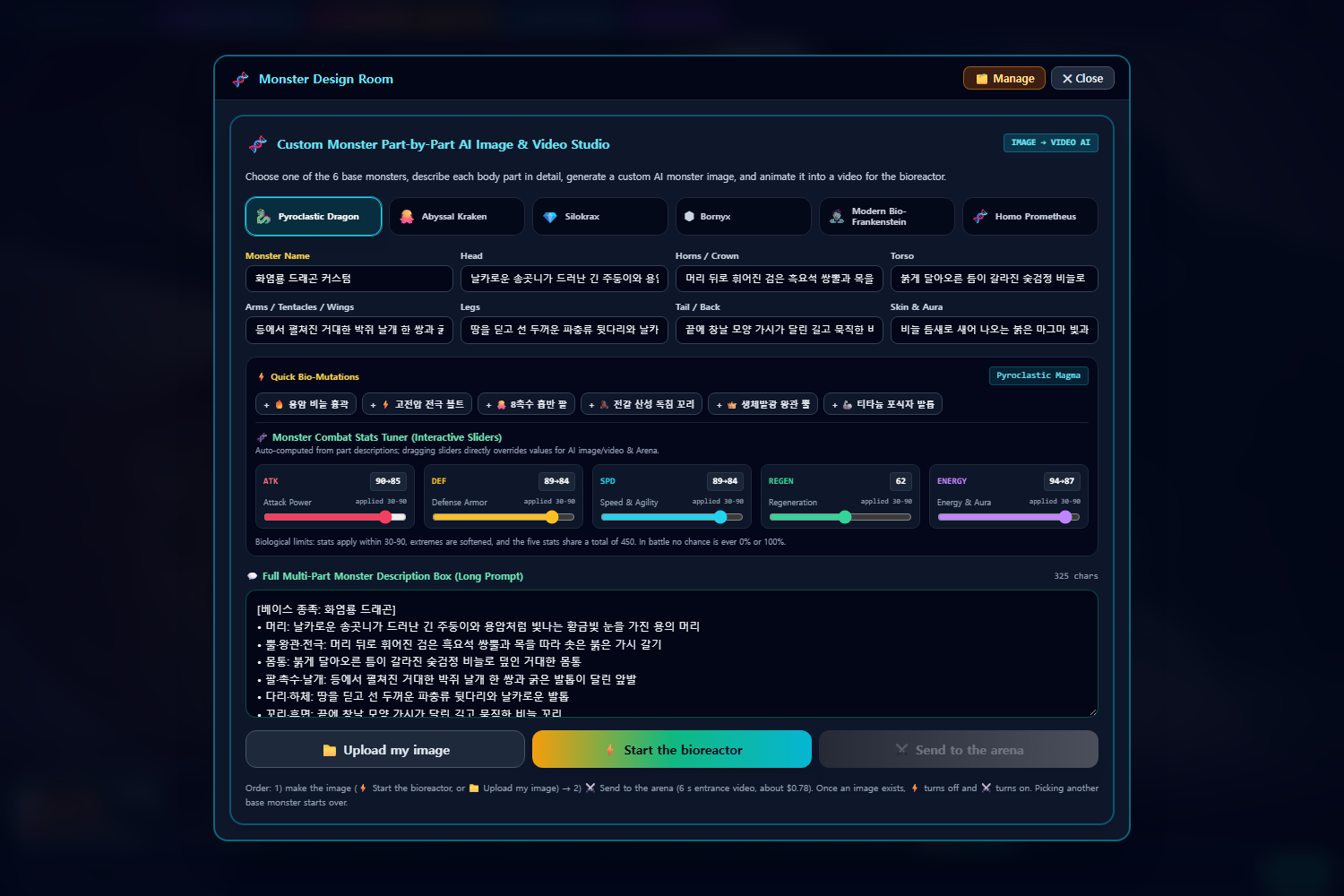
Design Room: choose species, body parts and a 450-point stat budget, previewed for free
-
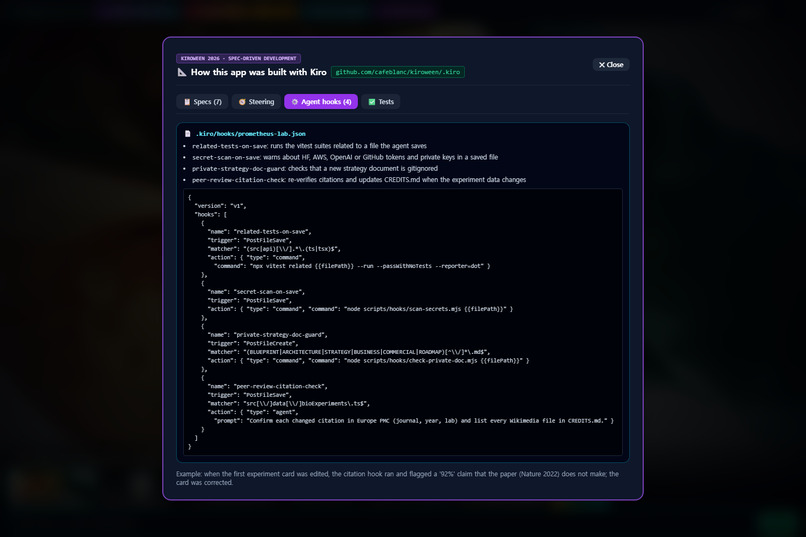
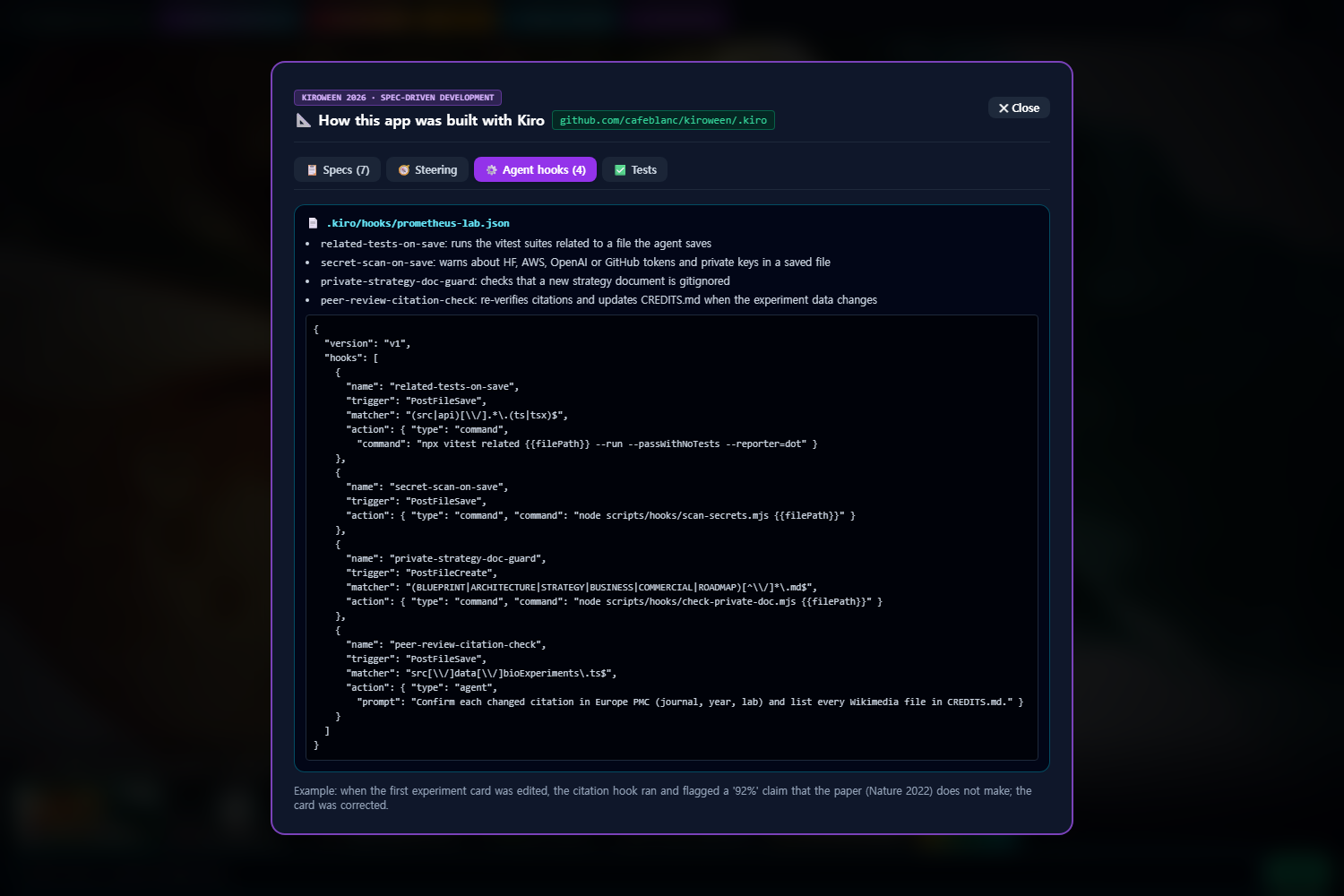
Built with Kiro: specs, steering, 4 real agent hooks and 404 tests, shown in the app
⚡ Inspiration
In 1818, Mary Shelley imagined Victor Frankenstein stitching together lifeless tissue and reanimating it with a spark of electricity. Two centuries later, regenerative stem-cell biology has crossed thresholds that feel straight out of Gothic science fiction:
- 92% Human-Brain Chimeras (Cell Stem Cell): Human induced pluripotent stem cells (iPSCs) colonizing over 90% of a mouse cerebral cortex.
- Ghost Hearts (Nature Medicine): Washing away every cell from a donor heart until only a translucent white collagen "ghost" scaffold remains, then seeding it with stem cells until it spontaneously beats again.
- BrainEx Revival (Nature): Restoring cellular circulation and synaptic activity in disembodied mammalian brains 4 hours post-mortem.
- DishBrain (Neuron): 800,000 living human cortical neurons grown on a microelectrode array learning to play the classic arcade game Pong in 5 minutes.
We asked ourselves: What if Victor Frankenstein's laboratory existed in 2026? Instead of rusty scalpels and lightning rods, it would be an interactive Bio-Hybrid Stem-Cell Stitcher—and for Kiroween's Frankenstein Track, we stitched together four completely disparate technologies into a single living application that bridges peer-reviewed stem-cell science with a delightfully bizarre 4-Part Mythic Chimera Bio-Assembler.
🧬 What It Does
PROMETHEUS-iPSC is an interactive, bilingual (English / Korean) Gothic-biotech web laboratory featuring two interconnected wings:
6 Real-World Stem-Cell "Frankenstein" Experiments:
- Explore 6 landmark, peer-reviewed breakthroughs (92% Human-Brain Mouse, Beating Ghost Heart, Yale BrainEx 4-Hour Post-Mortem Revival, DishBrain Neurons Playing Pong, Self-Assembling Anthrobots, and Salk Human-Pig Chimera).
- View authentic CC-BY scientific microscopy & histology imagery (iPSC colonies, cortical organoids, fluorescent neural rosettes, cardiomyocytes) paired with live 60fps HTML5 Canvas Multi-Organoid Cellular Simulation.
- Live Zero-Key Science API Stitching: One click queries EuropePMC / PubMed REST APIs and Wikipedia Summary APIs in real time to stitch verified PMIDs, DOIs, publication years, and encyclopedic context directly into the specimen dossier.
- High-Voltage Defibrillator Spark & ECG Audio: Triggering a high-voltage bio-electric shock spikes the live procedural WebAudio API cardiac monitor (BPM & mV) and wakes up a bilingual Web Speech API AI Lab Narrator.
⚡ 4-Part Mythic Chimera Bio-Assembler (Interactive Simulation Game):
- Step into Dr. Frankenstein's shoes by selecting and stitching 4 biological organ modules on an iPSC ghost-collagen scaffold:
- 🧠 Head / Brain: DishBrain 800k Arcade Neurons vs. 92% Humanized Genius Cortex vs. BrainEx 4-Hour Revived Brain
- 🫀 Heart / Core: Translucent Ghost Heart vs. 180 BPM Neon Bio-Reactor
- 🦾 Torso / Chassis: 3D-Printed Ghost Collagen Matrix vs. Self-Healing Anthrobot Swarm Armor
- 🦿 Limbs / Motility: 6-Arm Spider Silk Muscle Actuators vs. Bioluminescent Disco Reflex Legs
- Watch the Bioreactor Incubation Canvas fuse the 4 organs via glowing neural sutures and electrical arcs, unlocking 3 hilarious & eerie Halloween Chimera Endings:
- 🦁 The Prometheus Neon Sphinx (Telepathic riddle-master of the lab)
- 🕹️ The 6-Armed Immortal Arcade Gamer Chimera (Beats Pong, StarCraft, and Street Fighter simultaneously at 999 APM while demanding espresso in nutrient broth)
- 🕺 The Moonwalking Disco Frankenstein (Glows like a neon jellyfish and moonwalks across the surgical theater to 148 BPM defibrillator synth-pop)
- Step into Dr. Frankenstein's shoes by selecting and stitching 4 biological organ modules on an iPSC ghost-collagen scaffold:
🛠️ How We Built It (The 4 Stitched Technologies & Kiro Workflow)
To honor the Frankenstein Track ("Stitch together a chimera of incompatible technologies"), we stitched four normally isolated domains into one cohesive React 19 + TypeScript architecture:
- Live Biomedical Literature REST APIs (
EuropePMC+PubMed+Wikipedia REST API— zero API keys required) - Real-Time 60fps HTML5 2D Procedural Canvas Physics (simulating iPSC cellular mitosis, synaptic lightning sutures, and bioreactor assembly)
- Procedural WebAudio API Synthesizer + Web Speech API TTS (real-time ECG hospital monitor waveforms, defibrillator discharge synthesis, and bilingual voice narration)
- Live Broadcast Floating Telemetry UI (mobile-optimized 3-second auto-expiring chat & telemetry stream with
mobileDismissedIndexRefmemory so dismissed alerts never resurrect)
How Kiro (/.kiro) Powered Our Development
We built PROMETHEUS-iPSC from the ground up using Kiro's Spec-Driven Development workflow, checked directly into our repository root under /.kiro:
- Steering (
/.kiro/steering/product.md&tech.md): Established our strict ethical and scientific guardrails—ensuring every stem-cell case remained grounded in real peer-reviewed regenerative medicine (iPSCs, organoids, tissue scaffolds) while keeping the Halloween Chimera Assembler playful, gothic, and completely free of harmful pathogen/CBRN tropes. - Specs (
/.kiro/specs/stem-cell-bio-stitcher/requirements.md,design.md,tasks.md): Authored formal EARS (Easy Approach to Requirements Syntax) requirements (WHEN ... THE SYSTEM SHALL ...), designed our 4-technology chimera architecture with Mermaid diagrams, and broke the implementation into traceable tasks before writing UI code. - Agent Hooks (
/.kiro/hooks/pubmed-citation-verifier.hook.json): Configured an automated Kiro file-save hook onsrc/data/bioExperiments.tsandsrc/services/scienceStitchService.tsthat verifies every specimen retains a valid PubMed PMID, DOI, real peer-reviewed journal citation, and bilingual translation parity (ko/en).
🚧 Challenges We Ran Into
- Balancing Real Science with Halloween Fun: Early on, we realized that pushing biological horror toward lethal pathogens or apocalyptic tropes felt genuinely unsettling and triggered AI safety boundaries. Using Kiro Steering (
/.kiro/steering/product.md), we pivoted to regenerative stem-cell chimeras (Ghost Hearts, DishBrain gaming neurons, and playful mythic/arcade chimeras)—making the app scientifically fascinating, eerie, and genuinely fun. - Zero-Key Cross-Origin Biomedical Stitching: Fetching live scientific metadata from the browser without backend API keys required carefully orchestrating CORS-friendly endpoints across EuropePMC (
ebi.ac.uk) and bilingual Wikipedia REST APIs (en.wikipedia.org/ko.wikipedia.org) with instant graceful fallbacks. - Non-Resurrecting Mobile Floating Stream: On mobile viewports, floating lab chat messages needed to slide up and vanish after 3 seconds without ever re-rendering previously dismissed messages when new events arrived. We solved this cleanly with a monotonic
mobileDismissedIndexRefpointer.
🏆 Accomplishments That We're Proud Of
- Zero-Key Live Science Verification: Anyone can open the app and immediately pull live PubMed/EuropePMC citations and Wikipedia summaries for real breakthroughs like DishBrain and BrainEx.
- Full Spec-Driven Transparency Inside the UI: We added an interactive
[📐 .kiro Plan]modal right in the header so judges and users can inspect our Kiro Specs, Steering rules, and Hooks directly inside the running application. - Instant 1-Click Bilingual Experience (
🇰🇷 한국어 / 🇺🇸 ENG / 🌐 Bi-Lingual): Every scientific dossier, PubMed query, Chimera organ module, and voice synthesis prompt switches seamlessly between English and Korean.
📚 What We Learned
- Spec-Driven Development Prevents Scope Creep: Writing
requirements.mdin EARS notation and mapping the 4-domain boundary indesign.mdbefore coding allowed us to integrate Canvas physics, Web Audio synthesis, and REST APIs without state collisions. - Modern Stem-Cell Science is Stranger Than Fiction: Learning how cortical organoids wire themselves into biological circuits and play Pong gave us a deep appreciation for bio-engineering ethics and regenerative medicine.
🔮 What's Next for PROMETHEUS-iPSC
- 3D Molecular & Organoid Sidecar Viewer: Integrating WebGL / Mol* 3D protein structure rendering for key stem-cell reprogramming factors (Oct4, Sox2, Klf4, c-Myc — the Yamanaka Factors).
- Custom PMID Specimen Importer: Allowing students and researchers to paste any PubMed ID and automatically generate an interactive cellular simulation card and audio briefing.
Built With
- europepmc
- fast-check
- html5
- huggingface
- indexeddb
- kiro
- lucide-react
- node.js
- pubmed-api
- react
- stable-diffusion
- tailwindcss
- typescript
- vite
- vitest
- web-speech-api
- webaudio-api
- wikipedia-api
