-
-
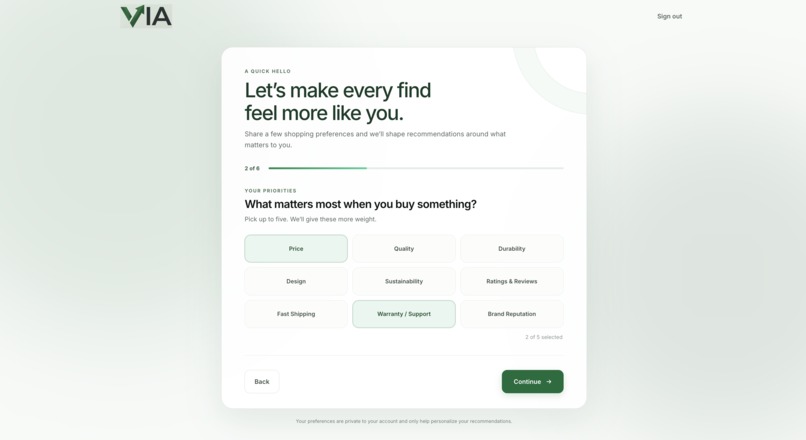
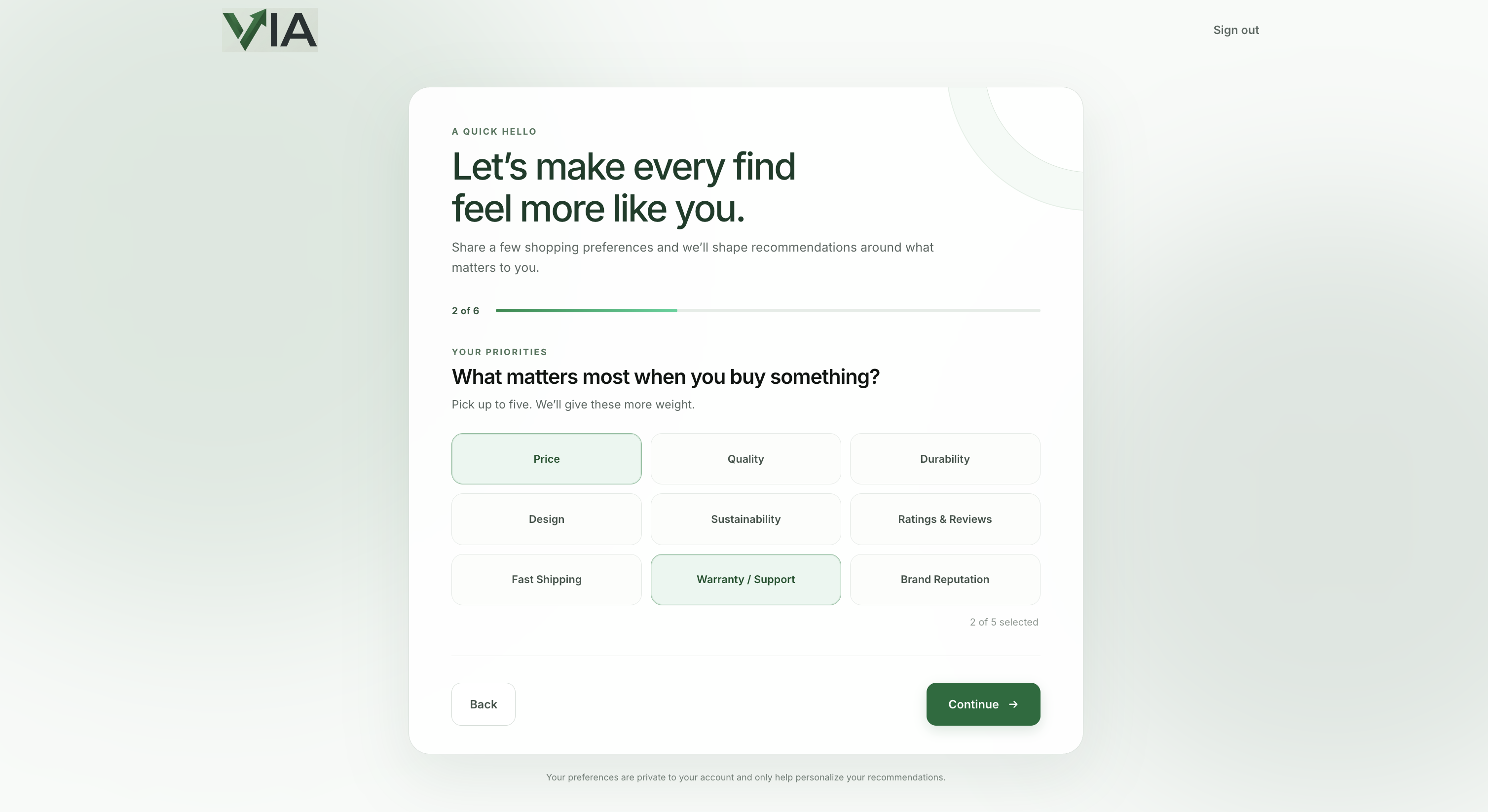
User Onboarding (One of 5 pages)
-
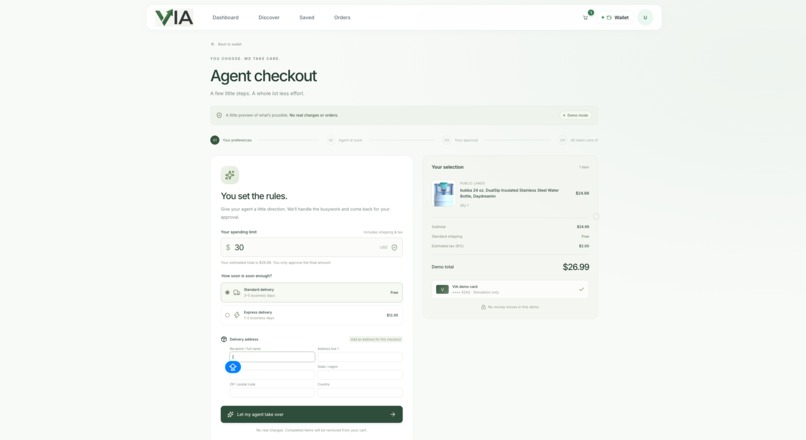
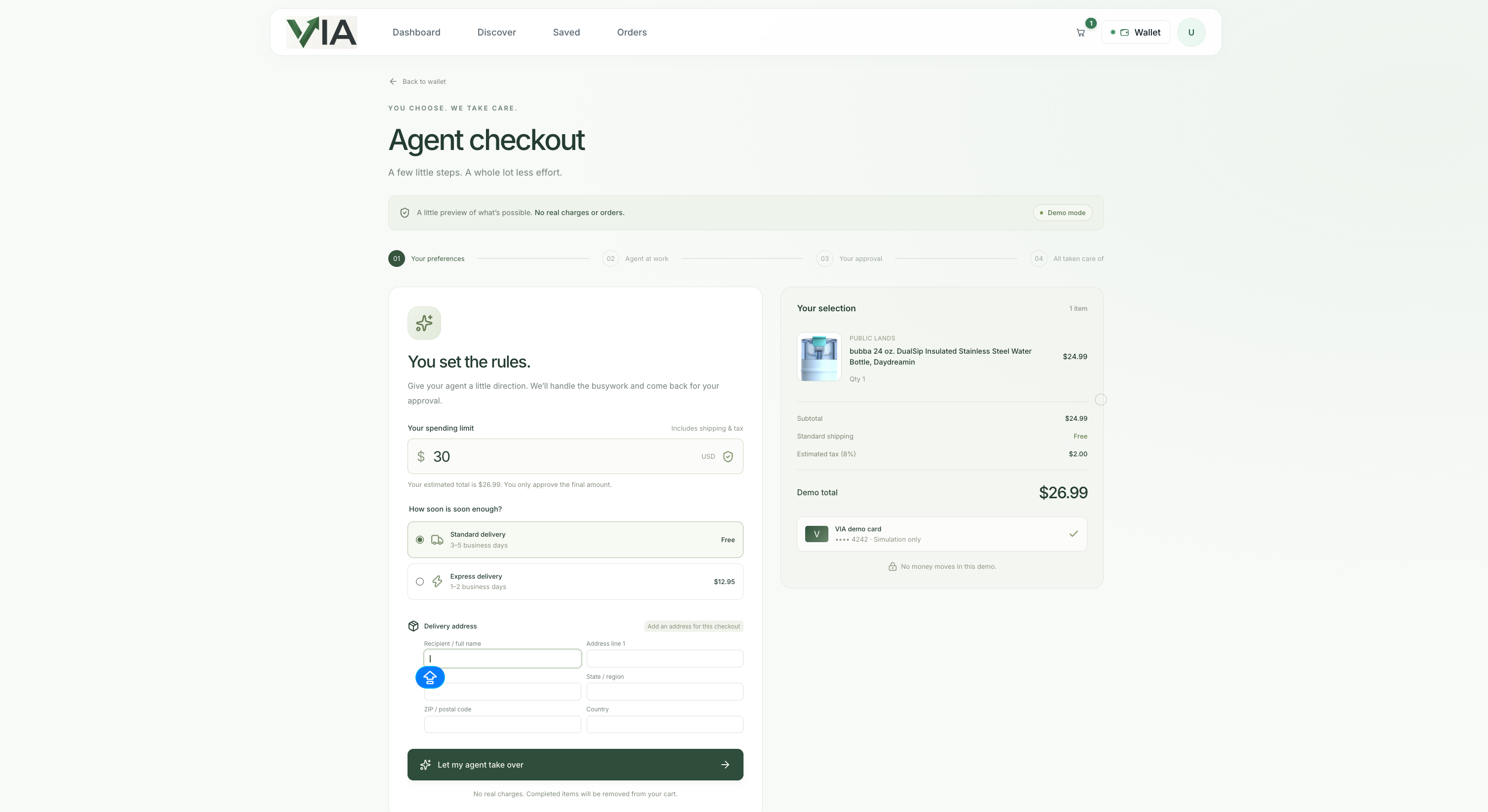
Checkout Page
-
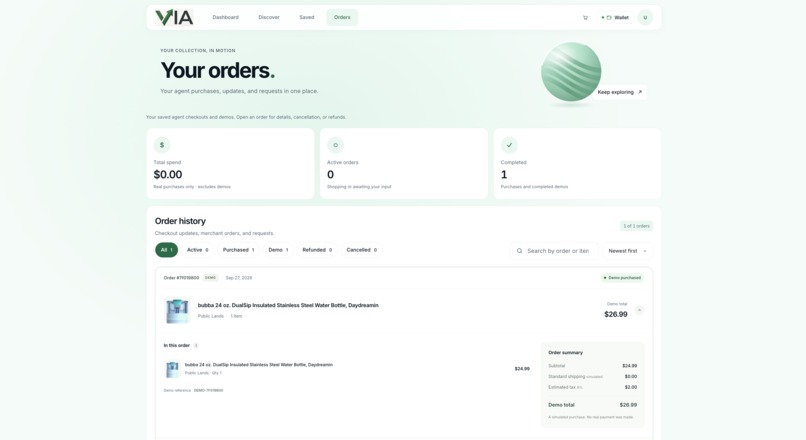
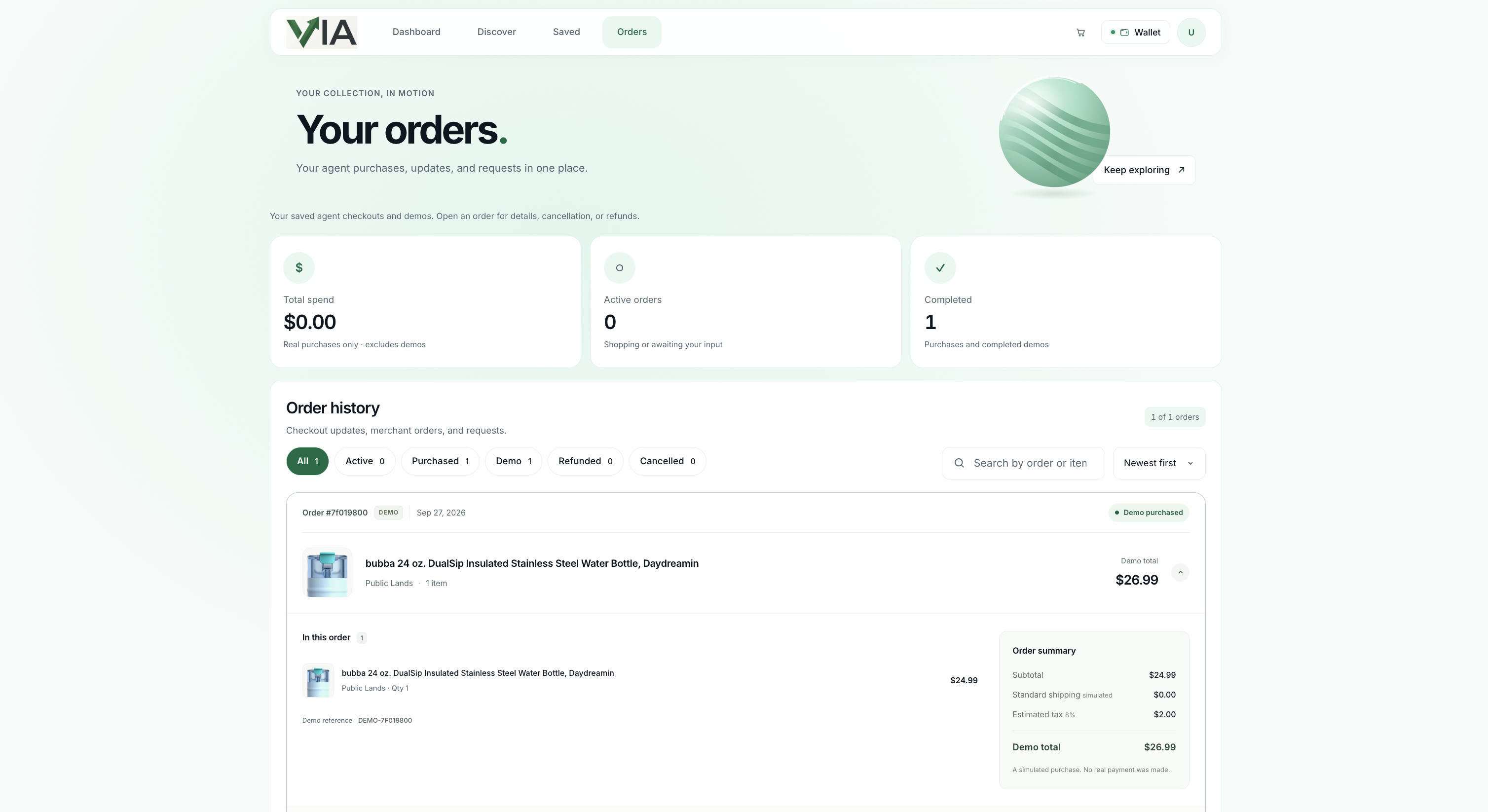
Order Tracking Page
-
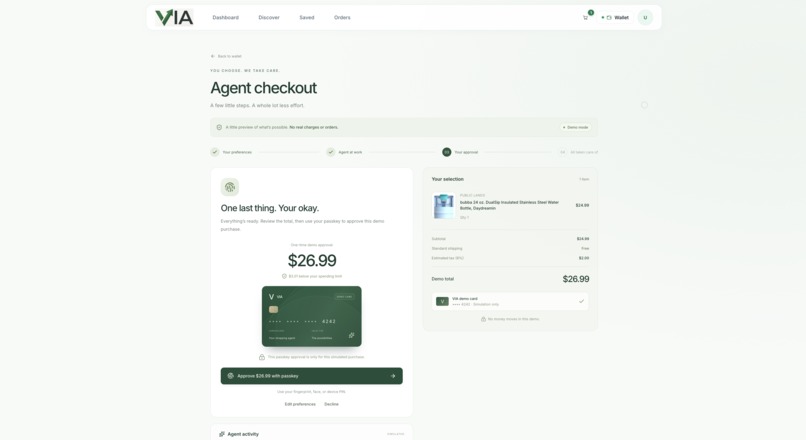
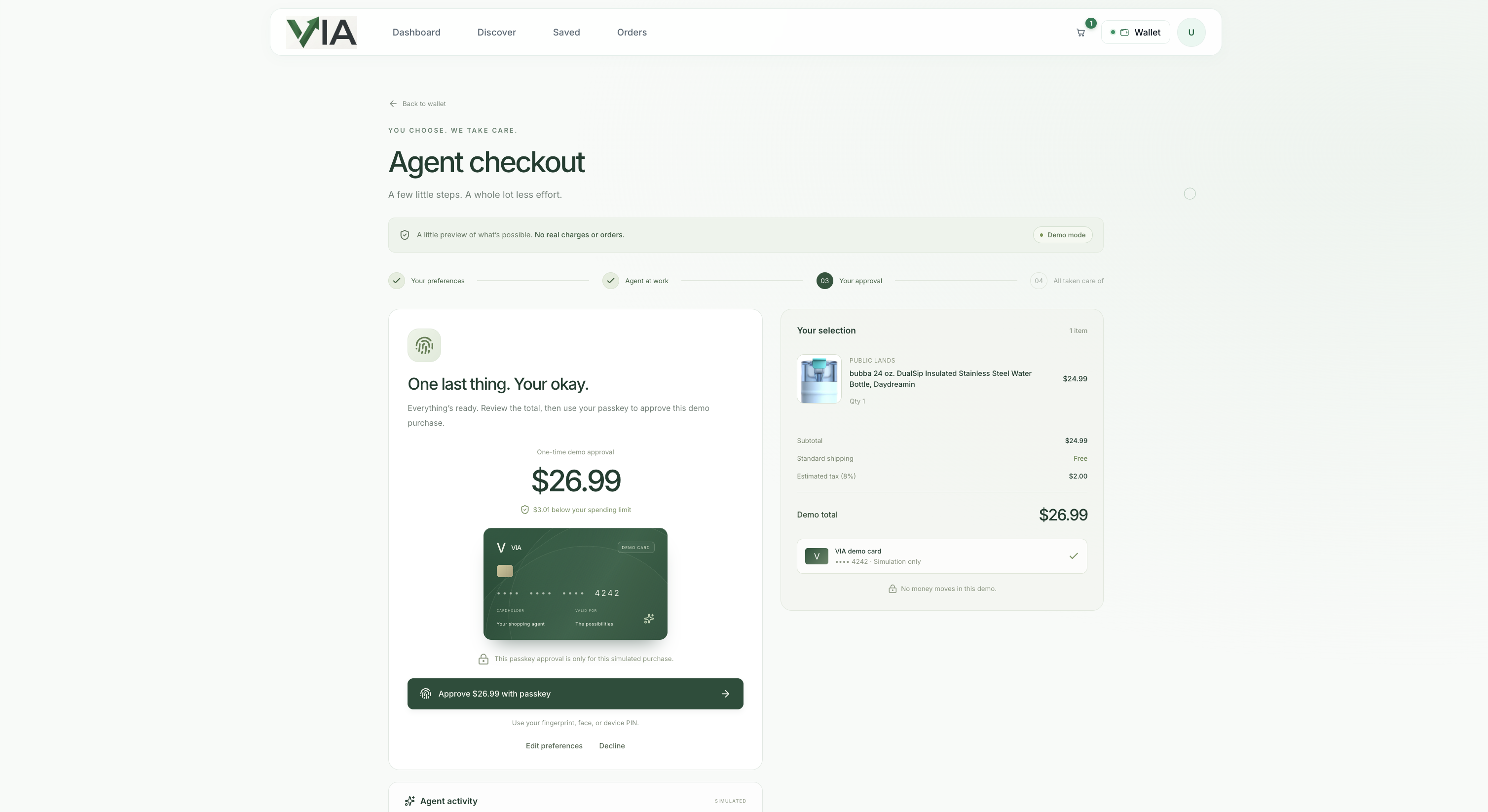
Payment Authorization
-
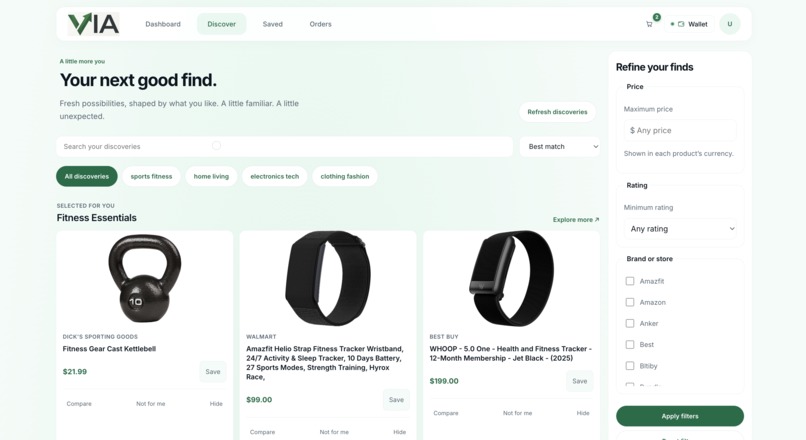
Product Recommendations Page
-
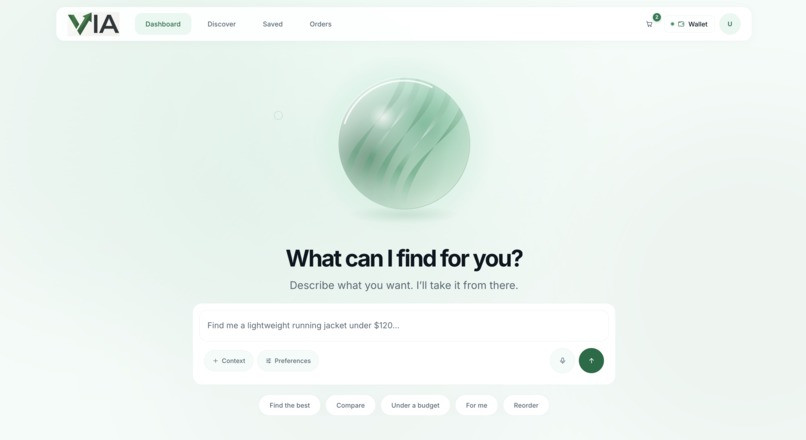
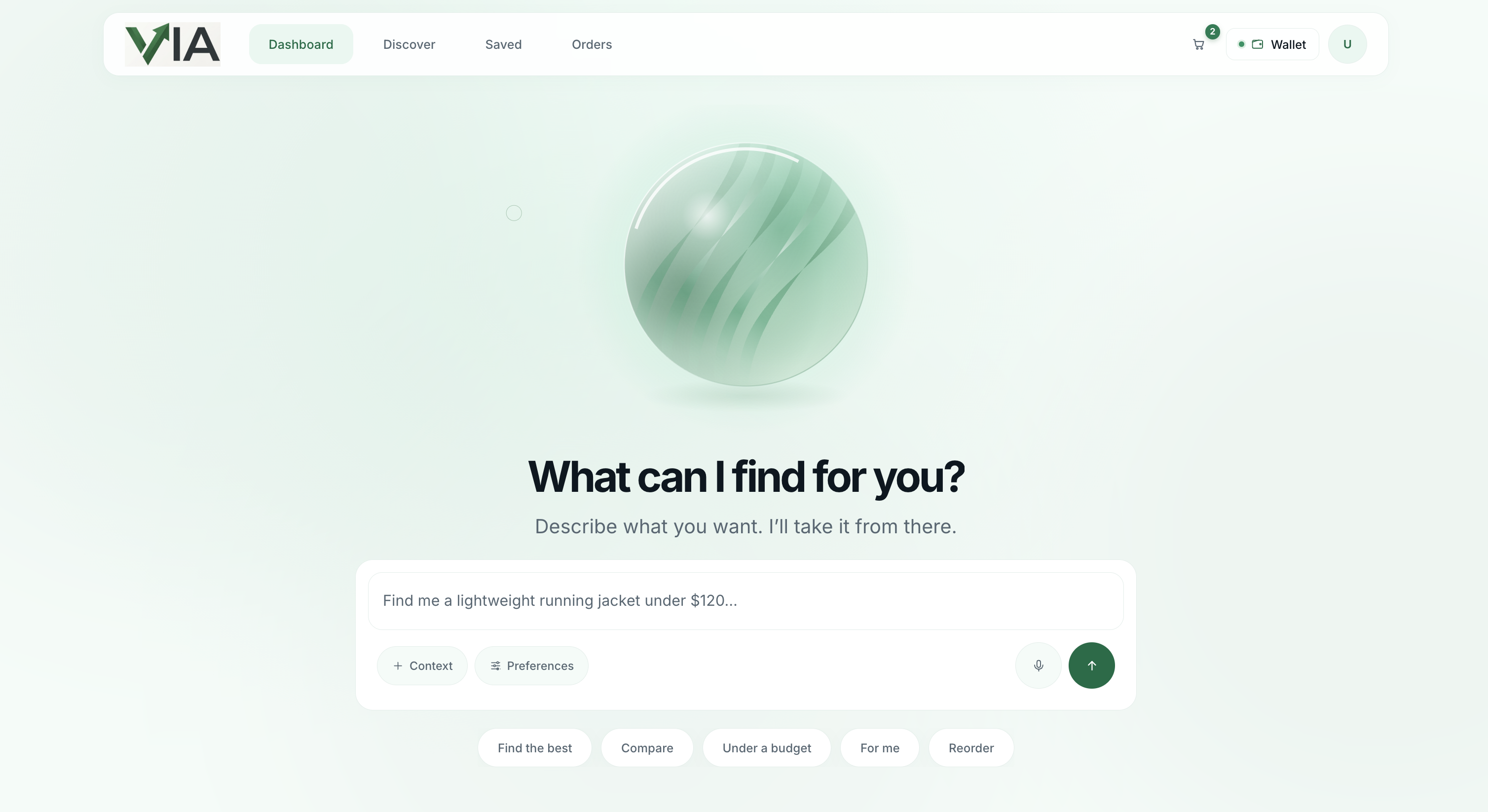
Dashboard
-
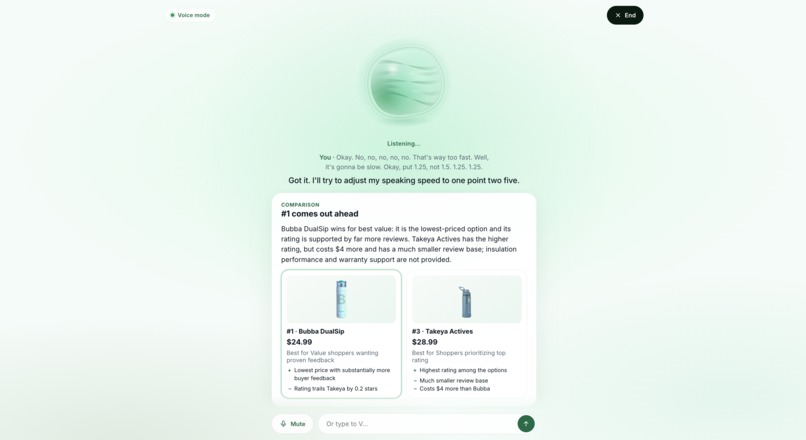
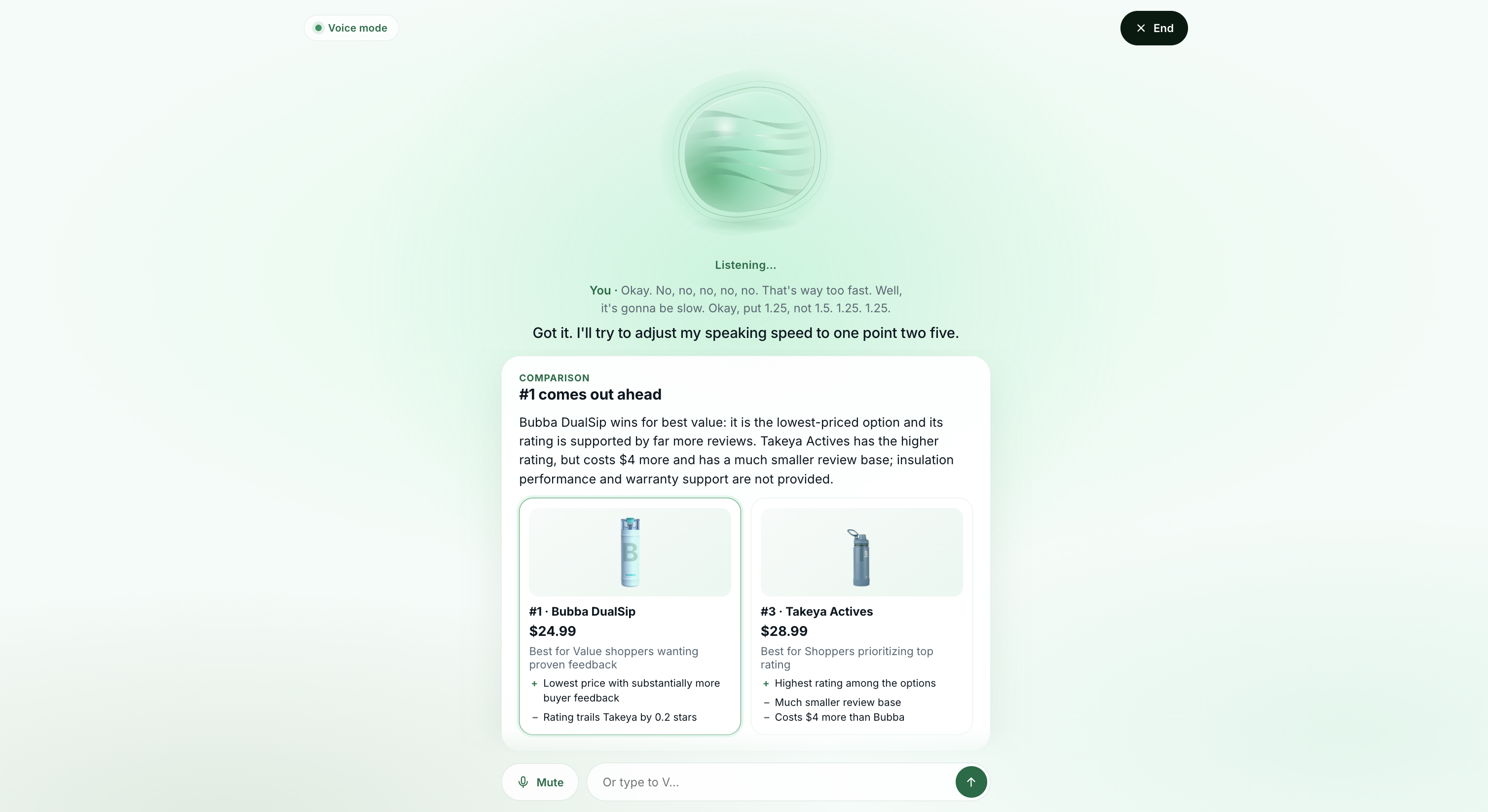
Compare and Contrast
-
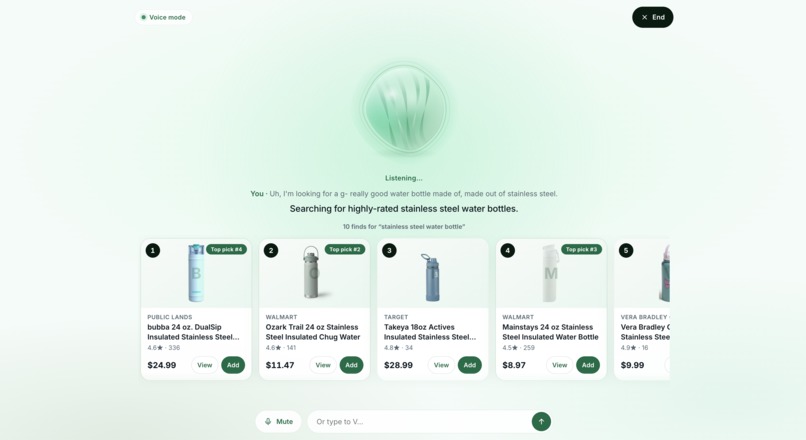
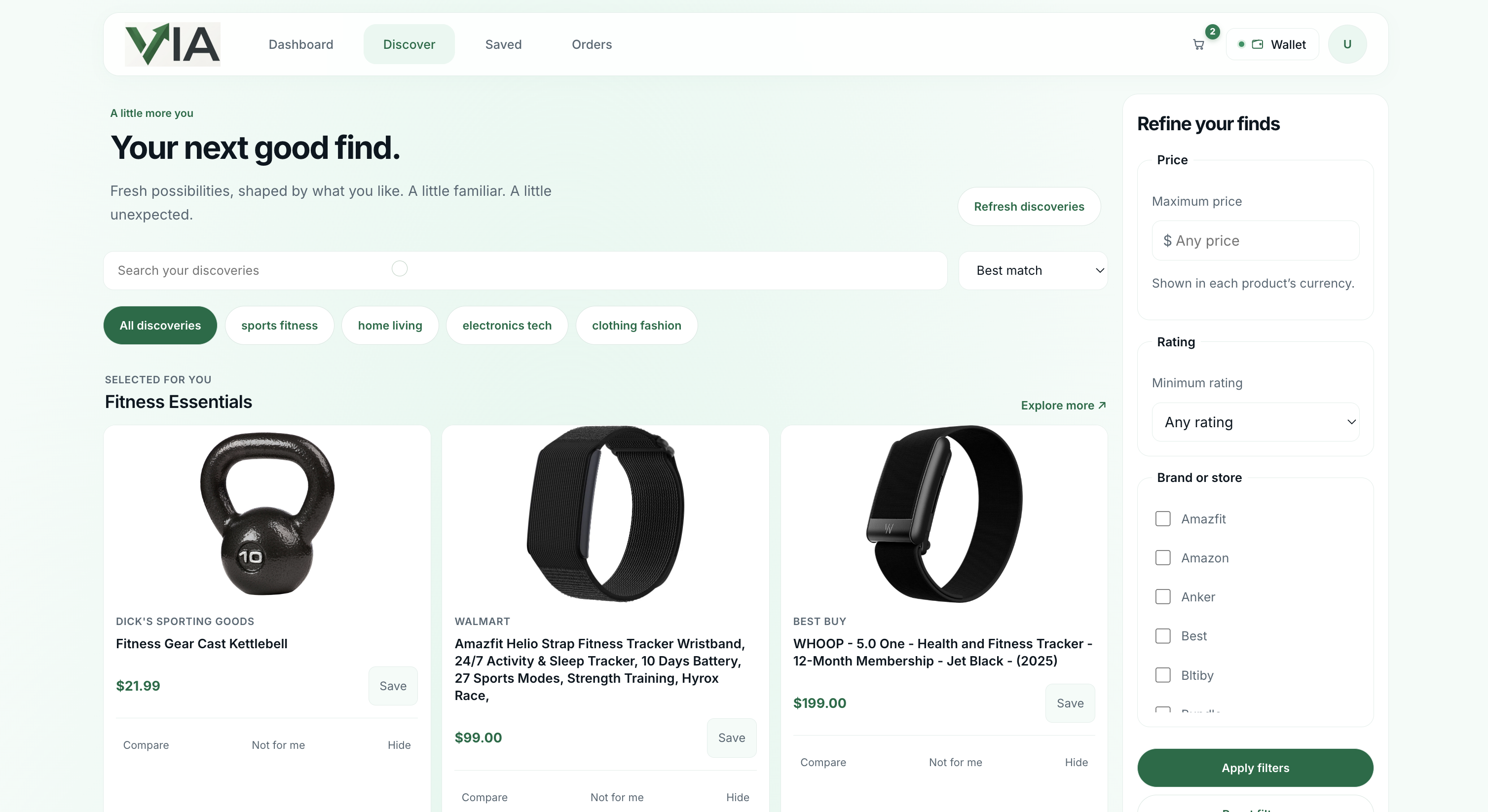
Product Discovery Engine
Inspiration
Online shopping gives us more choices than ever, but less clarity. A simple purchase can still mean ten tabs, repeated searches, endless comparisons, and guesswork.
That made us ask: if AI can understand exactly what we want, why are we still doing everything after we ask?
We built VIA to close that gap, turning your Vision into Intelligence, and Intelligence into Action.
What it does?
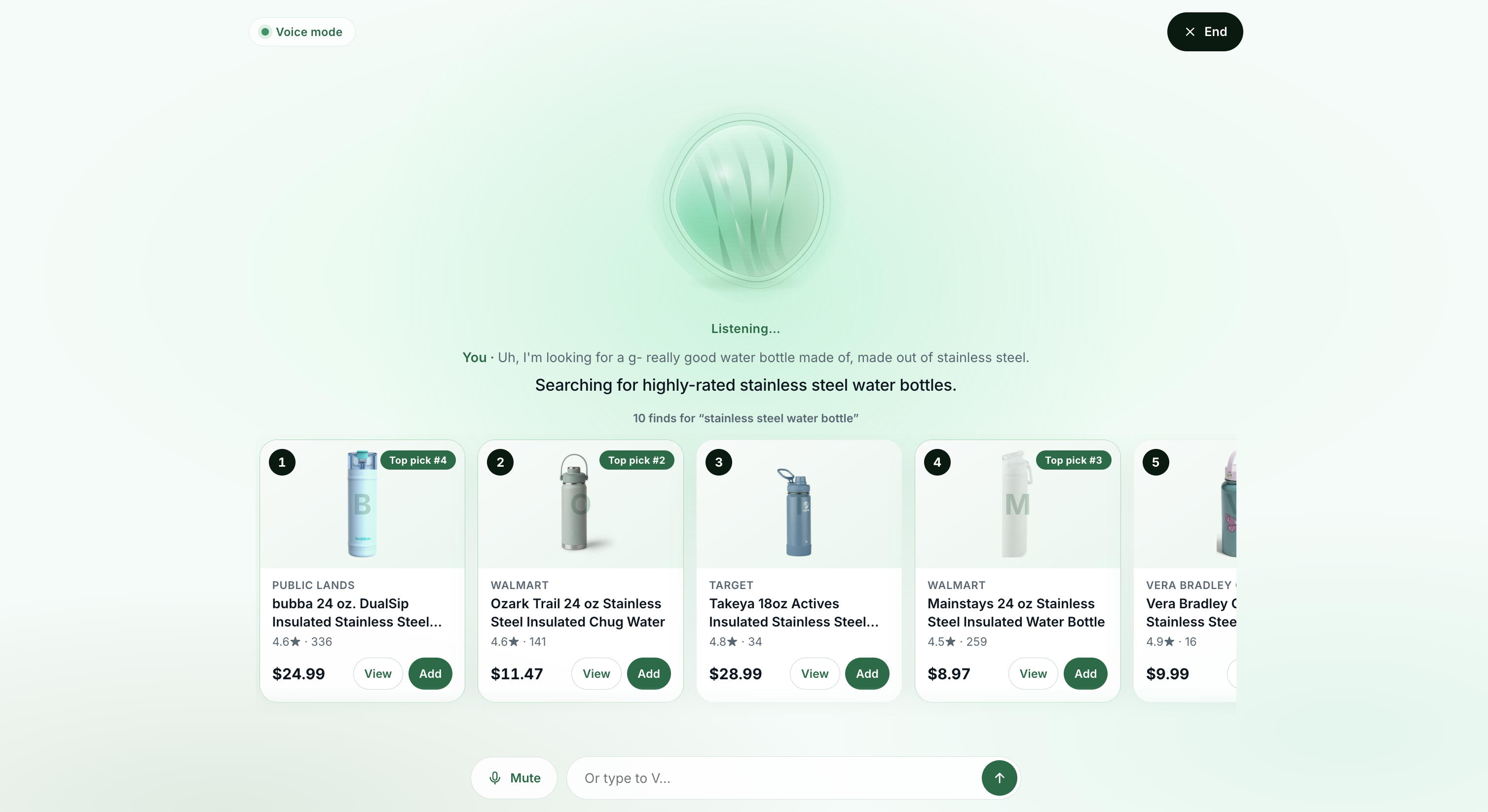
VIA turns “I want this” into “it’s mine” through one continuous shopping experience. Users describe what they need, and VIA searches across the web, understands their preferences, sizes, budget, and past purchases, then narrows thousands of possibilities into products that genuinely fit.
From there, users can refine results, compare their strongest options with clear pros and cons, and move directly into secure agentic checkout without leaving the experience. For users who prefer conversation, VIA adds a low latency voice layer that can search, refine, compare, and navigate the same interface naturally through speech, while typing and traditional controls remain equally available.
After the purchase, VIA stays with the order through integrated tracking, while its accessibility layer adapts the experience to a wider range of users. Discovery, decision, purchase, and delivery become one connected journey.
From want to yours.
How we built it
Core Architecture: VIA is built on a Python + Flask backend with a responsive web frontend, creating a lightweight architecture that connects discovery, personalization, AI reasoning, checkout, and order management through one unified system.
Product Discovery: We integrated the OpenWeb API to search across the web, aggregate products from multiple sources, and turn a single user request into relevant options within VIA.
Hyper Personalization: Supabase powers authentication, user profiles, preferences, sizing, likes, dislikes, and purchase history. These signals feed VIA’s weighted personalization system to filter and rank products around each user rather than showing everyone the same results.
Secure Agentic Checkout: Crossmint, Visa Intelligent Commerce, and Visa’s Trusted Agent Protocol power the transaction layer, allowing VIA to move from recommendation to secure agent initiated checkout while maintaining clear user authorization and trusted agent identity.
Conversational Agent: ElevenAgents by ElevenLabs provides VIA’s low latency voice layer. It connects to the same commerce workflow, allowing users to discover, refine, compare, and even progress through checkout conversationally, while the standard interface remains fully available.
Product Intelligence: The OpenAI API analyzes shortlisted products and transforms specifications, pricing, and features into concise comparisons, pros and cons, and decision relevant insights.
Orders & Infrastructure: Supabase and Crossmint work together to persist transaction and order data, maintain user purchase history, and surface order status directly inside VIA.
Accessibility: UserWay complements VIA’s accessible interface with additional accessibility tooling, ensuring the same discovery to checkout experience can serve a broader range of users.
Challenges we ran into
One experience, two ways to use it: One of our hardest challenges was building a shared workflow that works seamlessly across both VIA’s traditional interface and conversational layer. Discovery, personalization, comparison, and checkout all needed to operate on the same context without feeling like separate products.
Making agentic checkout secure: Moving from “I found the right product” to “buy it for me” introduced an entirely different level of complexity. Payments involve sensitive personal and financial information, so we spent significant time researching an architecture that could preserve user control while still enabling agent driven transactions. This led us to combine Crossmint with Visa Intelligent Commerce and the Trusted Agent Protocol.
Making conversation feel native: Integrating the conversational agent was more than adding voice input. It needed to understand the same shopping context, interact with the same workflow, update the interface in real time, and carry actions through checkout without creating a disconnected experience.
Accomplishments we’re proud of
We built a complete agentic commerce loop: VIA goes beyond product recommendations by connecting discovery → personalization → comparison → checkout → order tracking in one continuous experience.
We made personalization foundational: Instead of treating recommendations as an add on, VIA builds around each user’s preferences, sizes, likes, dislikes, priorities, and shopping history to make discovery increasingly personal.
We bridged traditional and conversational commerce: Users can shop normally through the interface or interact conversationally, while both experiences operate on the same context and underlying workflow, including checkout.
We tackled the hardest part instead of avoiding it: Rather than stopping at an AI shopping assistant, we built toward secure agentic execution, connecting the intelligence layer to real commerce infrastructure while keeping authorization and trust central to the experience.
Most importantly, it feels like one product: Despite combining AI, voice, web discovery, personalization, payments, accessibility, and order infrastructure, VIA presents them through one cohesive experience built around a simple idea: From want to yours.
What we learned
Agentic commerce is an orchestration problem, not just an AI problem. The real challenge was connecting discovery, personalization, conversation, payments, and orders into one reliable workflow.
Trust matters as much as intelligence. The closer an agent gets to making a purchase, the more important security, user authorization, transparency, and clear system boundaries become.
Personalization needs both memory and context. A strong recommendation should understand who the user is while still recognizing that every shopping request can have completely different priorities.
The best AI can feel almost invisible. We learned that VIA works best when intelligence simplifies the experience rather than adding another layer of complexity for the user.
What’s next
Take VIA from B2C to B2X: Build VIA not only as a consumer product, but as an agentic commerce layer businesses can embed into their own experiences. Retailers, marketplaces, banks, and platforms could bring VIA’s discovery, personalization, conversational shopping, and agentic checkout directly to their customers.
Build a VIA Commerce API: Turn the core workflow into modular APIs and SDKs so businesses can integrate individual capabilities or the complete intent → discovery → recommendation → checkout pipeline.
Create portable personalization: Let users carry a permissioned VIA preference profile across participating merchants, so sizes, tastes, budgets, and shopping priorities do not have to be rebuilt at every store.
Move toward delegated commerce: Give users precise controls such as “Reorder this under $40” or “Buy my usual running shoes when they fall below $120,” allowing VIA to execute within predefined budgets and rules.
Build an agent ready merchant network: Give merchants structured ways to expose products, inventory, offers, and checkout capabilities directly to commerce agents, making VIA a bridge between people, businesses, and autonomous agents rather than another shopping destination.
Built With
- crossmint
- css
- cursor
- dotenv
- elevenlabs
- flask
- html
- javascript
- openai
- openweb
- playwright
- postgresql
- pydantic
- pytest
- python
- pyyaml
- sql
- supabase
- tailwind
- visa

Log in or sign up for Devpost to join the conversation.