-
-
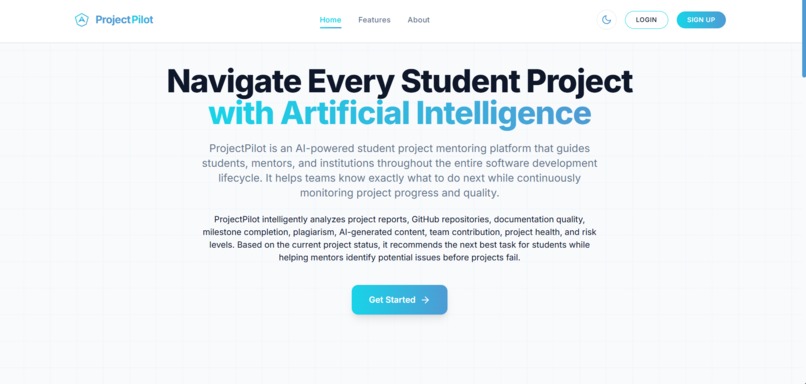
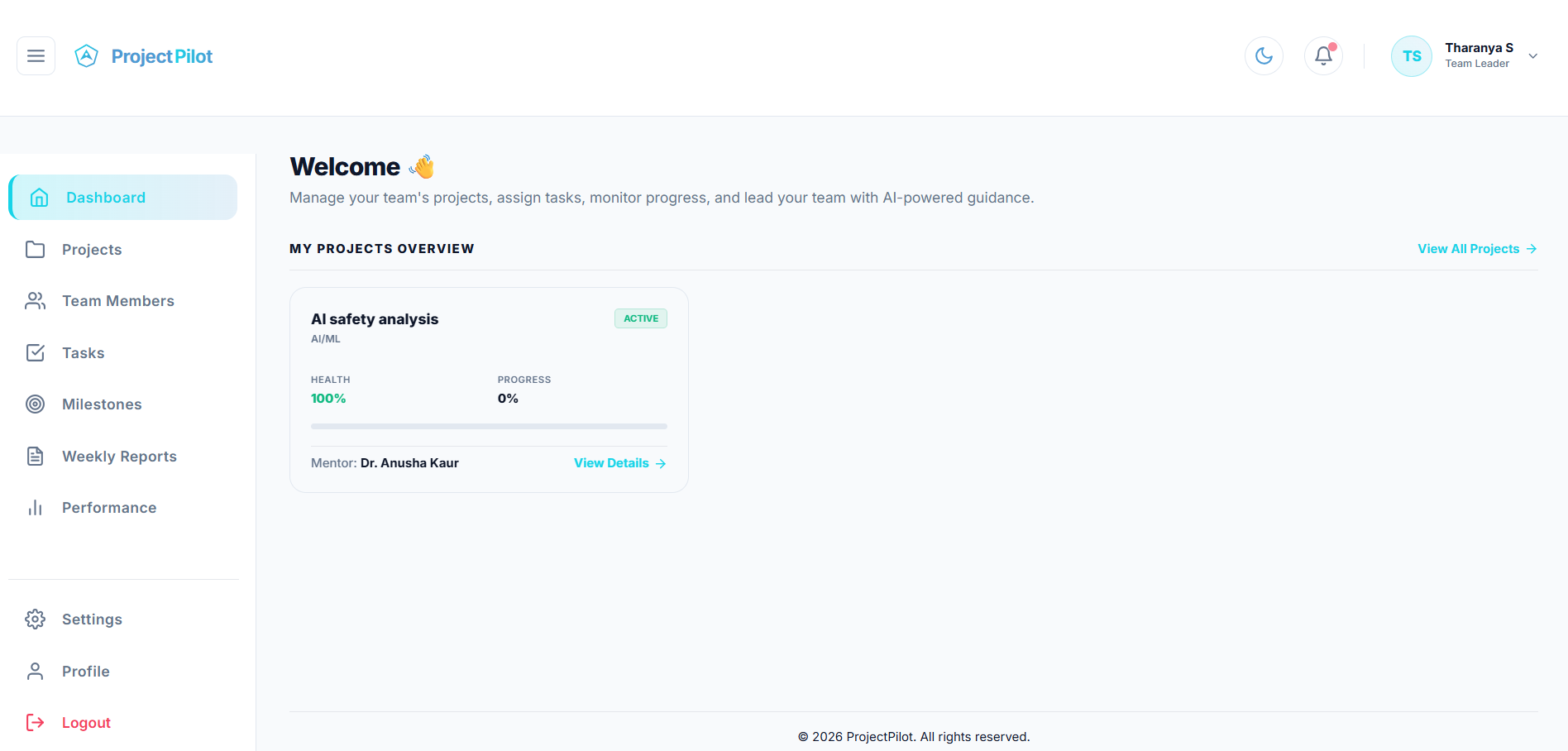
Main Dashboard
-
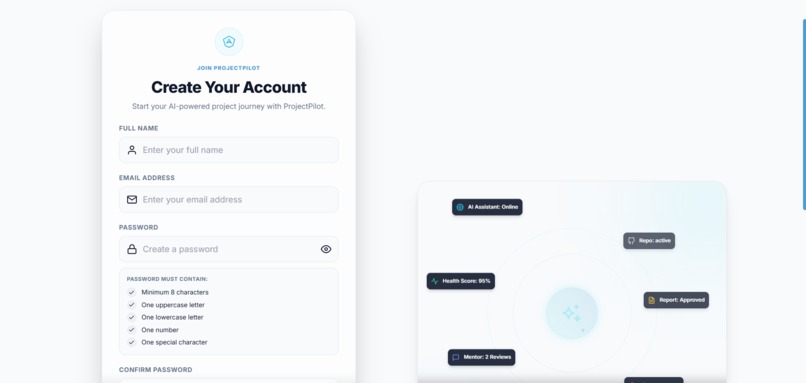
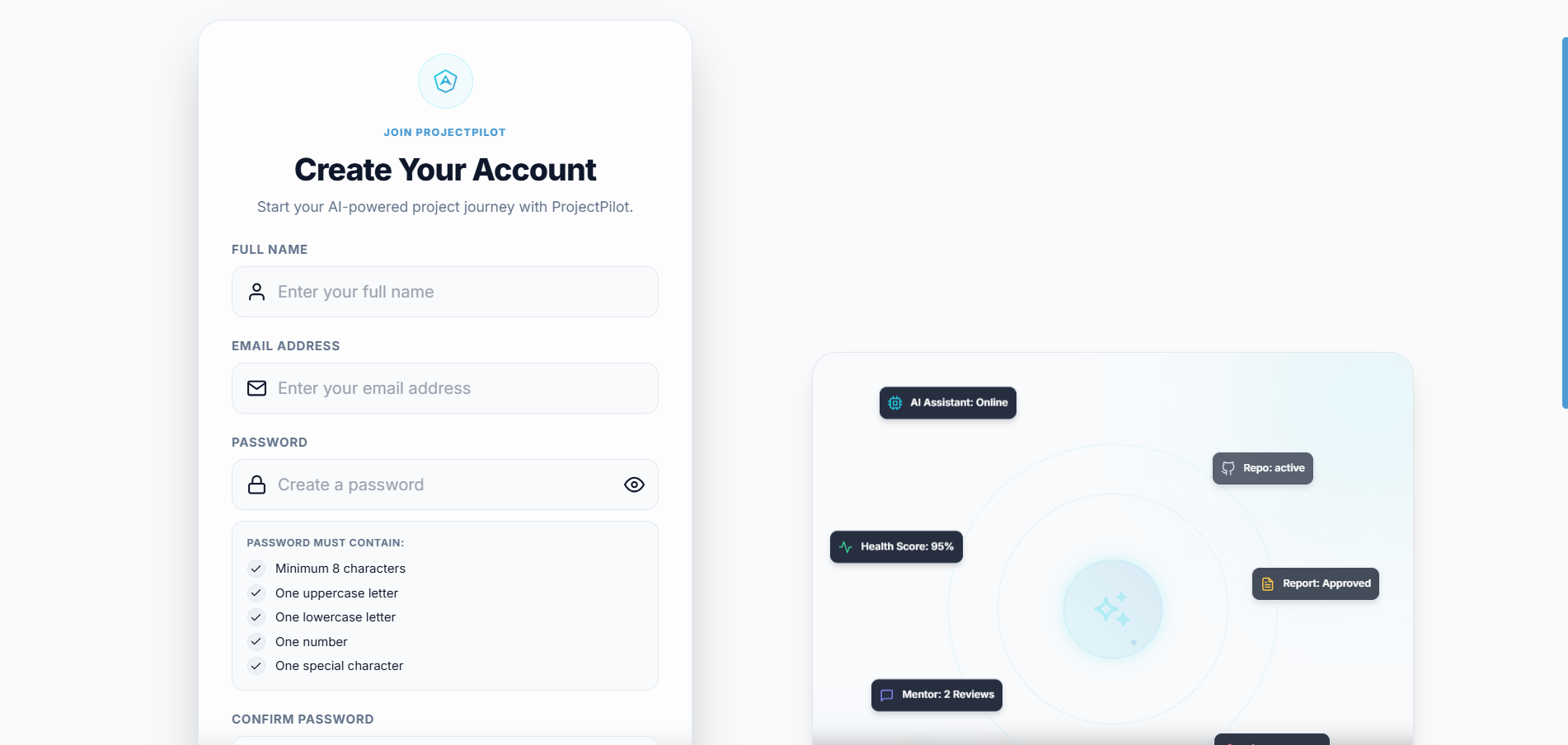
Sign Up Page
-
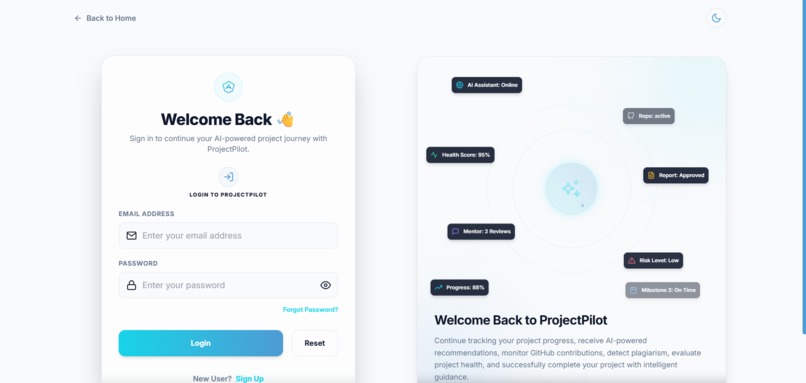
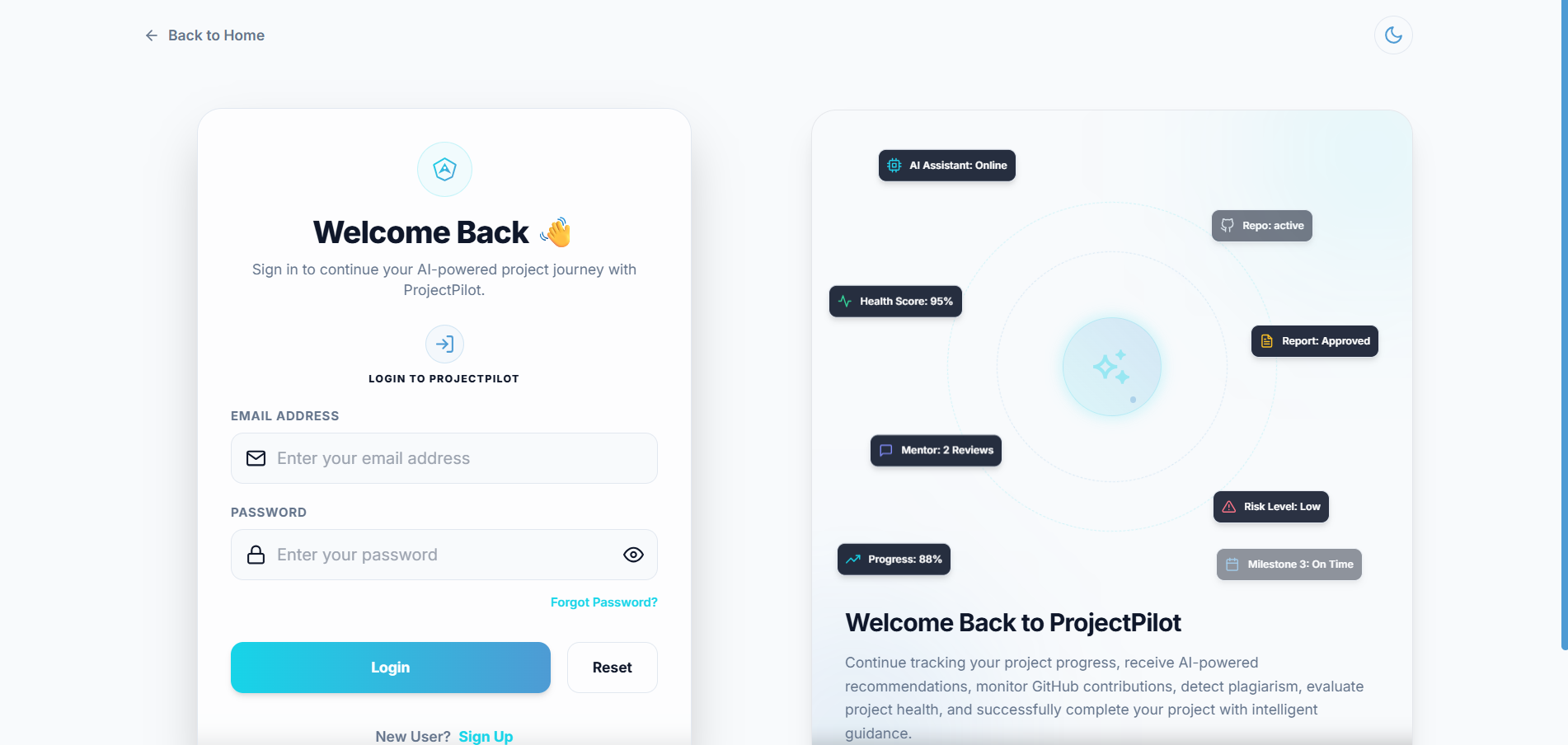
Login Page
-
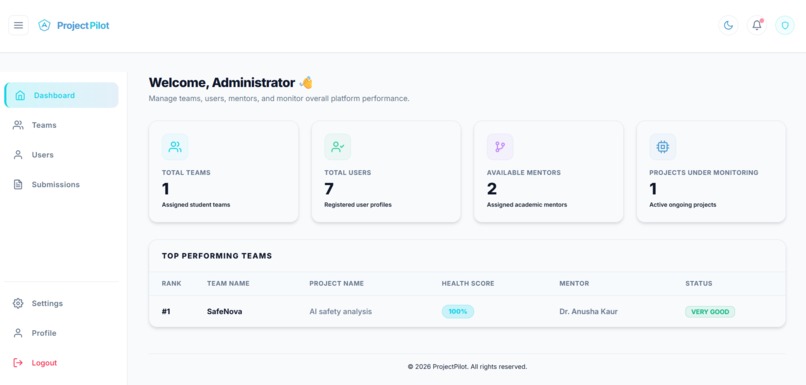
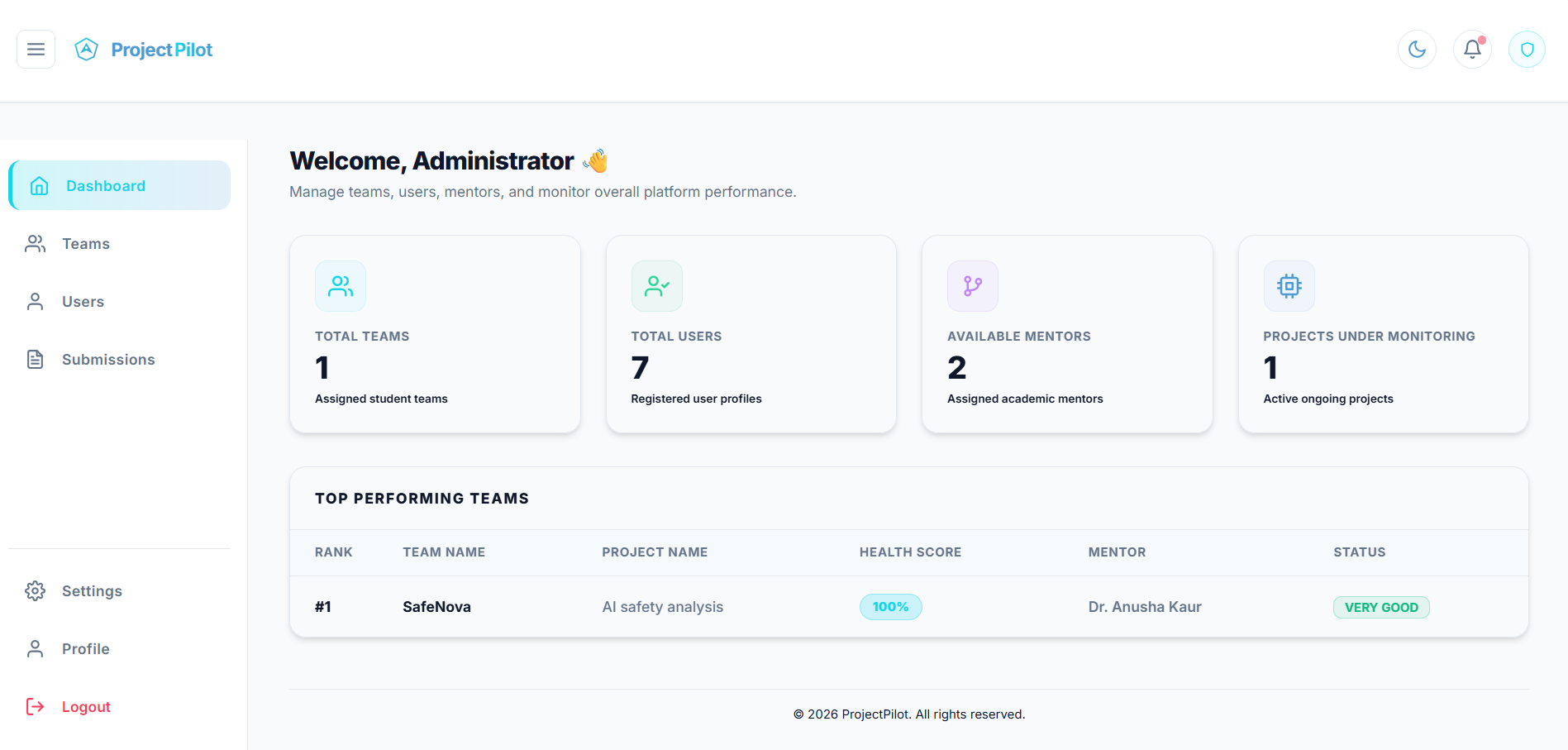
Admin Dashboard
-
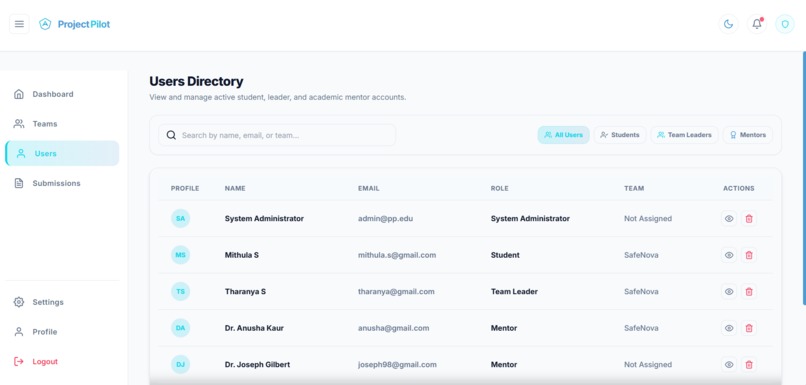
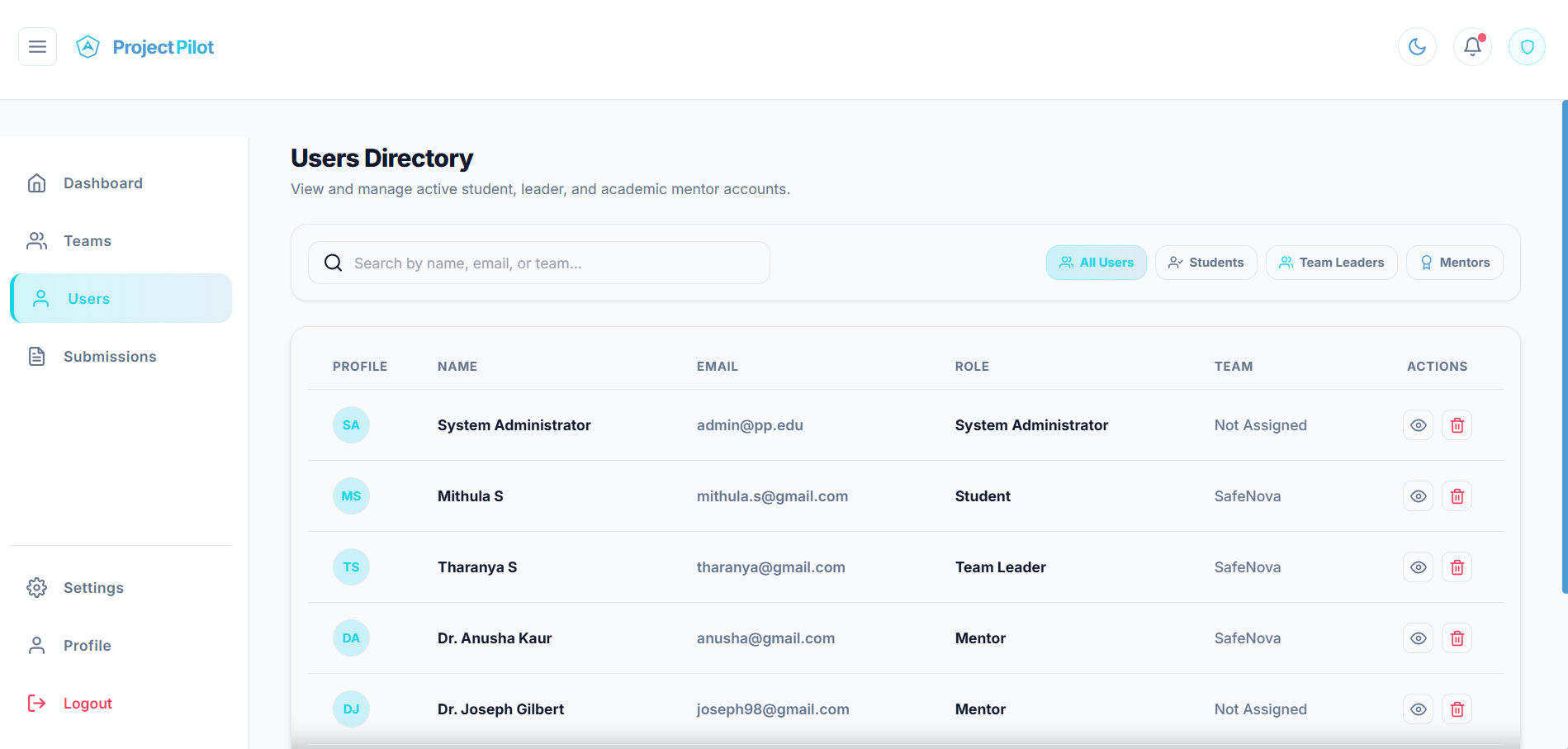
Users list
-
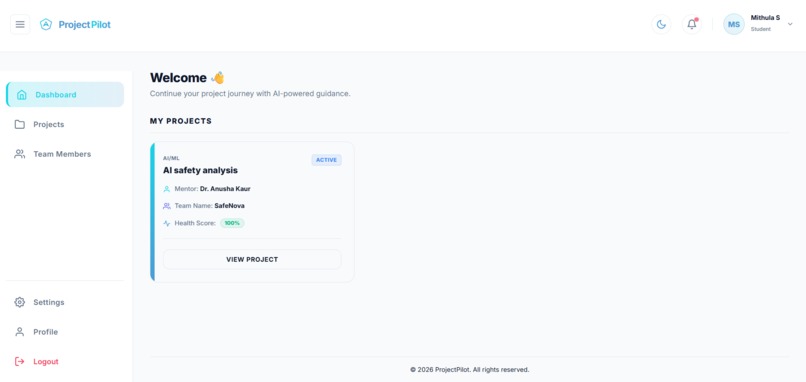
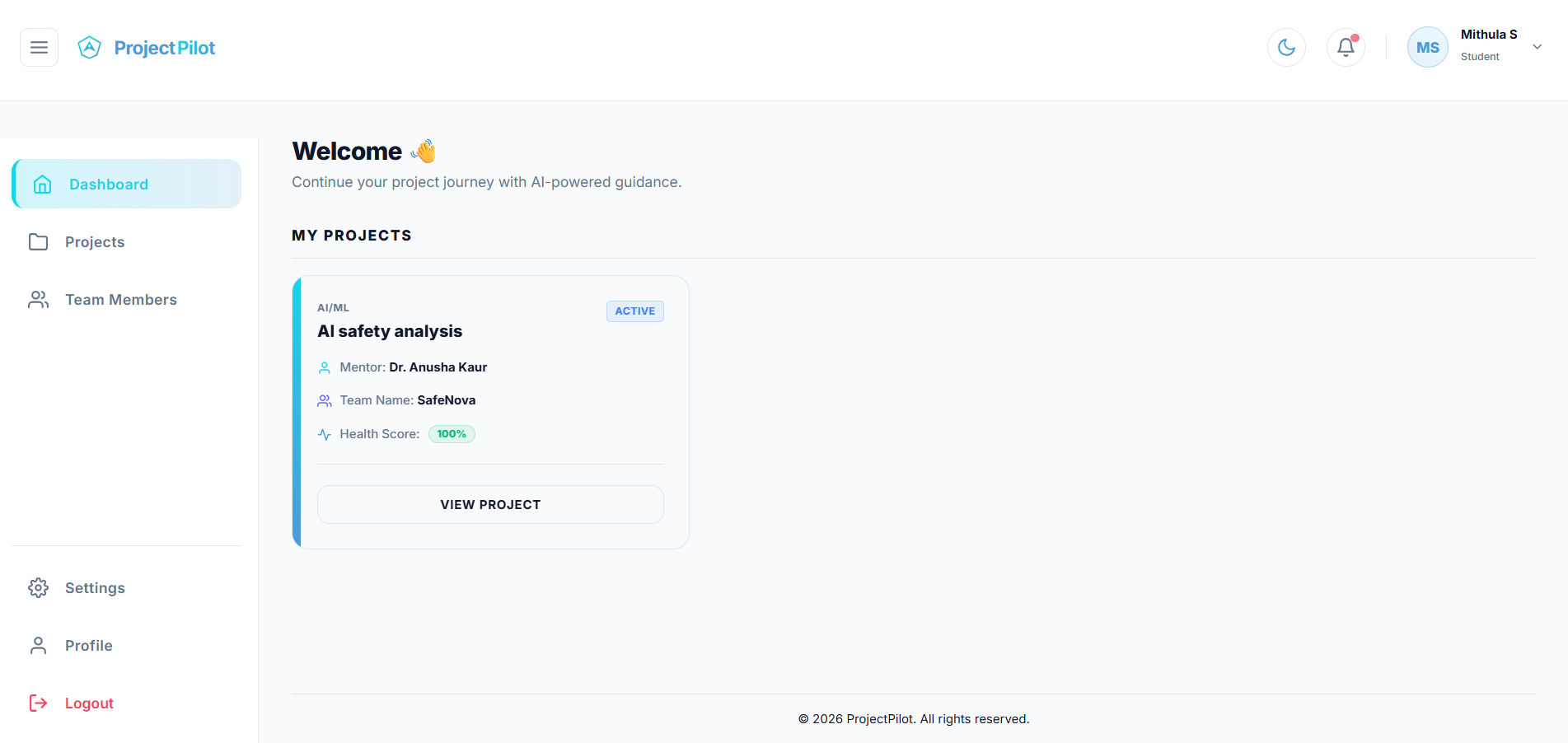
Student Dashboard
-
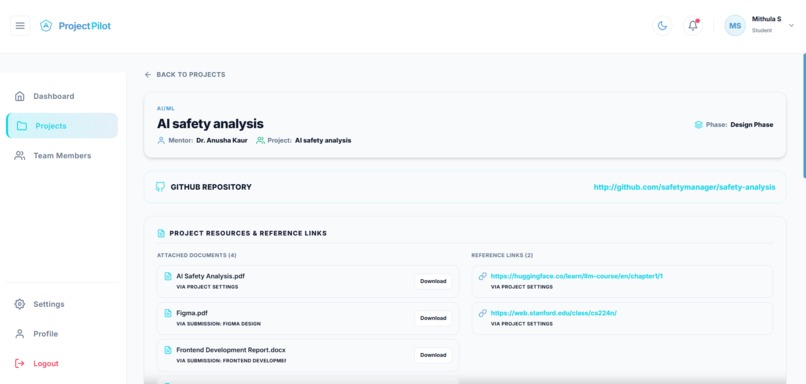
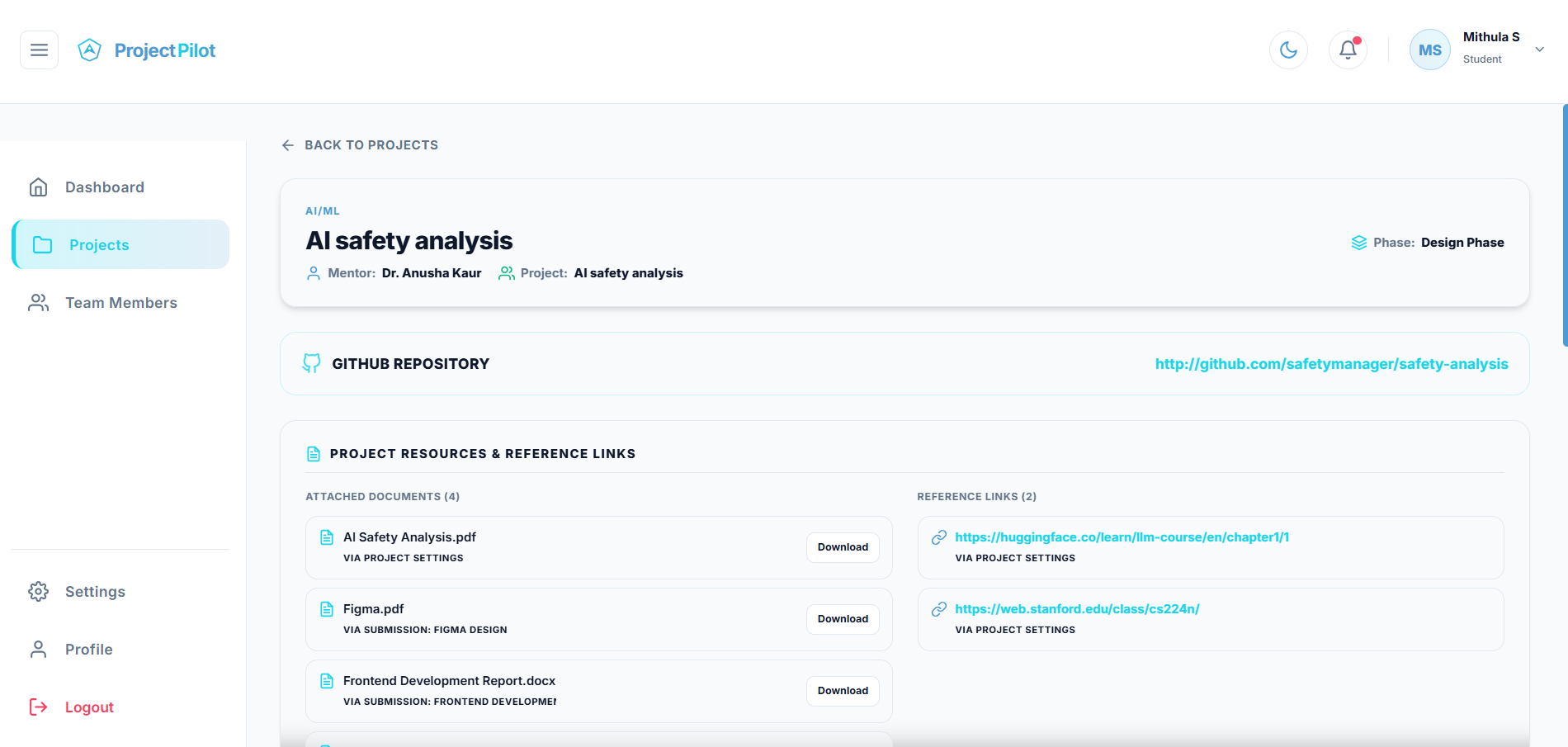
Project Page
-
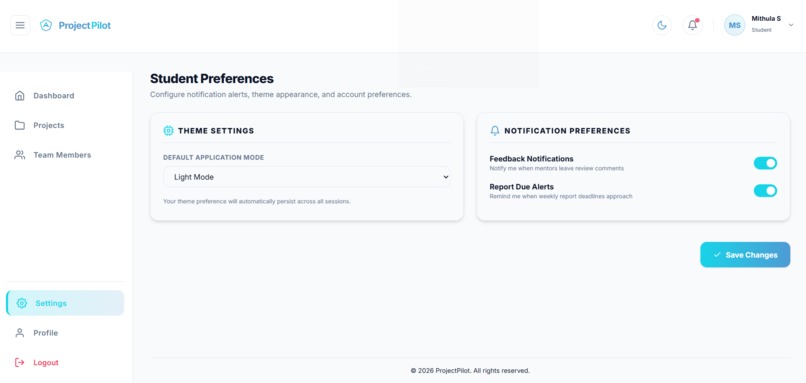
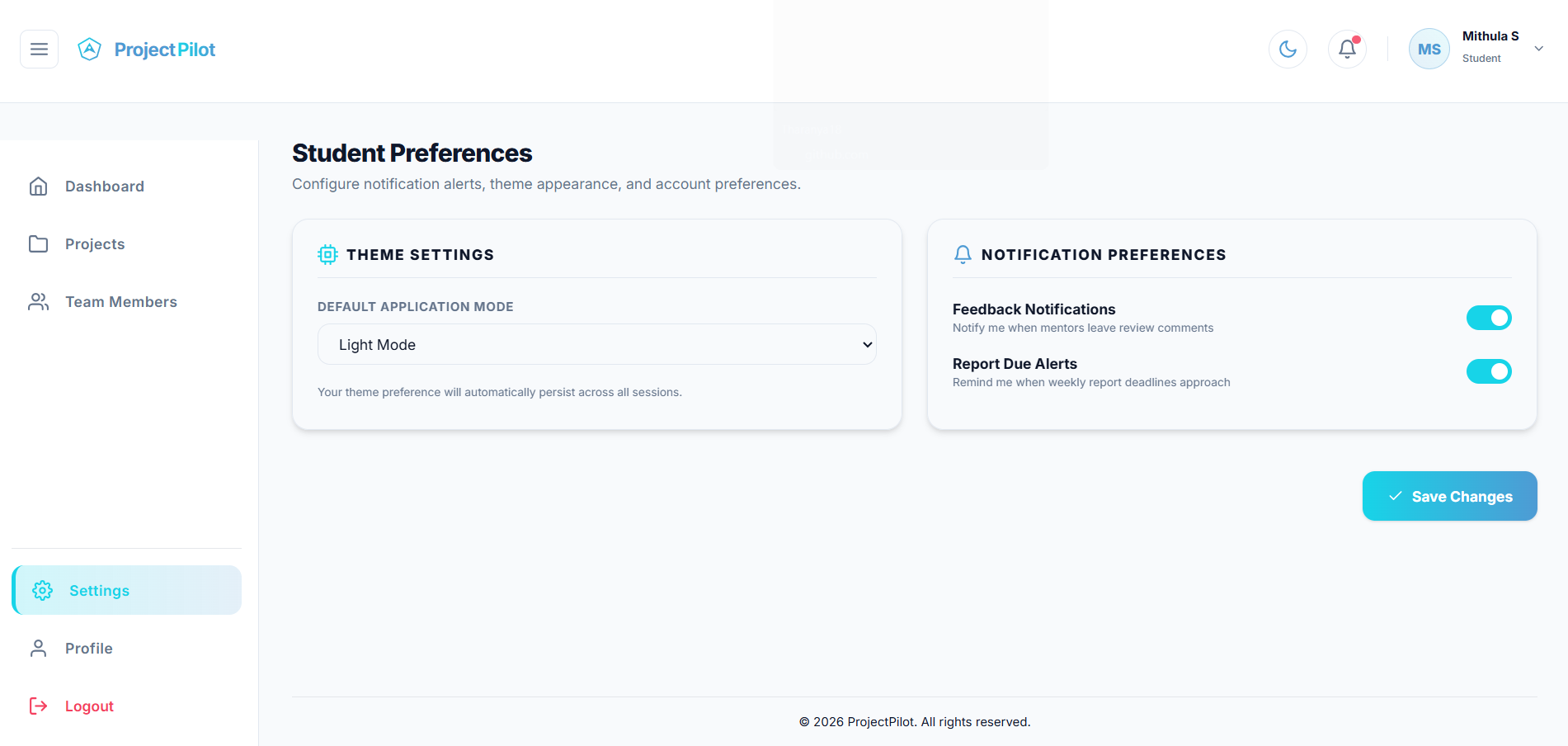
Settings
-
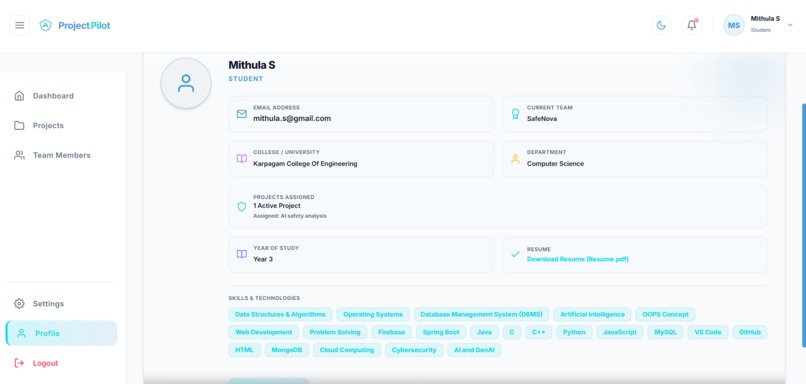
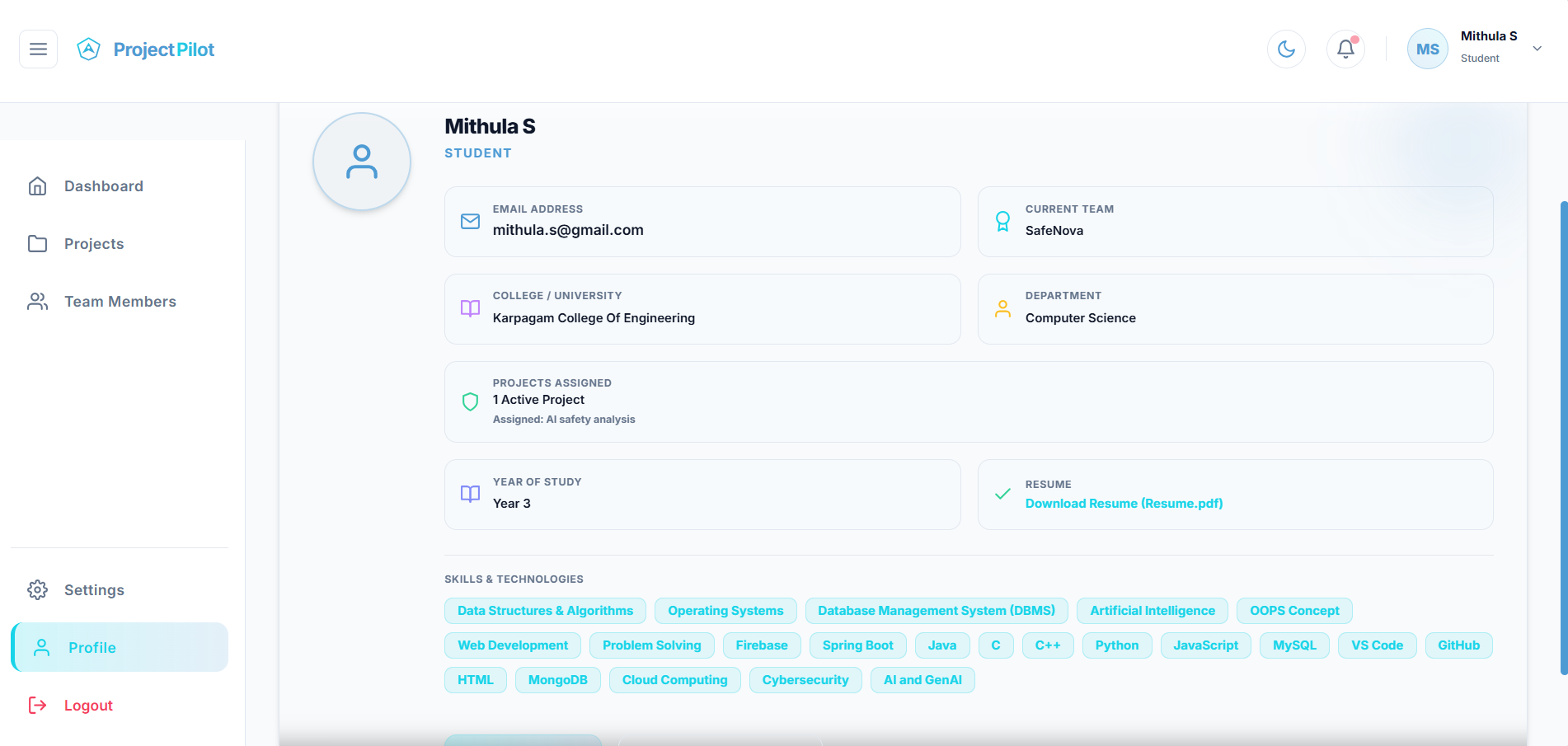
Profile
-
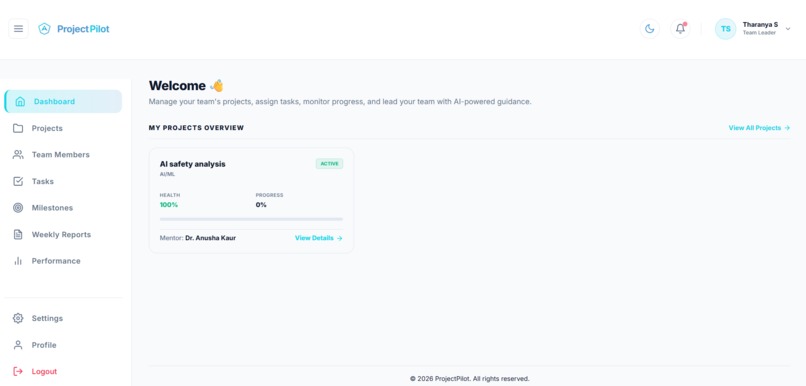
Team Leader Dashboard
-
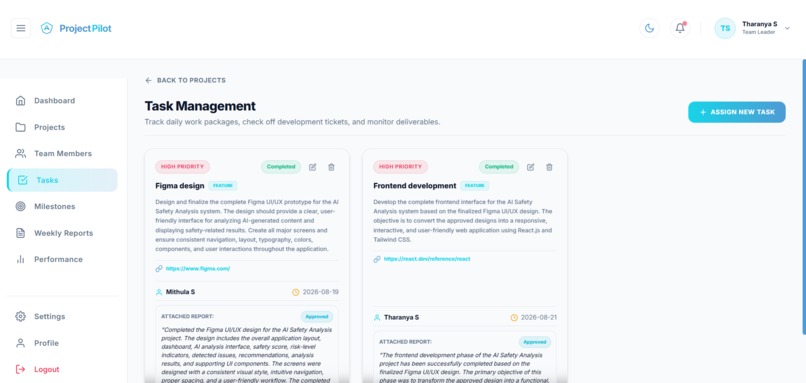
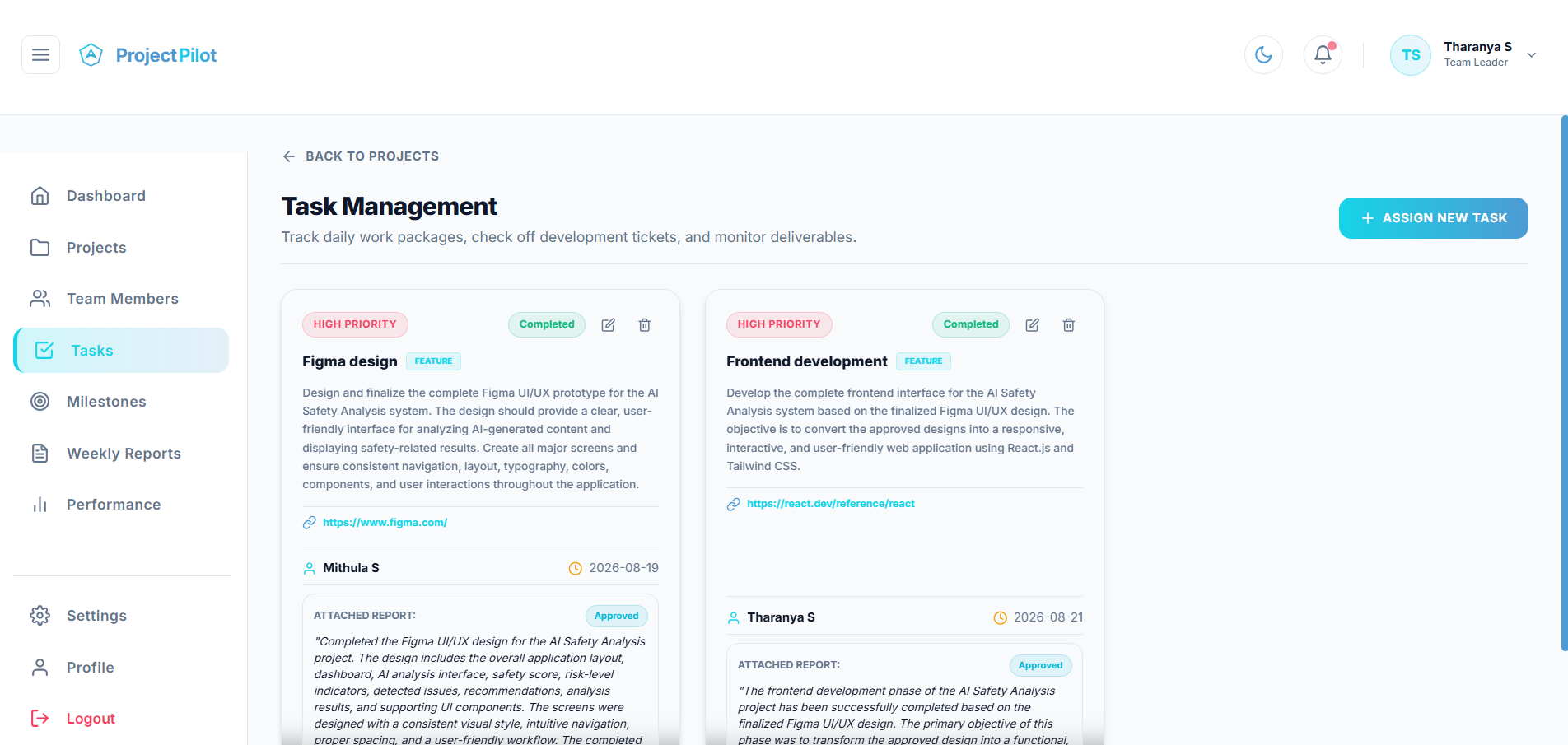
Tasks
-
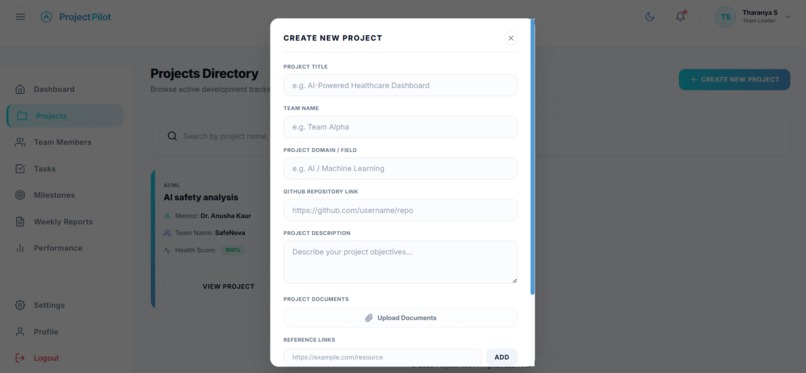
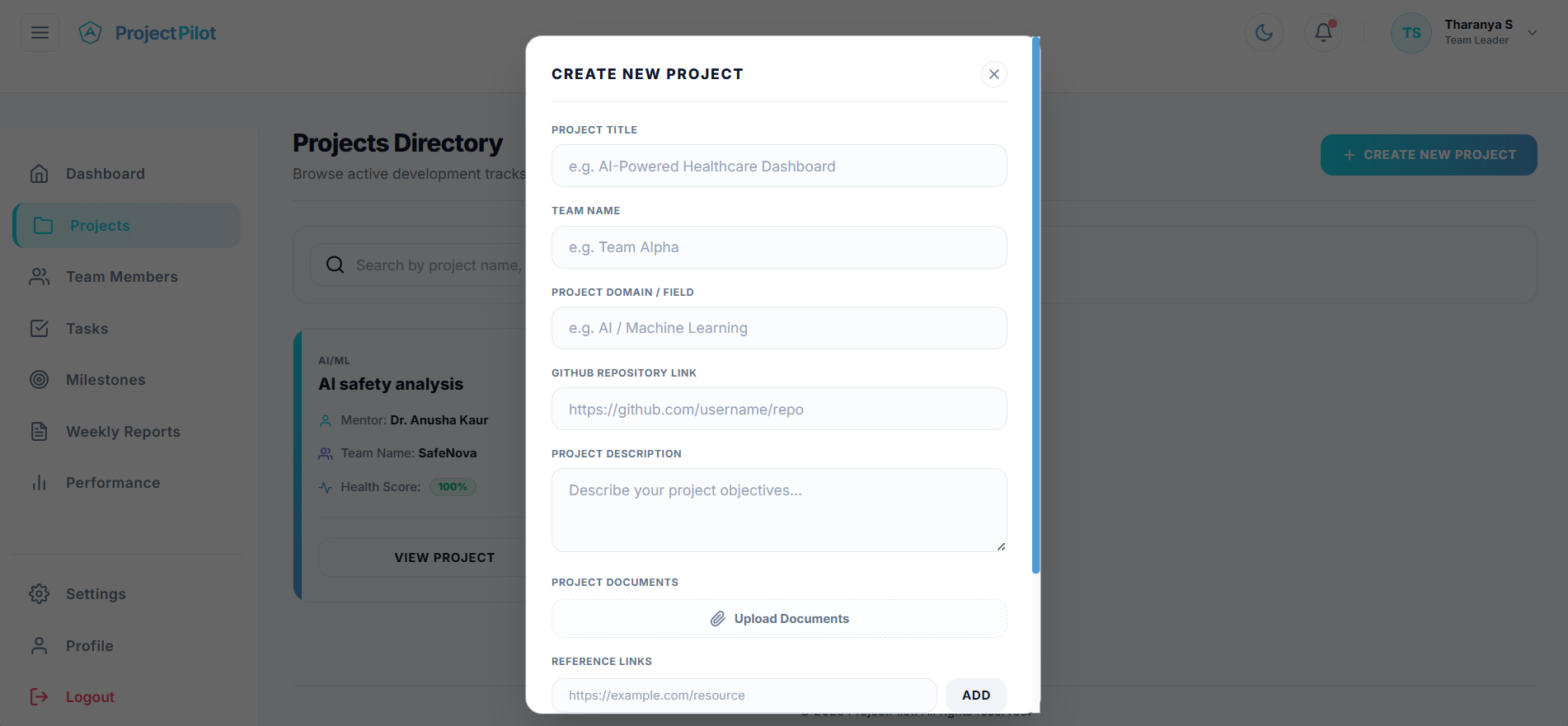
Project Creation
-
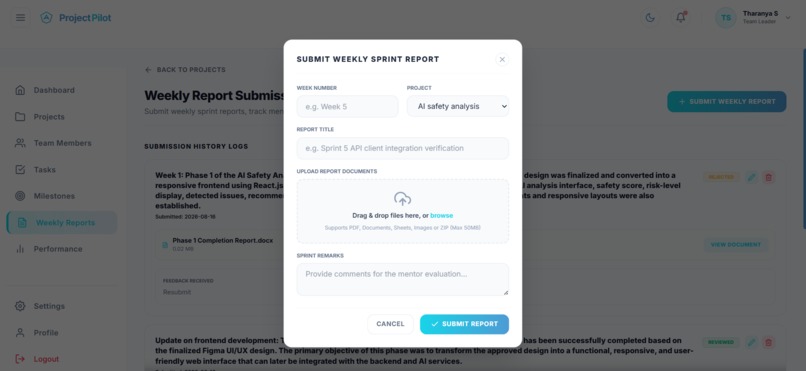
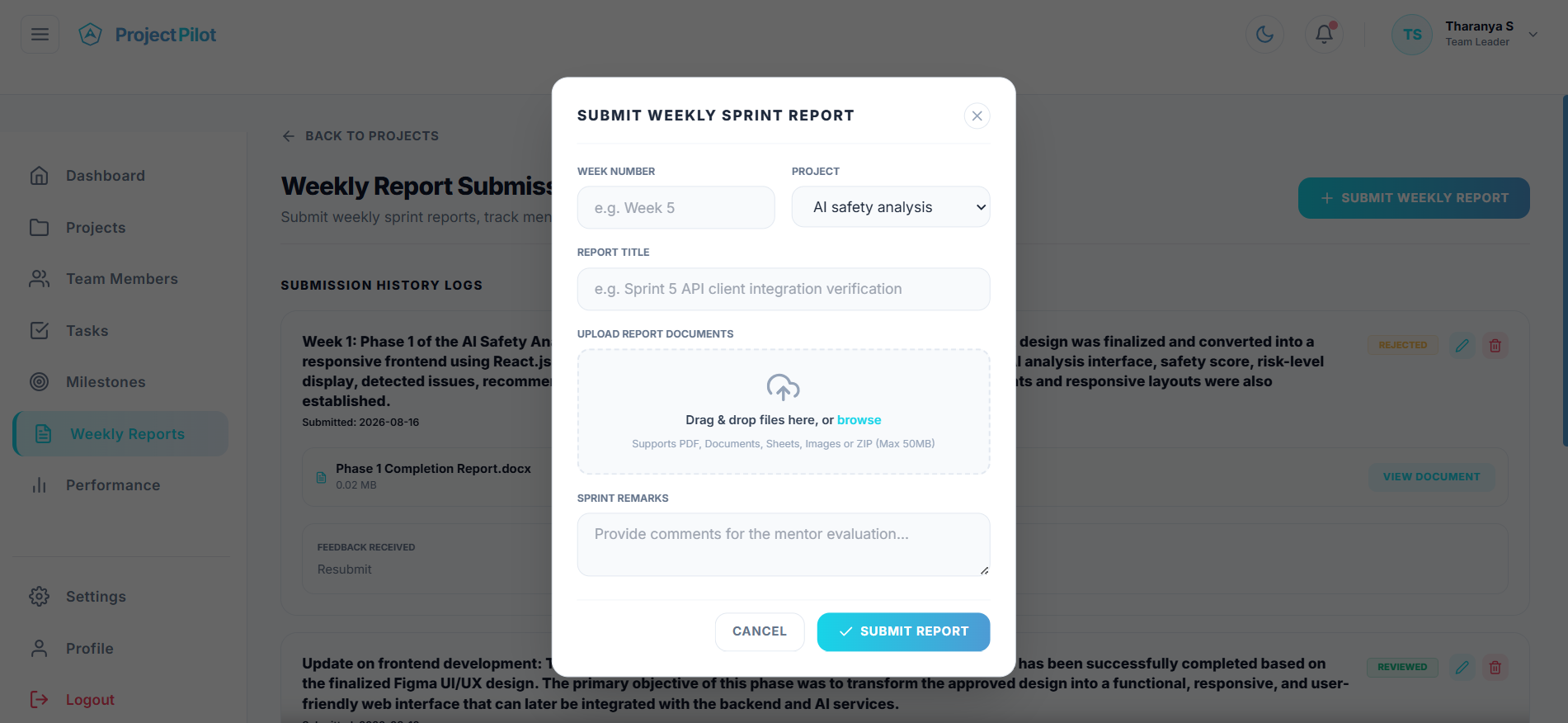
Weekly Reports
-
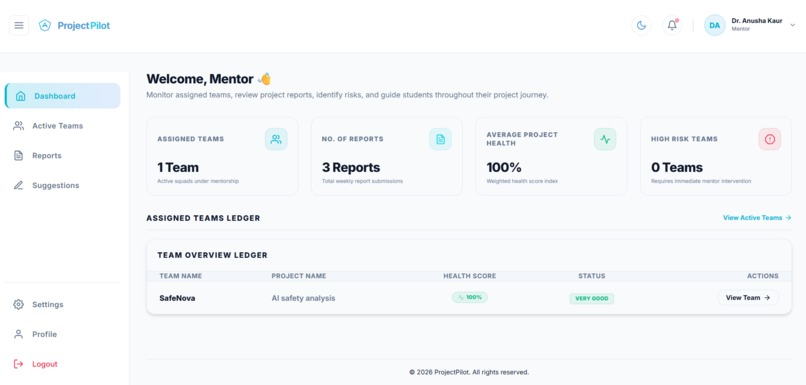
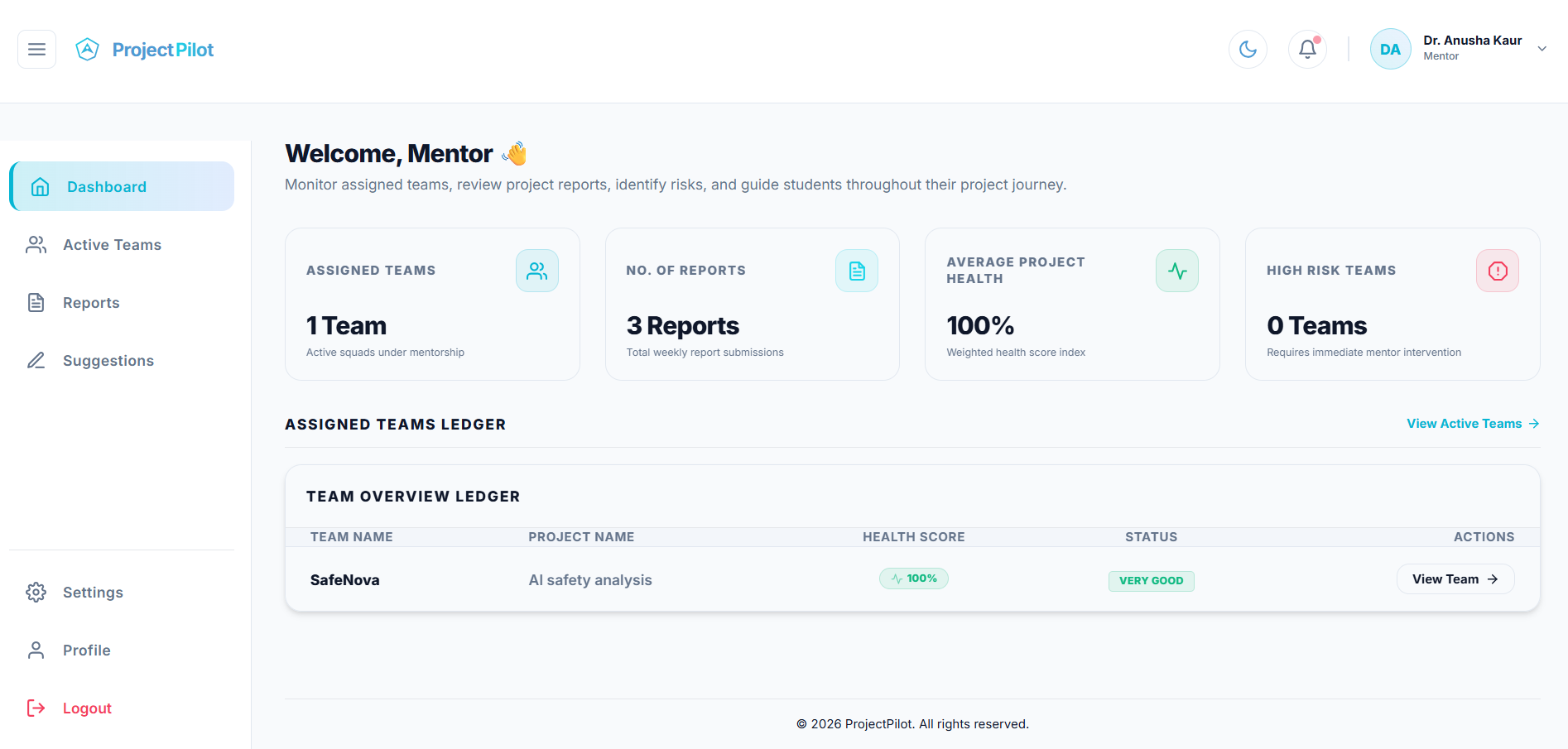
Mentor Dashboard
-
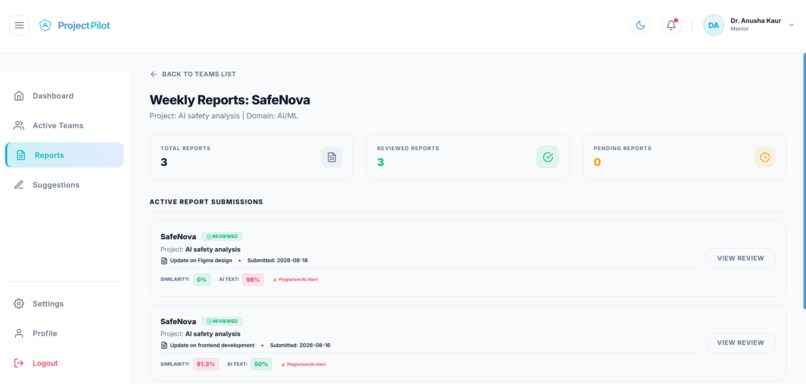
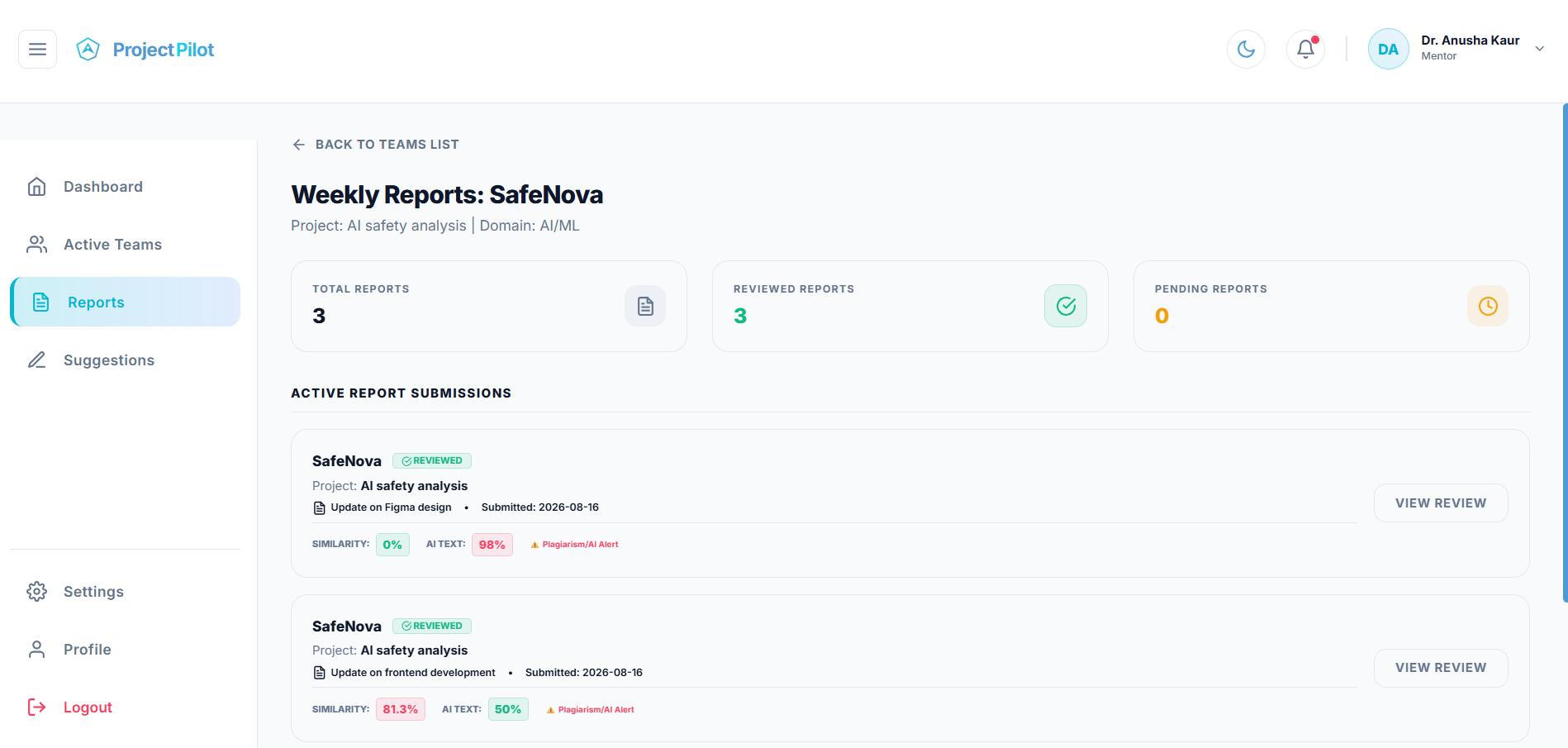
Reports
Inspiration
Academic project management is notoriously fragmented. Students struggle to keep up with milestones across multiple platforms, team leaders find it hard to coordinate tasks, and mentors—who often guide 5 to 10 teams simultaneously are overwhelmed trying to audit individual contributions, track weekly progress, and review reports. We wanted to build a single, unified platform that acts as a "smart co-pilot" for academic engineering projects: a tool that doesn’t just store tasks but actively uses AI to help mentors audit code authenticity, analyze progress reports, and keep projects on track.
What it does
ProjectPilot is a role-based academic project management and monitoring platform tailored for Students, Team Leaders, Mentors, and System Administrators. • Role-Specific Dashboards: Custom workflows for Students (submitting work), Team Leaders (managing tasks/milestones), Mentors (reviewing, grading, and directing teams), and Administrators (orchestrating projects and assignments). • AI-Assisted Analysis (Google Gemini): • Extracts skills and education timelines from uploaded student resumes during sign-up. • Audits weekly reports to calculate the probability of AI-generated content. • Performs semantic similarity scanning against all past reports in the system using document embeddings to flag potential duplication. • Member Contribution Auditing: Captures and aggregates individual commit and PR counts, mapping them to interactive performance auditing dashboards to give mentors a transparent breakdown of who did what. • Deadlines & Notification Hubs: Automated checkups and warnings for upcoming task and milestone deadlines. • File Handling: Upload, store, and download project reports and attachments directly through the system.
How we built it
ProjectPilot is built on a modern, decoupled microservices architecture: • Frontend: A highly responsive Single Page Application (SPA) built with React 19, Vite 8, and styled using Tailwind CSS. It incorporates dark/light theme support, custom modal dialogs, and dynamic timeline components. • Authentication Microservice (auth-service): A Spring Boot service handling registration, role-mapping, and stateless session management with JWTs, backed by MySQL database. • Project Microservice (project-service): A Spring Boot service that handles projects, teams, tasks, milestones, suggestions, notifications, and file storage, backed by MongoDB. • AI Integration Layer: Integrates the Google Gemini API to generate document embeddings and run text audits. We built a custom local fallback cosine similarity algorithm using a Java bag-of-words implementation to keep similarity scanning alive even if the API limits are hit.
Challenges we ran into
• Stateless Microservice Verification: Ensuring the project-service could verify JWTs issued by the auth-service without making slow API calls back-and-forth. We resolved this by configuring a shared cryptographically secure signing key. • Stale Metrics & Cascades: When a user deleted a task, modified a report, or deleted a weekly submission, metrics like commit counts would often remain stale in the database. We solved this by implementing strict database cascade triggers in the backend and refactoring the frontend metrics aggregator to scan the entire team roster. • Resilient AI Pipelines: Creating fallback protocols for instances when external AI services rate-limit or fail, ensuring document similarity and parsing features gracefully degrade without breaking the core user experience.
Accomplishments that we're proud of
• Premium UI/UX: Crafted a clean, function-driven dashboard layout with smooth micro-interactions, dark mode, and visual progress tracking. • Authenticity Checking: A fully functioning AI checker that scans student reports in real-time, providing immediate visibility into AI-generated percentage rates and document similarities. • Robust Synchronization: Real-time event communication across dashboards, ensuring that as soon as a student uploads a report, the team leader, mentor, and performance boards reflect the update instantly.
What we learned
• Hybrid Database Coordination: Best practices for syncing a relational database (MySQL) for identity management alongside a document-oriented database (MongoDB) for hierarchical project data. • AI API Integration: Designing robust prompts and fallbacks for Large Language Models to handle structured data extraction (like parsing resumes into JSON tags). • Cascading States: Managing complex client-side states where changing a single field (like a task report) updates multiple dashboard boards simultaneously.
What's next for ProjectPilot
• Direct GitHub Webhook Integration: Auto-importing commits and PR data directly from GitHub branches instead of developers manually logging their metrics. • Real-time Discussion Channels: Adding direct team chats and mentor-student discussion threads for immediate feedback loops. • Predictive Milestones: Using historical performance data from completed projects to recommend optimized timelines and highlight early risk indicators for teams lagging behind.


Log in or sign up for Devpost to join the conversation.