-
-
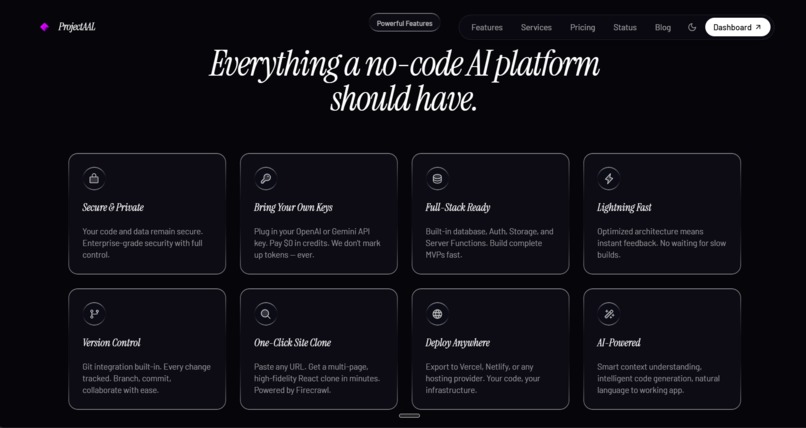
Features
-
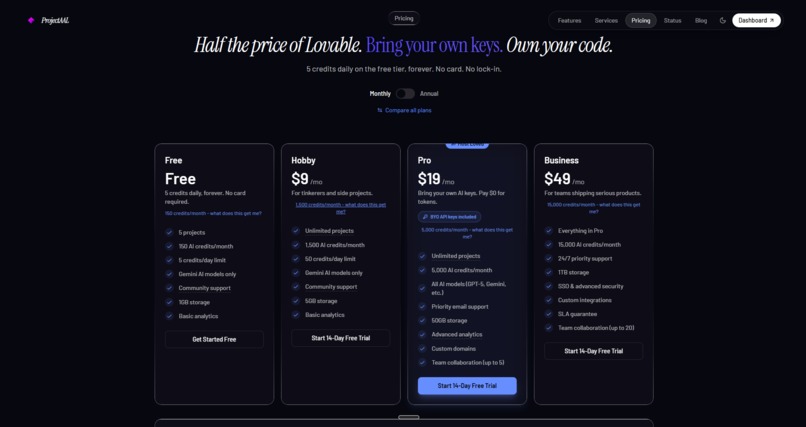
Pricing
-
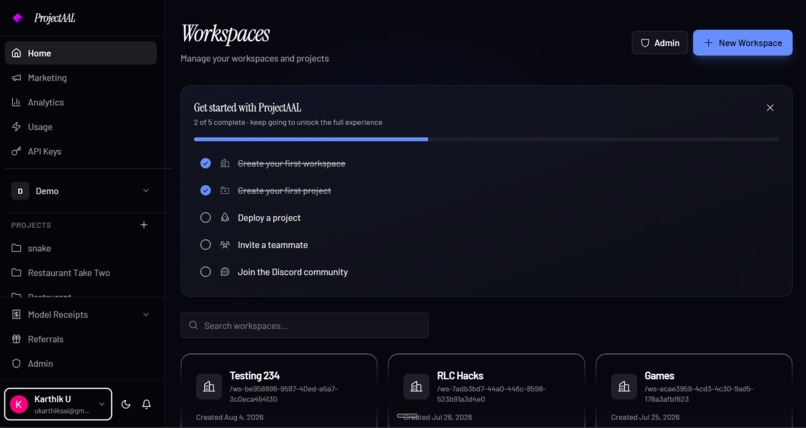
Dasboard
-
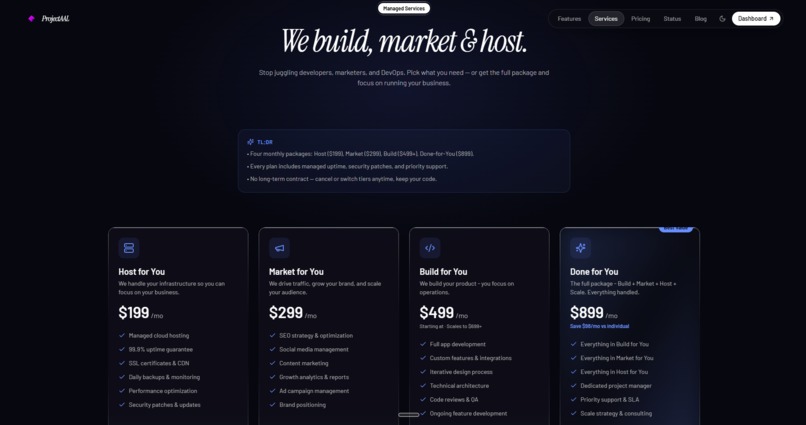
Services
-
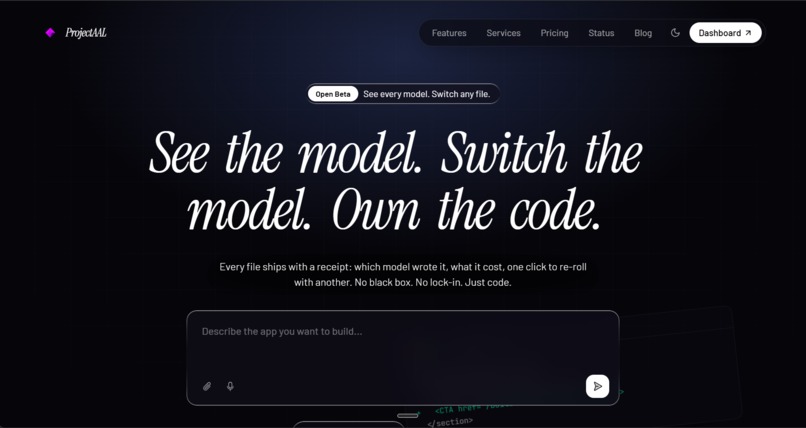
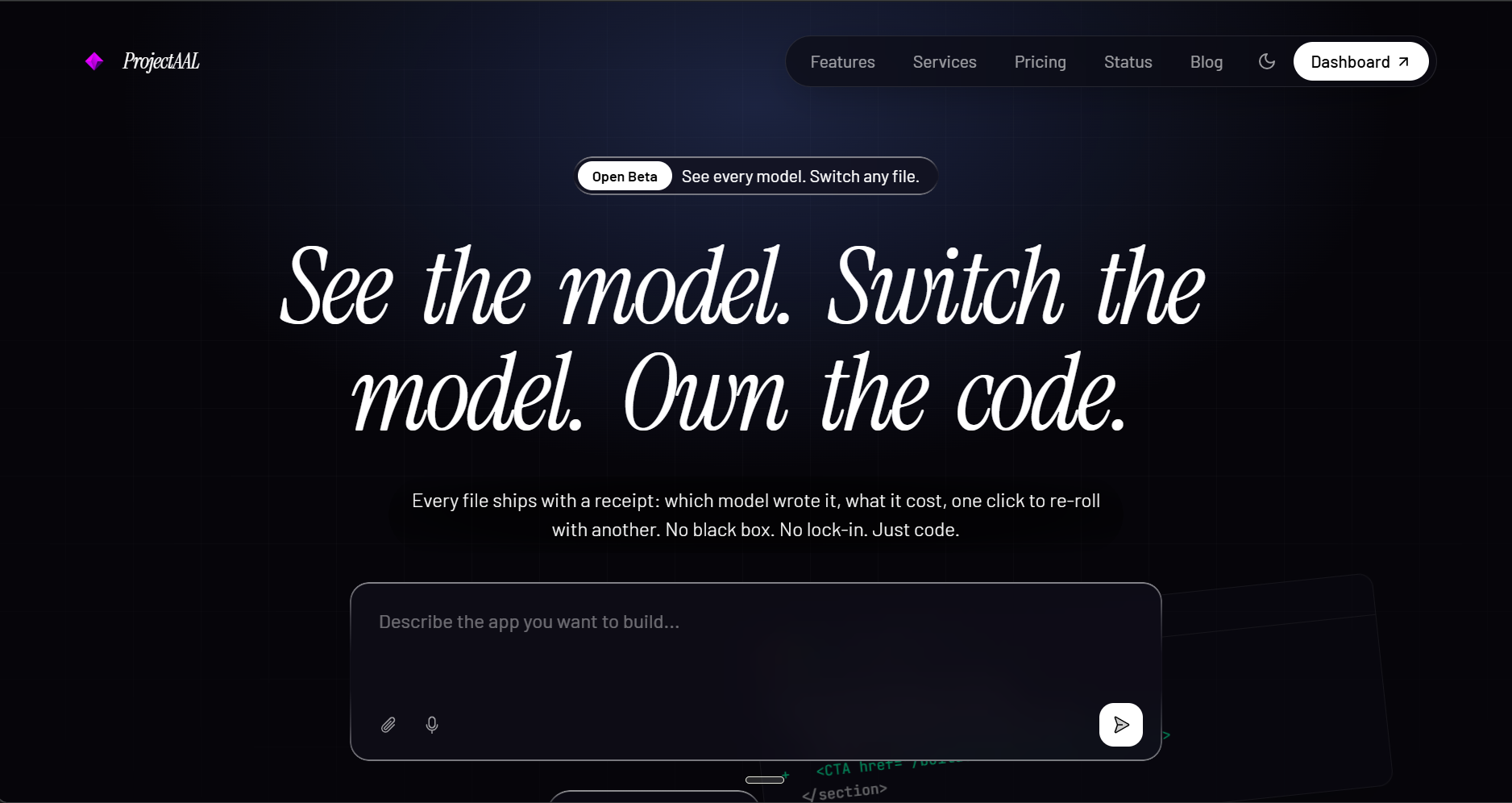
ProjectAAL Homepage
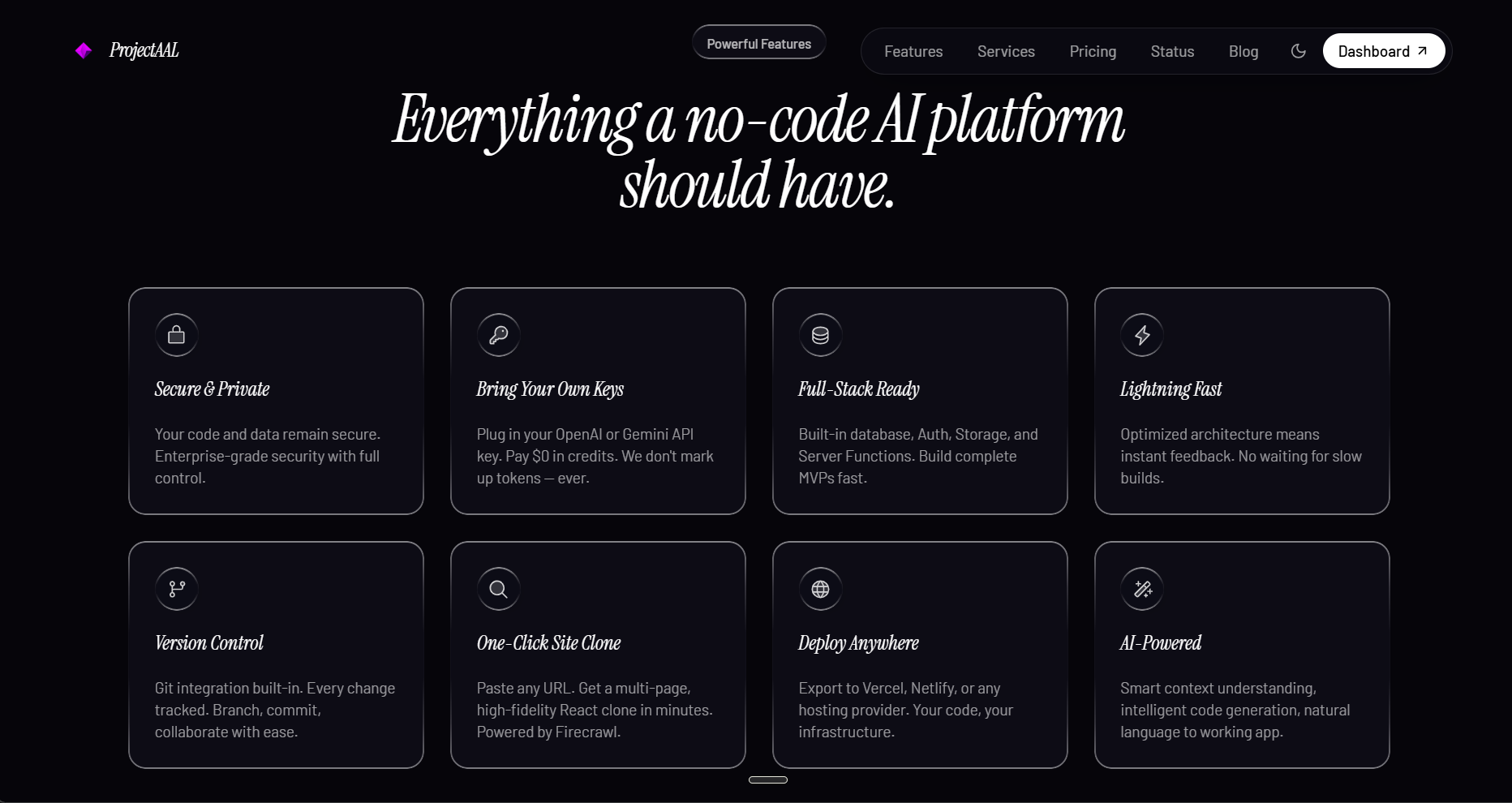
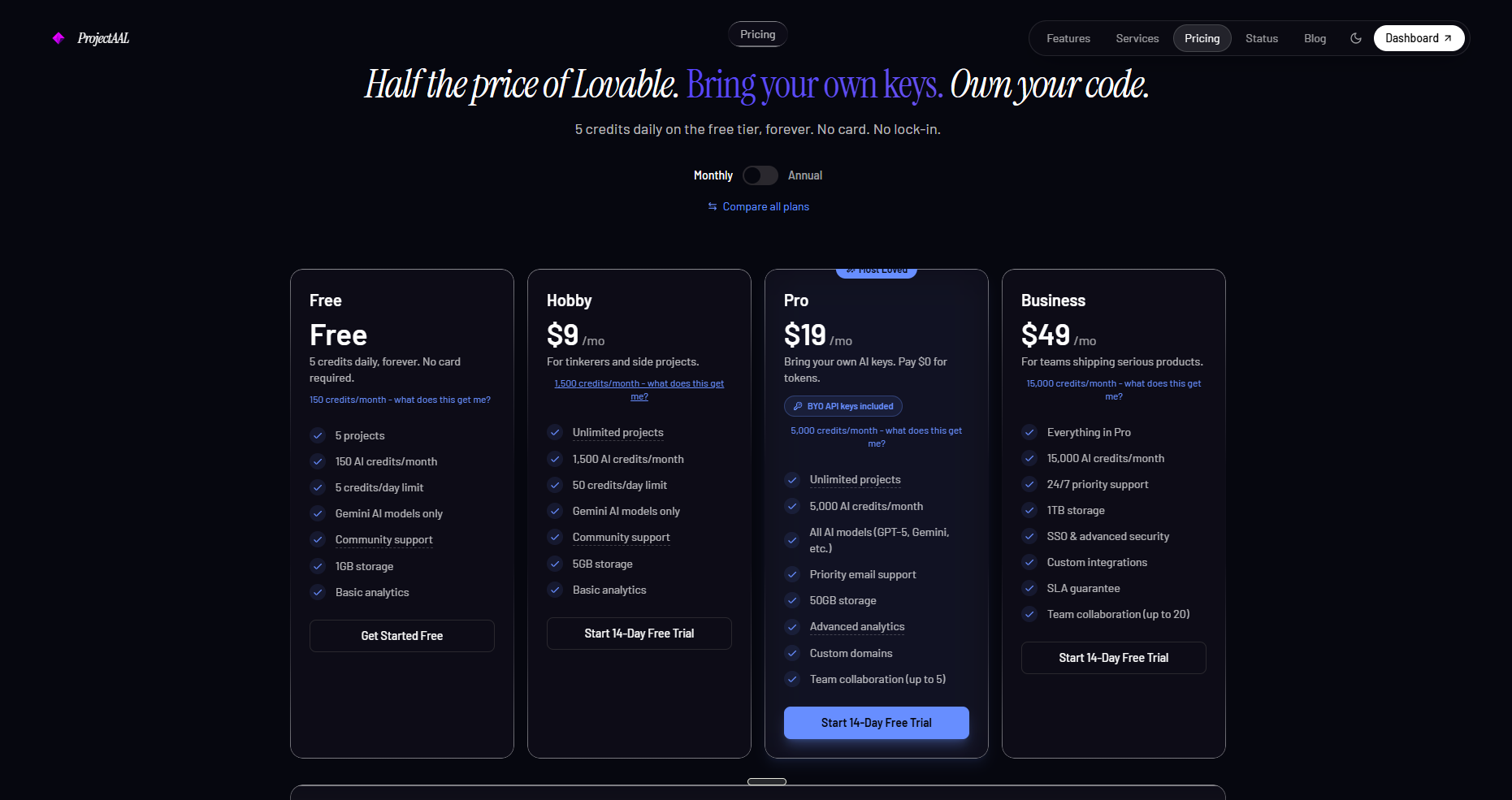
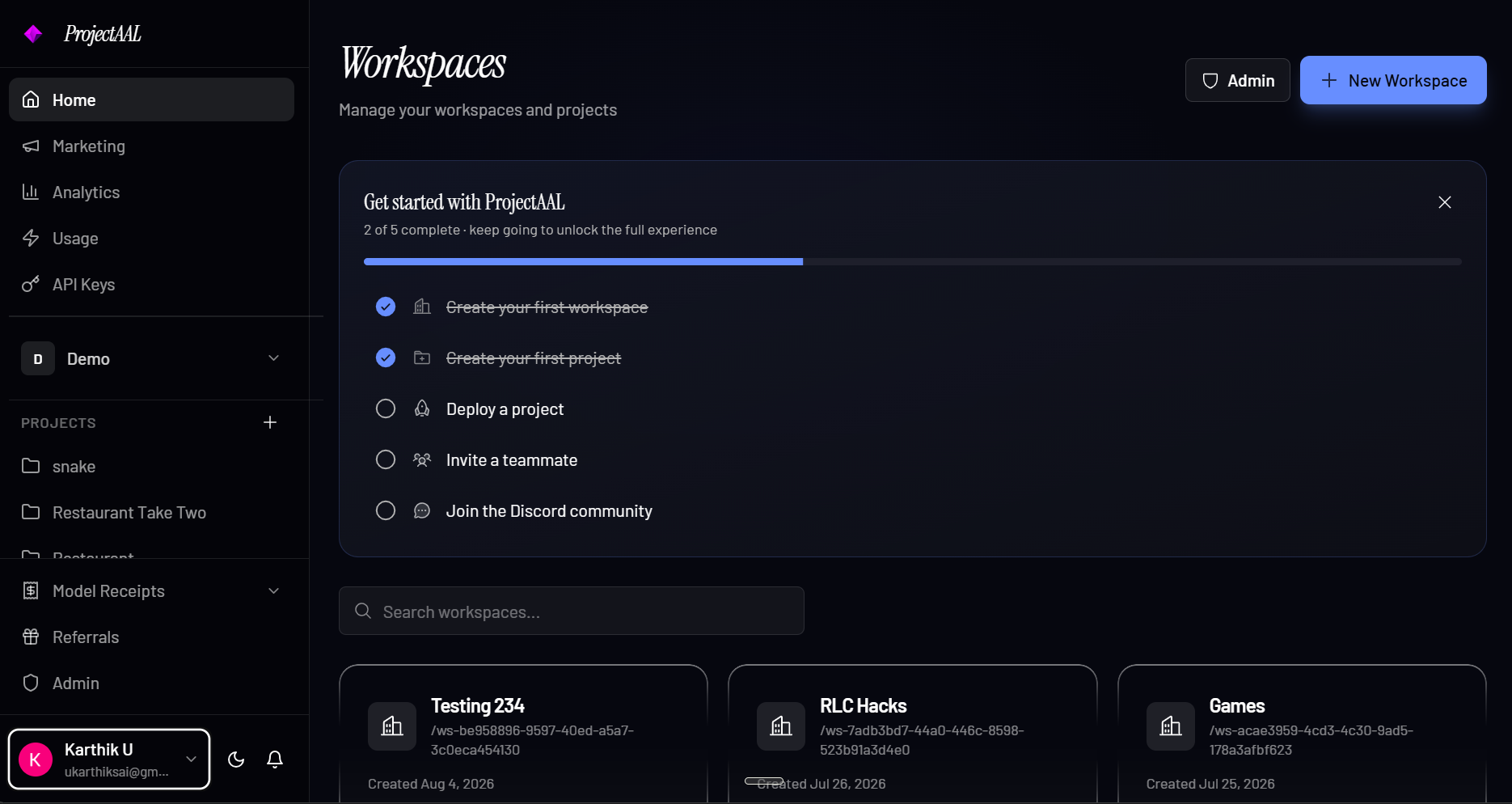

Inspiration
Building software is still harder than it should be.
A founder can have a strong idea but still need to understand frontend development, backend infrastructure, databases, deployment, debugging, UI design, and AI integrations before that idea becomes a real product. Existing AI coding tools have made development faster, but many still expect the user to think like a developer.
We created ProjectAAL to change that.
Our goal is simple: turn an idea into a working application through AI-native development.
Instead of asking users to manually coordinate every part of software development, ProjectAAL uses Gemini-powered AI agents that can reason about the product, plan what needs to be built, generate and modify code, analyze problems, and continuously improve the application.
We want building software to feel less like managing individual coding tasks and more like working with an AI product team.
What it does
ProjectAAL is an AI-native app builder that transforms ideas into production-ready software.
A user starts by describing what they want to build. From there, ProjectAAL can use specialized Gemini-powered agents to help move the application through the development process.
The system can:
- Understand a user's product idea and requirements
- Plan the structure and functionality of an application
- Generate application code
- Edit and improve existing code
- Coordinate specialized AI agents for different development tasks
- Analyze errors and application behavior
- Debug problems and suggest or implement fixes
- Iterate on an application as the user's requirements change
The goal is not simply to generate a block of code from a prompt. ProjectAAL is designed around an agentic development workflow, where AI can participate throughout the software-building lifecycle.
This allows nontechnical founders, students, creators, entrepreneurs, and small teams to move from an idea toward a functioning product without needing to manually manage every technical step.
ProjectAAL is currently in beta with users, giving us the opportunity to learn from real people attempting to build real products with the platform.
How we built it
Gemini is integrated into the core intelligence of ProjectAAL rather than being added as a standalone chatbot.
We use Gemini-powered capabilities across several stages of the development process:
1. Planning
When a user describes an application, AI can reason about the request and translate the idea into a more structured development plan.
Instead of immediately producing disconnected pieces of code, the system can first determine what components and functionality the application requires.
2. Code generation and editing
Gemini helps ProjectAAL generate and modify application code based on user requests.
Users can continue describing changes in natural language, allowing the system to evolve the application iteratively rather than forcing users to manually edit every file.
3. Specialized AI agents
ProjectAAL is designed around multiple specialized AI agents.
Rather than treating every task as the same type of prompt, different agents can focus on different parts of the development workflow. These agents can collaborate around a user's application and help move it from an initial concept toward a complete product.
4. Analysis and debugging
Building an application rarely works perfectly on the first attempt.
Gemini also helps ProjectAAL analyze applications, understand errors, reason about potential causes, and make improvements. This creates a feedback loop where AI is not only generating software but also helping maintain and repair what it creates.
Together, these capabilities create a workflow closer to an AI software team than a traditional code generator.
Challenges we ran into
One of our biggest challenges was moving beyond simple prompt-to-code generation.
Generating code is only one part of building software. A useful AI development system also needs to understand context, maintain consistency across changes, reason about errors, coordinate different tasks, and understand what the user is ultimately trying to accomplish.
Agent coordination was another major challenge.
When multiple AI agents contribute to the same project, they need enough shared context to avoid conflicting decisions or producing disconnected changes. Designing the workflow around specialized agents required us to think carefully about how tasks are divided and how application context is maintained.
We also learned that users do not always describe products in technical language. A founder may explain the outcome they want without knowing the architecture required to build it. ProjectAAL therefore needs to convert human intent into technical decisions while keeping the experience understandable.
Finally, working with beta users has reinforced that reliability matters just as much as raw generation speed. A generated application is only valuable if users can continue editing, debugging, deploying, and improving it.
Accomplishments that we're proud of
We are especially proud that ProjectAAL has grown beyond an idea or prototype and is now being tested by real beta users.
We are also proud of building Gemini into multiple stages of the product rather than limiting AI to a single chat interface.
ProjectAAL can use AI to:
- Plan applications
- Generate software
- Modify code
- Coordinate specialized agents
- Analyze applications
- Debug problems
- Continue iterating as requirements evolve
Most importantly, we are working toward making software creation accessible to people who have the ambition to build something but may not have years of engineering experience.
For us, the most meaningful accomplishment is reducing the distance between having an idea and being able to build it.
What we learned
Building ProjectAAL taught us that the next generation of AI development tools will likely be about more than code generation.
The bigger opportunity is delegation.
Users should increasingly be able to communicate objectives instead of individual implementation instructions. AI can then reason about the steps required to accomplish those objectives.
We also learned that specialized agents can provide a useful structure for complex development workflows. Planning, coding, debugging, and analysis require different kinds of reasoning, even when they ultimately contribute to the same application.
Working with users during beta has also shown us how important simplicity is. The people who can benefit most from AI development tools should not need to understand every underlying technical system before using them.
What's next for ProjectAAL
Our long-term vision is for ProjectAAL to become an AI-native environment for creating and operating software.
We want to continue improving agent collaboration, application reliability, debugging, deployment, and the overall experience of going from an idea to a real product.
Future versions of ProjectAAL will focus on giving agents greater ability to understand complete applications, coordinate longer development workflows, test their work, identify problems, and continuously improve products after they have been created.
We also want to make the platform increasingly useful for founders and small teams who may otherwise need multiple technical specialists to take an idea from concept to launch.
The ultimate goal is straightforward:
Describe what you want to build. Let AI handle more of the complexity required to make it real.
ProjectAAL is our attempt to make creating software accessible to a much larger group of people and to explore what becomes possible when Gemini-powered agents operate as an intelligent development team.
Built With
- agents
- ai
- api
- gemini
- generative
- javascript
- llm
- node.js
- react
- typescript


Log in or sign up for Devpost to join the conversation.