-
-
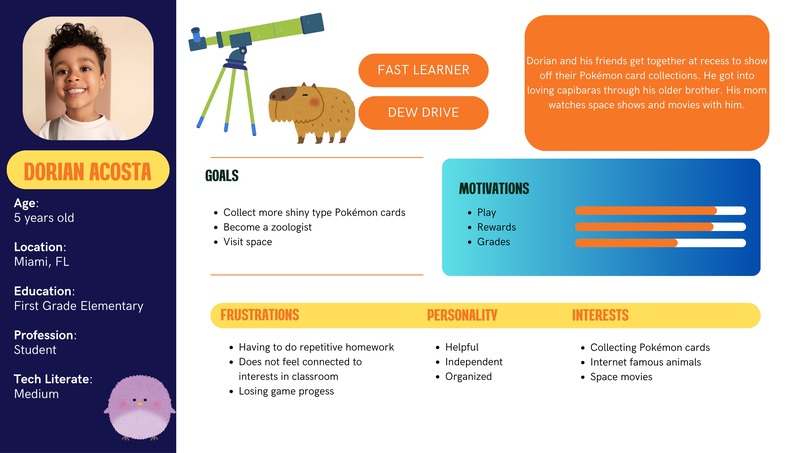
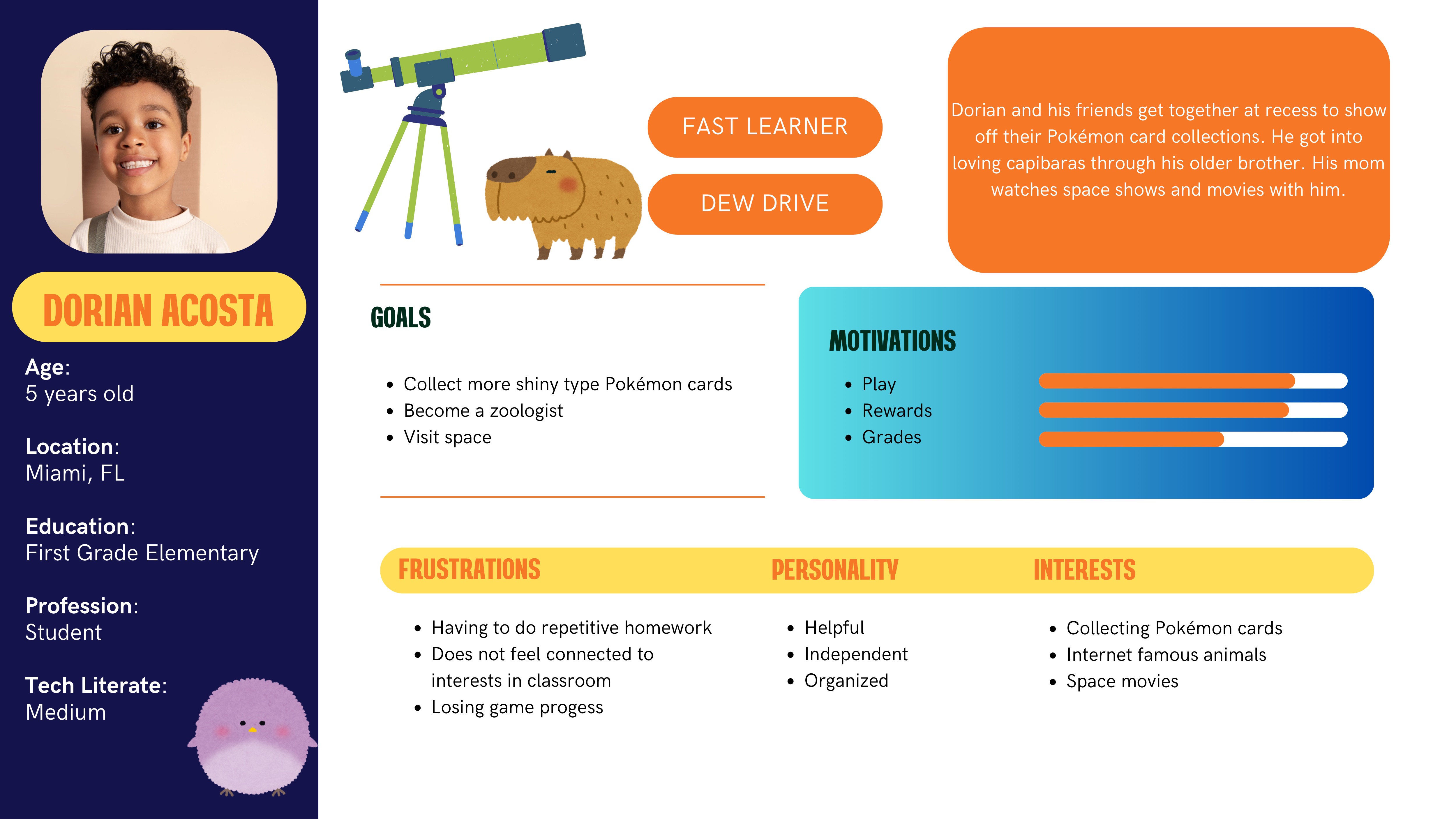
Dorian Acosta - Student 1
-
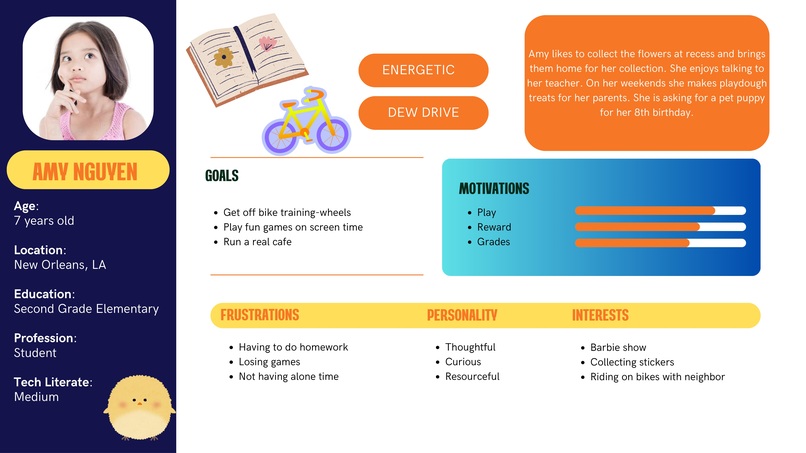
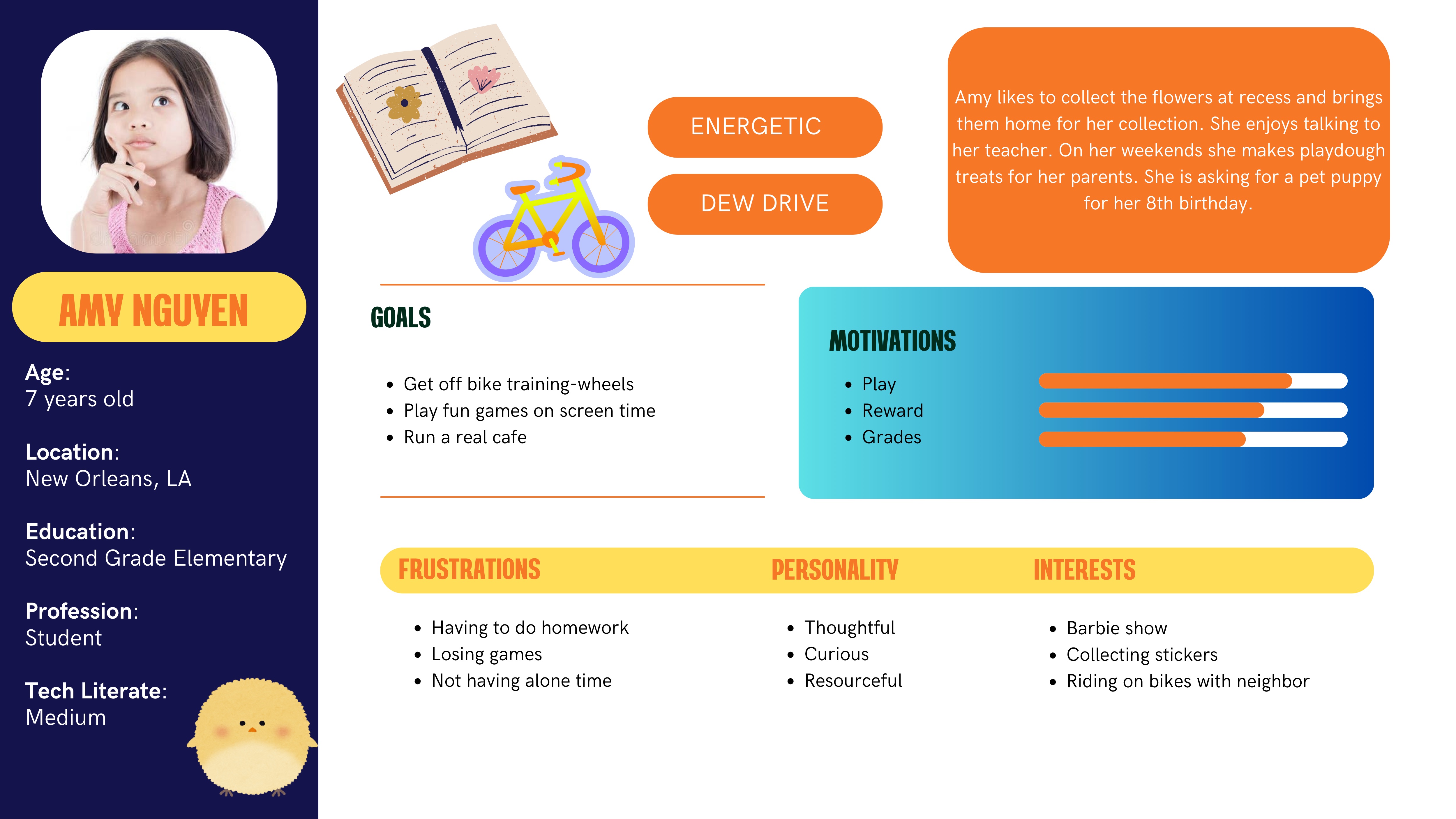
Amy Nguyen - Student 2
-
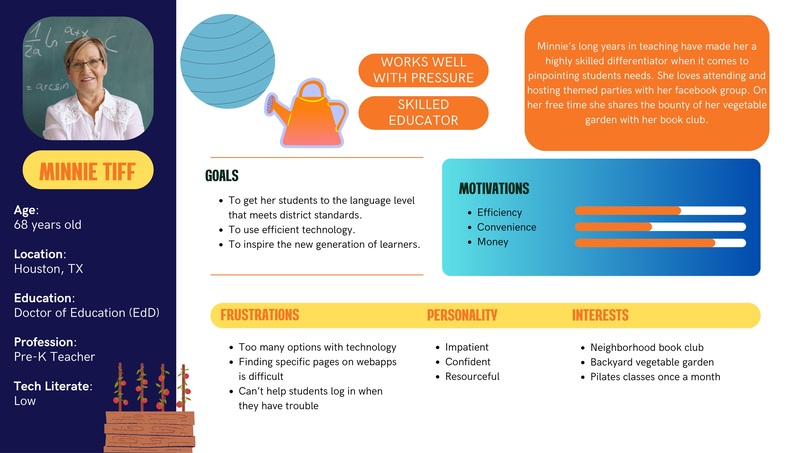
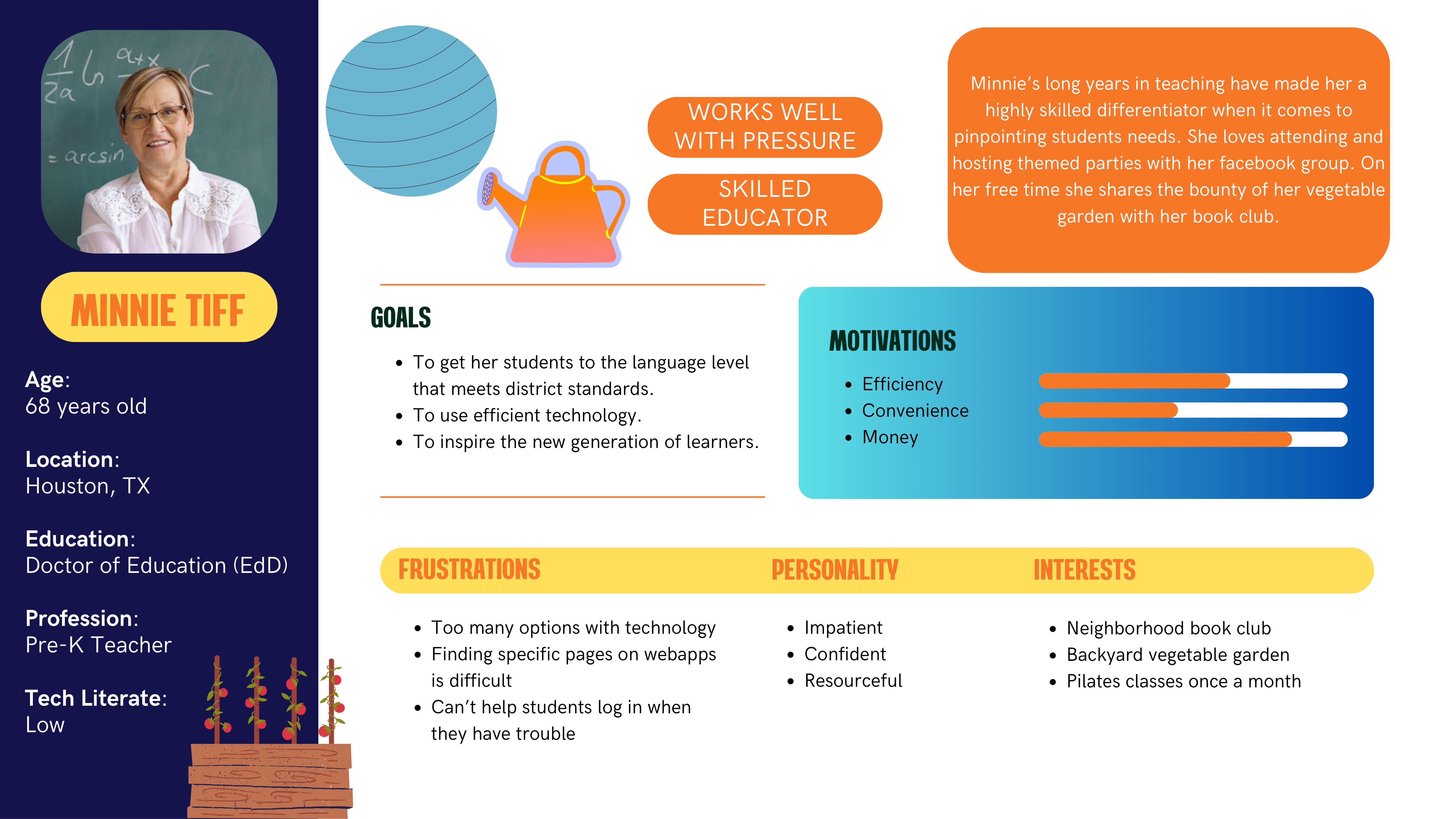
Minnie Tiff - Older Teacher
-
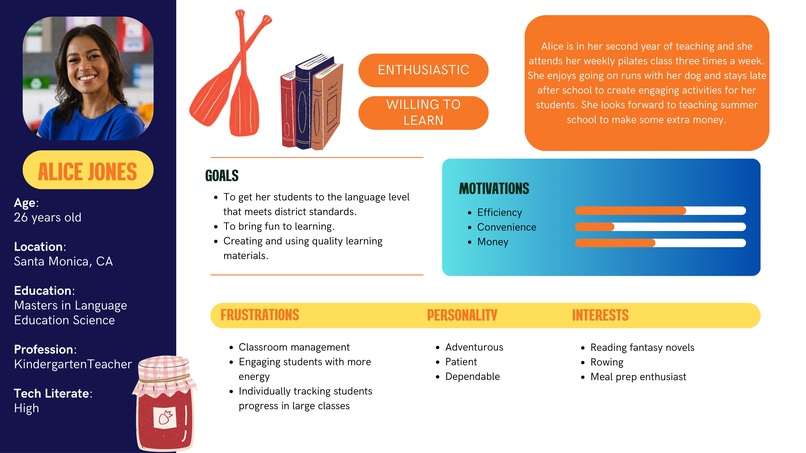
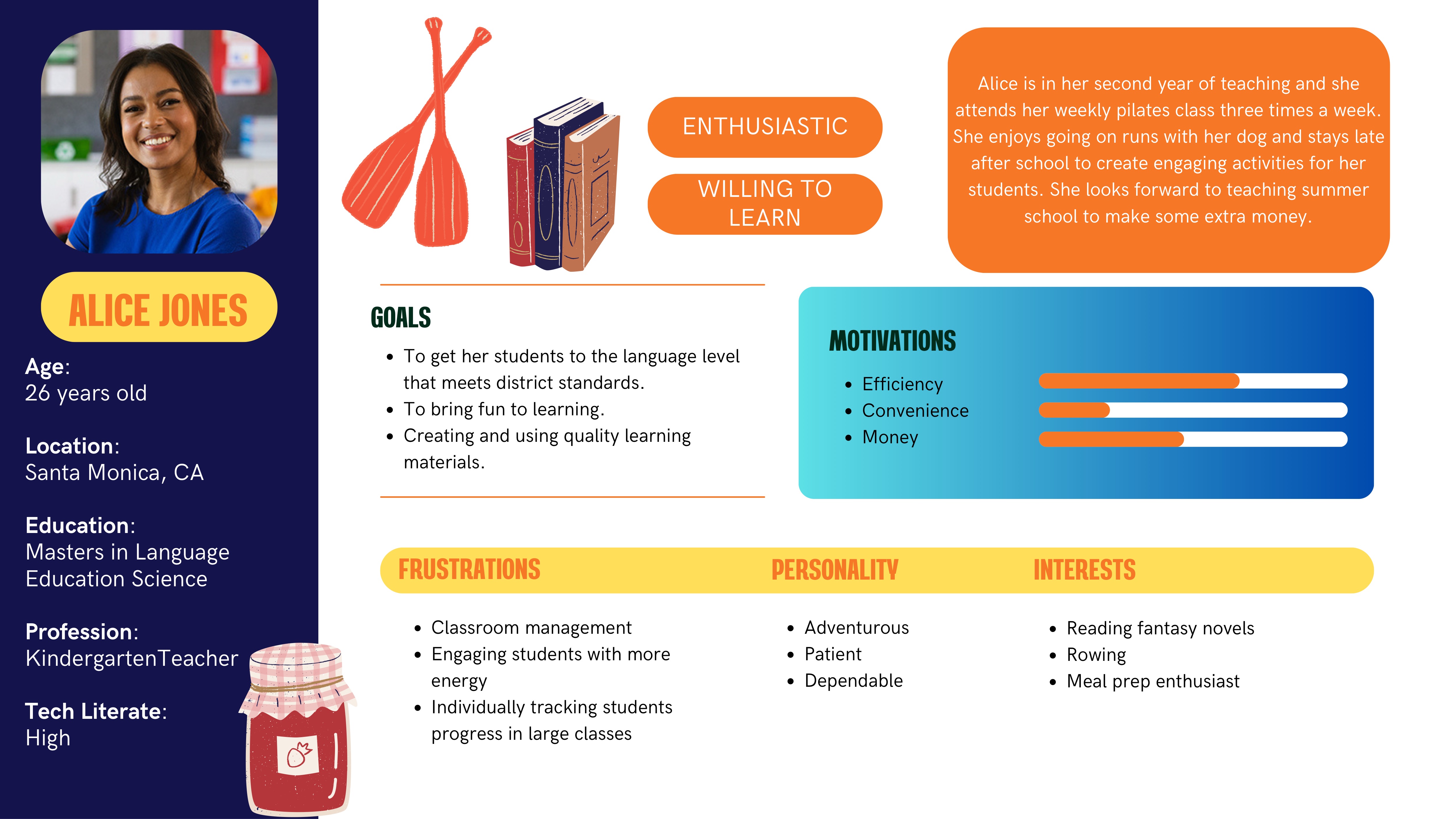
Alice Jones - Younger Teacher
Prototype link link
Describe your Project In an age of AI, genuine one-on-one human connection has become more vital than ever to maintaining our humanity. And given that communication is the foundation to connection, what better way is there to foster human relationships than to support kids as they begin to communicate with one another?
Blast Off is a language-learning game that encourages creative learning by supporting PreK-2nd grade English Language Learners (ELLs). Primarily built for a classroom setting, this game takes its young explorers on a journey through the solar system, where each lesson is a reward-based space encounter. Additionally, by utilizing AI to assist educators in lesson organization and individual tailoring, Blast Off is situated to be efficient and effective for educators looking to support their ELLs in a creative manner.
Blast Off helps students form classroom connections while gaining the skills to build lasting human connections in the future.
- Describe your Research Process and Findings. Team Shrimp Soup utilized a multifaceted approach to research during our development of Blast Off – combining a 1:1 interview, a comprehensive survey, and persona cards to better understand how to navigate our problem. Our goal in the research process was to better understand our target audience – more specifically, what methods or techniques were key to their language learning process, so we could better tailor Blast Off to specifically address user preferences.
Interestingly, the results from our 1:1 interviews were quite similar to those from our digital comprehensive survey – pulling specifically from the bilingual community, the 79% majority of our respondents had learned their second (or third, etc.) language by taking a class, and believed the most helpful factor in their language-learning process was having structured lessons, with 47% indicating this. However, the leaderboard only received a 7% vote—taking it out of our initial designs. Most importantly, a heavy emphasis was placed on the importance of properly learning to speak a language – as opposed to writing, reading, or listening – irrespective of whether the learner had used a class or a language learning app (e.g. Duolingo, Babbel, etc). This was mainly due to the spontaneous nature of conversation, which requires a wide range of skills and knowledge, along with the fact that it is the most applicable to daily life. It should be noted here that we interviewed **over 100 students* who are no longer PreK-2, but who have already learned an additional language – this was done to ensure that their input came following their learning process, and not during.
To gain a better understanding of a teacher’s perspective, we interviewed Vanessa Flores, a former 5th grade dual language teacher and current dual-language interventionist for K-5. We utilized her experience teaching at two different elementary schools to further improve Blast Off and specifically tailor it to the PreK-2 community – this is important given our target audience, which is meant to take advantage of the critical period for language acquisition during childhood. As a teacher herself, she helped us improve Blast Off compared to other language-learning platforms that she’d used in the past and answered our interview questions.
Lastly, we created persona cards to better visualize our target users – for both teachers and students, our aim was to better understand the variety of motivations and dissatisfactions that might arise from using Blast Off, as well as cover all demographics who might use Blast Off (that we cannot reach through surveys). As a quick example of such a persona card: “Minnie represents our demographic of older teachers. She dislikes learning apps with too many options, and has experience locating different points in students’ learning journeys.” You can read more the different personas in the attached images.
Regarding the variety of motivations – teachers might prioritize organization, efficiency and ease of use, while students might prefer colorful UI and a detailed gamified platform.
- Describe your Most Important Design Decisions While our initial project idea was based on the critical link between communication and human connection, the majority of our design decisions were guided by personal creativity and the results of our research. To be specific, our main design goals were threefold: To make a gamified interface that is inclusive and welcoming for all kids To streamline our interface so it’s simple to use – important for both PreK-2 students and their teachers To include factors that were identified as key points in our research.
Designing for children means creating simple and engaging experiences for their curious minds. We decided not to use “health hearts” because mistakes in language learning should not be punished. Instead we are using a star-currency reward system to encourage students to complete their tasks when helping aliens. We opted for collaborative-based, interactive learning using interpersonal connection and empathy to help aliens instead of fighting them.
Notably, when thinking about all our users, we switched from the Pixelify Sans font to Jersey Ten font, leading to improved legibility. We opted for direct language in our buttons and a light opaque background with text for legibility purposes. The colors blue and yellow fit in with the space theme and are one of the best color options for children with color blindness.
Additionally, Blast Off uses AI to make viewing students' progress organized and pleasing. This allows the teacher to view what students are on track and which students need extra attention to catch up. We used a smooth font instead of a pixelated font for the teacher's side, so it is easier to read and less of a strain on older teachers. Our language interventionist, Vanessa Flores, suggested specifying the exact amount of questions answered correctly. Rather than a star rating out of five, it is important for teachers to quickly understand how many problems they have done and how many are correct. It decreases the confusion between the ratios of right and wrong to the number of questions answered.
Finally, key points in our research that shaped our design process include student preference for structured lessons, personalization, and speaking practice. Regarding structured lessons, our original plan was to make Blast Off a mobile language-learning game, separate from classroom learning – however, given the overwhelming amount of students who reported that the organized structure of classroom learning helped them, we pivoted towards an in-class program that would support a teacher’s lesson rather than attempt to replace it. Additionally, we satisfied the desire for personalization in two ways: for the student, answering questions correctly gives them points, which they’re able to use in the in-game shop to buy items to decorate their profile; for the teacher, AI can be utilized to tailor their lesson plan. Lastly, for speaking practice, we added a microphone feature where students can record themselves practicing – these recordings will be sent to the teacher for in-depth and personalized analysis.
Built With
- canva
- figma
- photoshop


Log in or sign up for Devpost to join the conversation.