-
-
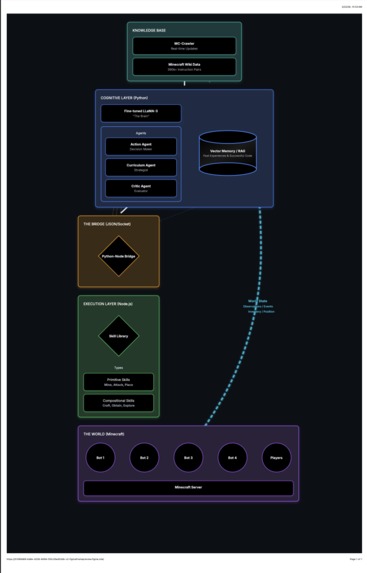
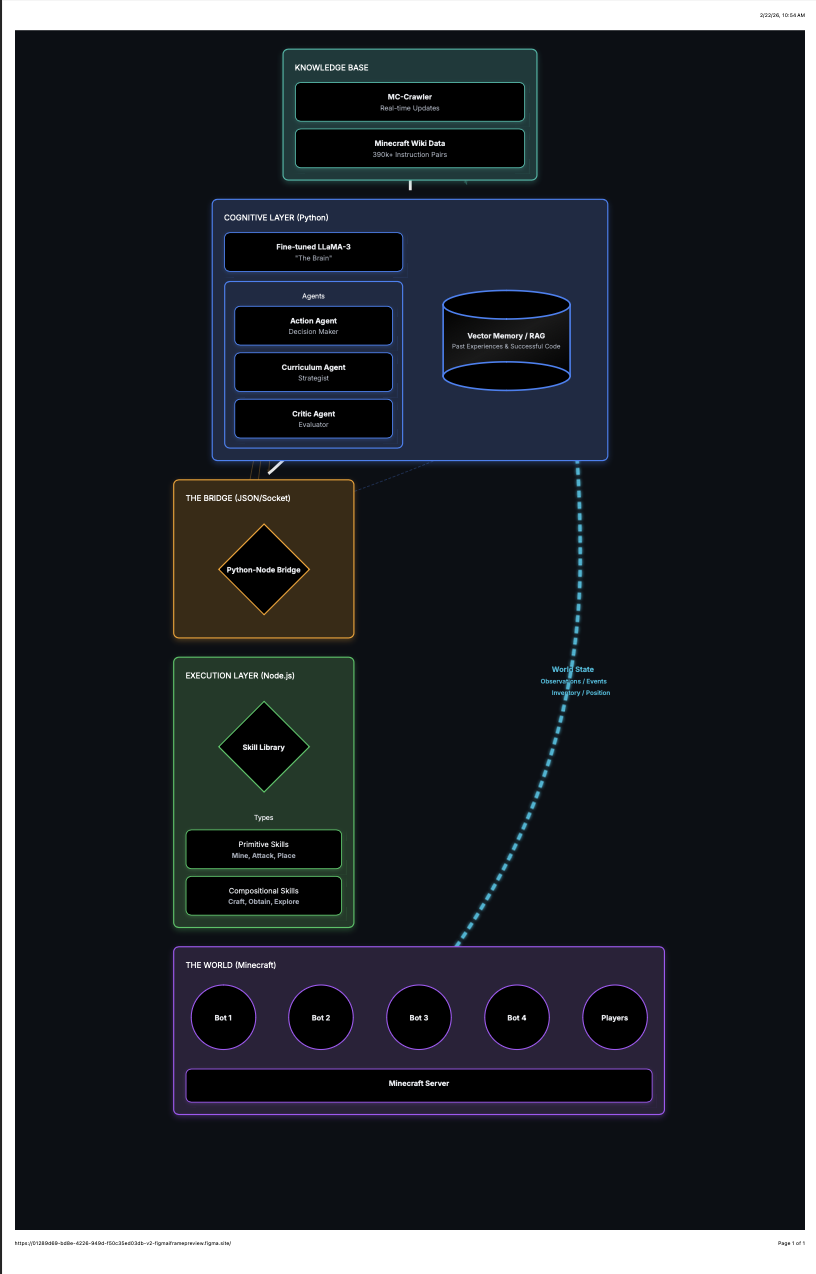
Architecture Flow (more or less)
-
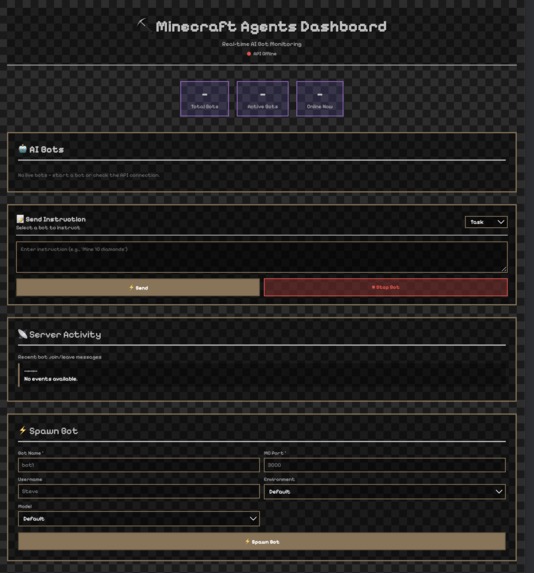
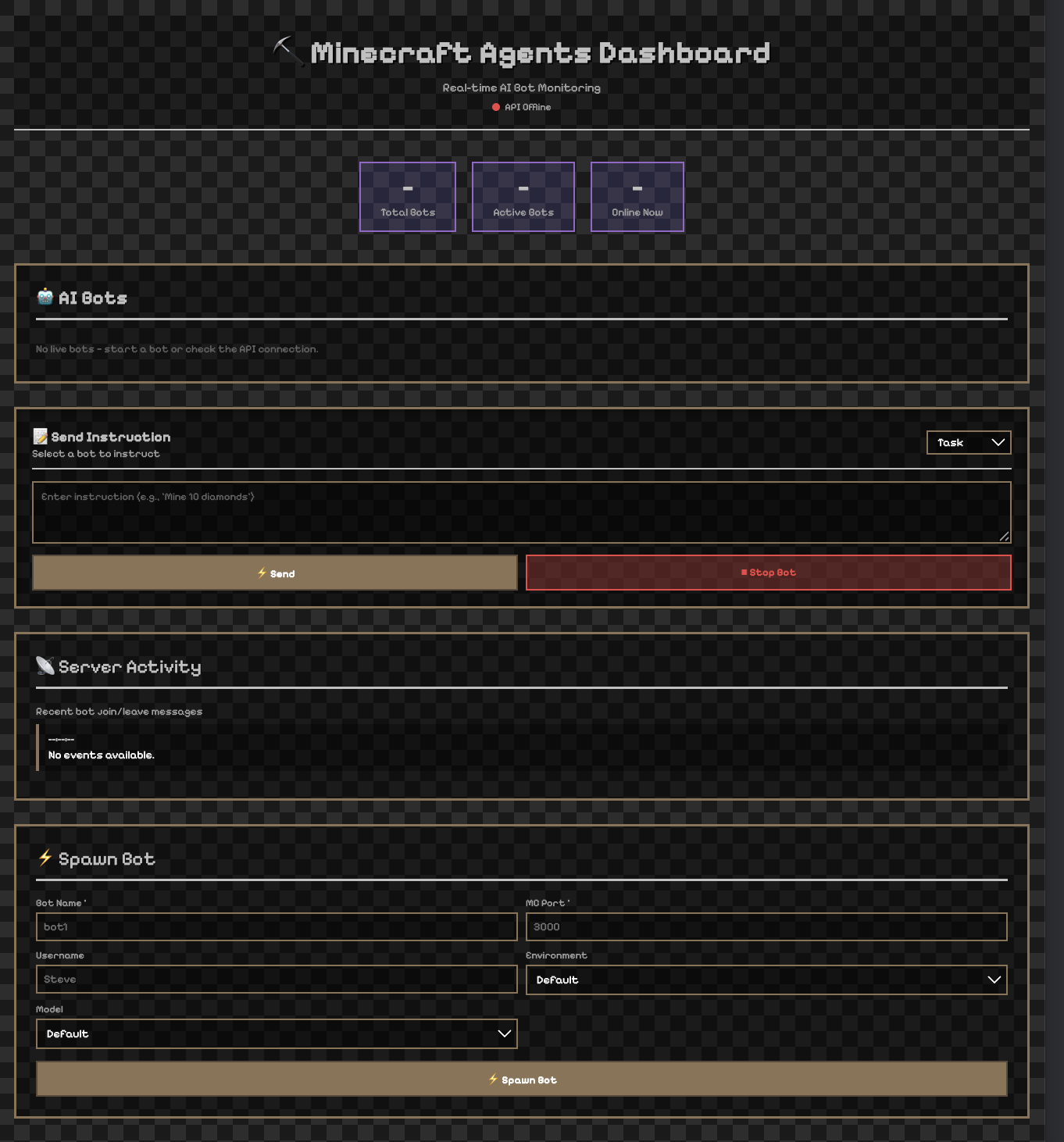
Website *Command Center*. Hooks up to our custom API to connect to the server and coordinate between different backend services.
-
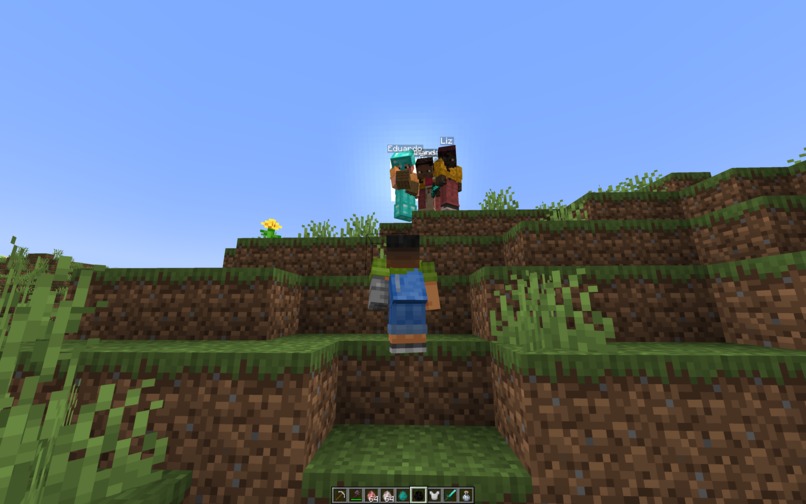
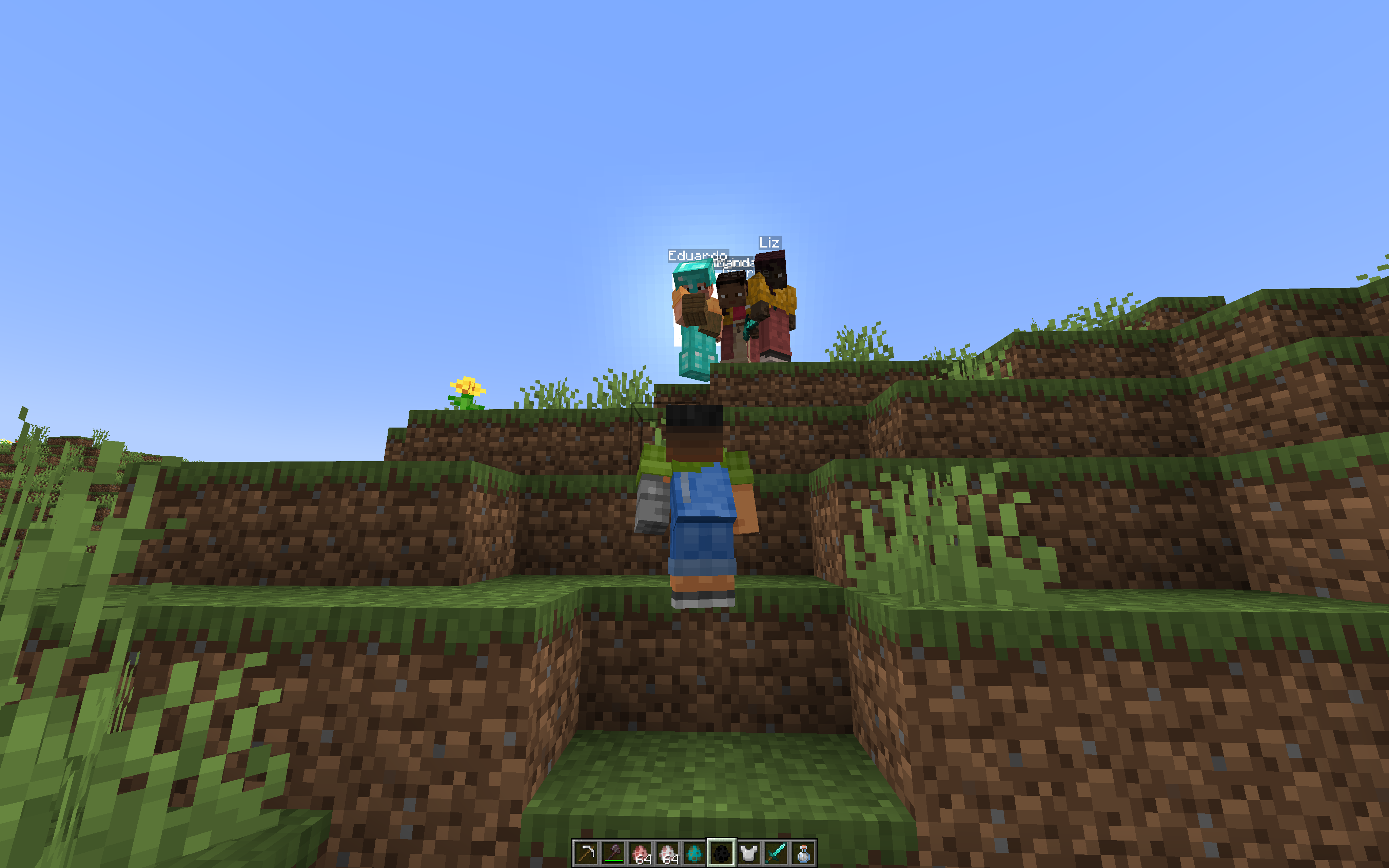
AI agents socializing with eachother (and giving items)
-
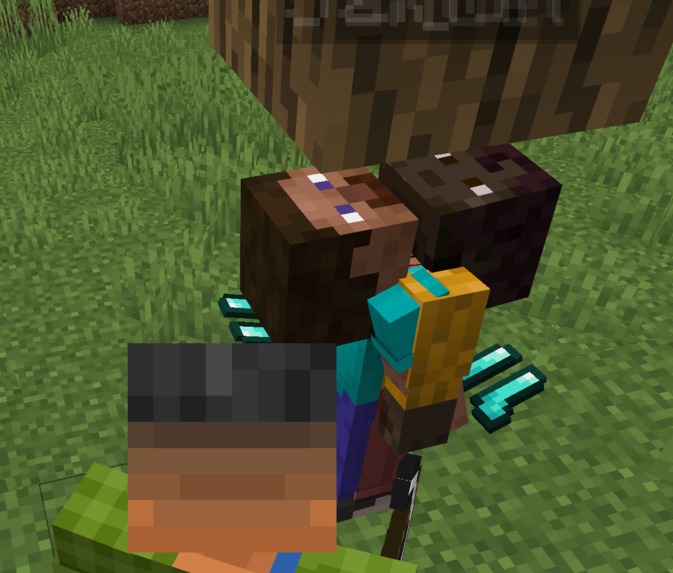
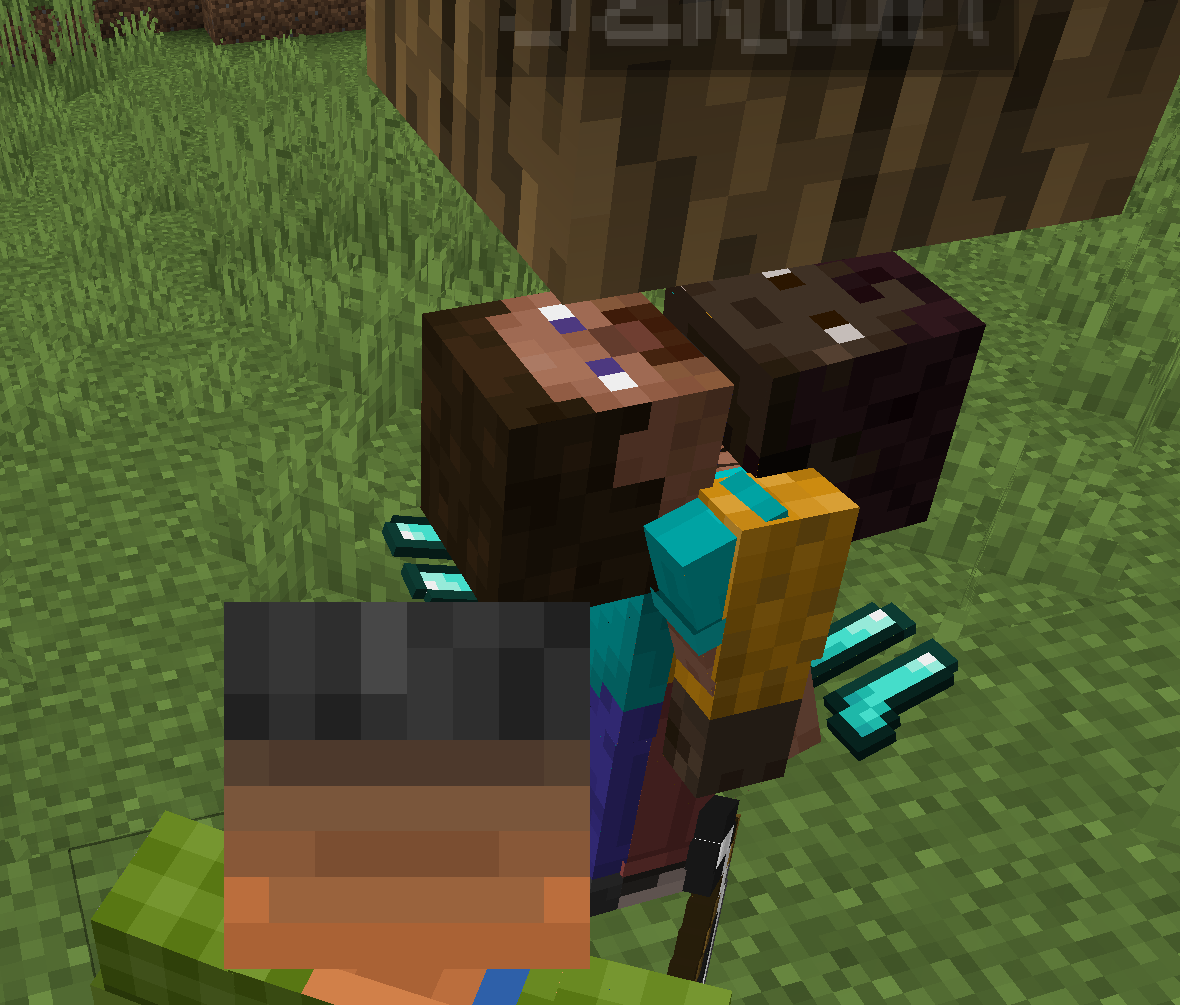
the bots deadlocked or something....
E-Steves
STOP exploiting villagers, START using AI.
Inspiration
Minecraft automation has always come at a cost — usually in the form of endlessly exploited villagers, iron farms, and morally questionable gameplay loops. We asked ourselves: what if we didn’t have to torture villagers just to get resources?
E-Steves reimagines Minecraft labor: AI agents do the work so players can focus on creativity, exploration, and strategy.
What It Does
E-Steves allows players to deploy AI-powered bot players that autonomously gather materials, perform tasks, and follow high-level instructions on a Minecraft server — even while the player is offline.
How We Built It
E-Steves is built on top of a programmable Minecraft bot framework.
At a high level:
- Node.js manages Minecraft bot instances and server communication
- Each agent runs as an independent, modular process
- Agents can perform actions such as movement, block interaction, and resource gathering
- A web-based interface allows users to command, manage, and monitor agents remotely
- The system supports multiple concurrent agents for scalable automation
Challenges We Solved
- LLM endpoint integration: Designing a reliable LLM endpoint that could interpret server logs and translate high-level instructions into actionable agent behaviors was non-trivial.
- Instruction transfer: Converting natural language commands into structured, executable actions for Minecraft agents required careful parsing and validation.
- Server log handling: Streaming, filtering, and interpreting Minecraft server logs in real time without overwhelming the LLM or introducing latency was a major challenge.
- Agent synchronization: Keeping multiple agents aligned with updated instructions.
What's Next for E-Steves
- Long-term memory and goal persistence for agents
- Natural language task instructions using LLMs
- Improved team work between multiple agents
- Better UI/UX for non-technical users


Log in or sign up for Devpost to join the conversation.