-
-
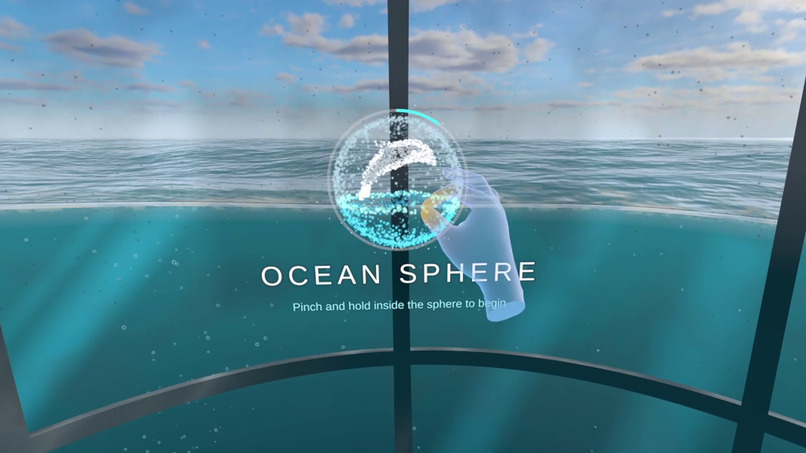
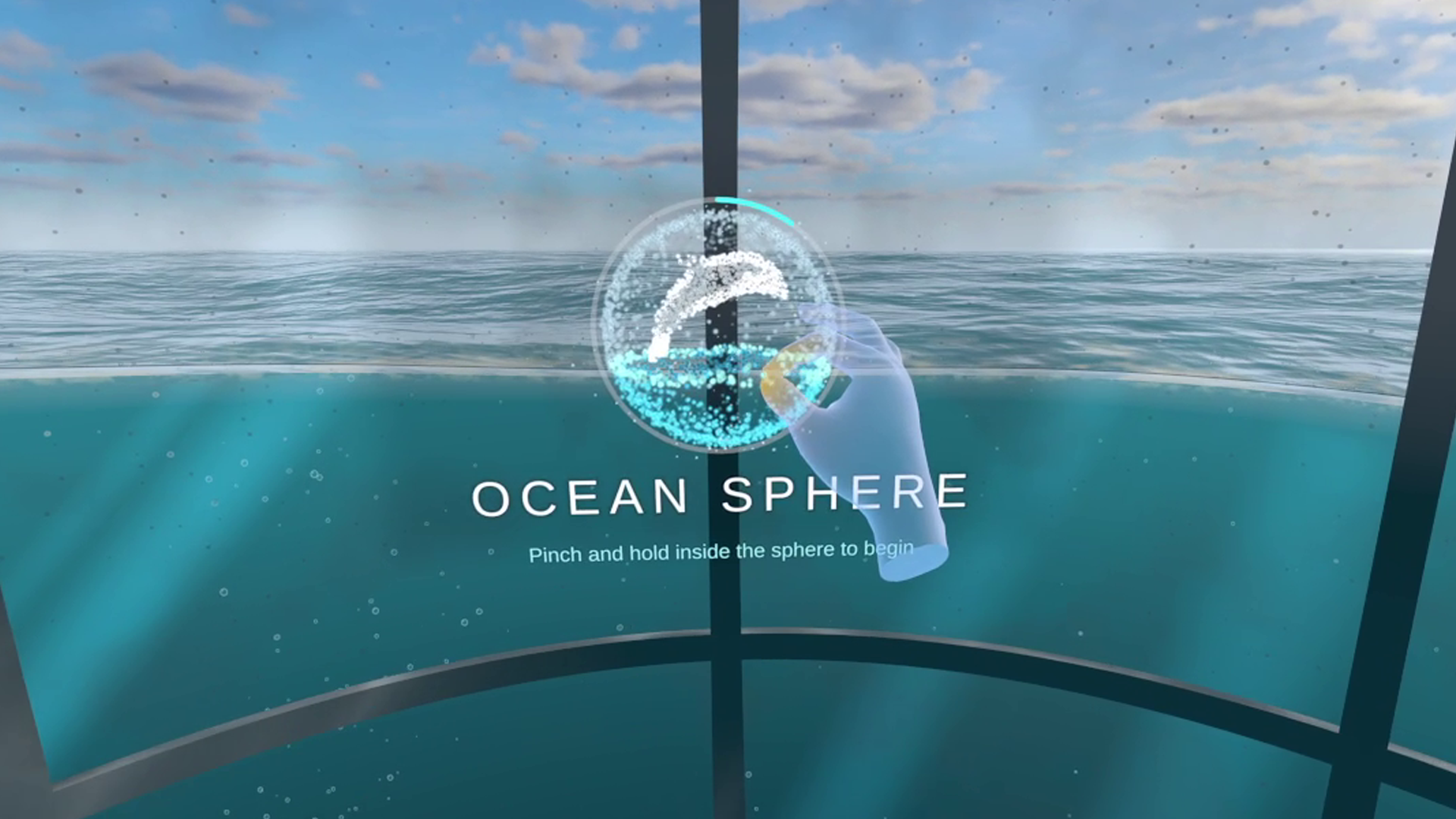
Ocean Sphere Title
-
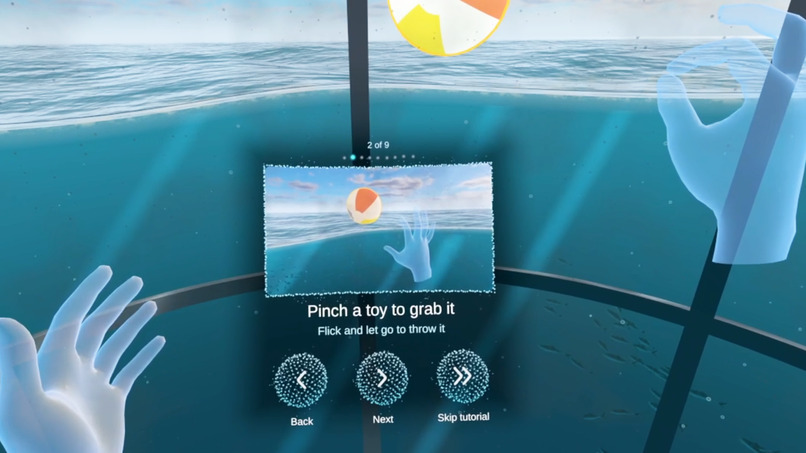
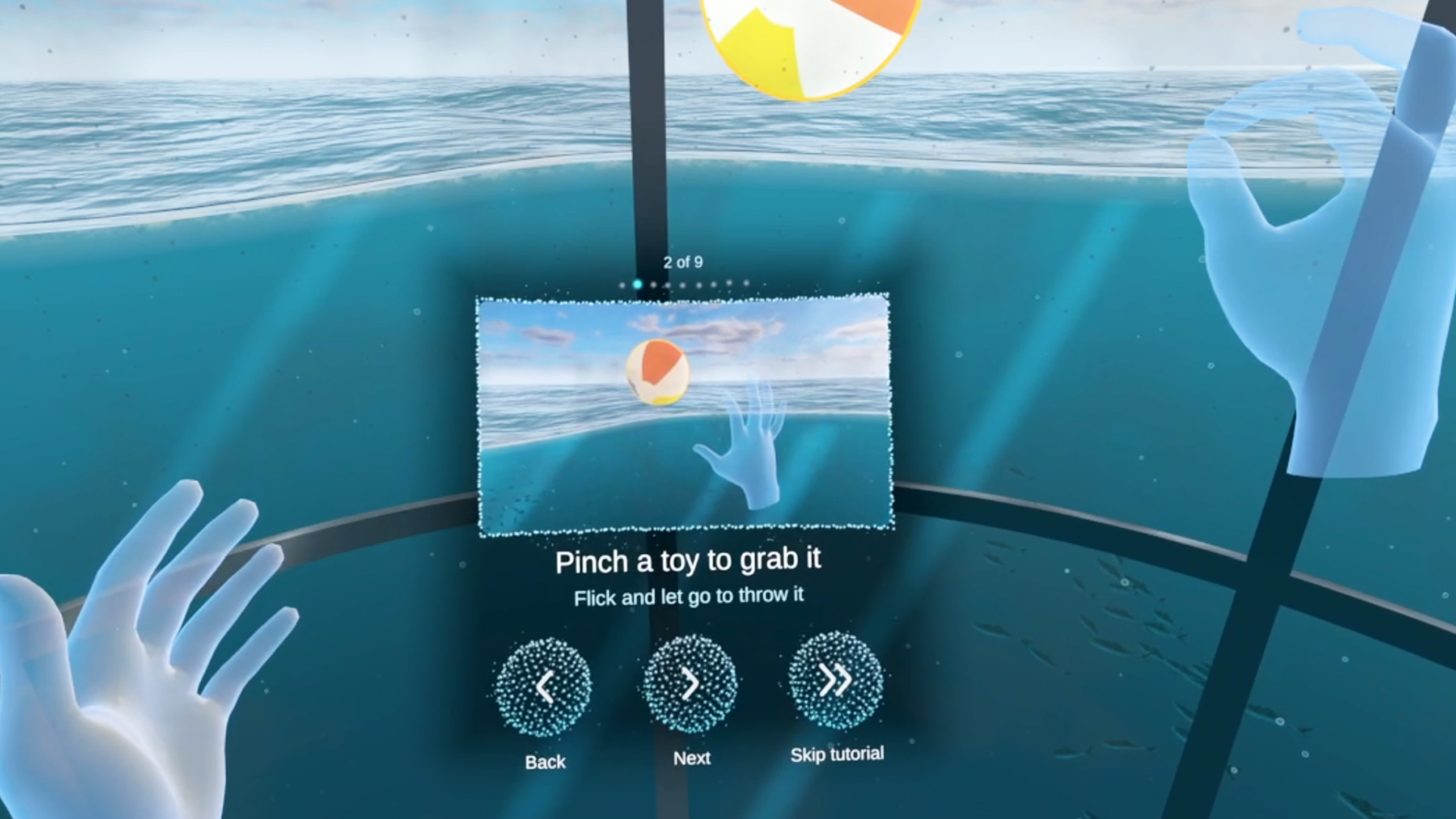
Ocean Sphere's Tutorial
-
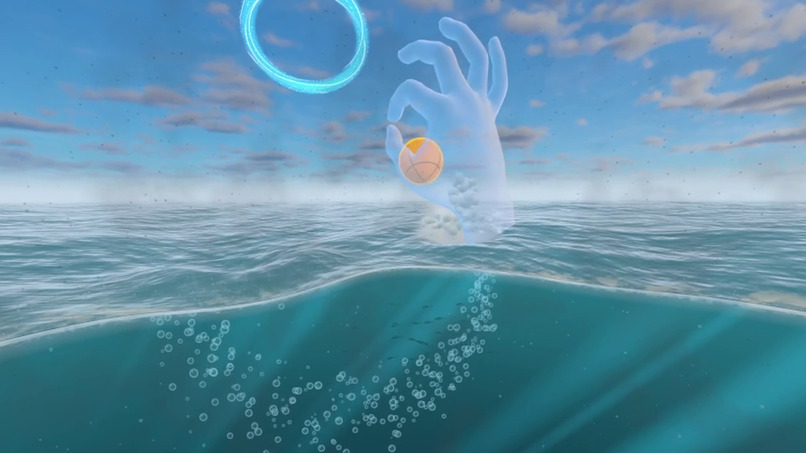
Playing with a Basketball
-
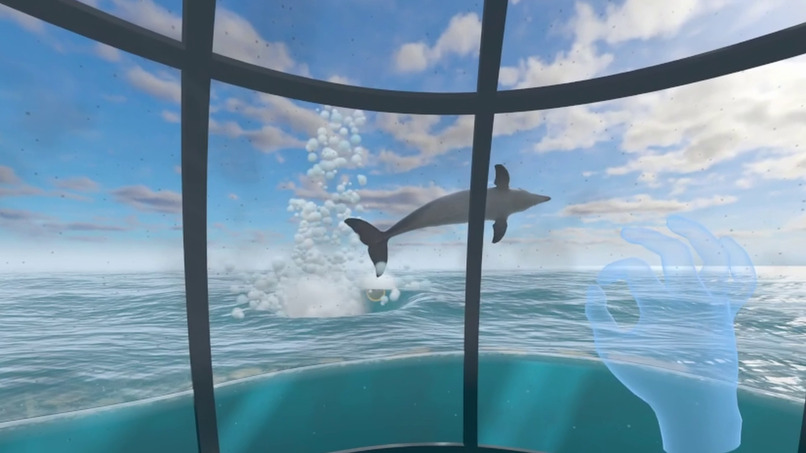
The stars of the show!
-
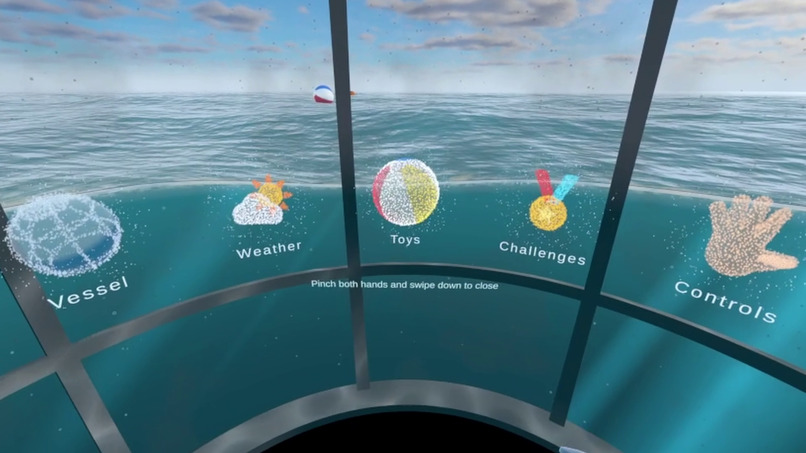
Main Menu
-
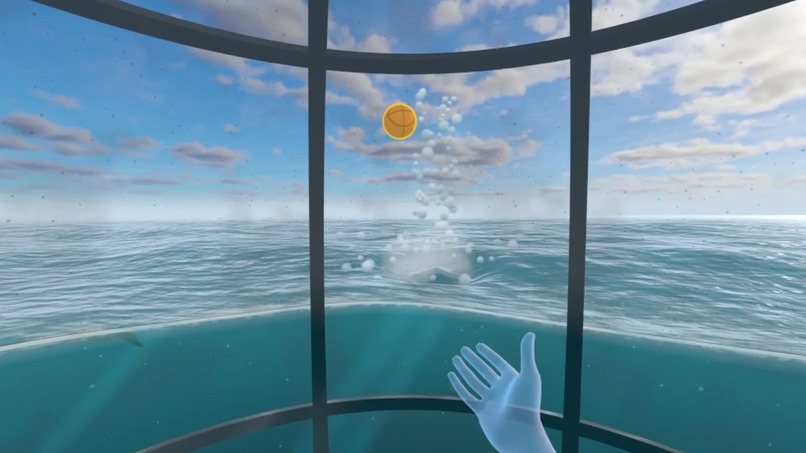
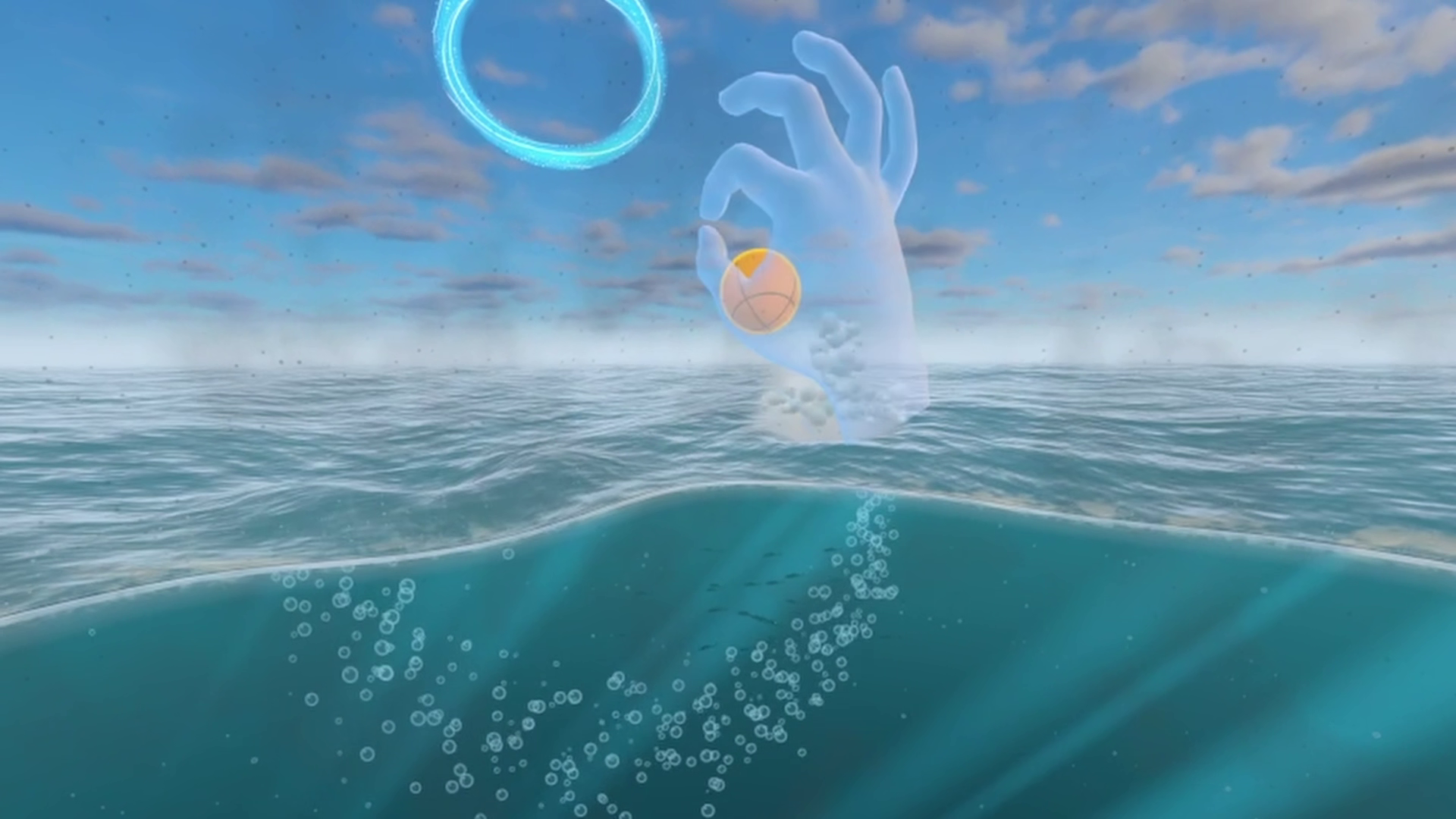
Summoning a basketball
-
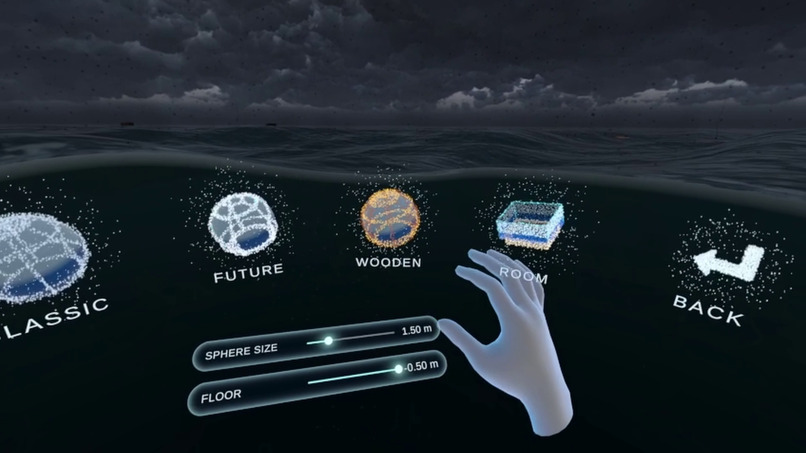
Choosing a vessel mode (VR/MR)
-
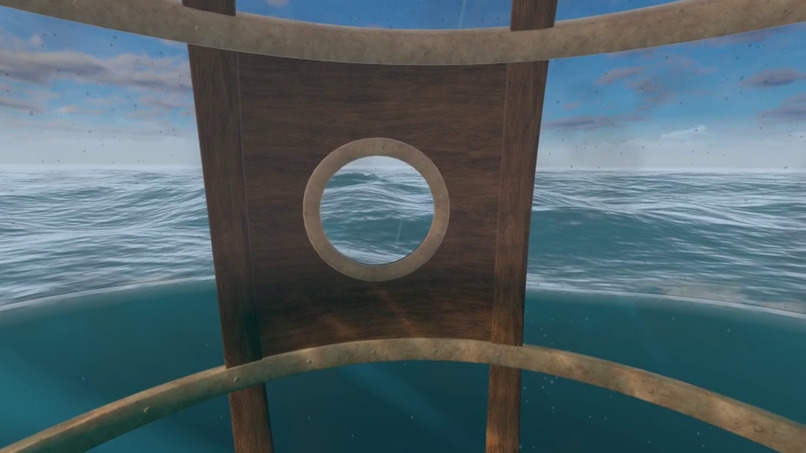
Wooden vessel mode
-
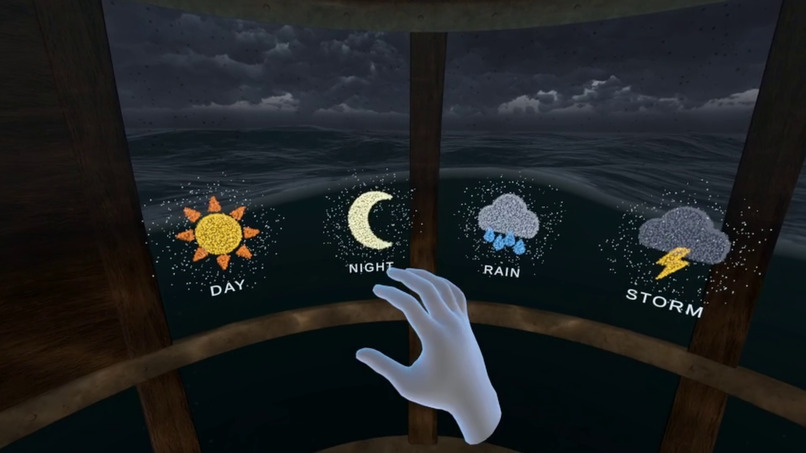
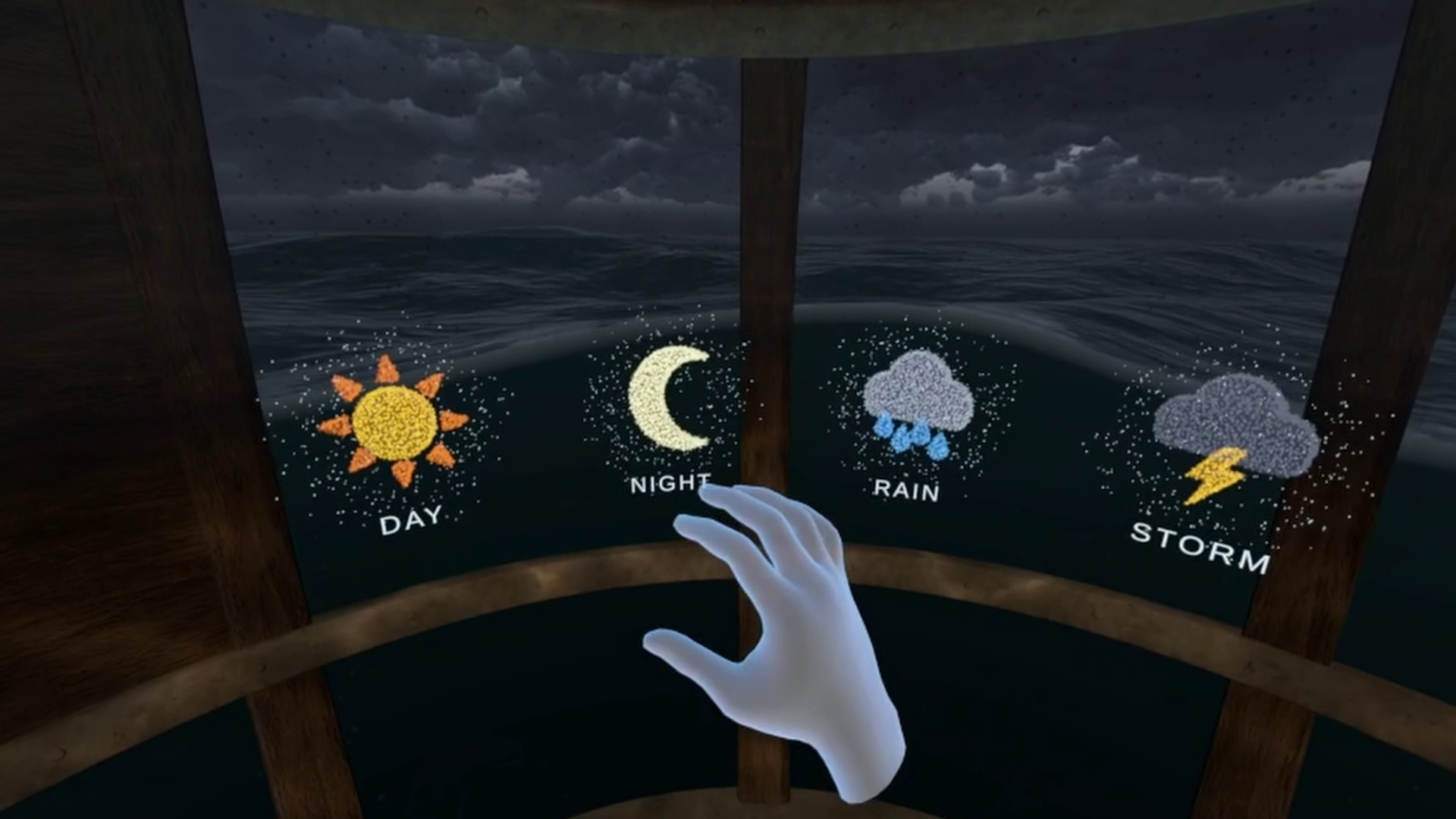
Choosing Weather mode
-
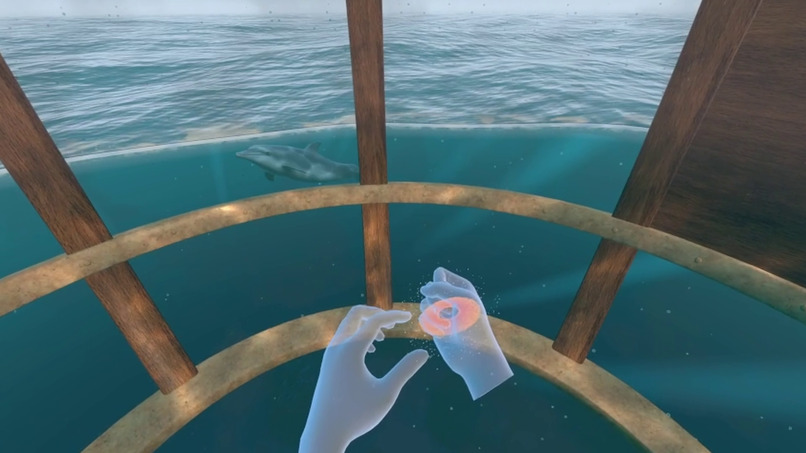
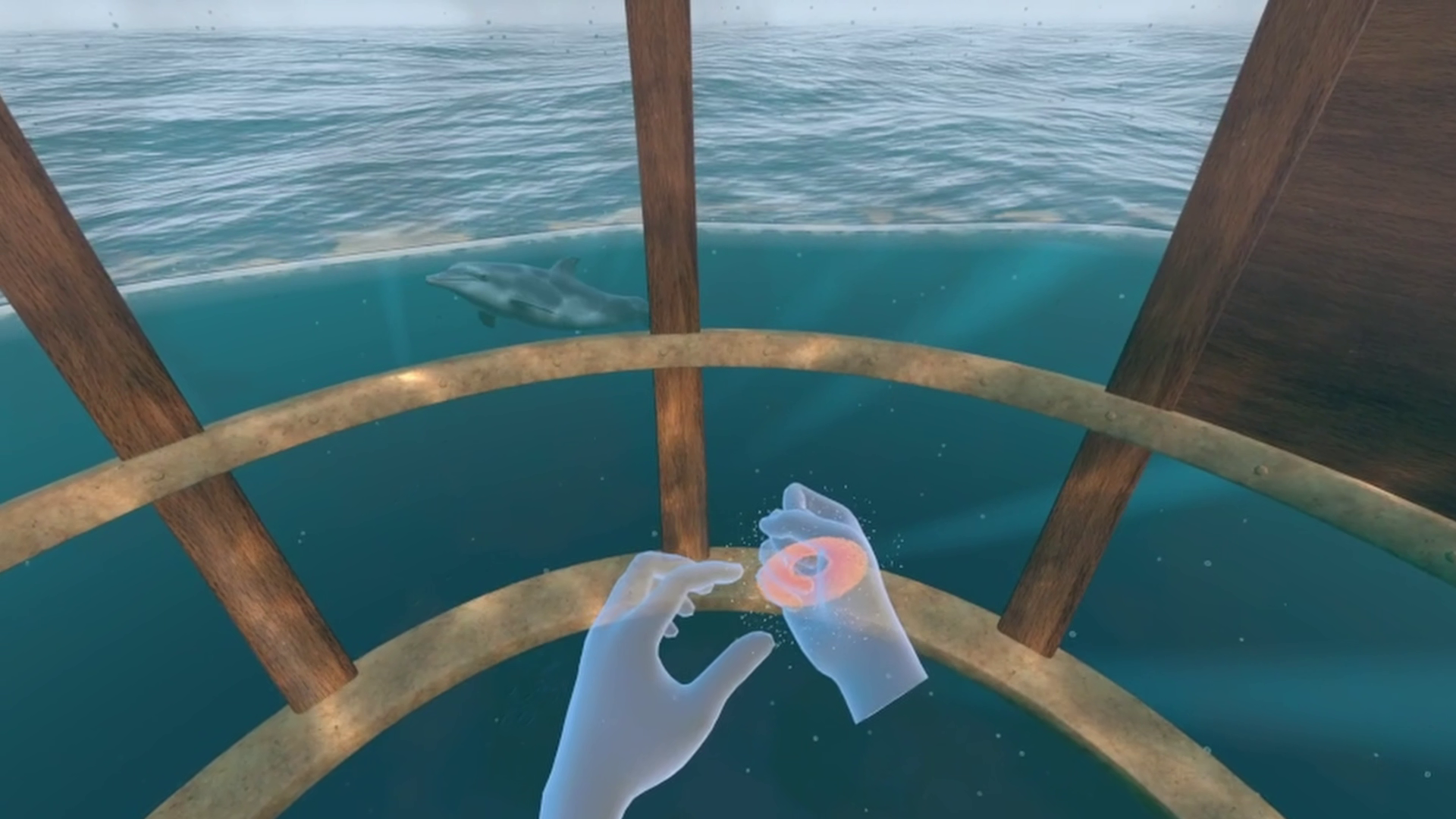
Selecting the Skimmer Toy
-
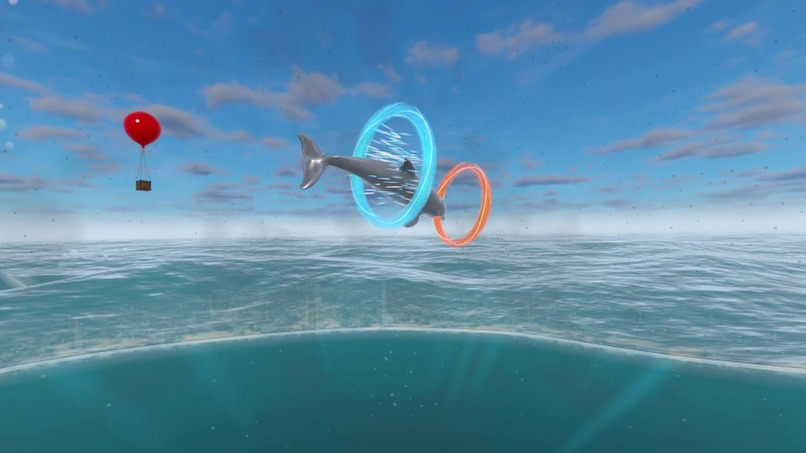
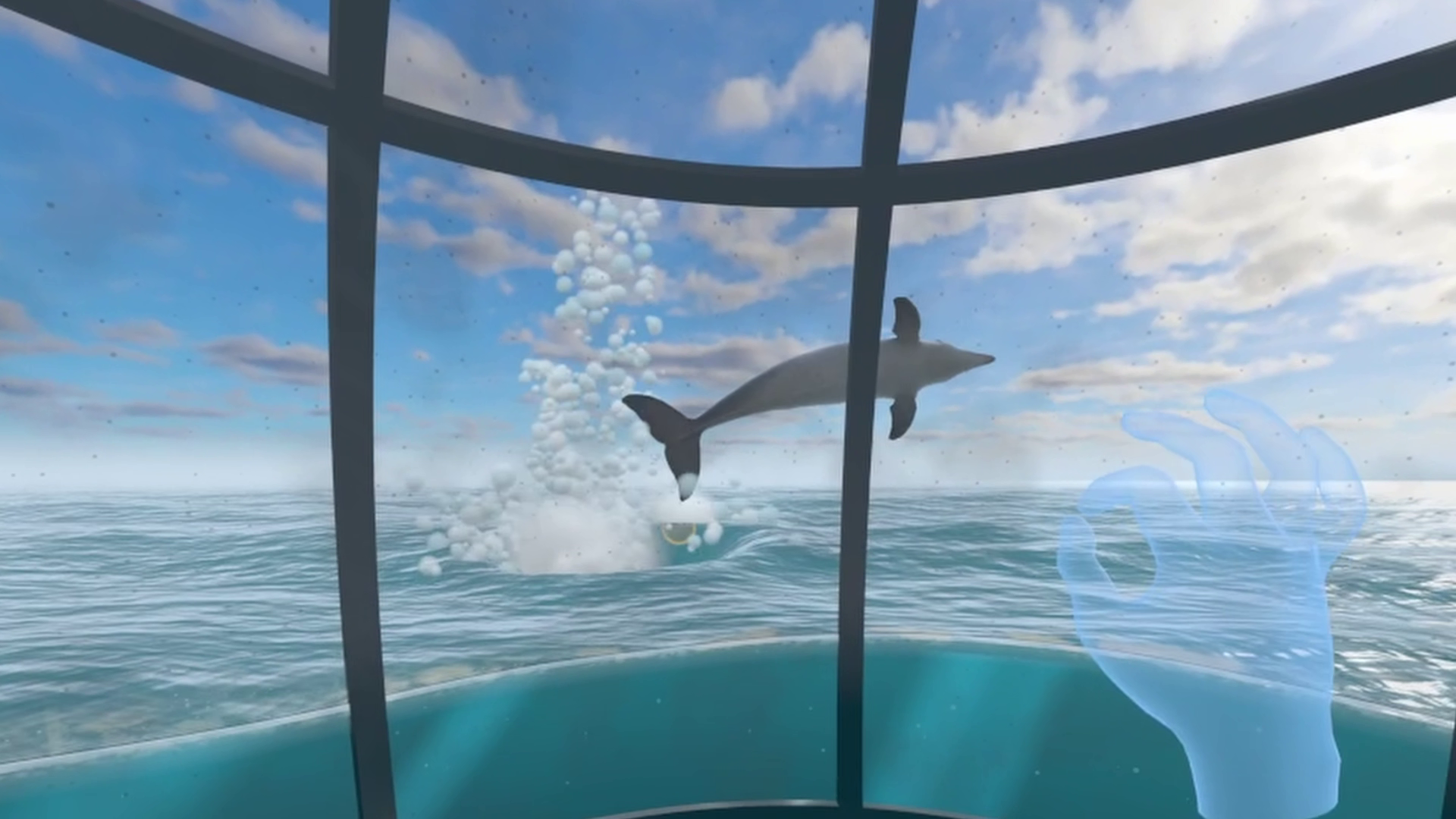
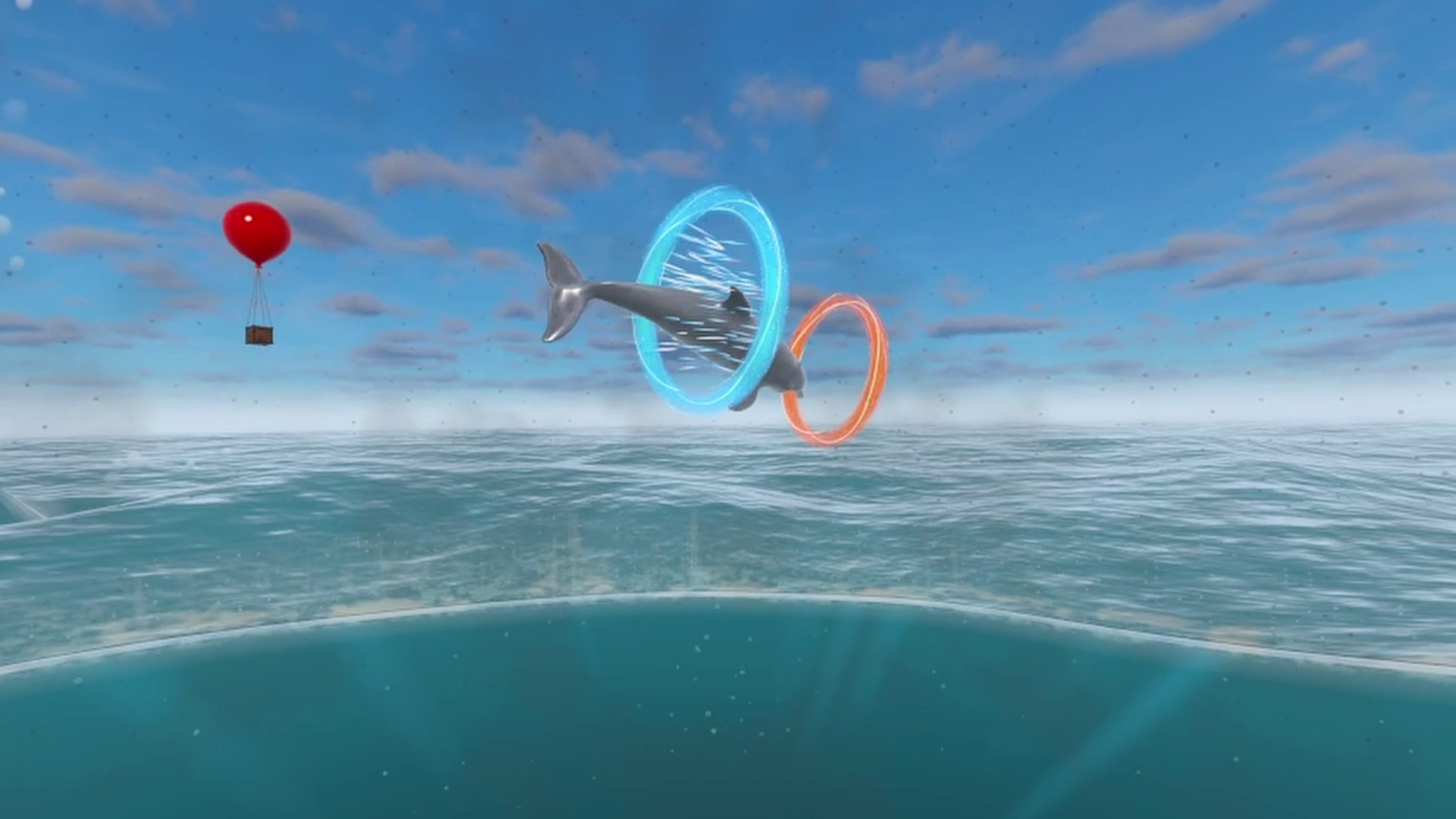
Dolphin jumping through rings
-
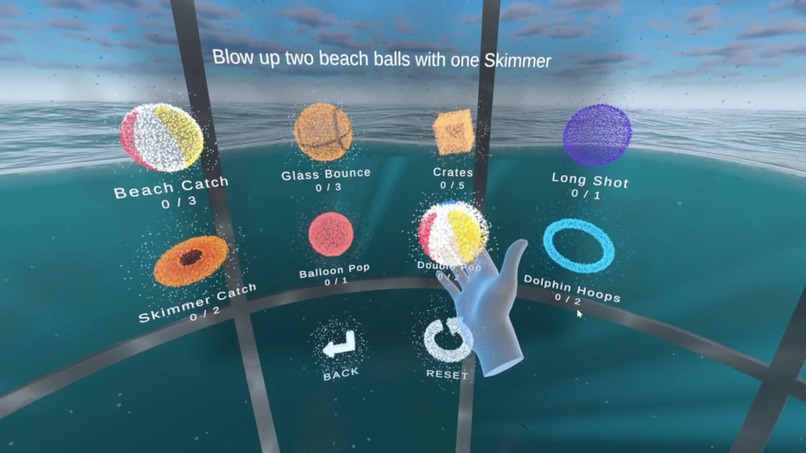
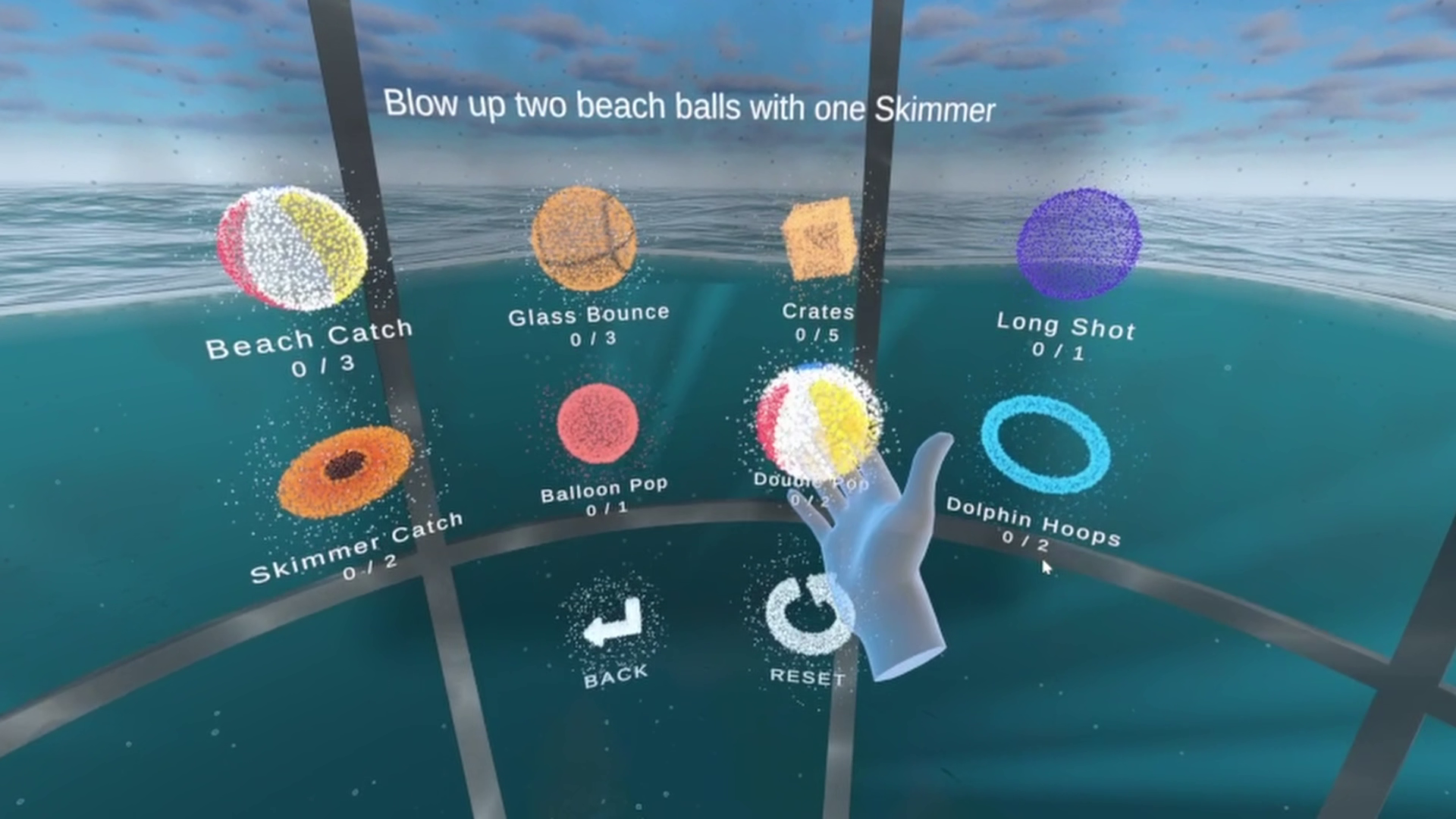
Challenges in the demo
Inspiration
I wanted to explore hands-first interaction at the ocean’s waterline, where you can see above and below the surface at the same time. The idea was to bring together the physical fun of throwing toys around in water with the charm of dolphins that take an interest in what you’re doing and join in.
The aim was for the controls to melt away so throwing a beach ball, pushing it underwater or beckoning it back feels effortless. I also wanted the dolphins to be enjoyable company in their own right. That feeling of sharing a space with an animal is something I’ve always found amazing about VR.
What it does
Ocean Sphere is a seated ocean playground controlled entirely with your hands.
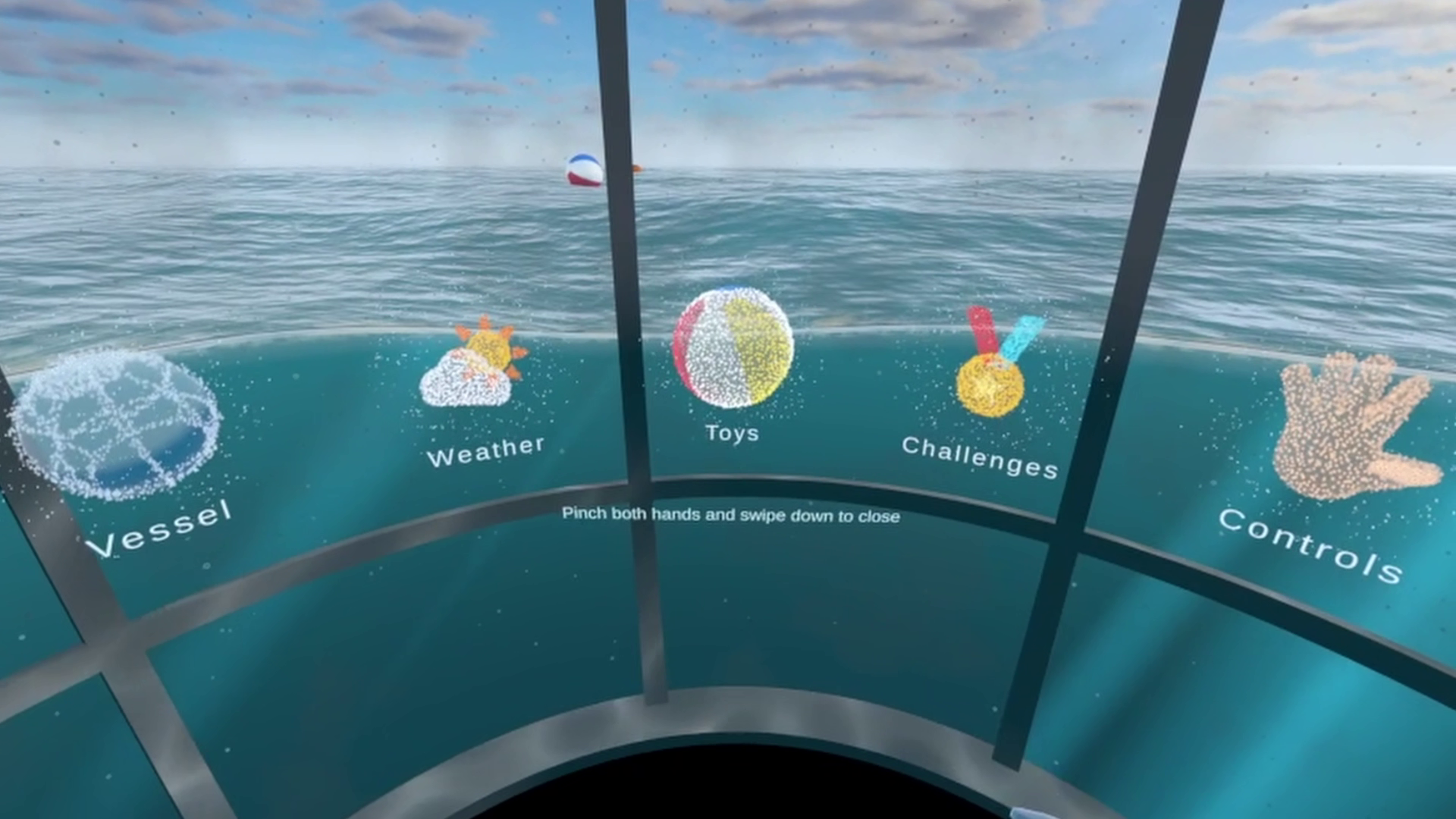
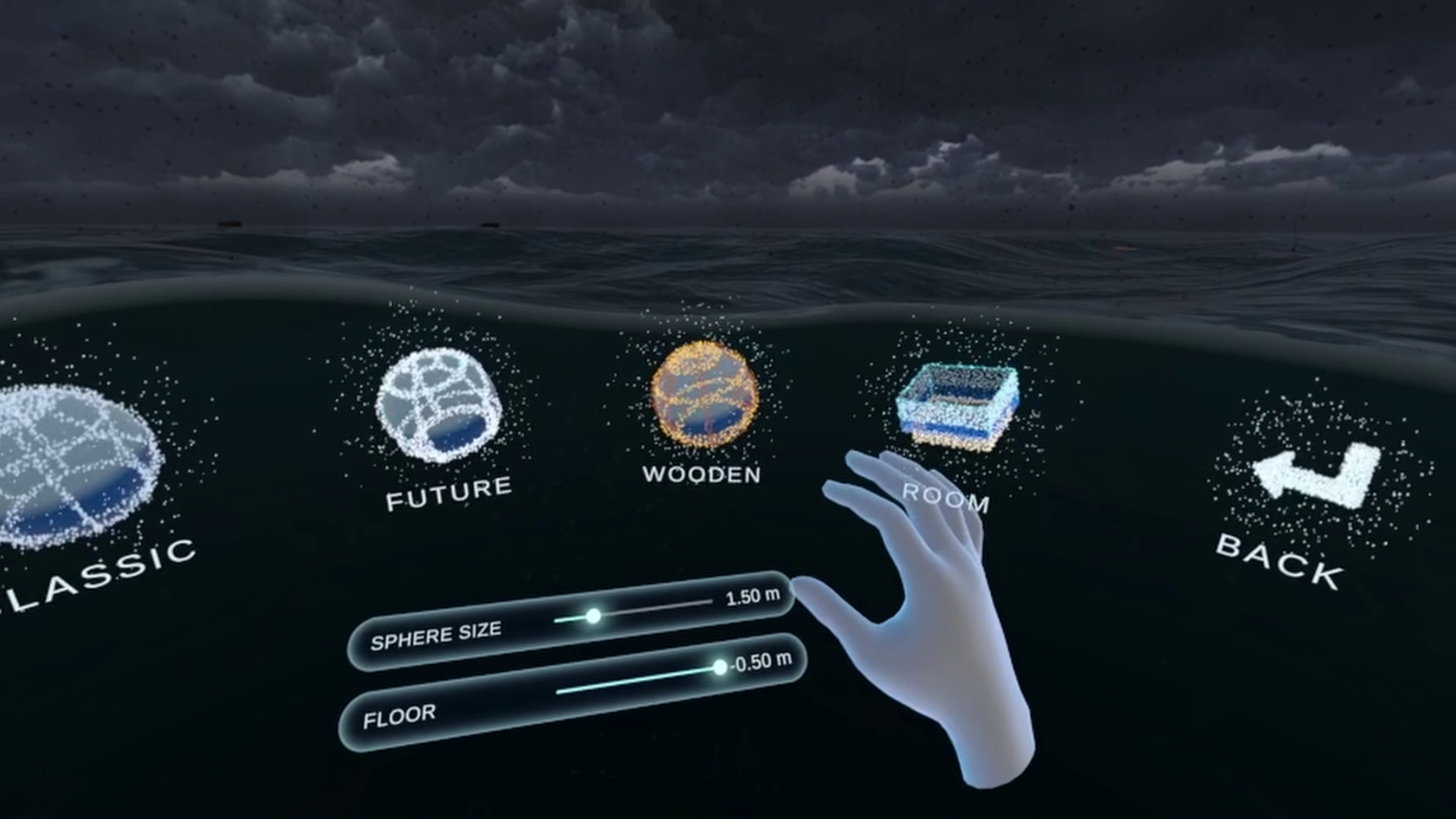
- The sphere: Sit at the ocean’s waterline, watching dolphins above and below the surface while waves lap and splash against the glass. You can lower the craft underwater or rise back to the surface.
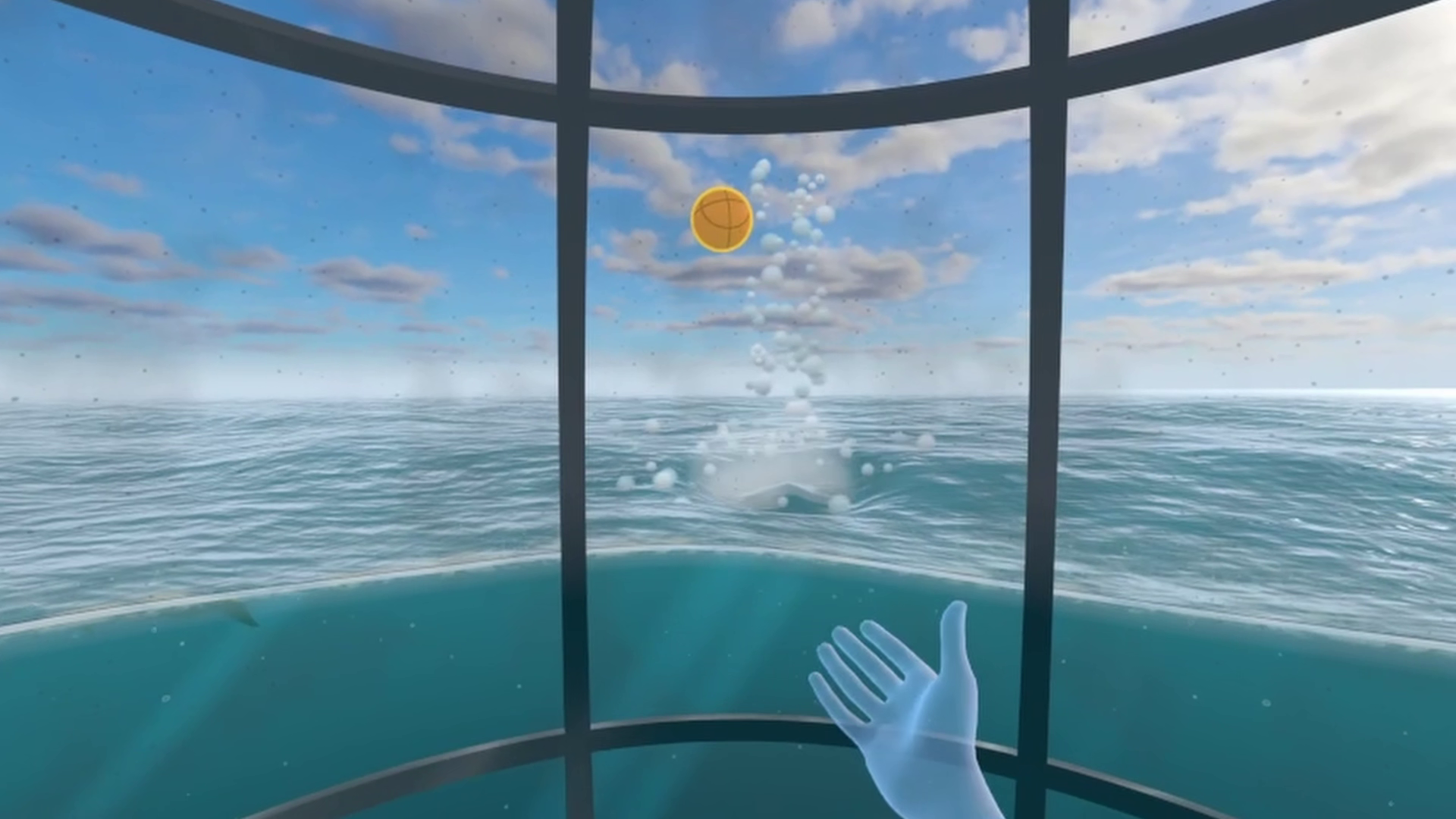
- Toys and water: Spawn, throw, catch, spin and beckon beach balls, basketballs, cannonballs, the Skimmer and dolphin rings. Experiment with buoyancy, skim toys across the waves or push them underwater. Impacts create ripples that travel across the water and reach the sphere.
- Dolphins: Two curious dolphins share the space, investigate toys, knock balls into the air and jump through rings with twists and flips.
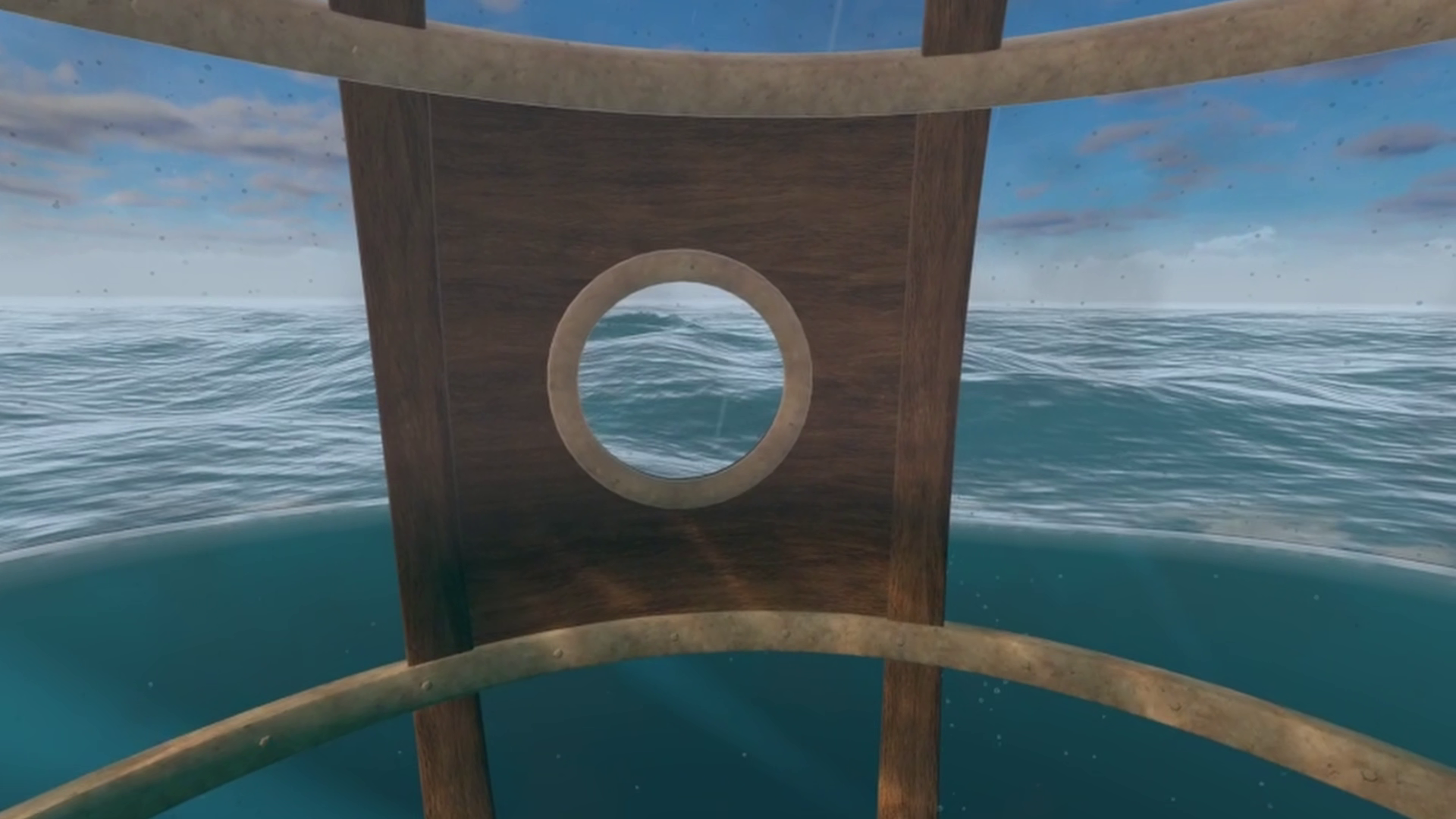
- Atmosphere: Change the weather and switch between glass, metal and wooden craft styles. Mixed reality also lets you turn your actual room into the craft.
- Free play: Everything is available from the beginning. Short visual tutorials introduce the gestures, then you are free to experiment. Crates and balloon-carried cargo provide things to aim at and break.
How I built it
I developed the prototype in Unity using the Meta XR SDK, with custom gesture controls, procedural dolphin animation, and interactive water. The dolphins’ swimming and tricks are generated programmatically, with behaviours that respond to the player, toys, and rings. The water combines geometric waves, buoyancy, impact ripples, particles, and sound, alongside effects on the glass.
The project was also an excuse to experiment with the latest agentic coding tools. I used Claude Code in Visual Studio to help me iterate quickly, test ideas in VR and follow the fun.
Challenges I ran into
It took a lot of work to get the waterline working properly in VR, making the waves feel realistic and finding the right sounds for creaking, lapping water and splashes. The water line and glass is very GPU-intensive, so getting it to run at 72 Hz was a huge challenge too.
Getting the hand interactions to feel reliable also took a lot of iteration, particularly throwing accurately and combining different gestures without them getting in each other’s way.
The dolphins took a lot of tuning. Looking convincing while swimming is one thing, but jumping in and out of the water, threading rings, and chasing or booping a moving ball requires much more dexterity. I'm delighted with how they turned out though - they have personality! 🐬🐬
Accomplishments I'm proud of
The feeling of sitting at the waterline with waves washing against the glass and dolphins swimming around you. Watching a dolphin jump through a ring or knock a beach ball into the air is amazing.
What I learned
Small changes to timing, movement and sound make a huge difference. Some of the best moments came from the systems interacting in ways I hadn’t planned.
What's next for Ocean Sphere
I would love to explore this prototype further. I hope to bring it to Meta VR Glasses in 2027.
Built With
- 3ds-max
- blender
- metasdk
- quest
- unity
- visual-studio


