-
-
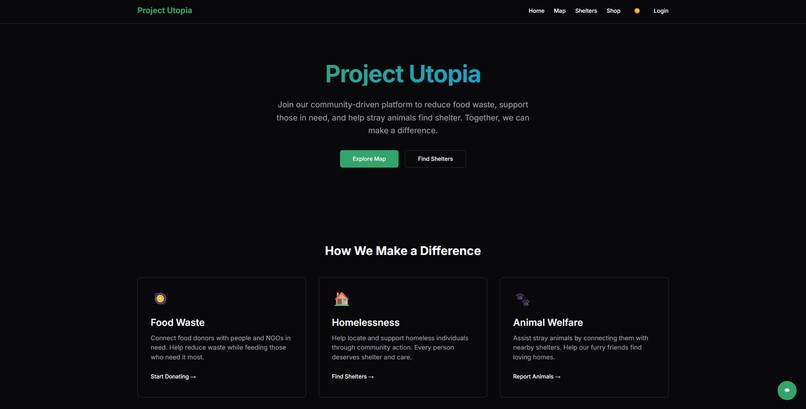
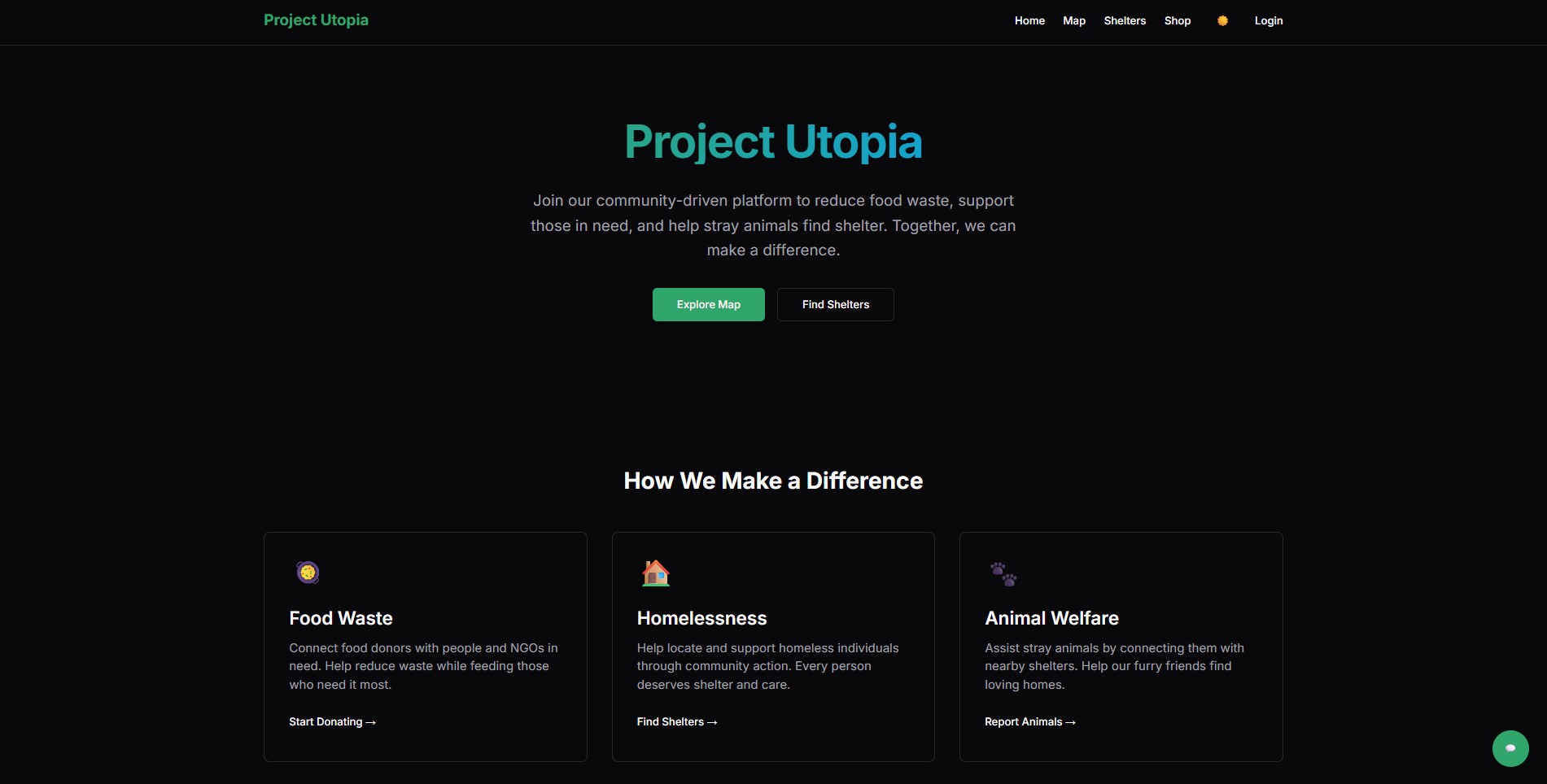
Home
-
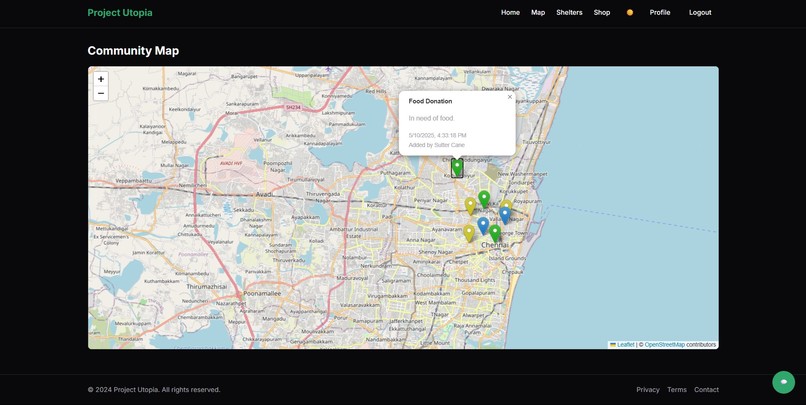
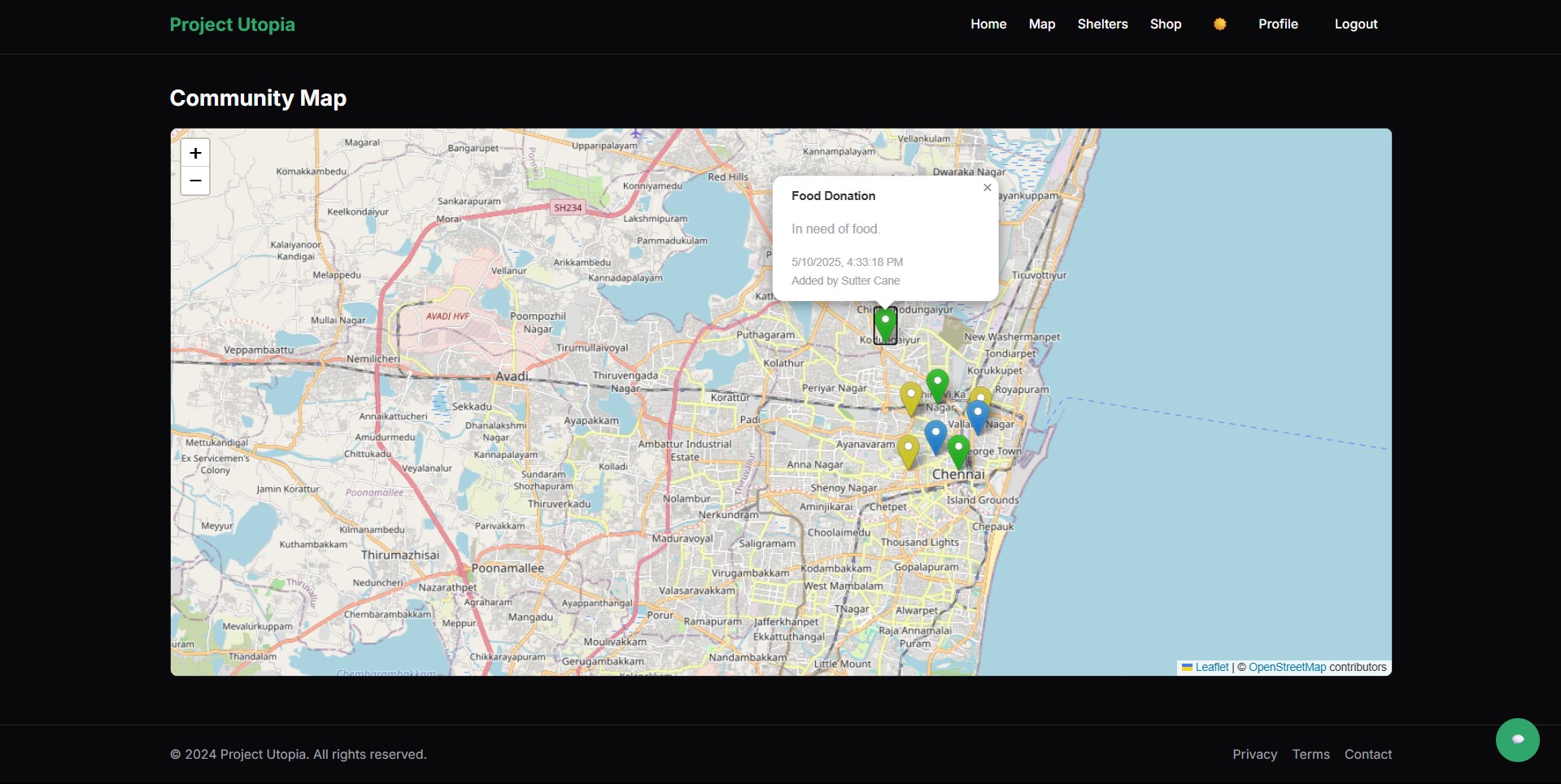
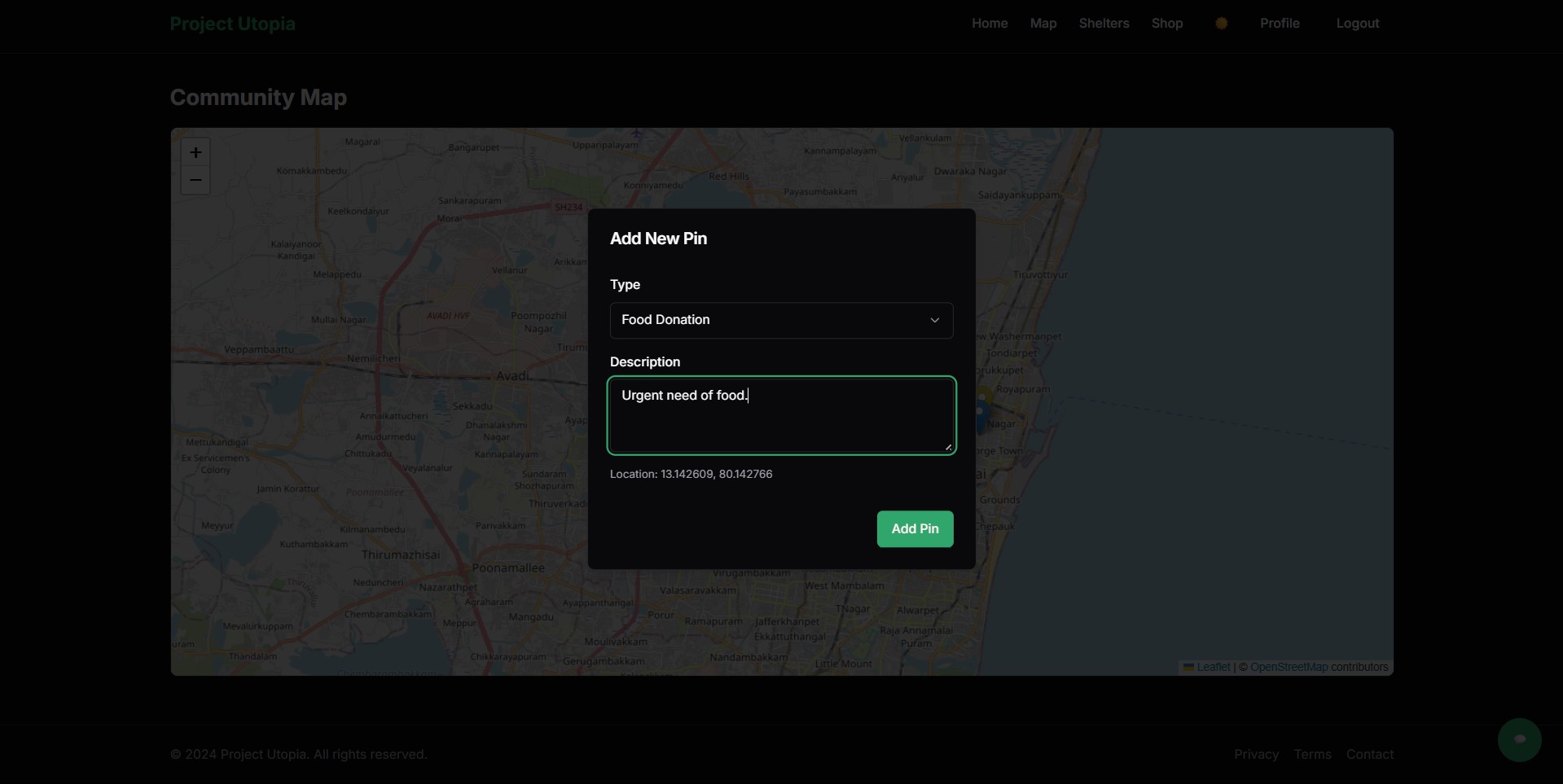
Map after signing in to view other pins for donation/shelters etc
-
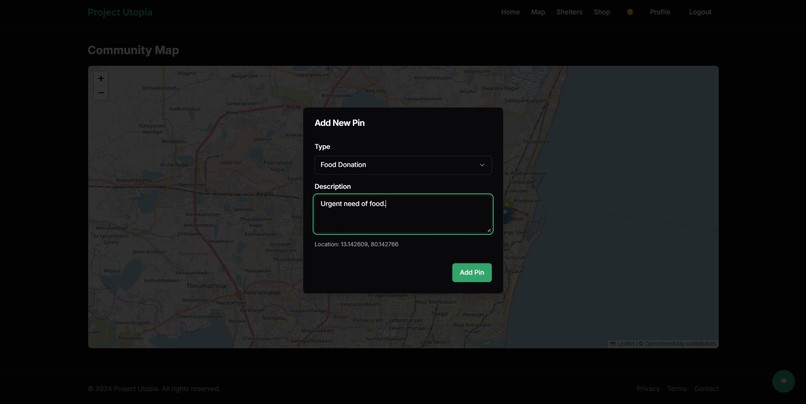
Dialog to add a new pin
-
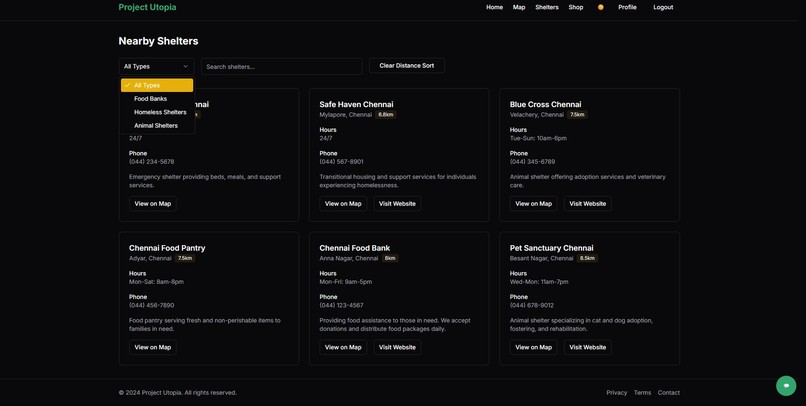
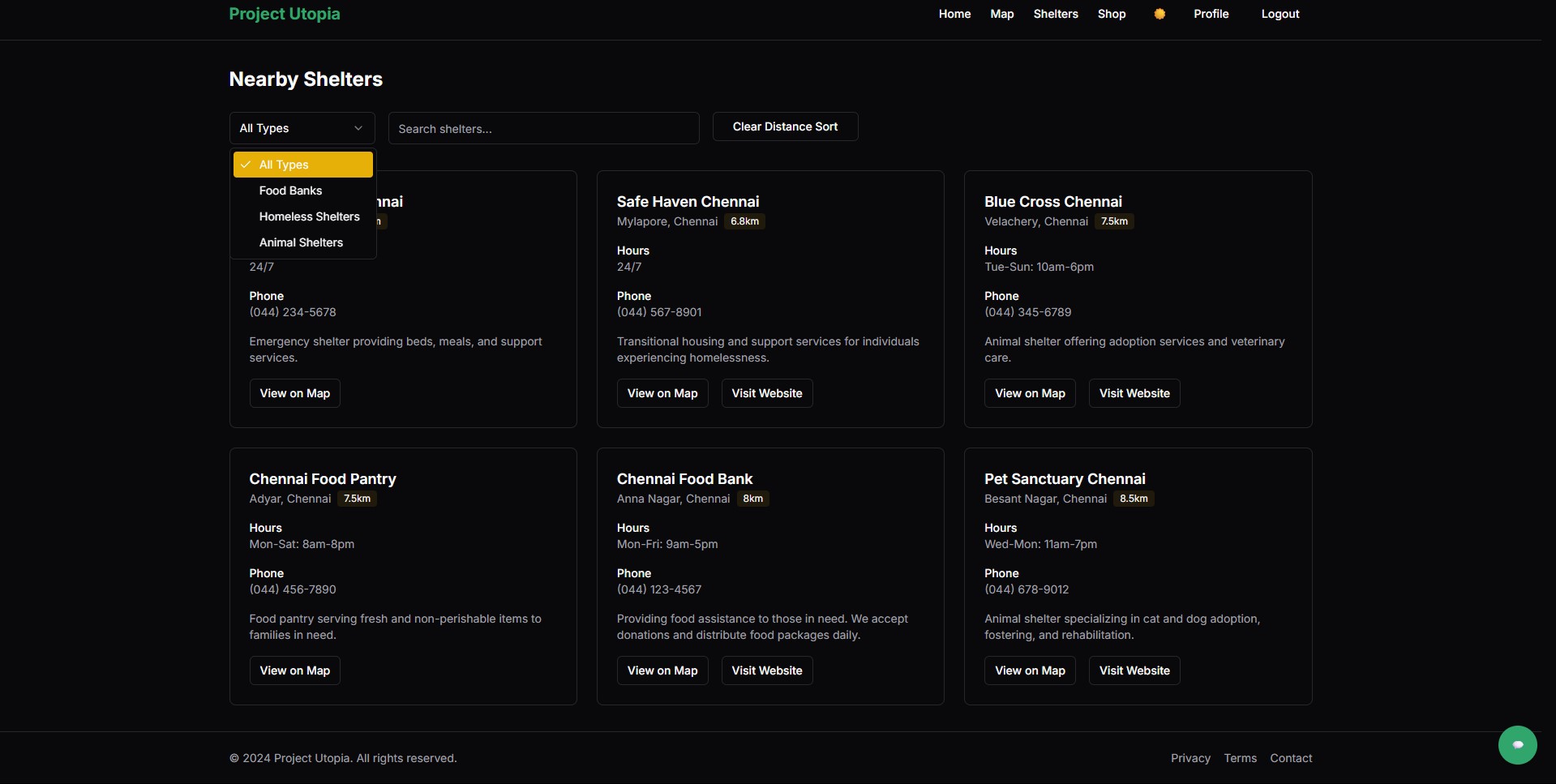
All available shelters and foodbanks
-
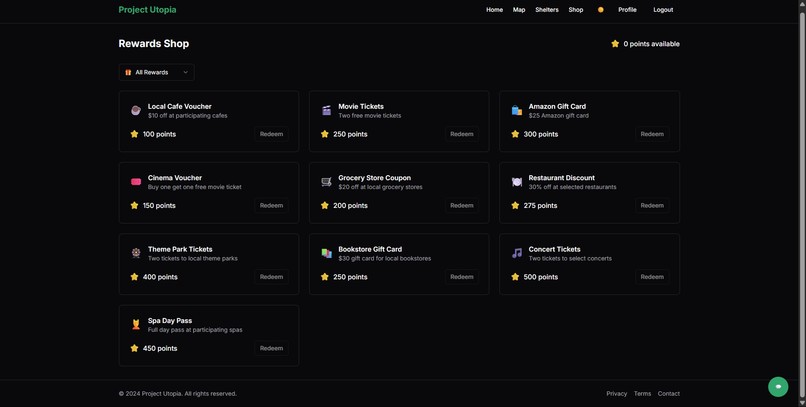
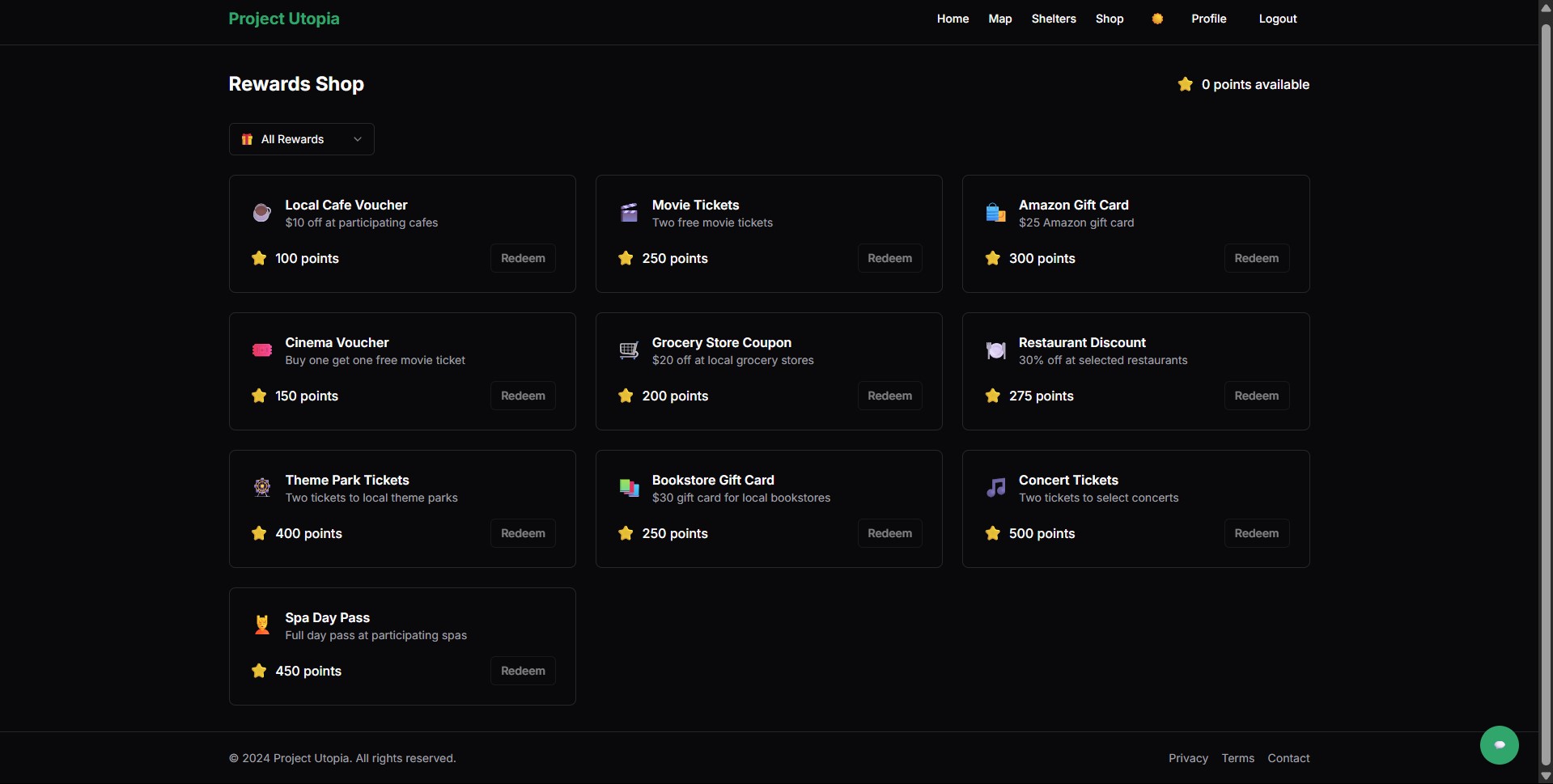
Shop to redeem earned points
-
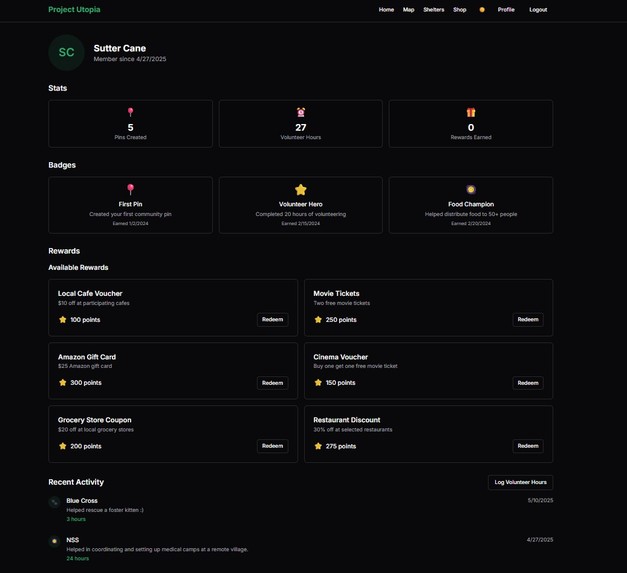
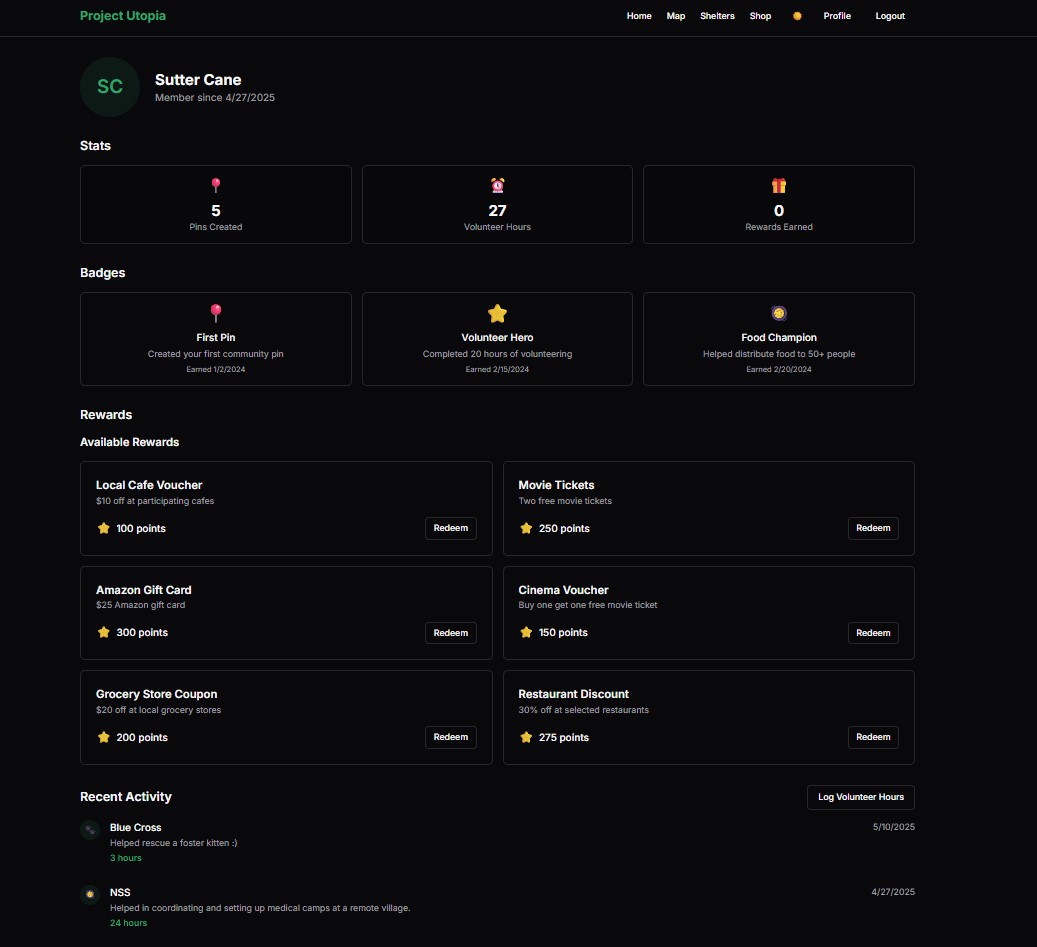
Profile
Inspiration
The growing disconnect between community resources and those who need them most inspired us to create Project Utopia. We saw how technology could bridge this gap by creating a platform that not only helps locate shelters and resources but also encourages community participation through gamification.
What it does
Project Utopia serves as a comprehensive community engagement platform that:
- Maps Local Resources: Interactive mapping of shelters and essential services
- Community Engagement: Users can pin and share resource locations
- Reward System: Gamified volunteer participation with badges and rewards
- Real-time Updates: Live shelter availability and resource status
- Volunteer Coordination: Streamlined process for matching volunteers with needs
- Smart Assistant: Built-in chatbot for immediate help and guidance
- Impact Tracking: Personal dashboards showing community contribution metrics
How we built it
We crafted Project Utopia using a modern tech stack:
- Frontend: React with Tailwind CSS for a responsive, clean UI
- Backend: Node.js/Express server architecture
- Location Services: Browser geolocation API with custom distance calculations using Leaflet
- State Management: React Context API for efficient data flow
- Interactive Maps: Dynamic mapping system for resource visualization
- Component Architecture: Modular design with reusable UI components
Challenges we ran into
- Implementing precise geolocation features while respecting user privacy
- Creating an intuitive reward system that prevents gaming while encouraging genuine help
- Balancing real-time updates with server load and performance
- Designing an interface that's accessible to users of all technical levels
- Managing complex state across multiple features and user interactions
Accomplishments that we're proud of
- Built a platform that makes tangible community impact
- Created an engaging reward system that drives real community action
- Developed an intuitive mapping interface for resource discovery
- Implemented a scalable architecture ready for community growth
- Achieved a balance between functionality and user experience
What we learned
- The importance of user-centered design in social impact projects
- Techniques for efficient geolocation and distance calculations
- Strategies for implementing gamification in serious applications
- The complexities of building real-time update systems
- The value of modular architecture in scaling applications
What's next for Project Utopia
- Mobile app development for increased accessibility
- Integration with local government and social service APIs
- Enhanced analytics for resource distribution optimization
- Expanded volunteer coordination features
- Multi-language support for broader accessibility
- Machine learning for predicting resource needs
- Community forum for sharing success stories and feedback
Built With
- deepseekv3
- express.js
- leaflet.js
- monogdb
- node.js
- react



Log in or sign up for Devpost to join the conversation.