-
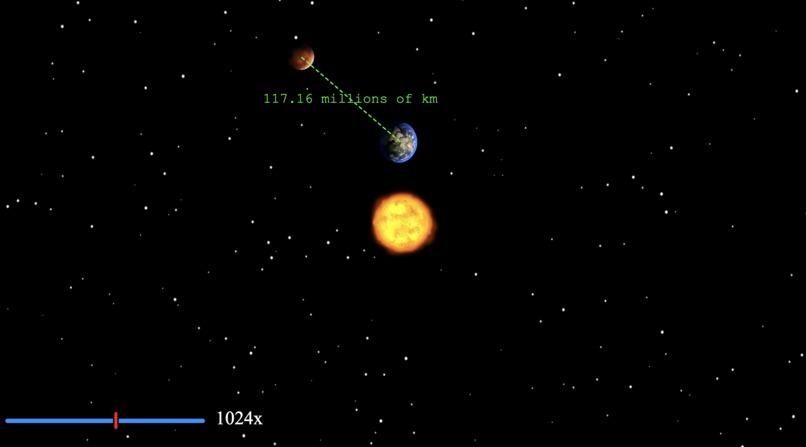
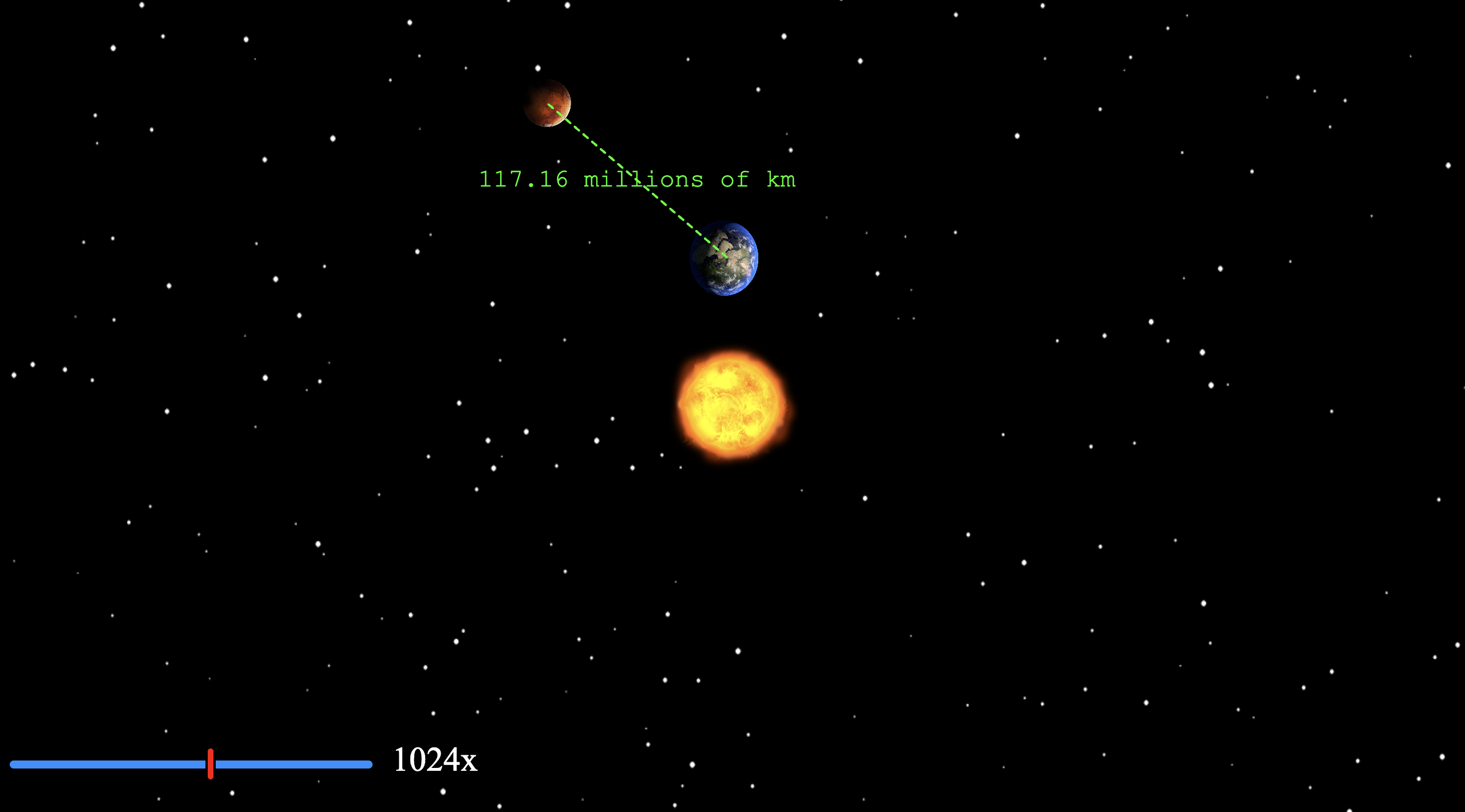
Simulation in action - Instantaneous distance between Mars and Earth
-
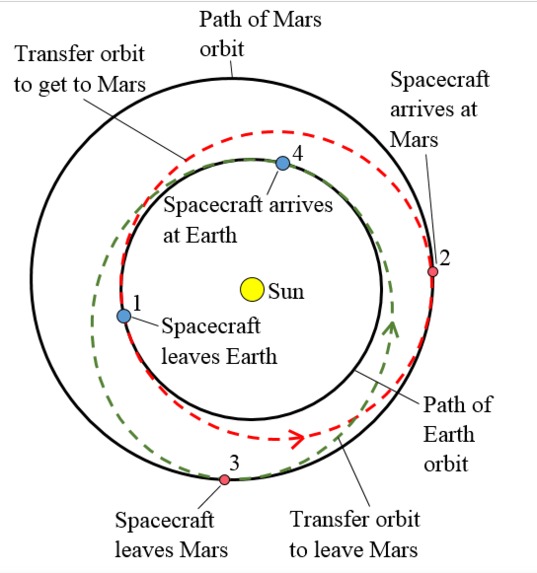
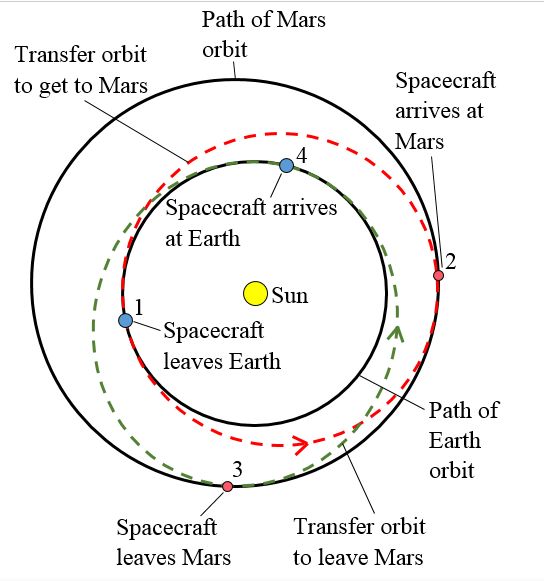
The Hohmann Transfer Orbit
-
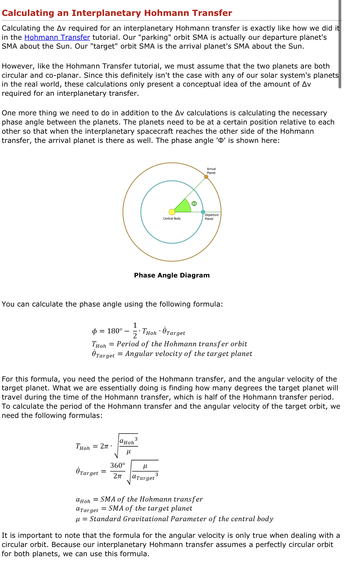
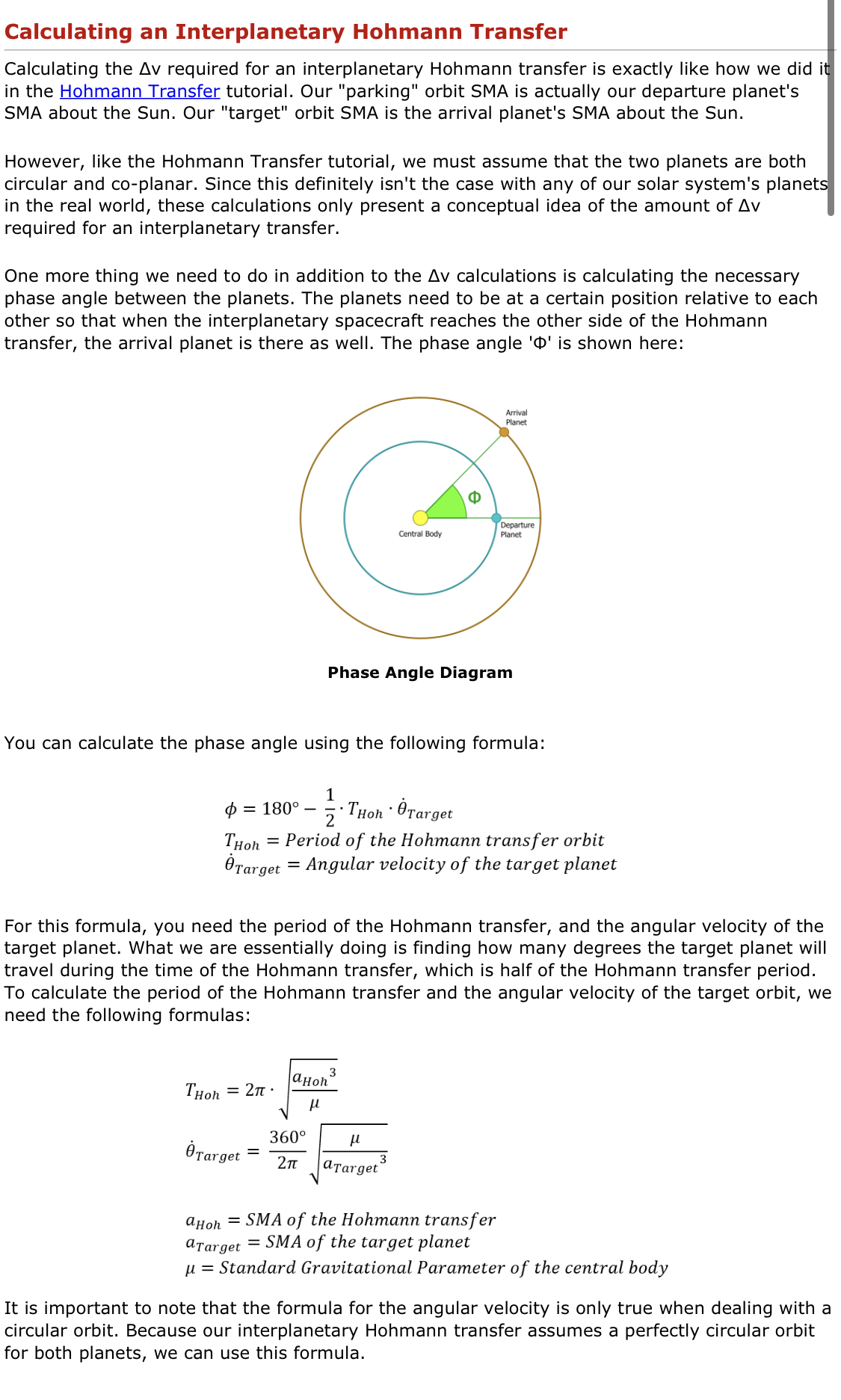
Calculating an interplanetary Hohmann Transfer
-
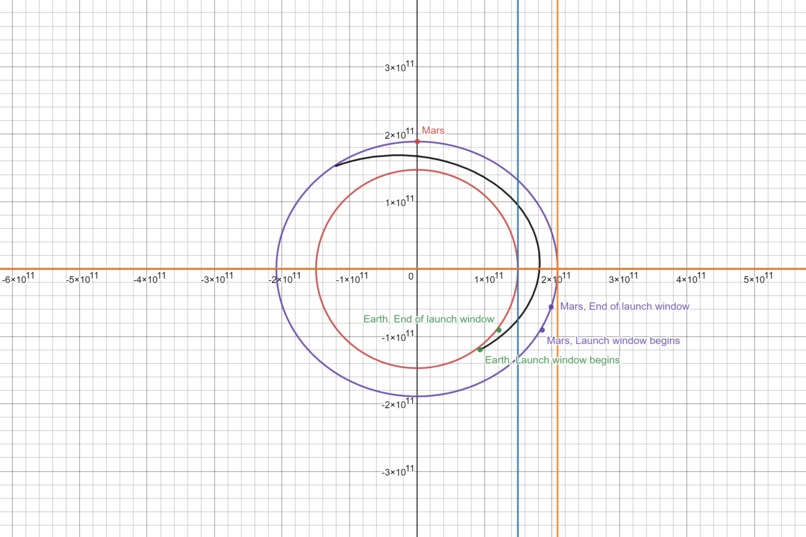
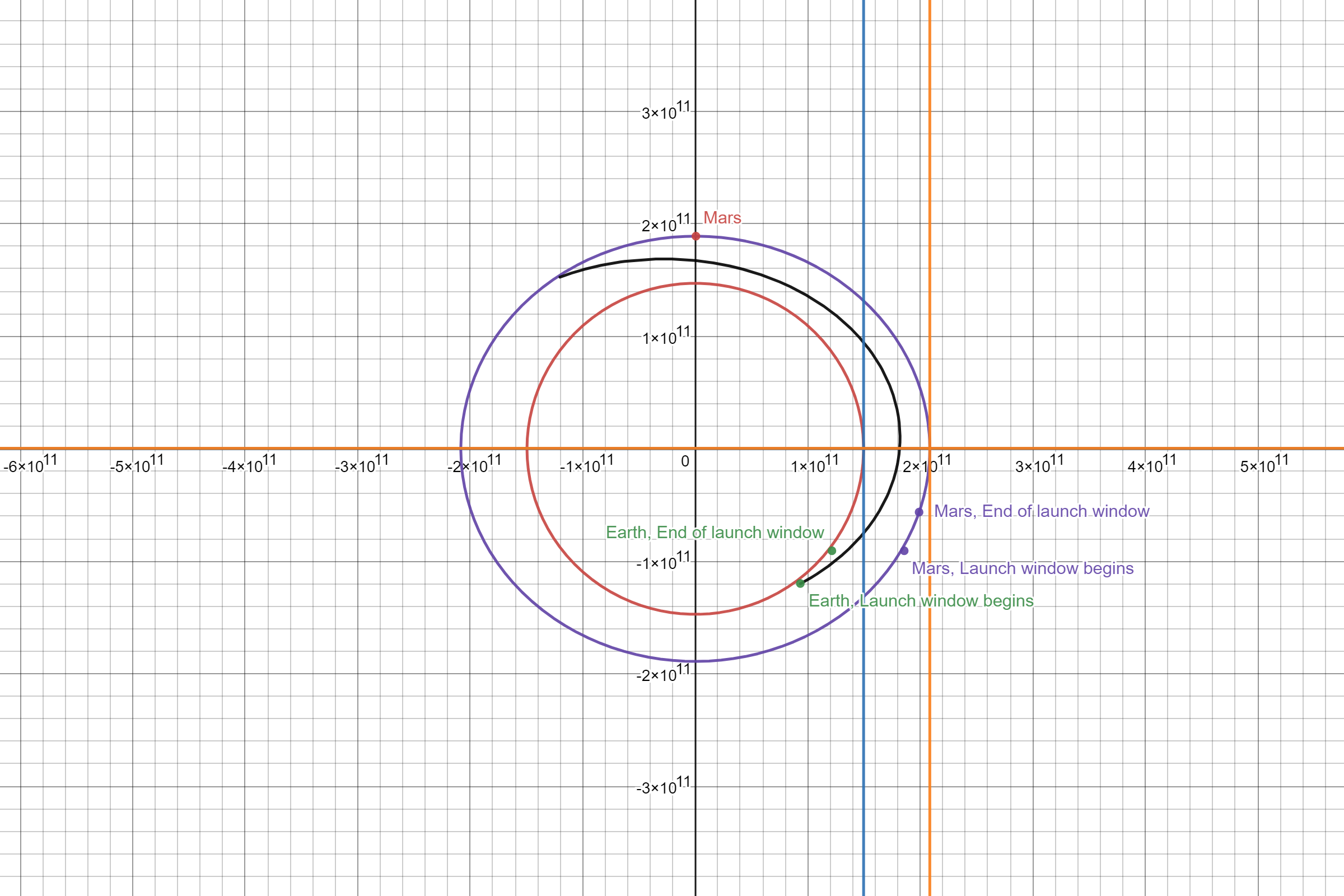
Planetary orbits and approximation of Hohmann's transfer orbit (Desmos)
Our inspiration
As a team, we've always been fascinated by our solar system, and how incredibly large the distances are between celestial bodies. To be more precise, a vacation to Mars has always seemed to be extremely interesting to most of us, and the sheer innovation required to travel there.
What it does
Our project is essentially a demonstration of the Hohmann Transfer. How does it work you ask? Well, it is essentially when your rocket is released when Mars is quite far from Earth, and the rocket travels in its own orbit to meet with Mars further along its path. We demonstrate this process using real values, of course, scaled-down. However, the forces, the speed of the planets, as well as the distance between them, are completely real-world accurate! ** In addition, we've also implemented a **time acceleration slider, which allows us to speed up the flow of time during our simulation.
How we built it
We used archival celestial coordinates and data to convert the locations into elliptical equations in Desmos, which we then implemented into javascript! Our planets perfectly follow orbit, the only difference being the size of the planets. However, despite their increased size, their gravitational pull remains intact. We mainly used p5.js, a javascript library, which allowed us to draw our simulation. In addition to this, we used css to customize the styles of some of our objects.
Challenges we ran into
Our simulation obviously required quite a lot of calculations, as we are simulating the literal solar system. Thus, mass amounts of calculations and graphing is quite difficult in Javascript. In addition to this, the different parts of our simulation were separated amongst our team, meaning combining these completed programs proved to be quite a challenge. Furthermore, we lacked time to implement the code of the rocket which would follow the Hohmann's transfer orbit trajectory
Accomplishments that we're proud of
Before November 3rd, not a single person in our team had ever written a single line of code nor studied celestial mechanics and astrophysics. We were all complete beginners, meaning it was extremely difficult to improve. None of the members of our team were experienced enough to assist the other members, which made it extremely difficult to solve our problems. However, through creative solutions and will, we powered through and managed to create something that we consider impressive for people who have never coded in their lives.
What we learned
From this experience, we all learned how to code, and how astrophysics and celestial mechanics can be such a pain yet so much fun. We learned how to use multiple programming-related websites and programs, which will hopefully allow us to continue hacking in the future! One thing is sure, the key is to never give up.
What's next for Gateway to Mars - Humanity's Magnum Opus
To come: The Gateway to Mars team will continue working on this project after the Hackathon ends, and we will continue learning how to code and explore the magnificent world of physics! We WILL be back next year, and we WILL WIN!
Built With
- celestial
- chatgpt
- creativity
- css
- desmos
- javascript
- knowledge
- p5.js
- physics


Log in or sign up for Devpost to join the conversation.