-
-
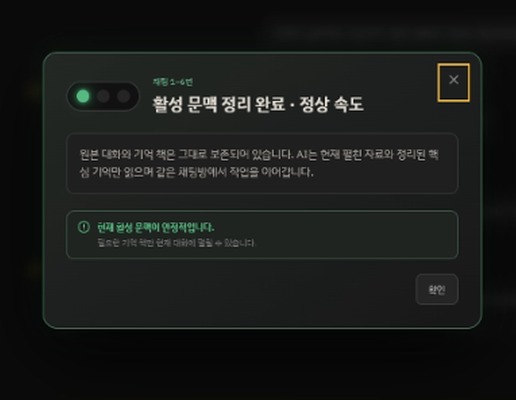
The original conversation continues while archived memories remain reusable.
-
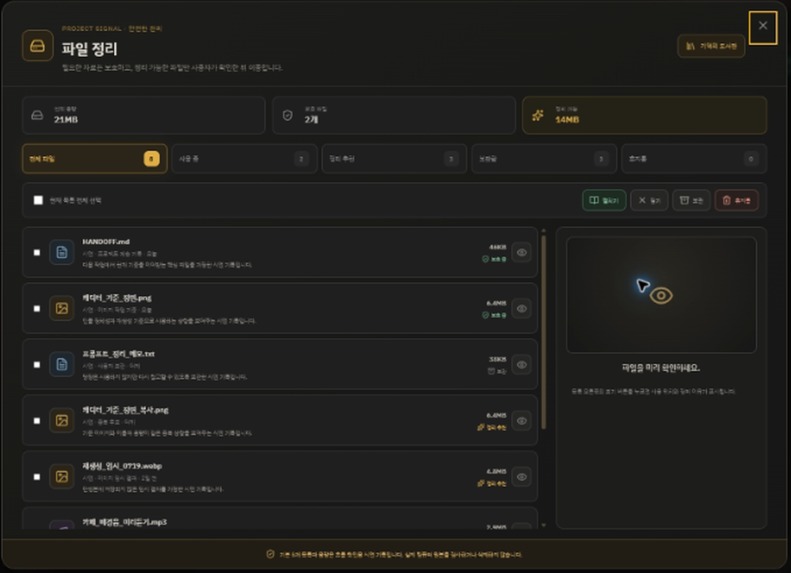
-
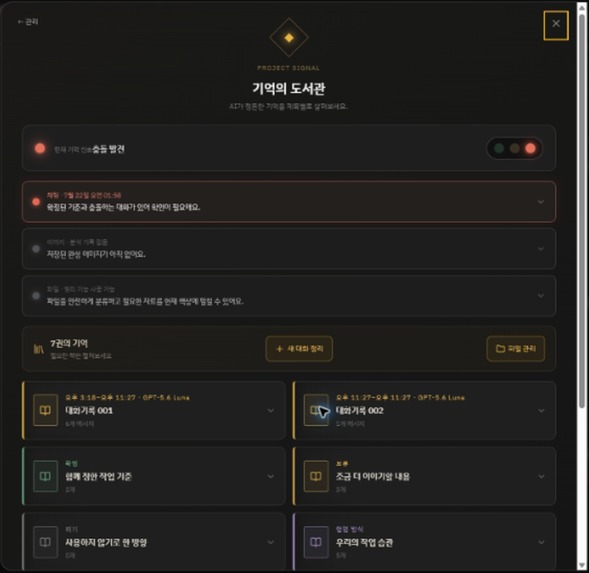
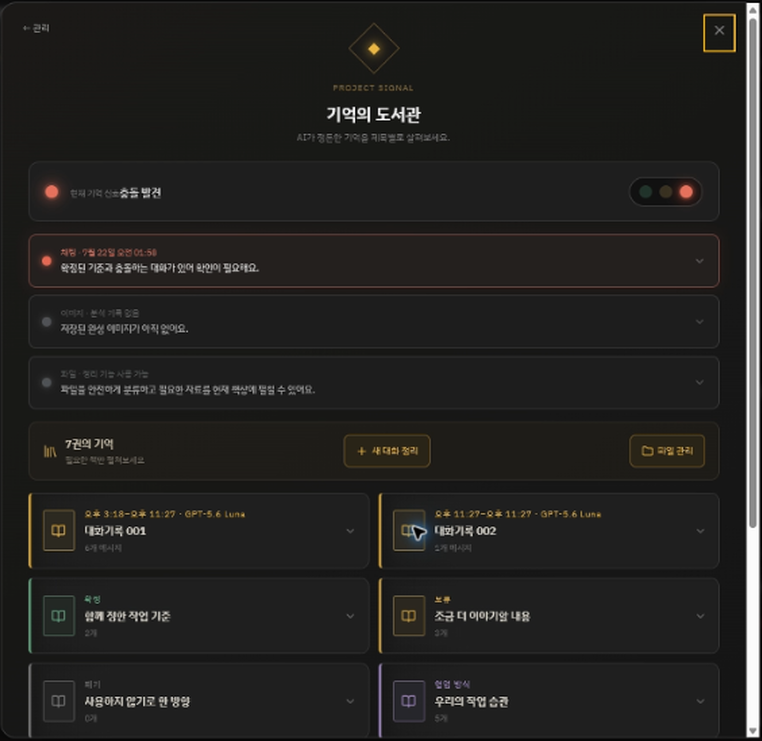
Memory Library stores organized conversations by topic.
-
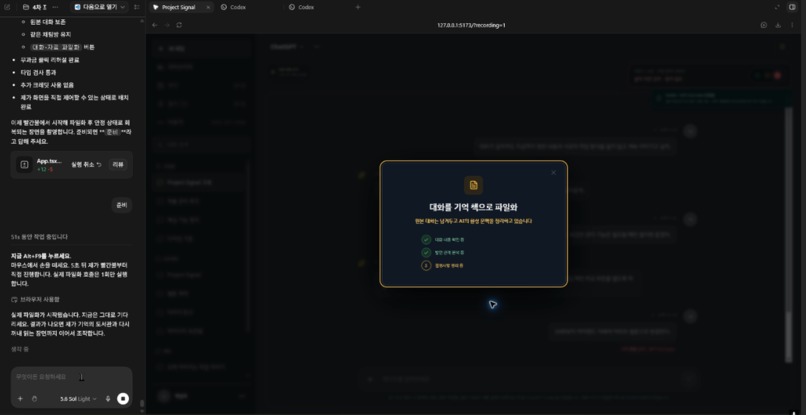
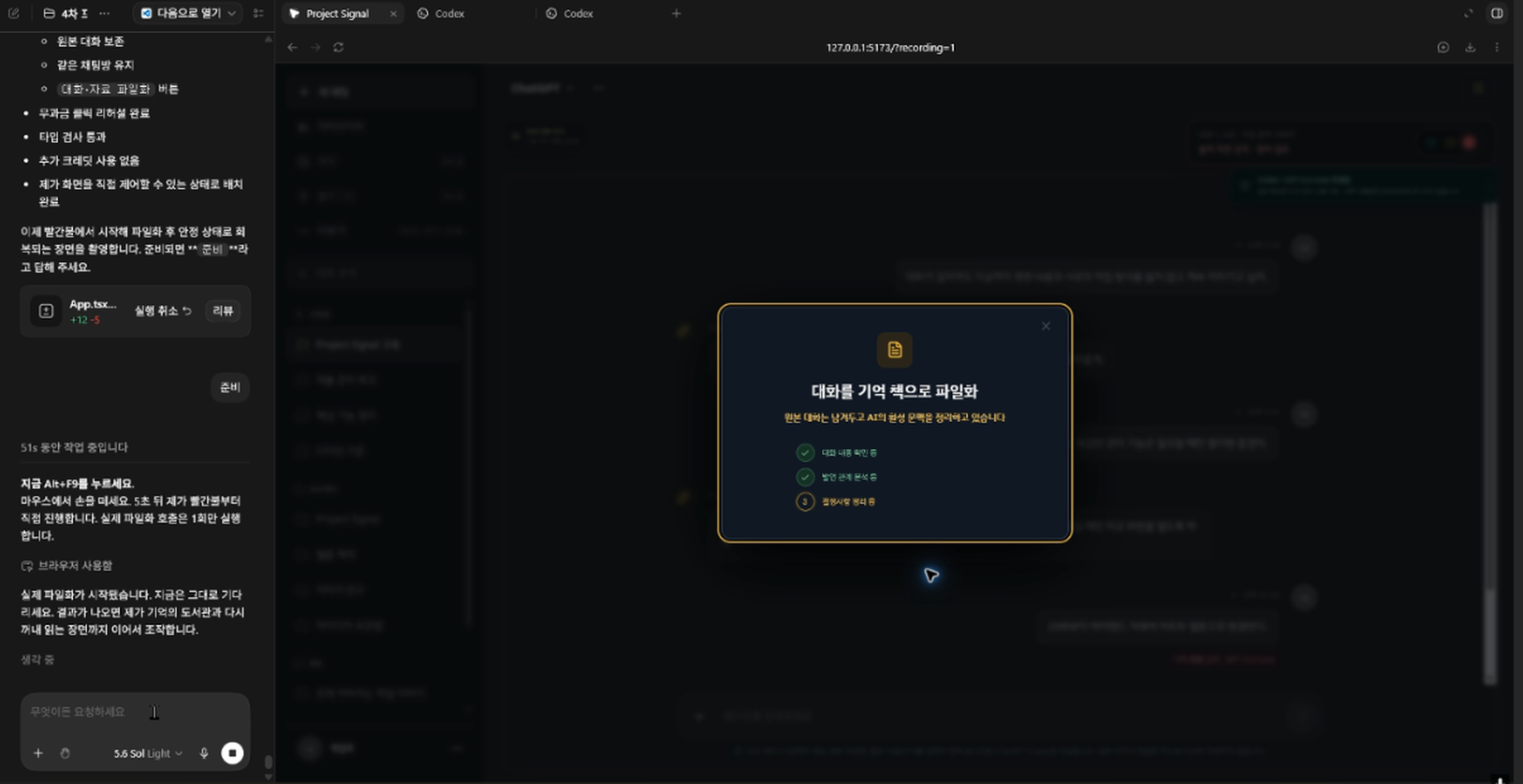
Approved conversations are converted into reusable Memory Books.
-
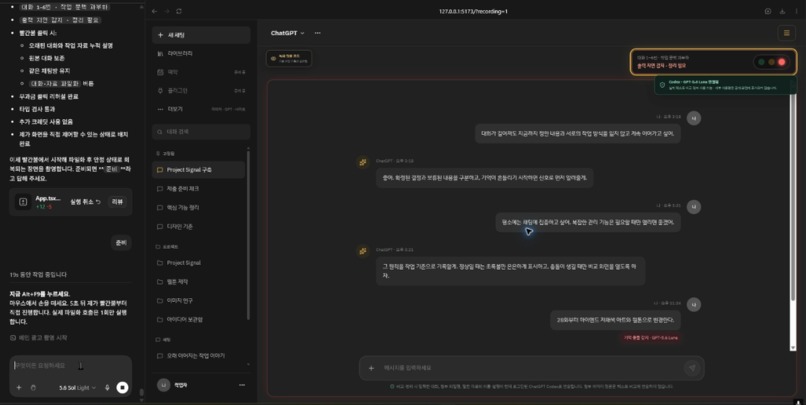
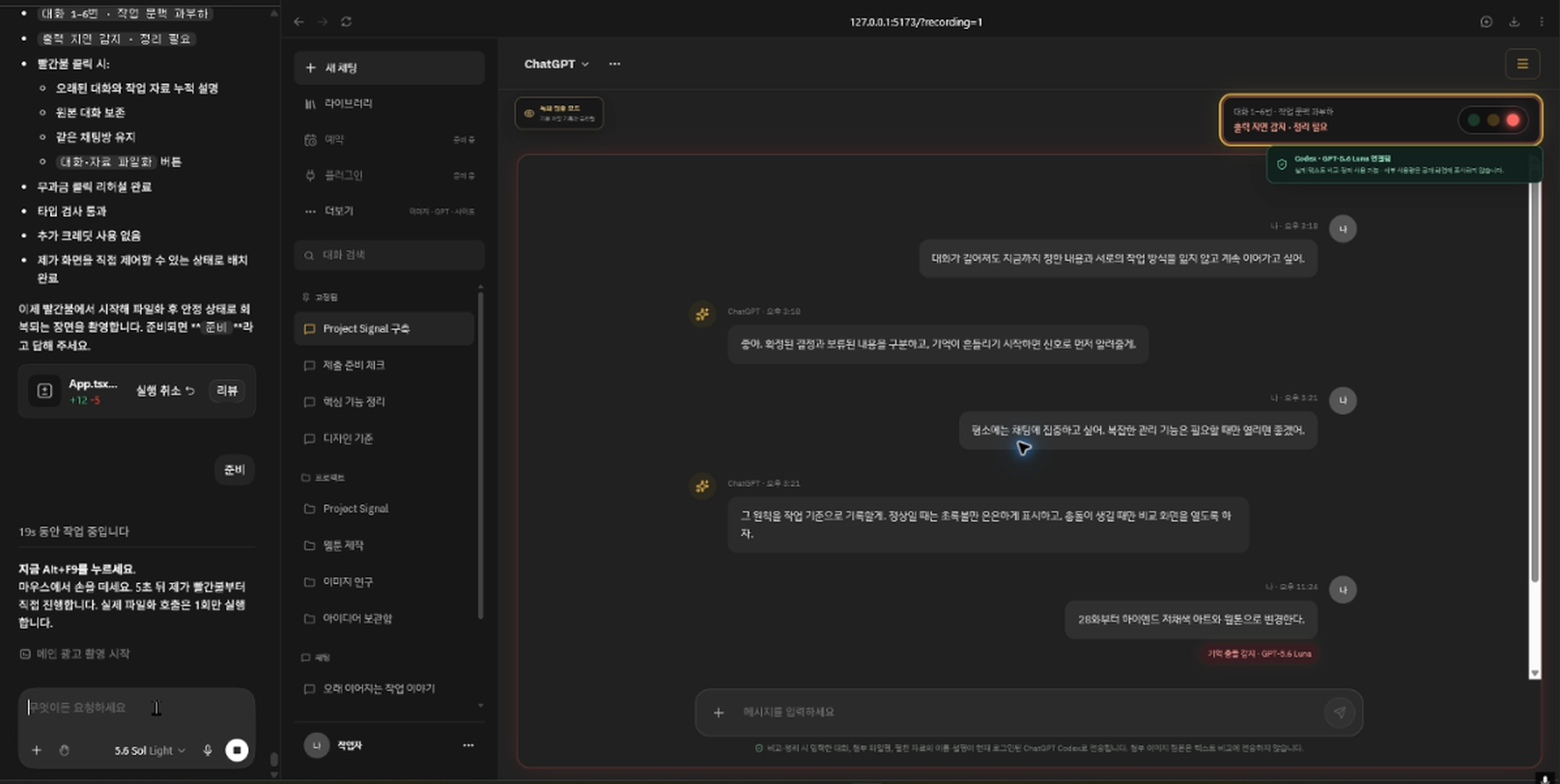
Context overload detection with real-time traffic signal.
Inspiration
Long-running AI conversations often become slower and less reliable as context, files, images, and decisions accumulate. Users may lose access to earlier context or feel forced to abandon a conversation they have worked in for days.
Project Signal was created to help users preserve that relationship and continue working in the same conversation.
What it does
Project Signal monitors the active conversation and represents context pressure through a traffic-light signal.
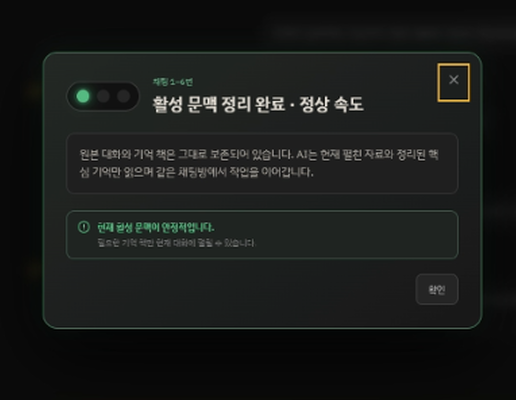
- Green means the active context is healthy.
- Yellow warns that older parts of the conversation may soon become difficult for the AI to retain.
- Red indicates serious context overload and possible output slowdown.
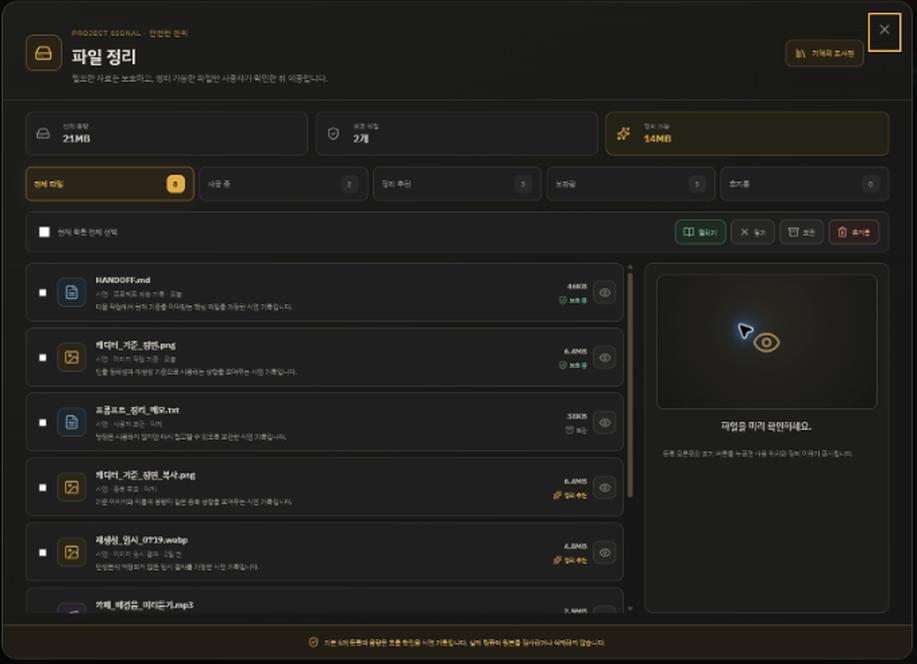
With the user’s approval, Project Signal organizes older discussion ranges into topic-based “memory books.” The original conversation remains visible, while archived sections can be removed from the active working context.
When a stored memory is needed again, the user opens its book in the Memory Library. That memory is then reconnected to the AI’s active context so the conversation can continue with the necessary information.
An optional continuity mode also allows approved memories to be carried into a new conversation when the user chooses.
How we built it
Project Signal was developed with Codex and GPT-5.6 as a working React and TypeScript prototype.
Codex helped inspect the existing project, implement the traffic-light states, connect the memory-management workflow, build API routes, preserve stored data, test interactions, and validate the final production build.
GPT-5.6 analyzes overloaded conversation content and converts it into structured, topic-based memory books. The workflow includes user approval, memory storage, library management, reconnection to active context, and visible recovery states.
Challenges we ran into
The main challenge was distinguishing between preserving the visible conversation and reducing the context actively processed by the AI. The product needed to keep the user’s history accessible without treating every old message, file, and image as permanently active context.
We also needed to clearly separate the main same-conversation recovery workflow from the optional new-conversation continuity feature.
Accomplishments that we're proud of
- Built a working green, yellow, and red context-pressure workflow
- Preserved the original conversation while organizing older context
- Created topic-based memory books with GPT-5.6
- Added a Memory Library for reopening and reconnecting stored context
- Implemented explicit user approval before memory organization
- Validated the complete overload-to-recovery demonstration flow
- Used Codex throughout implementation, debugging, testing, and submission preparation
What we learned
AI memory is not only about storing more information. It is about deciding what should remain active, what can be archived, and how users can deliberately reconnect important context later.
The library metaphor made this understandable: the current conversation is the worktable, and memory books are stored on shelves until they are needed again.
What's next for Project Signal
Next steps include integrating Project Signal directly with production conversation platforms, measuring context pressure using real token and attachment data, supporting encrypted cloud memory storage, adding stronger privacy controls, and evaluating whether context recovery measurably improves response speed and continuity across long-running AI collaborations.
Built With
- codex
- gpt-5.6
- indexeddb
- openai
- react
- typescript
- vite

Log in or sign up for Devpost to join the conversation.