-
-
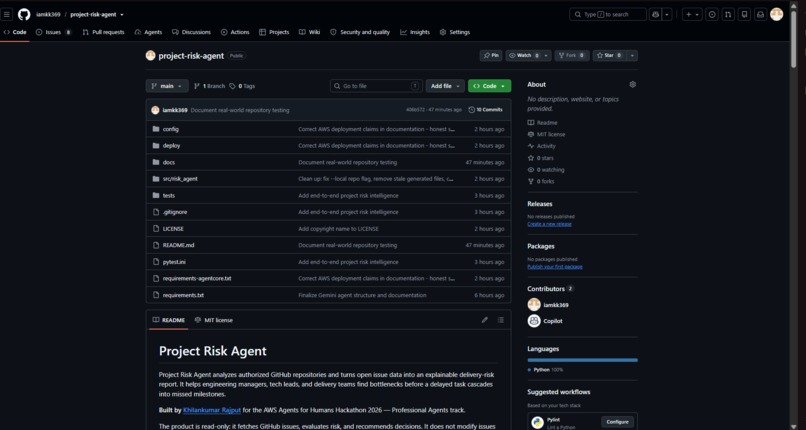
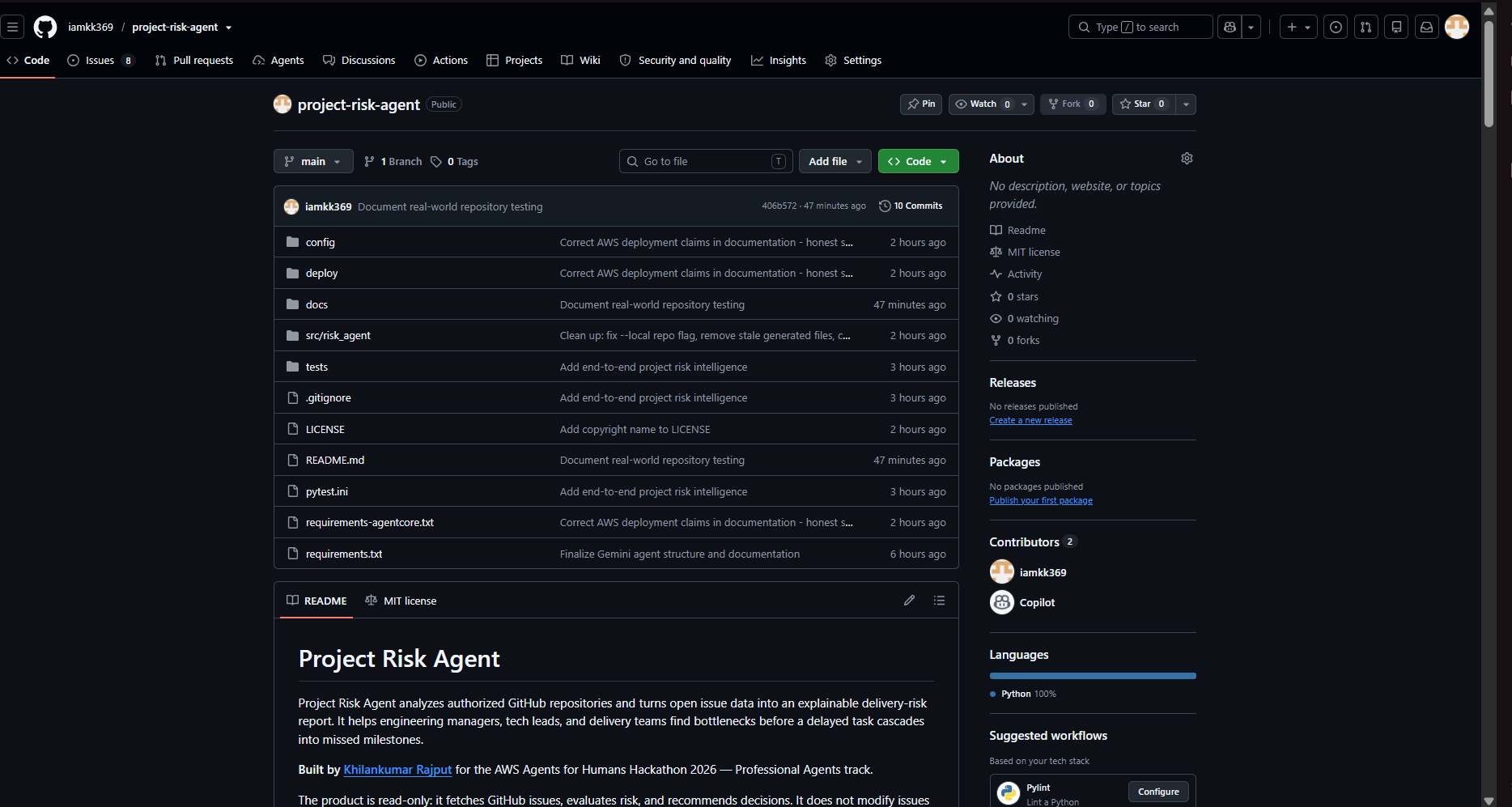
Github Repo Interface.
-
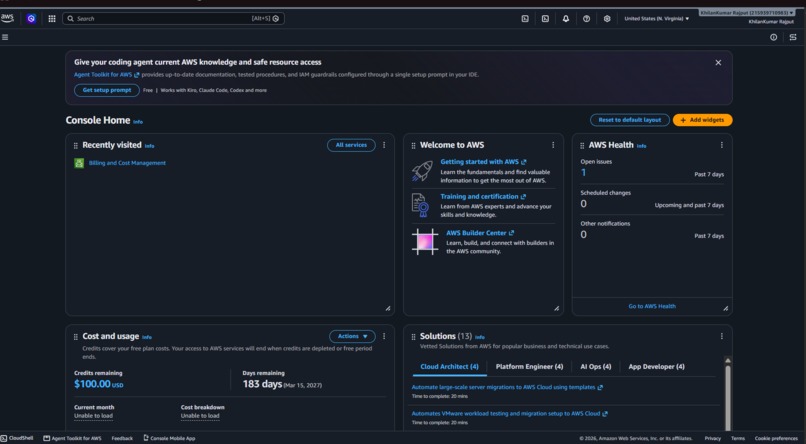
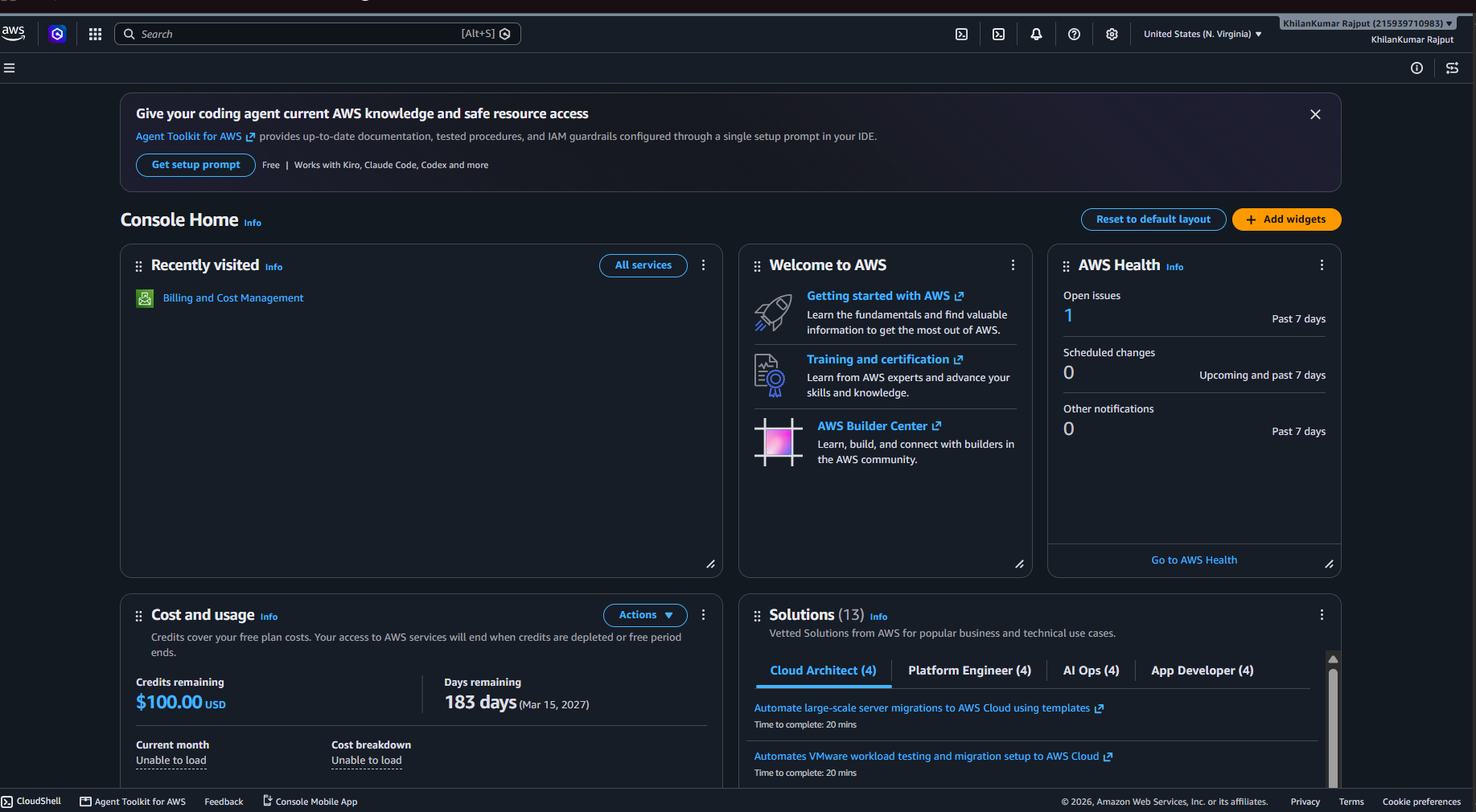
AWS login Confirmation.
-
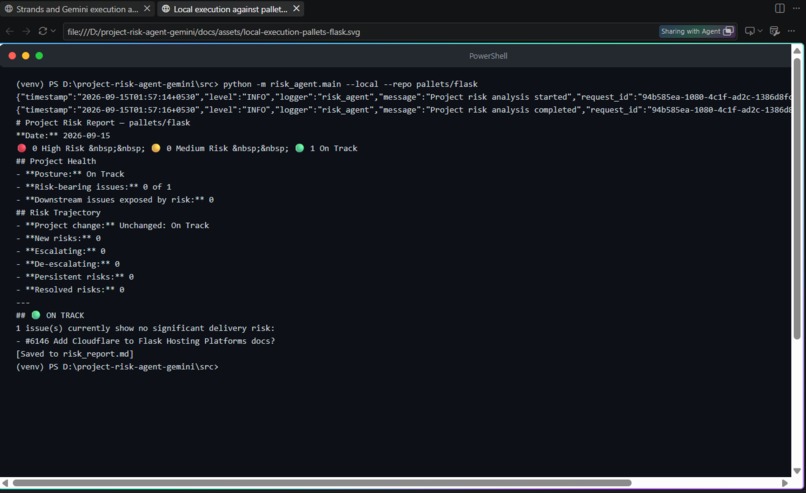
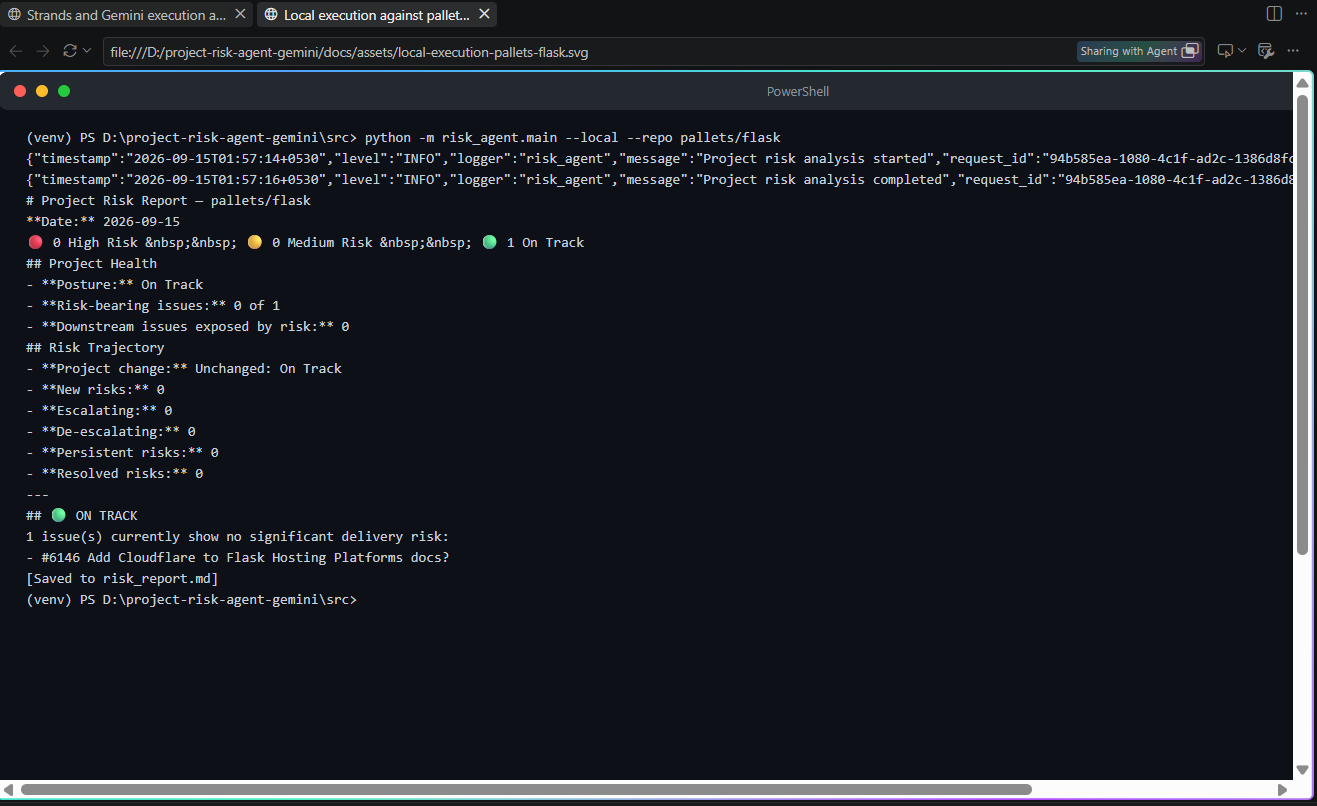
Test 1 . Local execution
-
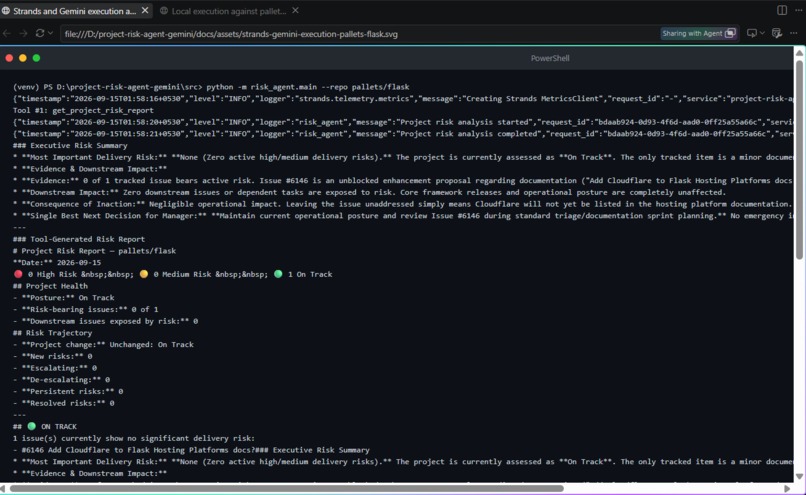
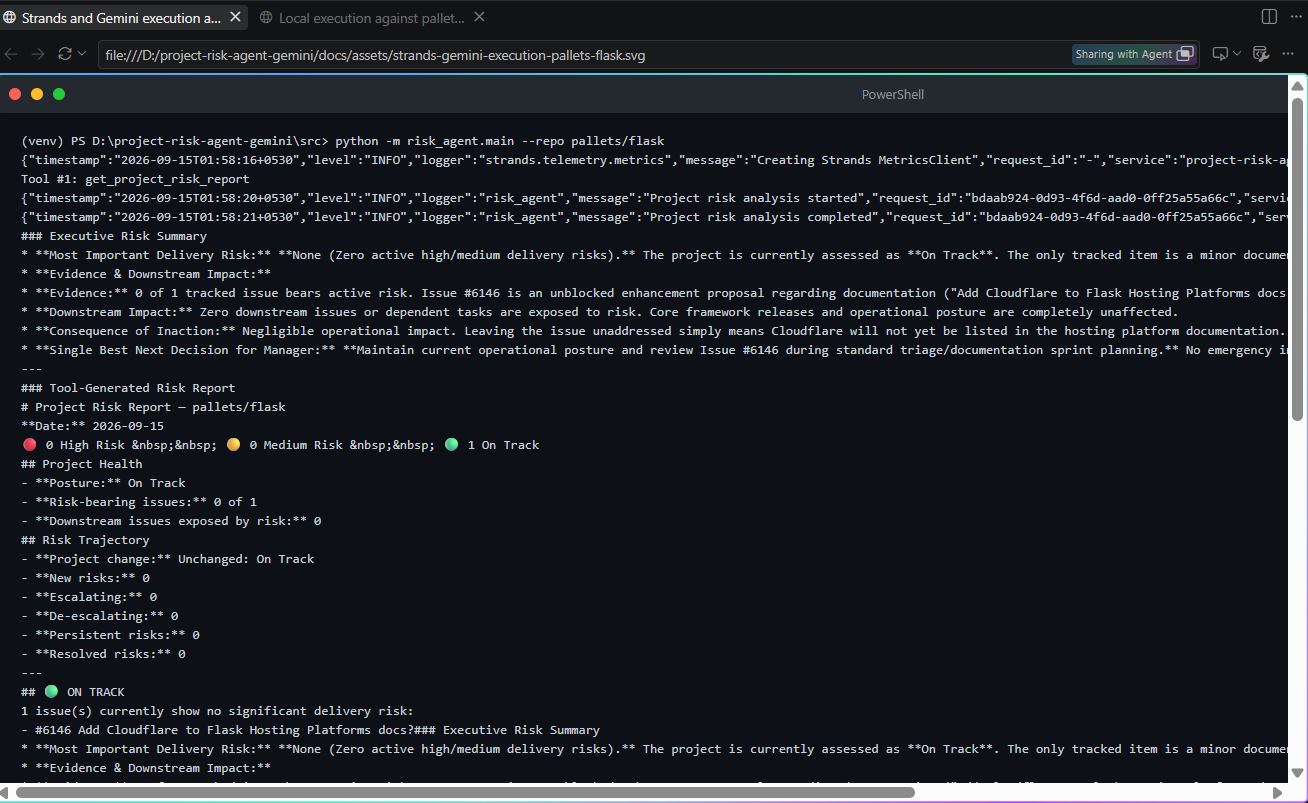
Test 2 . Gemini + Strands Agent
-

Project Architechture

Inspiration
So, while thinking about how project teams keep track of their work, I realized that all the info needed to spot potential delivery risks is often scattered everywhere—GitHub issues, deadlines, task statuses, dependencies—you name it.
Sure, a manager can see what’s on their plate, but answering simple questions like “What’s most likely to cause delays, and what should I do about it?” can sometimes feel like searching for a needle in a haystack.
That’s why I came up with Project Risk Agent—to turn all that data in your GitHub project into a clear, straightforward picture of where risks might pop up and what needs your attention first.
What it does
Project Risk Agent hooks right into your GitHub repo and scans issues, deadlines, statuses, and how tasks depend on each other.
Instead of just pointing out problems, it shows how issues impact each other and highlights which risks could really throw off your delivery schedule.
Here’s what you get:
- A quick snapshot of your project's overall health and risk level
- A breakdown of issues that are high, medium, or on track
- Insights into how risky tasks might affect other parts of the project
- Tracking how risks develop over time and if they’re getting worse
- Easy-to-understand explanations of why certain issues are flagged as risky
- Smart tips on what to focus on next
All this analysis is transparent and simple to follow. Plus, I use Strands Agents and Gemini to turn all that into a clear summary that helps you make better decisions.
How I built it
I built this tool using Python and the Strands Agents SDK, with Gemini powering the model.
The agent pulls in your issues from GitHub and runs them through a structured risk analysis process—considering deadlines, dependencies, how risks spread, and what’s most important for your project.
I also set it up to run with Amazon Bedrock AgentCore, so it’s ready to be deployed managed if you need it.
Challenges
One big challenge was making sure the risk analysis was actually useful and not just a black box.
I wanted managers to understand why something was flagged as risky. So instead of just using a vague AI judgment, I built clear rules around deadlines, dependencies, and downstream impacts. The agent then uses this structured info to explain what’s happening and suggest what actions to take.
I also tested everything with a real public GitHub repo, both locally and through the Strands + Gemini pipeline.
What I learned
This project taught me that building a helpful AI agent isn’t just about getting good answers from an LLM.
It’s also about making sure your data is solid, the analysis is consistent, the reasoning is easy to follow, and the recommendations are practical.
By putting all these pieces together, I created a tool that can actually spot project delivery risks and support managers in focusing their efforts—taking project management conversations to the next level with real, actionable insights.
Built With
- agentcore
- agents
- ai
- amazon
- amazon-web-services
- analysis
- api
- bedrock
- gemini
- generative
- github
- management
- project
- python
- risk
- strands


Log in or sign up for Devpost to join the conversation.