-
-
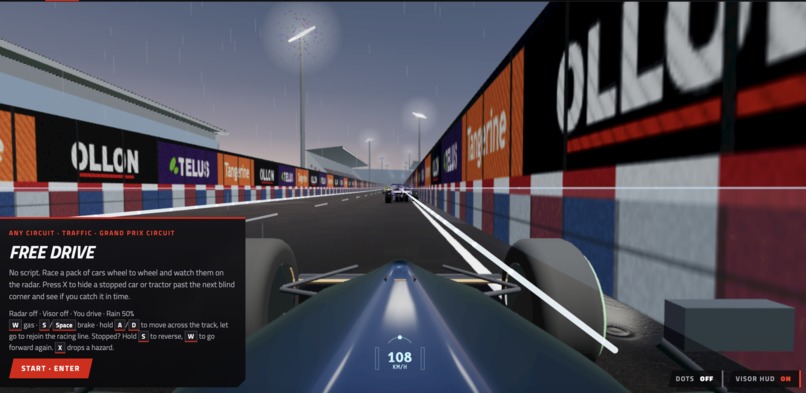
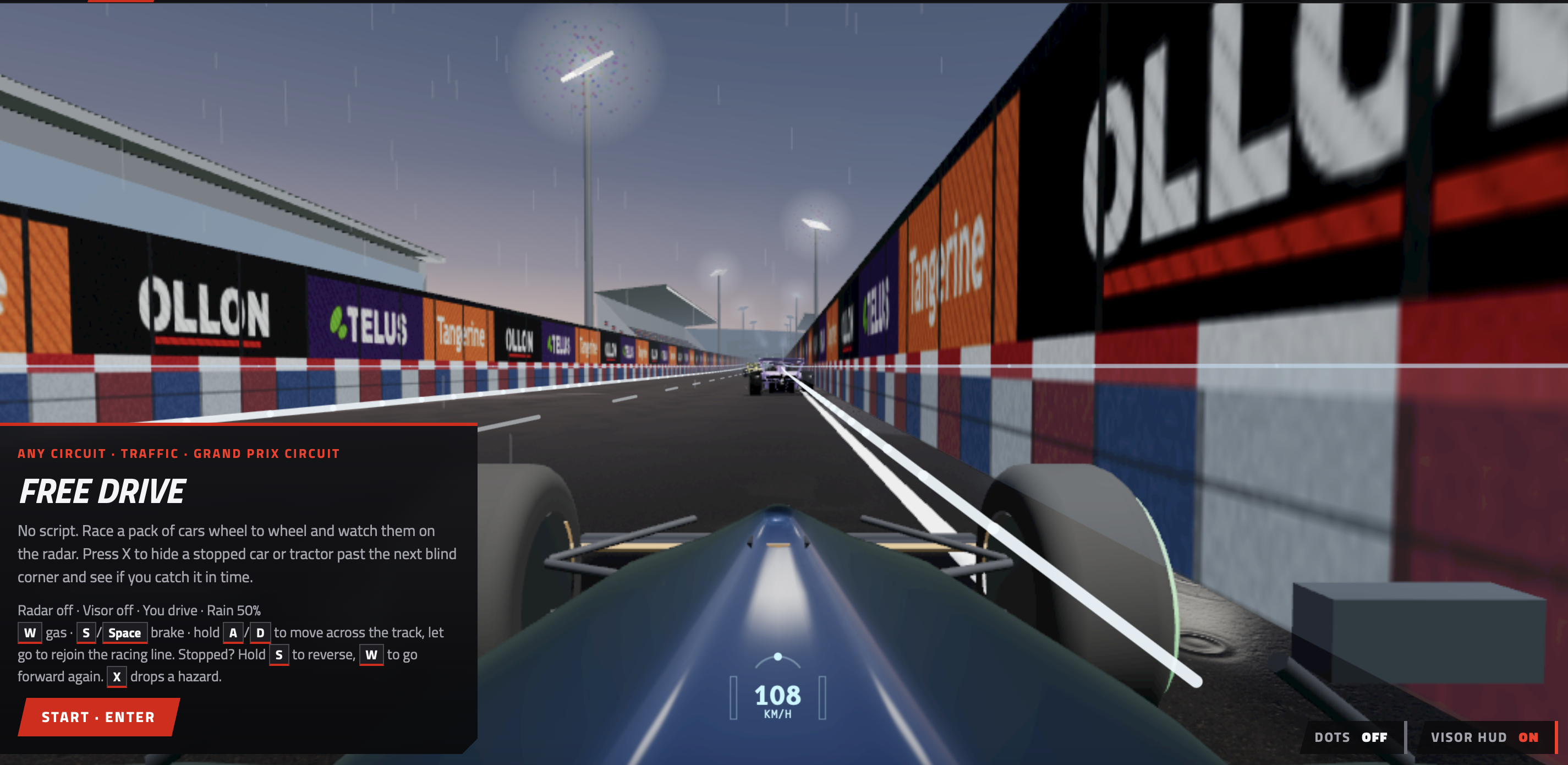
Initial Driving POV
-
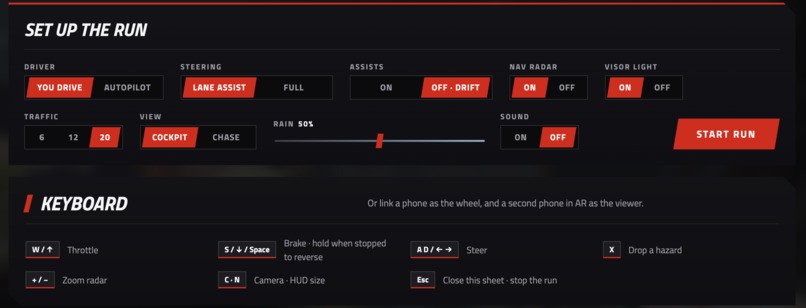
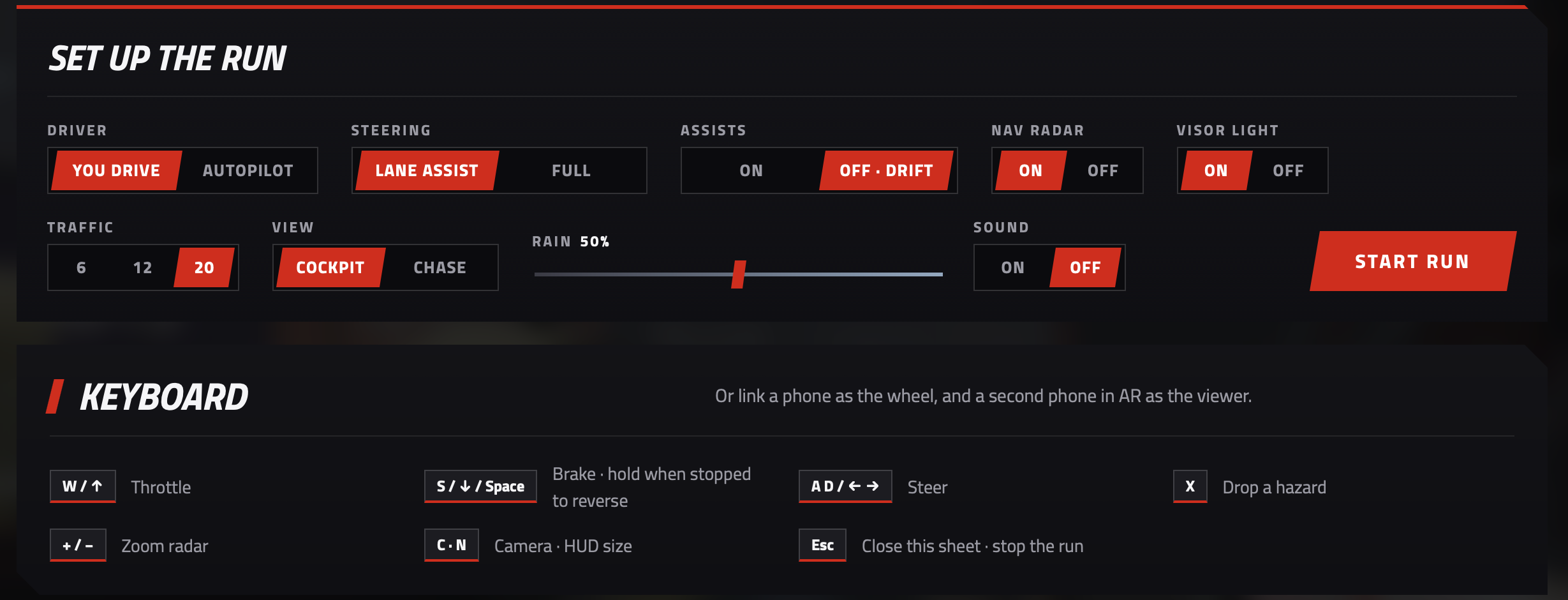
Setup with Assists
-
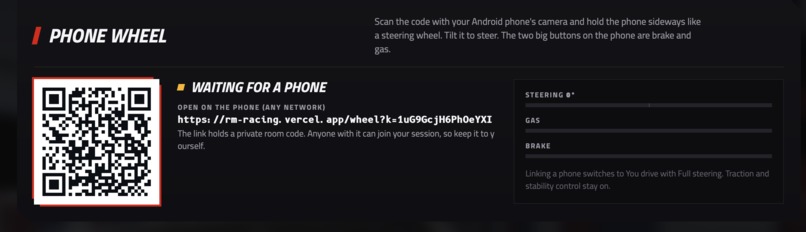
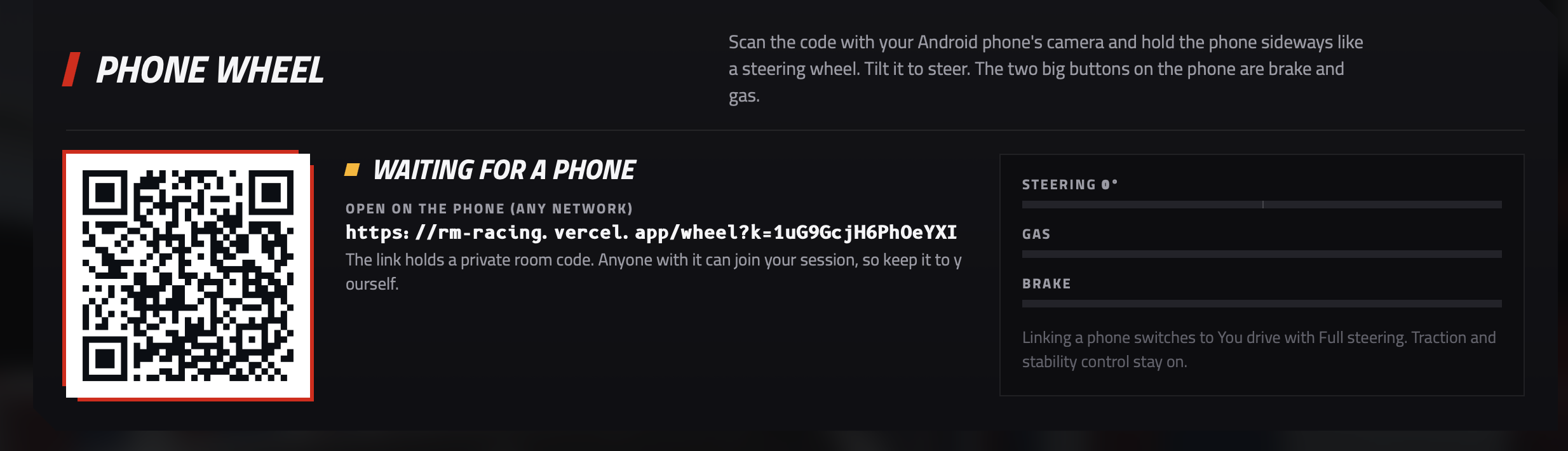
The phone setup
-
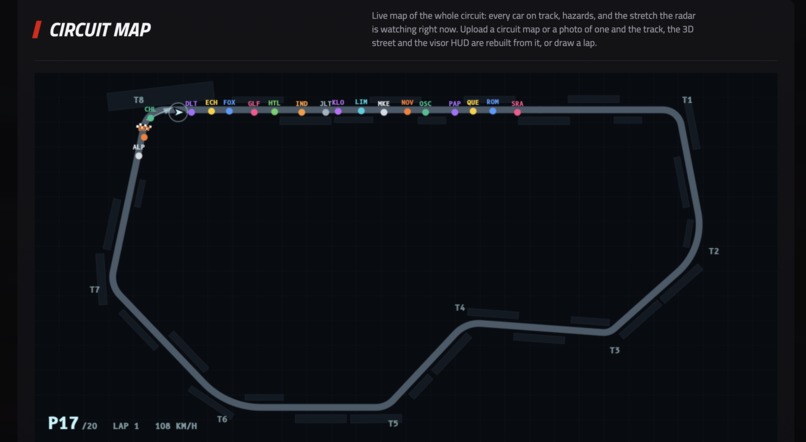
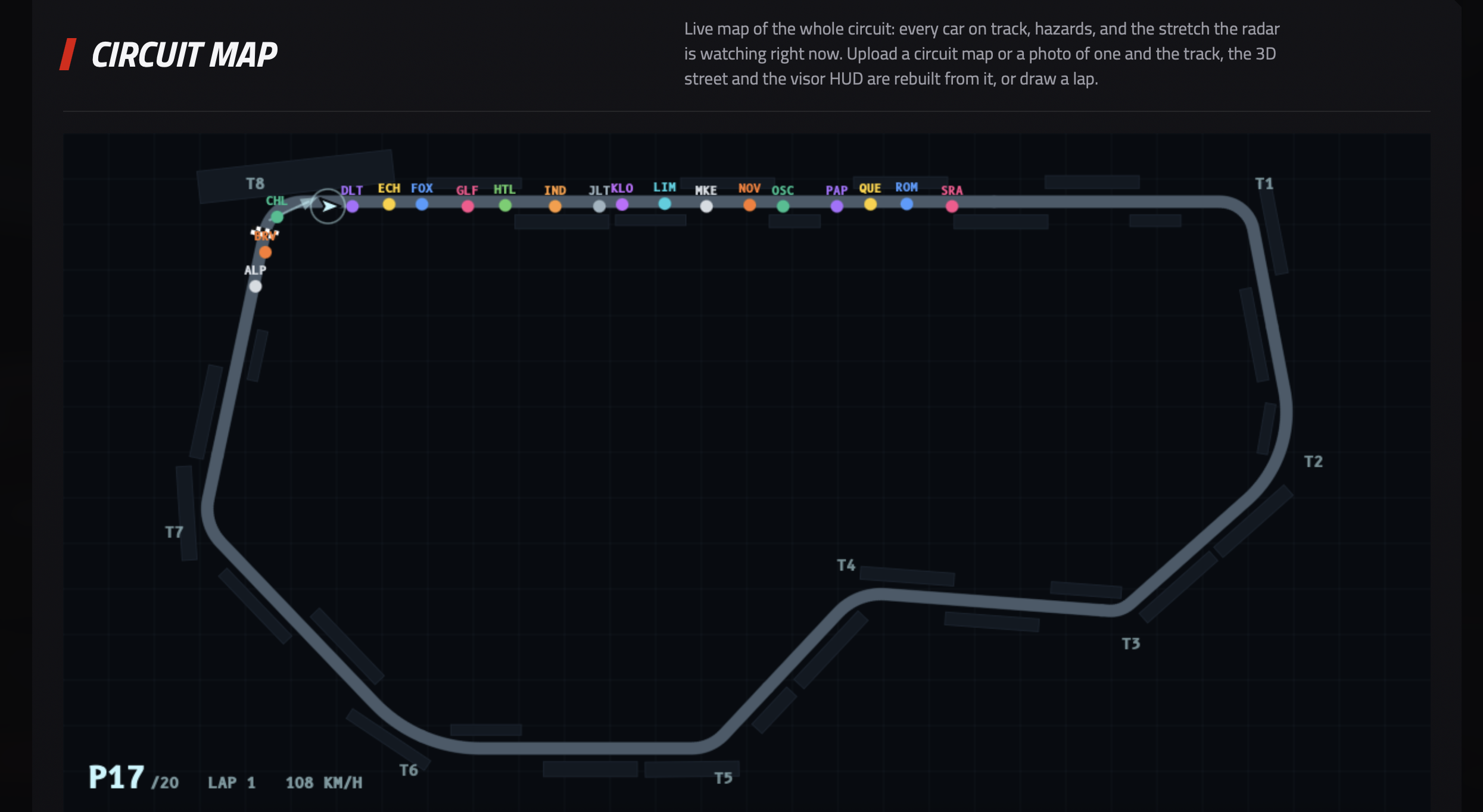
Circuit Map setup
-
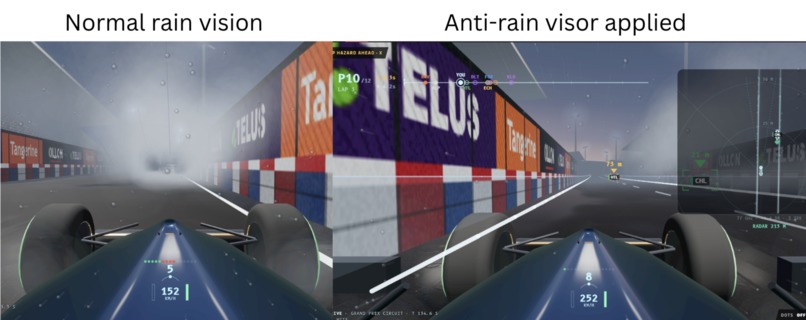
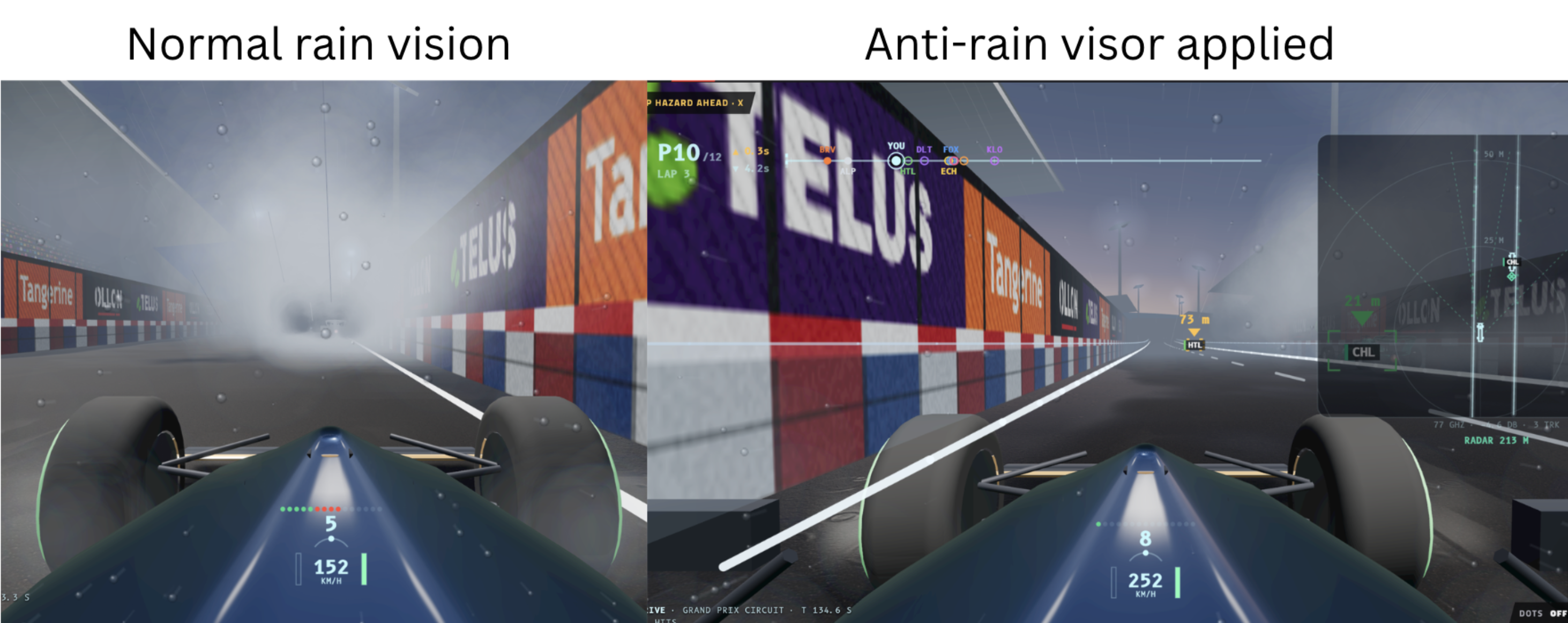
Vision Comparison
Inspiration
As motorsport fans, we look forward to wet races, as it causes unpredictability and chaos, some of the best races in Formula 1 are when rain hits but when rain gets too in the way of racing, the FIA governing body more often that not either cancel or delay the races until it's much drier if not completely dry due to safety reasons. This sucks for us as fans as we get a less entertaining product and a waste of hard earned money, and on the driver's side, they already accept that getting in a F1 car might be the last thing they ever do, and any extra risk on top of that has no incentive for them either
Example: 2021 Belgium, 2022 Japan, 2025 Belgium
What it does
The direct correlation is the driver’s visibility, as their skills and inputs come from not only from their physical feel, but cognitively as well. The main problem is the spray that comes up from the car in front, as it makes it much harder to judge intuitively where to brake and follow. To solve this we created a HMD system built into the driver's visors using a mini projector. It creates a hit-box with distance to the cars in front as well as a 2D radar and caution lights to show cars behind and in blind spots to compensate for extremely small and wet side mirrors on F1 cars. There are also additional visual cues that can be toggled by the driver to their preference.
How we built it
RM is a browser racing sim that shows how a look-ahead radar and a heads-up display could warn F1 drivers about hazards hidden by rain spray and blind corners. It runs entirely in the browser at rm-racing.vercel.app, and any phone can become the steering wheel or an AR visor after being paired through a QR code. The simulator runs a three.js + WebAssembly with the physics and circuit builder written in C and C++. We constantly iterated with AI to find pain points to calibrate vehicle dynamics, rain mechanics, as well as sound taken from real V8 engines to make it feel more real.
Challenges we ran into
One of our biggest challenges was making the simulation feel realistic rather than simply functional. We had to fix reversed phone steering and unreliable calibration, integrate haptic feedback, balance rain and fog visibility, and tune vehicle physics for both dry and wet conditions. We also implemented speed-dependent tyre spray, refined drifting and loss-of-grip behaviour, and balanced AI vehicle speeds so both the player and AI could realistically overtake each other. We solved these issues through continuous testing and iteration, using Claude to help diagnose problems and implement fixes as we encountered them.
Accomplishments that we're proud of
The HUD was already a tried thing in Formula in most recently in 2002 and before that, as well as a prominent system for fighter jets in the military currently. The fact we were able to come up with solutions that were tried and thought out by industry professionals at the top of their respective fields is something we are very proud of. We were able to innovate and take the best of both worlds to create a solution to a very real problem in motorsport.
What we learned
As a team when we originally came up with the problem and solution, we went a bit overboard with the amount of driver assists we added, similar to how simracing present their driving POVs. But after some research and taking a hard look at our solution, we made sure to be as minimalistic as possible to reduce the amount of distractions for the driver in its default state.
What's next for Project Rain Master
Software-wise, our simulation should confirm that a driver would be able to use the tool fittingly. What this means for our next steps should be looking at visor design and component assembly, creating a physical prototype with a mini projector and trying to implement the real 77Ghz Radar that our simulation uses.

Log in or sign up for Devpost to join the conversation.